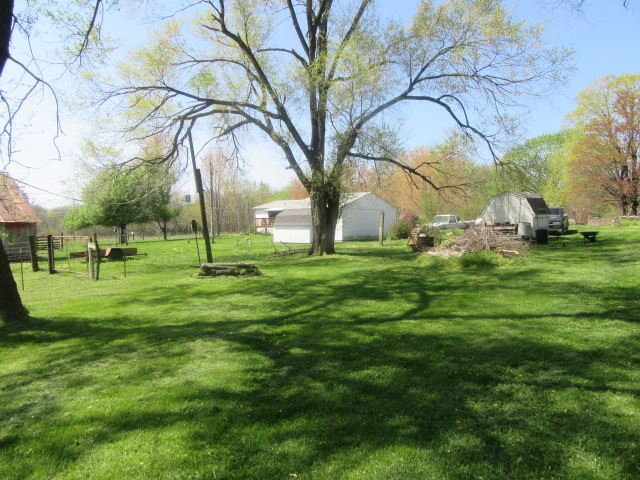
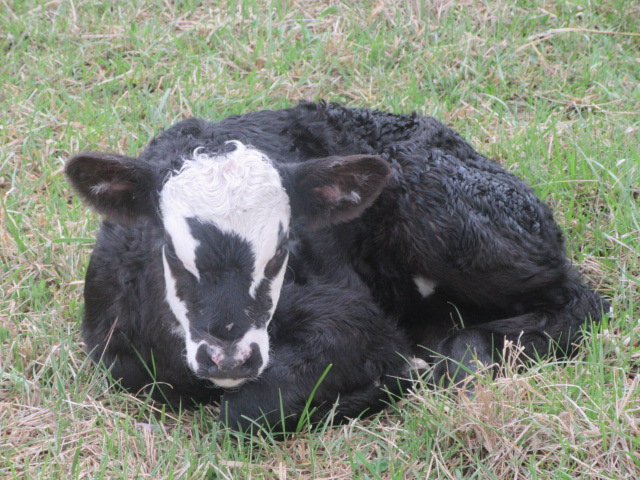
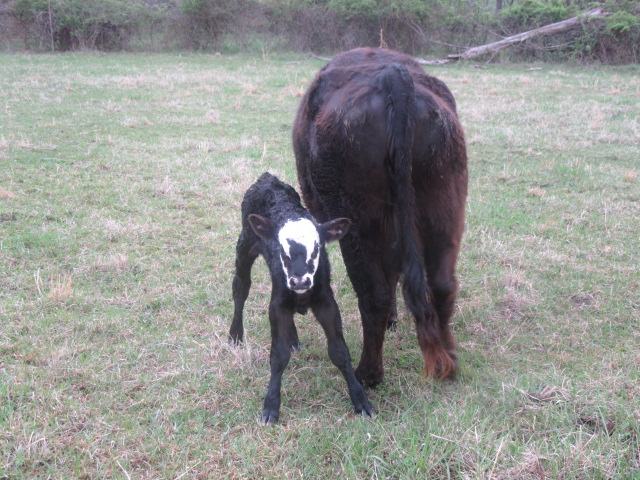
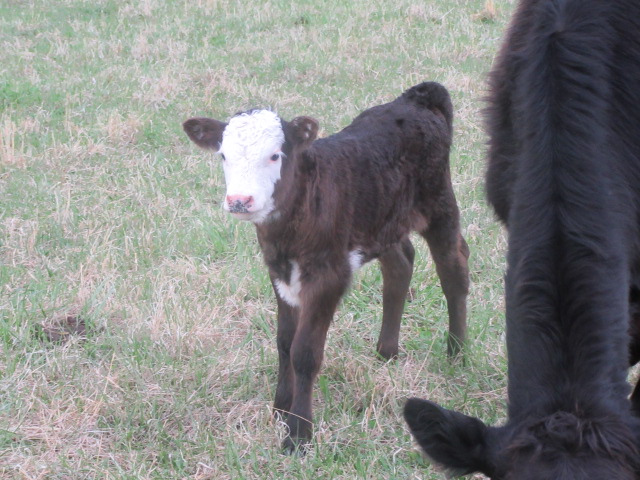
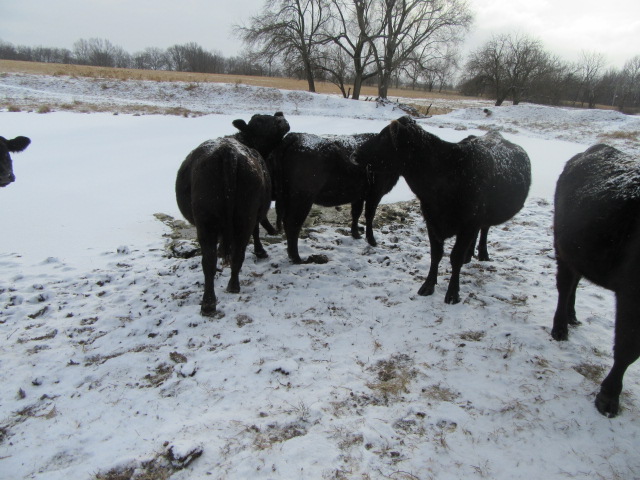
“What Are You Doing?”, He Asked…

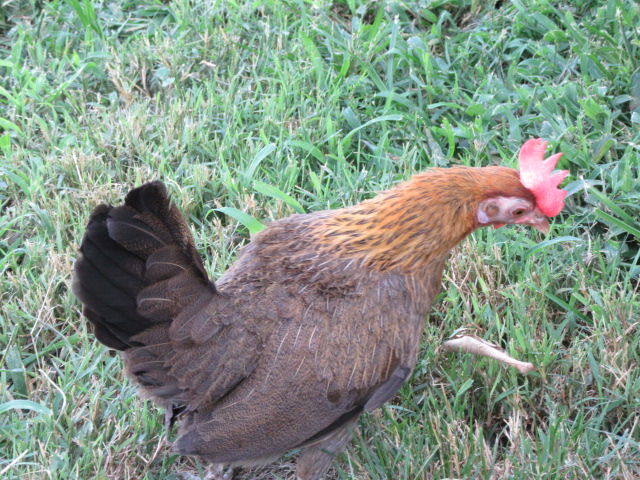
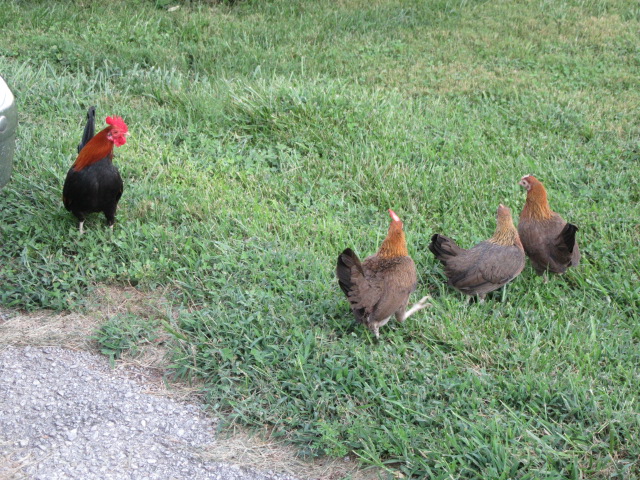
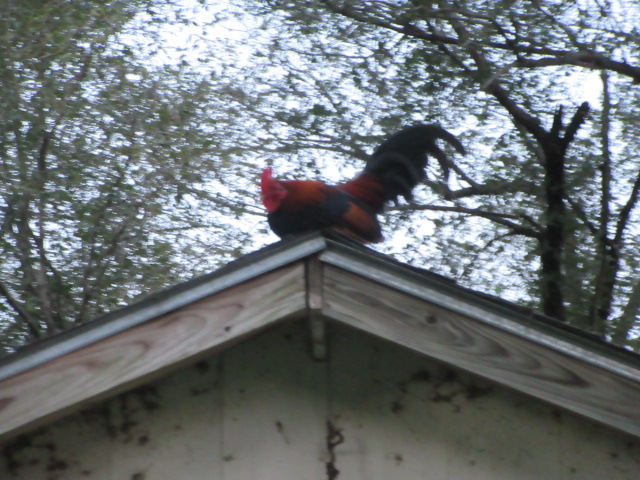
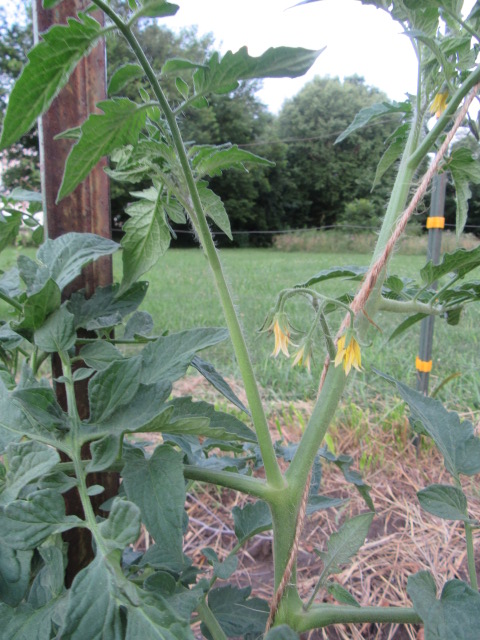
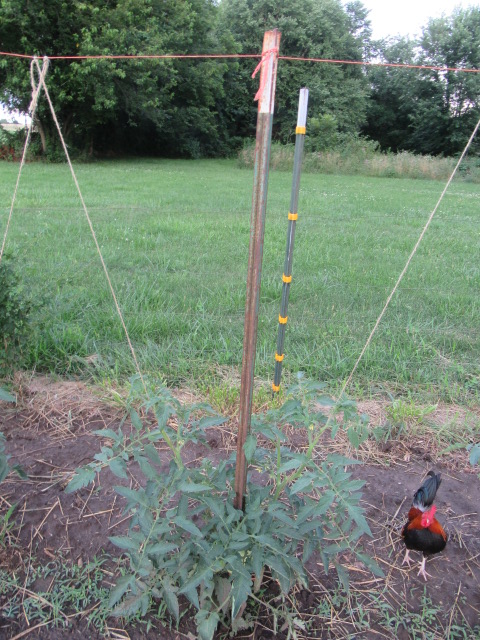
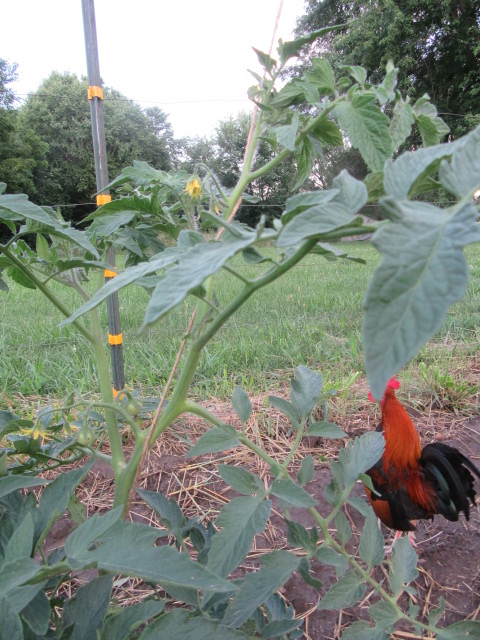
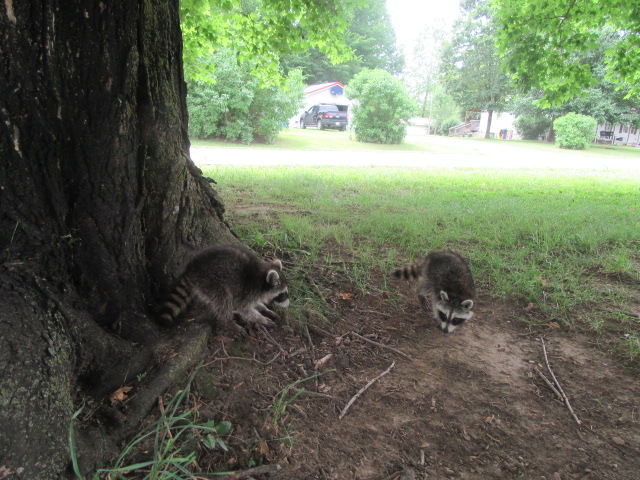
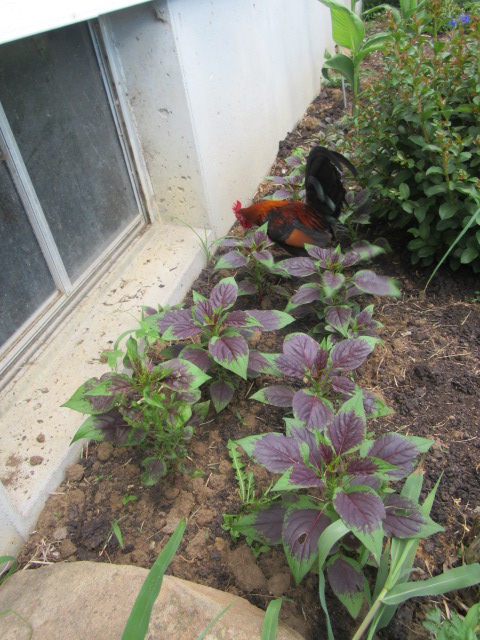
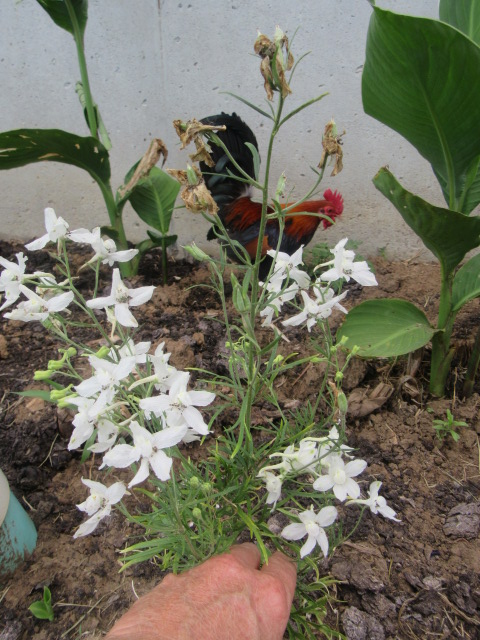
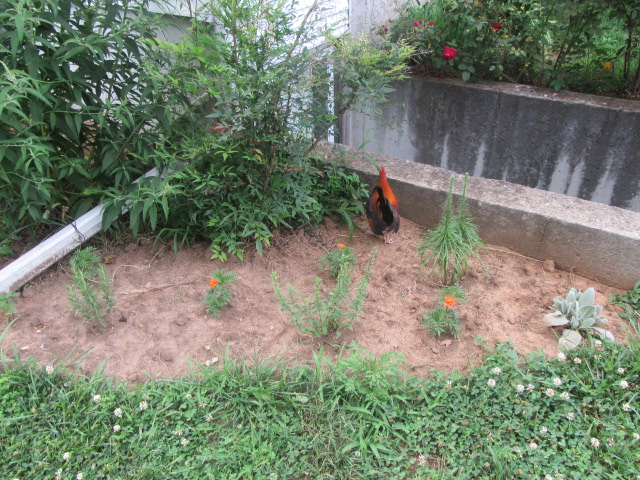
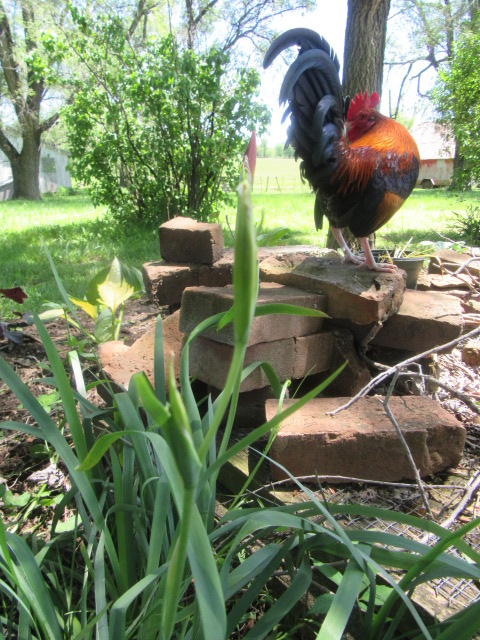
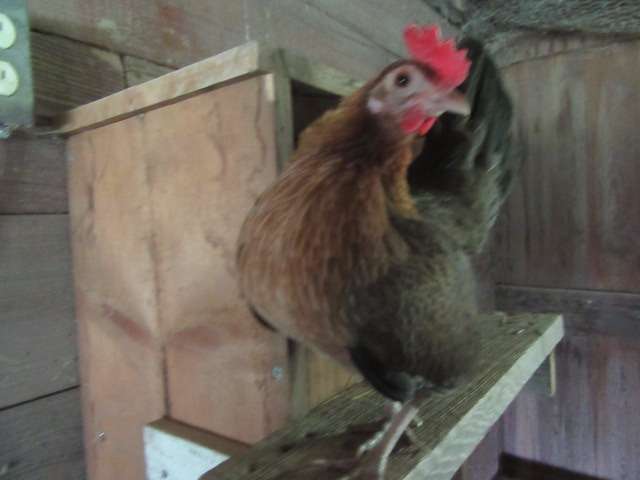
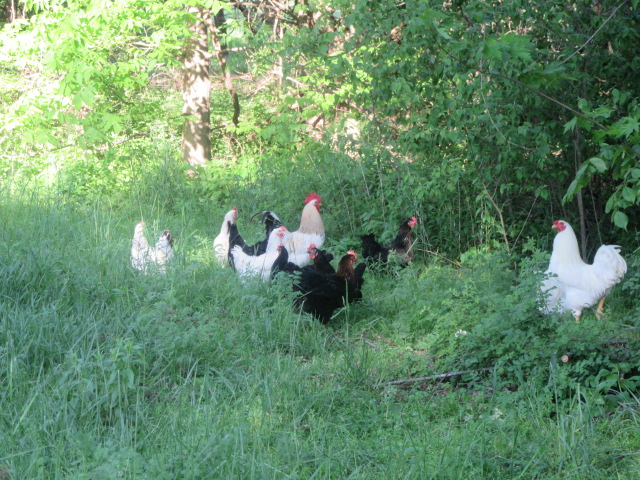
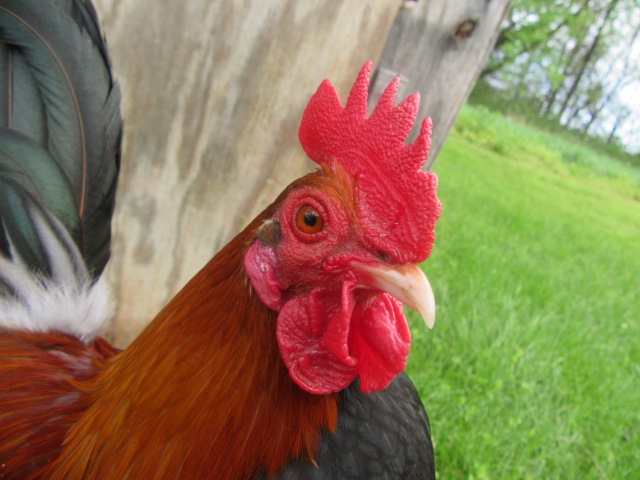
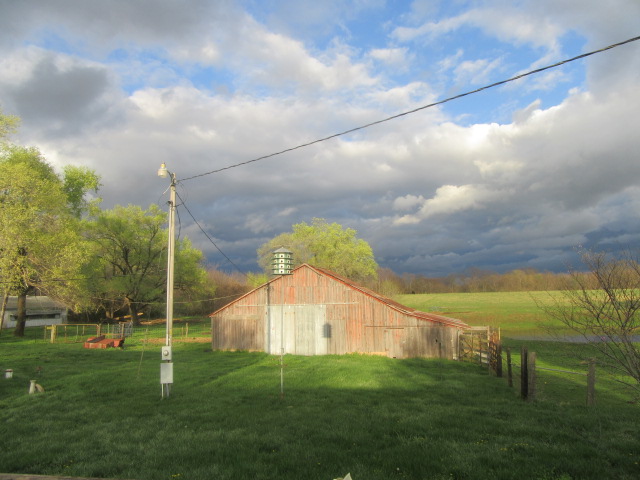
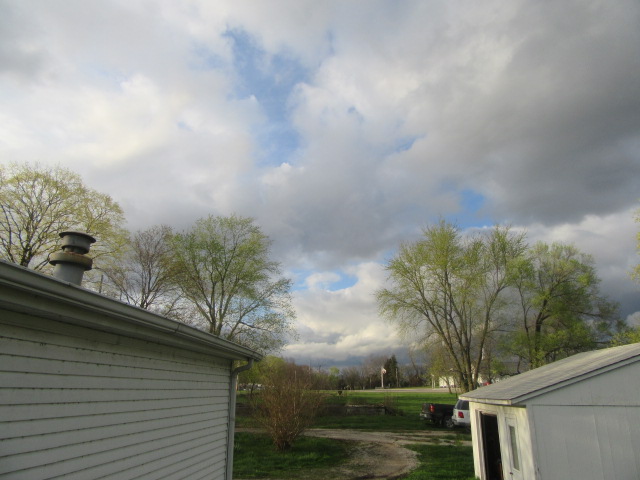
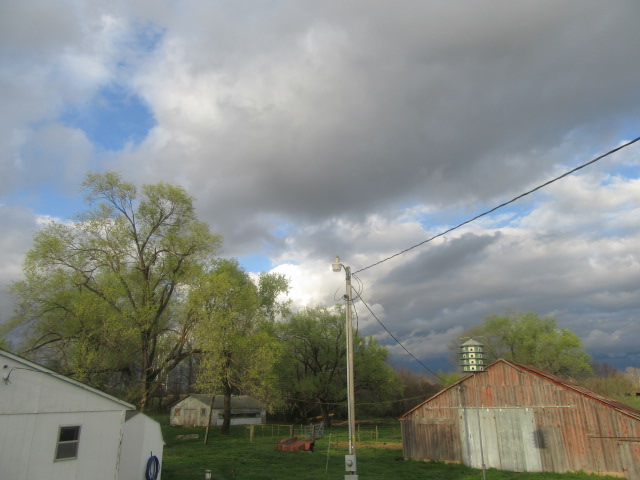
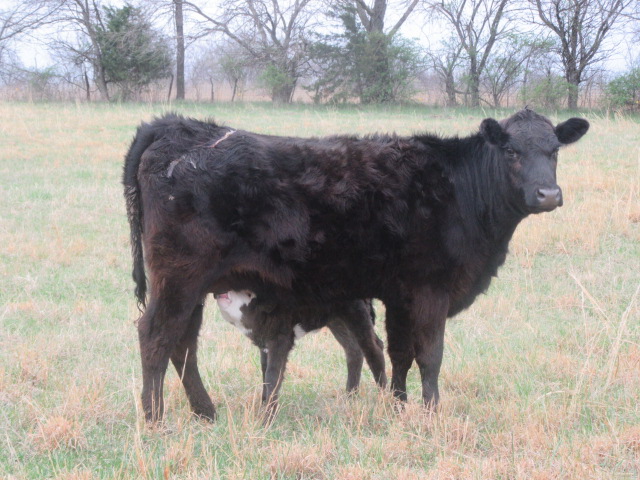
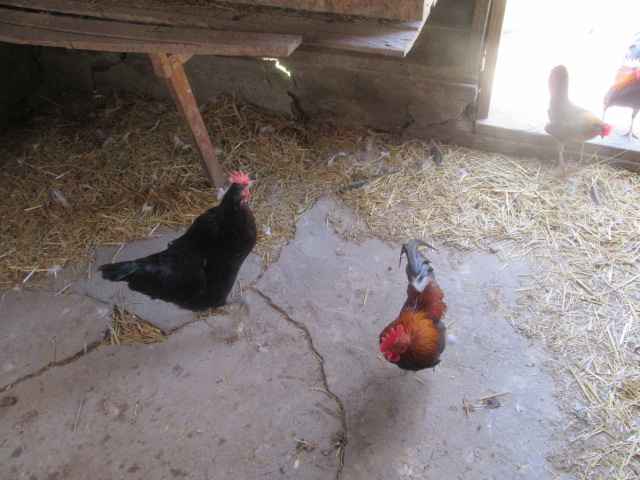
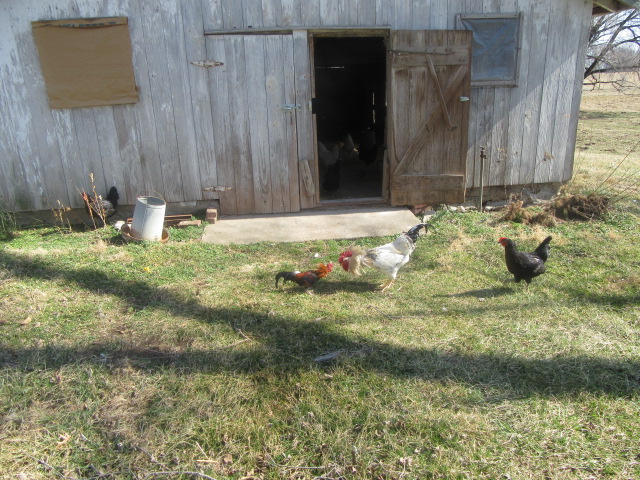
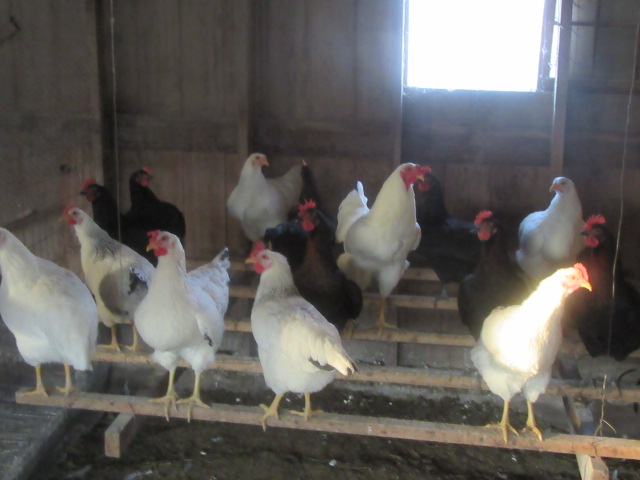
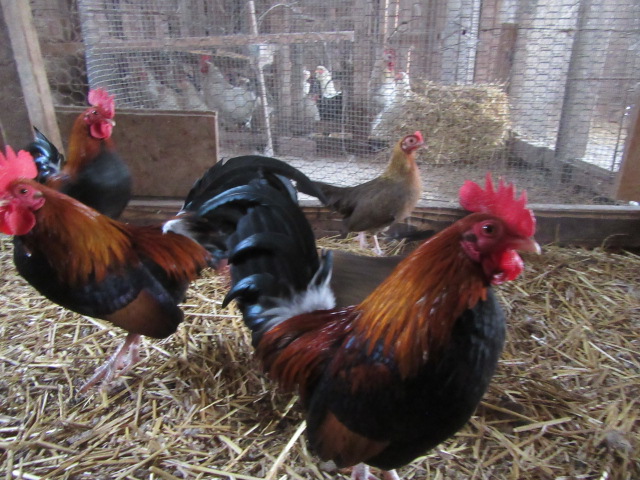
Hello Folks! I was walking around taking photos and he just stood there perfectly still watching me. He asked me what I was doing and I told him that I was taking photos for the blog. He said, “OH. I thought so.” Then he asked, “Why are you getting so close.” I told him because I was taking a closer look. Then I asked him why he was spending more time around the chicken house lately instead of on the back porch and around the house like usual. Well, it is partly my fault, as he pointed out. Several days ago I offended him. He had lost his tail feathers and I also noticed a lot more photos in his coop. I asked if something grabbed him. He said, “NO, they just fell out.” I told him he looked like a hen without his sickle feathers and that offended him… I had already sensed that I had offended him a few days ago, and I did apologize. But he still seems a little embarrassed over loosing his sickle feathers. His brother also lost his, but the bigger roosters still have theirs. The hens are also starting to loose a lot of feathers. Of course, they will grow new ones, and so will he. I reassured him he would grow new ones and that he wasn’t going bald… I did decide on a name for him, though. I think his name will be Harvey (after the hurricane). I chose that name because a few days ago dad said, “I wonder what Harvey is doing?” I asked who Harvey was, not realizing he was talking about the hurricane. I thought he had named the rooster… SO, I decided that would be a good name for him.

Dad is getting along pretty good at 86.  I took this photo after I came back inside from taking photos. I turned around and looked toward him and thought that would be a good photo. He spends his day watching TV, napping and sitting on the porch smoking his Falcon pipe. He doesn’t usually get off the porch unless we go to Wal-Mart or he needs to go to the bank twice a month. His check-up with the doctors is every six months now, which he is very glad of. When I moved back here there was a nurse practitioner at the clinic he and mom liked. Well, she started working at their other clinic out of town so they had to see the other lady. After mom passed away, dad wanted to make an appointment with the other clinic so he could see the nurse practitioner he liked. SO, I did that. She started running all these tests, sending him to the heart doctor, taking X-Rays, doing blood work and so on. He got tired of all that so he wanted to come back to the local clinic… Now all is well again. The first lady knew dad smoked a pipe, and has since he was eight. She told dad that he was healthy and he could smoke away… I thought that was a little odd for a nurse practitioner to say.

I don’t think he gets enough exercise but I am not 100% sure how to go about getting him more. He walks slow and doesn’t pick his feet up like he used to. Him walking up and down steps bothers me because he sometimes catches his heal on them. He goes slow because he knows he could fall easily. I could take him down to the park and walk around which would be a lot safer than him walking around on the farm. There are a lot of holes and low places, weeds, etc. that could make him fall. He used to mow a little and work in the garden. He hasn’t been to the garden since 2014. He used to mow part of the big yard with the riding mower but I think it started bothering his back so he stopped than a couple of years ago. He usually helps when I get the cows in the corral to sell the calves, but he didn’t the last time. I know he used to do it by himself, so I guess he thinks I should be able to as well.

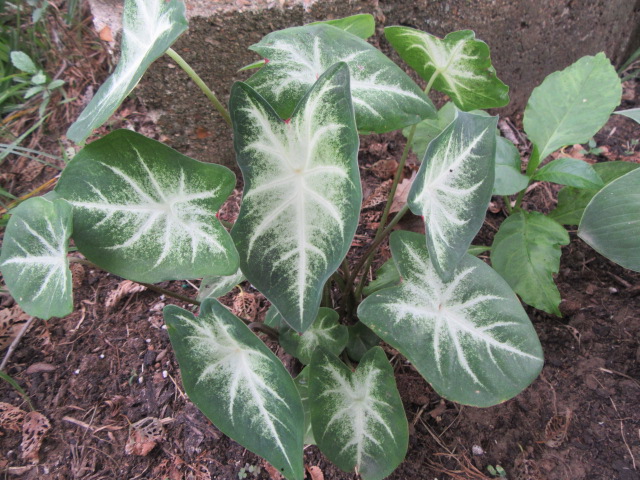
Ummm… I took close to 200 photos this afternoon but wound up with 86. I have to take two of everything in case one is not good. If I took just one and it was messed up, then there would be none of what I shot… Then there are always a few I have taken at a different angle or maybe was blurry. Anyway, I wound up with 86 after I was finished naming and numbering them. I started out taking photos of the Colocasia because I was going to write a post about the difference between Alocasia and Colocasia. Next thing I knew the idea changed somewhat.

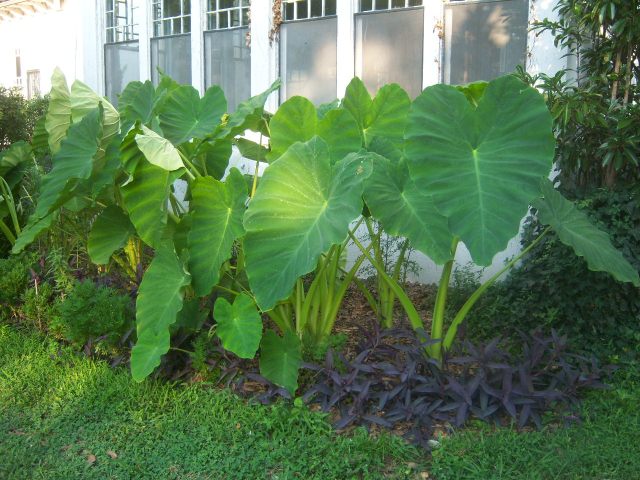
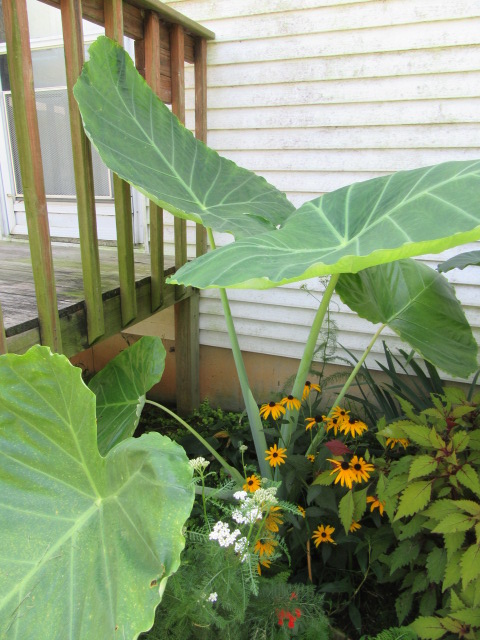
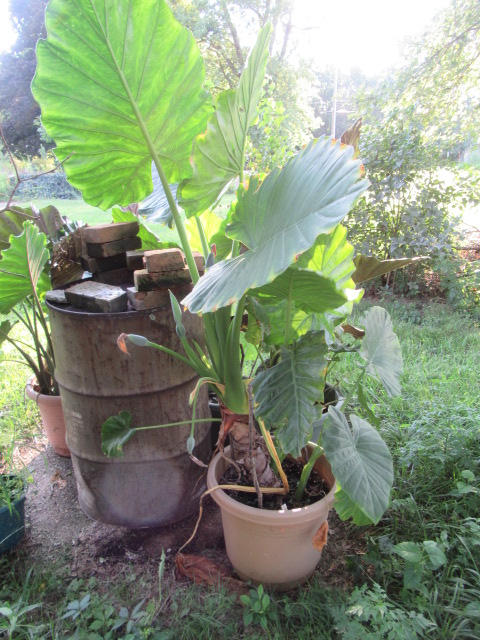
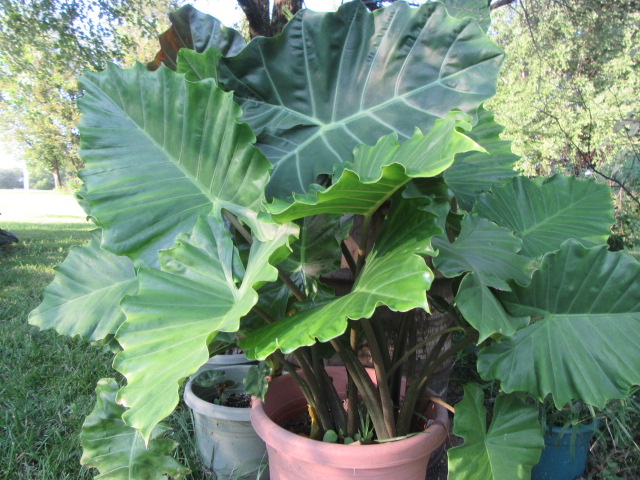
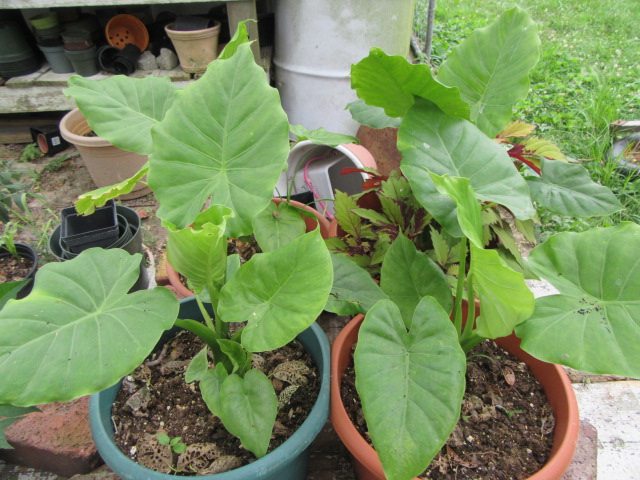
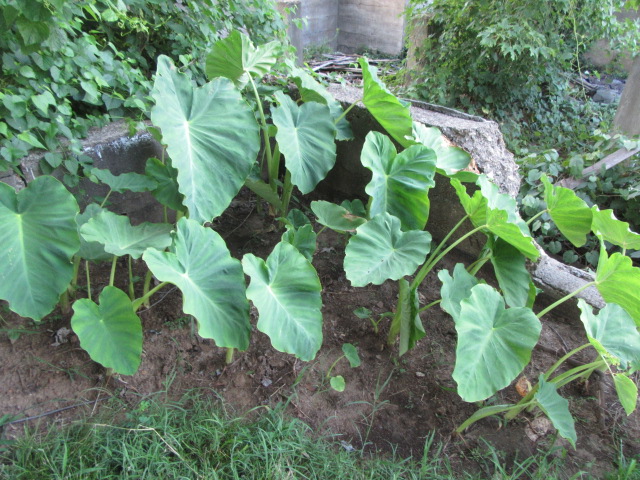
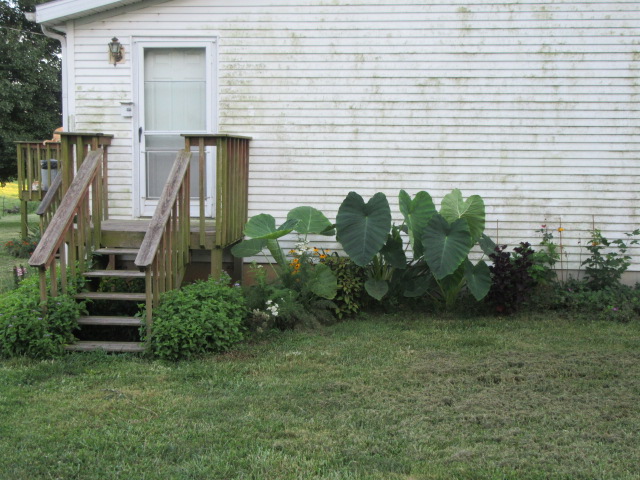
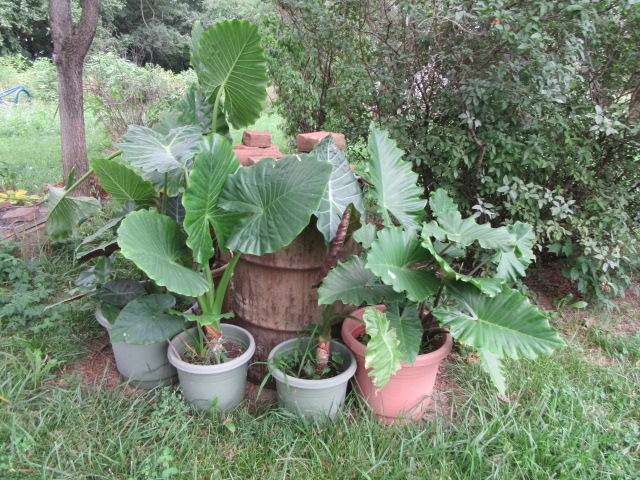
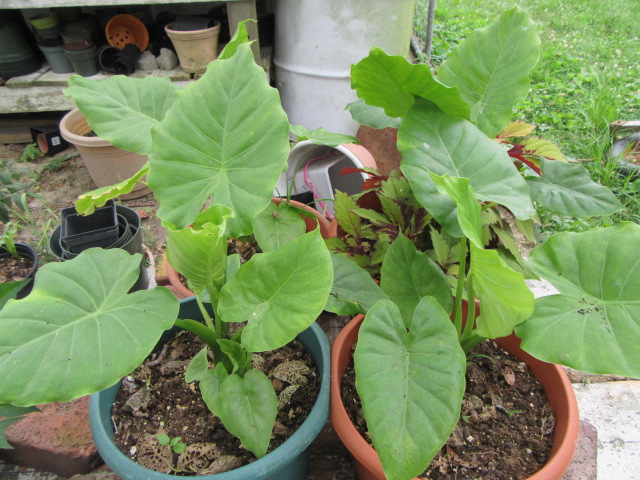
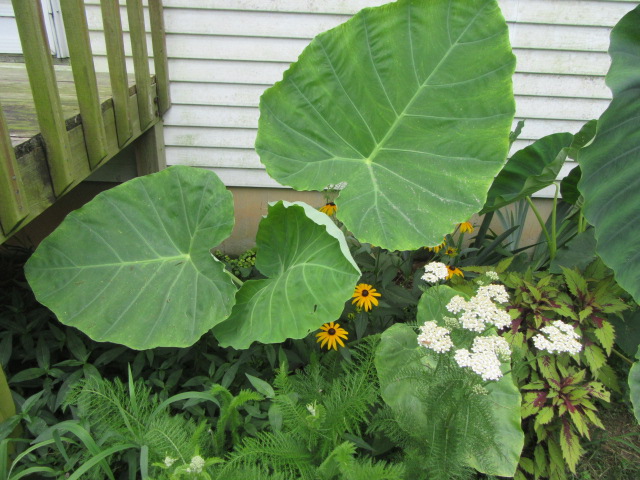
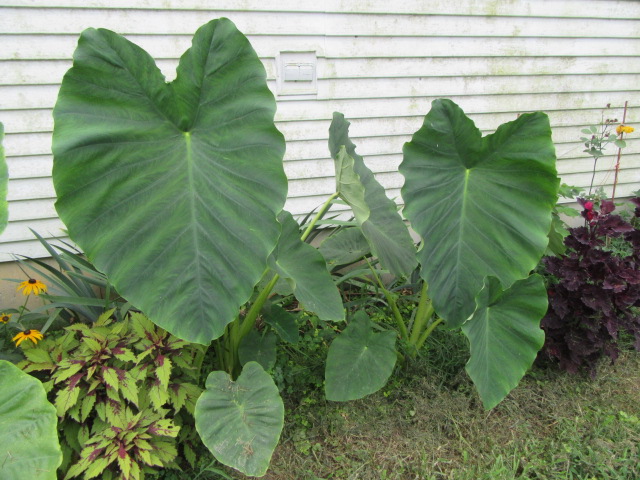
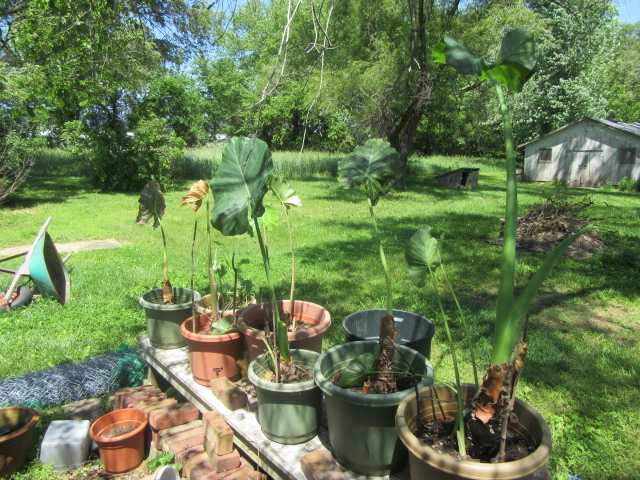
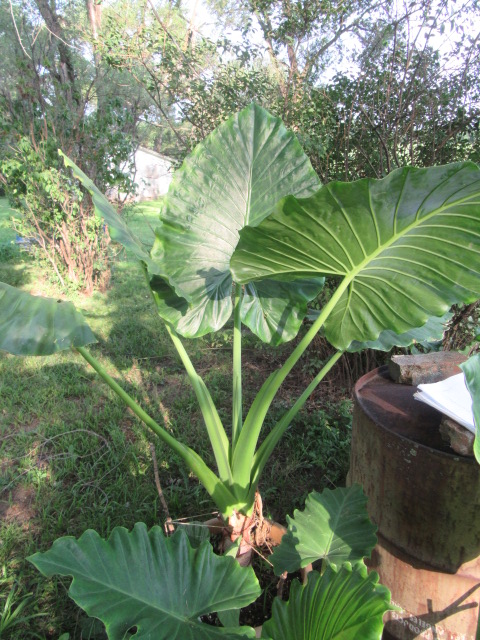
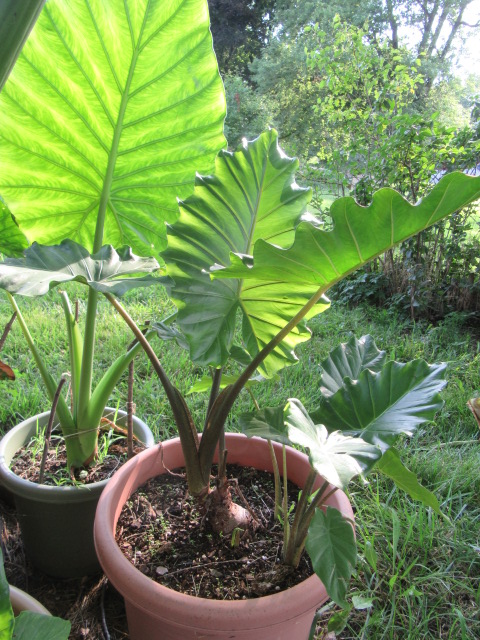
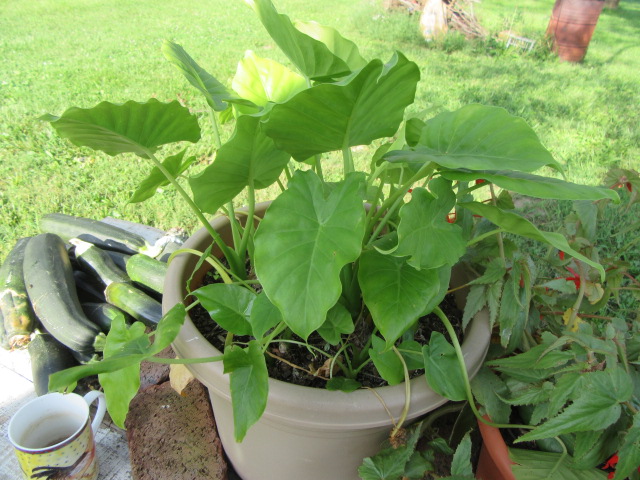
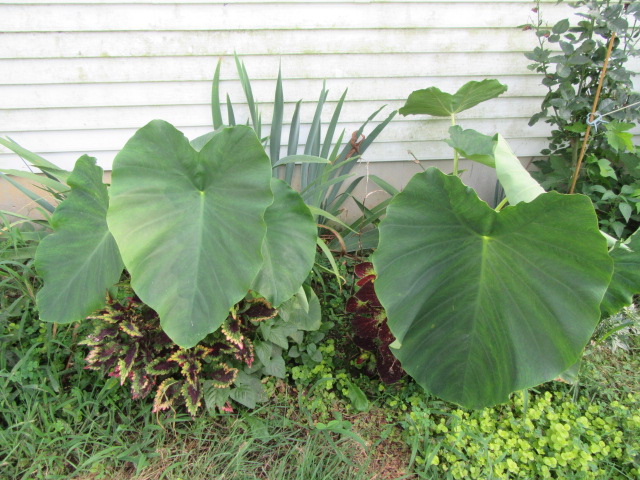
The Colocasia gigantea ‘Thailand Giant’ has really grew since I transplanted it here toward the end of May. (I bought it on May 20 and the next photo of it was May 26). At that time the two Colocasia esculenta didn’t even have leaves yet. On August 20, the ‘Thailand Giant’ and the two Colocasia esculenta were 54″ tall, all three the same height. Today the Colocasia gigantea ‘Thailand Giant’ is 64″, the Colocasia esculenta (in the center) is 72″,  and the one on the right is 61″ tall. I don’t think I have had any get this tall since I was in Mississippi… It surprised me when the Colocasia esculenta in the center grew 18″ taller in just 9 days, and actually outgrew the Colocasia gigantea.
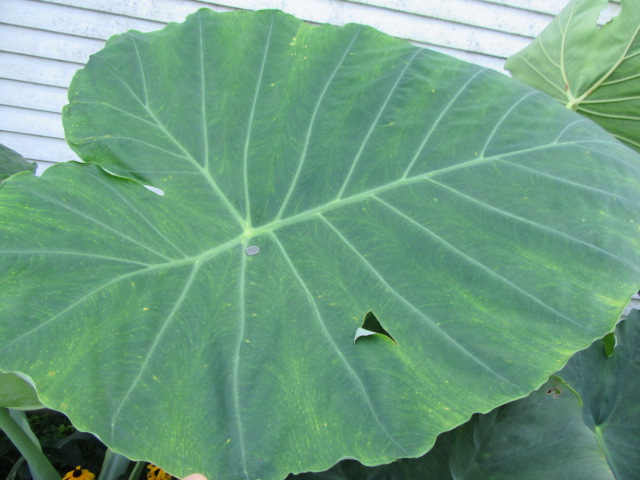
 

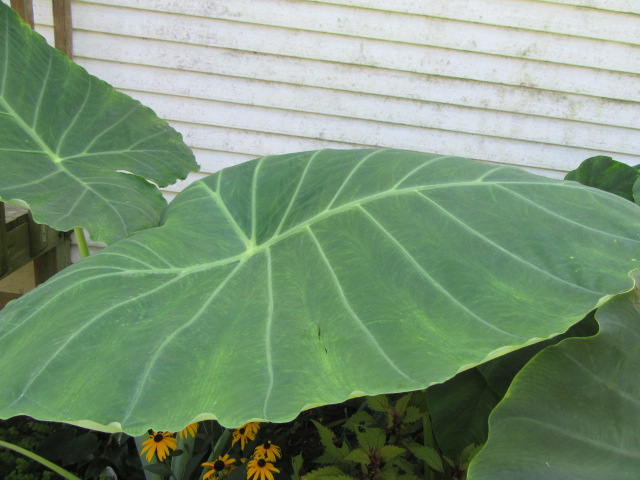
I put a quarter in the center of the leaf so you can kind of guess the size… I accidentally poked that hole in the leaf on August 20 with my pen when I was measuring it… It was 33″ wide x 42″ long then and it is still about that same size. The next one will be bigger… The largest Colocasia esculenta leaf is about that same size but it was complicated taking it’s photo without getting on a ladder because it was toward the back of the plant.


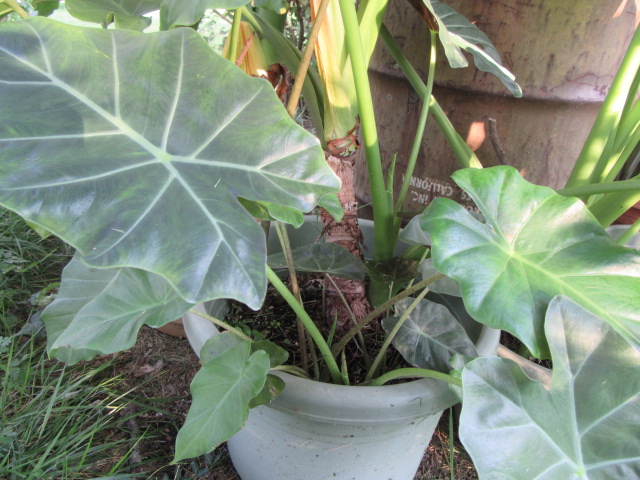
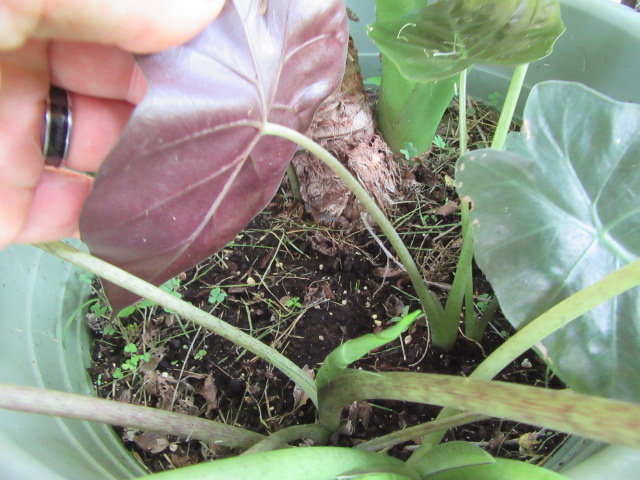
Now, my attempt in taking photos was to show some differences between Alocasia and Colocasia and why Colocasia leaves droop and Alocasia leaves point upward… But, the Colocasia gigantea leaves don’t droop like the Colocasia esculenta. In the above photo you can see the angle of the petiole where it is connected to the leaf… That shows why the Colocasia leaves droop downward.
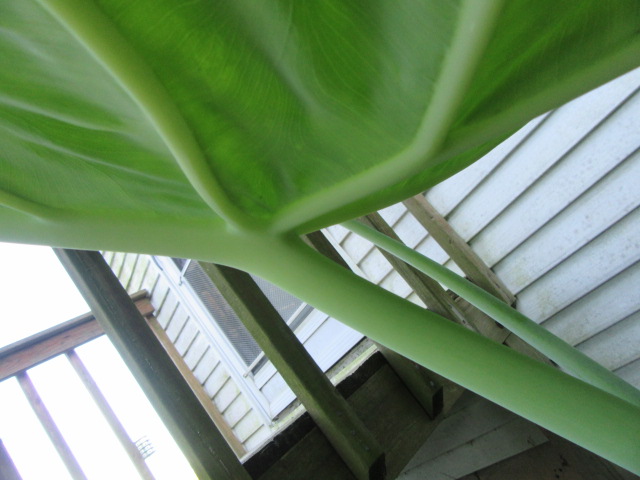
 

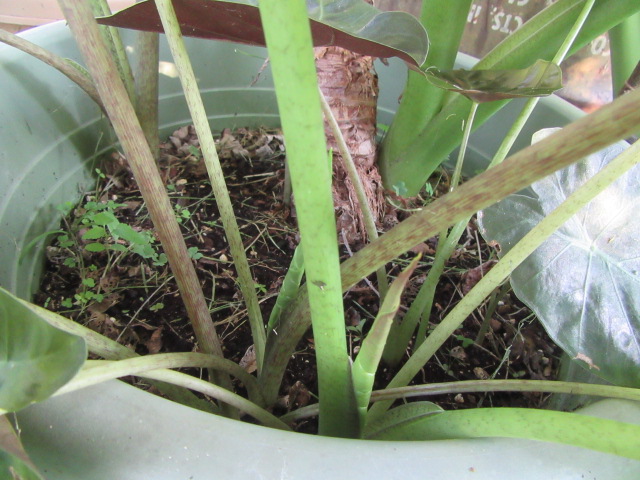
This photo shows how the petiole of the Colocasia gigantea attaches to the leaf. Then I got sidetracked and my mind began to wonder…

According to my iMac’s dictionary, the definition of wonder: a feeling of surprise mingled with admiration, caused by something beautiful, unexpected, unfamiliar, or inexplicable. The thesaurus added: “She was speechless with wonder.” 1) surprise, astonishment, stupefaction, amazement. 2) the wonders of nature: MARVEL, miracle…. etc.

You get the picture… Then I started paying closer attention and started taking more photos which completely threw me off track.


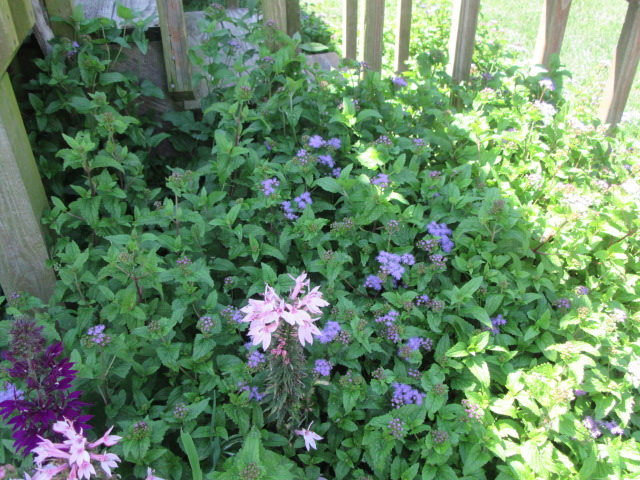
The Conoclinum coelestinum (Floss Flower, etc., etc., and so on) next to the steps is starting to strut it’s stuff now. Flowering up a storm! Every flower is a masterpiece of nature.
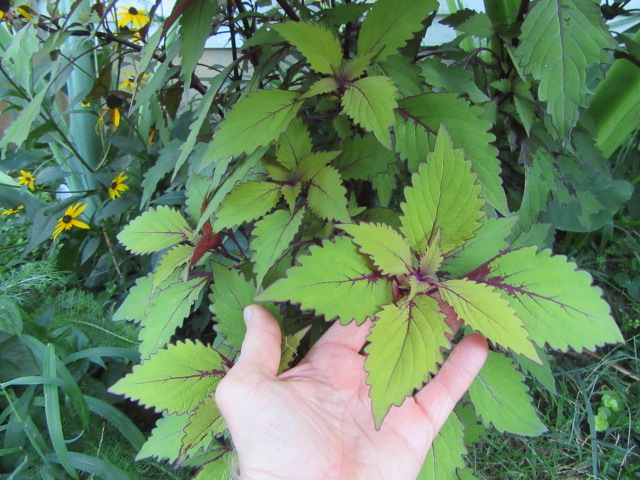
 

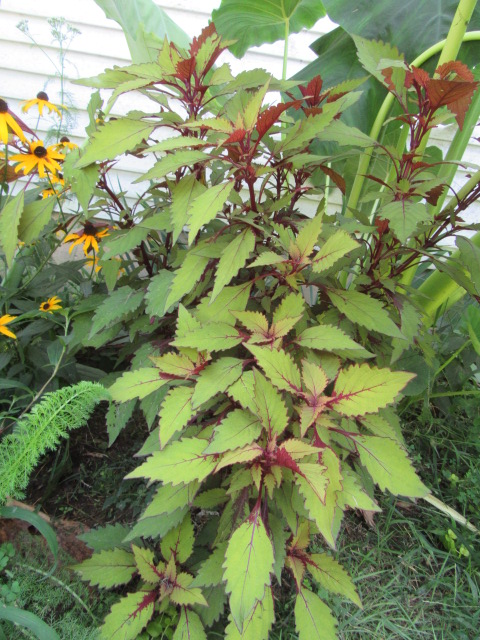
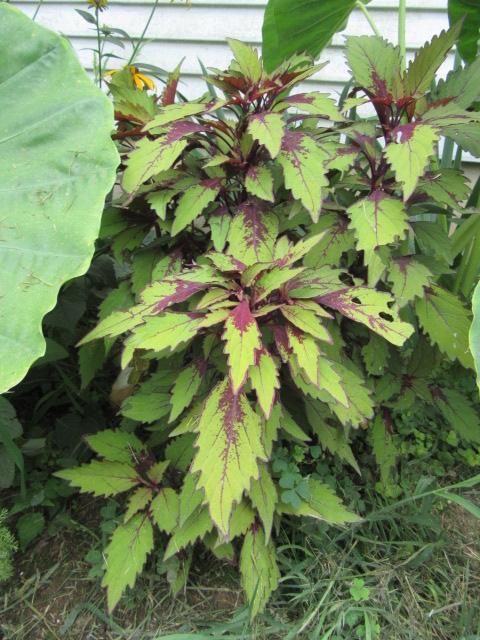
Just take a look at the Coleus ‘Spiced Curry’. Maybe I am supposed to say Plectranthus scutellarioides ‘Spiced Curry’. Well, there is STILL some controversy about that name and Coleus is so much easier. Chartreuse leaves with maroon veining. What a combination!


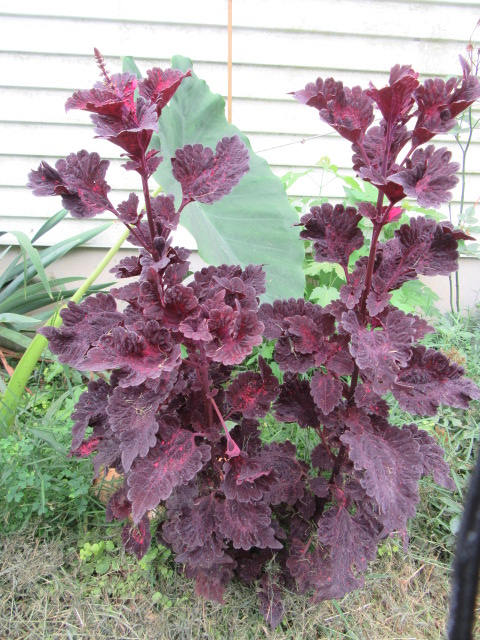
Then the leaves of the Coleus ‘Songbird’, so dark and mysterious. Take a closer look and notice the edges of the leaves… So precisely made. I would like to know why they named this dark leaved cultivar ‘Songbird’ anyway?


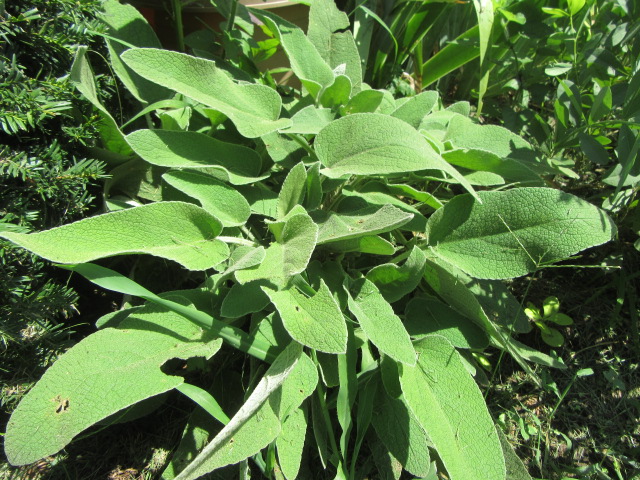
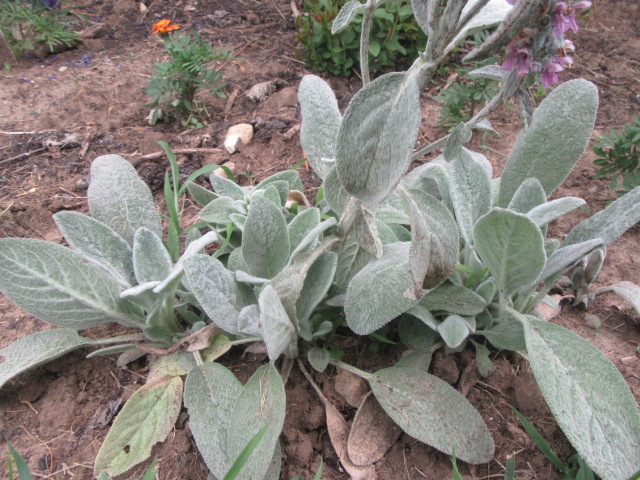
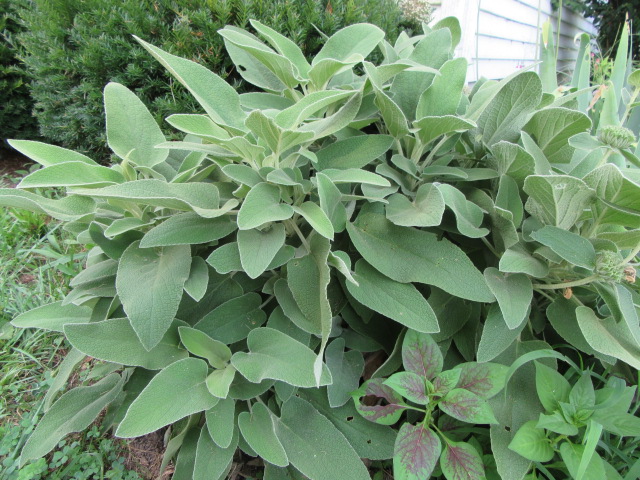
The Phlomis ‘Edward Bowles’ leaves are of a completely different texture, kind of fuzzy feeling.


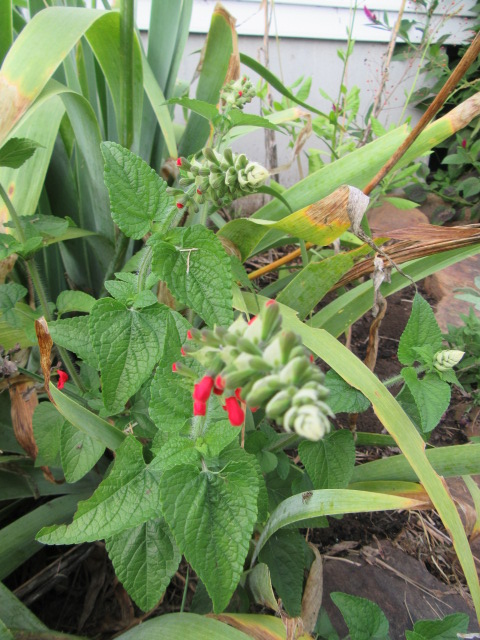
The Salvia coccinea (Scarlet Sage) are really flowering this week… Such an awesome bright red!
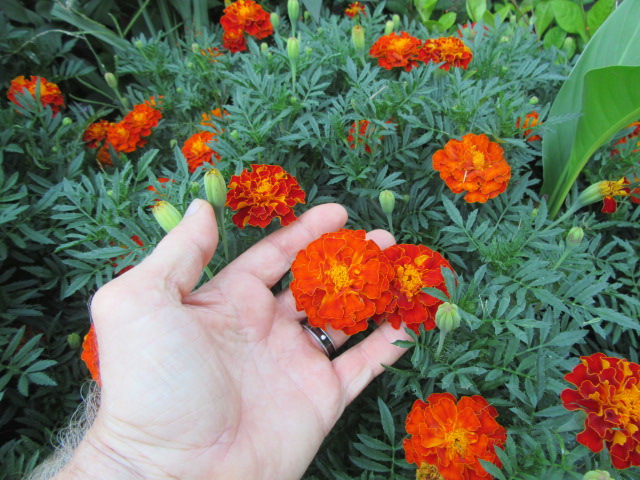
 

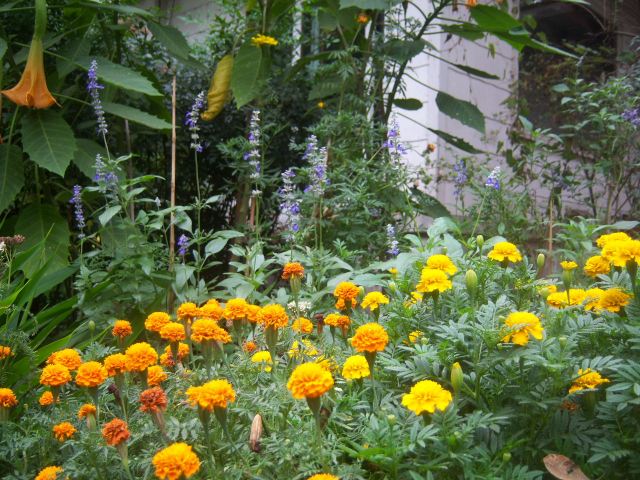
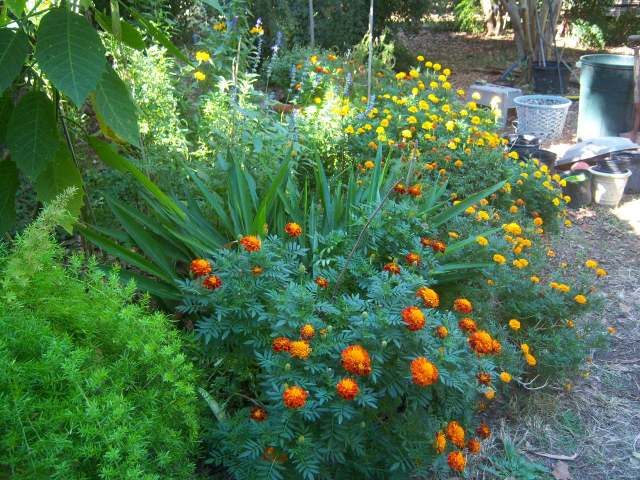
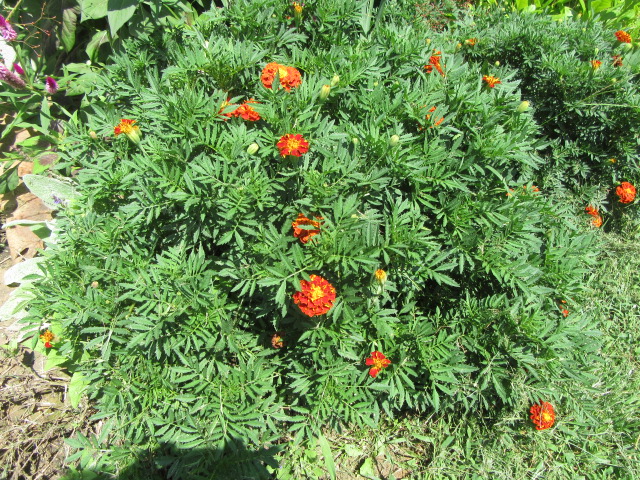
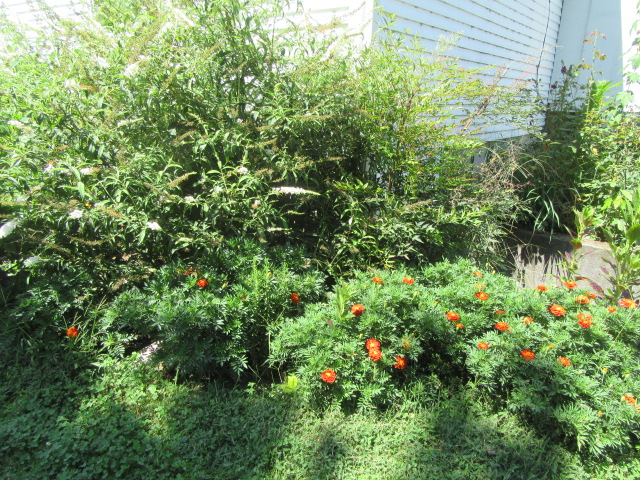
The Marigold ‘Brocade’ (Tagetes patula) flowers, each petal delicately laced with gold. I had previously thought that the redder flowers and lighter colored flowers were on different plants. However, with a closer look, most all of the plants have both shades and none of the plants have just the lighter shade.
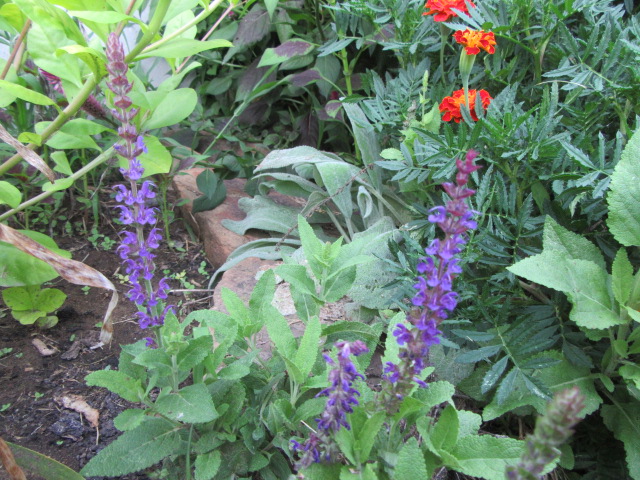
 

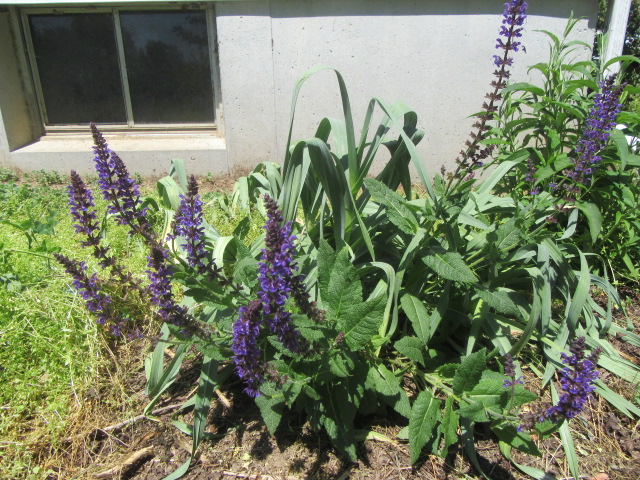
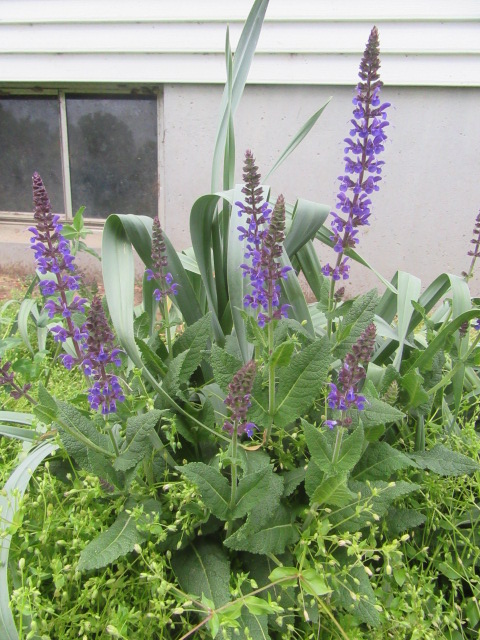
The Salvia nemorosa ‘New Dimensions Blue’ has managed to survive despite the aggressive takeover by the Marigolds.
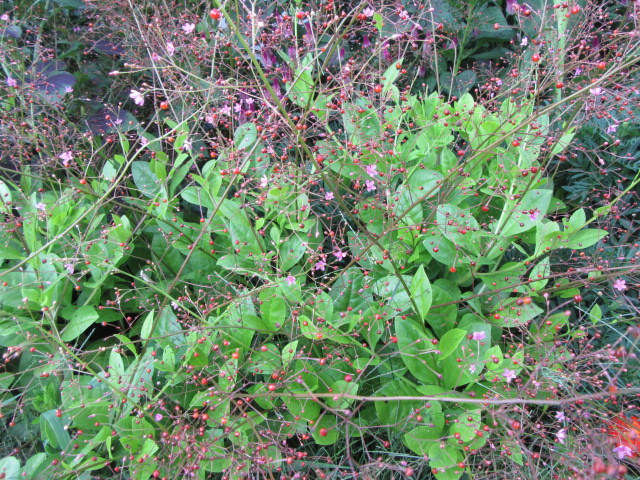
 

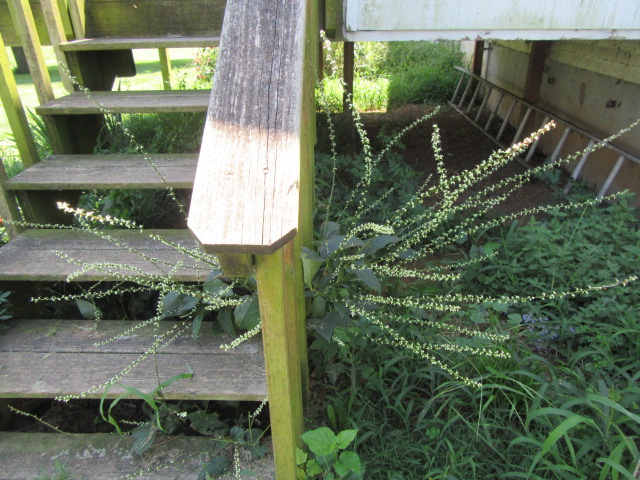
Even when you take a closer look at the Talinum paniculatum (Jewels of Opar) you see a miracle of nature. Just look at those tiny flowers and seed pods!!! Now, I am thinking I have flipped, calling this a miracle of nature! It will be no miracle when they come up by the thousands next spring… I really need to cut those stems off (how many posts have I said that in?).

Then I walked over to the other yard to take a few more photos for the “next post”. I already got sidetracked with this one… Just as well finish and just take a bunch more photos.
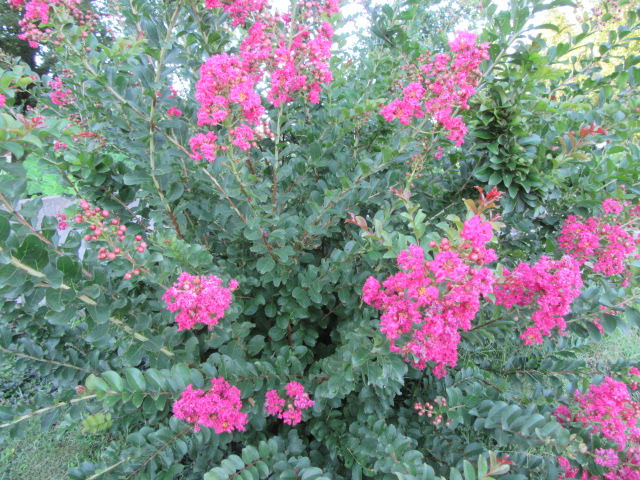
 

OK, OK! I will call it by it right name this time. The “CRAPE MYRTLE” is now flowering. I managed to keep the two on the south side of the house completely cut down this summer. They were just to much and I couldn’t do much of anything with that bed with them there. This Crap Myrtle, I mean Crape Myrtle, has been here since my grandmother planted it in the early 1960’s (maybe sooner). When I lived here in the early 1980’s there had been several along the house. They all died, or so I thought. SO, I planted a row of Red Barberry. Well after I moved away in 1987, dad didn’t like the Barberry because of the thorns and the Crape Myrtle started coming up AGAIN. SO, he removed the Barberry.  The two “MYRTLES” in the south bed came from this spot… GEEZ!!!
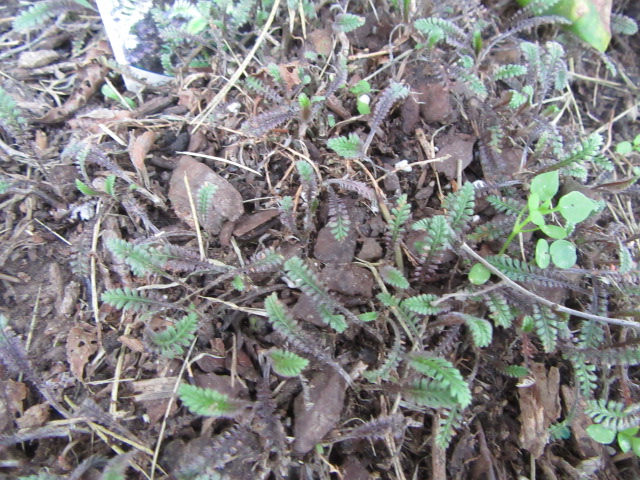
 

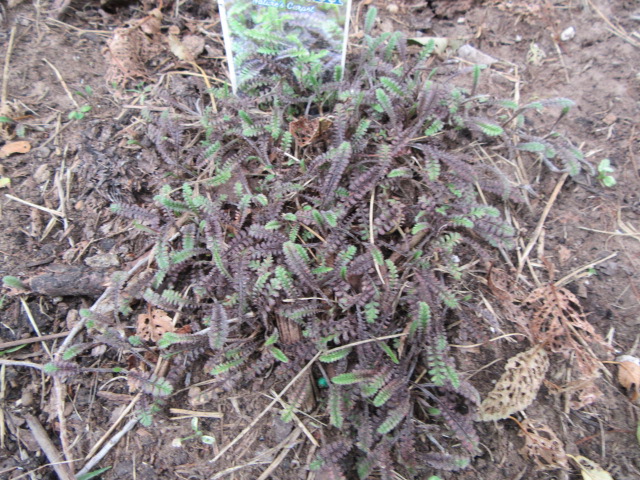
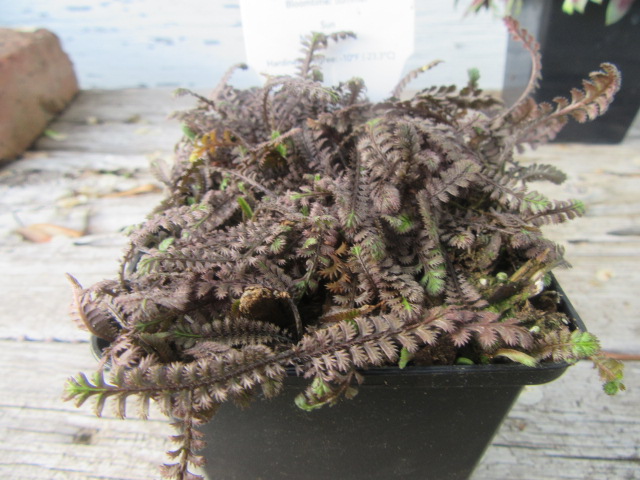
I don’t know how many of you have seen an Leptinella squalida ‘Platt’s Black’ in real life, but they are really weird (in a good way). Their ferny leaves are smaller than this photo shows. Apparently it liked this location because it is still alive and actually spreading out a little. The interesting thing is that the leaves unfurl green then turn this dark color.


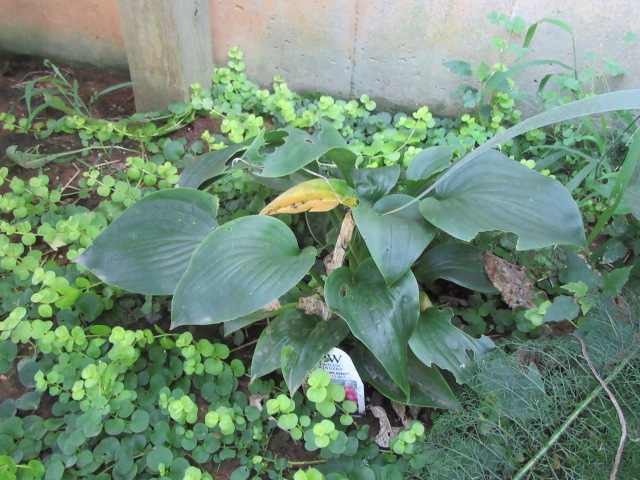
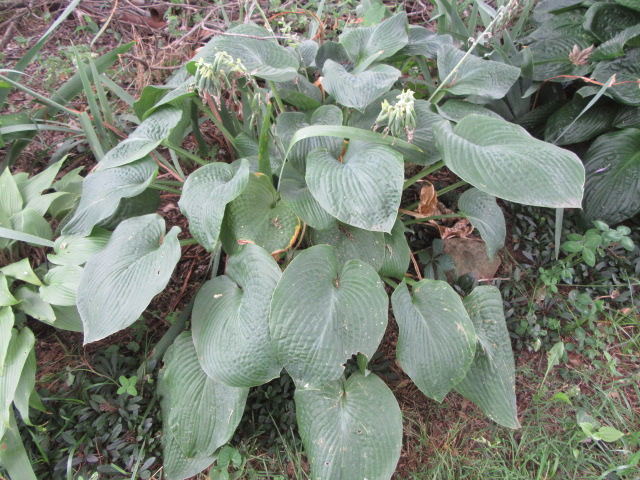
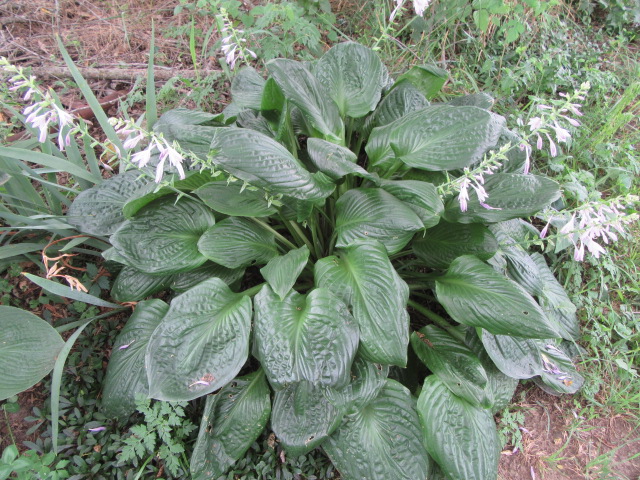
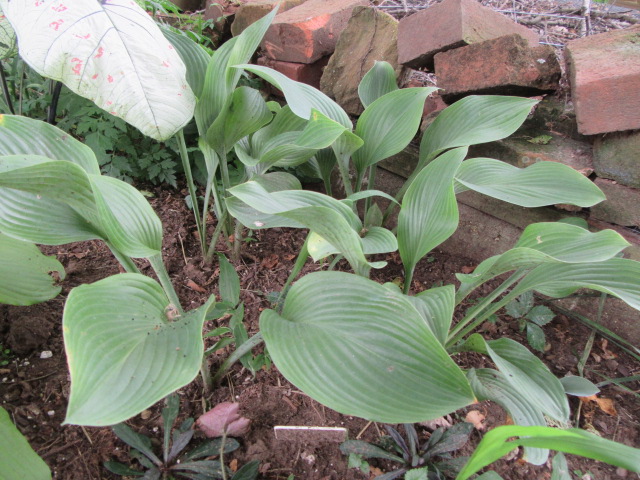
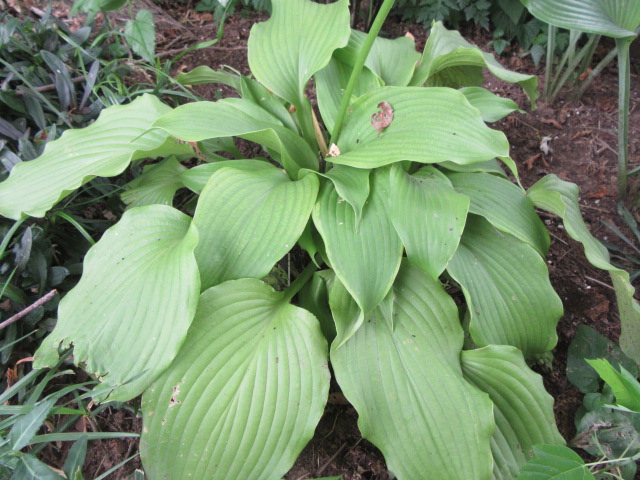
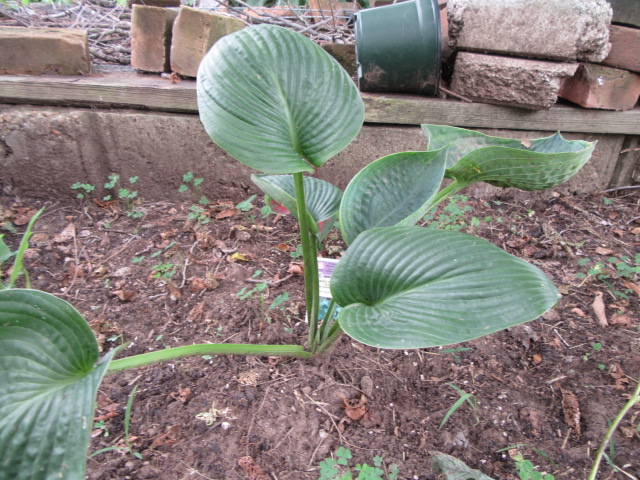
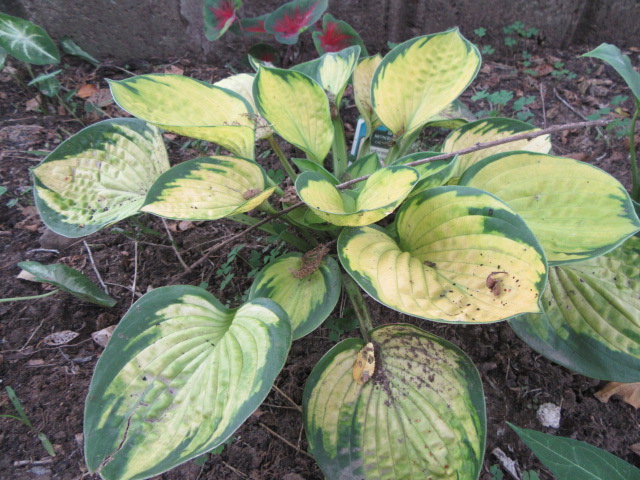
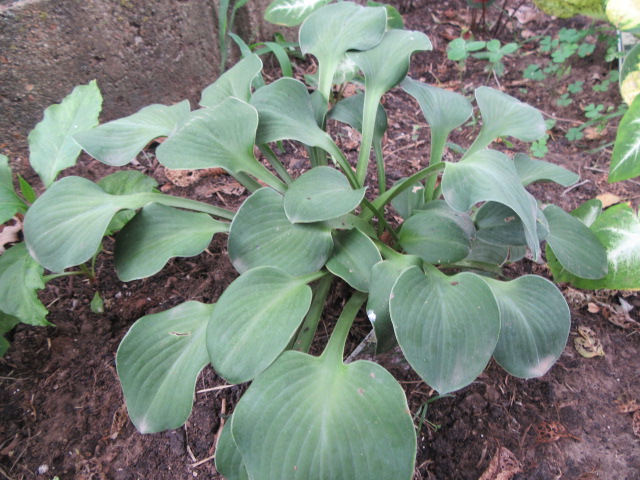
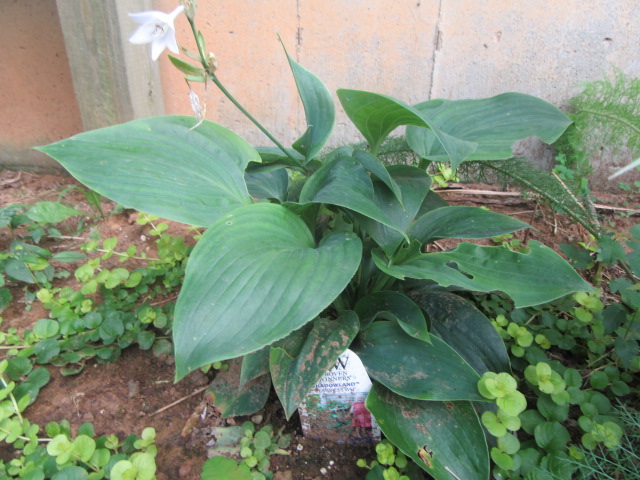
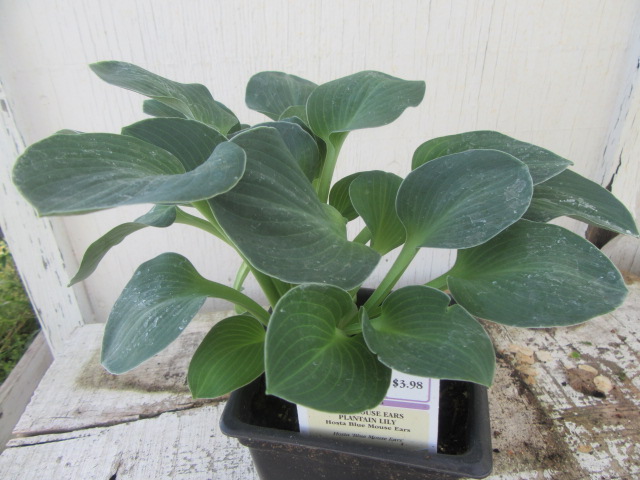
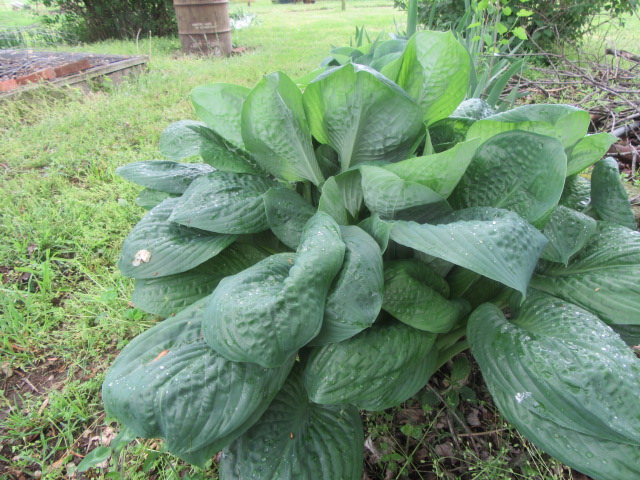
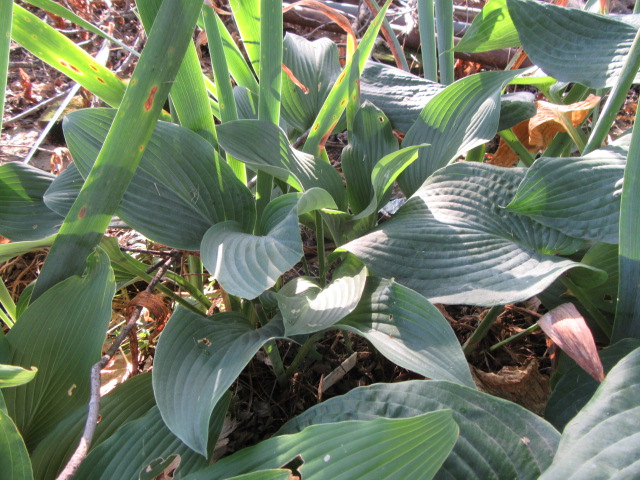
The older Hosta are doing very well this year but the newer ones are kind of sorta just sitting there. Well, considering none of the new ones are going to be HUGE plants anyway, except for ‘Empress Wu’, I guess they are doing pretty good. The miniature Hosta ‘Blue Mouse Ears’ is doing the best. Just look at those little round leaves!
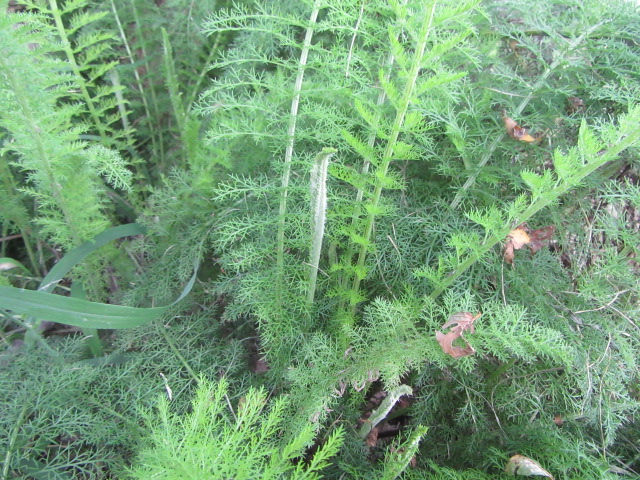
 

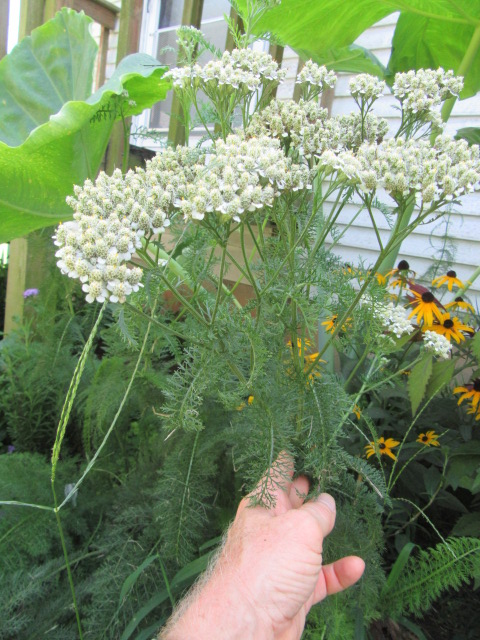
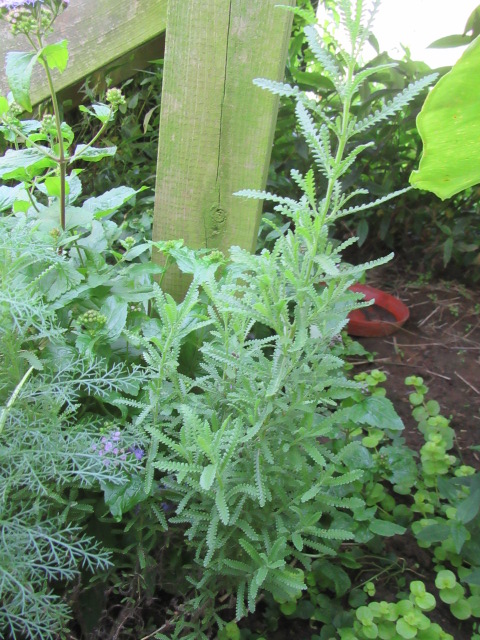
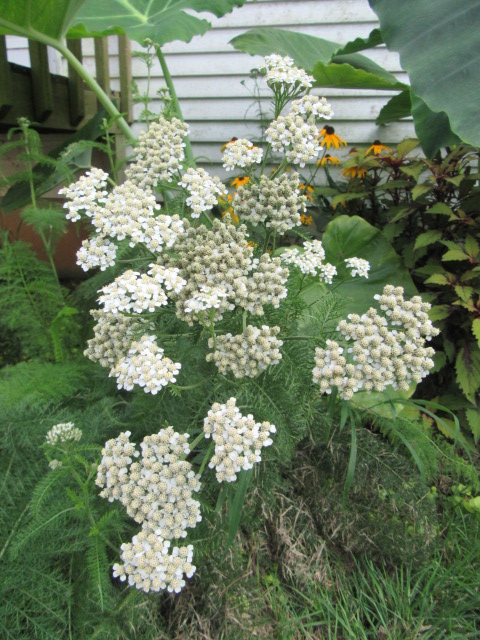
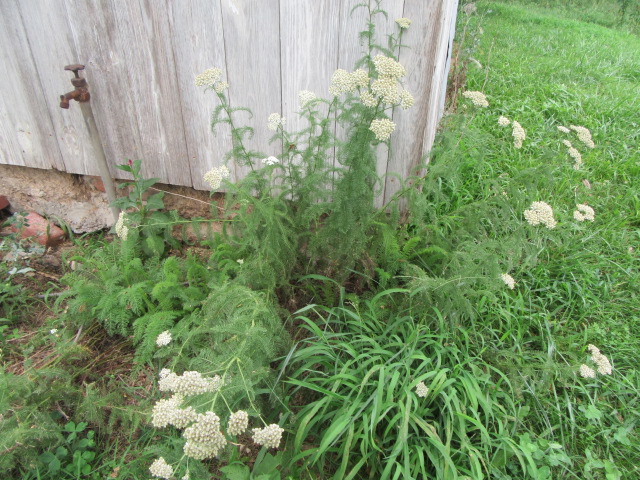
Normally I show the flowers of the Achillea millefolium, but if we take a closer look, the leaves are truly unique. Intricate, lacy, ferny… The new leaves emerge similar to a fern, in a way, and have this strange fuzzy feeling. You have to use more than your sense of sight, or small, to enjoy the AWESOMENESS of nature. Touch your plants and you can almost feel the energy and them wanting to be one with you. GEEZ! I know I have lost it now. Being one with a weed!?!?!?
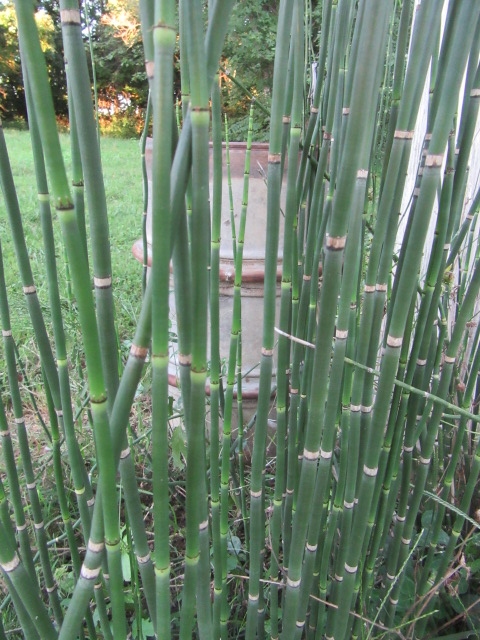
 

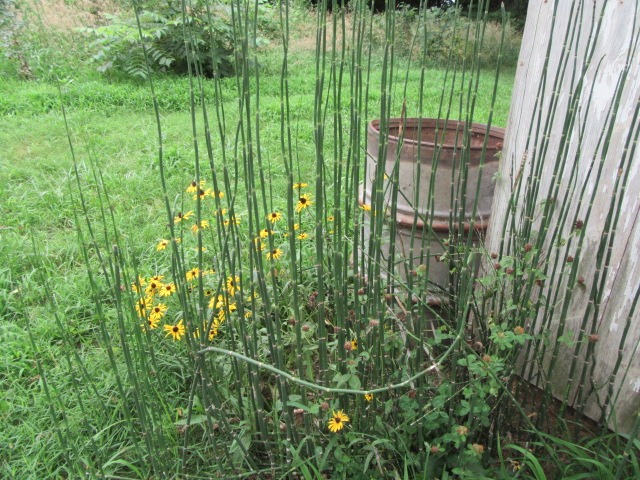
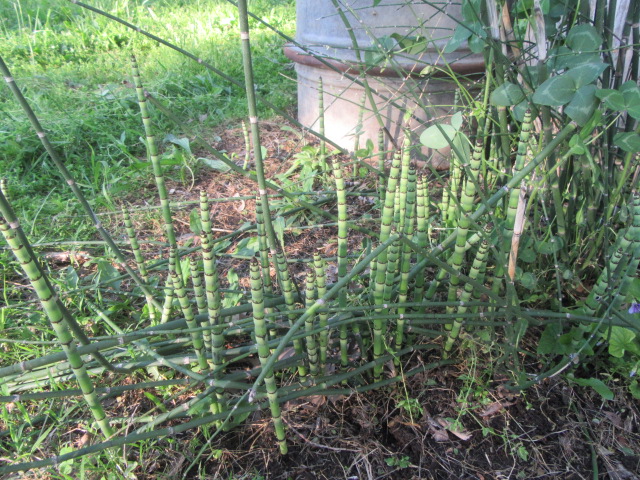
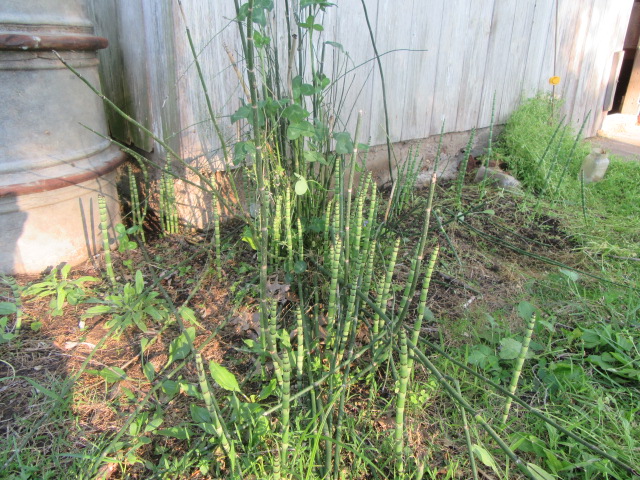
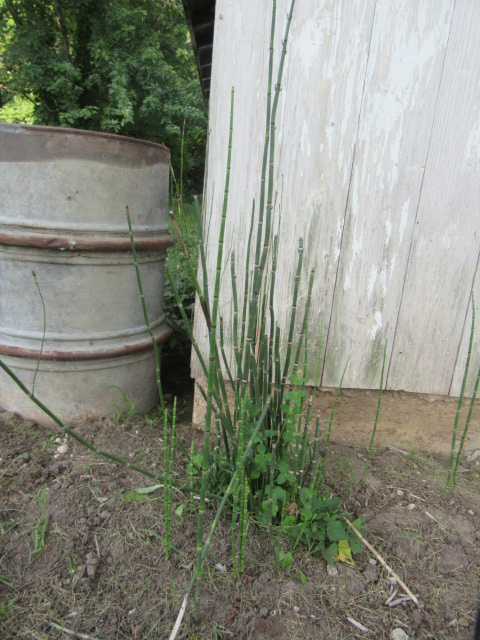
YES, folks, I will have to admit I think the Equisetum hyemale (Horsetail) is a miracle of nature. Despite is ever increasing determination to take over as much land as possible, this plant is made to survive. This plant’s ancestors were here with the dinosaurs roamed the earth, went through the ice age, flooding, intense heat from when the meteor hit the earth and killed the dinosaurs, and so on. They are still here. The Native Americans used their rough stems to wash their cooking utensils and found other uses for them. I guess they figured they must be here for something… I wonder if they also used the hollow stems as a straw?

Now lets go to the plant tables…


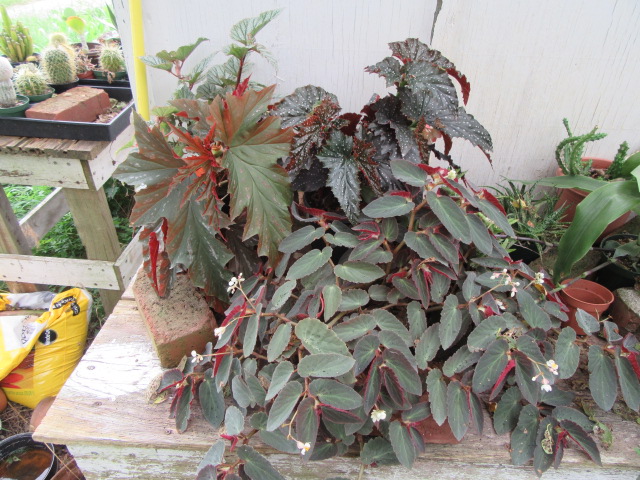
I like the dark leaves of the Begonia ‘Brazilian Lady’… But what do the undersides look like?

The leaves of this Begonia have this kind of fuzz growing out of them. What do you know? Begonias have whiskers! The underside of the Begonia ‘Brazilian Lady’ leaves are a deep maroon. Isn’t it neat how the petiole attaches to the leaves and then the veins go out from it? Kind of like blood veins but they also add support.
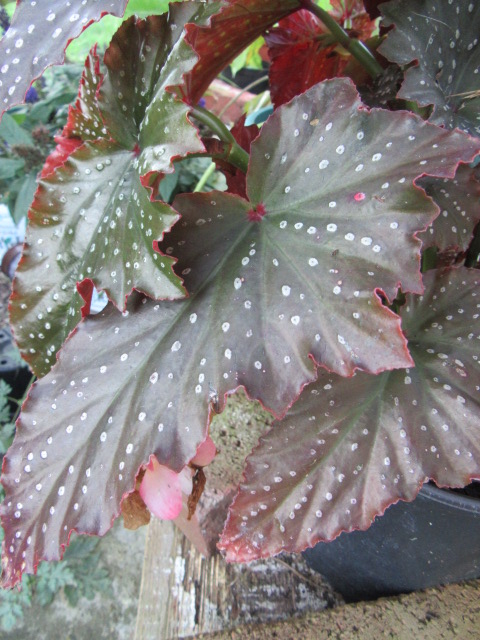
 

These are the leaves of the very beautiful Begonia ‘Fannie Moser’. Dark maroony green leaves with silver spots! My iMac is learning all kinds of new words!
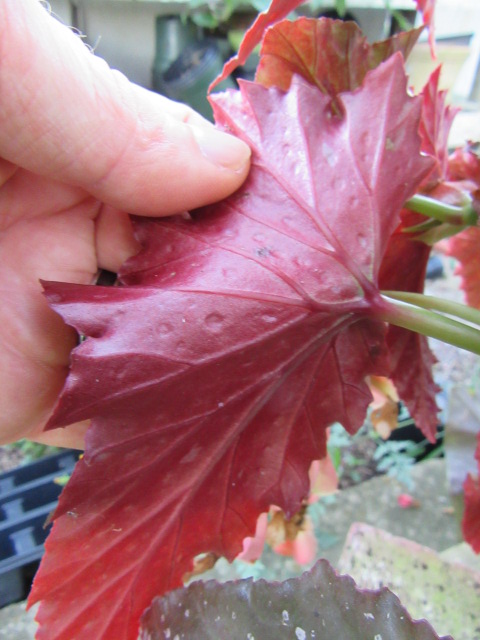
“WHOA!”, she said! I almost got slapped as I flipped over her leaf! I just wanted to see what the underside looked like… And WHAT IS THAT?!?! Dimples? ‘Fannie Moser’ has DIMPLES! Just look at the strong petiole!!! AMAZING! Now she is blushing….

 

Begonia ‘Frosty’ is a really nice looking plant for sure. Just look at those AWESOME silvery leaves with the dark green veins… Seems to be a thin maroon margin around each leaf, too. Then I asked, “Can I see your underside?”

WOW!!!! Would you look at that! Nice legs, nice petiole, dark veins running through the leaves. Looks like a true wonder of nature with the sun shining through the leaf. Notice how the end of the veins merge with the edge of the leaf to form the maroon margin? But wait a minute! The veins on top were dark green and they are maroon underneath!  Like a friend of mine always said, “How cool is that?”


Begonia ‘Sophia’ is smiling at me, kind of blushing, waiting to see what I will do with her. GEEZ!!! I was almost afraid to ask to see her underside.. Nice dark green leaves with silver splotches… I think she needs to learn how to apply her make up from ‘Fannie”.

OH MY GOODNESS!!! I didn’t even have to ask because ‘Sophia’ isn’t shy at all! Would you just look at that! A photo is worth 1,000 words and I am speechless! Time to move on from the Begonia girls…


Oxalis triangularis subsp. papilionacea (Wood Sorrel, False Shamrock)… I was really fortunate to have this plant come along when I bought my Amorphophallus a few weeks ago. I had one in Mississippi, actually more than one, but the leaves were smaller. Back then, in 2012, it was Oxalis regnellii var. triangularis… When The Plant List was updated in 2013, Oxalis regnellii became a synonym of Oxalis triangularis… Probably, when I do research for this plants own page, I will discover that was a name it had long before 2013.
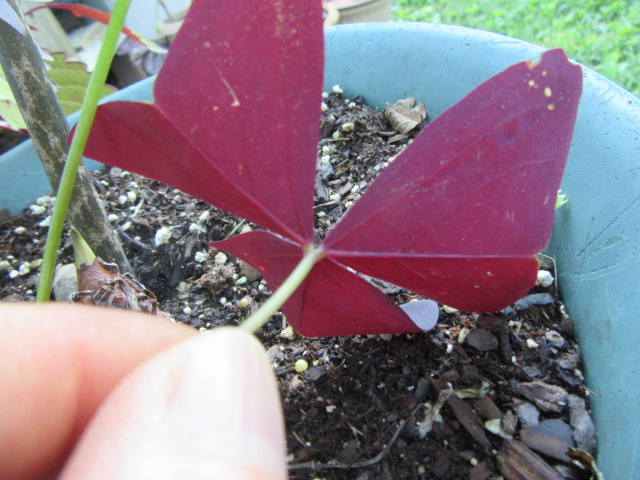
Hmmm… The underside is much different than the top side. The top side is darker purple with a lighter purple in the middle. The underside is more of a maroon or maybe the same color as the center on the top side. The petiole is a completely different color!
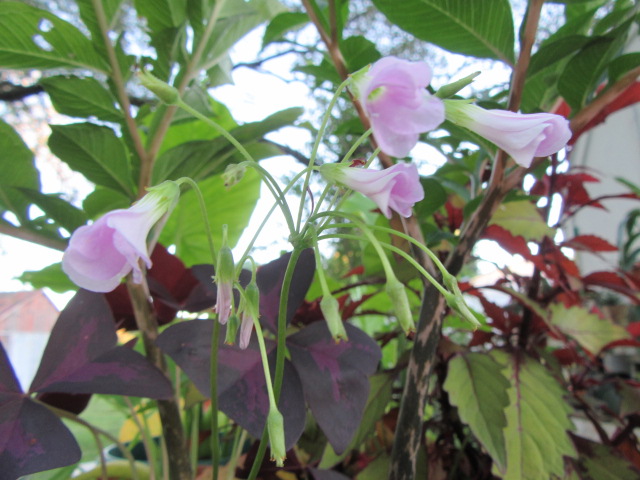
The flowers close for the evening! I never realized that until this afternoon when I took a closer look at this amazing Wood Sorrel! Believe it or not, these plants have bulbs and this plant is also edible…


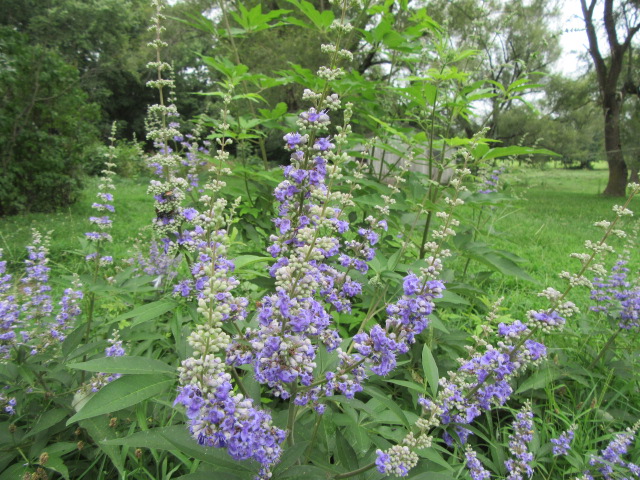
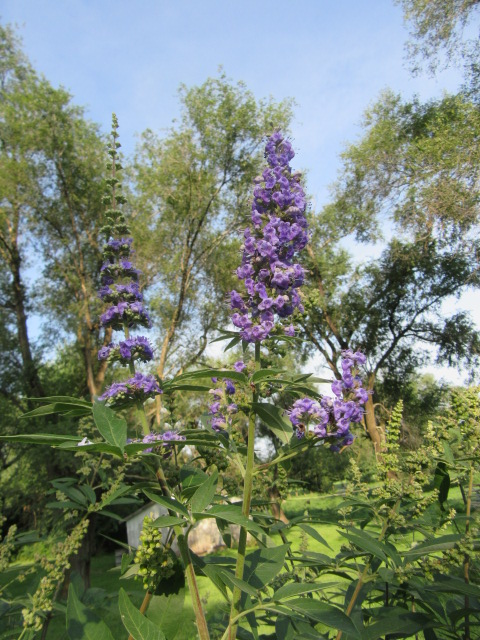
Now, this is interesting… The stems and leaves of the Buddleja davidii ‘Pugster Blue’ seem pretty simple. But, this plant knows it’s heritage, you can just see it when you really get to know the Buddleja. Although the ‘Pugster Blue’ will only (hopefully) only grow to 24″ tall and wide, he knows he has relatives that are trees growing to over 30′ tall. He has lots of relatives with family members on all four continents. There are over 200 species and naturally occurring hybrids in the genus Buddleja!


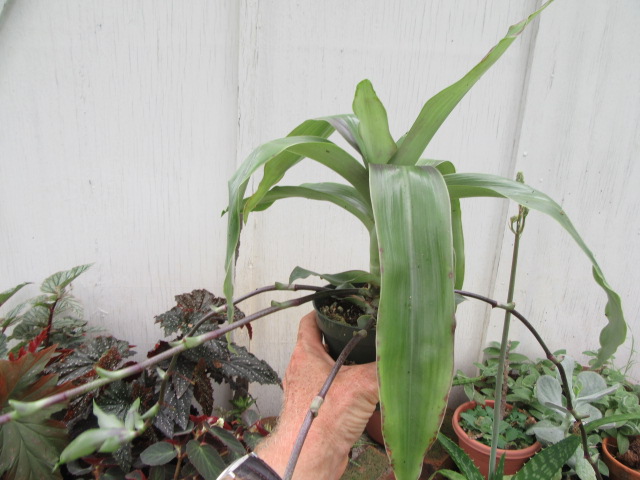
WHAT IS THIS? Is Callisia fragrans is going MAD?!?! I didn’t realize this was happening until I took a closer look. She isn’t going mad, she is happy! Happy to be alive, free and feeling one with her surroundings. This Bromeliad is truly something else!
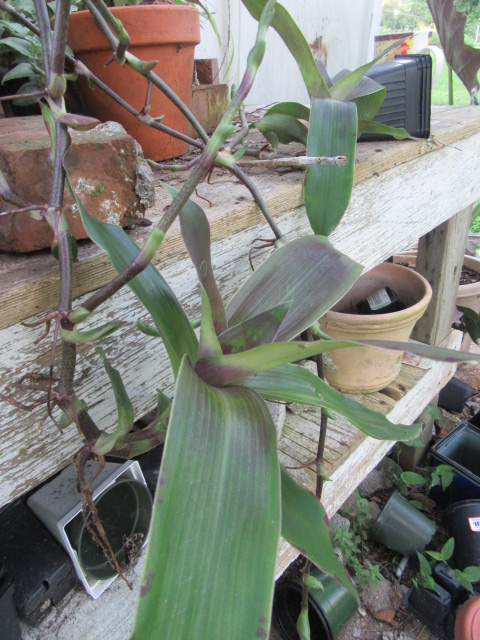
HA!!! Just imagine what this plant would do if it were in the ground or in sphagnum moss in the fork of a tree! A few weeks ago I turned the pot around and this plantlet (is that the right word) on the end had roots growing under a brick. It’s like where the joints touch something it signals to grow roots. Talk about a survivor!


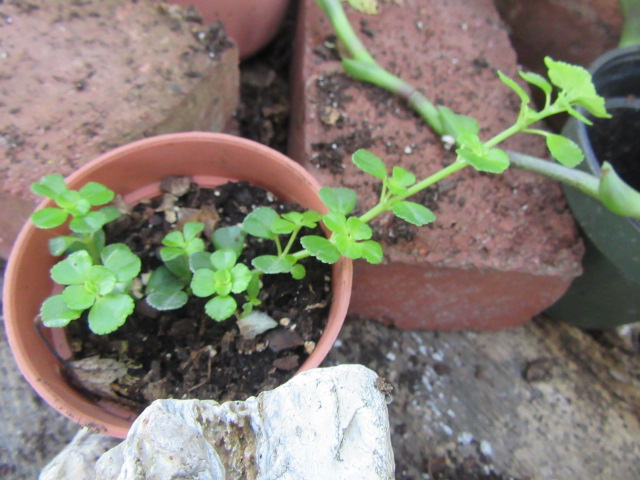
The Cotyledon ‘Silver Storm’ has done very well and has even grown a few sprouts. Lets take a closer look?
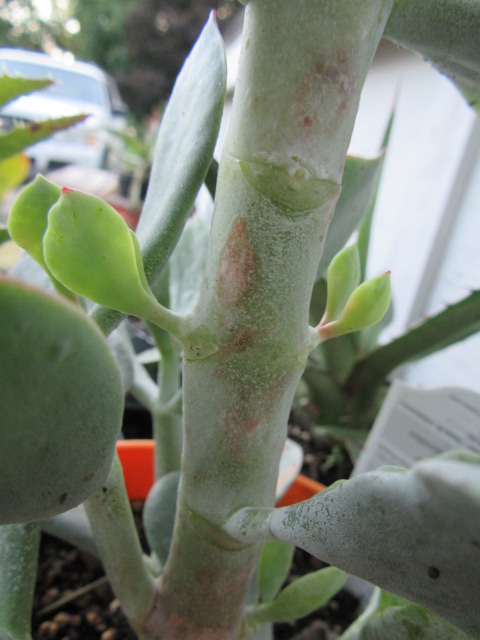
It is also growing branches… I haven’t done any research on the Cotyledon yet, but I am sure I may find out these aren’t stems, branches and sprouts. There will be some technical botanical language… But for now, I will just redneck it and call them sprouts and branches.

Hmmm… There is a voice inside me that is asking what a redneck is. Seriously, I have no clue what to say. Actually, what I think a redneck is doesn’t even apply to me. I just checked out my iMac’s definition of a redneck. NO, well, maybe sometimes in a way, partly correct… It says that a redneck is a working-class white person, especially a politically reactionary one from a rural area… As an example, it says “rednecks in the high, cheap seats stomped their feet and hooted…” I am scratching my head at that one and my inner voice has a big question mark…

MOVING RIGHT ALONG!


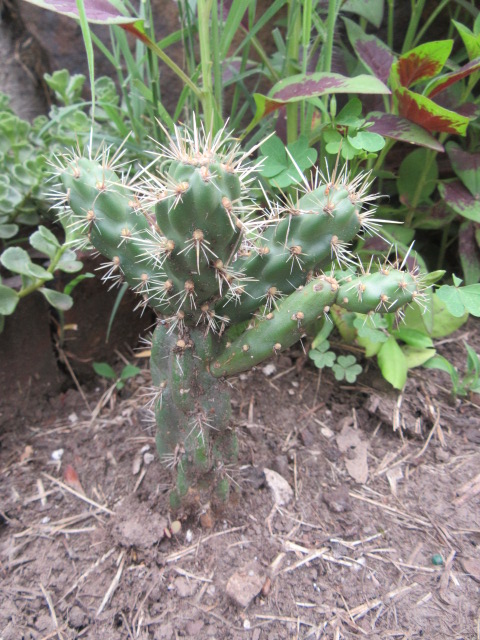
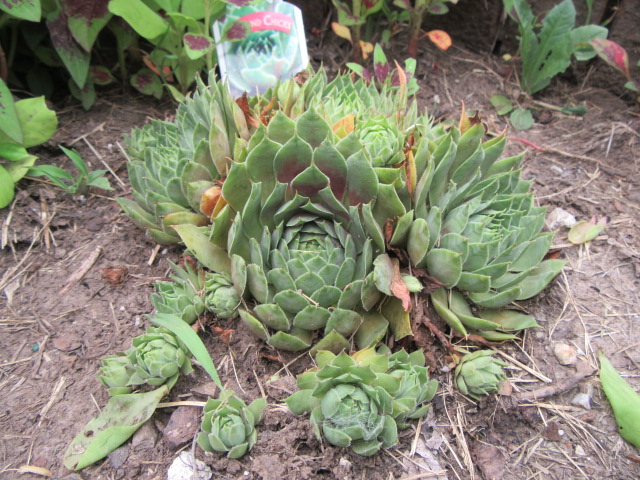
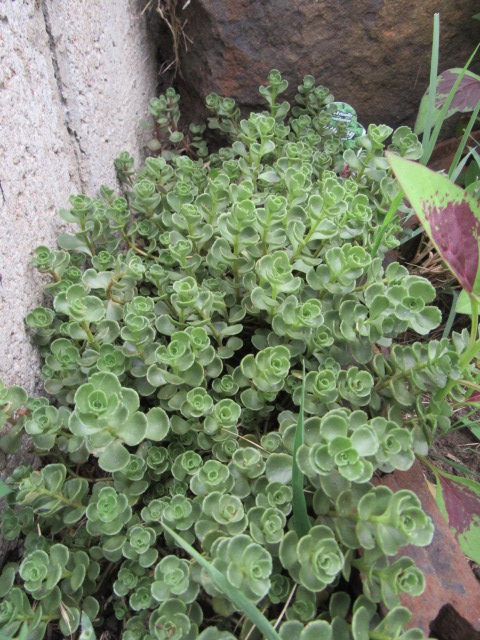
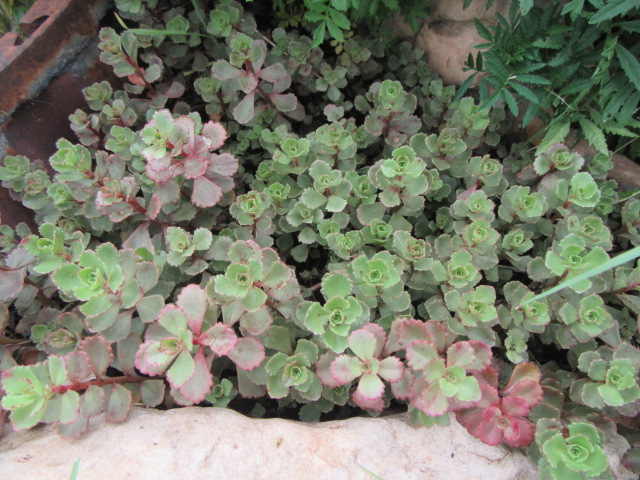
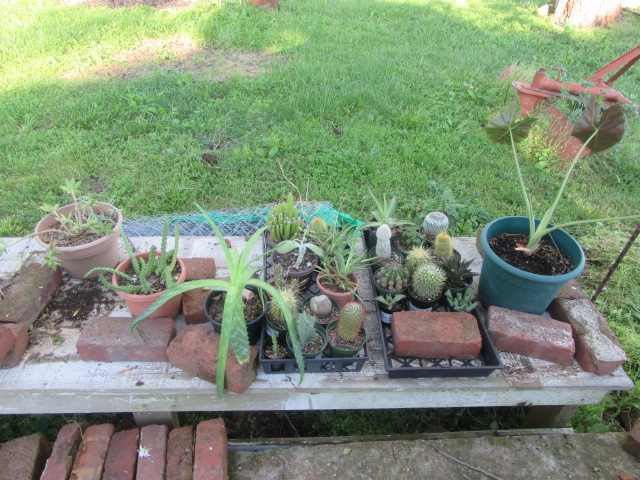
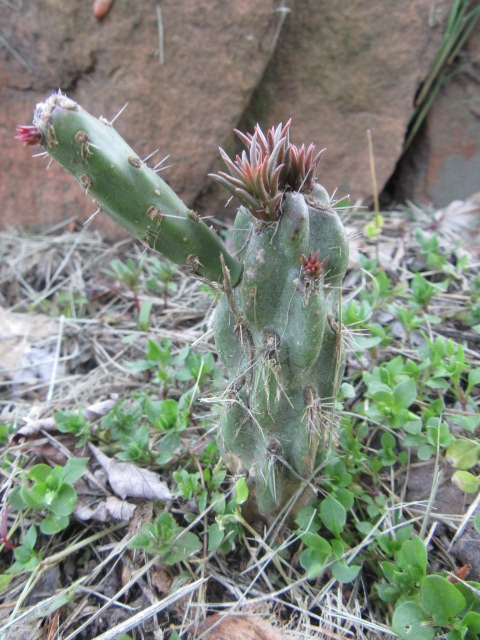
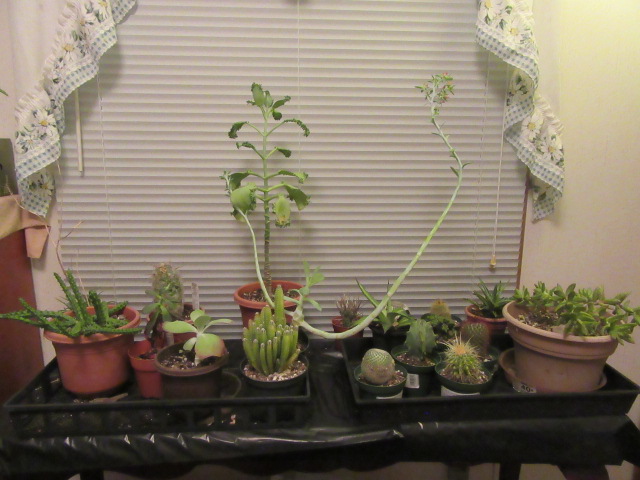
I know I haven’t shared many photos of the cactus and succulents lately (OH CRAP, I have been forgetting about the Sedum kamtschaticum). I have taken a few photos for the pages to the right, which I have been working on. Anyway, since I was taking a closer look at some of the plants today, I thought I would take a few photos of the cactus. The above photo is one of the Echinocactus grusonii (Golden Barrel Cactus). I have two which I didn’t realize until I got home with them. Well, I had bought several cactus that day because they were cheap and when I came home and was taking photos and measurements there were two of two different cactus. I will admit, though, my cactus probably get the least amount of attention of all my plants. They just sit there and SLOWLY grow. SO slow that I have to measure them once a year to see if they are actually growing at all. That is pretty sad they get ignored when they are some of the most amazing plants on earth.
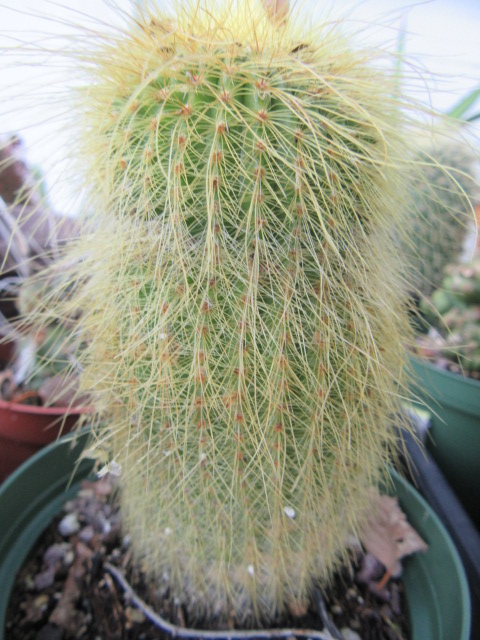
 

Parodia leninghausii (Golden Ball Cactus)(Syn. Notocactus leninghausii) is unusual because of it’s golden hair-like appearance. Kind of reminds me of pig hair. OH, I have hairier cactus than this but I didn’t take their photos today.


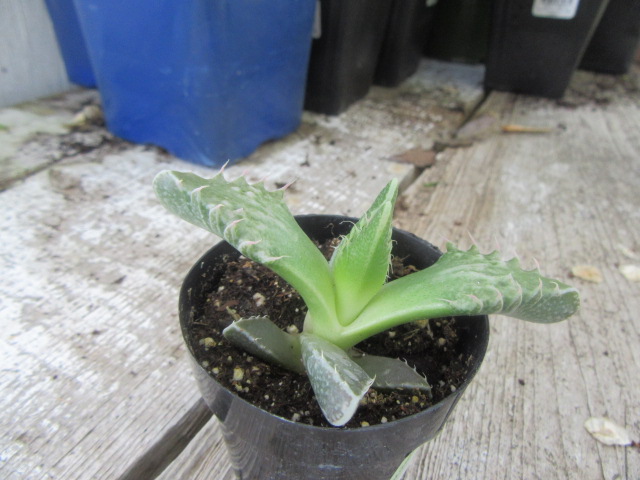
Umm… This is the Faucaria tigrina-Tiger Jaws. Still one of the most interesting succulents I have grown, although this one is not as nice as the one I had before. I think it will get there slowly but surely. The correct spelling, guys, is fow-KAR-ee-uh tig-REE-nuh not what you were thinking. Look at those teeth! OUCH!!!

Talk about teeth…


This Agave is STILL unnamed… Where did I get it anyway? I know I bought it last year, maybe from Wagler’s since it is unnamed. I know it needs more sun, though, and all this rain we have had lately is not good for it.

Well, folks, that is finally the end of this post. I took more photos of the Alocasia, Caladiums and Amorphophallus, but they are for the next post… SO, until next time, take care, be happy, healthy, prosperous and GET DIRTY!!!

Removing/Repotting Alocasia Round 1…

Hello and here we go! I am going to start with the biggest pot of Alocasia ‘Calidora’. I could have sworn I took a photo of the Alocasia ‘Calidora’ BEFORE I removed these to HUGE offsets. Oh, well, just have to go with the photos I wound up with because I can’t put them back and pretend I didn’t. It is 11:12 PM as I am starting this post, but if it were daytime, I may be tempted. Just kidding, of course.

Those two girls were really stuck good! Note to self: “Don’t let them get that big next time before removing.” I have said that before.


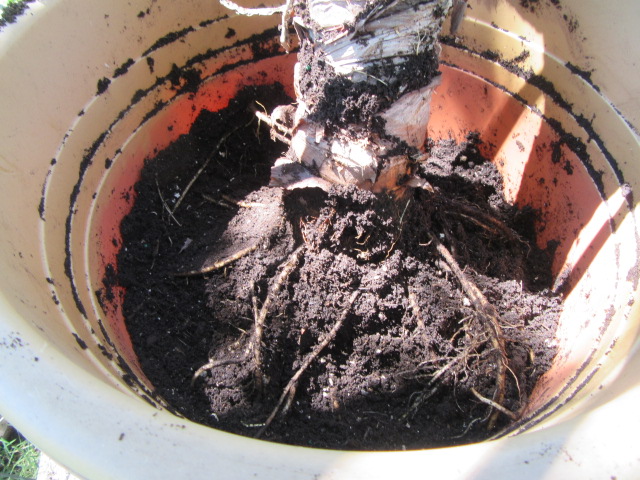
After I removed the two babies, I removed as much of the old potting soil as I thought I should then…


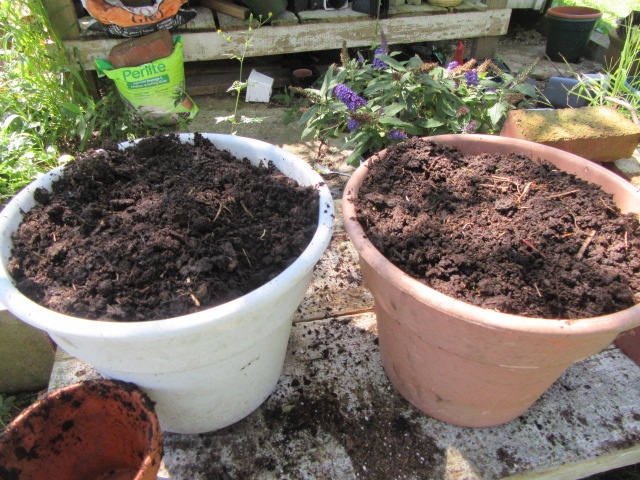
I filled the pot with about 3/4 new potting soil (with a timed release fertilizer) and 1/4 of the old I took out, mixed together. I didn’t put any of the “GOOD STUFF” in the pot because I think this ‘ol girl is big enough. Carry these huge pots around a few times and you would say the same.  I put a brick in the pot to make it stand straighter because she was leaning a bit too much. Never know when her leaning over could make the whole pot fall over, especially in the wind. I have been surprised their HUGE leaves don’t act as a sail in the wind anyway.


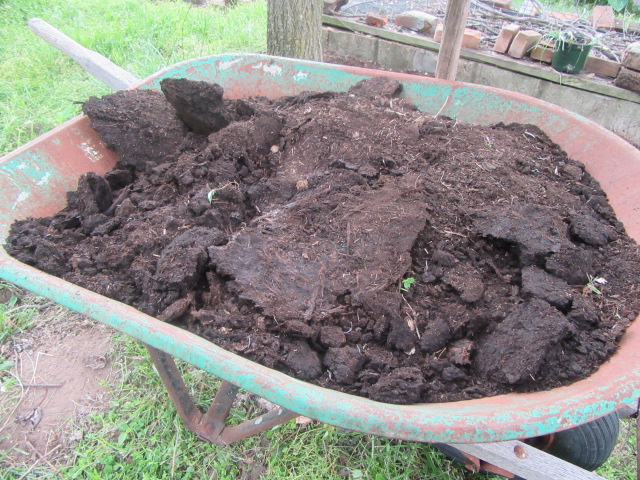
Oh, yeah, baby! ‘ THE GOOD STUFF!” I went to the pasture where I fed hay 2 years ago and a few times last winter. NICE!!! I will need that for the other pots.


Since the two Alocasia ‘Calidora’ offsets were pretty big already, I have to use good sized pots. I filled them this far with a combination of new potting soil and the old potting soil I removed from their mother’s pot.


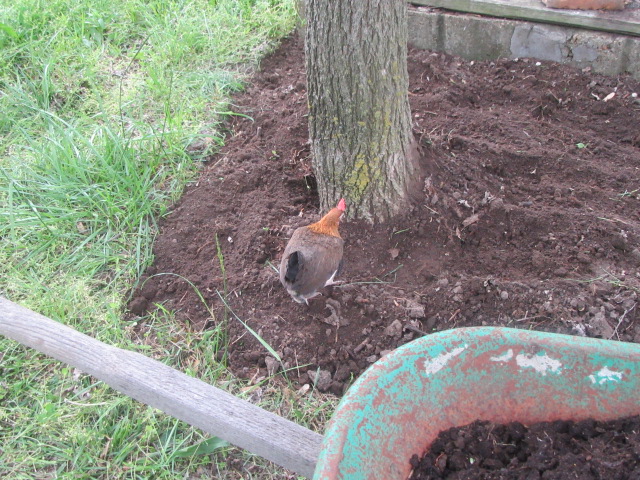
I got this weird feeling I was being watched. That’s very normal because I am never alone anyway, none of us are. But #3 is always where I am when I am outside. This afternoon I let the Old English Game Bantam hens out with him, so he is extra happy.


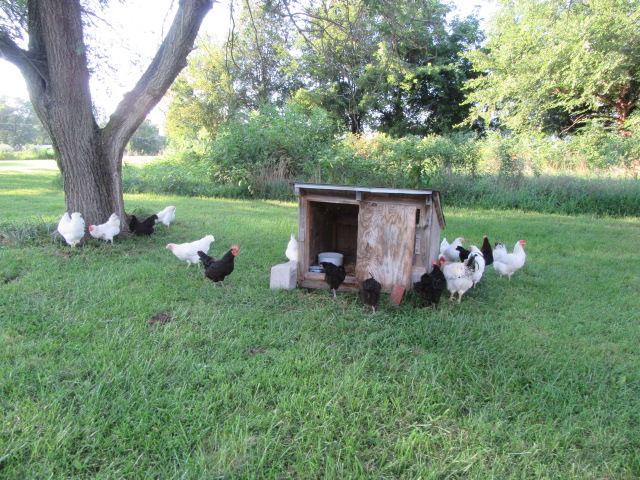
The other chickens are out, too. Since I was planning to be outside all afternoon I decided to let them out so I could keep an eye on them. We have foxes so you just never know. One of the neighbors whose property joins the trail brought home some hens not long ago. After a couple of weeks, he only had one left…


Then I filled the pots the rest of the way up with ‘The GOOD STUFF”.


The Callisia fragrans seems to be watching, too. I think that is because those plantlets or offsets (whatever you call them) want to jump in some dirt of their own so I have to keep an eye on them! Callisia fragrans is a new Bromeliad for me, so I am going to leave the stems, or whatever you call them, with the new plants on the end as long as possible to see what happens. I wonder if the plants on the ends will grow their own stems and new plants. I noticed some of the stems are growing stems now so they will have their own new plant on the end. This plant is going to be a multiplier for sure!


OH, now we have a visitor! Can you see it? The Snowberry Clearwing Moth (Hemaris diffinis) enjoying the flowers on the Buddleja ‘Pugster Blue’. Yeah, that’s the one I bought and have yet to figure out where to put it. Maybe we should walk around together and find a spot. It sounds too good to be true, but it is only supposed to grow 2′ tall x 2′ wide…

Where was I?


Then I dumped the contents of the two pots into the wheelbarrow to mix. Most of the time when I am transplanting I will take the pot I am going to use and fill it with everything I want in it before I mix. That way I usually have just the right amount, more or less.


Then you take one of the plants and kind of guess how much soil you will need to fill the pot up to where the bottom of the stem (I mean tuber) will be. Well, I get a little confused sometimes, especially when the tuber isn’t even large enough to be called a tuber, but it actually is. GEEZ!!!


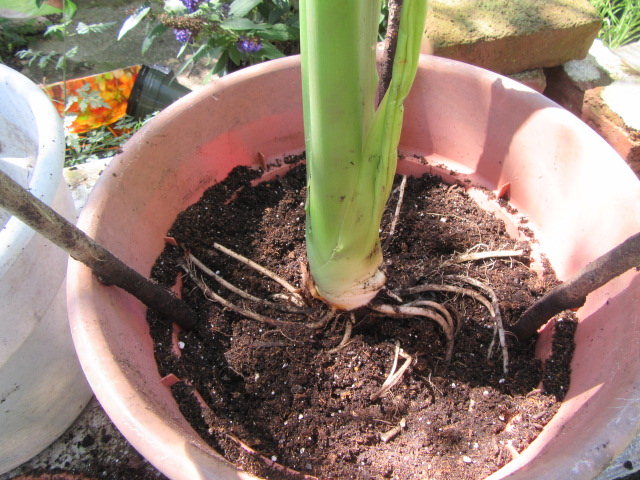
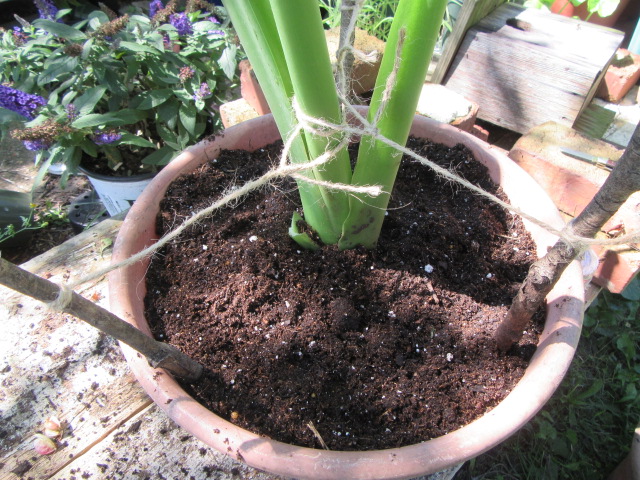
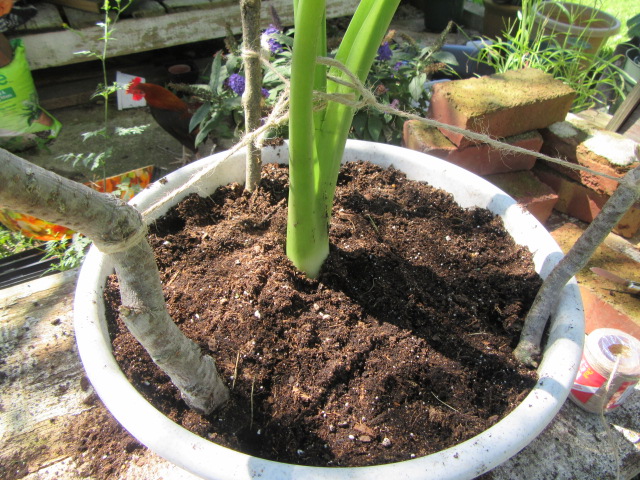
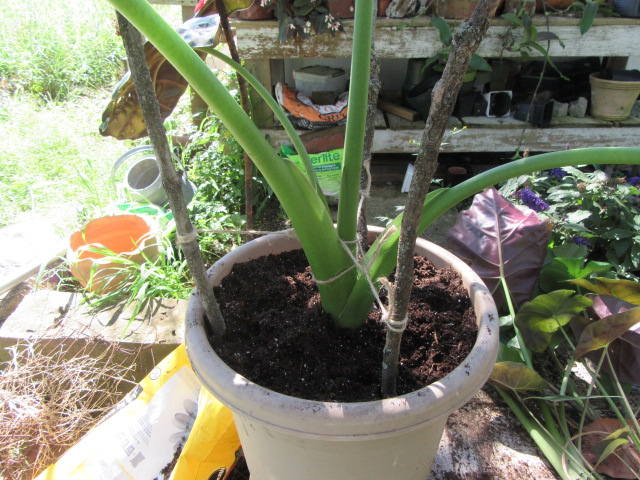
THEN you have to put three stakes along the side of the pot. This is very important because there aren’t many roots and there is A LOT on top. If the plants aren’t too tall you can use rocks for support until enough roots grow to support the plant.


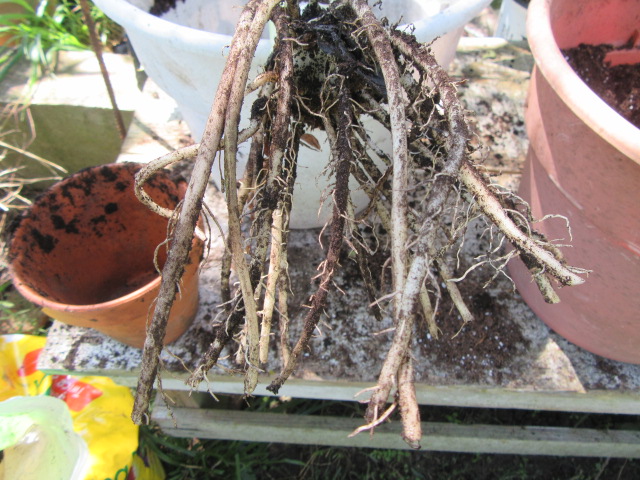
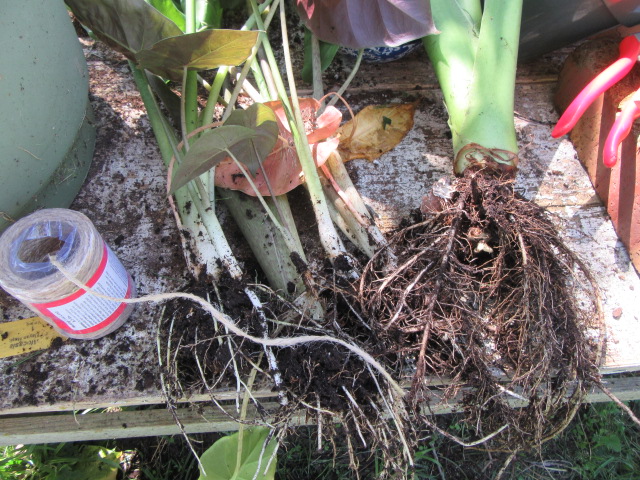
If the roots are very long, I trim a little.


Not much, though. Alocasia roots are good sized and they spread out and eventually develop a very good support.


Place the plant on the soil (in the center, please) and spread the roots out around it in the pot. There are no roots directly under the tuber.


You can either tie twine to the center petiole or around them all. I usually go around all of them but this time I am doing just the newest one. New petioles grow out of the last one and eventually the older ones, on the outside, will die, which makes the tubers become larger. Are you confused?

MORE company…


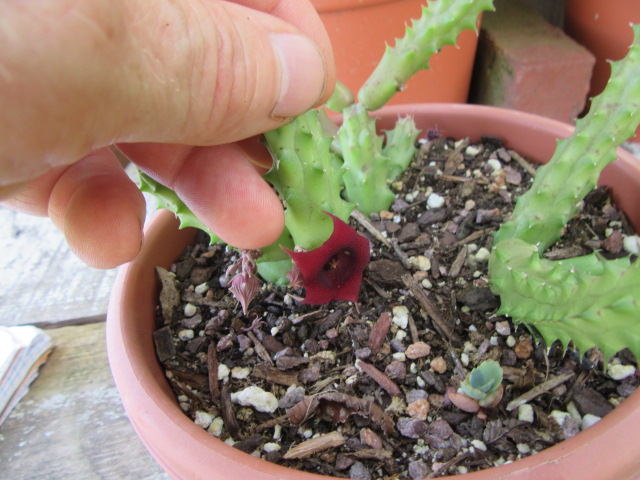
“GIRLS, that is NOT a good idea!” Because of their lighter weight, it really isn’t usually a disaster when they climb around on the pots. All the pots have bricks around them to keep the wind from blowing them over, so a little hen isn’t going to knock them over either. Notice the hen on the left with her wing out? She slipped and I got a photo of it. She stepped into the pot with the Huernia schneideriana and after I was finished repotting I noticed she had broken off a couple of pieces… No big deal. After about a week I will just stick them in the pot and they will grow roots.


I had forgotten chickens like the flowers of Begonias. Last year, when the Delaware rooster and the bantams were young they would climb around in the pots like this. The Delaware, being much larger, became a bit of a problem. The Old English Game can walk in the pots and even step on stems without breaking them. The Delaware loved getting in the pot with the Begonia boliviensis and eat the flowers. Strangely enough, the flowers the hen was eating were also on that same plant. The ‘Brazilian Lady’ has many more flowers and she hardly touched it. I wonder if they taste different?

Moving along… (actually, I had to save this post here as a draft and finish later).


This is the second pot finished.


SO, here you have the two new pots of Alocasia ‘Calidora’. There is still another pot of them to be divided but that will have to wait. Next, I am going to tackle the strange pot of Alocasia ‘Mayan mask’…

But first, I want you to see this…


Earlier this spring I took the big pot of Alocasia odora and put the 5 larger plants in their own pots (I gave 1 away). I put 3-4 of the smaller plants into 3 more pots… The bigger plants now have kids of their own. I counted and there are now 25 Alocasia odora. How I came to have Alocasia odora is a story in itself and I didn’t know the name. I sent photos to a few Aroid experts and only one replied. He said it was Alocasia odora so that is what I call it. That species gets HUGE but mine have never grown taller than around 20 inches even after 5 years. SO, I think it is safe to say the mystery continues…


Remember the photo from a few posts ago of the ‘Alocasia ‘Mayan Mask’ with the A. ‘Portora’ babies in it? This is the one. Besides the parent plant, there is a very large “baby” growing right next to it which could be a little tricky removing without removing the parent plant, too. We shall see.


The original tag from Brent & Becky’s where I purchased my Alocasia ‘Mayan Mask’ in the spring of 2012… Yep, this big plant is the original plant, 5 years old, and it has not gone dormant (very close, though). Actually, the ‘A. ‘Calidora’ I just removed the two babies from is also the original plant from Wellspring Gardens in 2012.


I removed 7 plants but I left a tiny one that was up next to the parent plant (still attached). Four of the plants are A. ‘Mayan Mask’ and three are A. ‘Portora’. The big baby came out a lot easier than I expected. Much easier than the two Alocasia ‘Calidora’. I put each one in their own pot.

I think probably, somehow maybe, I must have added potting soil to this pot from a pot that use to have Alocasia ‘Portora’ in it… That’s the only explanation I can figure out how they got in this pot with A. ‘Mayan Mask’. The other option is they somehow crossed up… BUT, I don’t think so. That is almost 99.999999999999999999% impossible.


I put the larger A. ‘Mayan Mask’ in a good sized pot and had to stake it, too. The others didn’t need stakes.

SO, that’s that for now. Started out with 2 pots and now there are 11 and four more pots to do the same with. So, in the spring I started out with 7 pots of Alocasia. Now there are 21. I gave away 4 earlier besides that. Now, I have to buy another bag of potting soil before I can finish the other pots.

I think I need to write a post telling the difference between Alocasia and Colocasia. Explain why Alocasia leaves stand up and why Colocasia leaves droop. Why do Alocasia prefer shadier areas while Colocasia does best in full sun? Explain the difference between petioles and stems. Also to talk about the difference between bulbs, tubers, rhizomes, corms… I think I need a refresher course, too, because it can get confusing. Some have eyes and some don’t… They multiply in different ways so it is very important to know.

Well, that’s it for now. The task was started on Wednesday afternoon, the post was started Wednesday evening and finished Thursday evening… Round two will begin when I buy another bag of potting soil. That may not be until next week… But it has to be done SOON because one of the pots of Alocasia ‘Portora’ has HUGE plants to be removed…

SO, for now, have a great and blessed day, or rest of your evening! Stay positive, be happy and healthy. Wealth is not only in finances and you can’t buy happiness. Money can buy freedom, however, and that brings happiness (and more plants). Go outside and breathe in that good fresh air and give someone a hug. Remember to thank God for all the awesome life and energy and all you have been blessed with. The universe is ALIVE and we are all part of it. Most of all, pick up a handful of good dirt and give it a good whiff… That’s life in there! GET DIRTY!!!!

Adding and Updating Plant Pages-Bringing Back Memories

Marigold ‘Petite’ at 32″ on 9-19-11, #79-1.

Hello again! Seems just like yesterday when I made my last post. I guess that’s because I did. Anyway, I have been working on the plant pages to the right which has brought back a lot of memories from Mississippi. Some I have to laugh about.

One of the memories tonight was about the Marigold ‘Petite’ and ‘French Dwarf Double’ seeds I bought in 2011. I made a corner bed (at the corner of the den in the backyard) in 2009 and so in 2011 I decided to plant ‘Petite’ Marigolds along the front of the border and the ‘French Dwarf Double behind them. By then the Salvia farinacea (Mealycup Sage) had a permanent home in kind of the center of the bed. I had a row of Brugmansia in the back… 

I was confusing myself trying to explain so I decided to draw you a map… The bed was at least 12′ wide and deep… I forgot one thing, though… The bed grew to be in front of the Nandina and between them and the brick sidewalk going to the den. The brick sidewalk, which I discovered by accident, led to the… OH, you should just read the story about the Mystical Mansion and Garden… It isn’t finished yet, but the story about the brick walkway is the last thing I talked about. Otherwise I will be here for HOURS (I will be here for hours anyway).

OK, where was I? Oh yeah, the ‘Petite’ Marigolds. Anyway, while I was updating the page I remembered how they got so much taller than they were opposed to have grown. So did the ‘French Dwarf Double’. Remember yesterday I was talking about how the ‘Brocade’ Marigolds always grew much taller than the information suggested. Well, the ‘Petite’ Marigolds were only supposed to grow to 8″… The top photo was taken on September 19, 2011 and those 8″ tall plants were 32″ tall! I am not pulling your leg.

This photo was taken on October 12, 2011. When I start looking at old photos I drift back in time. I remember how much fun I had in the back yard of the mansion. It was a disaster when I arrived but it became my paradise. One photo leads to another and one story leads to another. Everyday was a new experience.

OH, NO!!! Where us this folder going to lead…

I always laugh at this one… A good friend of mine, Kyle Hall, and his girlfriend (Sara at the time), came over frequently. They lived in a room upstairs in the mansion for a while, too. Anyway, I had Kyle take a few photos. This wasn’t one he was supposed to take, though and I have no clue what I was talking about now. This photo was taken on September 6, 2009.

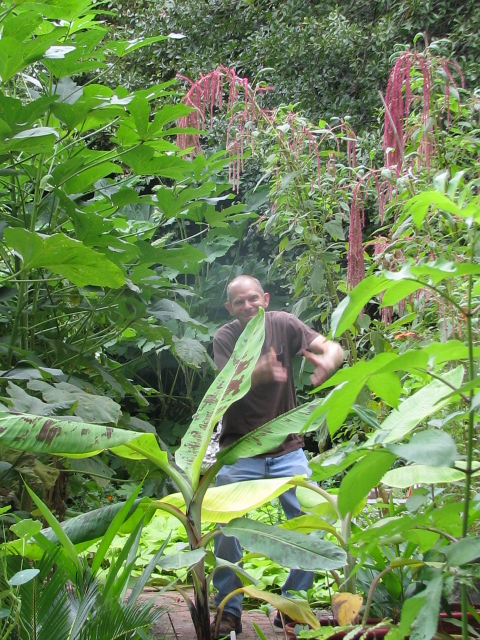
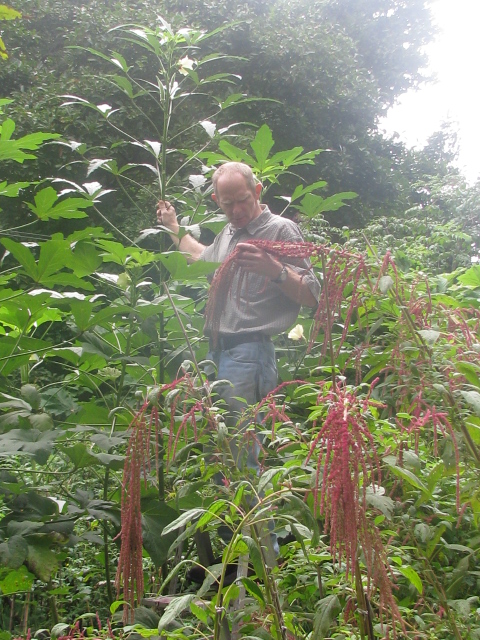
He took this one before I was ready, too. Kid of like “blooper” photos that no one ever sees. I was trying to get him to take photos of me on the top of the ladder (well, not all the way on the top step) showing how tall the ‘Cowhorn’ Okra and ‘Love-Lies’Bleeding’ Amaranthus grew. This photo was taken on September 26, 2009.

It seemed like everything grew to monstrous proportions…

This is where I started uncovering the brick walk in the backyard of the mansion on May 1, 2009. It led to the old covered patio… One time a lady stopped for a visit and she said she hadn’t been there for many years. She said the old patio was falling in then. It was either built by the first owners or the second. The mansion was built in 1905 and the covered patio was built out of Cypress. I made plant tables out of some of the lumber and I brought them with me when I moved back here. The plants with the HUGE leaves are Japanese Rice paper Plants. The upper left hand corner shows my first garden there… I made the raised bed out of the lumber that was stacked inside the old patio that was part of an old fence around the back yard long ago. I later moved the bed which is where I had my Zinnias for several years. I made a second bed where I planted the Asparagus which brings me to another story… It is when I first met the fire ants. I had prepared the bed like so to have two rows of asparagus. All nice and straight. When I started putting in the Asparagus crowns I noticed something was weird. The ants started covering my hands. I always thought fire ants were larger until that day… Needless to say, the Asparagus did not get planted in nice neat rows…

OH, there are SO MANY PHOTOS!!!

I had started a new project in April 2010… Eventually I was going to tear down the old covered patio, so I decided to make this, ummm, whatever you want to call it, for my potted plants. By this time there were over 100. I also did this along the left side of the garden.

Both of those photos were taken on April 20, 2009.

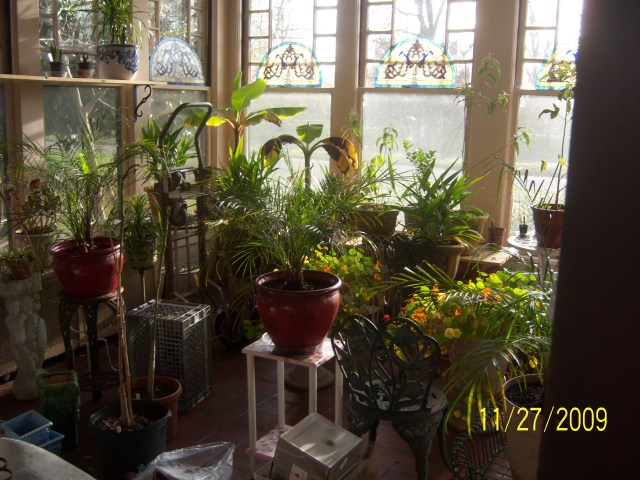
You may be wondering what i did with all the pots in the winter. Well, the den, the kitchen, the butler’s pantry, two sunrooms on the first floor and three on the second. Actually, I didn’t use the three on the second floor that much.

The date stamp is wrong. This photo was taken on December 16, 2009. On warm days during the winter I would put the plants on the 40′ long front porch and then bring them back in side in the evening. I did that until I moved in February 2013… Even after there were… A LOT MORE and BIGGER pots.

I also made this new bed in 2010.

This bed along the west sunroom was nothing but ivy and Vinca major until the spring of 2011. The Colocasia esculenta loved it here and so did the Tradescantia pallida (Purple Heart) as you can see. This photo was taken on August 1, 2011. This bed kept growing, too…

This was a few from the west side of the garden (which really wasn’t west) on August 1, 2011. The okra closest is ‘Burmese’ and on the other side is ‘Burgundy’ which I didn’t care for. SO, I switched to ‘Red Burgundy’ in 2012 and it is what I planted this year.

OH, this is the corner bed by the den on October 24, 2011… GEEZ!!!! That is what lead to this post in the first place!

Here’s another view since I already got WAY off course!

The Zinnia’s got a little carried away, too…

Can’t stop now, I am on a roll! This photo was taken on May 16, 2012. I had torn down the cold covered patio, removed the chain link fence behind it (which was apparently a huge dog kennel) and dug up the whole area with a shovel. NOW, the garden went all the way back to the back fence along the alley.

This photo was taken on June 2, 2012.

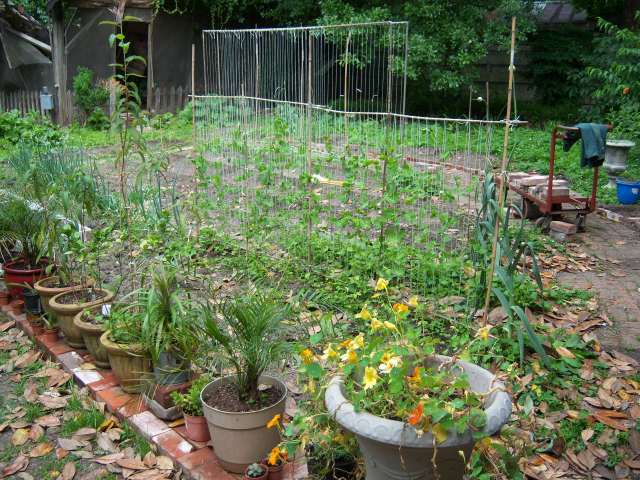
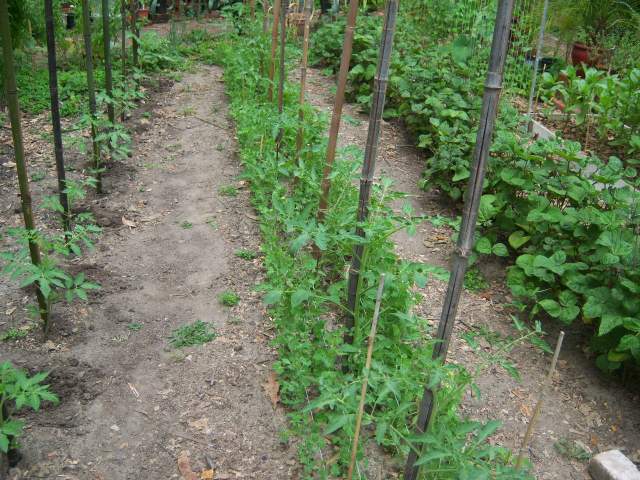
This is the back view of the garden on June 9, 2012. The front part of the garden had tomatoes, peas, beans… The middle part had ‘Top Crop’ Green Beans and ‘Royal Burgundy’ Bush Snap Beans. The okra in the back part is ‘Red Burgundy’ and ‘Fife Creek Cowhorn.’  The little triangular area was for Marigolds and Amaranthus.

Umm… ‘Super Sugar Snap’ Peas, ‘Royal Burgundy’ Snap Beans… The above photo was taken June 21, 2012 (after the next photo).

Switching ends… Tomatoes ‘Homestead’ and ‘Atkinson’ on the left. I planted ‘Laxton’s Progress #9’ Peas  with the ‘Homestead’ Tomatoes. That is the same ‘Royal Burgundy’ snap beans on the right as in the previous photo. Ummm… The above photo was taken on June 9, 2012.

Alocasia’s lauterbachia, ‘Calidora’, ‘Portora’, ‘Sarian’, and ‘Mayan Mask’, plus the white Bird-of-Paradise on July 13, 2012.

This was my work area under the HUGE Magnolia and Ligustrum tree on July 12, 2012. The HUGE Coleus is ‘Kong Red’.

The above photo is of the front part of the east sunroom on December 29, 2012. GEEZ! That was my birthday! The plants from the west sunroom had been moved into this sunroom and other rooms I guess because there was a drop in temperature.

Along the wall… The doors on the left go to the front porch.

The back wall… At one time, the passion flower was in the corner… Until I found out it would overwinter outside… The HUGE Alocasia is ‘Portora’ that I bought as a starter plant in 2009. She is normally in the west sunroom She is mother, grandmother and great grandmother of the ‘Portora’ I still have. She was 88 inches tall when I had to leave her with a friend in February 2013. I moved things around a bit… Sometimes I had all the Alocasia along the back wall.

This was some of the succulents on December 29, 2012. We haven’t even made it to the west sunroom… There are also photos somewhere of the plants in the kitchen, butler’s pantry and den…

OK, folks… That was a lot of the photos from that folder so I think it is time for a break now. I was supposed to me working on plant pages.

I hope you enjoyed this trip down memory lane as much as I did. Take care, stay happy, healthy, positive and GET DIRTY!!!


Just Around The House…

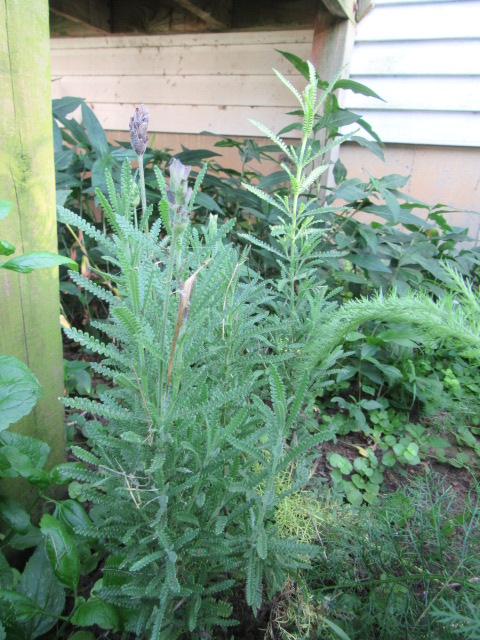
Achillea millefolium.

Hello everyone! This afternoon I had a few thing on my “to do” list but I decided to just walk around the house and take a few photos and measurements. It was pretty hot once again this afternoon but i didn’t check the temperature. Yesterday morning I checked AccuWeather and it said 88 degrees but feels like 102. It said today would be hotter and would feel like 105. I decided to take the website’s word for it and not check. Hot is hot and cold is cold no matter what the numbers actually say. Our thermometer on the back porch is useless as far as accuracy goes. Somehow the darn thing can tell how hot or cold it feels and not the actual temperature. If it is 90 and feels like 100, it will say 100. If it is 30 and the cold north wind is blowing and feels like 10, it will say 10. It isn’t influenced by the sun or the wind because of where it is hanging, so I am not sure how it makes it’s decisions.

Ok, now back to the purpose of this post… What was I doing? Oh, yeah, taking photos and measurements. When I was in Mississippi I measured everything periodically. Some plants just blew my mind at how HUGE they got while others I measured to see if they were actually growing (like some of the cactus).

First, as I walked down the steps and turn left, I started with the Achillea millefolium. Right now it stands at 37″ tall in flower. That’s pretty good despite it is growing in a little more shade that it likes.

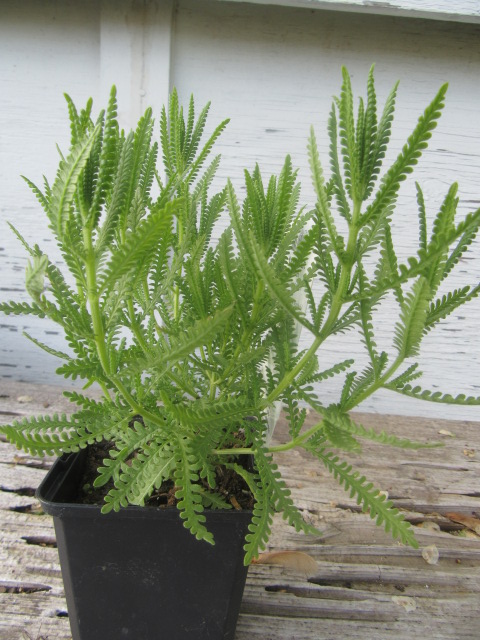
Lavandula dentata (French Lavender).

The Lavandula dentata (French Lavender) is holding it’s own at 21″. It has been nearly hidden by the Conoclinum coelestinum, Achillea millefolium, and Colocasia gigantea ‘Thailand Giant’. It keeps asking me what I was thinking when I put it there and then go and put the HUGE Elephant Ear next to it. Despite the Achillea already being there who also objects to this location. SO, I had to admit to it that I wasn’t sure if that was a good spot for it in the first place and I hadn’t brought the Colocasia gigantea ‘Thailand Giant’ home yet. It just looked me and sighed then said, “Well, next time… You will know better.”

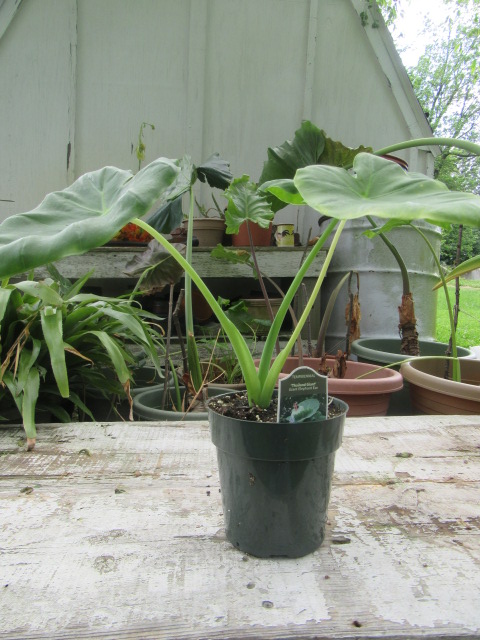
Colocasia gigantea ‘Thailand Giant’.

I must admit I knew it would get huge in time, but I didn’t really think it would be this fast. The Colocasia gigantea ‘Thailand Giant’ I grew in Mississippi from a starter plant didn’t grow this HUGE after just a few months. This gal is 54″ tall ALREADY! That measurement is from the ground to the top of it’s tallest petiole.

Largest leaf of the Colocasia gigantea ‘Thailand Giant’.

This photo is the largest leaf on the Colocasia gigantea ‘Thailand Giant’. It measures ONLY 33″ wide x 42″ long.

Colocasia esculenta.

The two Colocasia esculenta growing in the north bed are trying their very best not to be outgrown by the young giant neighbor. Both are standing the same height as she is at 54″ tall. The largest leaf is 24″ wide x 33″ long. I had a few Colocasia esculenta in Mississippi that had larger leaves than this. Ummm… Looks like I have a visitor. Can you see it? If you can, leave what you see in the comment section.

Hosta ‘Empress Wu’.

I didn’t crawl back to measure it, but the Hosta ‘Empress Wu’ is still doing OK. I think it is a but lonely back in the corner, though. In time, this world’s largest Hosta cultivar will be around 4′ tall x 5′ wide.

Coleus Flame Thrower™ ‘Spiced Curry’.

I must admit the Coleus Flame Thrower™ ‘Spiced Curry’ is AWESOME! Even though it is nearly hidden under the leaves of the Colocasia it has still grown to 32″ tall x 31″ wide.

Coleus ‘Songbird’.

I don’t know why, but every photo I take of the Coleus ‘Songbird’ looks brighter than it really is. Despite that, it is a very beautiful Coleus that has grown to 34″ tall x 24″ wide. I see it has a few more flowers to pinch off.

Let’s look at the other side of the steps before we go around to the south side of the house…

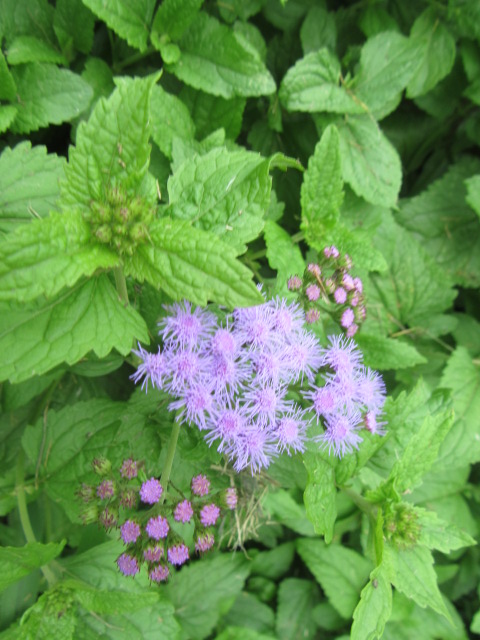
Conoclinium coelestinum ‘Aunt Inez’

I don’t know what has gotten into the Conoclinium coelestinum ‘Aunt Inez’  this summer. It has grown to 35″ tall! A lot of the time, well, usually always, it starts falling over by this time of the year, like it can’t stand on it’s own stems. (Can’t stand on it’s own two feet). I did something different this year as an experiment and it worked. I did NOT thin them out like usual on this side of the steps because I wanted to see if this would happen. It did. I only removed several plants from the front and moved them to the other side. The plants on the other side fell over this past week after the rain. SO, that has taught me a lesson. I mentioned earlier that they come up much better in the spring on the east side of the steps than on the other side so I always have to transplant. I have a theory as to why but I won’t know how that experiment worked out until next spring. This is is the perennial Hardy Ageratum, Blue Mist Flower or Floss Flower that my dad got from his Aunt Inez (his mother’s sister). SO, botanically speaking, ignore the ‘Aunt Inez’ part. 🙂 OH, another thing… This species used to be Eupatorium coelestinum.

Lobelia cardinalis.

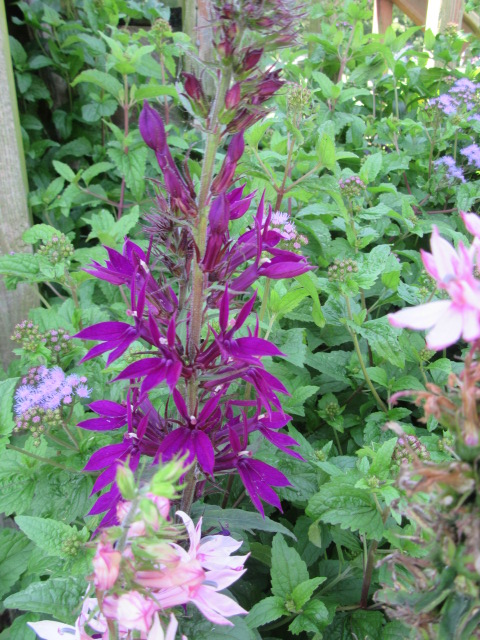
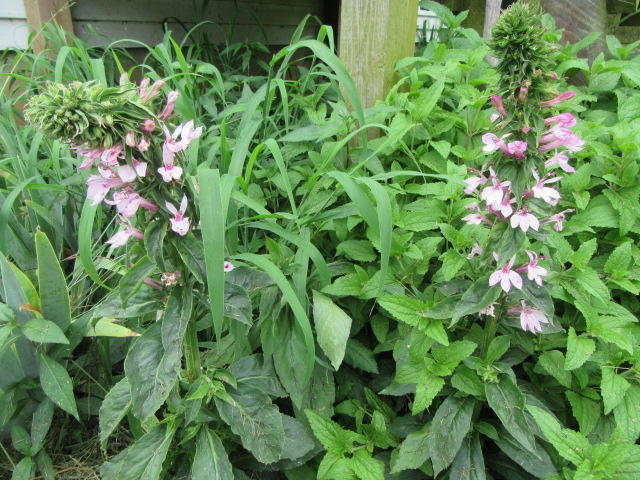
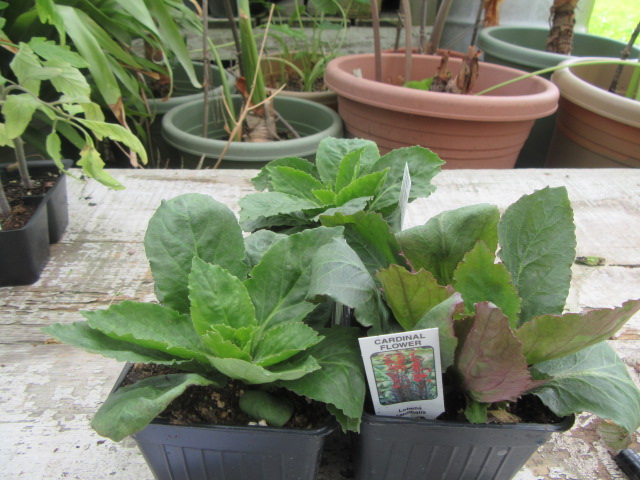
OK, folks… the Lobelia cardinalis (Cardinal Flower) was been the biggest surprise this year. Until I bought them I hadn’t done a whole lot of research on them. I had seen them in catalogs and always wanted to try them but I hadn’t until this year when I saw them at Wagler’s Greenhouse. Cardinals are red. The photos of Lobelia cardinalis in catalogs I had always seen were red. SO, when the first two flowered and they were pink, and didn’t even look anything like what I expected… I thought the tags were wrong and someone really screwed up. Unfortunately, that was not the case. Cardinal Flowers can be red, pink, purple and maybe white. SO why call them Cardinal Flowers? Have you ever seen a pink or purple Cardinal? On another note, what do the Cardinals in the Catholic Church have to do with birds or flowers? Maybe that is where the name comes from instead of a red bird. Now I have to check out the latin name for cardinalis… Well, Dave’s Garden says the meaning of cardinalis is Cardinal. That didn’t help… The name ‘cardinalis’ is in reference to the color red or scarlet. The common name is apparently in reference to the red robes worn by Roman Catholic Cardinals.

Now, let’s go around to the south side of the house… Normally I refrain from taking photos in the full sun but I did this afternoon anyway.

Phlomis ‘Edward Bowles’.

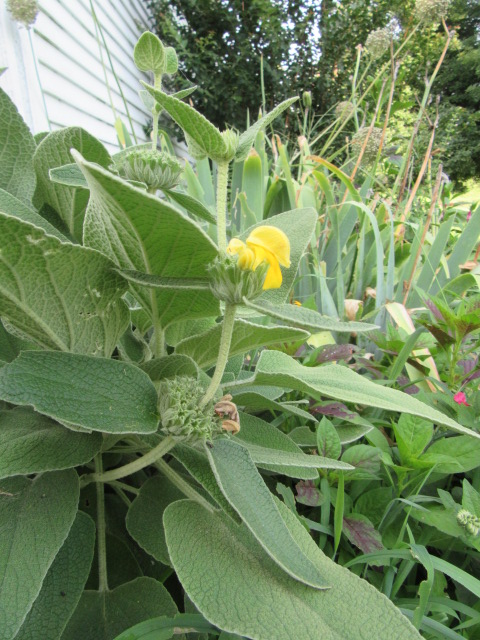
The Phlomis ‘Edward Bowles’ (Jerusalem Sage) is doing very well and has enjoyed the heat. Despite it’s near death experience this past winter it has done amazingly well. It is standing at 16″ tall x 22″ wide. Not as large as last year, but I am definitely not going to complain. The flower pot I cover it with in the winter close by (you can see it if you look close). I have two very large pots and I sed one to cover the Phlomis during the winter. The other pot is empty behind the shed where my plant tables are and every time I see it I wonder where the other pot is… Then every time I see the pot next to the Phlomis I say, “Oh, yeah, now I remember…”

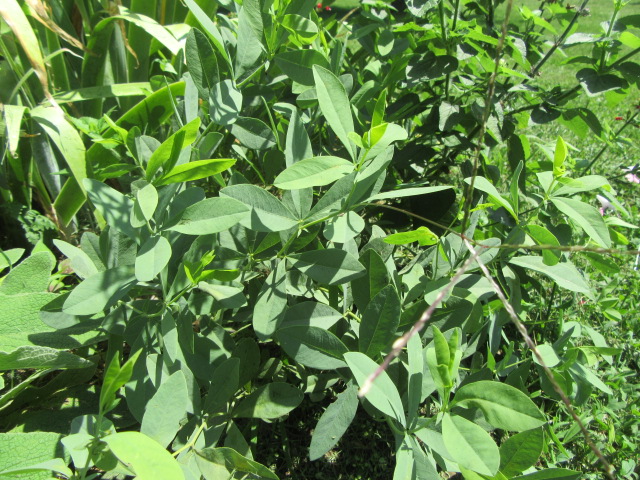
Baptisia x ‘Lunar Eclipse’

As I suspected the Baptisia x ‘Lunar Eclipse’ (False Indigo) is unlikely to flower this year. The garden center had bigger pots that were flowering already but I chose to by a less expensive smaller pot without flowers. GEEZ!!! NOW I have to wait until next spring to see if it even survives the winter to see if it will flower then. This corner of the south bed will make me nervous all winter since the Phlomis and this plant are next to each other. Maybe I need to put an electric blanket on top of them…

I didn’t take photos of the Salvia coccinea (Scarlet Sage) this time, but they are 36″ tall. Their flowers are looking a little raggy but I can’t deadhead because they need to go to seed.

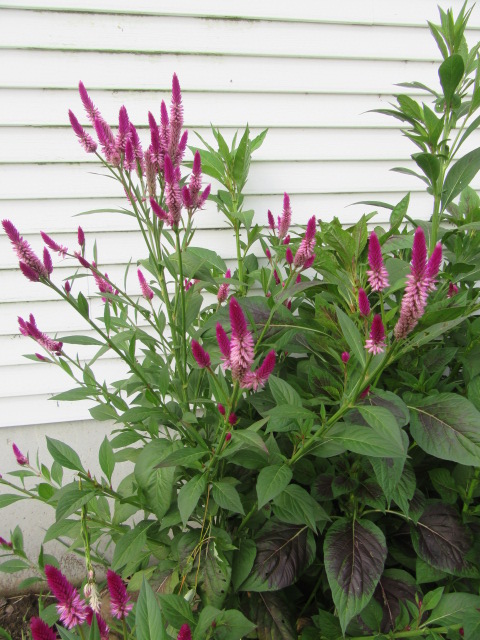
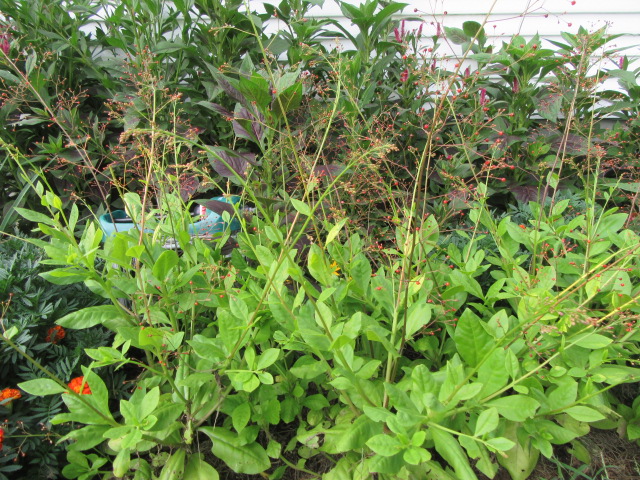
Ummm… Remember what this bed looked like in the post on June 25? But what happened here is another session to be learned… AGAIN! Every plant in the center row is invisible now. I knew the Celosia spicata ‘Cramer’s Amazon’ would get very tall and I knew how wide they would get. SO, I spaced the plants in the center row to compensate for that. I knew the Talinum paniculatum (Jewels of Opar) would sprawl out a bit, so I did not plant anything directly behind them. I also know there was a possibility the Marigold ‘Brocade’ could go bonkers. BUT, I also thought, according to the size the second row plants were supposed to get, it would be OK and they would be slightly taller than the first row plants. Well… That DID NOT happen… The Marigolds did go bonkers, though.

Marigold ‘Red Brocade’.

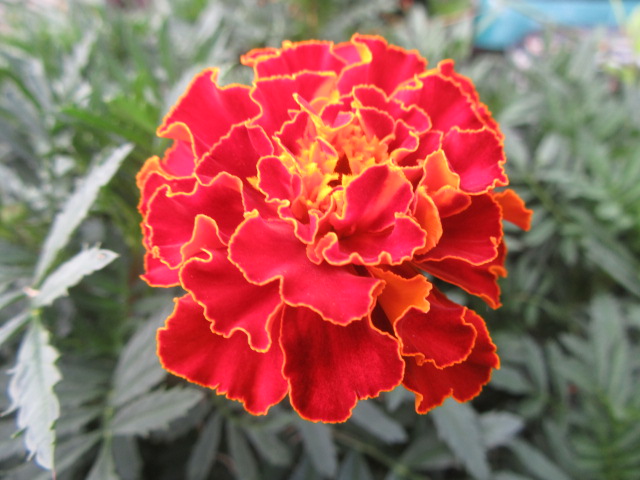
The plant in the above photo, one single Tagetes patula, Marigold ‘Red Brocade’ is 22″ tall x 36 ” wide. I am not kidding… 36″ across and deep. If you like Marigolds and don’t mind them getting like this, then you need some seeds! Information on the internet doesn’t say they get this size, but I am here to tell you they can… The flowers are around 2″ wide. The color can be somewhat variable even though I save only the seed from the red. Well, even though I save the seeds I haven’t needed to plant any for two years. I save them just in case…

Kniphofia uvaria.

Ummm… Yep, there are two Kniphofia uvaria’s (Red Hot Poker) in there. There were three but one died before. I think maybe I should do something to give them more sun… Don’t you think so? They won’t flower this year anyway or they would have already done so (May and June). They still need full sun, though. Despite their intrusion, the plants look really good.

Over just a little bit to the right, somewhere in the center row…

Rudbeckia hirta ‘Denver Daisy’.

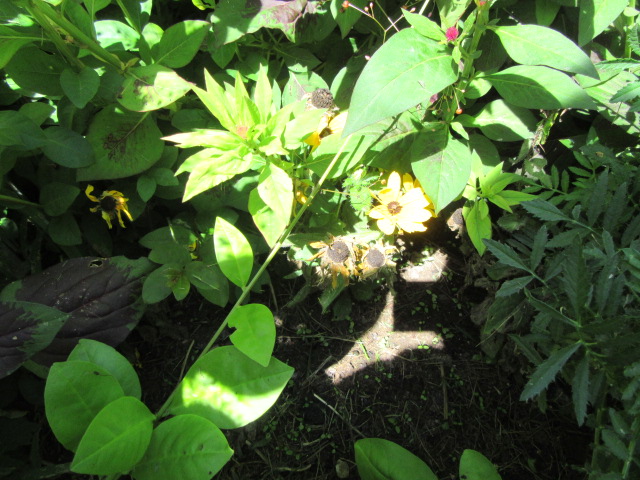
I had to take a close look to find the three Rudbeckia hirta ‘Denver Daisy’. This past month with the heat and ample rain (and I did water a few times earlier, too), the south bed went wild! The ‘Denver Daisy’ is supposed to get 22-24″ tall, which would be around the same height as the Marigolds grew. However, that did NOT happen even though they had a good head start and were flowering when I put them in this bed. Maybe they were intimidated by the smell of the Marigolds.

Echinacea purpurea ‘Pow Wow White’ and ‘Pow Wow Wild Berry’.

“YOU WHOO!!! Where are you Echinacea purpurea ‘Pow Wow White’ and ‘Pow Wow Wild Berry’? OH, there you are!” Umm, they are supposed to be 24 to 36″ tall but as you can see, they are a bit shy. They aren’t supposed to be shy or short!!! They are Echinacea for crying out loud! Supposed to make a bold statement and show everyone their cones!

Talinum paniculatum (Jewels of Opar).

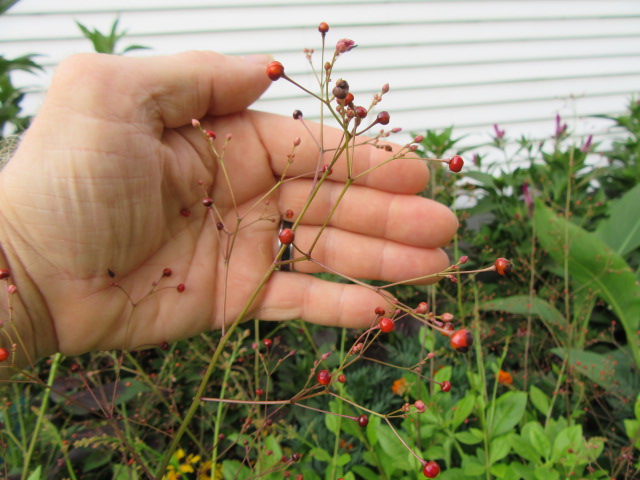
“OH CRAP!!!” That’s what I say every time I look at the Talinum paniculatum (Jewels of Opar). I need to get those stems cut off! The plants are 20″ tall, so far, but their flower stems are 40″ tall! This is their 3rd time flowering, maybe 4th. When I cut their stems off they will do it again and again and again and again…

Rudbeckia hirta ‘Cherokee Sunset’.

A couple of weeks ago the Rudbeckia hirta ‘Cherokee Sunset’ were screaming for more sun, so I had to make some adjustments. Now they are looking much better and flowering again. They are supposed to grow to at least 24″, some websites say 30″. Well, they didn’t, or haven’t yet anyway.

Buddleja ‘White Profusion’.

The Buddleja ‘White Profusion’ has really strutted this year as always. It is doing a GREAT job attracting butterflies, hummingbirds and the amazing Snowberry Clearwing Moth (Hemaris diffinis). One day I took several photos and videos for a post about them but the videos wouldn’t upload on the post… SO, it is STILL a draft. It was hard to take good photos because of how fast it moves but the videos came out good. The Buddleja is now 72″ tall x approximately 84″ wide. When I bought this Butterfly Bush it was supposed to grow 4-5′ tall. Now, information on the internet has changed it’s tune to a larger size. Seems like we all got fooled! The other Butterfly Bush I bought this spring, Buddleja ‘Pugster Blue’, is STILL in it’s pot because I haven’t decided where to put it. Normally when I get a new plant I already know where I am going to put it.

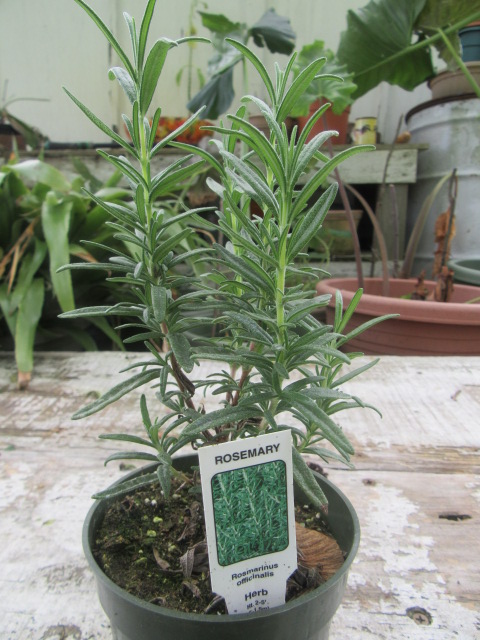
GEEZ!!! That’s all I am going to say about the “NEW” southeast corner bed… Besides the Rosemary, there is also Oregano and Liatris in there.

Rosmarinus officinalis-Rosemary.

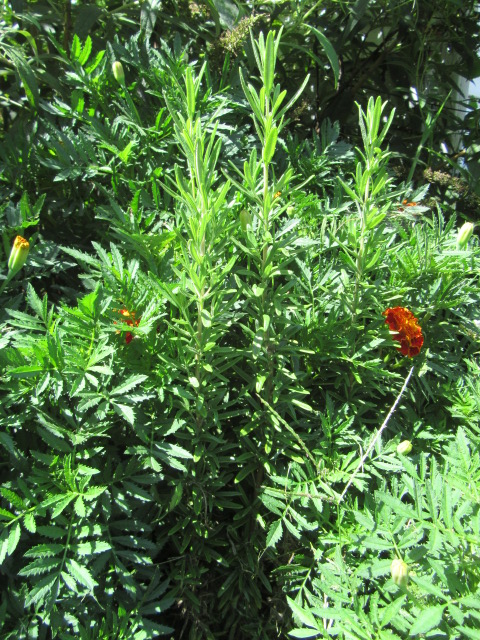
Just as happy as ever the Rosmarinus officials (Rosemary) refuses to be outdone by the Marigolds. Standing at 23″ tall and still growing… She did ask me if I could do something about her smelly neighbors, though. She says they keeps sniffing her and rubbing up against her. Hmmm…

Zinnia.

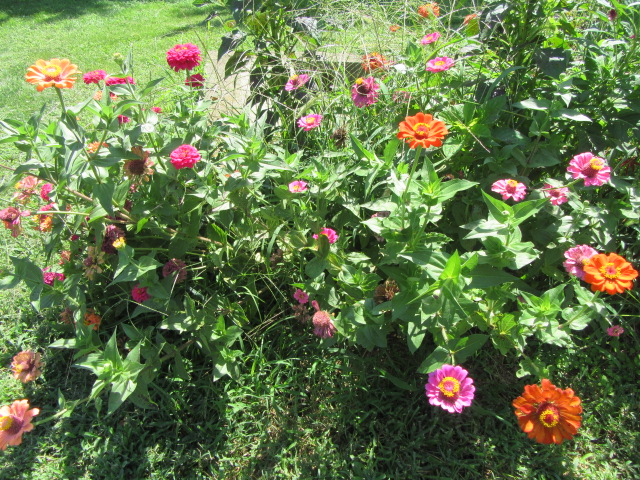
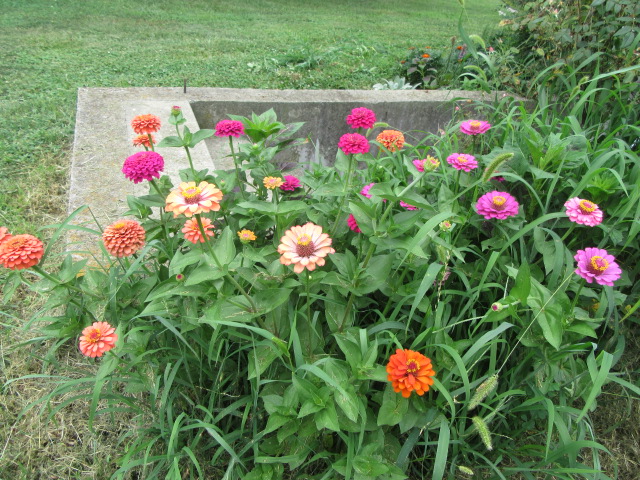
The Zinnia are still looking good but the rose on the other side of them aren’t doing so well. The beetles have continually chewed off the leaves and now the whole bush is ailing. I have to figure out what do do about that very soon…

Monarda.

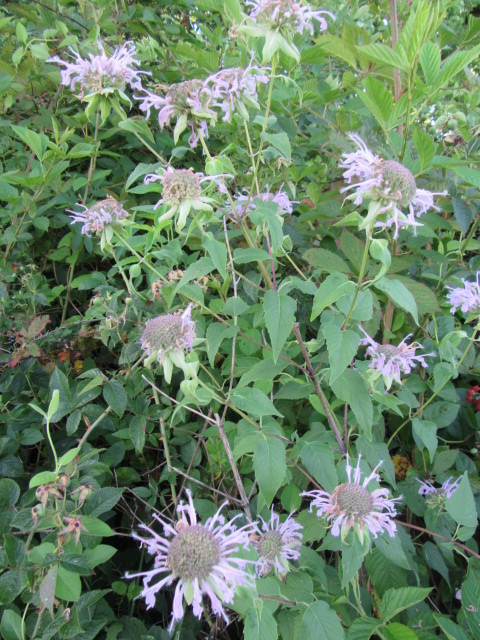
I noticed today that there are new plants coming up at the base of the Monarda (Bee Balm) I purchased from the garden club plant sale this spring. At least I hope those plants are new growth from the Monarda instead of some weed…

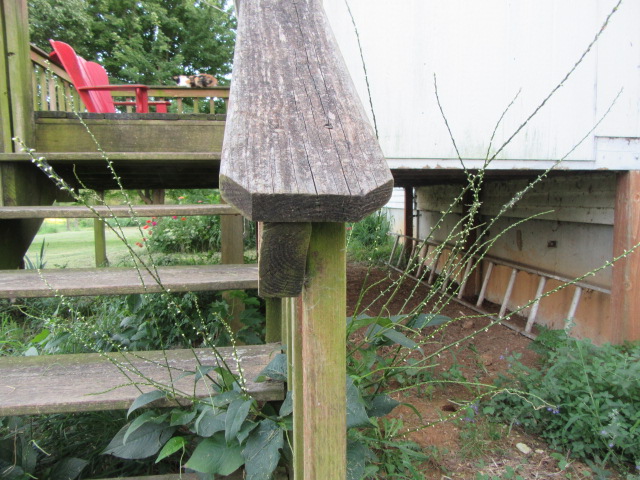
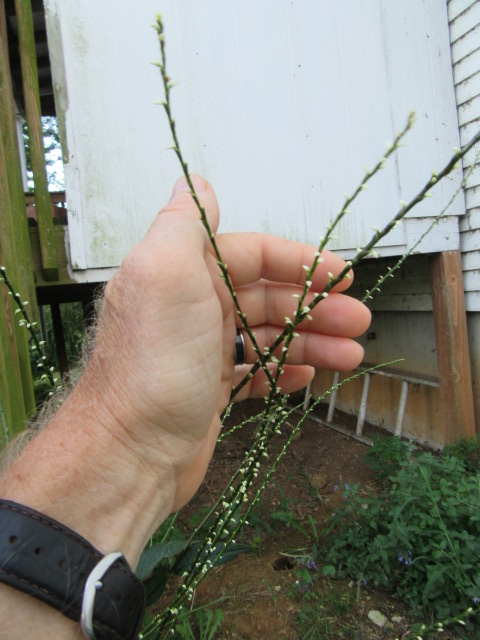
Persicaria virginiana (Virginia Knotweed or Jumpseed)

MYSTERY SOLVED! This interesting plant (weed) growing here is a Persicaria virginiana (Virginia Knotweed or Jumpseed). I also noticed a couple growing in the pasture behind the chicken house. I never noticed them until this year… It keeps growing!

Nepeta x faasenii-Catmint.

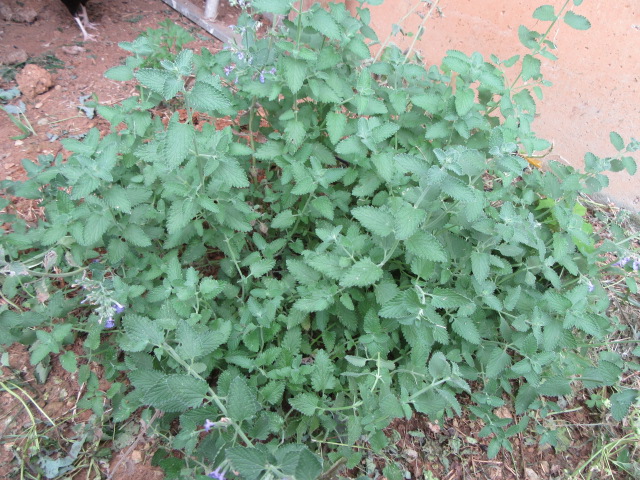
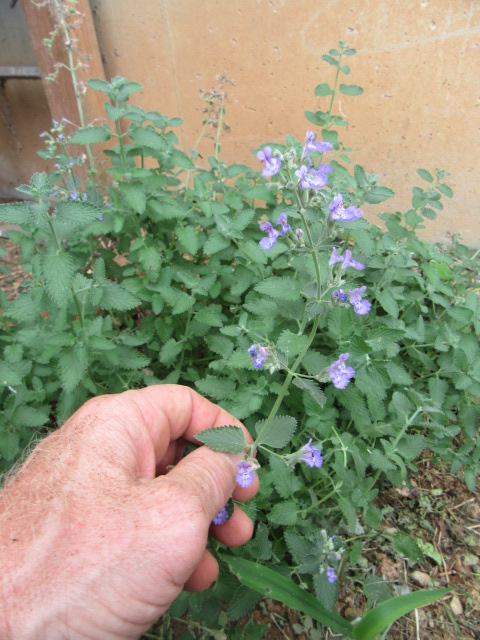
The Nepeta x faasenii (Catmint) is still doing very good in it’s own little corner. Despite the soil quality there it is spreading very good. I am so glad it is happy!

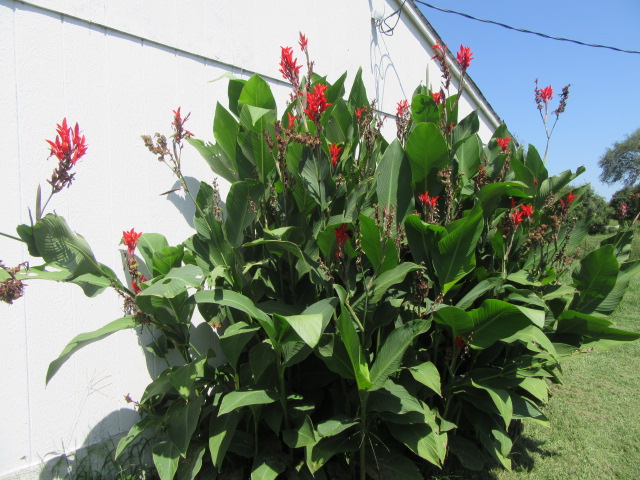
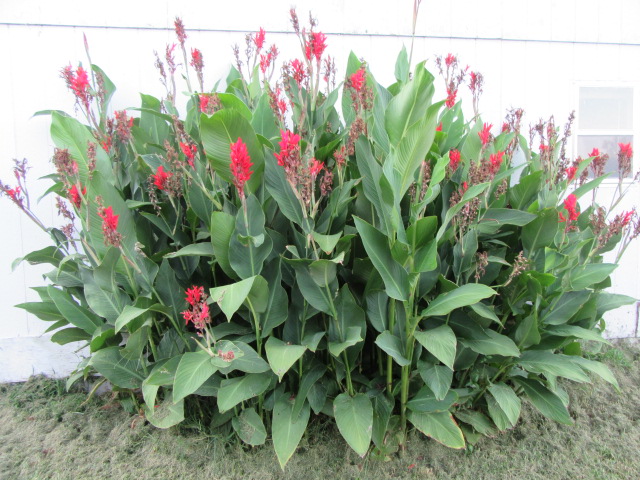
Dad’s red Canna’s.

The Canna’s have done really good AGAIN this year and have grown to at least 8 1/2′ tall! This fall, or maybe next spring, I am going to paint the garage then dig up the whole area along the garage and space them out more.

Well, that’s it for this post! I have been busy all week working on the pages to the right but still have a LONG WAY to go. You may have noticed that a couple of times on this post you can click on the plant names and be redirected to their own page. Some of those need updated as I take more photos.

SO, for now, stay happy, positive, healthy and get outside as much as you can. Enjoy nature, take a deep breath of good fresh air. Realize that we are not alone and just embrace the energy from the universe that we are all a part of. I hope you enjoyed this post as much as I enjoyed thing the photos and writing the post. If you did, I would love to hear from you and be sure and click on the “like” button.

One more thing… GET DIRTY!!!

What Do You Think?

We all have our opinions. I have mine as usual. But let’s be serious for a minute. The last several presidential elections have left us with very few good choices. In the beginning there are always several good choices but they seem not to have the support, financially, for some reason not to win. I always thought Mike Huckabee from Arkansas would be a very good president. He has run several times but just doesn’t get the support.

Hillary Clinton, to me, has always been scary. I believe she has always had her own agenda and tells us what she wants us to hear. Call it conspiracy theory if you want, but there is just to much about her that makes me very nervous.

It seems that some people who are republican or democrat will always vote that way no matter who is in office, regardless of their views. We need to choose our elected officials based on who they are and where they stand on important issues that face this country and not on their political party. There are rats in every party.

SO, I will admit to you… In the last election, even though I had many concerns about Trump, I absolutely did not want Clinton to be president. There is just to many lies and deception that follow her around like a big weight. Then there is Trump. His mouth, his crazy tweets… They should take his phone!

Whether or not we even know the truth about much of anything… The media does not like Trump and they can drag out a story for weeks and then bring it up again weeks later. While I am sure Trump may have some good ideas, others are just crazy. I mean, he just blirt’s out tweets like he can’t help himself!

I am sick and tired of hearing about the Russians… Let’s just drop all these investigations and move on. There are far to many things that are more important. I don’t even watch the news, but my dad, who is 86 and can’t hear tells me what he heras. Then there is the news posts I se overtime I log onto the internet. I scroll down and same various articles to my reading list for later, which after a few days I may read or I may delete.

We have the technology to stop hackers or follow them back with a virus. The internet is a two way street so why not give the hackers something to remember. If they want information, invite them to dinner or something. Let’s make it easier to hack so we can stop them. The harder we make it the harder they will try.

While it is true that there are many controversial issues where both sides have good and bad opinions. The racial issues in this country need to be faced head on. Telling both sides they are at fault, depending on the groups you are talking about is ridiculous. That is like telling the Jews they were partly at fault for the holocaust. Why, because they were there?

We live in a society where there is so much confusion about who is right and who is wrong. In many cases and viewpoints, we believe what we believe because of the way we were taught or brought up. Like the difference between Christianity and Islam… Christians and Muslims. In so many ways we/they are both wrong. That is particularly true if the Sumerian tablets tell the real story of man’s existence. SO, in effect, if they are true, then both Christians and Muslims are dead wrong. Christians say that the only way to be saved is to accept Jesus Christ as your Lord and Savior. No wonder the Muslims don’t like Christians. Then the Jews have their own opinion. What about the Hindu… We are all reborn into a baby or something. Well, according to the Sumerians… Besides, Abraham’s father was a high priest to Enlil in Ur… When we accept something as true, we fall through a funnel into a little bottle which is like the smallest dust particle compared to the universe. Ummm…. I climbed out of the bottle. We believe in our religion, no matter if it is true or not, but we believe regardless of other truths, or the truth. SO, what is the truth? Who is God? He is the creator of the universe which is ever growing and expanding. Why? Because that is what God does. He creates. But we are also creators. OK, I better stop there on that subject.

All people, all across this planet are part of the same universe and the same creation. In other words, we are all one. No one is greater than the other no matter your race, age, sex, or anything else. We are equal! We need to focus on the truth and build each other up as brothers and sisters.

Look at how much money is spent on weapons that could be used to do good things. Like feeding the poor, education, technology for the good of humanity, and so on… Why do we feel threatened by other countries? It is because they feel threatened by us. We are all paranoid!

I lived in Mississippi for several years and I became good friends with many people, both black and white. I was talking to a few black men one day, and one of them was pretty down about the fact that he was black. He was making my opinion about something and mentioned the fact that I was white. I put my arm next to his and said, “I be darned… My skin is different.” I went on to tell him that we had the same color of blood and we had the same creator. The mansion I lived in was on the side of the creek where many blacks lived. When I needed help, it was the black men in the neighborhood who were always there and available. I did have several white friends who were also like brothers, or like a son. I attended an all-white presbyterian church a few times but it was like I was an outsider. I was invited to a black church by a lady who was like a mother to me. I was welcomed with open arms and I went to that church from 2009 until I left Mississippi in February 2013. I went to several conferences with them where I was the only white person. I was always treated like one of them.

I lived in St. Paul, Minnesota with my brother from April 2007 until May 2008. That was quite a change for many reasons. One is because it was a much bigger city than I was used to. The other was because my brother (and his roommate) are gay. Ok, folks… I am a pure country boy with certain morals. I knew that would be a big change and it definitely was. But I got to see that “those” people are just like everyone else. My brother’s roommate’s family was from Jordan. They are Eastern Orthodox. This story could continue but I better stop there. I kept my sanity and my morals were completely left intact. But, it just gave me a different perspective on the gay community.

Then after I went to work for Dr. Skinner and moved to California I was around a couple of other groups. She lived in a neighborhood that was predominately Filipino and Hispanic. Well, Mexicans. SO, I got to meet and work with them. I didn’t work with any Filipino’s, but I did work with a lot of Mexicans. All the neighbors were very good people. The Mexicans were also very good people and I got along with them awesomely.

SO, what do I think about immigration? I think we are all citizens of this planet and we should be free to live, work, love, retire and visit anywhere we want to. As long as we have good intentions and mean no harm to anyone then we should be free to go anywhere we want and stay as long as we want. It is because of people who mean harm to other races and religions that keep the rest of us from being free. There are also those who move to a country where they have benefits from the government that make restrictions and and visa’s necessary.

I think that it is important to know who people are, sure. We need to try and keep criminals and terrorists from coming here, but it also makes it harder for people to come who are good, honest and hard working people. People who can and want to make a contribution wherever they live. When I say “contribution” I mean to work to support themselves, their family and help others less fortunate than they are.

There are A LOT of illegal men, women and children living in the US (and in other countries). Some are working in secret looking over their shoulders all the time. Others live in very bad conditions, just as bad or worse than where they are from. They work for cheap wages and bad working conditions and don’t say anything because they are afraid and can’t. Then, there are those who are in the drug trade… Criminals who come here to help traffic drugs and stolen property and so on. SO, what do we do?

I think everyone who is working in the US illegally should be made legal. They are here, they are working, so make them legal so they can pay taxes like US citizens. The others should be given work visas so they can find a job. Give them a time limit and help them find work. If illegal immigrants break the law, what do we do with them? Put them in jail at the expense of the taxpayers? I think they should be evaluated to find out why they chose to break the law, Surely most of them didn’t come here to break the law. Many of them come here to find work and can’t because they are illegal. Many are good people faced with tough and scary decisions. I knew Mexicans in California who were illegal who had good paying jobs, families and even were buying their home… Using legal Mexican’s name. SO, we are faced with many issues concerning illegal immigrants.

BUT, we also face many issues with American citizens as well. We have criminals that run free, Our prisons are full of criminals who are living on taxpayers money. When they get out, they commit crimes all over and wind up back in prison. We have people on death row that have been there for many years and still haven’t been executed. We have many people in prison with life sentences. We have handicapped people on disability that have not worked for many years and never can. They all live off taxpayers money. Believe me, I am not lumping disabled people with criminals, I am just stating that they live off taxpayers money, which they can’t help. But, there are people on disability that are not disabled, which almost makes them criminals.

SO, what do we do? We are all one. We are one with the educated and uneducated. The poor and the wealthy. The people who make this planet go great and the criminals. People of many races, cultures, religions, sexual preferences, and so on. We are all one together. Time to stop fighting with each other and embrace one another differences and realize we have a lot in common. We all breathe the same air, drink the same water, eat food for the nourishment of our bodies. Whether you live in a big city or in a remote jungle… We are all one in this universe which is truly amazing.

Well, I have more opinions… But I kind of got sidetracked. I was going to make this post because of Donald Trump and how shocked I have been about some of his behavior… Well, maybe that can be for another post somewhere down the line.

SO, for now, take care, be blessed, happy, healthy, prosperous and do try and GET DIRTY!

PS… Parts of this post may self destruct after 24 hours. I am supposed to be working on the tomatoes but it took almost 2 hours to write this post! MAN how time flies! How could it have taken 2 hours?  2,300 words!


Have You Noticed Your Card Has Trash?

Hello, I was wondering if you can do me a favor? When you move the photos from your video card to the trash what happens? Your video card is empty, right? So then you eject your card reader, remove it, or whatever thinking it is empty…

A couple of years ago I emptied my card as usual then left it in by accident. I checked my trash and HOLY CRAP!!!! Every photo and video I ever trashed was in my trash  AGAIN even though I had emptied the trash many times. THOUSANDS of deleted photos folders and videos. Not only what I had taken with my camera, but every photo and video I had taken with QuickTime (I have an iMac). That was good in a way, because I had trashed and deleted some photos I wished I hadn’t and found them again.

I know, that sounds crazy, but it is very true. Lately I have been going through photos and videos and deleting old ones that are blurry or duplicates, or whatever. Sometimes I take videos then take photos of the videos, then delete the videos. Even AFTER I delete the trash without the video card, they are right back in my trash when I put the video card back in. Videos/movies take up much more space than photos

So, what is the favor? Remove your trash without your card reader and card inserted in your computer. THEN, put them in. Remove the photos from your card… Then check your trash while the card is still in your computer. What do you see?


OH, MY ALOCASIA!!!

Hello again! This evening, after dealing with the little hen, I started pulling some grass and weeds from around and in the shade beds. A couple of days ago dad and I went to Sedalia because I had to get a HUGE bag of potting soil. I wanted him to go because he doesn’t get out much and a change of scenery would do him good. He enjoyed the trip and liked seeing the corn, soybeans and cows along the way.

The above photo shows how big Alocasia ‘Calidora is getting once again. She has had several flowers again this summer as she usually does. I think I removed one of her babies earlier and gave it away, but there is still another one that needs to come out… But, that is just the beginning.

This pot of Alocasia ‘Mayan Mask’ also needs some attention. How many babies does she have in there? Then I noticed something weird…

She has adopted someone elses kids! Now, how in the world did Alocasia ‘Portora’s kids get in to ‘Mayan Mask’s’ pot? You can easily tell my four Alocasia from one another. A. ‘Calidora’ has green stems, I mean “petioles”, and huge green leaves. A. ‘Portora’ has maroon streaked petioles and green leaves. A. ‘Mayan Mask’ has green petioles and the undersides of the leaves are maroon. A. odora is smaller and she is, uh, a different story.

I also noticed the petioles of the ‘Mayan Mask’ babies are not completely green. There is a faint hint of maroon streaks that I hadn’t noticed before. Maybe they have always been that way, though, and I wasn’t paying attention.

As you can see, the ‘Mayan Mask’ leaves have maroon undersides. The top of the leaf shows white veining.

This is a photo of the big pot of Alocasia ‘Portora’ The leaf at the very top is from Alocasia ‘Mayan Mask’.

Ummm…. Looks like the pot of Alocasia ‘Portora’ needs a complete overhaul. I didn’t count yet.

EARLIER, I had already divided the pot of Alocasia odora… I know I took a photo a few days ago of those pots but I can’t find them…  My camera or photo card is being weird lately, even more than before. I have gotten used to it giving me a few photos that are half missing so I have been taking two of everything. It also does this deal where the photos won’t open so maybe that is what happened to  the last photo (s) of Alocasia odora.

I put the larger plants into five separate pots and gave one away. Then after that, several babies came up in the pot I removed them from. SO, I put three each in four other pots. BUT, all the other four pots now have MORE babies. Alocasia odora is definitely prolific!

This photo, four of the pots of Alocasia odora, was taken on July 19… They look nothing like that now. I had stuck a couple of cuttings of the Coleus ‘Spiced Curry’ in one of the pots…

SO, I dug out as many of the medium sized pots I could find because I have to go to work on the Alocasia… SO, the next post will be about that adventure.

For now, that is it for this post and I hope you enjoyed it. Take care, stay positive, he happy, healthy and prosperous. Go outside, take a deep, listen to the sounds of nature around you and embrace life to it’s fullest! One more thing… GET DIRTY!!!

CATASTROPHE! GEEZ!!!

Hello there! Early this evening, a little after 6 PM, I decided to let the chickens out of the house, including the three Old English Game bantam hens. Since rooster #3 was outside as usual, I left #1 in their pen. For those of you who don’t know who #1 and #3 are…. Besides the two larger roosters, the Delaware and the White Chantecler, there were three Old English Game bantam roosters. 1,2, and 3. I gave #2 to a friend, #3 runs outside and #1 stays in the pen with the three hens.

ANYWAY… After I let the chickens out I went to the store and to get dad his dinner. When I came back home I took dad his dinner then went to the chicken house. The O.E. Game hens were in the chicken house instead of enjoying their time outside. I squatted down at the door and one of the hens, (in the above photo), walked up and just looked at me. I looked at her and said, “What in the hell happened to you!” Pardon my language, but that is what I said. She stood there looking at me and I at her because I could not figure out what the “F” (and I don’t mean frost or freeze) was wrong with her.

I guess she expected an instant reaction to her predicament but I didn’t have an instant reaction. I was in as much shock as she was. I was looking at her because of the look on her face… I could not at first figure out what was wrong with her. Her top beak was, uh, like missing. So she said, “WELL, now what?” That look of utter puzzlement was on her face and she expected me to do something. She walked off and I had to chase her down so I could have a better look.

I didn’t have my camera with me, or you could tell by the photo why I was in shock. Her top beak had gotten pushed back and was stuck inside her bottom beak! I realize if you know nothing about a chickens anatomy that sounds a little impossible. BUT, inside the bottom beak is a v-shaped area, similar to the inside of our mouth behind our gums. Like where our tongue rests. ANYWAY, that is where the point of this hen’s top beak was stuck. The point of her beak was close to sticking through the skin under the beak. This girl was traumatized.

I took her to the house to show dad because I knew he had never seen anything like that. He looked at her and his jaw dropped. I went back outside and sit in a chair. Then I took a hold of her beak which she didn’t like and wanted down. I put her between my legs so she couldn’t get away and was about to try to somehow push her beak back to dislodge it. She shook her head and her beak popped out. SO, that was much easier than I thought it would be. I rubbed her face and beak for a few minutes. The rooster jumped on the arm of the chair and then on my lap. Her face and beak went back to normal and she started talking. She was OK. GEEZ!!!! I let her down and she immediately started cackling at the cats. Then she and the rooster went down the steps into the grass and she started eating.

I took more photos but I have no idea where they went…

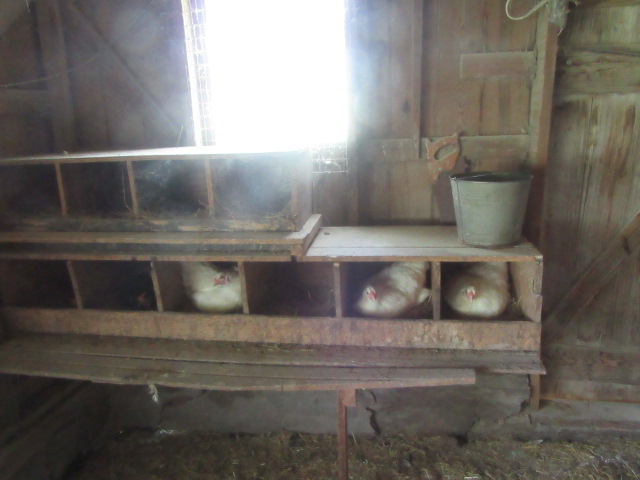
I went out to the chicken house and brought the other two hens. One of them has been broody all summer and the other one for over a month. They are both in the state of confusion where they are coming out of broodiness. They cluck and sing both but are spending most of their time out of the nest now. They still aren’t interested in yet. LOL. The one hen, like I said, did not go broody and continued laying. You can tell the other two have not been laying because their combs are shriveled up…

The other chickens were enjoying their time outside, too. That coop is where #3 stays at night.

Well, I think that is all for this post. I just wanted to tell you about the little hens traumatizing event. Just goes to show you you never know what can happen with you least expect it. How she got that way is a mystery. Maybe she had jumped on the nests of the other hens, like she likes to do, and that happened when she jumped off. Thank goodness she is fine now. WHEW!!!

Stay well, be happy and prosperous. Of course, GET DIRTY!

Monday Update

Hello folks! I have finally finished picking the sweet corn and wound up freezing about 200 good ears. The sweet corn did good, and I can’t complain, even though 2/3 are still on the stalk. The remaining 2/3 are partly not ready to pick OR were ready but not filled out very well. You can feel the ears and tell how well they are filled out. I still have most from last year in the freezer! The green beans did very well and I canned 24 pints and put several quart bags in the freezer. I also gave away maybe at least 10 gallon. There are still 30 pints from 2016 and I found a straggler from 2013 and 2014 that somehow got mixed with the empty jars. Besides that, there are still 10 quarts from 2013… Dad wanted me to can a few quarts for when company comes, but that doesn’t happen very often and it seems we usually go out to eat.

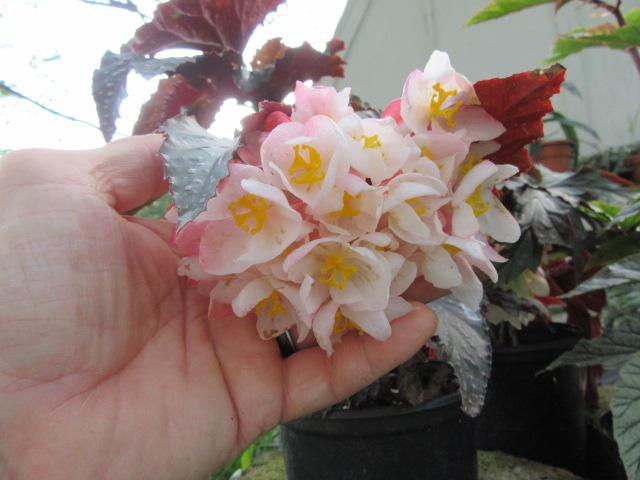
OK, so now for today’s photos, unless I don’t get this post finished today. If not, they will be yesterday’s photos. When I was out behind the shed where my potted plants are, I noticed that Begonia ‘Fannie Moser’ had two nice flower clusters.

I have grown several cultivars of Begonia’s, but I have never seen such HUGE clusters before.

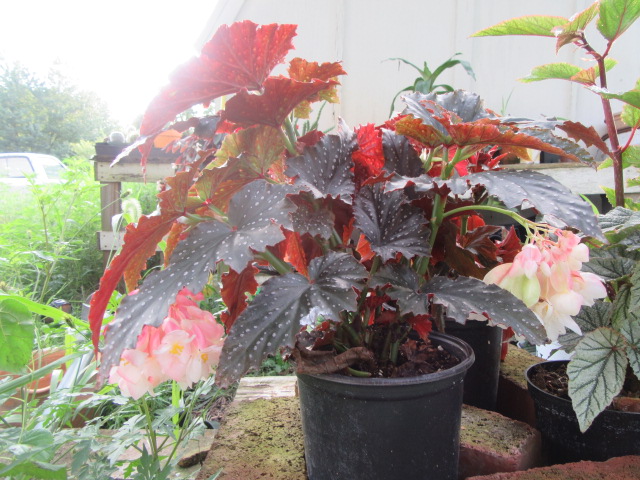
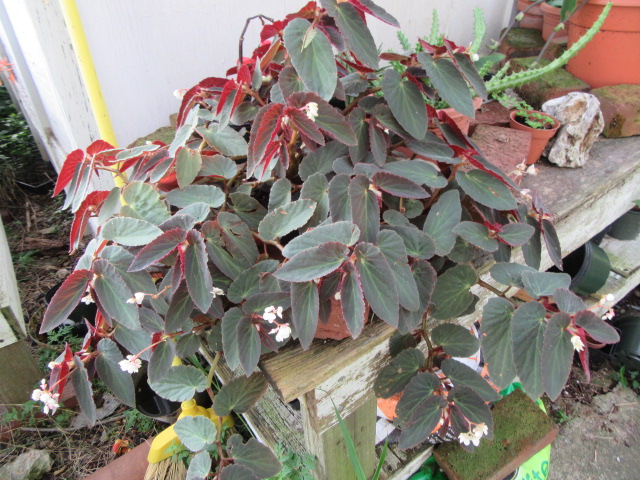
The Begonia ‘Brazilian Lady’ is growing up a storm. She is definitely a beauty!

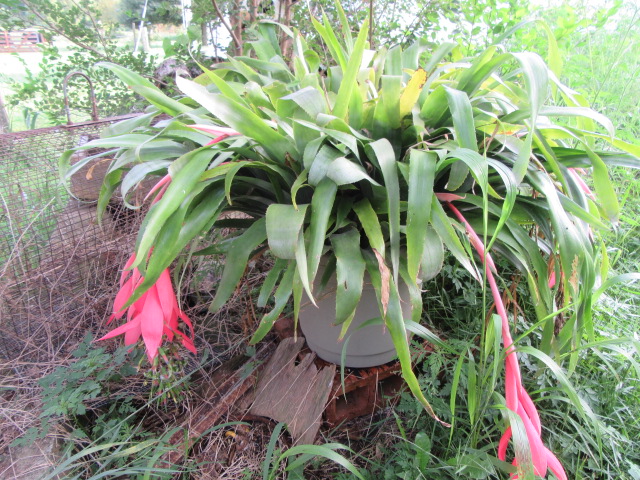
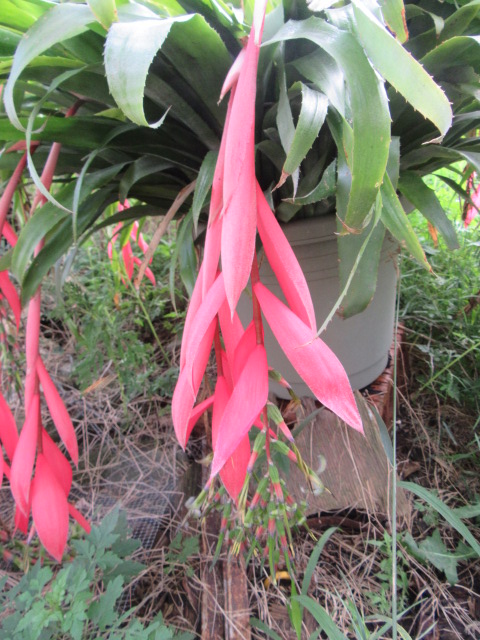
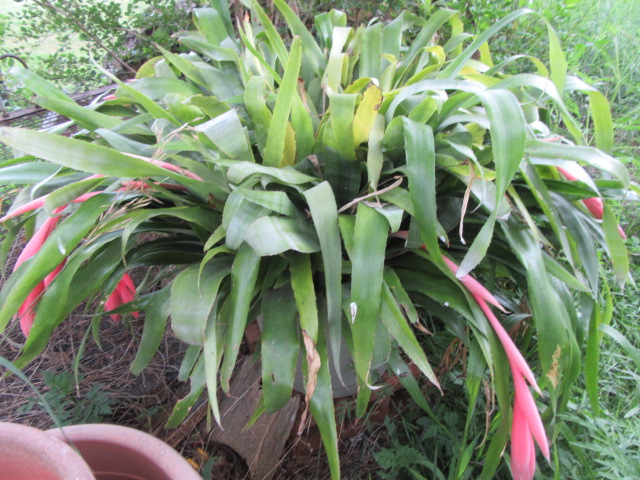
The Billbergia nutans, Queen’s Tears Bromeliad, is blooming up a storm. I STILL haven’t gotten it divided. I think some day I will go out and find she has jumped out of the pot herself. You know the old saying… Well, I better not say it on the blog.

The flowers are AWESOME!

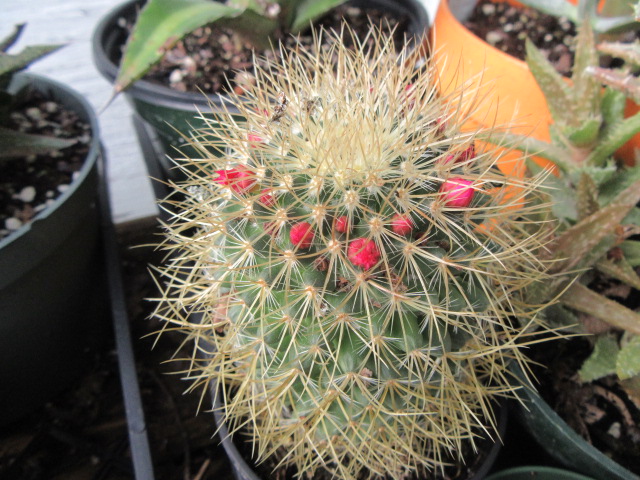
The Mammillaria pringlei is STILL budding. This species is on the red list in it’s native habitat and is down to only three locations. It seems that not only is it in danger because of it’s restricted range, but also because of the use of whole plants and it’s flowers as Christmas decorations… Apparently I need to update the name of this plant. Although the tag says Mammillaria pringlei, it is correctly Mammillaria rhodantha subsp. pringlei. I can’t imaging hanging this plant on a Christmas tree. That would definitely teach the cats not to play with the ornaments

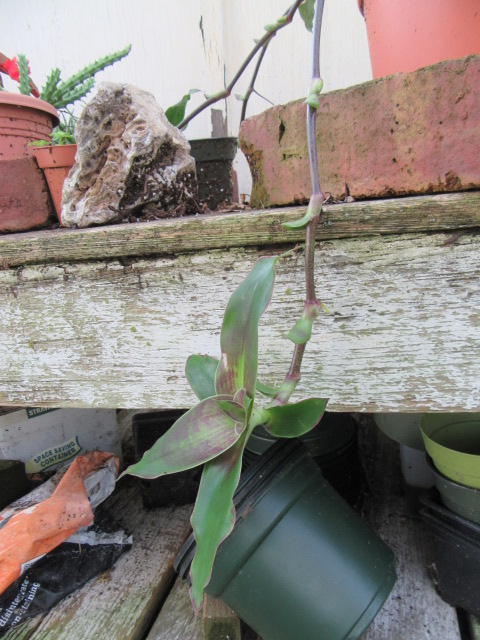
This Callisia fragrans doesn’t look like much from this photo, but this Bromeliad, also known as Inch Plant or Grandpa’s Pipe, etc., will surprise you…

I am not sure how many of these it has now, but it doesn’t want to stop. I have no clue what I am going to do with it this winter. The Billbergia nutans is perfectly comfortable in the basement over the winter, and even flowers down there, but I am not sure about this one. I have only had the Callisia since June, so we will just have to take it one season at a time.

I kind of allowed the Oenothera biennis (Evening Primrose) to do it’s thing this year. First they were growing in a crack in the floor of what used the be the back porch of the old house. Then, they started coming up like mad in the flower bed. I always pulled them up because that is not what I want there. This year, I let them have the spot between the back porch and basement steps. I didn’t plant them, they did it on their own. I think they must have appreciated that…

I am still not sure what has been up with the Physostegia virginiana (Obedient Plant). It’s leaves look burnt or something… I thought this plant was supposed to be somewhat invasive, but that hasn’t happened. Maybe next spring it will take off. Maybe there is something about this spot it doesn’t like… Maybe I should move them…

The third Lobelia cardinalis (Cardinal Flower) is FINALLY going to bloom! Looks like it may be red! THANK GOODNESS!!!

I have never seen the Conoclinum coelestinum (Floss Flower, Hardy Ageratum or whatever you want to call them) go so wild! They are getting so HUGE and barely flowering yet!

The Achillea millefolium (Fern Leaf Yarrow) here by the side porch is now showing us what it can do. It has been flowering for a while, but this week it has really strutted. Like I said before, it doesn’t like it here and is trying to go farther out into the yard. It wants more sun and it is determined to get it’s way… As it moves farther out, the bed gets bigger. Maybe dad won’t notice a foot or so more a year. The clump by the chicken doesn’t complain at all.

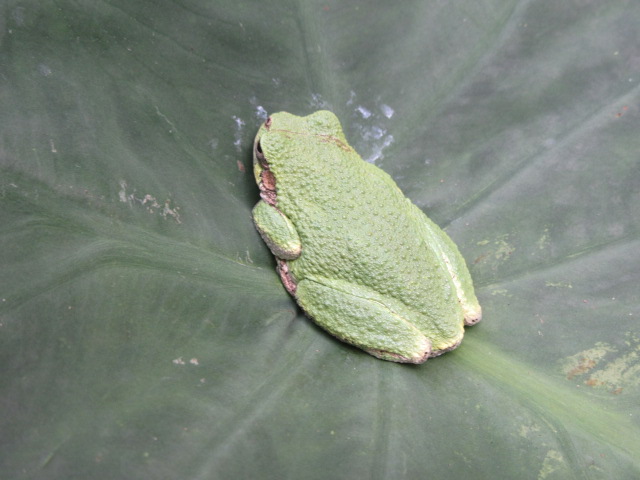
GEEZ! I was looking at the leaves of the Colocasia esculenta and found this guy using one for a hammock! I have found them in the weirdest places! We have a lot of tree frogs!

The Salvia coccinea (Scarlet Sage) are STILL coming up and many are flowering very well now. I am trying to get them all to be red eventually.

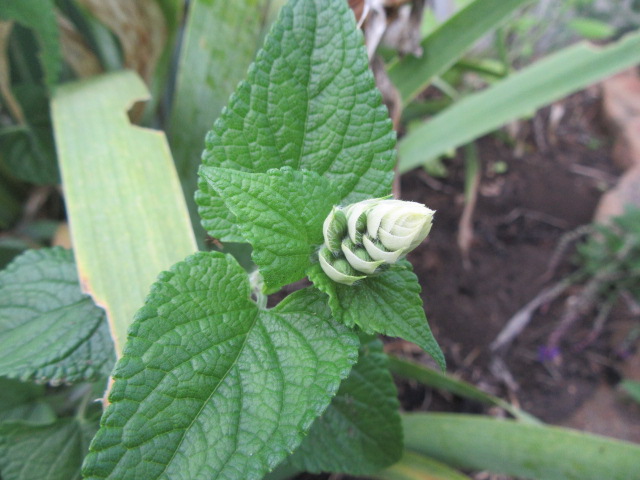
They have the neatest buds…

The Celosia spicata ‘Cramer’s Amazon’ is… (I have to whisper to tell you how awesome it is otherwise it gets the big head!).

NOW that is the color I want from my Marigold ‘Red Brocade’ (Tagetes patula)! Beautiful mahogany red, gold edging and a little gold in the middle. So many this year went back to more of a gold color. I guess I have to dead head and discard all the odd colored flowers to they won’t go to seed and save the color I want AGAIN. You have to admit that is a nice flower even though it stinks.

OK… Maybe I did over do it. This is just half of them. Normally, I would just transplant two or three. But last year there were none for some reason. This of course, is the Talinum paniculatum (Jewels of Opar). The deal is, I like this plant… I like the color and texture of it’s leaves and the weird way it grows… It is heat and drought tolerant and just a great overall plant except for one thing…

It’s jewels… OH, there were more but all the rain we had over the weekend knocked most of them off. That’s what I get for procrastinating and not deadheading. It would be great if those were real jewels! We would all be quite wealthy (with money, that is).

Well, that’s it for this post. I actually got it finished on the same day I took the photos. I hope you enjoyed this little stroll and look forward to hearing from you. I need to go visit your blogs now and see what you have posted for the day. I have done pretty good the past few days reading your new posts and I have enjoyed every one.

SO, for now, take care, stay healthy, be happy, prosperous and, of course, GET DIRTY!

Sunday Stroll

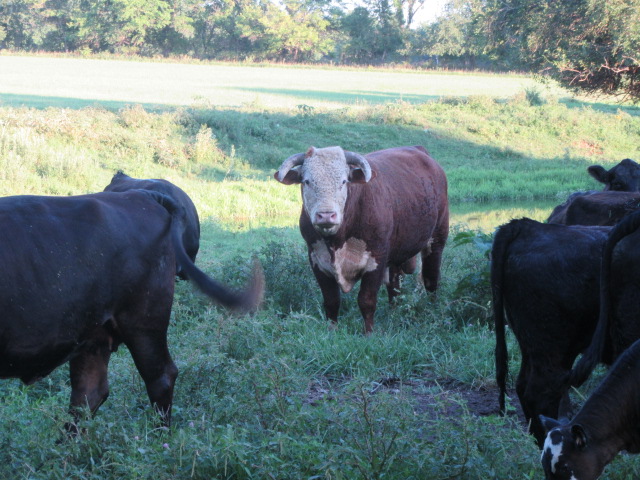
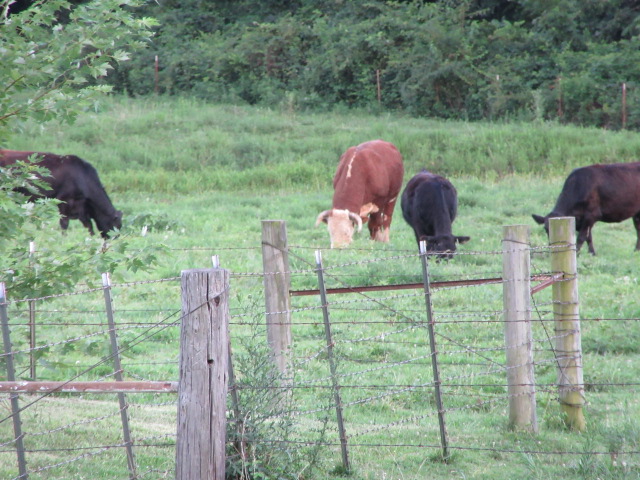
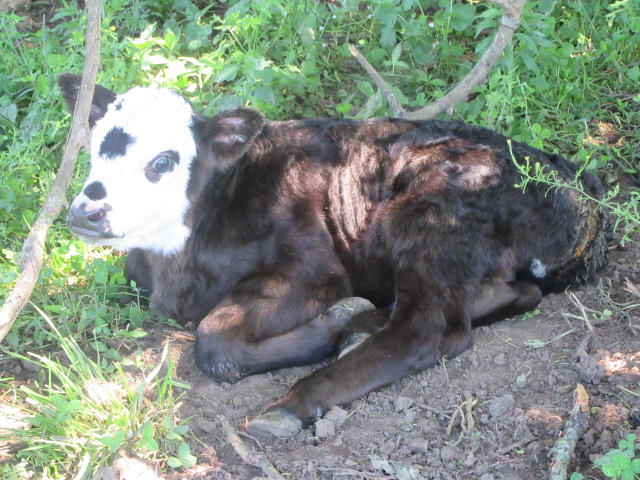
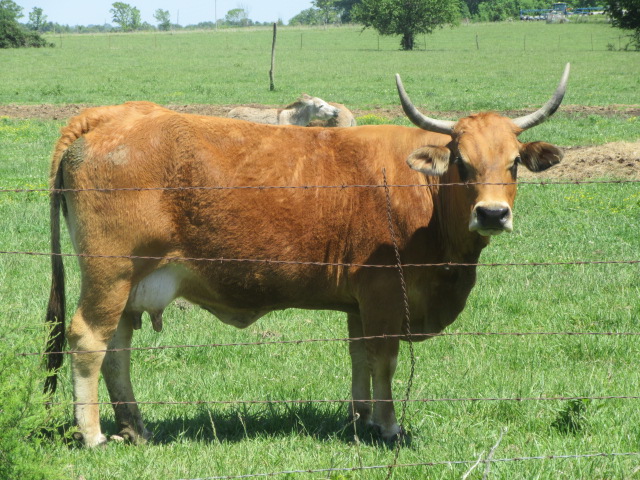
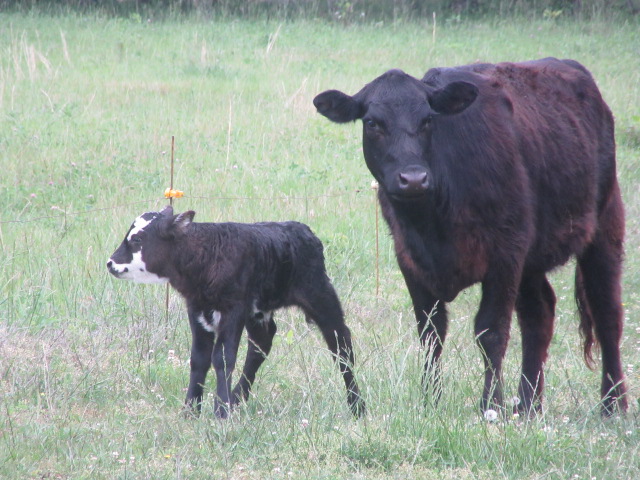
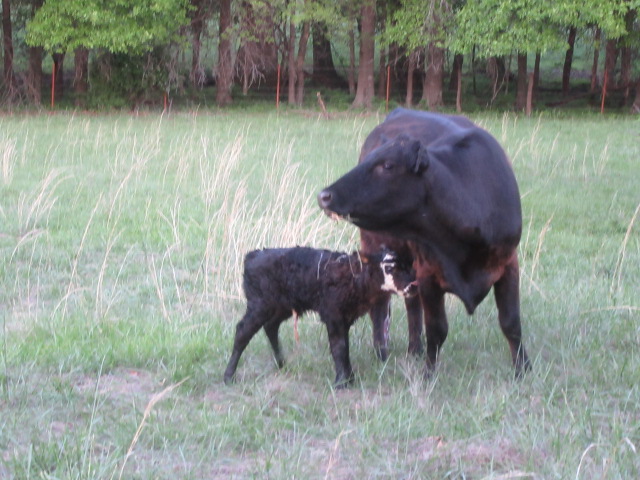
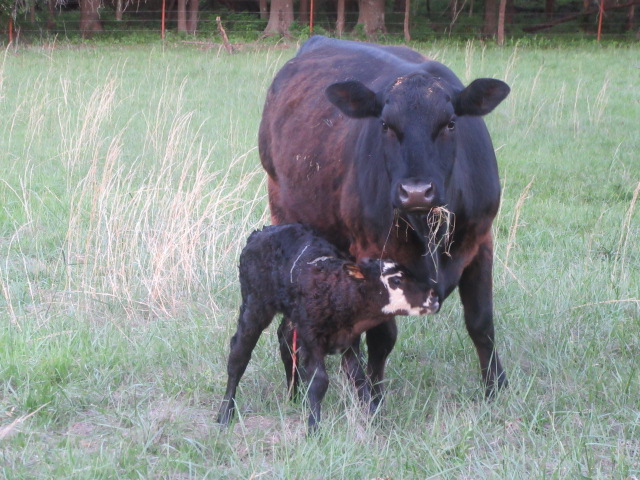
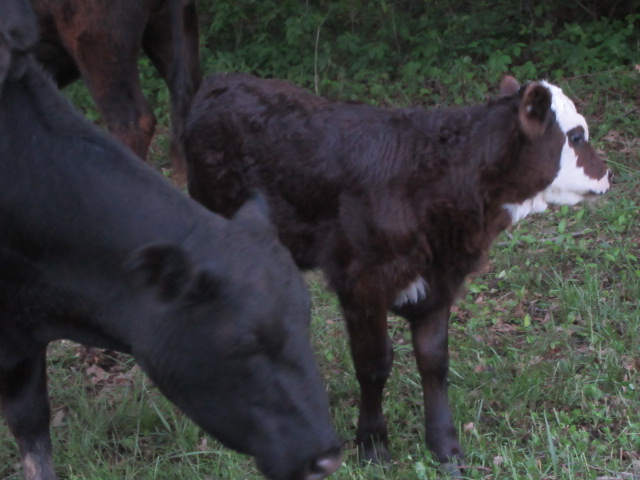
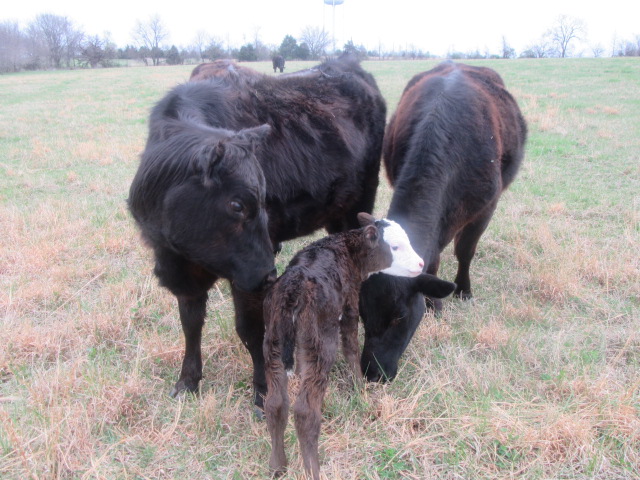
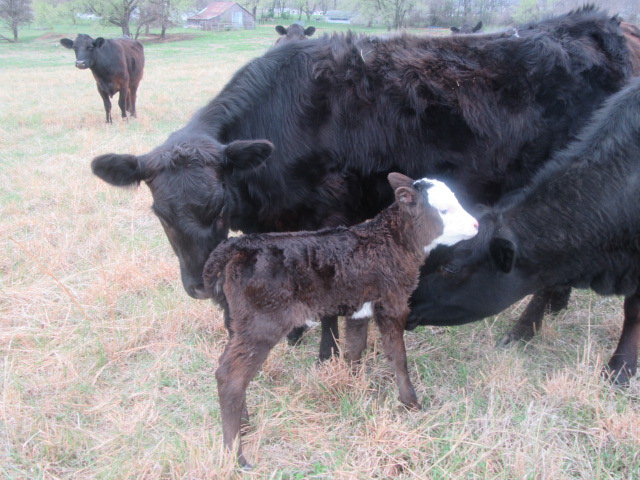
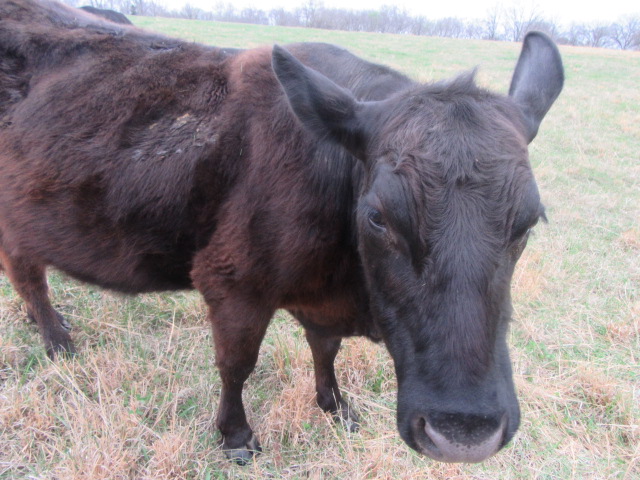
Hello everyone! I know it is Tuesday already and I took these photos on Sunday afternoon and  early evening. We have a new bull that actually arrived July 22. He is a Hereford like the one last year. They seem to have a much calmer disposition and don’t get to excited. This one is more alert than last years bull, though. Dad said I may have trouble with him but so far so good. I have been fairly close to him a few times and have had no problems. One great thing about using a Hereford is that the calves come all different. The cows are all black, with maybe a white spot somewhere if you look close enough. They all have different personalities, though. Some can get a little over friendly sometimes while other times they are stuck up.


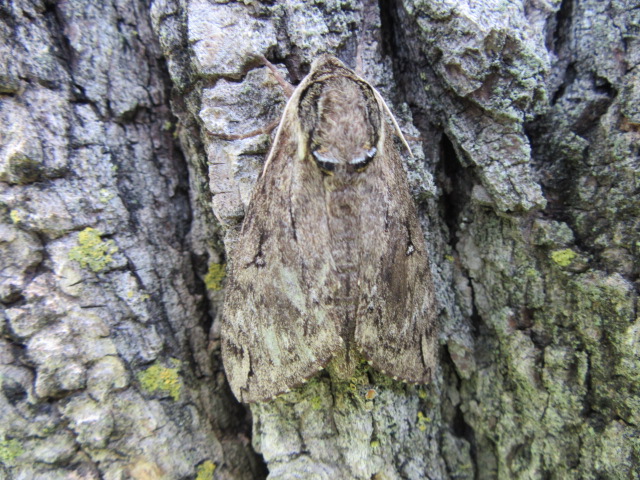
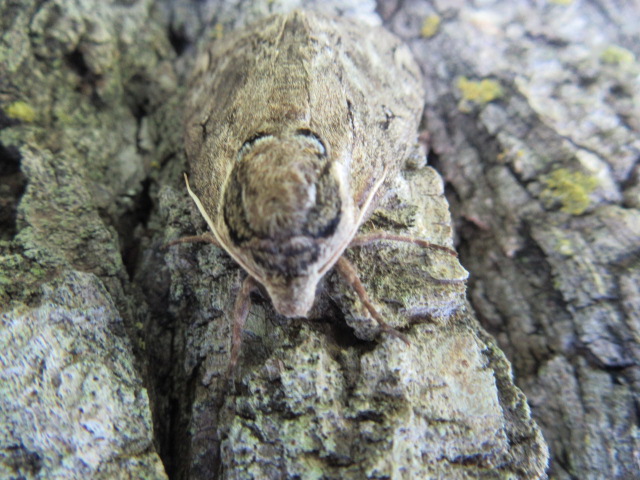
This moth fell on the ground when I opened the door to the rooster’s coop. I picked it up and let it crawl on the trunk of the tree next to the coop. I don’t know exactly what species of moth it is, and I looked at plenty of photos online. I submitted photographs to the Butterflies And Moths Of North America website. Yeah, I had to join…

I know it’s caterpillar may be destructive to something, but that is for another day. Over the past few months I have been looking at life a little differently. I know, it’s weird. It’s like I have woke up and see kindred spirits in animals and even insects. Not all insects, however. Tics and mosquitos are a different subject, the blood suckers, and I have no clue why they were even created (or evolved). Even white flies and aphids I still don’t appreciate and don’t hesitate to eradicate them with Neem Oil. Neem oil doesn’t harm beneficial insects and they can even continue feeding with no problem (I think). I even let the squash bugs have what was left of the zucchini. Last year they attacked my tomatoes which I didn’t appreciate one bit, but so far this year they haven’t found them. BUT, if they do there could be a problem.


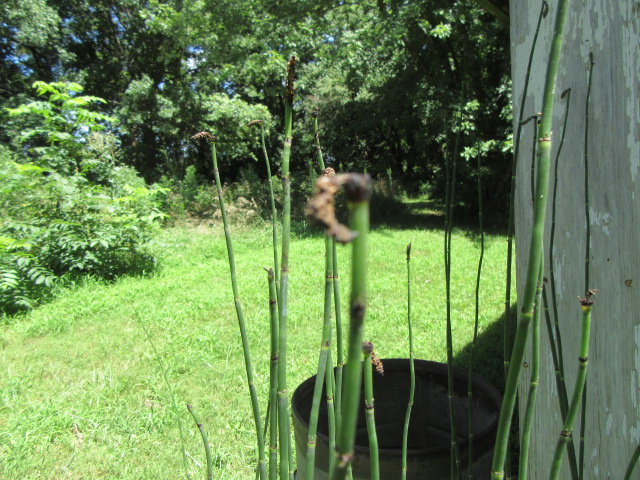
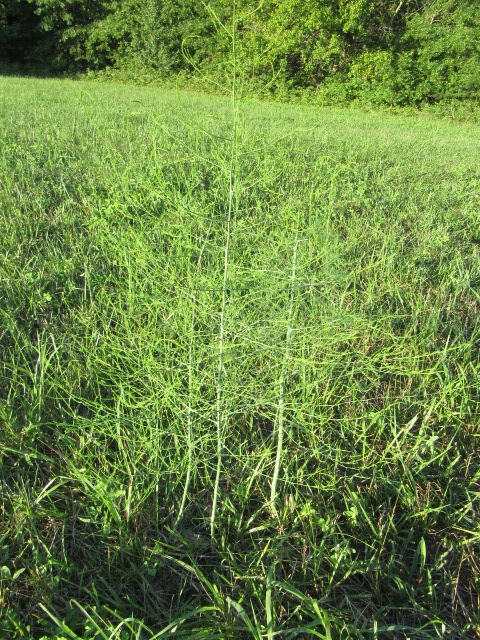
I noticed the “cones” on top of the Equisetum hyemale (Horsetail) have burst. OH, that is so great!!! Now there will be even more. I am just kidding about that being so great because these guys know how to procreate! Is there a birth control for plants?


Another plant that wants to invade anywhere it is allowed is the Lonicera japonica or Japanese Honeysuckle. It is all along the south border of the south hayfield and back pasture. I have noticed it popping up here and there in the yard and in the ditch, as well as a few other unwanted intruders. This honeysuckle produces yellow and white flowers and do attract a lot of hummingbirds. A while back I was in the hayfield close to the honeysuckle and was shocked at how many hummingbirds there were. There is a white one growing in a tree along the fence but it seems different and not as invasive. I took photos of it before but didn’t write a post about them. They will appear on one of the pages to the right some day. (LOL).


I walked up by the new shade bed and noticed the Heuchera ‘Obsidian’ is flowering now.

I wanted to walk up through the south hay field to see how the grass was doing after the hay was baled…

I was walking along in the hay field and felt like I was being watched… We have quite a few deer around here and it is always odd to me how sometimes there will be one all alone. A few days ago dad and I saw a doe and her fawn grazing along the highway. A couple of years ago there were two orphan fawns, to young to have been weaned, grazing along the street close to our farm. I had also seen them grazing on the lawn at the motel, right along a busy street.


Along the south border of the farm is kind of like a wilderness, or wildlife habitat. Well, the Rock Island Railroad used to run along there and now it is the Rock Island Trail. SO, the right of way, between the farm and the trail is, for the most part, a jungle. Full of blackberries, raspberries, honeysuckle, poison ivy, Solidago (Goldenrod) as in the photo and…

Monarda fistulosa (Wild Bergamot or Bee Balm) is growing here and there. I like this plant.


I don’t know what this crap vine is but I don’t like it. It is very tough and thorny. I don’t like it so well that I am not going to bother to do research and find out it’s name…


Here is a nice patch of Poison Ivy if you would like a start… I have plenty to spare and it spreads really well so I won’t miss any if you would like a start. I have tried to give it away but no one seems interested. It’s leaves turn a nice reddish color in the fall.


There are two clubs of Asparagus growing in the northeast corner of the south hay field. I saw them last year when I was moving the hay. This spring when the Asparagus was coming up I found one spot (because there was a spear sticking up) but I never found the other. After I picked that one spear, I never could find them again. Yeah, I know, I should have stuck a pole with a red flag on the spot… This fall I have a good notion to dig them up and move them to where I can find them. NOT that I will harvest any, I just want them to spread like wild fire. Isn’t it weird how what we want to spread doesn’t and what we don’t want does?


The Vernonia baldwini is beginning to strut it’s stuff. Some people just call it Ironweed, but it is also known as Baldwin’t Ironweed and Western Ironweed, There are 671 accepted species in this genera, some of which are very important medicinal herbs. Butterflies, bees and other various pollinating flies love this plant!


We have several Persimmon trees, but this one is the main one. Strongly, this year it has very few persimmons. I saw one in the fence row behind the hay field that has a few and I didn’t know it was there until Sunday. The webworms love persimmon and walnut trees. Last year there were a lot on this tree and there will be more later.


This is the main hay field… I already removed the 17 bales and now the grass and clover are growing very good again. I will put the cows in here later like I did last year. Dad never did that and kind of didn’t like that idea. BUT, it is beneficial for many reasons. Dad doesn’t like to spend money for seed or fertilizer which eventually takes a toll on the soil which then allows the sage grass to grow and spread. I read where 80-90% of what the cow eats goes out in manure… When you cut hay it strips away plant material so it doesn’t decay and feed the soil (like grass clippings do when you mow the yard). SO, grazing the cows on the field adds fertilizer. I just have to harrow in the spring to spread it around.

NOW, I am walking through the hayfield back down to where I store the hay for the winter…

These 17 bales came off the main hay field. The south hay field made 10 bales and another 7 from a small patch behind the south hay field… Dad doesn’t normally bale hay back there, but it was vary thick, mostly fescue with some letpideza. I told dad I wasn’t going to run the cows in there because I was going to have it baled. It was very thick so it made 4 bales.

I have something special to show you behind the bales next to the fence…

Well, these weeds are are not what I wanted to show you, but I have to walk through them to get there…

There are many mulberry trees on the farm, but this is the grandaddy of them all. It was an old tree when I was a kid and it is still alive. 

It is all gnarly but that adds to it’s character and wisdom. Kind of like when we get old. get grey hair and wrinkles. Just think of how many birds and insects have landed and crawled on this tree. This tree has probably also been struck by lightening several times, too. It isn’t very tall for it’s age and there is a MUCH taller one in the back of the farm.

After that I walked back to the, uh, back yard. You know, it is very confusing explaining a location here. There are two yards. One is where my grandparents home was and the other is where our house is now, which used to me one of grandpa’s gardens and apple orchard. Then there is the chicken yard, which really isn’t a chicken yard since the chickens stay in the house (unless I am feeling nice). Maybe I should make a map and mark the different areas so I can just say area A, B, etc.


Not much has happened lately except I did repot a few plants. The Amorphophallus is now in a new pot. Now, when some of you think of this genus, you may think of the Voodoo Lily, or maybe not. Voodoo Lily is a name given to several plants in the Arum (Araceae) family or aroids, which includes species in the DracunculusSauromatum,  and Typhonium genre. Even though many people call many of these plants Voodoo Lily, I think the only one that is the actual Voodoo Lily is the Sauromatum venosum. The name Amorphophallus comes from the greek word amorphos which means “without form or misshapen” and the word phallos which means “penis” which is in reference to the shape of the plants spadix. GEEZ!!! My computer’s new hard drive just learned a lot of new words!

SINCE I was given this plant by Wagler’s Greenhouse and someone gave it to her, she had so idea what the plant even was let alone the species. There are about 200 species of Amorphophallus… Luckily the leaves on the other genera are different so at least I know it is an Amorphophallus.


My new bromeliad, Callisia fragrans (Grandpa’s Pipe, Inch Plant, etc.) has a new pot. I think it should be in a hanging basket or at least on something up high so the, um, stems can hang down. One of them was sitting another pot and started taking root! I mean, growing roots. It didn’t take roots… Why do we say “take root” anyway?


The Tradescantia sillamontana (White Velvet, White Gossamer Plant, Hairy Wandering Jew, etc.) is really growing good this year.


When my sister was here to the greenhouses, she wanted a Baby Tears plant… I had no idea what plant she was talking about so she asked Mrs. Wagler. She told her it was this plant and my sister was happy (with the plant anyway). When my sister was leaving, I took a piece off of her plant. She exclaimed, “What are you doing?” I should have told her, “I a just being me.” Anyway, she said, “Alright”. But her tone did not say that. Now, folks… To me this looks like a species of Sedum and not like photos of “Baby Tears” online. It has serrated leaves, like a Sedum, but it is growing weirder than a Sedum… Baby’s Tears is Soleirolia soleirolii, which is also called Angel’s Tears and Mind-Your-Own-Business. I have news for you, sis… This is NOT a Soleirolia soleirolii. I just don’t know what it is… YET. I will tell you this much, it is doing very good!


My other Bromeliad, Billbergia nutans (Queen’s Tears, Angel’s Tears) is doing AWESOME as usual and flowering AGAIN. A very good friend of mine in Mississippi, Walley Morse, gave me this plant several years ago.  I have been needing to repot it for several years… It needs divided REALLY BAD!!!

It has just started and it’s flowers get MUCH longer. It reminds me of a Hermit Crab for some reason…

I also repotted several other plants but it’s time to leave this area for now…


This is the foundation of what used to be grandpa and grandma’s old house. This is where I lived from April 1981 until July 1987. The garden is in the upper left corner. The beds, where the Hosta are, and under the trees in the upper right corner. A few years after my parents had their manufactured home made and moved in, dad decided to get rig of the old house. SO, he gave it to the Amish. There were going to move it, but they realized they may have a problem getting it over the “hill” where the railroad tracks were. SO, they tore it down. They put the shingles from the roof and other stuff inside the foundation… SO, here it still sits like that. In my opinion…. This is a MUCH better place for a home and everything else just kind of fits around it. Grandpa had a plan where everything went, like the gardens, the orchards, the chicken house, the barn, etc. It was very functional and it worked well. Nothing was very far away. They should have torn down this house and put their new one in this same spot.


This is one of my beds for the “younger” Colocasia esculenta. They would do much better with more sun, but… I don’t really need them to do much better.


This is the north side of our house… I know, the algae needs cleaned off AGAIN! We are thinking about buying a power washer. I don’t want to go through the whole list of plants in this north bed. You have seen them all before on other posts already.


These are dad’s red Canna’s. They were in the bed on the south side of the house but I moved them to the north side of the garage. I should have spaced them out farther when I transplanted them because after just a couple of years they are overcrowded. SO, that is on my “to-do” list for this fall or next spring.


This weird plant decided to come up under the steps of the back porch. I let it grow because I wanted to see what it would grow in to. WOW!!! Did it ever grow in to something!

WHAT A WEIRD PLANT!!! The stems are very stiff and the flowers are so tiny… Where did it come from? I have no clue because I haven’t seen any other plants like it anywhere else on the farm. SO, here I go again. My research disorder is kicking in but I need to get this post finished. It has already been 2 days, make that 3 now, since I started writing it.


The south bed is looking really good! The Marigolds think they are the dominant plant and are trying to crowd out the plants in the middle row… I have cleaned up this bed a little since this photo was taken and I really need to cut the flower/seed stems off of the Jewels of Opar (Talinum paniculatum).

OH MY GOODNESS!!! There will be THOUSANDS come up next year! Not to mention the Marigolds and Celosia spicata ‘Cramer’s Amazon’!.


The cows are out in the front pasture now. They were pretty disappointed earlier when I went into the hay field and didn’t let them go up the lane to the back pasture. They were still waiting when I came back…

Well, that is it for this post!!! I have taken photos since these for other posts that will have be retaken. The photos that get outdated get moved to the various folders and to the pages to the right (eventually). It is a work in progress. My first Belmont Rooster blog didn’t take so long it seems. Everything was saved so when I did my second one it was a matter of copying and pasting. Well, most of those word documents were deleted so most of the pages now have to be started over again from scratch. I will NOT make that mistake again. Both not deleting the blog or the word documents…

Well, I better close for now. It its already Wednesday evening at 10:45. Until next time, take care, be happy, stay healthy, become prosperous if you aren’t already (you can prosper in many ways), and GET DIRTY!!! Go outside, take a deep breath. Listen to the sounds around you and take time to just embrace your life and the life around you. Live, love and learn!

Having To Many Ideas Is Not Good

Sorry, there are no photos this time…

Sometimes I get these ideas for projects and start and move onto another new idea before the first one, or others, are finished. How do you not do that?

I have a great idea for my blog, since it is supposed to be to help others. Those two words, “help others” is also complex. Help others do what? Get motivated, learn plant names, make a garden, how to divide plants, take cuttings, preserve the harvest, grow more vegetables in less space? The list goes on and on. SO, I have a lot of drafts…

Making videos would be AWESOME but I only have this camera. Downloading or uploading (whatever you call it) takes forever. I found out there are some cameras, like the Go Pro, that is much better and faster. The thought of doing videos used to freak me out. I mean, I am this old fart who doesn’t have a good speaking voice (in my opinion). I am bald and currently I don’t even have false teeth! OK, maybe I could have left that last one out. But, it is the truth. I am who I am, like it or not, you get what you see. Dirt usually under my nails and all.

This evening I repotted several plants and I thought what a good video that would have made for some folks who are reluctant to do it. It is very simple and something that needs to be done from time to time to keep your plants happy. That is our job, you know, and it is a two-way street. If you want to enjoy your plants, they also have to enjoy your company and care. Taking a lot of photos and writing does take a lot of time, especially if you are me. Every photo has to be properly named and numbered, alphabetically then numbered in order. I have a system but it still takes time especially when I get trigger happy.

SO, I have all the pages to the right with the * which means they are still under construction. I put them on the list anyway to remind me what had to be finished. Then there are over 100 drafts that aren’t visible and so many more that are… I think there will be over 400 pages when I am finished. For those of you who remember, twice before I had the blog and all the pages were finished.

SO, what is keeping me from finishing and being properly motivated? Good question. But, I do have a good answer. I am healthy as ever and still have plenty of energy. BUT, in 2014 something happened. I did something I should have not done and somehow it sucked the life out of me. NO, not drugs or alcohol or anything like that. For the most part, I have recovered but sometimes I still lack focus and motivation. I multi task a little to much sometimes which  annoys even me, and I am the one doing it.

Then there are a couple of things I want the world to know about but can’t talk about. One of the reasons this blog is hidden, kind of sort of, and my Facebook is private. It is kind of hard to promote your blog and yourself and do online marketing when you are hiding. But you know what? I think it is time to stop hiding. I am who I am, I love what I love, and I love who I love. The last part is AWESOME so why would I want to hide it? GEEZ! I bet that is making your mind wonder now… I am about to stick my foot where it doesn’t belong. I am a man, human as can be, completely heterosexual and I don’t intend to spend my life alone. I do NOT judge others and I respect everyone’s opinions and lifestyle, their beliefs, etc. We are all unique and that is an amazing thing. The universe is full of amazing things, amazing life and amazing people. It is our bond with the universe and all life around us that makes everything work.

This blog wasn’t just supposed to be about gardening in the first place. While gardening is one of my passions, there is a lot more to life than getting my hands dirty. SO, from now on, my blog will not be just about gardening. It will be about LIFE and LOVE! Well, I am getting a little ahead of myself. But seriously, what if someone loves you and you never mention them in your blog posts? Wouldn’t you think they somehow feel left out and unloved? SO, that has to stop. It is time you know, everyone, that she is incredible!

You all have GREAT and AWESOME blogs and you are such an inspiration to me and everyone who takes the time to read your posts. I am guilty for reading some of your posts and not making a comment and sometimes even forgetting to click “like”. Please don’t think I am not reading and enjoying your posts, though. I am here and I am here to stay!


Tuesday Garden Tour, The Day After

Hello everyone! A week went by since I took the last photos of the garden and a lot has changed since then. Mainly the grass and weeds have gotten taller. I tilled the garden a couple of weeks ago then it rained and this and that. SO, I am a little embarrassed to make this post because I normally have a fairly weed free garden. NOT… (well, at least it starts out that way).

The tomato trellising experiment is working really good, so it is doubtful I will ever go back to the old way. The above photo is of one of the 4 ‘German Johnson’ Tomatoes… That is the first one turning and I can hardly wait to taste it! It is an heirloom, so maybe it will be delicious! The tomatoes on this plant are weird shaped but the others are more normal. I just wanted to show you how strange the one on the top looked… The rest of the tomatoes are slightly ribbed.

This is the Tomato ‘Black Krim’. This will be my first ‘black’ tomato so I am very anxious to see what it tastes like. They are supposed to ripen 80 days from transplant but they seem to be growing SSSSLLLLOOOOWWWLLLYYYY… That never made any sense to me anyway. I mean, “from transplant”. What if I direct sow? Does that mean I won’t get any fruit? They are not actually black of course, more of a dark, purply brown kind of. Their flavor is said to be “smoky”. Hmmm…

This is two clusters of Tomato ‘Big Beef’. Earlier, I took a photo of me holding one of the biggest ones that was turning red. It was pretty big. I have already eaten a couple of these and the flavor was, ummm, how do I explain it? Kind of lacking that, ‘OH, WOW! THAT IS SO GOOD” experience.

Well, I don’t know why this photo is a little blurry of the Tomato ‘Celebrity’. These tomatoes are growing among the Asparagus… They are growing in the row so I just ignored them and set out the tomatoes like the Asparagus wasn’t even there. Trust me, it takes a big imagination and a lot of practice. Where was I? Oh, yeah, the ‘Celebrity’ Tomatoes… Well, as you can see, they are doing very well and the tomatoes are blemish free so far. This was the only good photo I could get because the tomatoes are hiding in what I am choosing to ignore.

Last of the tomatoes, but certainly not least are the ‘Goliath’ Tomatoes. Of all the tomato varieties I have grown (lost count) the ‘Goliath’ have been the most vigorous plants, best leaf cover, disease free, and so on. The tomatoes are good sized and rate a 6 or 7 on my flavor scale. (1-10).

When I was a kid, the tomatoes I remember rated an easy 10. That was back when dad grew ‘Rutgers’ and ‘Super Sioux’ (aka. ‘Super Lakota’)… Grandpa’s tomatoes were good, too, but even he didn’t know what kind his were because he saved his own seed for many years. I have grown several heirloom tomato varieties when I was in Mississippi, but that is another story. I will tell you this, though, before I move on. I grew ‘Caspian Pink’ from seed one year because they won the taste test OVER ‘Brandywine’. I only got 1 tomato! Even ‘Mortgage Lifter’ let me down… Several other varieties bred especially for the south couldn’t take the heat and humidity either. The problem with many heirlooms is that their disease tolerance is not as good. They get that leaf curl, rust, and so on that hybrids are resistant to.

Ummm…. This mess is the ‘Top Crop’ Green Beans. Now, folks, I realize that when most people think of a variety of green bean ‘Top Crop’ probably doesn’t even ring a bell. BUT, I was brought up with this old brown seeded variety and so every year I always plant them as my main crop. I have grown and eaten other beans but ‘Top Crop’ has always been my favorite. When I think of ‘Blue Lake’ or a white seeded green bean I think of a can. White seeded green bean varieties have been grown by the commercial growers for years and I do not like beans from a can. I prefer my brown-seeded ‘Top Crop’ fresh, frozen or in a jar. ‘Top Crop’ is an old variety, but they are pretty much stringless even when they get big.

Early last week I look inside the green beans that they were’t near ready to pick. Then Friday I looked and “HOLY CRAP!!!”

Dad always wants me to plant in the sign even if I have to wait longer than I want. SO, I always did as what he wanted to make him happy. This year, I was tired of waiting, so I planted when the almanac said the sign was barren. I KNEW if everything did poorly dad would tell me it was because I didn’t plant in the sign. BUT, we have a bumper crop… Monday-Wednesday I picked green beans… I planted four double rows of green beans about 20′ long, more or less. Monday, about 2/3 of a 5 gallon bucket from not even a whole row. Tuesday, about the same amount from where I left off and about 5 feet of the next row. Wednesday, 8 gallon from the third row. I had already canned 24 pints, and with 30 still left from last year, I decided to give the last 8 gallon away. I still have one row to pick and then……

It will be time to pick the ‘Incredible’ Sweet Corn. The raccoons have not bothered it at all. Maybe that is because of the electric fence. I remember when the neighbors cat thought she was going to get in the garden and got the shock of her life. She flew back home so fast her feet barely even touched the ground. But you know what? The darn little rooster can crawl under the wire and not even get shocked.

I planted ‘Red Russian’ and ‘Dwarf Blue’ Kale this year. The ‘Dwarf Blue’ didn’t even come up and after a few pickings of the ‘Red Russian’, the worms had taken over. I only had a few worms last year and had plenty of Kale to share with them. This year they got greedy and wanted it all. SO, today, I mowed it off so it would start growing new leaves.

This year I am growing the ‘Red Burgundy’ Okra again. It is superior to ‘Burgundy’ in my opinion. It doesn’t yield quite as well as ‘Clemson Spineless’ but that is OK. I had been watching the Okra for a while waiting for some pods…. Today I saw one about a foot long that I had already missed.

Cucumber ‘Early Spring Burpless Hybrid’….

Doing very good. Did you even know a cucumber that didn’t do good?

The Zucchini, on the other hand…. Last year I planted an entire 50′ row of Zucchini because I always had borers in Mississippi. NOT ONE plant died from borers. I had so many Zucchini’s it was NOT FUNNY! This year, I planted just a few in the same row as the Okra. I picked just a few and now the plants are already dead.

‘Henderson’s Baby Lima’ (Bush). I bought this small packet of seeds from Wal-Mart late in the season but they are going pretty good. I grew ‘Thorogreen’ in Mississippi and they did very good. I just needed more than one packet…

The ‘Mammoth’ Sunflowers are doing GREAT and are now budding. You can always tell where the sun is, even on a cloudy day, because they are always looking at it. Wonder what they will do when we have the eclipse?

‘Red Knight’ Sweet Bell Peppers. WELL, all I can say is they they are a pepper. I usually plant ‘Big Bertha’ so looking at these seems strange to me. Much smaller, but I suppose they will taste the same. They are ready to pick in the green stage.

Cabbage ‘Bravo’ full of holes. When I was adding the photos for this post I had forgot to take a photo of the cabbage, so this one is a week old. They are still basically the same with a few more holes. The heads still look good…

He had been in the garden with me for a while but then disappeared. It was was about 8:30 when I left the garden and I didn’t know where the little fart was. He wasn’t in his coop and normally he likes to play around instead of going to bed. He likes to play hard to get sometimes. BUT, it was a little later than normal for his bed time. Then I noticed him “sitting” on top of the chicken house like he was planning to spend the night there. I had to throw sticks at him to get him off.

Well, that’s it for this post. We are getting a thunderstorm right now as I am finishing up this post. Take care, stay healthy, happy and be prosperous. Most of all, GET DIRTY but don’t get to hot.

Wednesday’s Walk Part 2

Hello Folks!!! Back again with part 2 of Wednesday’s Walk even though it is Saturday evening when I am writing this post. Hopefully it will not take 3 days to finish like part 1.

Wednesday’s Walk Part 2 continues in the “other yard” which is actually the original yard here on the farm. It is where my grandparents lived from maybe 1958 until 1981 and where I lived after my grandpa died from 1981 through 1987.  In 1996, my parents moved their new manufactured home in across the driveway where one of the former gardens and apple orchard was. A few years later my grandparents old home was ton down. The foundation is still here and has lots of stuff in it. Once I moved back here in February 2013, I reclaimed the flower beds I had built when I lived here before. Dad said I could do whatever I wanted, so I smiled and did.

One of the plants I bought with me from Mississippi, given to me by my good gardening friend Walley Morse, is the Rudbeckia fulgida ‘Goldsturm’. The plants above are in a southeast corner, next to where the dining room and kitchen were. I like putting beds in corners where the mower can get to. Behind this plant is a Physostegia virginiana (Obedient Plant) that I picked up at the local garden club plant sale last year. It did come back up this spring, but that is about all I can say about it. I know, I know, I need to pull some grass.

OH, no… That’s not right. Rudbeckia ‘Goldstrum is Rudbeckia fulgida var. sullivantii (Sullivant’s Coneflower). This is a very good cultivar that blooms like crazy and doesn’t get out of hand. They spread nicely but are not invasive. Native Rudbeckia fulgida are called Orange Coneflower…. OH WAIT A MINUTE!!! Orange Coneflower, Black-Eyed Susan, Brown-Eyed Susan, Sullivant’s Coneflower.

The above photo, corner bed on the northeast corner of the foundation, shows Rudbeckia hirta (left) and Rudbeckia fulgida ‘Goldsturm‘ (I mean, R. fulgida var. sullivantii) on the right. I moved some of the Rudbeckia fulgida (for short) here last spring and there was one Rudbeckia hirta there already. (I never pull them up no matter where they pop up). This year, the Rudbeckia hirta have claimed dominance for sure. Well, I don’t think the R.f.var s. ‘Goldsturm’ come up from seed and the R.h. self sow.

When I first did my research about the, um, Rudbeckia fulgida var. sullivantii ‘Goldsturm’ a few years ago, it was called Rudbeckia fulgida ‘Goldstrum’. Then I found it was correctly ‘Goldsturm’ as named by the breeder. Just tonight, while I am attempting to clarify which species is the Brown-Eyed Susan and which is the Black-Eyed Susan, I find the other name… No wonder it takes so long to write a post. OH, maybe not for everyone, but I have the research disorder and there are no pills. Only truth can cure the problem.

Now, according to the NPIN, Rudbeckia fulgida’s common name is Orange Coneflower and also called the Black-Eyed Susan. Other websites agree. Common names also vary with cultivars and varieties.

Common names for the Rudbeckia hirta, according to MULTIPLE sources, are Black-Eyed Susan, Brown -Eyed Susan, Gloriosa Daisy, Ox-Eye Daisy. Depending on the cultivar’s too, as mentioned in Wednesday’s Walk Part 1 with the ‘Denver Daisy’ and ‘Cherokee Sunset’. There are MANY well known cultivars available.

There are MANY species of Rudbeckia, including another one called Brown-Eyed Susan, Rudbeckia triloba.

While looking at websites, I found some very useful information and AWESOME photos on one of my favorite blogs I follow, and you should, too… gardeninacity.

I need to back up from the last photo….

The Cylindropuntia imbricata hasn’t done anything weird lately. It seems happy in it’s new spot, though.

In the same spot is the…

Sempervivum x ‘Killer’ growing and spreading nicely. You can see the Celosia spicata ‘Cramer’s Amazon’ and Talinum paniculatum (Jewels of Opar) seedlings in the same spot, too. They don’t belong there, though.

The Sedum spurium ‘John Creech’ (Two-Row Stonecrop) is doing awesomely well in it’s little cubby hole between the cast iron planter and the foundation.

Then of course…

The “unknown’ Sedum. I think it could possibly be Sedum spurium ‘Dragon’s Blood’ but I am not 100% sure yet.

I am sure about this one, though…

Sedum kamtschaticum (Kamchatka or Russian Stonecrop). At least I am fairly certain that is what Sedum it is. The latter two I bought without tags. There are so many different Sedum species, and also the Phedimus argument, to consider if you are trying to find out what Sedum you have.

These are dying to get mentioned…

Tagetes patula ‘Brocade’. Of course, Marigolds need no introduction. I have grown many different Marigold cultivars and I am stuck on the ‘Brocade’ series. I saved seed from only the red flowers for several years, and only a few would come up at first. I saved seed and planted more in 2015, more came up and they were all beautiful red with a little yellow in the center. Well, the original seeds I bought in 2009 just said Marigold ‘Brocade’. I did not save seeds last year and they came up on their own like their lives depended on it (which was true since I didn’t save any seeds to replant). HUNDREDS came up and not just in the flower bed (s). Now I have even transplanted them in the south bed. Problem is, they aren’t just red AGAIN! That means a lot of deadheading and seed selection.

I already added the photo of the Rudbeckia hirta, so now, let’s go to the shadier part of the yard…

The Alocasia are doing very well but seed some repotting with fresh dirt and some of the “good stuff” and a few need bigger pots. I have a limit on the pot size, though. The largest I can find and carry. In this photo are the three usual in this area, ‘Calidora’, ‘Mayan Mask’ and ‘Portora’. I had more varieties before, some I left with a friend in Mississippi and some didn’t work out. Alocasia odora, is in another photo. These all seem very tough and hardy and do well in the basement during the winter.

Now, the Hosta….

Hosta ‘Guacamole’ is the first one I come to in the first shade bed. This was the first new Hosta I added in 2014 and it has done GREAT. I really like the two-tone green leaves.

NOW it is SUNDAY EVENING!

Hosta ‘Red October’. It is surviving the heat pretty well although it is complaining and asking for water. This cultivar has the red petioles and dark green, lance shaped leaves which makes it easy to identify. I brought this one with me from Mississippi.

NEXT, the incredible…

Hosta sieboldiana ‘Elegans’. It flowered earlier and needs deadheading now. It is also asking for water. GEEZ!!! Brought this one from Mississippi, too.

Then the AWESOME…

Hosta ‘Potomac Pride’. Oh, yeah!!!! This has been one impressive plant for sure. Amazing large, shiny, dark green leaves, puckered, textured… Not to nation it’s nice white flowers. I brought this one with me from Mississippi, too.

Then, in a new spot next to the old goldfish pool…

The impressive Hosta ‘Kross Regal’. Medium green leaves with a vase-shape habit. My first ‘Kross Regal’ was from Bluestone Perennials in 1981 and this one came from an Ebay seller in 2009 while I was in Mississippi. I had to relocate it to this spot this spring because it was getting overwhelmed in the other bed. It seems very happy here and even got to be divided.

Next to to is the beautiful…

Hosta ‘Dancing Queen’. I bought this plant this spring and it is my first gold-leaved Hosta. It is doing very well and I am pleased it is happy here.

I was pleasantly surprised with the next plant…

Caladium ‘Strawberry Fields’. When my sister and niece came down a few weeks ago to go to the greenhouses, Wagler’s still had a few Caladiums and they were on sale. In fact, I think she gave this one to me… My favorite Caladium has always been ‘Frieda Hemple’ and I never tried a white leaved variety. I am telling you, this one is HUGE in comparison to most Caladiums and it just glows! SO, I am impressed!

Now, let’s go around the tree to the new shade bed… Let’s start with the other new Hosta I added for 2017.

Hosta ‘Forbidden Fruit’. Well, all I can say for the most part is that it is hanging in there. This is a new bed and new plants, so all the plants in this bed need to get acclimated. They need more watering since they are not well established yet. The soil needs cultivated so it will stay loose which helps the water soak up better (otherwise it will run off). I think this will make a nice Hosta, though, with it’s lance-shaped, kind of three-toned leaves. The leaves are nice and thick, too.

Then…

Hosta ‘Abique Drinking Gourd’. This will definitely make a since plant in time. Nice thick, heavily-veined, dark green, cup-shaped leaves. What does “abique” mean anyway? First of all, I have been misspelling it. it is ‘Abiqua Drinking Gourd’. SO, what does “abiqua” mean?

Well, Hosta ‘Abiqua Drinking Gourd’ is a hybrid of Hosta ‘Tokudama’ and Hosta sieboldiana that was introduced by Dr. Charles Purtymun (Walden West Hosta) in 1989. Believe it or not, he registered 24 different Hosta cultivars with the word Abiqua in their name. Abiqua comes from Abiqua Creek that runs through the central Cascade Mountains. What about the “Drinking Gourd” part of the name? Dr. Purtymun saw a dog drinking from one of the Hosta’s leaves after it rained. There you have the name ‘Abiqua Drinking Gourd’.

I don’t know if I mentioned it before, but Hosta ‘Abiqua Drinking Gourd’ was the 2014 Hosta of the Year.

Next up….

Hosta ‘Rainforest Sunrise’. This Hosta definitely brightens a shady area with with it’s golden leaves bordered by an irregular green margin. It is a sport of Hosta ‘Maui Buttercups’ which has been on my wish list for many years. This Hosta is doing very well and and acclimating pretty good.

Last but not least…

Hosta ‘Blue Mouse Ears’. I have had this one on my wish list for a while, too. This is my first miniature Hosta that will grow to only 8″ tall (12″ in flower). It is doing very well, too, and is not a complainer. This was the 2008 Hosta Of the Year.

Now, let me back up a few feet for the three new Heuchera’s…

Heuchera ‘Obsidian’. This is supposed to be the darkest leaved Heuchera. It is doing very well now, as are the other two. They looked a little shaggy until they started getting established here. Once they start growing new leaves chances are they will be OK. My other dark leaved Heuchera, ‘Palace Purple’ hasn’t done very well for the last couple of years (which is why I haven’t taken many photos of it since 2015).

Next Heuchera is out of this world…

Heuchera ‘Venus’. Beautiful silvery leaves and green veins! This one has done very well, too, and even flowered!

Then the last one…

Heuchera ‘Southern Comfort’. I am glad I found one of these at Lowe’s so I can take if off my wish list. I like how the leaves change color as they mature. The undersides of the leaves keep that peachy color. It is doing very well and was the first of the Heuchera to get adjusted.

Now, let me see what is next…

Caladium ‘John Peed’. I have bought several Caladiums over the years but usually as potted plants. This spring I found a bag of bulbs of this cultivar from Wal-Mart so I thought I would give them a shot. The bag said “GUARANTEED TO GROW”… I don’t remember how many bulbs were supposed to be in the bag, but there were A LOT more. It was taking forever for them to come up, and I thought they all rotted or something. Finally I think three came up. They aren’t very big right now, so we will see how they do my then end of summer.

Then, my old favorite…

Caladium ‘Frieda Hemple’. This one has always done well for me in the past and I just love the color.

Then, the last Caladium…

Caladium ‘Aaron’. This cultivar is doing very well, too. When I took it out of the pot, I divided it into 3 or 4. The leaves turn more white as they mature. NICE PLANT!

The Leptinella squalida ‘Platt’s Black’ (Brass Buttons) is doing MUCH butter in more shade this year. The one I tried last year fried… This is a very small, tidy plant that has spread out a little. It is supposed to make a ground cover, but it isn’t covering much ground. I am just happy it has survived.

The Acalypha hispida (Chenille Plant) is getting along very well, too. These are mainly grown in hanging baskets and the greenhouses usually sell quite a few. That photo was almost no good!

I am finished with that area, now lets see what else I took photos of…

I have really grown attached to the Vitex agnus-castus ‘Shoal Creek’ (Chaste Tree). It’s leaves have a very interesting smell and the flowers smell like Lilac. I thought I lost this tree (shrub) this spring but it came back up from the base. That was not good… The new stems were standing up until one of the storms we had earlier made a mess of it. Now most of the stems are sprawled out on the ground. There are a few that are standing up, though, so I may have to do some trimming once it is finished flowering. It is blooming up a storm now.

Now, let’s go to the chicken house…

This is the Mentha spicata (Spearmint) I bought from a local garden club’s plant sale. It us doing good and i hope it returns next spring. It has neat flowers!!!

Of course the…

Equisetum hyemale (Horsetail) is thriving. It makes me wonder if I should have taken it from it’s pot a few years ago. I think I have enough to move it around a little, but I am not sure if that is a good idea… Yeah, it is a good idea. In a couple of years I will be saying, “I don’t think that was a good idea.”

On the other corner…

I put one of the clumps of Achillea millefolium (Fern Leaf Yarrow) I bought from Mississippi in this spot in the spring of 2014. This one, and the one next to the side porch, were originally transplanted in the south bed in front of the Buddleja. I always say, if your Achillea likes it where you put it, you won’t like it.  That is because these guys will spread eagerly. SO, if you give them LOTS of sun, they will take over rather quickly. In this spot, there is enough shade to keep them from going overboard and enough sun to keep them alive and healthy. When a good friend of mine in Mississippi, Mary Botler, gave me my start, I thought she was not going to stop… I learned when someone does that you need to be prepared. The Achillea at the side porch doesn’t like it where I put it because it gets to much shade. It can see the sun beyond the shade so every year it seems to move farther out. I need to relocate it… I want my plants to be happy, but… There is a limit. This old “refined” cultivar is the same species as the Achillea that grows in the pastures, hayfields, along back roads and highways and… You get the picture. Mrs. Botler did not know the name of the cultivar and said she got it from someone else years ago. Thank goodness it doesn’t seem to spread from seed…

Now, lets go to the plant tables behind the shed…

Alocasia odora… I mentioned in an earlier post that I repotted this Alocasia. There were so many in the pot so I thought maybe that is why they didn’t get larger. Well, they are doing very well. This is the one I have an interesting history with but I am still somewhat confused. An Aroid expert told me the name of this plant, but I have always wondered if it is accurate. Alocasia odora should get much larger, but these stay smaller, around 18’20 inches max. Some of these may be 5 years old! I have more than in this photo…

Next, the new Bromeliad…

Callisia fragrans. Now, Mrs. Wagler told me that when she was given her start, she was told it was called “Grandpa’s Pipe”. I told her it was some species of Bromeliad. Of course, when she was giving me one, I wasn’t about to turn her down. I went home and typed in ‘Grandpa’s Tears’ on the internet and found the  scientific name. It listed several common names, but none were “Grandpa’s Pipe”. I saw Basket Plant, Chain Plant, Inch Plant… I saw a comment on a forum from someone saying that she was told hers was “Grandfather’s Pipe”. BUT, no where, in published articles from “experts” was there any name like “Grandpa’s Pipe” or “Grandfather’s Pipe”. It was weird how I found it by typing in that name, though. This plant sends these shoots out that curve upward in the end and form another plant that easily take root. The other interesting thing is that this plant is used in Holistic medicine…

This is my new Begonia collection… Their names are ‘Brazilian Lady’ (in the front), ‘Fannie Moser’ (center right), ‘Sophia’ (center left) and ‘Frosty’ (in the rear).

There are more plants, Billbergia nutans, the cactus and succulents, etc. But it was very hot and I was sweating like a stuck pig… I had already taken photos in the garden, which is for the nest post. By the time I am ready to make the next post I will need more photos of the garden! This week I will have to pick green beans, and maybe even some sweet corn.

This time of the year is when I question my sanity. It is so hot in mid day that I wait until late afternoon to go outside to work. The grass and weeds grow despite the heat and even with no rain. Beds, in my opinion, are much easier to maintain than a large yard to mow. Especially that is true when you mulch your beds and garden so weeds don’t grow. That’s what I did in Mississippi but I haven’t been able to accomplish that here. I think, for the most part, it is because my dad already thinks I am nuts. If I start mulching the garden and stop tilling like I should be doing… Well, let me just say, from experience I know large gardens and beds are much easier to manage when they are mulched with leaves, grass clippings, bark, etc. There are MANY benefits.

Well, I will end this post here and start working on the pages to the right. Maybe after a big bowl of ice cream. I hope you enjoyed this post! Take care, be happy, healthy and prosperous. Stay cool and GET DIRTY every chance you get!

Wednesday’s Walk Part 1

HELLO FOLKS!!! It has been a while since my last post so I thought I would do an update. I am calling this post Wednesday’s Walk but it was Thursday before I started writing it. SO, I thought about calling the post “Wednesday’s Walk, Thursday’s Thoughts”. By bed time Friday I still hadn’t finished. NOW is is “Suddenly Saturday” so I think I will post Part 1. Part 1 is about the plants in the beds around our house. Part 2 Will be about the plants in the beds next to the old foundation in the other yard, the shade beds, in front of the chicken house and the potted plants. Part 3… I also took photos of the garden which will have be still another post. BUT, by then, the photos may be a week old so I may maybe I should take new photos of the garden.

When I went outside to take photos early Wednesday afternoon I started with the “so called” Lobelia cardinalis. These are growing on the right side (east side) of the side porch which is on the north side of the house (just in case you get lost). I never grew Cardinal Flower until this year and I was really expecting RED flowers and the tag just said Cardinal Flower and Lobelia cardinalis and the photo was red. I was so disappointed when they opened and were PINK!!! SO, what is this PINK flower? Lobelia cardinalis f. rosea. There is also a white form called Lobelia cardinalis f. alba. The “f.” stands for form or forma.

I notice that while somewhat drought tolerant, the flower stems start bending over when they need water and in intense sun. There are three plants in this spot but the one in the back was slower growing. And, YES, I do need to get some grass pulled AGAIN.

The other plants growing to the right of (and behind) the Lobelia are……

The Hardy Ageratum, Floss Flower or whatever you choose to call them. Scientifically known as Conoclinium coelestinum. It was formerly known as Eupatorium coelestinum as named and documented by Carl von Linnaeus in 1753 in Species Plantarum. These are very tough plants… They seem to come up mainly on the left side of the steps so I always move several to the right side. This year they went a little wild…

Dad got his start of these plants many years ago from his mother’s sister. SO, I call them Conoclinium coelestinum ‘Aunt Inez’ in her memory.

On the right side of the steps, past the Conoclinium is the… OH CRAP!  I forgot to take a photo of the Lavandula dentata (French Lavender).

SO, the above photo of the Lavandula dentata was taken today (Friday) instead of Wednesday with the rest of the photos. This French Lavender is doing very well but may have done better in more sun… I think next spring the Achillea millefolium in this bed needs to be moved.

There was also a Armeria pseudarmeria ‘Ballerina Red’ (False Sea Thrift) in the bed but the Conoclinium’s aggressive takeover killed it before I could make the rescue.

In the corner, which I am finding out was NOT a good idea, is the new and “going to be AWESOME”…

Hosta ‘Empress WU’. I mentioned previously this is probably the LARGEST growing Hosta cultivar to date. In time it will be HUGE. Something chewed on it’s leaves a coulee of weeks ago but haven’t bothered it since. I never had any snail or slug issues in this bed, but I have never grown Hosta here either. The leaves of the Hosta ‘Empress WU” are thick which makes them slug resistant (that is what I have read). This was where I wanted to plant a Hosta ‘Empress WU’ for quite sometime but I did not want to pay the price. Luckily I found this one for $11.50 locally. The problem is, I had already planted the….

Colocasia gigantea ‘Thailand Giant’ which is doing very well. In time, which may also take a few years, this Colocasia will be HUGE!!! The leaves are a lighter green and somewhat different shaped than the….

Colocasia esculenta. I have had the predecessor of these girls since 2009. I have learned a lot about the Elephant Ears over the past 8 years thanks to them. They always produce plenty of kids to experiment on. That didn’t sound right, did it? I mean, I have plenty to plant here and there in different light conditions to see what works best. Believe it or not, if you plant them in more sun and give them LOTS of water they will get HUGE faster. For those of you who have not planted Colocasia esculenta, they are cheap and easy to find. There are many recipes for Taro but I haven’t tried any yet. I am somewhat reluctant because I am still thinking about the myth that says they are poison. Ummm… Just don’t eat them raw PLEASE! These girls grow fast in the right conditions and spread. I know, I kind of sorta already said that. Even though the Colocasia gigantea had a head start, the Colocasia esculenta on the left caught up with it very FAST. Now they are in a race to see who can grow the biggest and have the largest… leaves.

The Coleus ‘Spiced Curry’ has been a show stopped with it’s colorful leaves. I keep calling the Coleus but that actually their common name now and it has been for a VERY LONG TIME. Actually, there are about 70 synonyms for the correct scientific name (I lost count going down the list), Plectranthus scutellarioides (L.) R,Br., which was given to this plant by Robert Brown in 1810. It was first named Ocimum scutellarioides by Carl von Linnaeus in 1763 (in the second edition of Species Plantarum). There are around 40 Coleus synonyms, but it was named Coleus scutellarioides (L) Benth. in 1830. Besides, Coleus is much easier to say and spell.

The only other Coleus I have this year is the dark and mysterious…

Coleus ‘Songbird. I probably should have pinched about 10″ inches ago but I kind of like to let them do what they want. Does that make me a bad parent? The color in real life seems to be much darker than this photo shows. Umm… I need to work on the grass, huh? Actually, there is a neat grass growing in this flower bed that I let grow a little. I think it is called Nimblewill (Muhlenbergia schreberi). OH, who comes up with these names?

Now, lets to to the south side…

The south bed is looking really good now. There have been a few issues, though. The Delphiniums are not looking so well now and the Lupine’s… Well, they are no more.

Let me back up a little bit to the….

Phlomis ‘Edward Bowles’ (Jerusalem Sage)… It is doing very well now considering his late recovery from the weird winter and spring temps. It is still a long way from it’s usual size but at least it is alive and well. I doubt it will flower this year.

Next to the Phlomis is the…

Baptisia x ‘Lunar Eclipse. Still growing and looking very well and no sign of pests. BUT, no buds either. This plant is part of the Prairieblue™ Series and is a complex hybrid of Baptisia alba, B. australis, B. leucophaea, and B. tinctoria. Developed by Dr. Jim Ault at the Chicago Botanic Garden in Glencoe, Illinois. Maybe it won’t flower until next year. Hmmmmmmmmmmmmm.

Among the plants in this corner bed on the south side are the…

Salvia coccinea-Scarlet Sage. There is a pink one right next to it and several others to flower. These come up from seed every year but they don’t spread that much. There will be red, pink, and some that are almost white.

Of course all along the wall…

Celosia spicata ‘Cramer’s Amazon’. This plant needs no introduction because it will just barge right in. They are my favorite Celosia because they get tall, produce LOADS of flowers and their leaves. Beautiful dark green and maroon! The reason the plants are taller on this end is because they were transplanted first. The others will catch up. If you have a place in the sun, like in a neglected corner, and can make a little bed, plant some of these. You won’t have to worry about that corner anymore. They will come up every year from seed and you can even have hundreds to share.

Next in line… Well, I didn’t take photos of the Salvia nemorosa ‘New Dimensions Blue or Rose’ because they need some attention. So, next in line as far as photos go…

Kniphofia uvaria-Red Hot Poker. They are doing good but GEEZ!!! They are growing new leaves, are heat and drought tolerant, but GEEZ!!! Can they grow faster?

Next in the center row, on the other side of the Crap Myrtle…

Rudbeckia hirta ‘Denver Daisy’. This plant always looks so bright and cheerful! This Black-Eyed Susan was bred by crossing native Rudbeckia hirta with Rudbeckia ‘Prairie Sun’ by Ernst Benary Seeds to commemorate the 150th anniversary of Denver, Colorado

Next, in the front row, is another one of those great plants that you will love at first, but after a few years they may get under your skin in a different way…

Talinum paniculatum-Jewels Of Opar. Now, folks, these are just getting started good again and just barely starting to flower. A good friend of mine gave me a start of these, two plants, in 2012. I brought them with me when I moved here in February 2013. He had quite a patch of these and said they really spread from seed. Well, my two plant got HUGE and had so many flowers it wasn’t funny. When the seeds pods started forming I would cut them all off. STILL, in the spring of 2014, hundreds came up. I transplanted some here and there but last year I don’t think any even came up. Luckily, quite a few came up this spring here in the south bed AND a planter behind the old foundation in the other yard. SO, I transplanted several this year along the border in this south bed… SO, there will be lots of jewels (that’s what I call the seed pods) and thousands of seedlings next spring. I mainly like this plant because of it’s thick chartreuse leaves. It produces hundreds of tiny pink flowers on tall stems.

Next… Old favorite and popular herb with a new twist…

Echinacea purpurea ‘PowWow® White’. There are 9 species of Echinacea that all have lavender flowers. An old white cultivar, ‘White Swan’ has been around for many years. In the past several years, a lot of new colors and shapes have been developed. I have several on my wish list. I think the PowWow series was developed by PanAmerican seeds and they claim that they produce more flowers per plant than any other seed grown Echinacea. Well, they have bloomed non stop since I brought them home and I like the fact that their petals droop like the species online some cultivars.

And the…

Echinacea purpurea PowWow® Wild Berry is one of only two Echinacea that have been named an All-American Selections winner (2010).  The other is Echinacea ‘Cheyenne Spirit’® (2013 AAS Winner), from Keift Seeds, which comes in a wide variety of colors including rich purple, pink, red and orange tones to lighter yellows, creams and white. ‘Cheyenne Spirit’ also won Europe’s FleuroSelect Gold Medal award for garden performance.

Rudbeckia hirta ‘Cherokee Sunset’ has been a good performer here in this hot south bed. I noticed when I was taking this photo that the plant to the right, which I avoided in the photo, needs some attention. Probably a good dose of water would help, too.

In some of the photos you are probably noticing the Marigolds… I put A LOT of the Marigold ‘Brocade Red’ in this flower bed but they aren’t flowering that well here yet. You will see more of them later in this post from a different location.

Next is a plant I bought in 2009 that is still going strong…

Salvia x sylvestris ‘Mainacht’ (‘May Night’) has been AWESOME. Always one of the first perennials to emerge in the spring and almost maintenance free. You have to deadhead them from time to time to keep the flowers coming. My computer kept trying to spell it x sylvestnis… This is a hybrid cross between Salvia nemorosa and Salvia pratensis and I think I have been incorrectly calling it a Salvia nemorosa… This plant is also sometimes referred to as Wood Sage, and a few other names, but the latin meaning for sylvestris is “of or pertaining to forest or wood”. It does not spread very fast because the seeds are sterile.

Next, and as always, beautiful…

Buddleja ‘White Profusion’-Butterfly Bush. LOADED with flowers for sure! Some day I guess I will have to go out and remove all the flowers that are turning brown. I usually do that a couple of times during the summer so it will continue to attract butterflies. The spelling of this plant can get somewhat confusing as it is also called Buddleia and Buddlea. Buddleja is botanically correct. No matter what you choose to call it, it is still the Butterfly Bush and one of the finest plants on the planet. I STILL have not found the right spot for my new one, Buddleja ‘Pugster Blue’. It is STILL in the pot.

Then, next to the Butterfly Bush is my favorite shrub…

Nandina domestica-Heavenly Bamboo. It is hard to choose what a favorite of anything is because sometimes tastes and opinions change. One gets tired of certain foods that was one their favorite dish because they ate it so much. I spent several years in Mississippi with LOTS of Nandina and I never grew tired of them, or trying to control their growth rate. I had my own way of pruning them to keep them looking great. There are many cultivars that don’t grow quite as tall, but this one is a VERY OLD one that I brought from the mansion in Mississippi. Ummm… I am working on the Mystical Mansion and Garden page. It isn’t a draft, so you can look at and read what I have added so far.

NEXT the east corner of the south bed…

Rosmarinus officinalis-Rosemany. This smelly herb is really looking good and getting taller. It could probably benefit from a little shearing. I remember a friend of mine had a HUGE Rosemary along her house in Mississippi. I had started doing their yard work and I was really impressed because I had never seen an actual Rosemary in real life until then. It was so huge and treated just like her other shrubbery. I sheared it with the hedge clippers…

Next is another smelly herb….

Origanum vulgar-Oregano. There is something about the smell of Oregano that turns me on. I don’t why, but I feel like stuffing a few leaves up my nose. This plant needs some shearing, too, so that it will bush out more. BUT, I can’t do that yet! It has flowers!

I will tell you one thing, though, this is one stinky corner! Rosemary, Oregano and Marigolds…

Also in this corner bed is the…

Liatris spicata-Blazing Star. The other one’s flowers have already turned brown. They are supposed to prefer more fertile damp soil, but it is doing pretty good in this spot. I certainly would not call it fertile and it is far from damp. You know, when have a foundation dug and they use “fill dirt”… I didn’t even mix any of the “good stuff” in this spot. But you know, that old red dirt in this spot seems to grow stuff pretty well.

To the other side of the basement steps…

Zinnia… OK, I am fired! This small area between the back porch and the basement steps had my wheels turning in the spring of 2013 when I moved back here. I had plans… I was going to have a 2-3 foot bed along the walls and a table along the porch for cactus and succulents. I was going to brick the center walkway… BUT, that didn’t happen, or hasn’t yet. Some day… This area is hard to manage even though it is so small. There is some Bermuda Grass that is a small problem in the spring but this time of the year it is the CRABGRASS (Digitaria sp.)!!!

Did you know that Digitaria exilis (White Fonio) a species of Crabgrass are even used as food in Africa? The seeds can be toasted, ground and used as flour and fermented to make beer? Since the seeds are so small, it can be very difficult to dehusk. Then there is that other crass, darker green than crabgrass with similar seeds, that is so hard and tough that even the mower almost chokes out (even with a small clump). I don’t know what it is called YET!

Around the porch in the corner next to the air conditioner is a spot that usually grows a very good weed. I don’t know what the name of of it is yet, but some day I will look for them. I decided a few years ago I wanted to plant some kind of mint in that spot. So, this year I found…

Nepeta x faasenii-Catmint. It is doing very well in this unamended ol’ red dirt. It has not stopped growing, never complains, is very heat and drought tolerant. It didn’t even get upset with the weeds wanting to come for a visit (which I pulled up before i took the photo).

It has been flowering non stop since I brought it home, so I guess it likes it here. It would be really nice if it spreads as well as the weed that was living here. Don’t worry, we still have plenty of weeds. But what is a weed actually?

OK, that is it for this post. If I don’t publish it now it will be next week already. Part 2 is coming soon! Take care, stay happy, healthy and be prosperous. Just in case you forgot… GET DIRTY!


FINALLY FOUND THE NAME-CYLINDROPUNTIA IMBRICATA

Cylindropuntia imbricata on 2-11-17, #309-3.

Hello, folks! Soon after I put this cactus in the flower bed it was covered by the Marigolds so I basically forgot all about it. The first photo I took, since I can’t find any earlier ones, was this one dated February 11, 2017. It didn’t have that “shoot” sticking out of it when it was given to me.

My computer hard drive went on the blink at 12:40 AM on July 1 and I just got it back on July 6. I almost went NUTS! Having ideas and work to do online and with my photos, plant documents, etc. and not having a computer!!! I used to write everything down in a notebook and then would write the documents for the blog. But, since I knew the computer would be fixed soon, I just took this time to rest, take photos and do “some” work I had been putting off.

Cylindropuntia imbricata on 4-20-17.

Tree Cholla, Candelabrum Cactus, Cane Cactus, Walkingstick Cholla, etc.
Cylindropuntia imbricata
sil-in-drop-UN-shee-uh im-brih-KAY-tuh
Syn.: Cereus imbricatus Haw.
Syn.: Cactus imbricatus (Haw.) Lem
Syn.: Grusonia imbricata (Haw.) G.D. Rowley
Syn.: Opuntia imbricata (Haw.) DC.

According to The Plant List, Cylindropuntia imbricata (Haw.) F.M. Knuth is the correct and accepted scientific name of this cactus. It was described as such by Frederik Marcus Knuth in Kaktus-ABC in 1935. It was first described as Cereus imbricatus by Adrian Hardy Haworth in Succulent Plantarum Succulentarum in 1819. BUT….

I was given this cactus my Mrs. Wagler of Wagler’s Greenhouse in 2016. She said it was hardy here and I wouldn’t have to bring it inside for the winter. BUT, even though I wanted this cactus, there was a problem. NO label as with so many of her plants but sometimes she has a common name that I can look up. I accepted this cactus because, 1) I wanted it, 2) I couldn’t help myself, and 3) I don’t use my own advice when it comes to buying plants that are not labeled… Then again, I wasn’t buying this plant. It was a gift so I am off the hook. I remembered seeing this cactus in a photo in an old book on cactus, so I figured I could easily find the name anyway. Over a year later…

Cylindropuntia imbricata doing something weird on 5-5-17, # 325-2.

When I brought this cactus home, I put it in the bed behind the old foundation of my grandparents house. Along with a few other succulents I was experimenting with, they were soon covered up by the Marigold ‘Red Brocade’ also growing in the bed. Then, months later, after a hard freeze and in the middle of the night, a thought popped into my head. “OH CRAP, I forgot about the cactus!” I grabbed the flashlight and went to check on it and it was just fine.

Cylindropuntia imbricata on 5-27-17, #335-1.

While my computer was out for repair last week I had a lot of time on my hands. SO, one evening I decided to try and find the name of this cactus. Unfortunately, I could not find the book I was thinking about, but I did find another one I had forgotten about. The book is titled “Cactus Of The Southwest” by W. Huben Earle, copyright 1963. Getting past the technical description of this cactus, it stated that the origin was unknown but it was introduced into England in 1830 by Loddiges (now I have to figure out who he was). It further said it could be found growing in Arizona, New Mexico, Kansas, Texas, Oklahoma and northern Mexico…

Cylindropuntia imbricata on 5-31-17, #339-44.

It also mentioned other synonyms not mentioned in The Plant List, Llifle, or the CactusGuide. It mentioned Cactus cylindricus James 1783. SO, I checked that name out on The Plant List and it says that name is unresolved as is Cactus cylindricus Lam., so it says, is also an unresolved name. SO, the same name unresolved with two men wanting the credit. BUT, the old book gives the date 1783 for J. James description while The Plant List says 1825. The other guy, who’s name abbreviation is “Lam.”, documentation is dated 1783. His name is SO LONG I didn’t even want to write it down. There are two synonyms with the same name documented by Ortega in 1800 and Vellozo in 1825. It also lists Opuntia magna and Opuntia spinotecta by Griffiths both in 1914. I have a headache now so I didn’t do any further name research.

Cylindropuntia imbricata on 6-11-17, #343-5.

Upon further research…

The Cylindropuntia imbricata is native to the southwestern United States and northern Mexico, including cooler areas not known to other cacti. They have also naturalized in arid regions in South Africa, South America, the Mediterranean basin and Australia.

There are many common names for this cactus including Tree Cholla, Giant Tree Cholla, Candelabrum Cactus, Cane Cactus, Walkingstick Cactus, Tree Cactus, Tope Pear, Hudson Pear, Rosea Cactus, Devil’s Rope Cactus, Chain-Link Cactus, Cane Cholla and Coyote Candles.

Cylindropuntia imbricata on 6-18-17, #345-8.

The Cylindropuntia imbricata can grow to a height of 15’ but their typical height is a round 3’. They have two kinds of stems (cladodes). The main stem (orthotropic) that supports the plant grows plagiotropic stems which grow in a star-like pattern. These produce purple or magenta flowers in late spring to early summer. The flowers are followed by yellowish fruit which are tubercular (lumpy) like the stems.

In some areas this cactus has become invasive because the stem joints fall off and take root or they get stuck in animals fur and fall off.. Even though the fruit are spiny, some animals, even cows, eat them and then dedicate the seeds.

Cylindropuntia imbricata on 6-24-17, #349-18.

According to the Wikipedia, The plants are grown as ornamentals . Their dead stems decay to leave a hollow tube with a pattern of lengthwise slits which can be used as canes or to make curios. The Roman Catholic Penitentes used to tie fresh stems of this cactus to their back during Holy Week processions.

Well, I am relieved that I finally found the name of this cactus. To think all I had to do was open an old book instead of spending hours online searching photos.

I took photos today but many of them were no good. It says “The file could not be opened. It may be damaged or use a file format that Preview doesn’t recognize.” Maybe it is time to buy a new photo card (or whatever you call them). Most of the photos come out fine but some are half there. The photo I took of this cactus and the Sempervivum ‘Killer’ were on the same photo even though I took two separate photos (of course).

I moved the Cylindropuntia imbricata to the, umm, whatever you call it, with the Sempervivum x ‘Killer’. I also moved what was left of the sedum kamischaticum ‘variegatum’ to this spot. As you can see it has a lot of company… seeds from the Celosia spicata ‘Cramer’s Amazon’ and Talinum paniculatum (Jewels of Opar). The Jewels of Opar have not been in this spot for 2 years and the seeds still come up. Actually, I don’t think they even came up last year. This “whatever you call it” came from an old coal burning boiler a friend and I took out of a house in the early 1980’s. It has made a great planter.

One thing I can say about this cactus is that it is definitely entertaining. Most of the cactus in my collection just sit there and I have to measure them once a year to see if they are even growing. This one is always doing something new as you can see from the photos.

Well, that’s all for this post! Hope you enjoyed the information as much as I enjoyed the research and finding the name for this cactus! Stay well, happy, healthy, prosperous and most of all… GET DIRTY!!!

How Does Corn Stand Back Up?

Hello folks! Early Thursday morning we had a storm pass through. Very strong winds and heavy rain. I got out of bed and looked out the back door and the first thing on my mind was the sweet corn. I knew it would blow over and was dreading having a look when I went outside in the morning. It happens every year, sometimes more than once. Earlier, when it was just 1-3 feet tall, it blew over and stood back up just fine. I always hill the corn, and usually the beans, which does help a little, but when you have a down pour even the soil you hill up can flatten out.

Early in the evening I went out to straighten it back up. To my amazement, as usual if I am patient, most of the corn had stood back up on it’s own. That was a good thing, because the soil was still pretty wet so I left it alone. No use wading around in the mud.

The term for blown over corn is “lodging”. Sounds kind of strange, though. The Webster’s Dictionary describes lodging as a place to live, dwelling, lodgment. Sleeping accommodations found lodging in the barn. A temporary place to stay, a lodging for the night; a room in the house of another used as a residence, usually used in plural.

Dictionary.com says: 1) accommodation in a house, especially in rooms for rent: to furnish board and lodging. 2) a temporary place to stay; temporary quarters, etc. 

Does that have anything to do with blown over corn? Well, the term “lodging” as far as plants and agriculture are concerned is totally different. The bending of the stalk of a plant is called “stalk lodging” and when it has to do with the entire plant it is called “root lodging”.

Stalk lodging is cased by a large load of lush growth on the lower part of the stalk. It could be caused by overgrowth, to much water or to much shade.

Root lodging is where the entire plant falls over, roots and all. SO, during a storm, when the soil, especially loose soil, gets very wet it is very easy for wind to blow plants over. Hilling up the soil around the plants is very helpful, but during a downpour even that soil can be washed away. I staked almost EVERY plant in Mississippi and I am not exaggerating. I would tie strings around plants, kind of like their own cage. If you go through many of the plant pages to the right, when I get them all finished, you will see a lot of stakes. Even if the plants are 1-2 feet tall.
Fields of corn, wheat, rice, and other cereal grains are especially susceptible because the as the wind blows the plants fall like dominos. I saw this a lot in the rice fields in Mississippi. I guess you can call me a “staker” instead of a stalker.
Corn can stand back up on it’s own, although maybe not completely. Attempts to stand it back can eat to stalk breakage. If you leave it alone the corn stalks will curve upward. Every year I know sooner or later we will have wind and the sweet corn will blow over. I always hill my corn up after it gets over a foot tall or so. It does help for a while, but once the corn gets fairly tall it will inevitable blow over. I always go out and stand it back up, and yes, some of the stalks break off. Dragging wet soil up against the corn can be frustrating when it is almost as tall or even taller than me. If the soil is still very wet the weight of the corn will sometimes cause it to fall right back over.
There are a few things I have come to know will happen. One is the wind blowing over the corn and the other is it raining after I plant carrot seeds. The third is having to replant seeds where the seeder missed. Of course, grass, weeds and pests as usual, too. These are the things that a gardener has to deal with that we just get used to. There are ways to prevent some problems and also cures. Planting by hand instead of using a seeder keeps the seeder from missing (or getting a better seeder). Growing earlier, shorter cultivars of sweet corn can reduce the problem of “lodging”. Planting carrots earlier and placing boards, newspapers or a thin layer of mulch over the rows keeps the carrot seeds from washing away or being covered to deep. Mulching can reduce the amount of grass and weeds to pull. Companion planting can reduce some insect problems and also attract beneficial insects to patrol thew garden.
As far as how corn stands back up on it’s own goes… I have no clue. Maybe I should set up a video camera to record it all day then play it on fast forward later. Maybe there are elves or fairies that stand it back up.
Well, I need to end this post and prepare for the next one. I have SO many pages to finish, too. I have started saving them as “drafts” now (over 200 already) besides the ones with the “*” which means the page is still under construction.
SO, for now, take care, enjoy life to the fullest, be happy, healthy, prosperous and… GET DIRTY!

MY TOMATO TRELLISING EXPERIMENT

Tomato ‘Big Beef’ hanging on a trellis on 6-24-17, #349-96.

HELLO FOLKS! A couple of weeks ago I had to start putting up the stakes next to the tomatoes. Over the years I have always pruned my tomatoes and tied them to stakes. I always did it the way my dad did by cutting off the suckers and keeping a single stem and tying that stem to the stake. You should know how to properly do it and why. Not just because…

First off, I will tell you I love tomatoes. I love eating and growing them. But, to be very honest with you, of all the plants I have done well with, my tomatoes have never done that well. I have found them to be average at best. The weather or climate I lived in played a big apart, I think. The other may have been my determination to “control” them to the point they just decided they didn’t like me. That may sound a bit strange to say but consider this… Most other plants I just water if needed, make sure there are no insect problems, keep the weeds away, etc. Basically, I just make sure they have what they need and that is it. For the tomatoes… They go through staking and pruning which, if not done properly and at the right time, can cause a little stress.

When i was in Mississippi I grew a lot of different varieties of tomatoes that were supposed to be developed for the heat and humidity of the south. Some were hybrids and some were heirlooms. That is where I learned that the flowers on tomatoes and peppers can fall off when the temperature reaches 90 degrees. SO, I had a few tomatoes earlier in the summer and a flush of flowers when the temps got cooler… Only to leave me with hundreds of green tomatoes by the time we had our first frost. That was frustrating!

This year I am trying something a little different. A couple of weeks ago, I got on YouTube and typed in “pruning tomatoes”.

I had already put the steel posts next to the tomatoes, except for 2 because I ran out of posts… I still have to go find a couple more. 

I first used baler twine and tied to the top of the first post and wrapped it around the top of every post in the row. I made it as tight as I could. I don’t like using baler twine to tie the tomatoes, though, because I have found it can cut into the tomato stems more than hemp twine. You should use something that has some give to it, even like strips of material.

The photo above shows a sucker on the left, or is it? If you look down at the bottom of the photo you can see a leaf node and a sucker right where the leaf is growing. Those should be removed.  If you don’t cut them off when they are small, they get larger like the one above and could start budding. Then you will think, “OH, maybe I should leave it since it has flowers.” Now, for many years, I have pruned to leave one single stem. But this year, I am doing something different. You now how a tree forks? Tomatoes do that, too. OH, I should have taken a better photo to show you!

As you can see with this photo, I tied two strings to the post where the tomato plant started branching out. In pervious years, I only kept one. After watching the video I had a better idea. Where the plant starts growing two branches, similar to when a tree forks, side by side, keep them both because neither one are suckers. Then I wrapped the string around each branch and tied the other end to the twine, half way between the posts.

You can se how I wrapped the string around the stem. I just wrap the stem around the string as it grows. In this photo you see another fork. At least I think it is another fork. SO, I tied another string to the string wrapped around the stem and wrapped it around the branch on the left and tied it to the baler twine.

While I was working on the tomatoes I noticed some leaves on one of the plants had been chewed on… SO, I started looking for the culprit. I knew what it was already I just had to find it.

I really wish they would find something else to chew on besides tomatoes, eggplant, peppers and potato leaves. At first glance, you would think this is the typical tomato hornworm, right? Ummm… Look again. The Tomato Hornworm, Manduca quinquemaculata have 8 diagonal white lines with no borders. This one has 7 white lines with a black border and has red horns. SO, folks, this caterpillar is a Tobacco Hornworm, Manduca sexta. They are very beautiful creature, in my opinion, and can get very large before you even spot them. The moth they turn into is called the Carolina Sphinx Moth or Tobacco Hawk Moth which feed on nectar, or even honey from bee hives. They are in the Sphingidae family of moths (hawk moths, sphinx moths, and hornworms) which consists of over 1,450 species classified into around 200 genera. They can fly up to 12 miles per hour and hover like hummingbirds. I have seen several of these in the hayfield. Depending on where they are, they produce 1-4 generations per year.

This year I am experimenting with 5 tomato cultivars. Goliath (I tried this first last year). Big Beef, Celebrity (recommended by Jim), German Johnson and Black Krim. All are doing pretty good now and looking better every day.

Well, that is all for now. I hope you enjoyed this post. Until next time, take care, be happy, healthy and prosperous and GET DIRTY!!!


Curious Visitors-Baby Raccoons!

Hello, folks! I am still running a little behind posting photos. A few days ago, actually a week ago, I went outside in the afternoon and spotted a couple of small raccoons run across the yard and climb up the old Maple tree (in the other yard, where my grandparents home was). Luckily I had my camera. I took quite a few photos and then went inside to show dad. I got into where he was sitting in his recliner in the living room and told him I had something to show him. I turned on the camera and it said I didn’t have a photo card in the camera.

SO, I put the card in and went back to take more photos.

What goes up must come down.

Once back on the ground they waisted no time to continue their exploring.

They hurriedly went across the yard toward the old foundation. I wanted to stay and watch them, but I had other things to get done. They walked to the foundation and up the stairs, walked along the wall…

Then they climbed down into the basement…

I watched them for a while then went to the chicken house.

When I came out of the chicken house they were by an Elm tree in the chicken yard (It used to be the chicken yard, anyway.).

I decided to try out taking a video…

After they played around for a while they went to the barn. We haven’t seen them since. You just never know who is going to show up here

Stay tuned for the baby rabbit, the turkeys, the tomatoes all strung up, and of course more plant photos!

I hope you enjoyed this post. Have a great day or evening depending on where you are from. Stay happy, healthy and  prosperous and GET DIRTY!

Refurbished South Bed

I can hardly believe it has been 19 days since my last post! Well, I have been kind of busy as you can imagine this time of the year. The garden is doing OK, at least half of it. The other half I don’t want to talk about. I have also been adding new pages on the right of plants I have grown, or am growing, which can lead to one thing then another. I have to make sure the scientific names are still correct for one thing. I am trying to get the list more or less complete then go back and add more photos and information. That has proved to be a little difficult for some plants.

I had to go back and look at the photos I had taken since June 6 (JUNE ALREADY!) to jog my memory. The last thing I remember was looking at the bed on the south side of the house (above photo taken on June5) and trying to think about what to do with it. Then I decided that if I start digging up the soil, cut the Crap Myrtle’s down (OH, I mean Crape Myrtle), maybe I could get some inspiration. THEN while I was digging I got distracted with the garlic bulbs. THEN, when I was digging up the garlic bulbs I saw something glowing in the soil… Both became new posts. Then the next day I went to Wagler’s Greenhouse to see what was there that could get me even more inspired… I intended to write a post about the Fireflies, then the Elephant Garlic, then the bed. BUT, then I joined a new online marketing program and started taking the training… SO, that is one reason why I haven’t added any new posts lately.

I could post the photos I took on June 6, but the plants have grown by now! SO, what do I do? I will just ignore the past 19 days and post the photos I have taken the past couple of days. I took 115 photos Saturday afternoon but this post is just for the south bed.

<<<+>>>

The Baptisia x variicolor ‘Lunar Eclipse’ is still doing well with no sign of any worms foraging on it’s leaves as in Mississippi. This plant is located in the southwest corner of the bed next to the Phlomis ‘Edward Bowles’.

<<<+>>>

The Buddleja ‘White Profusion’ is doing well again this year and LOADED with buds. I still don’t know which of the 141 accepted species of Buddleja this cultivar is from.

The flowers on the Buddleja ‘White Profusion’ are always AWESOME! I would like to add more Buddleja varieties somewhere…

<<<+>>>

I transplanted a double row of Celosia argentea ‘Cramer’s Amazon’ for background plants along the wall. Since they can get very tall, up to 9′, they do very well as background plants. They readily reseed so I had PLENTY to choose from. So many that I run out of places to out them. The bad thing about putting them here and there is that the following year there are HUNDREDS more to put somewhere. I am tempted to scatter the seeds all along the fence rows on the entire 40 acres!

<<<+>>>

Wagler’s had several Delphiniums, so  purchased a blue and a white one.  The last time I bought Delphiniums was in the 1980’s, so I thought I would give them another shot. The tag on the Delphiniums just says “Delphinium Mix”. GEEZ!!! There are about 300 species in the Delphinium genus, which are perennials. The annual Delphinium are Larkspur’s, which are in the genus Consolida. I planted Larkspur seeds in Mississippi that reseeded every year. Most perennial Delphinium hybrids and cultivars are from Delphinium elatum. The genus is pretty complex and I will tell you more when I get the Delphinium page added to the right…

<<<+>>>

As you can see there are still a few Cannas in this bed. I haven’t removed them yet, but that is on my “to-do list” so I can transplant more Celosia argentea ‘Cramer’s Amazon”

<<<+>>>

Echinacea  purpurea ‘Pow Wow’ White’. Seriously, folks, there are a lot of new Echinacea’s (Cone Flower) on the market. Personally, while there are several I would love to try, I don’t care for a lot of them. The petals on the traditional old Echinacea are supposed to hang downward. Many of the new ones that have came out over the past several years to not droop. I have not seen any Echinacea of any kind in any of the garden centers or greenhouses, only online. SO, when I saw Wagler’s had a few Echinacea ‘Pow Wow White’ available, I thought I would give it a try… They didn’t have the ‘Pow Wow Wild Berry’. I checked online to see if the petals droop and I found out they are a cultivar of Echinacea purpurea and they do droop.

<<<+>>>

This is the Kniphofia uvaria-Red Hot Poker. This is another new one I never grew before, so I am very anxious to see how they do. There are several different species and cultivars, some have enormous flower stems! Plant Delights has some really nice ones available but they are VERY EXPENSIVE! When I was first taking photos for this post I somehow didn’t get a photo. SO, I had to go back and take this one on the 26th. I can hardly wait for it to flower!

<<<+>>>

Liatris spicata-I have wanted some Liatris for many years, so when Wagler’s had them on sale I decided to buy one. I should have bought at least 3. I extended the bed a little beyond where it originally was and put the Oregano, Rosemary, a Stachys byzantina (Lamb’s ears) and a few ‘Brocade Red’ Marigolds there. I was going to dig more, but the ground was a hard as a brick… I will have to do something about that later (added to the “to-do list”).

<<<+>>>

I had previously bought 3 Lobelia cardinalis (Cardinal Flower) and planted them in the north bed and they did pretty well. SO, since Wagler’s still had plenty, and they were on sale, I thought I would buy 3 more. Well, I examined them pretty good, as I always do, and noticed there was a problem. Umm… They had a touch of mealy bugs. I forgot to tell them about it. Anyway, I bought 3 more and put them in the south bed. The tag says sun to part shade, so I thought they might be OK here. If they have issues with to much sun I can always move them later. BUT, I learned something about Lobelia I haven’t experienced with any other perennials… Their leaves burn if they are still a little wet from the dew by the time the sun gets intense. The first 3 plants had that problem when I first planted them, too.

BUT, that is not the problem here…

When I was taking the photos one of the three plants had already died… It was not dead a couple of days earlier. I thought their problem was because of the sun and I forgot about the few bugs I saw when I bought them. NOW, I have to either spray or burn these guys. This is the first year I have seen bugs in any of the greenhouses. When I bought a few tomatoes from Mast’s Greenhouse earlier there were LOTS of bugs, white flies. He admitted he had a problem with bugs this year. Now I notice there are aphids and some other critter on some of the tomatoes. There are also a lot of Fireflies dealing with them. I need to go back out to Wagler’s and see if she noticed the bugs…

<<<+>>>

Lupine ‘Popsicle’. I really like Lupine’s but so far they haven’t liked me very well. SO, I thought i would give them another shot. I bought two and they did fine… Then when I was taking these photos I noticed one had died. CRAP!!! Overnight DEAD. How can plants be fine one day and DEAD the next. Shriveled up, dried up dead! That is because of the intense sun the south side of the house gets. In Mississippi I had LOTS of oak tree leaves I used for mulch and they really helped. SO, It is very likely I need to start mulching the south side.

<<<+>>>

Well, this Nandina domestica (Heavenly Bamboo) is not a new plant either but it is in the south bed. You know, sometimes we plant stuff where they would be great but maybe there is a slight issue that we learn about later. It has nothing to do with the Nandina. In fact, I would say that the Nandina is probably my favorite all around shrubs. NUMBER ONE! BUT, this spot is not always big enough for the Nandina and the Buddleja. Last winter (2015-2016) the Buddleja didn’t die all the way back and just continued growing in the spring from where it left off. That was a big problem for the Nandina which was basically covered up. Luckily this past winter, the Buddleja did die back and started over. The Nandina and I were both so relieved! There are new shoots coming up from the bottom, so this bush will soon be really NICE and the Buddleja won’t be able to take advantage of this location. The mansion in Mississippi had a lot of Nandina so I bought one back with me…

<<<+>>>

The Origanum vulgare (Oregano) is doing very well in this extended portion of the south bed. I put it here because I couldn’t decide where to put it…

<<<+>>>

Just as I was taking the photo, “guess who” jumped in. He had been with me when I was taking photos on the north side but ran for the bushes in the front yard. The alarm went off at the church next door and he did not like that noise at all. By the time I made it to the south side of the house the alarm was turned off and all was quiet once again. When I took this photo of the Phlomis ‘Edward Bowles’ he jumped out of the bushes and right into the photo. I have had this plant since the spring of 2013 and I realized how important it was to protect it over the winter. You never know about the winters and the last one was weird. BUT, I did not cover it up this past winter even though the pot in the background is there in reserve for this one particular plant. SO, when everything was coming this plant didn’t. Finally one day I saw one tiny leaf emerging telling me it wasn’t dead. You can bet this winter that pot will go over this plant with mulch added! Probably it won’t flower this year, though. OH, I have to get those Celosia spicata ‘Cramer’s Amazon’ relocated!

<<<+>>>

Rosmarinus officinallis (Rosemary). As with the Oregano, I couldn’t decide where to put the Rosemary I bought from the garden club plant sale. SO, It went into this spot….

<<<+>>>

This is a photo of the extension to the south bed. It is quite smelly with the Oregano, Rosemary, and Marigolds. the Lamb’s Ears also have a scent but it isn’t noticeable.

<<<+>>>

The Scarlet Sage, Salvia coccinea, still continue to come up from seed every year. They are a bit SLOW to appear, though, so I have to be careful when I am weeding. I just let them grow where ever they want and they seem happy. Weird, though, they are called Scarlet Sage but they flower in white and pink, too.

<<<+>>>

The Salvia x sylvestris ‘Mainacht’ (‘May Night’) is always one of the first perennials to come up in the spring. They flower early and do so all summer. Right now, it needs a bit of a dead heading… I bought this plant in the spring of 2013 and it has never disappointed me in the least. Many sources list this hybrid Salvia as Salvia nemorosa, but it is actually a cross between Salvia nemorosa and Salvia pratensis. I had forgot about this, so I have some correcting to do… I hate it when that happens! I also thought that Salvia nemorosa was a cross between two species… In fact, the original post this one replaced had the two species it was a cross of. It sometimes takes me hours (or days) to write a simple post.

<<<+>>>

I bought the Salvia nemorosa ‘Dimensions Blue’ and ‘Dimensions Rose’ earlier this spring and put them here in the right side of the south bed. They are doing very well so far as long as I keep the spent flower spikes cut off.

Salvia nemorosa are very heat and drought tolerant and seem to have no problems as far as insects are concerned.

<<<+>>>

Stachys byzantina. This Lamb’s Ear clump has been weird… First, a good friend of mine gave me two pots in 2013. One club dies after the second summer and this one survived. BUT it is not exactly where I put it. It seems to be drifting out into the yard because it doesn’t like the Crap Myrtle. SO, I removed a couple of the escapees and put one in the left side of the bed and one in the extended part. I like Lamb’s Ears, but they either like where they are and spread like mad or they eventually die. I don’t think it likes the soil here either.

<<<+>>>

A very good friend of mine in Mississippi, Walley Morse,  gave me a start of this plant in 2012. Without a doubt, the Talinum paniculatum-Jewels of Opar, is one of my favorite perennials. So, go lock me up in the nut house if you like for confessing that. Here in Missouri I haven’t had any problems with it spreading like wild fire. In fact, here it is more like a self-seeding annual. When i transplanted the two plants he gave me here in the spring of 2013, they got HUGE and were LOADED with flowers and seeds. I cut off as many of the spent flowers and seeds as I could because i knew what “could” happen. Even so, I had hundreds of seedlings come up. In 2015 I had only a few plants and I have no photos since 2014. Last year I don’t think I even had any and thought they were gone. This spring, I was surprised when several seedlings came up in the bed behind the old foundation in the other yard. I transplanted several along the border in the south bed.

The south bed is to long to get a good photo of the whole thing. You can see the few Canna survivors that need to be removed. A couple of years ago I moved the Cannas to their new home along the garage where they are ding very well. The grasshoppers always ate them to pieces in the south bed but don’t seem to be a problem where they are now. The Crap Myrtle have always been a problem in this bed because they get quite tall. If it were up to me, I would pull them out. I know, I know, they are Crape Myrtle and a lot of people love them. I am just not one of those people. When I expressed my dislike of them while I was in Mississippi it was like I committed a mortal sin.

Well, I think it looks much better now, although there is still work to be done. I like mass planting and there are a lot of bare spots. We have the summer ahead of us and the heat will be the test to what works and what doesn’t. I have to decide what do about mulching to keep the soil cooler, too. Maybe I will have to get some of the leaves out of the ditch, or at least some of them. I left the leaves in the ditch for a reason, though and it is working. SO, best I leave them there. I just hate to buy mulch when there is so much natural mulch available. But NOT grass clippings for this area! I just have to think about it.

Well, that is it for this post. Hopefully, it won’t take me 19 days before I post again. Actually, I took enough photos on Saturday for four posts. I have something to show you… Over the past week, I have taken photos of the wild turkeys and two baby raccoons… But that isn’t what I want to show you. It is of my experiment with the tomatoes…

I hope you enjoyed this post! Be happy, stay healthy, prosperous and most of all GET DIRTY!!!

The Elephant Garlic

Hello Folks! In yesterday’s post I mentioned I had to dig up some of the Elephant Garlic in order to dump the wheelbarrow of “The Good Stuff” in the flower bed on the south side of the house. I decided to do a post about the Elephant Garlic and talk about some very interesting details you may not know… First off, Elephant Garlic, Allium ampeloprasum, is NOT a true garlic (Allium sativum), but a close relative of the leek that produces cloves like garlic.

Since it is only June 5, the plants that produce the large heads with cloves are not ready to harvest. SO, I can’t show what they look like right now. But, here’s the deal…

The garlic heads with cloves and bulbs both produce small, hard bulbils. If you leave them in the ground or plant them they produce a bulb with NO cloves…

They look sort of like a small onion. I should have cut one open to show you what they look like inside. They are quite “wet” inside and they stay that way if you save some for cooking. I have put them in soup before and they completely dissolved. Some of them get pretty big. These bulbils produce a plant that WILL NOT flower their first year. Leave them in the ground and the plant that grows the next year will produce a flower stalk and HUGE heads of garlic with large cloves.

NORMALLY, if you don’t harvest the heads with cloves, each clove will produce a plant along with all the bulbils left in the ground. They can form good sized colonies after a while because usually the cloves in the ground do not rot. I didn’t dig my garlic last fall, but the year before I did. I left the bulbils in the ground so I have A LOT of bulbs and LOTS of bulbils. Some of them were deep in the ground!

NOW, if you plant the cloves, they WILL produce a plant that will flower the first year and produce cloves. Does that sound confusing?

  1. The bulbs produced by the bulbils and the cloves from the heads will both produce flowering plants and heads with cloves the first season.
  2. Bulbils planted will only produce a plant that will not flower the first season that will produce only a single bulb.

Ummm… These groups have not been dug for a few years so you can see plants with flowers and some without.

As far as when to plant goes… I replant as I dig them, if I dig them. I take the heads with cloves and replant the bulbils and bulbs right then. They will come up and overwinter just fine.

The flowers in this cluster have not fully opened yet. OH, I forgot, am supposed to say inflorescence? When the tops are immature, I think they are called scapes, they can be cut off and used in cooking soups, stir fry and pickled.

OH, one other thing about the flower stems… If you cut them off the plant when they start to grow the heads will be larger. It allows the plant’s energy to be used to for the head instead of flower production, too. Why do they call it a head when it is below ground. OH, never mind that subject…

One other very interesting thing about the Elephant Garlic is that they have properties of both garlic and onions. They produce allicin found in garlic and syn-propanethial-S-oxide found in onions and leeks. Allicin is what makes it smell like garlic and syn-propanethial-S-oxide is what makes your eyes water. There are many health benefits of garlic and onions but if I write all that down this post will be much longer.

I want to thank my neighbor in Mississippi for giving me my start of Elephant Garlic in 2010.

SO, I will end this post and hope you enjoyed it. Be happy, healthy and prosperous. Most of all, GET DIRTY!

My First Firefly Pupa

HELLO FOLKS! After dinner this evening I went outside to play in the dirt. Well, it didn’t start out that way actually. For several days I have been looking at the bed on the south side of the house and scratching my head. IT NEEDS HELP! When I first came back here is 2013 I hauled a trailer full of “THE GOOD STUFF” and mixed it with the soil along the south side of the house. Well, tonight I decided start doing that again. A couple of days ago I was PLANNING on digging from the gutter downspout on the east side to the end of the basement steps. Now, I had dug in the corner and about half way done in 2013 so that part was still OK. The rest… HARD AS A BRICK!

SO, what happened tonight is one of those “one thing led to another” story. I took the wheelbarrow out to the pasture to where I fed hay a couple of years ago to get it full of “the good stuff”. My intention was to bring it back and just dump it out in the flower bed for later. When I made it back to the flower bed I discovered a small problem. I couldn’t just dump it out because there were Celosia spicata ‘Cramer’s Amazon’ seedlings coming up in most of the bed. The other spot had Elephant Garlic… That brings me to ANOTHER STORY!

I would have taken photos of this part but I didn’t have my camera with me and it was getting dark. Elephant Garlic kind of has three stages, which also depends on a couple of things. BUT, I will go no further about them for now because this is a post about Fireflies not Elephant Garlic. BUT, I had to dig up the garlic in about a 4′ wide area to dump the “good stuff”.

Firefly pupa glowing.

While I was digging around in the dirt and removing the garlic I noticed something weird… Something was glowing. I picked it up and saw it was a lightening bug pupa. OK, I wasn’t really sure what it was called until I looked it up online. At first I thought maybe it was a larvae but I was mistaken.

I brought the pupa in the house so I could take a photo. Now, getting a good photo was the tricky part. The first one, as you can tell, was taken in my hand to give you an idea of how small it was but you can’t see the glow. SO, I placed it on something black then used a magnifying glass to make it bigger. Using just the zoom on my camera made it blurry…

Firefly larvae courtesy of GettyImages/Hans Lang.

The above photo is a Firefly larvae I found online. I have never seen one of these.

Life cycle of a Firefly. Image courtesy of fireflyproject.weebly.com.

Firefly photo courtesy firefly.org.

I found a very good article written by Debbie Hadley on thought.com. The article is titled “10 Fascinating Facts About Fireflies and Lightening Bugs.

Debbie wrote this article:

Fireflies may be our most beloved insects, but we know surprisingly little about them. Fortunately, what we do know about fireflies is fascinating. Here are 10 cool facts about fireflies.

1. FIREFLIES, ALSO CALLED LIGHTNING BUGS, ARE NEITHER FLIES NOR BUGS.

Fireflies are actually beetles. Like all other beetles, they have hardened forewings called elytra, which meet in a straight line down the back when at rest.

In flight, fireflies hold the elytra out for balance, and rely on their membranous hindwings for movement. These traits place fireflies squarely in the order Coleoptera.

2. FIREFLIES ARE THE WORLD’S MOST EFFICIENT LIGHT PRODUCERS.

Have you ever touched a light bulb that’s been on for a while? If you did, you probably burned your finger! An average electric light bulb gives off 90% of its energy as heat, and only 10% as light. If fireflies produced that much heat when they lit up, they’d probably incinerate themselves. Fireflies produce light through an efficient chemical reaction that allows them to glow without wasting heat energy. All 100% of the energy goes into making light.

3. FIREFLIES “TALK” TO EACH OTHER USING LIGHT SIGNALS.

Fireflies don’t put on those spectacular summer displays just to entertain us. You’re actually eavesdropping on the firefly singles bar. Male fireflies cruising for mates flash a species-specific pattern to announce their availability to receptive females.

 An interested female will reply, helping the male locate her where she’s perched, often on low vegetation.

4. FIREFLIES ARE BIOLUMINESCENT THROUGHOUT THEIR LIFE CYCLES.

We don’t often see fireflies before they reach adulthood, so you may not know that all stages of the firefly glow. Bioluminescence begins with the egg, and is present throughout the entire life cycle.

In fact, all firefly eggs, larvae, and pupae known to science are capable of producing light. Scientists believe that larvae use the light to warn predators away, but we don’t know this for certain. Some firefly eggs will emit a faint glow when disturbed.

5. NOT ALL ADULT FIREFLIES FLASH.

Fireflies are known for their blinking light signals, but not all fireflies flash. Some adult fireflies, most notably those that inhabit the western areas of North America, don’t use light signals to communicate. Many people falsely believe that fireflies don’t exist west of the Rockies, since flashing populations are rarely seen there.

6. FIREFLY LARVAE FEED ON SNAILS.

Firefly larvae are carnivorous predators, and their favorite food is escargot. Most firefly species inhabit moist, terrestrial environments, where they feed on snails or worms in the soil. But a few Asian species use gills to breathe underwater, where they feed on aquatic snails. Some species are arboreal, with larvae that hunt tree snails.

7. SOME FIREFLIES ARE CANNIBALS.

We don’t know much about what adult fireflies eat. Most don’t seem to feed at all, while some are believed to eat mites or pollen. We do know what Photuris fireflies eat, though – other fireflies!

Photuris females enjoy munching on males of other genera. How do they catch their lightning bug cousins? See fact #8.

8. FEMALE FIREFLIES SOMETIMES MIMIC THE FLASHES OF OTHER SPECIES.

The well-known femme fatales in the genus Photuris use a trick called aggressive mimicry to make meals of other fireflies. When a male firefly of another genus flashes its light signal, the female Photuris firefly replies with the male’s flash pattern, suggesting she is a receptive mate of his own species. She continues luring him in, closer and closer, until he’s within her reach. Then she eats him!

9. FIREFLY LUCIFERASE IS USED IN ALL KINDS OF MEDICAL RESEARCH.

Scientists have developed remarkable uses for firefly luciferase in the research lab. Luciferase can be used as markers to detect blood clots, to tag tuberculosis virus cells, and to monitor hydrogen peroxide levels in living organisms (hydrogen peroxide is believed to play a role in the progression of some diseases, like cancer and diabetes).

Fortunately, scientists can now use a synthetic form of luciferase for these research purposes, as the commercial harvest of fireflies could put our native species at risk for population decline.

10. SOME FIREFLIES SYNCHRONIZE THEIR FLASH SIGNALS.

Synchronous fireflies are one of the seven wonders of the insect world, in my opinion. Imagine thousands of fireflies lighting up at precisely the same time, over and over, from dusk to dark. This simultaneous bioluminescence, as its called by scientists, occurs in just two places in the world: southeast Asia and Great Smoky Mountains National Park, right here in the U.S.A. North America’s lone synchronous species, Photinus carolinus, puts on its light show in late spring each year.

That’s the end of the article…

You just never know what you will find in the soil, especially on a farm. It is like a whole different world of life. Actually, soil is life in a way, or should I say that soil is alive.

I have several posts projects waiting and it seems like everyday comes another idea for a new one.

Well, I better go for now. I hope you enjoyed this post. Be happy, healthy and prosperous! Don’t forget to get dirty and take notice of what if living in your soil.

Strange Looking Clouds

Hello! I was in my room and dad asked me to check the weather on the computer. I had dozed off watching Murdoch Mysteries and didn’t get to see the end of the episode and another one had started. I got on The Weather Channel and looked at the weather in motion and saw the clouds heading southeast and was clear in the northwest. The clouds had just passed over us. In fact we were right on the edge through the whole deal and I could barely hear the thunder as it had approached earlier. Then, at some point, I had dozed off.

I took this first photo looking directly above the back porch.

I thought how weird the clods looked, almost like they weren’t even real.

They looked almost like they were smooth balls of cotton, not fluffy at all, just stuck under a blue ceiling and about ready to fall off. I took the last two photos on the back porch looking slightly southeast.

I took this photo looking toward the north.

This one was taken looking toward the southwest.

Then I went to the front porch and took this photo looking toward the south… The major part of this system.

Then I took this photo looking over the top of the house. I’ve never seen anything like it… They look kind of out of focus. I was wondering when an alien space ship was going to peek out.

WEIRD!

What do you think? Have you seen any strange clouds lately?

Iris x violipurpurea ‘Black Gamecock’

Iris x violipurpurea ‘Black Gamecock’, 5-29-17, #337-1.

FINALLY my Iris x violipurpurea ‘Black Gamecock’ has flowered again. I bought it from an Ebay seller in 2009. I bought another flavor, too, but I can’t find photos… It was blue and yellow but didn’t come up after a couple of years. It is weird how my photos are arranged and how I could ever loose any. But there are NO photos of the other Iris in the Iris folder. I will have to go back and look through all the folders from 2010-2012 taken in April and May when I lived in Mississippi.

Iris x violipurpurea ‘Black Gamecock’ on 4-20-10, # 51-6.

This photo was taken in the back yard of the mansion in Leland, Mississippi in April, 2010. The only photos I have of the Iris ‘Black Gamecock’ are from 2010 besides the one I took today and a couple of days ago. What is this? Did I somehow not take any others in Mississippi?  Maybe I somehow didn’t transfer the photos I took to the Iris folder. I don’t know but there is only one way to find out.

Iris x violipurpurea ‘Black Gamecock’ was developed my Frank Chowning in 1978. It has won numerous awards: American Iris Society Honorable Mention 1982, Award of Merit 1986, Mary Swords Runner up in 1988 and the winner in 1989.

They grow to a height of at least 24″ in full sun and like plenty of moisture. One website even says they grow to 5′. Well, I know the other Louisiana Iris in Mississippi at the mansion grew to over 6′ tall one year and I have the photos to prove it. A friend of mine is 6’3 and they were a few inches taller than him.

When I moved here in February 2013, I dug a spot between the basement steps and the back porch. The soil was just fill dirt and TERRIBLE! I mixed it with the “GOOD STUFF” from where the cows had been fed hay over the winter. WELL, this was NOT an ideal location. It only received a few hours of morning sun but that was not the worse part. If you remember, mom and dad had almost 20 cats and digging that area provided them an ideal spot. I had a time replanting the Iris over and over. Thankfully that have stopped using that area and now we are down to 7 cats (I think). I kept wanting to move the Iris ‘Black Gamecock’ to a more suitable area, and maybe that will have to be on my “to-do” list. Maybe it would be a good idea to plant them close to the water hydrant… OR maybe where I dump the chicken’s water every day… Ummm… They are a Louisiana Iris and can grow in around 4″ of water.

Well, I better go for now… Have more blog pages to work on. Take care, God Bless, be happy, wise and well and most of all GET DIRTY every chance you get!

Calf #6, A Bull, Plus Two Old Farts

Hello folks! This one is a few days late AGAIN, but even so, we finally had our second bull calf on May 25. I came home from town and dad said he thought we may have a new calf. He kept asking me for several days if “she” had it yet. I kept telling him no. He would say, “She is going to have a bull. That’s why she’s late.” For the life of me I could never figure out what he meant by ‘late”. She’s a cow and it’s not like we know when the deal was done so there isn’t really a “due date”.

SO, I went down to where the cows were and sure enough… There was an extra calf. He was resting, so I didn’t bother him to much.

His mom isn’t one to be fooled with and will promptly tell you what she thinks. She has no problem giving you a head butt.

SO, that makes 4 heifers and a bull calf. Two more cows to go and they aren’t even showing any signs of having a calf. I was looking at one of the older cows a few days ago, thinking she was next. She also almost gave me a head but and said, “You idiot! I already had my calf!”

OH, these black cows! Unless you stand there and look for distinguishing features they are hard to tell them apart. Especially the older ones. Two of them have white spots on their udder but not in the same place. July and her mom have bigger navels but July’s is bigger. I used to be able to tell her from the others because she looked different. Now that she is older she pretty much looks like the other younger cows, but she is very tall and lean. SO, I have to look at her navel. The other way to tell is if I can pet her. Normally she doesn’t wait and comes right up to me and puts her head down. Not a good idea and it is becoming a bad idea more and more.

Luckily all the calves look different since their dad is a Hereford. They have different personalties developing now. July’s calf was born blind in one eye and is a complainer. She is always complaining about the flies on her head and keeps trying to out run them.

OH, one more thing… Over the past week I have FINALLY gotten all the photos from 2016 and up to now numbered and named and pasted in their proper folder according to plant name. I didn’t bother keeping up with that when I didn’t have the blog again. Now, it is important to keep up to date. That’s a good thing. Now I can get all those pages to the right finished and add the rest…

One more thing… We had a family reunion at the park on Sunday and these two guys showed up and my cousin Christine took this AWESOME photo! We all had a good time visiting and for many of us it is the only time we do visit. Most of were there but a few didn’t make it. My sister went to get grandson’s birthday celebration in Oklahoma, cousin Joyce wasn’t feeling well. Cousin’s Cindy and Ruthie (sister’s) couldn’t come because Cindy’s husband passed away on Wednesday. Most of the kids and their kids didn’t make it. GEEZ! I used to be one of the kids! Dad is the oldest one now at 86…

Now I can go. It is almost time for dinner. 🙂 Hope you enjoyed the post and have a great rest of your day or evening (depending on your time zone). Stay healthy, be happy and prosperous. Be kind to other and nature and they will be kind to you. Well, that may take some practice. I just dug up the thistles and I don’t think they liked it.

Until next time…

Seeds For The Garden and NEW Plants

Hello everyone! On Monday (May 22nd) I stopped by the garden center in Clinton to buy seeds for the garden. I was there on April 24 when i bought plants and no seeds. I bought ‘Black Diamond’ Watermelon, ‘Hale’s Best’ Cantaloupe, 3 varieties of carrots (Danvers, Nantes and Tendersweet), ‘Red Burgundy’ Okra, ‘Red Russian’ and Dwarf Blue’ Kale AND ‘Broad Windsor’ Fava Beans. I had perviously bought ‘Top Crop’ Bush Snap Green Beans and ‘Incredible’ Sweet Corn.

Of course I had to browse around the plants AGAIN and wound up buying two Coleus. The one in the above photo is Coleus ‘Songbird’. This one will grow around 28″ tall and favors either shade or sun.

This one is Coleus ‘Spiced Curry’. It is from the FlameThrower series introduced by Ball Seed Company. This one will do well even in full sun and grows to around 12-18″ tall.

Tuesday I went back out to Muddy Creek Greenhouse…

I want to introduce a very special Hosta to you… Hosta ‘Empress WU’. I know right now it doesn’t look so impressive but just wait and see what happens. Hosta ‘Empress WU is the WORLD’S LARGEST HOSTA growing 4 feet tall x 4-5 feet wide! The leaves can grow to 1 1/2 feet wide! The flower stems can grow up to 5’ tall. I have wanted one of these for several years and now I am delighted to have one. This cultivar is a seedling of Hosta ‘Big John’ and was introduced by Brian and Virginia Skaggs in 2008. It will take approximately 5 years for it to reach it’s massive size.

I also bought a Hosta ‘Dancing Queen’. This is my FIRST gold leaved Hosta, not that there aren’t many on my wish list. This Hosta was developed and introduced by Kent Terpening and Alttara Scheer in 2005 as a seedling from Hosta ‘Split Personality’. It’s gold leaves can grow up to 13″ long, are heavily veined and have a rippled, pie crust edge. They produce pale lavender flowers in midsummer.

NOW, I get to have fun deciding where to plant what. I had it all figured out, for the most part but that kid of sorta changed. I planned on putting the Hosta ‘Empress WU’ next to the side porch. In fact, buying a Hosta ‘Empress WU’ for that area had been on my mind since the spring of 2013. BUT  I put the new Colocasia gigantea ‘Thailand Giant there.’ It would still be possible to put H. ‘Empress WU’ behind it since it will be several years before either one will maturity. HMMM…

It seems so weird that I started this post on Tuesday and now it is Friday. I have taken several photos, planted the garden, had a new calf, planted the Hosta… I have a lot of catching up to do!

SO, I guess I will publish this post and move on to the next one. But first, I have to go outside and GET DIRTY! I hope you enjoyed the post and are GETTING DIRTY yourself. Take care, be happy, healthy and prosperous! Take time to appreciate your accomplishments, make plans, and embrace your gifts from God and the universe.


Happiness Is More Plants

Hello everyone! Saturday afternoon on my way to town I told dad I was going to go to the greenhouse after I came back home. I asked him if he wanted to go and he said he guessed he could. I knew he thought I was going to just one but that wasn’t in my plans.

When I was in town I noticed one of the local garden clubs was having a plant sale. I just had to see what they had. I bought a Spearmint (Mentha spicata)

Oregano-Origanum vulgare… AND

Bee Balm-Monarda. Don’t know the species or cultivar YET. I asked one lady what the name of it was and she said it is a Bee Balm. She said it has red flowers. I asked her what cultivar it was. I said, “You know, the name. Like is it ‘Jacob Cline’.” (Because they have red flowers). She called another lady. The other lady said, “It is a Bee Balm and it has red flowers.” When I went to pay I said, “I am the Belmont Rooster”. They looked at me with a big question mark on their face because they had no idea what that even meant. Then I told them I had a blog called The Belmont Rooster and what it was about. I told them I had the blog twice before and recently put it back up. I told them when it is finished it will have over 400 pages of plants that I have grown. They wrote the name of the blog down. Wonder what will happen next… Probably nothing because the garden clubs in Leland, Mississippi avoided me like I had the plague. I know I was an outsider, and a so-called Yankee from Missouri… Maybe I was the crazy plant guy in the big white house.

When I returned home I snuck the plants out of the car and went inside. Dad was getting on his shoes. We got in the car and backed out of the driveway. Dad was confused because I went the wrong direction. He asked where I was going and I told him I was going to Mast’s Greenhouse first… I know when he got in the car he didn’t know he was going on an adventure.

MAST’S GREENHOUSE

Dad thought I was going to get tomatoes and maybe peppers but he wasn’t surprised when I picked up a few extra plants. Mast’s has a good selection of bedding plants, a few perennials, some succulents (not near as many as last year) and a garden center.

I had been there earlier but I didn’t buy anything. The first thing I picked up was cabbage. I didn’t see the variety I really wanted, so I settled for ‘Bravo’. That’s odd… The bottom left corner is missing from the photo. I have taken photos where they look fine until I add them to a post and then they are half missing. This is my first for a missing corner.

Of course, dad wanted always wants the variety of tomato called ‘Beefsteak’ but I don’t like them. They have big green shoulders that that is not good. I bought a 4 pack of ‘Celebrity’ from Mast’s but I shouldn’t have bought any tomatoes from them at all. They did have a lot and a good selection, but they had a lot of BUGS! Whiteflies. I told the owner and he said they had a bad insect problem this year.

I picked up this little Chenille plant, Acalypha hispida, then when I went to Wagler’s she had some that looked even better. I love the hanging baskets with these plants but I didn’t want to pay that much.

I think I bought the Rosemary, Rosmarinus Officinalis, from Masts. I haven’t figured out where to put it yet, though.

MUDDY CREEK

Muddy Creek is a few miles down the same road as Mast’s. They had some really nice tomato plants when I went there with my sister last year. They basically have the same type of bedding and vegetable plants as the others, but they also have a good selection of Hosta… The Hosta were right in front of the car so I checked to see if they had ‘Empress WU’. They had ONE left, in a half gallon pot for $11.50… Ummm. I needed tomato plants. My mind was thinking. Should I buy the ‘Empress WU’ and get more cash from dad for tomatoes? Here’s the problem. The Amish do not take debit cards so I took $20 in cash. I also took my dad in case I ran out of money. The other reason I took my dad was so I wouldn’t buy too many plants. Not that he would really care but for some reason with him there I tend to hold back a little. One reason is that I don’t want to ask him for money. The other is that if I get the money from him for tomato plants, I feel like I have to buy what he wants me to. If it is my money I feel like I can get what I want. I definitely have to get him off of ‘Beefsteak’ tomatoes because they are a waste of space in the garden. NOT a beefsteak type of tomato, but the variety ‘Beefsteak’. There are many beefsteak varieties.

I went inside the greenhouse and luckily they didn’t have ‘Beefsteak’. I did buy a 4-pack of four varieties. They have many varieties of hybrids as well as several heirlooms. I choose ‘Big Beef’, ‘Goliath’, ‘Black Krim’ and ‘German Johnson’. The last two are heirloom varieties. No need to put photos of all of them in the post since they all look alike.

Tomatoes are all I bought from Muddy Creek, but I am thinking about going back out there and buying the Hosta ‘Empress WU’. $11.50 for that variety is not expensive and they are AWESOME! Trust me, I have paid MUCH more for Hosta in the past. In 1981 I paid $50.00 for a Hosta ‘Samurai’.

WILDWOOD GREENHOUSE

This was the first time I visited Wildwood and I was impressed. Not as large as the others, but the selection and quality was really good. He even had many succulents and several Sempervivum hybrids from Chick Charms®. Of course, I am sure he didn’t know the story behind them. The quality was great and I may have bought a few but dad was with me. BUT, I should refrain from buying too many succulents because of overwintering issues. Also, I noticed that many were unlabeled which I knew would drive me insane.

Now, when you first see this photo you are thinking it is an Elephant Ear. Well, that is partly true. I know when I put it in the car dad probably had blank look on his face. I didn’t look at him so I am not really sure. He didn’t say anything but I am sure he was thinking, “Why in the world did he buy another one of those?” I have quite a few Colocasia esculenta bulbs I haven’t even set out yet because of the temperature of the soil and the ground is too wet. I don’t want them to rot. BUT, this is NOT a Colocasia esculenta. This is a Colocasia gigantea ‘Thailand Giant’. I had one two different times in Mississippi and I did not bring the last one with me when I came back here in 2013. SO, I had to have another one. I am very anxious to see how big it gets here. I planted it next to the porch on the north side of the house.

That’s all I bought from Wildwood.

WAGLER’S GREENHOUSE

Wagler’s Greenhouse has been here longer than the others. In fact, until my sister mentioned Muddy Creek last year, I didn’t even know there was more than one. Mrs. Wagler and I have been exchanging plants since the spring of 2013 and she always has a very good assortment. Annuals, perennials, cactus and succulents, houseplants and vegetables.

Armeria pseudarmeria ‘Ballerina Red’-Sea Thrift. I bought seeds of these from Stokes in 2012 when I was in Mississippi but I didn’t have any luck growing them. They come in pink or red so I had to look for one with a red flower. The only time I buy something with pink flowers is if I don’t have a choice. Pink is not my color, seems to “girly” for me. I put this one next to the side porch, too.

Lobelia cardinals-Cardinal Flower. I always wanted to try these but never bought any until now. Wagler’s had them in these smaller pots for $1.25 each so I bought three. Other garden centers, like Lowe’s, usually have them in bigger pots for a lot more money. I planted all three in a group on the left side of the side porch.

I couldn’t find any ‘Big Bertha’ sweet bell peppers anywhere because they were all sold out. SO, I settled for a variety called ‘Red Knight’. They are a typical sweet bell pepper…

SO, in all, I bought 15 plants from 4 greenhouses on Saturday. At least I did get dad out of the house for a while and I think he enjoyed the drive. He mainly commented on the cattle. He only got out of the car at Mast’s, but he did get to see the countryside.

The garden is tilled now, and it rained again so the soil is settled enough to plant. I have found out that if I plant right after I till the seeds don’t come up as well. I use a Garden Way Seeder and I always have to poke some of the seeds into the soil. After it rains I have to do it AGAIN and sometimes replant. The seeds that get too deep sometimes rot. NOW I have to wait for the right sign. Dad says I have to plant when the Almanac says. If I plant when it isn’t the right sign and some of the seeds don’t come up, it will be because it wasn’t the eight sign. If I don’t get a good yield, it will be because I planted in the wrong sign. If we get a drought and they don’t do well, it will be because I planted in the wrong sign. Dad says even if we don’t get rain if you plant in the right sign the garden will still do well. Personally… I am not convinced. I should experiment and plant on the good sign and also on a barren day to see what happens.

Well, that’s it for this post! I need to work on the pages to the right. I say that every day! SO, I am going to do that right now.

Hope you have had a great weekend and have a wonderful week. Get outside and breathe some good fresh air. Enjoy your time with nature and mother earth. Listen to the beds singing. Just stand there outside, close your eyes and listen. You may have to work at that if you are in the city… One more thing…. GET DIRTY!!!


FOUR Days Ago…

Hello everyone! We have went several days without rain BUT there is a system moving in as I write this post. I haven’t heard any thunder yet and there is no wind right now. A couple of days ago it was so windy it blew the Red Bud tree over in the back yard. Seriously, I have been wanting to cut it down anyway so now i have a good excuse. I told dad I was going to cut it down now. He said to cut it down and let it grow back from the bottom. That is not in my plans… A couple of nights ago it started thundering and carrying on, maybe around 4:30 AM, and it barely sprinkled for about a minute.

FOUR DAYS AGO I moved the Alocasia outside. As you can see from the above photo they were READY to get outside. Some winters they do very well in the basement but about a month ago they started looking bad. Now that they are outside again they will soon be strutting their stuff!

Billbergia nutans-Queen’s Tears Bromeliad.

FOUR DAYS AGO I also moved the Billbergia nutans outside. It was also in the basement. If you have tried and failed at raising a Bromeliad, find one of these. It has to be the hardiest and hard to kill Bromeliad on the planet! My good friend and fellow gardener in Mississippi, Walley Morse, gave me this start in 2012 and I have upgraded it’s pot many times. I was going to divide it last spring BUT when I took it out of it’s pot I scratched my head and put it back in. This year I WILL do something with it. I do have some larger pots so one alternative is to just put it in a bigger one. Otherwise I will need to use a saw…

Iris fulva

FOUR DAYS AGO I took this photo of the AWESOME Iris fulva. These are a native southern Iris species of Louisiana Iris I think… OH, I had a whole story about them in the last blog but I have forgotten. Anyway, they were growing wild in the back yard of the mansion in Leland, Mississippi so I brought some with me when I came here. I think they are AWESOME. Such a beautiful copper color. I have other photos which I need to get added to the pages on the right.

FOUR DAYS AGO I also went to a friend’s house for a visit. Well, I had to borrow some clamps. His White Chinese goose finally got old enough to lay and hatch out goslings. If any of you are familiar with geese and know about White Chinese… Even without goslings they can be pretty aggressive. Every time I go out to his place I have to watch my back.

Jay has been one of my best friends for many years. He has had an old Humidaire incubator for several years and hatches out and sells chicks from a few breeds of chickens. He worked for the former Marti Poultry Farm when I was with Allen’s in the early 1980’s. We have a lot in common so we get along really well. He used to me in the exotic animal business and had monkeys, wild cats from Africa and other weird critters. He still has a few Pot Bellied Pigs. Last year he had some kind of an odd looking pig with a long noose and long hair. I think he called it a Rabbit Pig from Vietnam.

FOUR DAYS AGO I took this photo on the way to his house. The owner of this farm used to have quite a few Brahma but I have no clue what this breed is… He doesn’t have any Brahma now, though.

Well, that’s all for now. It is almost 1 AM, so maybe I should go to bed. It is thundering now so we are about to have a storm.

Until next time, stay healthy, happy, prosperous and MOST IMPORTANT… GET DIRTY!!!

#5-ANOTHER HEIFER!

When I came back from town Thursday afternoon dad said he thought we had another calf. He said one of the older cows was next to the barn and all the sudden she took off running. Well, I had checked a few hours earlier and there were no new calves. I went out to check and all four calves were laying together on the pond bank. Then I counted and there were four cows that weren’t with the rest of them.

I had connected the fence around the entire area we store hay for the winter Wednesday afternoon so I figured they were in there. From where I was standing I could see three. Then I looked the other direction and saw a cow with a calf walking along the electric fence in front of the hay field. I counted the calves on the pond bank again and there were four. The calf with that cow did NOT look new, though!

It was all cleaned off and running around like it was a few days old! But that just could not be!

It had to have been born Thursday morning for sure right after I checked on the cows. Normally, though, after just a few hours old, the calf would still be a little wobbly. Not this heifer. She is running around so fast her mom could hardly keep up with her. She was running around and exploring like she was several days old. If I didn’t know better…

That makes 5 calves now. Four heifers and one bull! Last year there were four bulls and 1 heifer! Three more cows to go.

Well, that’s it for this post! Take care, be happy, stay healthy, be prosperous and GET DIRTY!

#4 IS A HEIFER!

I was sound asleep Tuesday morning when dad opened the bedroom door to tell me that a new calf was born. He said it was on the other side of the electric fence and hadn’t sucked yet. Now, for those of you who don’t know, it is important that a new baby gets milk right away because it contains colostrum. I am not going to go into the details of colostrum, though. So, I got up, got dressed, grabbed my camera and headed out the door… Without my morning coffee.

The cow had her calf next to the lot we store our hay. Apparently, after a good licking, the calf stood up and took it’s first steps in the wrong direction. If you have ever been around a new born calf you know that usually happens. They can’t see very well and they are very wobbly when they are first learning to walk. Actually is is an amazing sight to watch a gift of life come to life. Dad had watched from the porch as the whole process took place and he said the calf just went toward the electric fence and walked right under it. Then it was exhausted and laid down and went to sleep…

SO, knowing one of two things were going to happen, I stepped over the fence and walked behind the calf. One thing that could have happened is the calf could have gotten startled by my approach and ran farther out into the hay lot. Luckily, it chose the best option and just laid there looking at me. SO, I walked up to it and started petting and talking to it. All calves LOVE to be rubbed behind their ears.

I knew getting the calf up and expecting it to walk under the fence was going to be impossible, so I had to pick the and slide it under the fence. First I raised the fence up as high as I could because I didn’t want to give it another shock… I figured that is why it laid down just a few feet from the fence instead of turning around and going back. Every calf learns about the electric fence and this one learned early. Picking up a new born calf isn’t as easy as you might think… They actually are heavier than they look, covered in slime, and they won’t stand up. SO, when I tried picking it up it kept’s sliding out of my arms and wanted to lay back down.

Once I got it slid under the fence mom was in my face. She is one of the gentler older cows so she isn’t crazy. Protective, yes, and it makes you wonder. Once the calf stood up I checked and saw it was another heifer.

This calf could NOT figure out where to suck… It kept turning around and walking toward me or sucking on the cows neck. I push her in the right direction, even tried holding her head next to the udder. This was getting nowhere so I decided I needed to get them farther away from the fence. That wasn’t easy either. Do you say, “OK, mom, you need to go over there a little farther.” You would think as old as she is she would understand English. But, that isn’t how it works. I tried pushing the cow backwards but she pushed toward me. SO, I got a stick I had left over by the gate and that she understood. FINALLY…

it found a tit!!! Can I say tit on here? OH, I’m sorry, maybe I am supposed to say teat… Mom always called them “dinners”.

SO, after a few more minutes I went back to the house, made my coffee and posted the last post. Then I posted this one two days late. Maybe the next one will be posted right after I take photos We’ll see.

Well, that’s it for now. Take care, be healthy, happy and prospers. Have a great day or a good evening, depending on when you are reading this post. As always, GET DIRTY!!!


BEAUTIFUL SUNDAY!

Sunday was a nice sunny day even though it is NOW Tuesday. Monday and today are going to be nice as well. I should have posted these photos Sunday because NOW I have another post. Never know what will happen next so I need to post the same day I take photos otherwise the timeline will be screwed up.

We have a lot of Martins again this year. It is odd how they so far to make nests, hatch their young, raise them up then fly all the way back down to Brazil after the babies learn to fly. Well, we do appreciate all the mosquitos they eat.

The Abelia x grandiflora is beginning to bud and soon it will be covered with thousands of pink and white bell-shaped flowers.

The Bearded Iris are strutting their stuff right now. No words are needed to describe how nice they look.

The Iris in this clump by the street have actually been flowering for about a month now.

These are Iris I planted in the early 1980’s when I lived here before.

The Iris fulva I brought with me from Mississippi are starting to bud now.

These beautiful Iris were given to me by a neighbor in Mississippi. 6 flowers on one stem!

Geranium sanguineum is always LOADED with flowers for several months.

The Salvia nemorosa ‘Mainacht’ continues to flower and look very good. So is the Elephant Garlic.

Well, that is it for this post. Hope you enjoyed the photos of the Iris. Take care, stay healthy, happy and prosperous. Get some fresh air and GET DIRTY!!!

A Beautiful Sunny Saturday!

Hello! This morning when I went to the chicken house all three White Chantecler hens were in a nest. The other hen is a black sex-link. The White Chantecler’s are very gentle and always just sit there without pecking. Except this morning. One got a little upset, pecked me a few times and ran off squawking.

Then I went into the bantam’s pen and Clara was complaining. She started screaming at me before I even got close… What does it mean when a hen is screaming and singing both? She would not explain herself. There was an egg in the nest but she was acting like she wanted to lay hers on the perch. She has done that twice before. I think maybe she was upset because one of the other hens laid theirs before her. I told her she better get in the nest and lay her egg or it could fall on the floor and break. Weird…

I decided this afternoon would be a good day to start taking the plants back outside. Some of them don’t look so well, but hopefully the fresh air and sunshine will help. I have learned that some succulents do better in the basement where it is cool over the winter, with hardly any water or light. I know that sounds crazy but being where it is warm and low light makes their leaves stretch to get light. Some are winter dormant anyway so they do very well in the basement. This winter I had them all in my bedroom window or the kitchen window. The cactus did well, but not the succulents.

The bigger Alocasia are still in the basement along with the Bromeliad. Maybe tomorrow I can get them outside. I am also still waiting for the soil temp to warm up more so I can plant the Colocasia esculenta. I am debating the thought of transplanting a few of the smaller Alocasia in the ground, too. Sounds like a good idea. Wonder what they will do when their roots aren’t confined?

Some of you may remember how many plants I used to have… Starting over is going to be hard because I remember how it used to be. Some cannot be replaced because of the sentimental value. But, maybe I had to many anyway. I can’t believe I just said that!!! To many plants?

SERIOUSLY! I am almost ashamed to put this photo of the Kalanchoe x laetivirens (Mother-of-Thousands) on here. This is the second one I have had, and I will tell you, this one is NUTS. Maybe all her kids are driving her nuts (and me along with her). The first one had long, wide leaves just like this one did in the beginning. This one started growing tall and skinny late last summer. The first one didn’t do this… I guess the poor light may have contributed some… I could have had the blind open more but the light puts a glare on my computer. Lame excuse, maybe, but it is my reason. OK, OK… Live and learn. Next winter I will do things a little different.

Yes, Coop Cat is still alive and well. Several cats have died since I moved back here but the most healthy are alive and well. Coop Cat never let anyone touch her except mom. She tolerates me and allowed this photo because she was asleep at first. I think she is a nice looking cat and she never causes any problems.

I let the chickens out this afternoon and they sure enjoyed themselves. They really like it in the area behind the chicken house. I don’t let them out unless I am going to be close by because you never know… The foxes are near and they don’t just come out at night, you know… If they come, they will wait where they can’t be noticed. Then maybe they will get impatient for them to go to the chicken house so they will come out to be noticed. Then when the chickens run to the chicken house they will be right where he wants them. I watched a video on YouTube where there was a camera in the chicken house. The fox went in the chicken house and killed all the chickens within a few minutes then he carried them off one by one.

I remember watching a coyote in the early 1980’s from the back yard. I had close to 300 Brown Leghorns which are very alert and active. They would range a little way up in the pasture with no thought to any kind of danger. Well, one afternoon I noticed a coyote watching the chickens from top of the hill like he was making a plan. Then it started walking toward the chickens ever so slowly… When the chickens would look down and start pecking the ground the coyote would walk toward them. When they looked up, he would stop. Then when they started pecking again he would come a little farther. I am not kidding you, the coyote walked right through the chickens all the way into the chicken house and grabbed a hen off the nest. It took him at least an hour to get that hen. I stood there amazed as I watched the coyote have that much patience and decided he deserved the hen. Well, I had plenty and would eventually have to get rid of them anyway.

Ummm…. Please don’t laugh at these next two photos.

Well, yep. It is one of those “WELL”  moments. Kind of leaves me speechless every time I go to the chicken house and look over at the Equisetum hyemale. Umm… I first dug my Horsetail out of a yard in Leland, Mississippi in 2010 when I lived at the mansion. Now, let me go back just a minute. When I moved to St.Paul, Minnesota with my brother in 2007 he had a few sprigs growing in one of his flower beds. That was my first encounter with Horsetail. THEN when I moved to Mississippi I experienced them in a whole different way. I kept mine in a pot from 2010 until the spring of 2014. Now, I will be honest with you (but you can’t commit me because I am making a confession). I thought Horsetail was one of the most AWESOME plants I ever met… SERIOUSLY, what kind of plant can survive for millions of years? That in itself is AMAZING! Since the pot was getting kind of crowded I decided to put the Horsetail in the ground in front of the chicken house. I have a friend in Mississippi who is a great gardener and she has had her back yard featured in Southern Living Magazine. She was telling me how she hated Horsetail… She did everything for years to get rid of it and never succeeded. It even started coming up on the other side of a ditch running through her yard. I told her that not only do they spread by roots, but also by spores. I showed her the top of some of hers (the deal that looks like a cone) and told her they will burst and send out spores. She said, “Well, I declare.”

I told dad when I transplanted these in the bed that they would spread. he said, “That’s OK. Just mow them off.” They did OK in 2014 and survived two winters but they really never spread much. They just stayed in that one spot. This spring has been a different story. I cleaned out the chickweed this afternoon. The horses have gotten out!!!

I found this toad in the chickweed and told him about the the horses getting out. He looked over at them and looked back at me. All he said was, “Yep.” This toad isn’t much of a talker. I think I woke him up from a nap.

That’s it for now. I ran out of photos and stories for now. I hope you have been getting your hands in the dirt and enjoyed getting out with nature. We have been having plenty of rain so it was nice being outside for a while. So many people live in the cities or somewhere they can’t get out and enjoy nature. You know, to me, part of being happy is getting my hands in the dirt and growing plants.

Maybe President Trump should go take a walk with the North Korean president in a forest over there. Have him show President Trump some of the most beautiful places in North Korea. Then go to the poorest communities there are see the poverty… Would it make them stop and think about what they are doing? Both of them are grown men acting like little kids wanting to blow each other up. Just think of all the MILLIONS, BILLIONS of dollars spent on weapons of mass destruction that could be used for the poor and hungry and preserving our environment.

The truth is, folks, it isn’t our presidents that pay the price for their foolishness. It is the people and the environment. They know what they are doing. Why do you think Russia and the US have so many nuclear weapons? It has not one thing to do with a threat to one another. Do you realize that their weapons build up started after both countries went to the moon?

OH, I better stop before I get on a roll!!! Save it for another post…

Hope you enjoyed this post as much as I enjoy writing it and taking photos. See you soon!!! Take care, God Bless, be happy, healthy, prosperous and GET DIRTY whenever and as much as possible! Dirt is good for you! 🙂

THE PHLOMIS IS ALIVE!!!

Yesterday afternoon (Thursday) I decided to start pulling chickweed out of the flower bed on the south side of the house. I was very pleasantly surprised to see a sign of life next to the old stems of the Phlomis ‘Edward Bowles’. I thought is was completely dead! I bought this plant from an Ebay seller in the spring of 2013 and it quickly became one of my favorite plants. Last year it was super nice but I had it covered with a large flower pot with leaves inside all winter. If it was going to be warm I uncovered it and then covered it back up at night. It didn’t seem to really go completely dormant which I thought was a little strange. This past winter I didn’t cover it at all. That will NOT happen again!

I noticed this cactus that overwinters here had a few buds a few weeks ago. Then yesterday I noticed it ding this. How strange is that?!?!?! I still need to find out it’s name. How many thousands of photos will I have to look at? I guess I better share this photo to a few groups on Facebook. They are good about identifying.

I found a perfect spot for my new Sempervivum Hybrid ‘Killer’. It was screaming to get out of the pot. Now it is happy it can stretch out a bit.

Well, that’t it for this post even though it is a day late… Just think of this as yesterday’s post. Take care, God Bless. Be happy, healthy and prosperous. But most of all, GET DIRTY!!!

#3, IT’S A HEIFER!

Hello everyone! I had a surprise when I went to get the cows from the back pasture on Thursday. July had a new heifer, which is her second calf. I didn’t have my camera with me then. The other cows went through the gate to go to the front pasture for the evening. July and her calf stayed behind because the calf was just born and wasn’t ready. If I had known she had the calf I would have left the rest of the cows back there. The calf was OK except for one thing… It’s left eye was white so it will be blind in that eye.

After maybe an hour or so I decided to go back and check on them. The other cows saw me heading for the gate so they came along, too. That was new… Well, I suppose it was a new circumstance for them because I don’t normally go to the back pasture that time of day. Seems it wouldn’t matter where I went they would want to come along. This time I took the camera..

To bad this photo is a little blurry. She just walked right up to and fell to her knees.  She liked being rubbed and scratched behind the ears. OH, I see trouble coming already!!! She likes attention like her mother and grandmother and she is just born!

The second calf, the bull, was born on April 3.

The first calf, a heifer, that was born on March 31 is doing very well, too. She is  camera shy so she is always getting in front of her mother when I get the camera out.

I am glad we used a Hereford so all the calves will come out different. That was it is easier to tell them apart. It is hard to tell one from the other when they all look alike. I have to look for distinguishing characteristics, like personality or make a white spot somewhere to tell them apart. July and her mother are both like pets, but they both have a larger navel, July’s is big than her mother. That’s how I knew she had the 3rd calf.

Well, that’s it for this post. I have a couple more to add. I intended to post this sooner but one thing led to another and i didn’t get it done. Now I have to catch up.

I hope everyone is doing well! God bless! Be happy, healthy and prosperous! Don’t forget to take time to smell the flowers and GET DIRTY!!!

NEW Shade Bed!

I did this little project on April 25 but just now had time to make the post. It is a good thing I made the bed when I did because it has been raining every since.

Believe it or not this entire area was where I had a really nice flower bed back in the early 1980’s. The concrete deal is where my grandmother had goldfish. I made a new top for it back then because the old one rotted. I am not sure if that is the same top or not, though. The pool had a crack in it about half way down so I took the goldfish out one winter. Umm… I had tropical fish in a 29 gallon aquarium until I bought a Kribensis Cichlid and that was the end of the rest of the fish. SO, I thought I would put the goldfish in with him. He was a small guy and the goldfish were much bigger. Well, I was busy back then in the hatchery business and algae took over the sides of the tank to where I could barely see inside. Next thing I know, there aren’t any goldfish left.

Where was I? Oh, yeah… I made a brick sidewalk all around the pool and had a flower bed all the way around. The fence around the chicken yard was about where the rock is and a fence around the garden past where the tree is on the right. My Hosta bed is above where the pool is. You will see in a minute…

First, I had to dig up the whole area. NO, I didn’t double dig, just one scoop down was enough. Usually I put all the dirt in the wheelbarrow and mix it up with the “GOOD STUFF” after it gets so full then dump it where I dug. That was kind of my idea at first, but I changed my mind. When i dig for a flower bed, I take one scoop at a time and remove all the grass, weeds and roots and put them aside to fill up holes in the yard. The soil I am going to use stays in the wheelbarrow until it gets full. This time, I put all the dirt back in the bed and smoothed it all out.

Then comes the “GOOD STUFF”. I broke up all he clumps and dumped it in the bed then mixed it all up with the soil.

Oh, yeah, one of the Old English Bantam hens was helping the whole time…

Then I placed the Hosta and Heuchera where I wanted them. The Leptinella squallida ‘Platt’s Black’ is in the left corner in front of the tree. Now you can see where the other Hosta bed is. There is a concrete slab on the other side of the other bed where an old shed used to be.

After I had all the plants in their place I put the Caladium ‘John Peed’ bulbs here and there. The bag said 6 or 8 bulbs, I forget which, but there were 15. Some of them didn’t look so good so we will just see how many come up.

I let the chickens out of their house since I was going to be outside for a while… I made sure the other two Old English Game Bantam roosters were in their pen so #1 wouldn’t be fighting… BUT….

The bigger chickens always stay close to the chicken house, not going more than 40′ feet away so far. The bantams always run to the back yard, close to where I was making the new bed. Well, #3, the rooster that is always outside, decided he would go have some fun with the Deputy (the White Chantecler rooster). The Sheriff was on the other side of the chicken house. Anyway, I had to stop what I was doing and go break up the fight. This was the second time they had been in a fight. the first time, the Deputy threw #3 out of the chicken house. It is so funny to watch the bantam roosters fight. They are so small and quick they confuse the big roosters. One kick from the bigger ones and the little guys go flying but they are back for more in a second.

I know them fighting is “inhumane” (GEEZ!) but this kind of entertainment is probably the oldest sport on the planet. Hunters used to take wild jungle fowl roosters back home and put them in cages and then let them out and watch them fight. They put the hens in cages for eggs.

One more photo… The Salvia nemorosa ‘Mainacht’ (‘May Night’) is looking very well. Next target bed is on the south side of the house. Let’s see what I can do there…

Well, that’s it for now. I hope you enjoy this post. Maybe you can find a problem area for a new bed.

Take care, stay happy, healthy, prosperous and GET DIRTY!!!
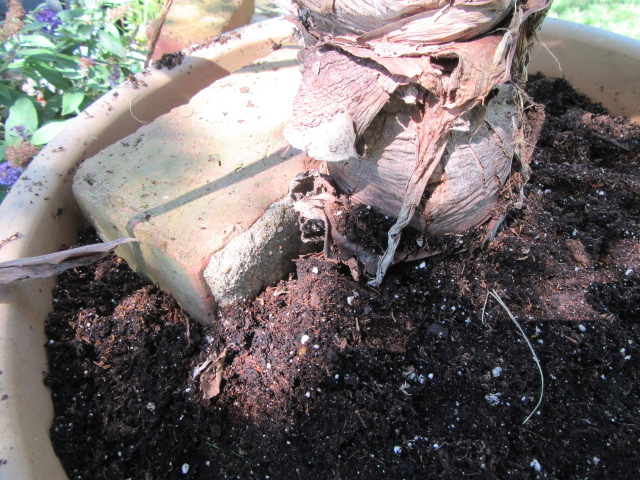
Monday’s Find :)

Well, I suppose I better fully admit that my addiction to plant collecting had once again emerged. I tried to hide it when I went to Lowe’s on Sunday but it was no use. Then when I went to Clinton on Monday I had to take a trip to the garden center downtown. Notice I said “I had to”. That was not a question. The first thing I saw was the herbs. I saw a few that I would have liked but I was saving them for last. I needed desperately to see what else was available. The next selection was the annuals. There were SO MANY Petunias that their fragrance filled the air. BUT, I hesitated because I really wasn’t in the mood for Petunias at the moment.

Then I walked to the back… OH YES!!!! SEDUM, HOSTA, VIOLAS, SALVIA… Then I saw their prices. HOLY CRAP!!!! Suddenly my wish list got smaller. I decided maybe I shouldn’t buy any. Then I started looking at the Sedum and they called out to me. OH, it was terrible! I had to tell so many they just couldn’t come home with me. Then with the Hosta. She even had a Hosta ‘Samurai’. I had one of those in the early 1980’s. SO AWESOME but she wanted $15.00! Then I spotted a Hosta ‘Empress Wu’! My mouth drooled but it was in a 1-gallon pot from Monrovia which meant it was over $20.00. SO, reluctantly, I passed up her Hosta and went back over to the Sedum. Then I noticed the Leptinella squalida ‘Platt’s Black’ like I had in 2014. WELL, I had to have one.

Well, one plant led to another then another… In alphabetical order:

Baptisia x variicolor ‘Lunar Eclipse’

‘Lunar Eclipse’ False Indigo’
Baptisia x variicolor ‘Lunar Eclipse’
Baptisia australis x Baptisia sphaerocarpa
bap-TIS-ee-uh aw-STRAL-is x sfay-ro-KAR-puh

Part of the Prarieblues Series. There are many cultivars of Baptisia I have wanted to try, but this only the second I have owned. A couple of years ago I bought B. ‘Carolina Moonlight’ from Brent and Becky’s but it had some issues. Baptisia haven’t been readily available locally so I was happy to see this one at the garden center in Clinton on Monday. Baptisia ‘Lunar Eclipse’ is one of several in the Prarieblues Series from the Chicagoland Grows program from the Chicago Botanic Gardens. This hybrid featured flowers that change color… They emerge light lemon-over-cream then turn to cream, pale lilac and shades of purple/blue. They grow to a height of 3-4 feet in a full to mostly sunny location. Baptisia attract a lot of butterflies.

Lavandula dentata

French Lavender, Fringed Lavender
Lavandula dentata
lav-AN-dew-lah den-TAY-tuh

Lavandula dentata L. was named and first documented by Carl Von Linnaeus in Species Plantarum in 1753.

Now, folks, I don’t know much about Lavender. I just know it smells girly and has many different leaf and flower types. I have always particularly favored the French Lavender because the flowers look like they have wings on top. A couple of years ago I bought a Lavandula angustifolia ‘Platinum Blonde’. It was taken over by the HUGE Coleus growing next to it and died… I had too many other distractions that year and completely neglected my plants. Lowe’s had Lavender plants when I was there on Sunday but they were the English species so I didn’t buy any. When I saw the garden center in Clinton had a few of the French, I had to have one.

When I add this plant to the pages to the right I will have more information about Lavender.

Leptinella squalida ‘Platt’s Black’

New Zealand Brass Buttons ‘Platt’s Black’
Leptinella squalida ‘Platt’s Black’
lep-tin-EL-luh SKWA-lee-duh

I bought one of these at Lowe’s in 2014 and it was really neat! Well, it did very well in the pot but went downhill after I put in the bed. It did flower then died cold turkey. SO, I found another one at the garden center today, which was a surprise, so I had to bring one home. Yes, I HAD TO! It was fate that brought me to the garden center and possibly because they had this particular plant. OK, well, maybe that is a complete exaggeration.

According to information on the internet, these plants are supposed to like full sun to part shade and can spread indefinitely. OH, that would be AWESOME!!! It says in large planting, spent flowers can be clipped off with a lawn mower and can even stand foot traffic. Well, I don’t think I will be walking on mine for a while, or even be using a lawn mower on them. They grow a max of 2” tall and the leaves grow 2” long x 1/2” wide. Info says they like full sun to part shade but last time I tried them in full sun so this time I will try part shade. It also says they don’t like their soil to dry out.

They are considered a herbaceous perennial in USDA Zones 4-10 and are even evergreen in zones 9 and 10.

Leptinella squalida are native to New Zealand but the ‘Platt’s Black” cultivar is from a sport discovered in the garden of Jane Platt of Portland, Oregon. According to some, the original is much better and more bushy and healthier looking.

OH, I almost forgot… Leptinella squalida Hook.f. is the correct and accepted scientific name of this plant. BUT that’s all I could find… Publication details weren’t available on Tropicos.

Sedum spurium ‘John Creech’

Caucasian Stonecrop, Two-Row Stonecrop
Sedum spurium ‘John Creech’
SEE-dum SPUR-ee-um

Sedum spurium M. Bieb. is the correct and accepted scientific name for this species of Sedum. It was first described as such by Friedrich August Marschall von Bieberstein in Flora Taurico-Caucasica in 1808. You can take a deep breath after that.

Well, I love Sedum so I had to have this one, and many more to come. We all pretty much know the characteristics and growing conditions of the “ground cover” type Sedums. BUT you have to realize that many Sedums have had or now have different genus names. In fact, many Crassulaceae experts who have written many publications use the genus name “Phedimus” due to the leaf shape (and other characteristics I am sure). While The Plant List says this species is Sedum spurium, they say Phedimus spurius. I am certainly not going to argue either way because I am just a gardener.  The taller species, like the ever popular “Autumn Joy” isn’t even a Sedum anymore. They are in the genus HylotelephiumSedum is MUCH easier to pronounce! Many retailers and growers are still using the Sedum name, though.

You have to admit the list of 421 ACCEPTED species names is STILL pretty long… Not to mention there are STILL 429 names that are unresolved. That is because in the world of succulents and cactus there are so many that are the same.

Sempervivum x ‘Killer

Sempervivum x ‘Killer’

This Sempervivum cultivar was hybridized and registered by Volkmar Schara of Germany in 2004. According to one website, they are also sold under the name of Chick Charms® ‘Cranberry Cocktail’. That name led me to the Chick Charms® Collectable Hens & Chicks website.

Chick Charms® are selected by Chris Hansen who is also the breeder of SunSparkler® Sedums. He has a collection of over 485 named varieties.

You know, there are over 4,000 named varieties of Sempervivums and SO MANY of them look exactly alike and no doubt many are the same. The result of the same crosses or sports. Just like in this case… They were hybridized AND registered under the name ‘Killer’ and they are also sold under the Chick Charms® name ‘Cranberry Cocktail’.

I had a few really nice Sempervivum that did very well until they met their end in 2014. This one caught my eye at the garden center because they have longer leaves and the rosettes reach 8” across and they grow up to 3” tall.

Well, that’s it for my second trip of plant buying. The next post will be about my new bed. SO, until then, take care, enjoy life and GET DIRTY!!!


Ummm… I Just Went To Get Potting Soil

Well, you know… I haven’t much to say for myself (I am laughing as I wrote that). We have a conscious mind and a sub-conscious mind. Sometimes I think my mind hides stuff in my sub-conscious mind believing that no one will see it’s true agenda. But I think it is fooling itself, especially among those who know me best. This afternoon I told my dad I was going to Sedalia to buy potting soil. He looked at me and smiled but definitely didn’t offer his debit card.

When I arrived at Lowe’s I heard this voice in my head. It was my wife saying, “Honey, you better park as close as you can.” Well, now that was really weird because I am not married. Maybe it was my spirit guide and she didn’t say “honey”… Maybe she said “hey”. Anyway, I followed her advice.

When I got up to all the plants in front of the garden center of course I walked around. It is SO NUTS how they are selling sweet corn and green beans in packs for $3.00!!! I didn’t see anything interesting so I went inside. Now, my conscious mind is talking to my subconscious mind, reminding one another that I had thought I needed to find more Hosta. I need more color in the shaded area where they are. Of course, I looked for more cactus and succulents but I was VERY disappointed. Thank goodness for that.

SO, I didn’t do as well as I should have. Well, I guess that depends on how you look at it. i was very careful though… Careful because I made sure everything I bought had labels. SO, when I came home I made sure dad was inside while I unloaded the car. Then I took them behind the shed to my potting bench and went inside to get my camera and a notepad. Dad was watching TV. He asked, “Well, how did you do?” GEEZ!!!! I answered, “I did OK. I bought a big bad of potting soil, perlite and a few plants.”

In alphabetical order…

Adromischus cristatus-Key Lime Pie.

Adromischus cristatus
ad-roh-MIS-kus kris-TAY-tus
Syn: Adromischus poellnitzianus

According to The Plant List, Adromischus cristatus (Haw.) Lem. is the accepted scientific name for this plant. It was described by this name by (Antoine) Charles Lemaire in Jardin Fleuriste in 1852. It was first described as Cotyledon cristata by Adrian Hardy Haworth.

Native Habitat: Lower Baviaanskloof and Langkloof west of Humansdorp, Eastern Cape, South Africa. This particular species is easily recognized by its felt-like leaves and tangled, hair-like aerial roots.

Crassulaceae Family
Zones 9b-10b (25-35 degrees F.)
Light: Sun to part shade
Flowers: White to near white in late summer to early fall.

Faucaria tigrina-Tiger Jaws

Tiger Jaws
Faucaria tigrina
fow-KAR-ee-uh  tig-REE-nuh
Syn: Mesembryanthemum tigrinum Haw.

Faucaria tigrina (Haw.) Schwantes is the correct and accepted scientific name for this succulent. It was first described as Mesembryanthemum tigrinum by Adrian Hardy Haworth in Observations on the Genus Mesembryanthemum, in two parts in 1795. The species was then moved to the genus Faucaria and was first described as Faucaria tigrina by Martin Heinrich Gustav Schwantes in Zeitschrift für Sukkulentenkunde (Berlin) in 1926.

Faucaria tigrina is found only within the Albany Thicket of the Eastern Cape Province, South Africa. There are only four remaining subpopulations left in the wild due to urban development and over grazing. It is listed as endangered in the Red List of South African Plants. The first documented discovery of Faucaria tigrina was during an expedition in 1789 by Francis Masson, who was sent to the Cape by the King of England to collect plants for Kew Royal Botanical Gardens. The specimens of F. tigrina were sent to Adrian Haworth, a gardener at Kew, who recognised them as a new species. The genus name comes from the Latin word faux meaning jaw and tigrina for tiger. The genus has 33 species in total, all occurring within the Eastern and Western Cape provinces of South Africa.

The “teeth” are an adaptation of the plant to help collect water vapor from the air and direct it down to the plants roots.

I bought one of these in 2014 and it looked much better.

Heuchera ‘Obsidian’

Heuchera ‘Obsidian’

Considered the “black standard” which does not fade even in full sun. I think this is a Terra Nova introduction since this cultivar is on their website. Also it is probably a Heuchera villosa x H. micrantha and/or H. americana hybrid.

Zones 4-9
Ht: 10-12”, 24” in flower
Full sun to part shade
Creamy white flowers in May-July, depending on location.
Low maintenance and medium water requirements.

Heuchera ‘Southern Comfort’

Heuchera ‘Southern Comfort’

Foliage color changes from cinnamon peach to burnished copper to amber. This is another villosa hybrid from Terra Nova.
Zones 4-9
Ht. 14”, 22” in flower.
White flowers in spring.
Full sun to part shade

Heuchera ‘Venus’

Heuchera ‘Venus’

Silver leaves with green veins. Part of the ‘Planet Collection’ from the Netherlands.
8” tall, 15 “ n flower.
White flowers in late spring to mid-summer.
Full sun to part shade
zones 4-9

Hosta ‘Abique Drinking Gourd’

Hosta ‘Abique Drinking Gourd’
(H. ’Tokudama’ x H. sieboldiana)
Hosta of the Year 2014

Developed by Chuck Pertymun (the Hosta wild man) and introduced by Walden-West in 1989.
Large cup-shaped, heavily puckered, blue-green leaves. Leaves can grow up to 10” wide x 10” across.
Grows approximately 20” tall.

Hosta ‘Forbidden Fruit’

Hosta ‘Forbidden Fruit’

A beautiful Hosta that is a tetraploid sport of Hosta ‘Orange Marmalade’. Introduced by Marco Fransen, Fransen Hosta, of the Netherlands.
Very thick, puckered leaves of glowing orange with a wide blue-green margin. Produces lavender flowers. The plant grows 12-14” and will make a 24” wide clump.

Hosta ‘Rainforest Sunrise’

Hosta ‘Rainforest Sunrise’

This hosta is a sport from Bill Vaughn’s dwarf Hosta ‘Maui Buttercups’. Leaves are cupped and heavily puckered, bright golden with a very dark green margin. Introduced by Jim Anderson of Winterberry Farms in 2003. This is a smaller Hosta grows around 16 “ tall x 16” wide.

Hosta ‘Blue Mouse Ears’

Hosta ‘Blue Mouse Ears’
Hosta of the Year 2008.

Introduced by Emile and Jane Deckert in 2000. It is a sport of Hosta ‘Blue Cadet’. There have been at least 27 new Hosta’s from this cultivar. This is a miniature for sure growing only 8-10” tall and forming a clump of around 12: wide. The small leaves are thick, blue-green and slug resistant.

Mammillaria pringlei

Mammillaria pringlei
mam-mil-AR-ee-uh  PRING-lee-eye

First documented as Mammillaria pringlei by John Merle Coulter in Contributions from the United States National (Smithsonian Institution) in 1894. It was also documented as Mammillaria pringlei (J.M. Coult.) K. Brandegee in 1900.


Nepeta x faassemii-Catmint

‘Walker’s Low’ Catmint
Nepeta
x faassenii
NEP-eh-tuh  fah-SEN-ee-eye
Nepeta racemosa
x Nepeta nepetella

Nepeta x faasenii Bergmans ex Stearn is a correct and accepted name according to The Plant List. It was first documented by Johannes (John) Baptista Bergmans and William Thomas Stearn. Their document was published in the Journal of the Royal Horticultural Society in 1950.

Family: Lamiaceae
USDA Zones 4-8
2-2 1/2’ tall x 2-3’ wide
Flowers: Lavender blue from April through September
Light: Full sun to part shade
Fragrant leaves
Water: Dry to medium
Propagation: Must propagate by division because the seeds are sterile.


Salvia nemorosa ‘New Dimensions Blue’

Salvia nemorosa ‘New Dimensions Rose’.

Salvia nemorosa ‘New Dimensions Rose and Blue’

This series produces the richest and deepest colors of any seed-grown Salvia. Salvia nemorosa species and cultivars are herbaceous perennials that are are hardy in USDA Zones 5-8. This series supposedly grows to 12” or so tall with a spread of around 18”. They are very drought tolerant, need well-drainers soil, and prefers full sun. As with all of the Salvia, butterflies love them.

These particular cultivars are seed-grown and were developed by Kieft-Pro-Seeds of Holland.


Zantedeschia elliottiana (Golden Calla Lily)

Well, almost everyone knows what a Calla Lily is and they don’t need any introduction. I would like to have a BIG collection! According to the label, they are hardy here. We will see.


I did buy a bag of Caladium bulbs, too. Wagler’s greenhouse had A LOT of them last year but none I could see this year.

Well, that’s it for this post. Now I have to add these to the plant pages list to the right. SO, I hope you enjoyed this post. Spring and PLANTS make me feel like blogging again. Stay tuned, have fun, take care and GET DIRTY!

HELLO! It’s Friday!

Hello, everyone! I thought I would walk around and show you a little of what’s happening around here. I did go to two of the Amish greenhouses today to see what they have available. I was good, didn’t get to excited and I didn’t buy a single thing. That seems like a miracle! I was going to take photos but there were several customers always standing around so I decided not to this time.

The Ajuga reptans ‘Chocolate Chips’ are flowering now. They have spread nicely everywhere I planted them. Umm… Don’t know if you realize it or not, or have ever tried Ajuga (Bugleweed), but they spread. They spread, that is, if you plant them where they are happy. Mine are happy here but they seemed to be happier where I had them in Mississippi. I have a photo somewhere to prove that. Of all the Ajuga I have seen, I like the variety “Chocolate Chips’ better. They have really nice small leaves that are dark green with kind of a burgundy tint, hue, or whatever you call it. Did I mention they spread?

Obviously this is a cactus. But guess what the name of it is? Well, actually, I am hoping someone tells me. I need to put it on a Facebook group to get the name. This is the one that Mrs. Wagler of Wagler’s Greenhouse told me it would survive the winter outside. Umm… The one I forgot about until late one night when it was snowing. Well, it survived just like she said. Now it has a fall off on it and buds. Some cactus grow shoots that fall off and root… I call them fall offs because that is what they do. I won’t have any problems identifying this cactus because it has some pretty distinctive characteristics.

The Horsetail (Equisetum hyemale) has been galloping very nicely lately. I say nicely now, but later I will probably want to corral it (them). Many of the taller stems have fallen over so I guess I need to cut them off. Despite the Equisetum’s wandering nature, they are one of my favorite plants. I like weird accent plants and I have been thinking about sticking a few here and there. It took me several years to take them out of their pot so I probably won’t be moving them around anytime soon. Not because I am a procrastinator but because I know what WILL ultimately happen.

Yeah, I know. I am supposed to cut the flowers of of the Rhubarb. But aren’t they AWSOME!!! Only one plant does well and the others are so small and weird. I always like growing Rhubarb because they are neat, tropical looking plants. Kind of like Elephant Ears. Dad had a HUGE Rhubarb patch in our garden when I was a kid and I have no idea why he didn’t move some here to the farm in 1996. The new owners of their old house mowed them all down. I remember as a kid I would break off a stem and suck on it for hours. Of course, mom would often cook it for us.

All the Hosta are looking very well. Above is Hosta ‘Guacamole’ with its beautiful bi-color green leaves.

Hosta ‘Krossa Regal’ is always majestic with it’s nice powdery, light blue-green leaves. This cultivar has a nice vase-shape, as they call it. I could never figure out why they call it a vase-shape. Seems more like a funnel. LOL.

On the right side of the bed is the HUGE Hosta ‘Potomac Pride’. Awesome large, dark green,  puckered, heavily veined leaves.

This photo of Hosta ‘Red October’ looks a little off. It is darker green than this. Anyway, it is doing very well, too.

Last, alphabetically, is my beautiful Hosta sieboldiana ‘Elegans’. Now folks, seriously, this is an AWESOME Hosta. If you don’t have one, you need to find one. Large, thick, puckered blue-green leaves that are quite slug resistant.

After taking a few photos I went to the chicken house… I went inside and picked up the water bucket to get fresh water and came out…

And “you know who” was on the roof! I think he gets sillier every day!

When I came back to the chicken house I went into the bantams pen. Clara was screaming at Elizabeth and Elizabeth was complaining because Clara didn’t want to share the top nest.

Rooster #1 was laughing at them saying, “Women.”

I went back into the main area of the chicken house to get the bigger chickens eggs and “This One” was in a nest. “This One” always gives me the evil eye and bristles up ready to strike. I think she sharpens her beak just for me. Seriously, I have never had a more ferocious hen! Lately I just leave her alone. Not worth upsetting her, getting pecked only to find she doesn’t have any eggs under her yet.

The two unnamed Sedum are doing very well, too. I just call them Unknown #1…

And Unknown #2. I can figure out their names in time. I just have to sit down and go through several hundred photos and descriptions. The thing is, they may have been placed in the Phedimus genus. Or maybe they were put in the Phedimus genus then put back in Sedum. I DON”T KNOW!!! I do know that they were Sedum, then Phedimus at one point but the last time I looked some of them were put back in the Sedum genus. Some experts who write books with one name or the other argue with each other about what belongs where and why. I think they need to sit down to an AWESOME dinner and forget all about it for a while. Find something they can agree on to talk about.

Well, I better go for now. Hope you enjoyed this post! Take care and GET DIRTY!!!


THE GREEN AND THE ROOSTER

Hello everyone! The little Old English Game rooster has completely made himself at home. Dad says he wears himself out going from one yard to another all day. We talk a little in the morning when I let him out of his coop then he follows me when I go get fresh water for the other chickens. Then he goes right to the back porch. By the time I put the water in the chicken house and get the earlier eggs he is back again. The cats don’t pay any attention to him but I think they find his talking and crowing rather annoying.

One day as I walked by the back door the rooster was on dad’s lap. Dad started petting and talking to the rooster and I could tell they had become buddies. I should have taken a photo that time, but that was one of those precious moments I didn’t capture. I did get this photo a few days later.

The grass is growing so fast now as with every spring. It seems I am on the mower or trimming every day. I need to harrow the hay field and close there gate so the cows can’t get in. May just have to forget the harrowing. I also need to get the garden ready!!!

OH, YEAH!!! I almost forgot about our evening visitor..


The raccoon stayed and ate cat food even after I turned on the light. He got a drink after he ate the rest of the cat food then looked up at me and left.

I hope you enjoyed this post. I will try and make a new one sooner next time. There are a few photos I can take, so maybe tomorrow or the next day….

Until then, be safe, be happy and thank your creator for your many blessings. Don’t forget to GET DIRTY!

#2-IT’S A BULL CALF!

Our second calf was born this morning and it’s a bull.

He was sleeping but his mother went over and woke him up as I got closer.

He had to give me a good look. I was his first glimpse of a human.

The little heifer born March 30 is doing fine and is full of energy. The tried to hide behind her mother so I couldn’t get a photo.

There were some beautiful clouds in the sky.

There were some Blue-Winged Teal on the pond…

Well, that’s it for today. I hope you enjoyed this post and hope to bring you another real soon. I am still working on one that is still a draft. Maybe I can get it finished tomorrow unless we have another calf.

Have a great day or evening, depending on your time zone. Take care and GET DIRTY!

First New Calf of 2017

Our first calf of 2017 is a heifer born on March 30. This is her first calf, too. She did very well and is very proud of her new little girl.

One down and 7 more to go. Last year we has 4 bull calves and a heifer. This year we have started out with a heifer.

Of course, July has to have her photo taken and a good rub down. She is looking so much like her mother is it to hard to tell them apart. They both like their head scratched, which isn’t such a good idea anymore. Scratching your calves your calves on the head when they are born gets addictive to them. Kind of like sticking your babies thumb in their mouth to pacify them. It is something you regret doing later on.

I have been working on a post all week that I have not finished. I wanted to get this one done about the calf, though because it is a current event.

Well, I better get off here for now. Take care and enjoy your weekend. OH, if weather permits, GET DIRTY!!!
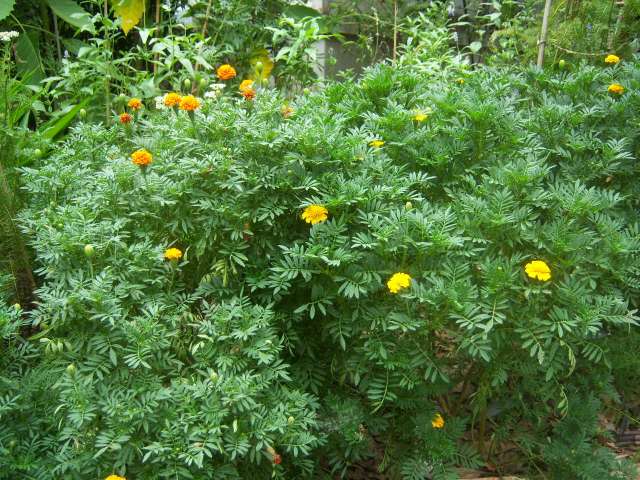
 

Celosia argentea ‘Cramer’s Amazon’ Page Added

Well, I finally finished another page, almost 400 to go. The Celosia argentea ‘Cramer’s Amazon’ never ceases to amaze me every year since 2012. They grow very tall and can take up a lot of space. The seedlings come up like mad so you never have to buy more. The biggest problem I have is what to do with all the extras. 

If you want to see the new page just click HERE… 

The weather was nice and warm for a few days but now it has cooled off quite a lot. At least we didn’t get but a small flurry of snow Saturday. 

When I was looking for photos for the Celosia argentea ‘Cramer’s Amazon’ page, I found an idea for the next post. SO, maybe I can do that tomorrow. I think I will try and make a new page everyday, maybe take an hour or so every night. OH, WOW. If I do one a night that will still take at least a year!

I am continuing to work on my online business (s) which so far… Ummm… Let’s just say I have really learned a lot. So much work to get started no matter how many tell you differently. Even if you join a program where your website is all set up, you have to do many things to promote your site. Then you find many others you want to join, too. That’s OK but you can get overwhelmed sidetracked. You have to join one program and finish all the steps before starting a new venture. There are some very good and profitable programs, but there are many scams out there, too. 

Well, I better get off here now and do a little work before I eventually go to bed. Take care, God Bless, and get as dirty as you can. Let those nutrients from the earth soak up in your skin and get some good healthy sunshine. 

Signs Of Spring Are In The Air (And On The Ground)

I decided to take a few photos for the blog this afternoon and #3 heard me and came running. I have to decide on a name for him some day. I usually call him by saying, “Hey, boy” and he comes running. Usually he hears me before I call him unless he is behind the chicken house. 

These Old English Game bantams have a personality all their own are are VERY sharp and alert. Ummm… They also seem pretty fearless. There have been several times he has tried to run off the cats. But they look at him like they are saying, “Are you kidding? You are smaller than me.”

Ajuga reptans ‘Chocolate Chips’, 3-7-17, #312-3.

The Ajuga reptans ‘Chocolate Chips’, Bugleweed, are green during the winter but I think they are still kind of dormant. Spring brings new growth and buds. Soon they will be strutting their stuff with vibrant blue flowers. They have spread nicely and in some areas not so nicely. I always liked this variety because of their smaller leaves and color.

Cydonia oblonga-flowering Quince on 3-7-17, #312-4.

I have always liked the Flowering Quince although I never knew why. They have absolutely no trait that I like in a shrub. They grow weird without form, sprout freely, have thorns. Other trees spring up inside their mass and are hard to cut out. Even if you cut them out they still keep growing making a bigger problem. There are Iris on the other side of this bush and now the Quince are sprouting up among them. But they are one of the first to flower and green up in the spring… Along with the Forsythia and Abelia, they have been here in the same spot since 1958 or the early 1960’s. 

Heuchera ‘Palace Purple’ on 3-7-17, #312-6.

My poor Heuchera ‘Palace Purple’ didn’t do so well last year. I am glad it made it through the winter and I may decide to move it somewhere else. I haven’t been the best Heuchera grower. They do well for a couple of years then start going down hill. 

Horseradish on 3-7-17, $312-7.

The Horseradish are all coming up and have spread very well. I thought about spreading them out in the fall but that didn’t happen. SO, maybe that will be something I can do in a few days. I would actually like to put them in the garden because right now they are in a flower bed. Dad used to have a HUGE patch of Horseradish when they lived in town (which was also once owned by mom’s dad). He didn’t bring any with him here and didn’t get this start until 2013… I think we started out with 4.

Hosta ‘Guacamole’ on 3-7-17, #312-8.

I am always very happy when spring gets here and the Hosta start showing signs of life. This means that Hosta ‘Guacamole’ is alive and well.

Hosta ‘Potomac Pride’ on 3-7-17, #312-9.

On the other end of the Hosta bed, ‘Potomac Pride’ is also ready for spring. I dug around for some of the others but they haven’t started coming up yet. Looks like some of the tags have blown away over the winter so…. Will just have to wait for a while to see if they come up. I would like to start cleaning the bed off for spring, BUT I am not convinced that spring is here yet. In fact, the weather forecast is calling for snow this weekend so I am not going to get in any hurry.

Lysimachia nummularia ‘Goldilocks’-Creeping Jenny on 3-7-17, #312-10.

One plant that is sure to come back every spring is the Creeping Jenny, Lysimachia nummularia. This cultivar is ‘Goldilocks’ which I like because of the chartreuse leaf color. Makes a great contrast with and under other plants. I planted ONE clump (one pot) in the bed on the north side of the house in 2014 and it has spread over the entire bed and into the yard. Well, I guess removing the grass from the Creeping Jenny is one way to make the flower bed bigger. Dad has a different thought and thinks it is best to remove the Creeping Jenny from the grass and throw it on the burn pile. 

Rhubarb on 3-7-17, #312-11.

The Rhubarb is coming up, at least this one clump. This one clump out of several we planted in 2013 has done better than the others. Dad got the Rhubarb from the same man as the Horseradish and they are in the flower bed, too. 

Salvia nemorosa ‘Mainacht’-Meadow Sage on 3-7-17, #312-12.

Always one of the first Salvia to emerge in the spring, the Salvia nemorosa ‘Mainacht’ will soon be flowering up a storm. Some refer to this cultivar as Salvia nemorosa ‘May Night’ as it was marketed under this name first when they came to the U.S.

One of two of the “un-named” species of Sedum. Photo taken on 3-7-17, #312-13.


The second of the two un-named species of Sedum. Photo taken on 3-7-17, #312-14.

I love Sedum but I don’t like it that they weren’t labeled. They came from an Amish greenhouse and I mentioned before not all her plants are labeled. Maybe when I am ready for a headache I will do some research on the International Crassulaceae Network. OH, but what a job! I will have to search both Sedum and Phedimus genera because she is in disagreement with The Plant List, GRIN and Llifle. DO you have any idea how many species, cultivars, etc. that includes? So many look so much alike!

Stachys byzantina-Lamb’s Ears on 3-7-17, #312-15.

Last but not least on the alphabet today is the Stachys byzantina or Lamb’s Ears. No mistaken this fuzzy leaved perennial. One of my clumps died out a couple of summers ago but this one is spreading very well. I could spread them out a bit but I think a clump in one area is good enough. 

I had a few more photos to take but dad came out on the porch to smoke his pipe. He was looking at me like I was nuts, so I thought I would stop for the time being.

This is my dad. I took this photo a few days ago and I was surprised he didn’t make a funny face. Oh, yeah, he enjoys having fun, laughing and making faces when you try and take his photo. 

He is 86 now and in good health and still pretty sharp. He spends his day mainly watching TV, relaxing, and walking to the porch several times a day to smoke his pipe. Hopefully when the weather warms up he will get more exercise. 

He enjoys watching old shows on TV, even though he has seen them so many times already. I get tickled at him sometimes when he says, “this is a rerun.” I will say, “Yep.”

I am experiencing a problem… I taught my computer botanical language over the past few years but last summer I had to put in a new hard drive. I was so glad that the technician was able to save all my photos BUT it’s memory of botanical names was screwed up. Now I have to teach it all over. SO, if you notice a name misspelled, please let me know! The names are correct in the photos and word documents, but when I type in the name elsewhere or copy and paste a word document sometimes the computer changes the names and I don’t always catch it. 

Well, that’s it for this post. Hope you are all doing well and do your best to GET DIRTY!

FAMILY FUED!!!

img_3316

Saturday, February 18, I decided to let the chickens out for a while. One of the Old English Game Bantam hens got sidetracked and decided to check out the other nests. There was an egg in the nest she went in so I watched to see what she would do. She scratched around a bit and kind of sat on the egg. She kept looking at it like she thought it was a bit uncomfortable. When I looked at this photo, I noticed MORE ORBS!!!

img_3317

One of the black sex-link hens came to greet the bantams, and one of the roosters came back inside to flirt a little. 

After the bantams went outside I hoped they would move elsewhere before the other chickens came out. BUT…img_3318

That didn’t happen. I didn’t get photos of what led to this, but it as pretty funny and it happened so fast. The Old English were on the grass in front of the step and i was behind them. The Sheriff stepped on the door sill and in a split second, even faster maybe, Rooster #1 hit him so hard he saw stars! Sheriff kind of staggered for a few minutes not knowing what had happened. Then he stepped out of the door and Rooster #1 went right up and challenged him. I got between then and tried to keep them apart. BUT, #1 being so small and faster than the speed of light, darted under my hand and nabbed the Sheriff again. That just made him mad! Actually, both of them were very ticked off at this point. I got them apart and the bantams moved on toward the back yard where they usually stay when they are outside. Then, #1 ran back down and challenged the Sheriff again. That’s when i took the photo.

But it didn’t stop there… Usually the Sheriff and deputy get along fine, and still are. But Deputy, or the Deputy (GEEZ!) kind of sensed the Sheriff was pissed off so he didn’t even come outside for a while. The whole ordeal was quite amusing. I think the Deputy was trying to hold back his laughter and the Sheriff knew he was making fun of him. I mean, just think of it… Look at the photo and notice how much bigger the Sheriff is compared to #1. The funny thing is, I think #1 would actually get the best of the Sheriff. 

(Better explain their names… Sheriff (or the Sheriff) is the Delaware rooster. Deputy (or the Deputy) is the White Chantecler rooster. The Old English Game Bantams are #1, #2 and #3. From the most dominate down to the least… Unfortunately, my buddy is #3).

Well, after the bantams and other chickens had got over the whole deal and were in their separate areas I went inside. After an hour or so, I can out and checked on them and everything was fine still. BUT then later I went out and it seemed the bantams had been squabbling. #3, my little buddy, had a couple of spots on his comb and #1 was kind of bullying him. SO, I knew something was not good. Then later when I went to put them inside their pen, the other two roosters didn’t want #1 with them. OH, that was NO GOOD at all! #3 was so upset, and maybe sore from a beating, he wouldn’t even let me pick him up. So, I walked out of their pen and held it open a little and he followed me out. The bigger chickens had already went to roost, so I left him in the main part of the chicken house. After it got dark I went to the chicken house and he was sitting on the nests. SO, I put him in the small coop outside.

Now, there is a moral to this story… The bantams love being outside, but since #3 has free run outside, they can’t go out. I guess that goes to show you if you pick on the little guy, he still may get the best end of the deal. 

Well, it is time for dinner… I did get the Celosia page finished on the right. I have been working on my online business so I haven’t had a lot of time to work on the blog. BUT, soon it will be finished. Maybe…

SO, I’ll leave for now. I hope you are enjoying whatever life brings your way and REMEMBER… GET DIRTY!


A Few Days Late!!!

It was 5 PM, I think, on Saturday the 11th when I decided to go to the back of the farm to check on the fences, I took these photos along the way. Now, I fully intended to make this post later that evening, but one thing led to another. SO, here we go!
img_3293

Seems like you can go nowhere without being watched around here. We still have 10 cats, I think. Several have died since I last blogged, but at least we won’t be having more kittens.

img_3294

This is a new cactus I acquired last year from Wagler’s Greenhouse. She said it would survive through the winter outside. It is a good thing, because when i was moving plants inside I completely forgot about it. It was over shadowed by the Celosia ‘Cramer’s Amazon’ in the flower bed where I put it. I have no idea what the genus and species name is YET because, like so many other of her plants, she had no idea either. GEEZ!!! You know how that drives me NUTS! Like I said, I had forgotten all about this cactus until one night in January I remembered. It was very cold that night, but I went outside with the flashlight to check on it. It was fine. WHEW!

Amaryllis belladonna on February 11, 2017.

Amaryllis belladonna on February 11, 2017.

The temperatures have been so warm lately that there are signs of life. The Amaryllis belladonna (Surprise Lilies, Naked Ladies, etc.) are up. I am not sure when they usually come up but I imagine I have other photos from pervious years.


Grape Hyacinth Mascara armeniacum) on February 11, 2017

Grape Hyacinth (Mascara armeniacum) on February 11, 2017.

The Grape Hyacinths are coming up by the chicken house. As are the…


Achillea millefolium on February 11, 2017.

Achillea millefolium on February 11, 2017.

Fern-Leaf Yarrow.

img_3288

The chicken house is all closed up for the winter. Yeah, I know it needs painted. It kind of gives a rustic appearance wth the paint falling off, though. Grandpa built this chicken house maybe in 1958-1960. It was a plan provided by the Missouri Poultry Association. Well, that may not have been what they called it. I found it in the old 1952 year book I used to have. I collected a lot of old poultry books when I was in the hatchery business in the early 1980’s.

Now, let’s go inside.

img_3295

The bigger chickens were all on the roost ready for bed… 4 Delaware hens, 7 black sex-link (we used to call them Rock Reds because they are the progeny of Barred Rock hens with Rhode Island Red roosters), 3 White Chantecler hens, 1 White Chantecler rooster. BUT there us one rooster missing!!!


img_3296

The big Delaware rooster. He is HUGE and he thinks he is the sheriff now. I butchered the other two Delaware roosters a couple of weeks ago because this Delaware and the White Chantecler were fighting them because they were on the bottom of the totem pole. It is strange how well this Delaware and the White Chantecler get along.

The Delaware was originally a sport of the black sex-link cross.

img_3297

This is a closer photo of the White Chantecler rooster. They were developed in Quebec, Canada by the monks of the Cistercian Abbey under the supervision of Brother Wilfred Chatelain. There were no breeds of chickens that had been developed in Canada. Brother Wilfred’s goal was to develop a breed that was more suitable for the cold conditions of Canada that was a dual purpose breed. As you can see, they have a small cushion type comb and hardly any wattles. Work began on creating this breed in 1908 but wasn’t released to the public until 1918. The Chantecler was created by first crossing a Dark Cornish male (pea comb) with a White Leghorn female (single comb), and a Rhode Island Red male (single comb) with a White Wyandotte female (rose comb). The following season pullets from the first cross were mated to a cockerel from the second cross. Then selected pullets from this last mating were mated to a White Plymouth Rock male, thus producing the fowl as seen today. They were admitted to the American Standard of Perfection in 1921. Interesting how crosses with pea, rose and singe comb parents produced offspring with a cushion comb… Actually, there are rose comb White Leghorn and Rhode Island Red.

Later, another variety, the Partridge Chantecler, was developed. In the 1980’s I wanted to get a start of White and Partridge Chantecler’s for the hatchery. BUT they were quite rare. They still are, for the most part. These cost me about $9.00 each. OH, but I have paid more. In 1985 I bought 12 Red Shouldered Yokohama hatching eggs for $120.00… They had been covered in sheep poop and then washed… Only 2 hatched. YES, they became pets and slept in a box on the back porch until the rooster started crowing.

img_3298

This is one of the White Chantecler pullets. I will put the White Chantecler’s in a separate pen later…

img_3299

The bigger chickens were on the roost ready for bed, but the Old English Game Bantams were still wide awake. It was still daylight, so I asked them if the wanted to go outside for a while. Well, I never have to ask them twice. I opened the door to their pen and they eagerly followed me to the outside door.

img_3302

They wasted no time snacking on some green weeds. 3 Hens and 3 roosters. I was supposed to dub their combs and wattles, but I decided not to this time around. Well, they are Old English Game and it is a custom to dub them. I was watching a video on YouTube about how to do it and it said that in some states it is against the law. Even so, I do believe to show them they have to be dubbed. Ummm… If you use them in cock fights they also need to be dubbed. OH, that is illegal, too.

img_3306

This one seems to be my buddy. He likes to get on my lap and be talked to and petted. But what he really likes is to fly on my shoulder and peck my ears. He is a little smaller than the other two and has a smaller comb. A few months ago, I noticed they had been in a fight and I think he got the worse end of it. But no fighting since.

img_3307

Now the roosters get along very well. They still like fighting the bigger chickens, though, even MUCH larger than they are now. The pullets used to love flying over into the bigger chickens pen so they could chase them around. Even now, if I let the bantams out, I leave the outside door open. If the bantams go inside the chicken house, the other hens run into the back pen. BUT, even though the Delaware rooster was raised with the bantams, he doesn’t want them around his hens now. The White Chantecler’s also try and stand their ground. No doubt due to the Dark Cornish Game in their bloodline.

Now it is time to head to the hayfield…

img_3308

The cows are enjoying the hay right now, so I walked past them to the hayfield.

img_3311

Then I noticed I wasn’t alone… I had company! Ummm… Notice anything odd about this photo?

img_3312

I thought maybe they were following me because I had a bag of insulators. But NO, they weren’t interested.

img_3309

Yeah, I know this one is blurry, but there is a reason I put this photo here. Can you see? ORBS!!! 5 of them in this photo. You know, supposedly they only show up on digital photography and videos…

Check this out: https://www.ghostcircle.com/orb-photos-page/

Just saying… Maybe I was more “not alone” than I thought.

img_3313

They continued to follow me, the cows… Apparently the orbs stayed behind. LOL

A couple of the cows get a little to close sometimes. If i stop and turn around they lower their head and want it scratched. They like it a little to much in fact, I also learned that when they follow like this to keep a slow pace. The faster you walk the faster they follow. Sometimes when i slow down they go around me. They followed me all the way to the end of the hay field. Then crossed the electric fence and left them behind. But they were waiting for me when I came returned from the back pasture.

Well, that’s all I have to say for now. Take care, have fun and GET DIRTY!

Time To Catch Up

#274-1, Achillea millefolium, 7-19-16.JPG

I bought a new camera in July (2016) and immediately went out and took 70 photos. Well, I had bought a lot of new plants, mainly cactus and succulents, so I had to do my thing. You know, make sure the names were right, write their history, take measurements and so on. The above photo is of the Achillea millefolium next to the side porch, which isn’t new by a long shot.


#274-3, Alocasia 'Calidora' 1.JPG

Since I started out this post with a photo of a plant I have had for a while, I’ll just go with that and catch you up on what I still have from before…

This photo is of the Alocasia ‘Calidora’ that I have had since May 2012. It is looking pretty good and it has a few kids now.


#274-4, Alocasia 'Calidora' 2.JPG

All three of these pots are Alocasia ‘Calidora’.


#274-6, Alocasia 'Mayan Mask' , 3 pots.JPG

On this corner is the Alocasia ‘Mayan Mask’ family. The big one I bought in 2012. They are one of my favorites because they have dark leaves, white veining, and maroon undersides.


#274-7, Alocasia 'Portora' 1.JPG

This is one of the Alocasia ‘Portora’, descendants of one of my first Alocasia when I was in Mississippi in 2009.


#274-9, Alocasia odora.JPG

This is the pot of the, umm… Alocasia odora. I say “umm” because I am not so sure about that. I know you don’t remember the story behind this plant, but when I get to the pages of plants on the right, I will explain it again. ANYWAY, this Alocasia and I have some interesting history going back to 2012 in Mississippi.


#274-18, Billbergia nutans.JPG

OF COURSE, I still have the AWESOME Billbergia nutans (Queens Tears/Angels Tears) that was given to me, MUCH SMALLER, by my good friend Walley Morse of Greenville, Mississippi in 2012. For a couple of years now I have wanted to divide this pot. SO, last spring I removed it from the pot. I looked it over and put it back in the pot. I seriously need a bigger pot… This makes its 3rd pot. Where this plant is hardy they can make a large bed in no time. Right now, sitting in the basement for the winter, it is flowering again. I would love for it to be upstairs but I have no idea where I would put it.


#274-25, Colocasia esculenta.JPG

Since I moved back to the farm in 2013 I have had the Colocasia esculenta in front of the chicken house, and a few scattered here and there. They didn’t do so well in front of the chicken house two years in a row, so I decided to put a couple of the bigger tubers on the north side of the house. They did much better. I put about 30 of the smaller tubers in the other yard next to the foundation of my grandparent’s old house.


#274-26, Conoclinium coelestinum 'Aunt Inez'.JPG

I am not sure when dad got the start of his Conoclinium coelestinum (Hardy Ageratum) from Aunt Inez (his mother’s sister). They come up on the other side of the steps in the spring better so I have to always transplant them to this side. More came up last spring than before so I moved some to the south side of the house along the basement steps. This photo was taken on July 19, 2016, so they are just starting to flower.


#274-31, Equisetum hyemale.JPG

This is the Equisetum hyemale (Horsetail) I dug up from Augustine Taylor’s yard in Leland, Mississippi in 2010. I had them in a pot until the spring of 2014 when decided to put them in the ground in front of the chicken house. I told dad they are called Horsetail and they gallop… This photo was taken on July 19, 2016, and as you can see they have started to gallop. They would make a great accent plant here and there in flower beds, but GEEZ!!!


#274-34, Hosta 'Guacamole'.JPG

Hosta ‘Guacamole’ that was added to my Hosta collection in 2014 still doing well.


#274-35, Hosta 'Krossa Regal'.JPG

Hosta ‘Krossa Regal’ bought in 2009 still doing well…


#274-37, Hosta 'Potomac Pride'.JPG

Hosta ‘Potomac Pride’ bought in 2009 still doing well and getting BIGGER every year. It is always the first to flower, too. OH, and the deer sampled a few of it’s leaves one night and never bothered the Hosta again… THANK GOODNESS!!!


#274-38, Hosta 'Red October'.JPG

Hosta ‘Red October’ bought in 2009 still doing well…


#274-39, Hosta sieboldiana 'Elegans'.JPG

Hosta sieboldiana ‘Elegans’ bought in 2009 still doing well…


#274-40, Huernia schneideriana.JPG#274-42, Huernia schneideriana flower.JPG

This is the second pot of Hernia schneideriana. You may not remember, but the first one was in 2014 when I had the blog before and Kate told me it was a Carrion Plant. Well, I had got it from one of the Amish greenhouses and she has A LOT of plants with no labels. Even when I tell her the names, she still doesn’t label them… SO, after some research, I found the scientific name. Well, It had to flower first because there are MANY genera and species of Carrion Flowers that look exactly alike until they flower. Most of them have very colorful HUGE flowers but this particular one has among the smallest. VERY FUNNY!!!


#274-43, Kalanchoe daigremontiana.JPG

Oh, yeah, I still have the Kalanchoe x laetivirens (Mother of Thousands). She needs birth control even though there are no men like her around. These Kalanchoe’s, and the other species that grow “plantlets” from their leaves have an interesting story. I will get into that later because I kind of forgot the whole story…


Phlomis 'Edward Bowles' 1.JPG

Since I bought my Phlomis ‘Edward Bowles’ (Jerusalem Sage) in the spring of 2013, I just can’t imagine life without it. It is just an AWESOME plant! I always cover it up with a large pot and put with leaves around it. BUT this fall I forgot to do that so I HOPE it comes back this spring.


Phlomis 'Edward Bowles' 2.JPG

The first flowers were better looking but I didn’t have a camera then. There are really weird!!!


Vitex agnus-castus 'Shoal Creek'.JPG

Vitex agnus-castus 'Shoal Creek' flowers.JPG

Last in the alphabet of photos taken on July 19, 2016, is the Vitex agnus-castus ‘Shoal Creek’ I also bought in the spring of 2013. Looking very good and flowers like mad. The flowers smell like lilac.

You know, it felt really good taking the time to make this post, even though the photos are from last July. Makes me feel like the Belmont Rooster again. Maybe the name of the blog should be “THE BELMONT ROOSTER RIDES AGAIN!”. I have a lot more photos to catch you up on, so…. Until next time, TAKE CARE AND GET DIRTY!!!
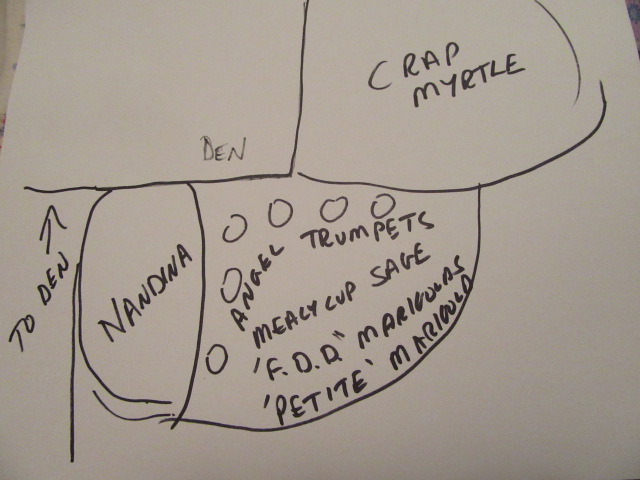
Where Do I Begin…AGAIN?

IMG_3221.JPG

Twice before I have started blogging and added pages to all the plants I am growing and have grown. NOW, I have to start all over once more. Luckily, I saved most of the pages and I certainly still have all the photos since 2009. It is just taking the time to add them again. SO, just bear with me. It is a good thing most of you are just interested in posts, which I can easily do. 🙂

But as I go along adding the plant pages, I will have to continually check and make sure the botanical names are still correct. This should be interesting because I haven’t checked for a while except for the new plants I added this year. That was really fun! Hmmm… A new post for each new plant…

I did grow white sweet potatoes this year, which was REALLY interesting. Believe it or not, in all my years of gardening, I had never grown sweet potatoes. I think it was because I knew they would want to take over a very large space. OK, better stop because I feel a new post coming on…

I was talking to a friend a few weeks ago who specializes in cactus and succulents and they had to move their plants inside. I had already done that the first part of November. Suddenly I remembered I had left a cactus in the ground I had acquired in the spring. I was told it was one that is supposed to survive the winters here in the ground. Well, I immediately went outdoes with a flashlight to see if it was OK. To my surprise, even though the temps had dropped to zero, this cactus was still alive and very well… Well, It was from an Amish that I frequently traded plants with who owns Wagler’s Greenhouse. Unfortunately, she didn’t know the name like so many others she has. But it isn’t a Prickly Pear, which also survives outside here.

This spring my sister wanted to come and go to the greenhouses here. I only knew of one and she said there was another one. I investigated and found out that there are four! SO, she came down from the city and we went to three. OF course, we bought plants from all of them. Earlier I had bought a Kalanchoe lucia (Propellor Plant) from Wal-Mart. Mast’s Greenhouse had these HUGE succulents that they had labeled “Propellor Plant. Well, they were AWESOME but they certainly weren’t like the one I had already bought. Turns out they are a species or some hybrid Echeveria. OH, NOW another post coming on…

Well, it is 10:42 PM and I feel another sleepless night coming on. Talk to you soon! Take care and try to find some way to get outside in the cold and get some dirt under your nails… In the daytime.


BREAK THE ICE, ALREADY!!!

IMG_3219.JPG

When I got up to make my coffee this morning the cows were at the pond looking toward the house. It was like they were saying, “BREAK THE ICE, ALREADY!”. I am pretty sure that’s what they were saying. SO, I made my coffee, took a few sips, and went out to the pond then to the chicken house.

The cows hardly wanted to wait for me to get enough ice broke before they dove in, nearly pushing me out of the way. The chickens also gathered around the bucket to get a drink. Well, I have never been an early morning person because I don’t like going to bed at night. I do wake up early but I go back to sleep. My alarm is set for 7 AM, which I turn off and go back to sleep. I often wondered why I set my alarm if I am just going to turn it off and go back to sleep.

I always remember the old saying, “The Early Bird Gets The Worm.” Well, I always say I do what I should be getting up early to do before I go to bed. That is all well and good, but in the winter I have to consider the livestock and the fact that they don’t have water to drink until I get up and break the ice or fill their buckets. SO, OK… I guess I will have to get up when the alarm goes off and take care of that.

Somehow I need to slide back, go to bed earlier, and then get up earlier. I have been listening to various sleep music and meditation on YouTube to help put me to sleep at night. It does work, believe it or not, especially two in particular. The problem is, I don’t start listening to them until… Um… 2-3 AM. Sometimes even later than that. Going to bed to me is a waste of time when I just lay there, tossing and turning. So much on my mind, it seems. SO, I have been told, “When you go to bed, stop thinking.” When they can’t sleep at night I remind them (not to mention names, here), of what they said. I just get a dirty look.

Well, that is easier said than done. Meditation helps especially when the person talking is telling me I have control over my body and mind. Take deep breaths like so and clear your mind of all thoughts. One night I was listening to this guy on YouTube and he was telling me how to breathe and then he said he was going to talk to my body while I was sleeping. Then he got quiet for a couple of minutes while the soft music was playing. I was trying to relax, but some part of my body was always itching, or there was some pain. Then he started whispering… I thought, “OH, this guy is NUTS!” After a few seconds, I fell asleep and didn’t wake up until the alarm went off. He was still whispering…

Well, now that I have had about half of my coffee, I am telling my body and mind that I am wide awake. I guess I am supposed to look out the window, with the sun shining so bright, and tell myself that it isn’t 10 degrees out there.

Time to go to work, now. Take care and I hope you have a GREAT and BLESSED DAY!
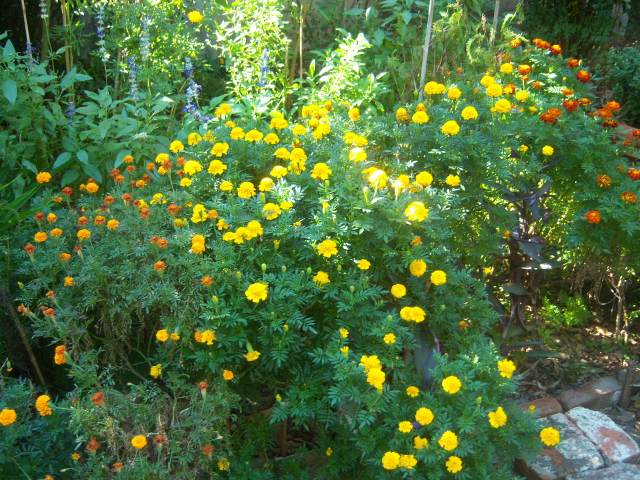
 

SNOW AGAIN!
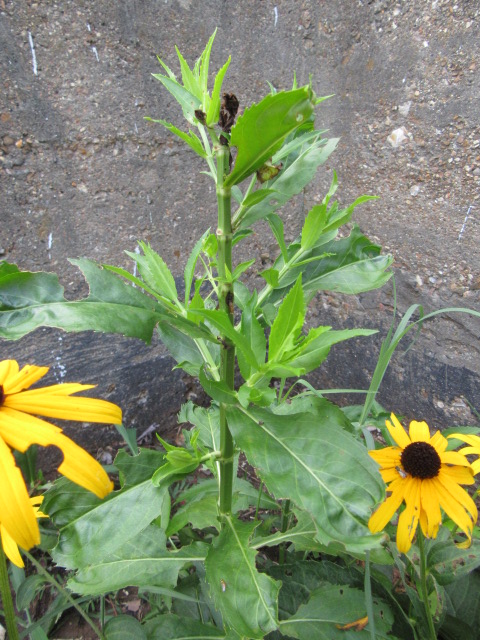
We have been very fortunate not to have had much snow so far this winter. We did have a cold snap a couple of weeks ago, but we always survive and it always warms up again. We just have to change our routine and I need to go to the chicken house and dump the water after the chickens go to roost and give them fresh water early the next morning. Then I have to go and break the ice on the pond so the cows will be able to drink.

IMG_3206.JPG

This is what it looked like when I went outside this morning. Not too bad, though and it could be MUCH worse.


IMG_3207.JPG

This photo is of the Old English Game bantams. They are six months old now and one of the pullets started laying a couple of weeks ago. The chickens in the back pen have the run of the back pen and the whole other half of the chicken house. They aren’t used to me wearing my coat yet, so they all ran into the back pen where they roost. They are Delaware’s, Black Sex-Link, and 4 White Chantecler’s.

We bought the first batch of chickens in July then when they were old enough I put them in a coop outside so they could run around outside. Normally we keep the chickens inside the house, but I knew they would be better off outside free-ranging. They did very well for a while. In the late afternoon, I would go out and make sure they went in the coop so I could shut the door for the night. Then one day, I was a little later… I went out and there were dead chickens laying in front of the coop and there was a fox in the coop. The fox killed them all but six Old English Game Bantams (3 roosters and 3 pullets) and one Delaware rooster. SO, we had to start over again but we didn’t buy any more bantams. Live and learn.


IMG_3213.JPG

The pond was frozen over so I needed to break the ice so the cows could have water. The ice wasn’t very thick and they could have probably broken it themselves this time.


IMG_3214.JPG

They always appreciate a little help, though.


IMG_3215.JPG

The cows were in the hayfield grazing but they headed for the pond when they saw me.


IMG_3216.JPG

With that finished it is time to head to the house and warm up…

I hope you stay warm this winter and are making plans for spring when you can get your hands in the dirt and start gardening again. Take care and God Bless You!

My Return

HELLO AGAIN!

I am back for the third time as The Belmont Rooster. As before, this blog will be about plants I am growing on the farm now or had experience with while living in Mississippi. I don’t have photos prior to that. As before, I like doing taxonomic research of plant names and their authors like who named what and when. Some of the men and women who named plants were quite fascinating, so links are provided by clicking on their names.

I will be blogging about life on the farm with the cows, chickens, birds, cats, and whatever happens to wander in. If you have any comments, questions or suggestions I would like to hear from you.

So, let’s BEGIN…