Working On It…

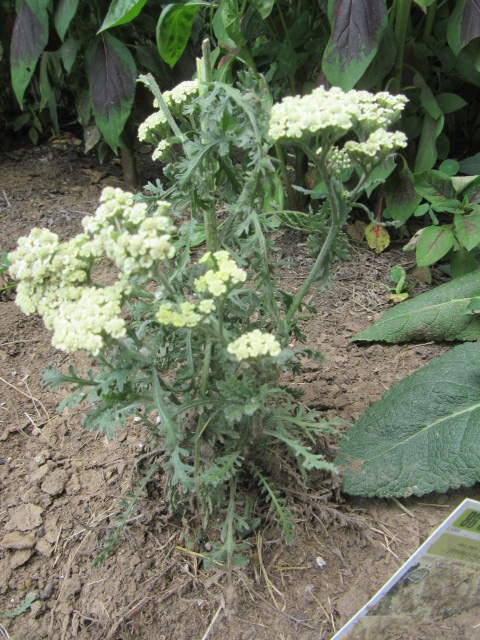
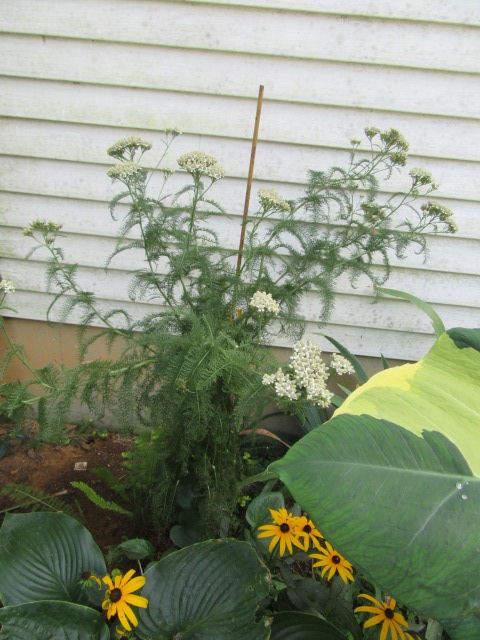
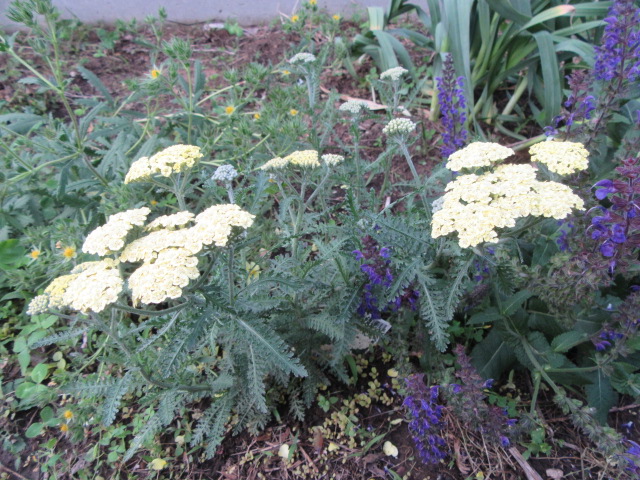
Achillea ‘Moondust’ on 5-25-19.

Hello everyone! I hope this post finds you well. I am well, but we have gotten a lot of rain in the past few weeks. It is hard to mow, keep up with the weeds and try and work on the beds when it is raining or wet. The plants I did put in the ground were done so in a hurry without much thought or amending the soil. I did put in some composted cow manure with the Colocasia bulbs, but cow manure only provides so much. There is a lot more to it and some plants need more of this and that. I think I need to write a post about plant requirements as I learn and experiment.

I always feel a little strange when people compliment me about my skills as a gardener and talk about my green thumb. Seriously, there are many great gardeners whos plants and flower beds look much better than mine. I have plants I think should be doing better while others do so well it is shocking. What is worse is to bring home a plant that is supposed to perform a certain way and it doesn’t. Then I realize it was labeled wrong and isn’t even the plant I thought it was. So, how does it perform like so when it isn’t even supposed to? 🙂 Sometimes it takes many years to even realize “this isn’t even the right plant!”

Hmmm… I can sense something about to happen with this post but I am trying to avoid it…


Achillea ‘Moondust’ on 5-25-19.

We have had a lot of rain, as I mentioned, and wind and some plants are beginning to lean. The Achillea ‘Moondust’ isn’t that tall, but I noticed it leaning as I took its photo. When this happens, you need to put a rock or something next to their stems or firn the soil a little. Otherwise, they can start growing crooked. I staked almost everything when I was living in Mississippi but I don’t have to do that here. That’s a good thing and I am thankful. I am thankful for the rain even though we have gotten plenty for now. But you know, it is always that way this time of the year.

One thing I have realized is to be thankful for everything. The good, the bad, and the ugly. We have so much to be thankful for and take so much for granted. We should spend our day saying “thank you” for every experience and everything we encounter, everything we use, the air we breathe, our abilities, running water, the food we eat, friends and family, a bed to sleep in, the clothes we wear… One thank you can just lead to another because one thing leads to another. One thought leads to another. One action leads to another and so on.
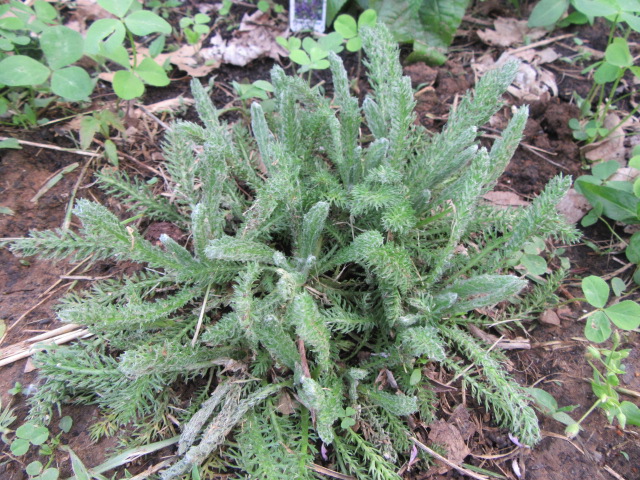
 

Achillea tomentosa ‘LoGrow™ Goldie’ on 5-25-19.

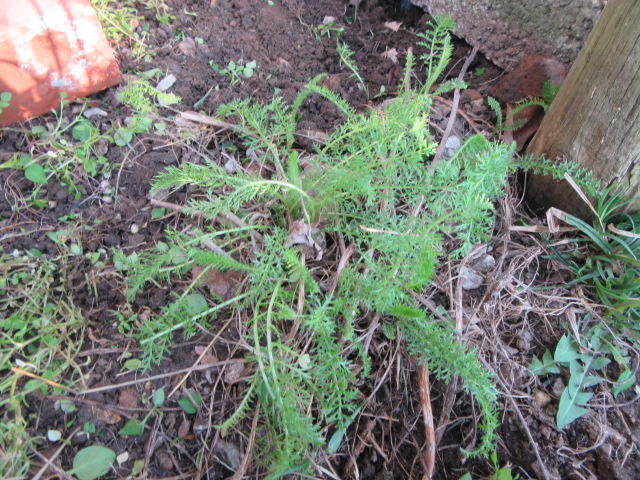
The Achillea tomentosa ‘LowGrow™ Goldie” is doing well and looking a little shaggy. I haven’t noticed any buds yet but I am thankful it is doing well.

****

I have hesitated to talk about certain things because this is a blog about gardening and plants. There is more to my life than gardening and plants. I think I need to work on opening up about other things like my spiritual journey. I know so many people struggle with the same problems and issues I have. We are all unique in our needs and life’s journey, which means we struggle with the same issues.
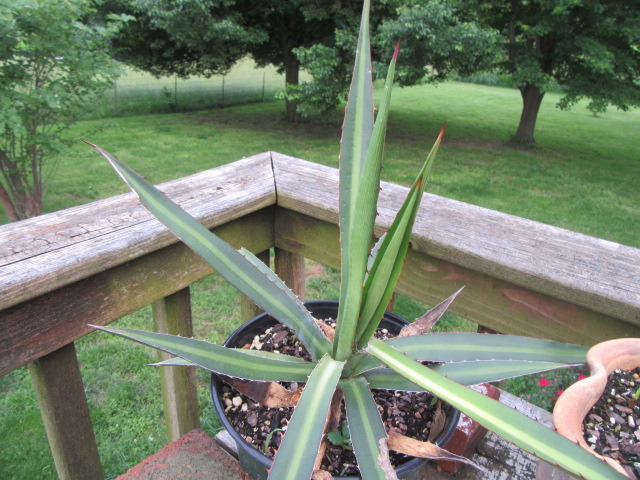
 

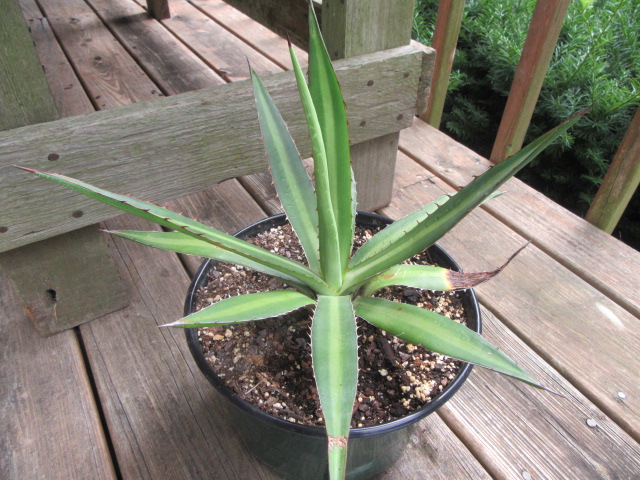
Agave univittata var. lophantha on 5-25-19.

Well, this is supposedly an Agave univittata var. lophantha (Center Stripe Agave). It looked much different when I brought it home, unlabeled, and did research to find out what it was. When it was just a pup, its leaves were shorter and broad now they are long and narrow. Maybe it is because it hasn’t had enough sun in the past so this summer it gets FULL sun… I am sure it will be thankful, too.

****

I was brought up in a Christian home and accepted Jesus Christ as my Lord and Savior when I was young. My mom made sure us kids were in Sunday school every week no matter what. She would drive past the speed limit going down the street to get there on time, but we were always late anyway. I had the same questions about the bible many of us do and was given the same answers many us were told… “There are things we don’t know, but we have to believe and live by faith that what it says is true.”


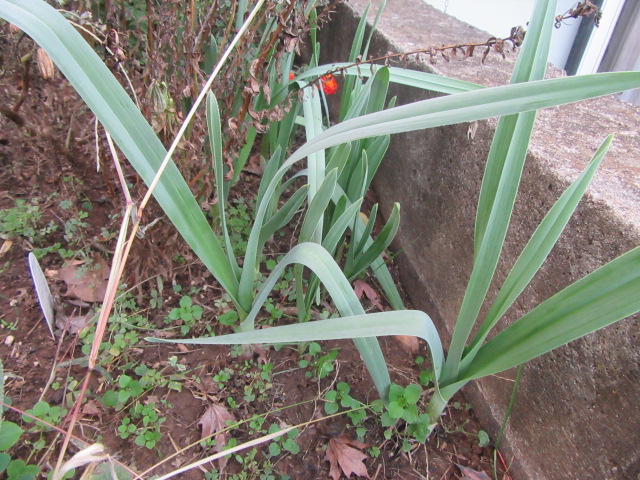
Allium ampeloprasum var. ampeloprasum (Elephant Garlic) on 5-25-19.

I have a lot of Elephant Garlic in the south flower bed and they make neat plants and have these beautiful flowers. My start was given to me by my neighbor in Leland, Mississippi 8-10 years ago and they always do well and spread.

****

We get into this rut believing things we still question. Sometimes when we believe in something, we close our minds to other possibilities. Then, when the truth comes, you don’t believe it. Therefore, I have always had an open mind and have always believed there is more to life than what the Bible teaches. And to think I have been nominated to be an elder at the church I attend. I used to call myself a “progressive Christian” until I recently found that there is already a movement by that name. Now I have to come up with another name because I am not involved with Progressive Christianity. I am just me.

I always say, “the truth is the truth whether you believe it or not.”

So, if we believe and accept what the Bible says, if it isn’t exactly true, we will believe many other things that aren’t exactly true as well. And we have.
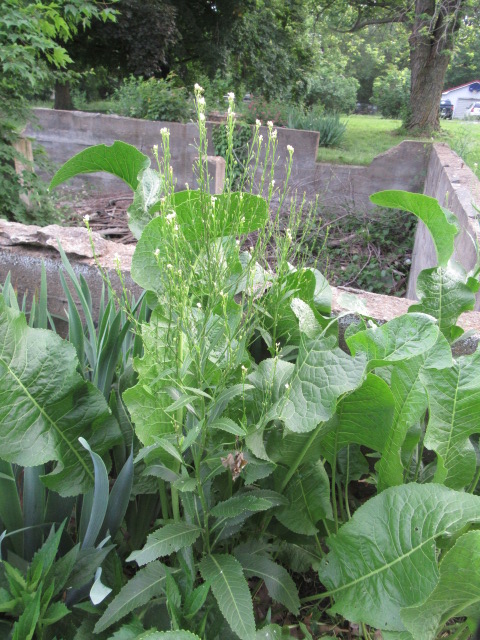
 

Amoracia rusticana (Horseradish) on 5-25-19.

The Horseradish is looking awesomely well! I took a photo of it in full bloom on May 5.


Armoracia rusticana (Horseradish) flowers on 5-5-19.

I took a close-up but it turned out a little blurry. Most members of the Brassica family of plants have yellow flowers and interesting seed pods. Horseradish is different…

****

As we humans get older, we naturally have a few physical issues to deal with. It is like we are fine one day and the next we have new pains. Our joints get somewhat stiff, sometimes our digestion gets out of whack, we have weird sleep patterns, and so on. Not to mention getting bald on the top of our heads while the hair on our ears and eyebrows seems to need trimmed daily. We try this and that to feel better but barely anything works (usually because we are fine already). I am still healthy and fully functional, but sometimes a little extra energy would help. Some of go on this health kick, hopefully, and learn that we need to eat better. We realize the importance of reading labels and try to avoid GMO’s… Eating out, especially fast foods, is a no-no. But, sometimes we revert back to our old ways for one reason or another. Next thing you know, we are back to eating out and still taking our natural supplements. We think maybe if we just go ahead and eat whatever we want, take natural supplements, get plenty of exercise and do a cleanse every 6 months or so… Hmmm… We need to eat healthy for our physical body, mental focus, and our spiritual growth.


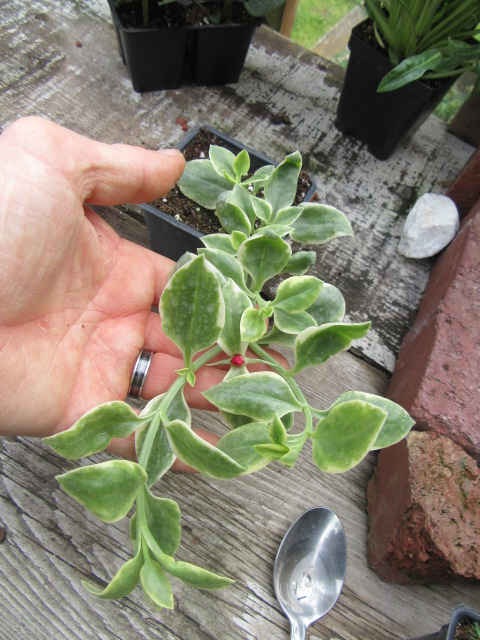
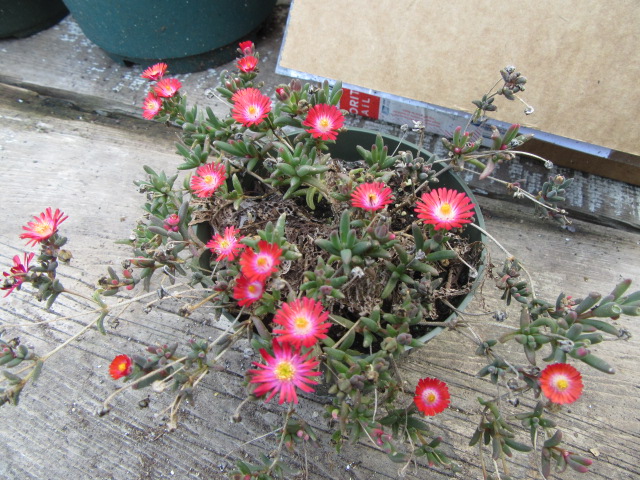
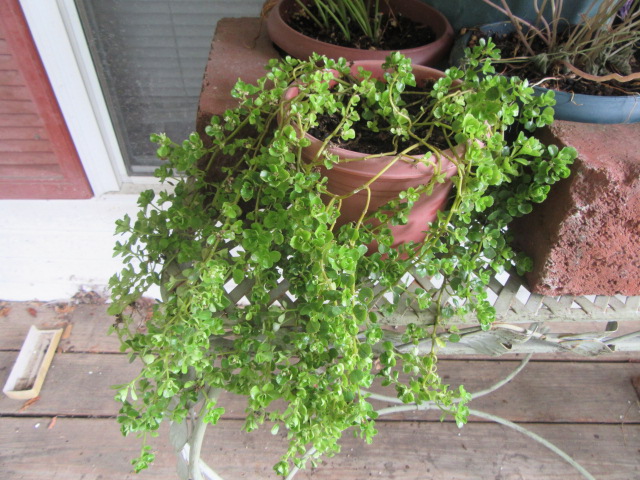
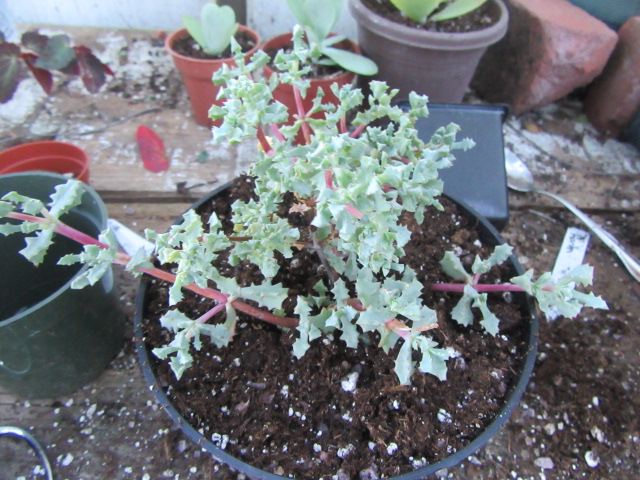
Aptenia cordifolia/Mesembryanthemum cordifolium f. variegata on 5-25-19.

The Heartleaf Ice Plant is looking much better now. It was one long branched stem so I took cuttings and put them in the same pot. I am patiently waiting for more flowers now.

****

Ummm… I deleted A LOT of paragraphs and have started over more than once. I have a lot to talk about but I am not sure how to go about it…

I feel like as we are growing up we are spinning around in a funnel as we learn. We are taught about the theory of evolution in school and the Biblical theory of creation in Sunday school. Once we accept Christ, we fall through the hole in the bottom of the funnel and into a bottle with all the other believers. The glass bottle is dirty and you can’t see out… Kind of like the scripture, “For now we see in a mirror dimly, but then face to face…” (1 Corinthians 12:13 ESV). Well, maybe that isn’t what the scripture pertains to, but it reminds me of it anyway. That bottle is like a tiny speck of dust floating around in the Universe. I climbed out of the bottle and funnel and peered into the Universe in December 2016…


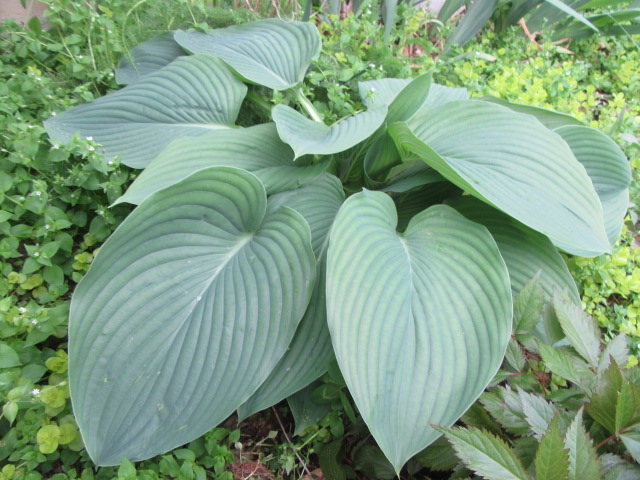
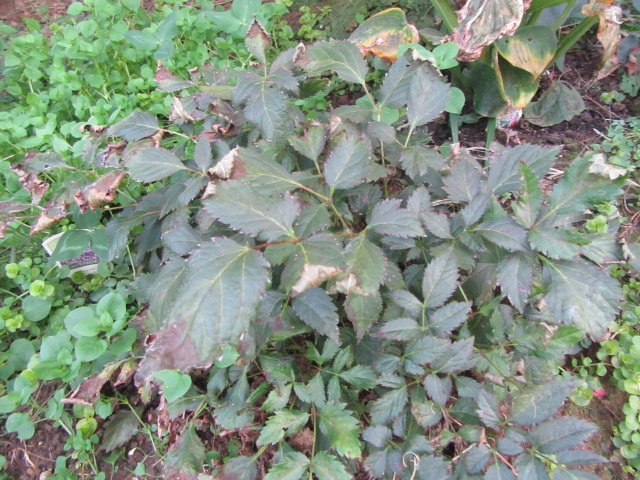
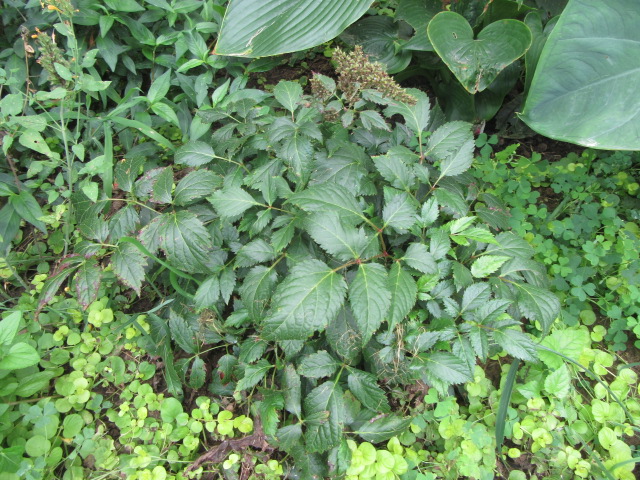
Astilbe x arendsii ‘Fanal’ and Hosta ‘Empress Wu’ on 5-25-19.

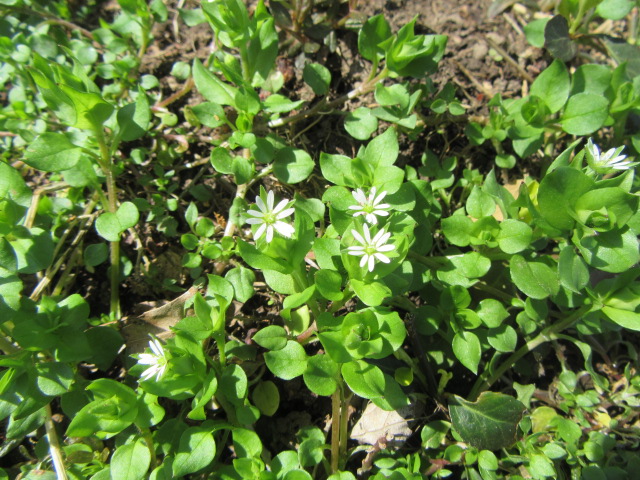
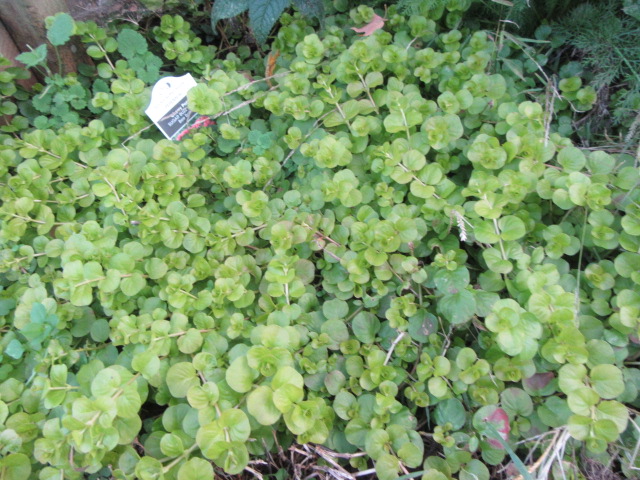
The Astilbe x arendsii and Hosta ‘Empress Wu’ next to the porch in bed on the north side of the house are making great companions. I bought the Astilbe last spring and it is the third year for the Hosta ‘Empress Wu’. Both are very impressive plants that make a bold statement. Of course, the gold-leaved Creeping Jenny (Lysimachia nummularia ‘Goldilocks’) also makes a bold statement as well. It is like a living mulch that knows no boundaries in the right conditions. I thought it preferred a more shady area, but let me tell you, it has gone really wild in more sun. With the rain and lingering cool temps, the Chickweed in the north bed has been a challenge. The plant in the lower right corner of the photo is a Rudbeckia fulgida var. sullivantii ‘Goldsturm’ (‘Goldstrum’).

****

Deleted and started over more…

As I mentioned, we are taught the theory of evolution in school, but we have been taught it is wrong in Sunday school. Everyone knows most everything has gone through a process of evolution, even the people that tell you it is wrong.


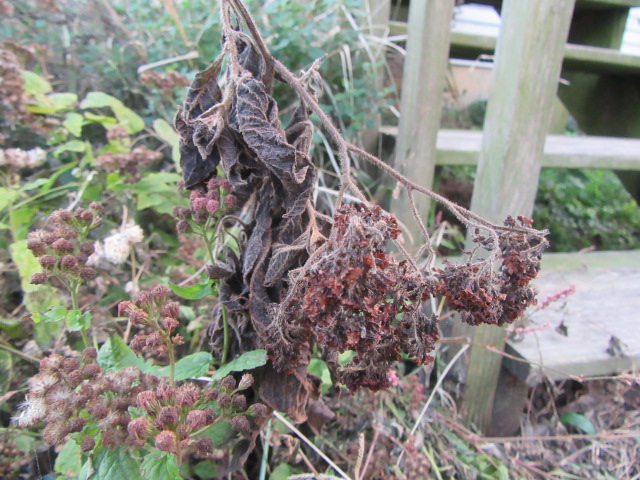
Baptisia australis seed pods on 5-25-19.

The beautiful flowers of the Baptisia australis (Wild Blue Indigo, Blue False Indigo) have been replaced by these HUGE seed pods. While the flowers were beautiful, the plant doesn’t flower long enough. Deadheading doesn’t encourage more flowers as it does with a lot of annuals and perennials. After flowering, the Baptisia have these huge seed pods which turn black when mature that can be used in flower arrangements.

****

Since December 2016, I have enjoyed watching documentaries about ancient origins, ancient civilizations, new discoveries both in archaeology and science, and so on. It just fascinates me what has been found. Since modern scientists have said, “who are we”, the Universe has answered. Archeology and science are coming together more and more, but religious leaders and theologians are still stuck in old beliefs for the most part. They cannot admit the truth, even though so many know the truth. I think it is because they didn’t know the truth and believed what they were taught, even though it couldn’t be explained. Very little in the Bible can actually be backed up with physical proof. One reason is because the names of cities and people in the Bible are different than the actual names. Even names change from time periods and cultures. Their “gods” were given different names even though they were the same “gods”. Notice I wrote it with a small “g”. I could not figure out why the name Sumer wasn’t mentioned in the Bible when several Sumerian cities are. Then I realized the Bible calls it Shinar. Ur, a Sumerian city, was the birthplace of Abraham and his father and grandfather were high priests to the Sumerian “god” Enlil. Most people in the early part of the Bible were Samarians including Noah, although his name was different. One reason some things cannot be backed up is that they are myths. GEEZ! Like I said, I am supposed to be an elder, but I am just saying what most Christians believe but won’t admit to. Christianity is a multi-billion dollar “industry”.

To make it worse, many sacred documents that have been discovered are hidden or have been destroyed because they contradict what was written in the Bible.

I am not going to get into the Sumerian tablets. Maybe later. I do have the entire set of The Earth Chronicles by Zacharia Stitchin even though I haven’t even made it through the first book. In the first book, The 12th Planet, Mr. Stitchin has done a great job comparing old testament scriptures with the Sumerian tablets. Umm… Even though it is “controversial”.

I am not going to get into the Moses controversy…


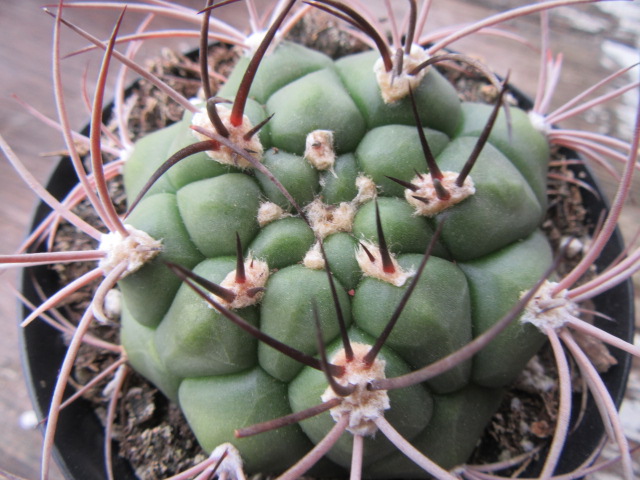
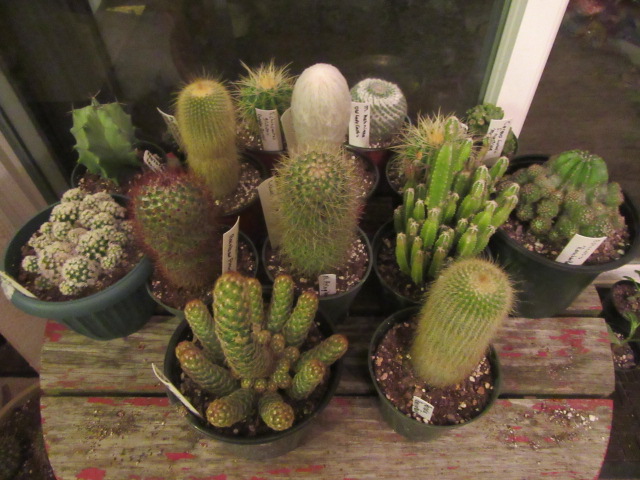
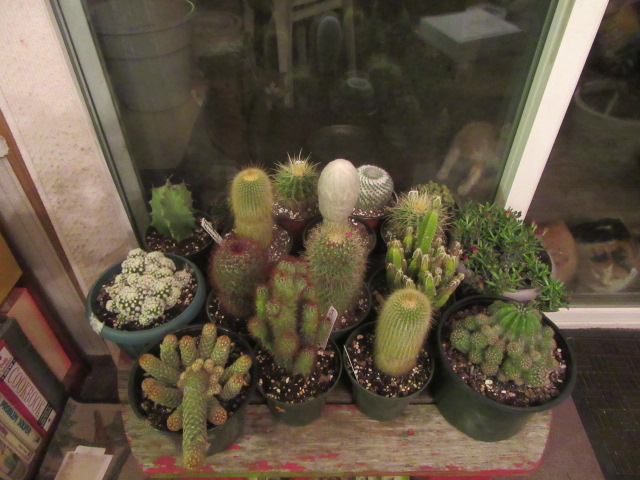
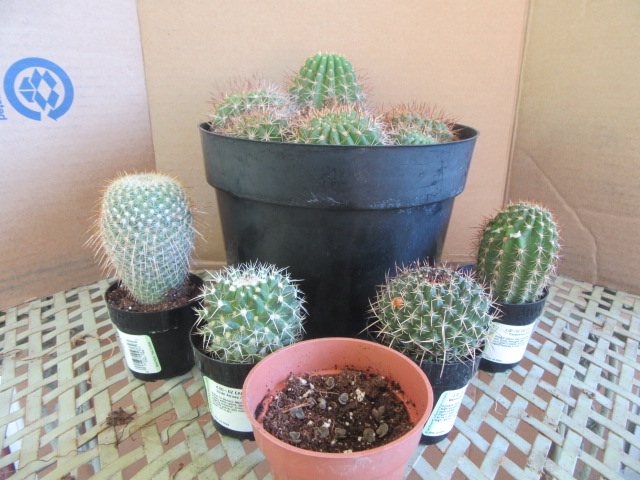
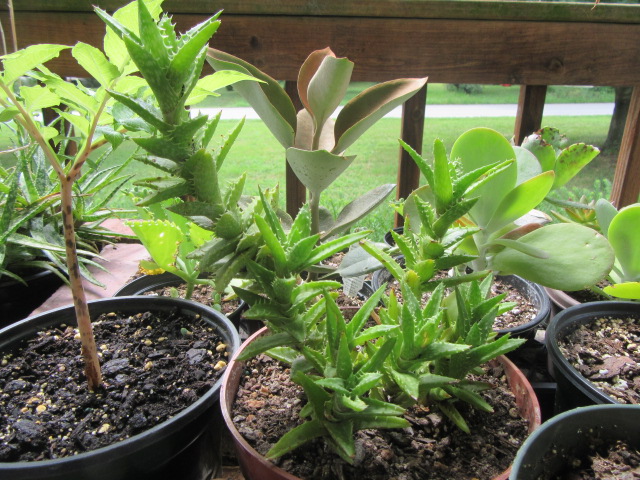
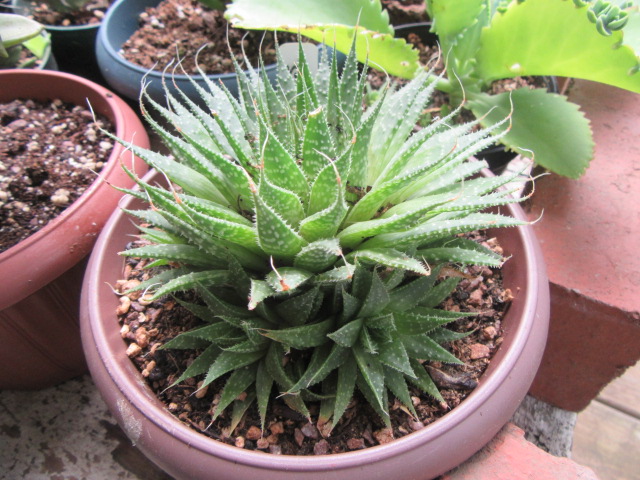
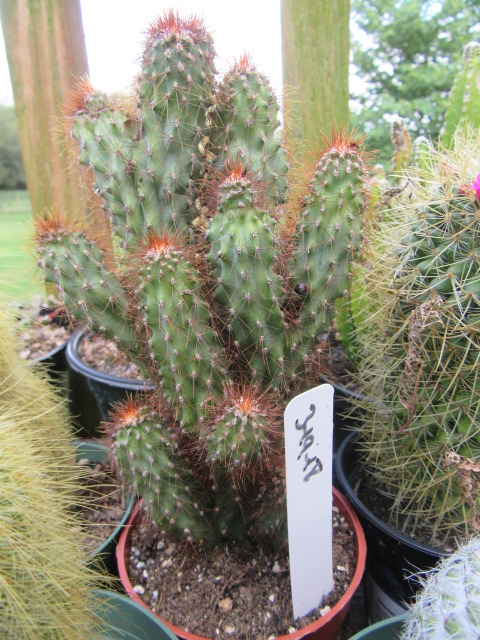
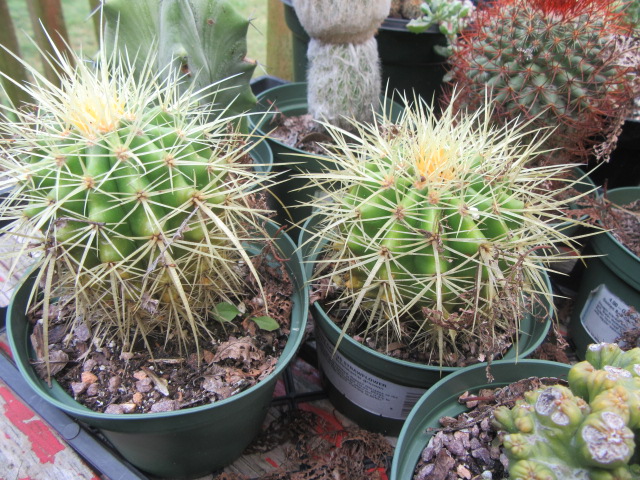
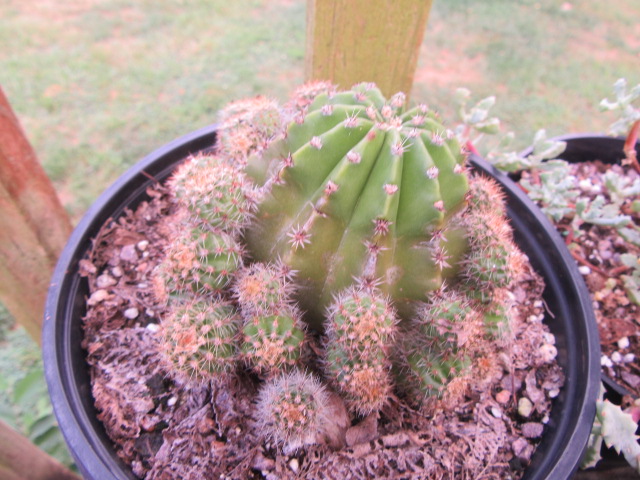
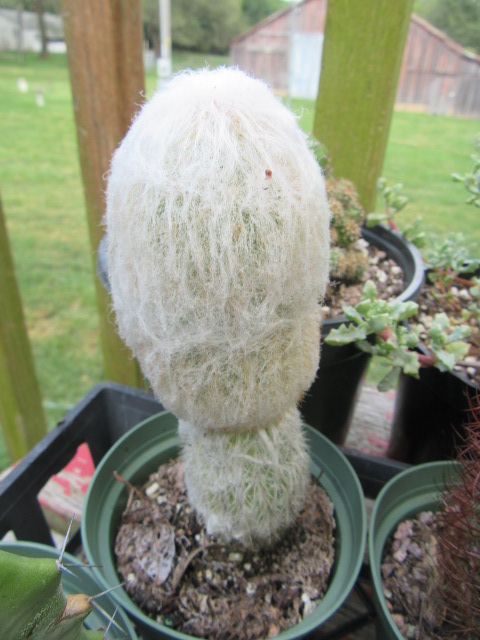
Most of the cactus collection on 5-25-19.

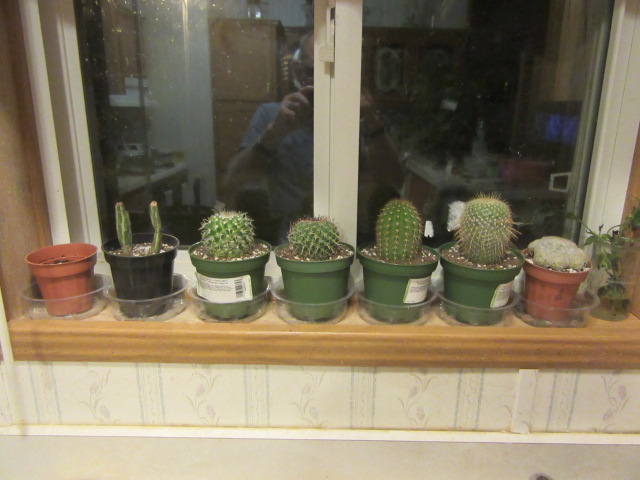
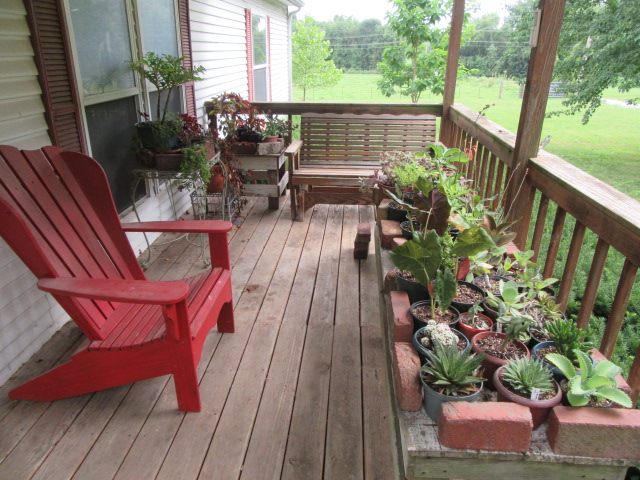
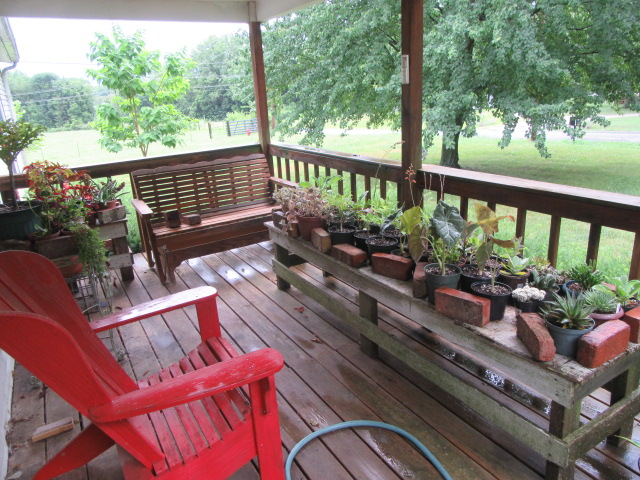
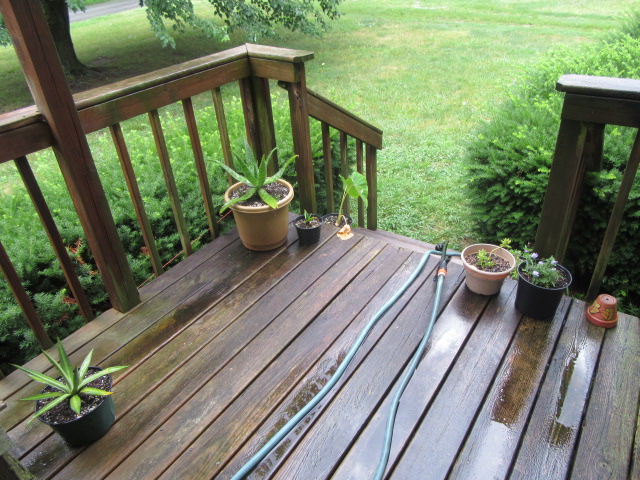
Most of the cactus collection is on the back porch while most of the succulents are on the front porch. If there were more room on the back porch… All are doing well for the most part and some need re-potting. Experimenting with pumice will continue.


Celosia argentea var. spicata ‘Cramer’s Amazon’ and Talinum paniculatum (Jewels of Opar) seedlings on 5-25-19.

Patiently waiting for the Celosia argentea var. spicata ‘Cramer’s Amazon’ to come up can be a real pain. I need to get the south bed planted so it will look good, but I have to wait for the re-seeders to come up. The Rudbeckia hirta ‘Denver Daisy’ came up first last spring but they haven’t made an appearance yet. So, likely they will not come up at all. USUALLY, the Jewels of Opar (Talinum paniculatum) come up after the Celosia but this year they came up first… By the thousands!
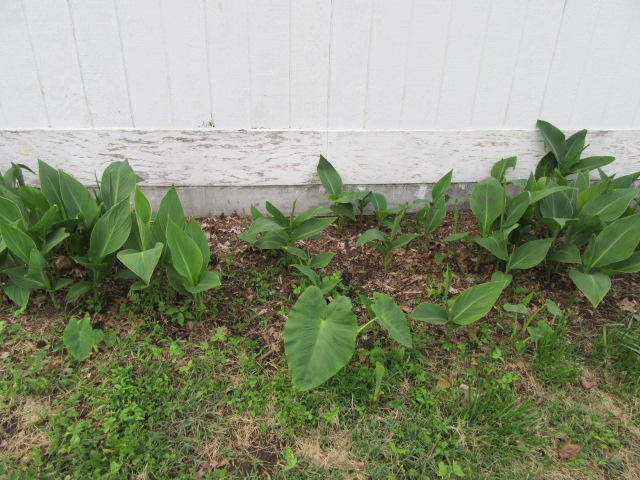
 

Canna and Colocasia esculenta along the garage on 5-25-19.

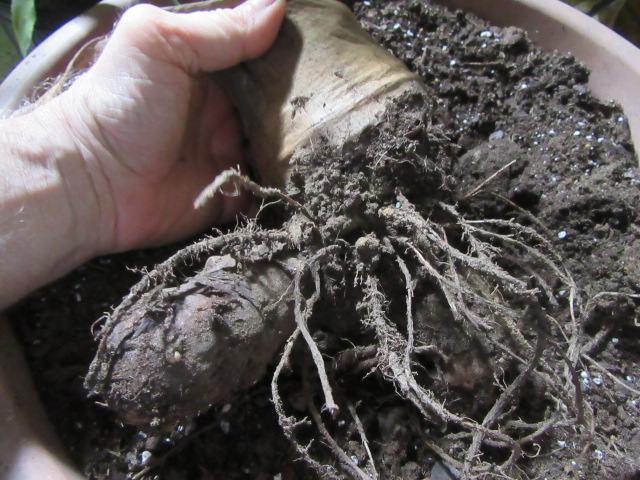
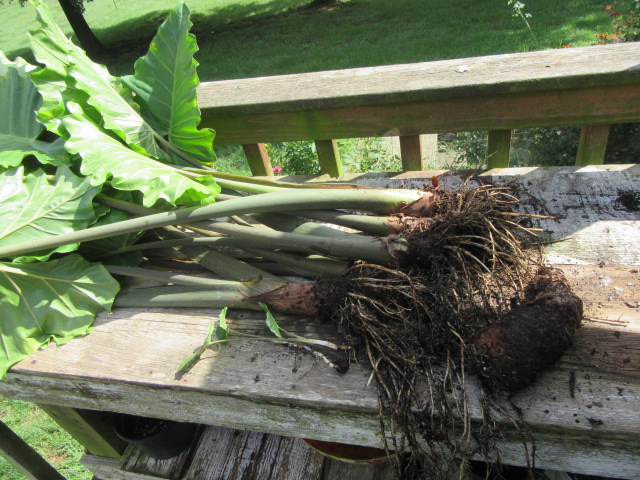
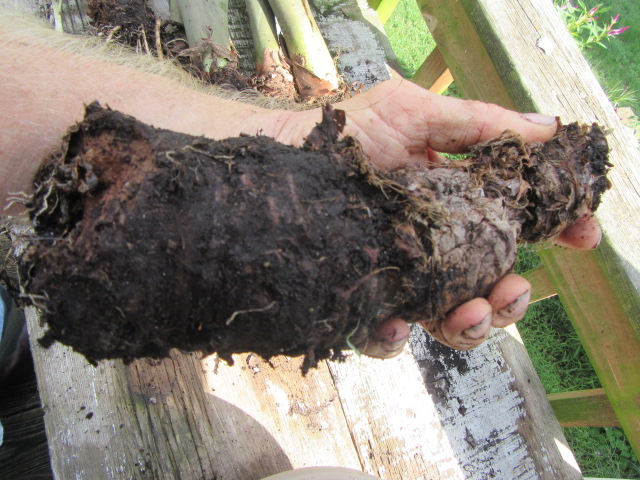
Something weird happened. Last year I dug all along the south side of the garage and spread out the Cannas. Then, I planted several of the smaller Colocasia esculenta rhizomes in front of the Cannas. The Colocasia didn’t do all that great here probably because I didn’t water them enough. After the “F” zapped everything in the fall, I removed the dead and mulched the bed with leaves. I did not dig up the Colocasia and take them to the basement because I already had plenty. Technically, not even the Cannas are supposed to survive the winter here, but mine are not the only ones in town that do. What was surprising, though, was that the Colocasia also survived the winter in the ground with the leaves on them. I often wondered what would happen if I tried that but never did. I wouldn’t try it with the bigger Colocasia rhizomes because that would be a disaster if they rotted in the ground because I neglected to dig and store them.
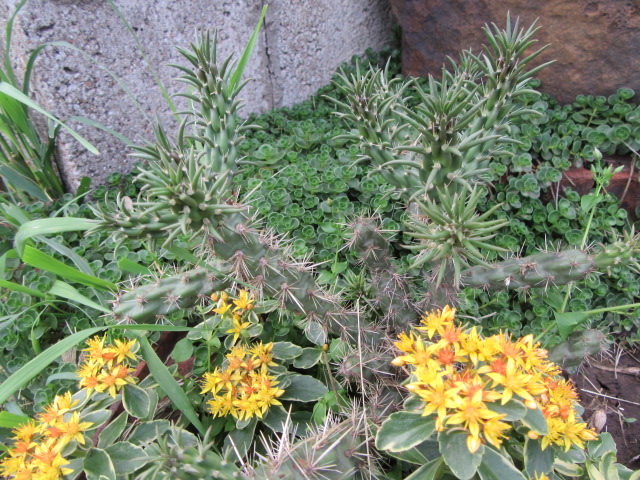
 

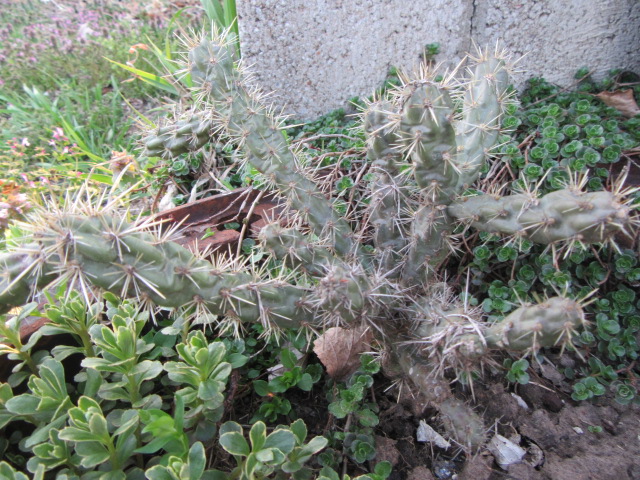
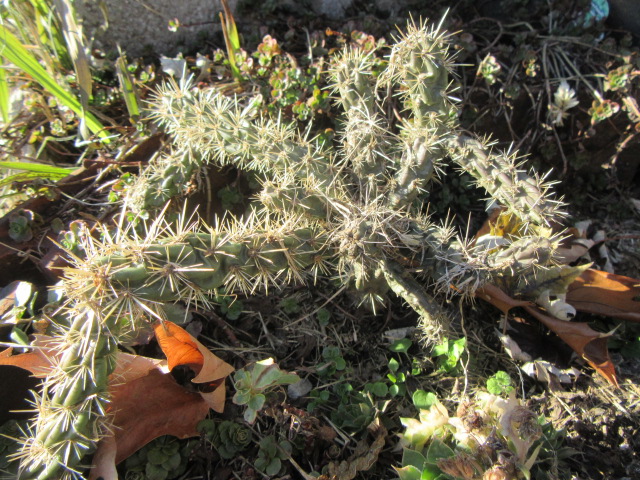
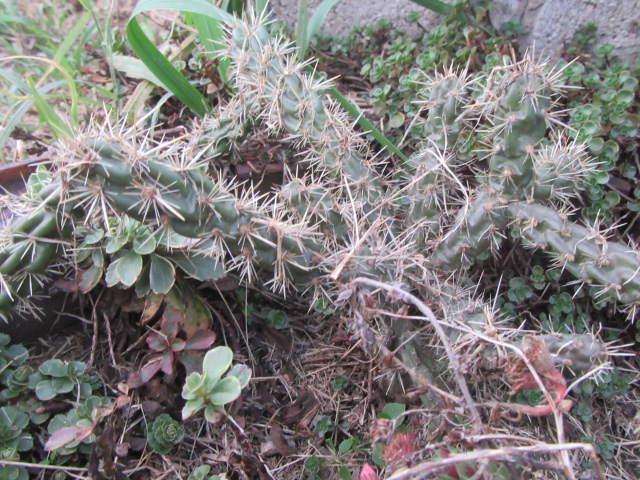
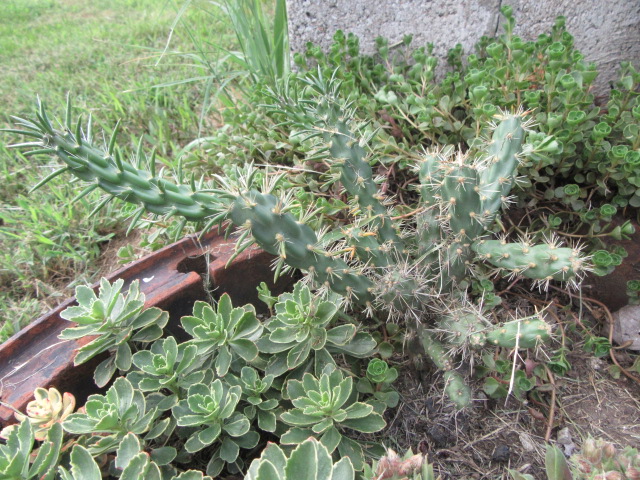
Cylindropuntia imbricata on 5-25-19.

The flowers are on the Sedum kamtschaticum ‘Variegatum’ but this photo is supposed to be about the Tree Cholla (Cylindropuntia imbricata) next to it. Since the Sedum is doing so well, it is hard to take a photo of the Tree Cholla without the Sedum being in it, too. The Tree Cholla does weird things in the spring and early summer, growing leaves and new branches and is very interesting to watch. The drawback of this plant is its thorns that just seem to reach out and grab you… The Chickweed seems to like growing in it perhaps because it thinks it is protected. Hmmm…
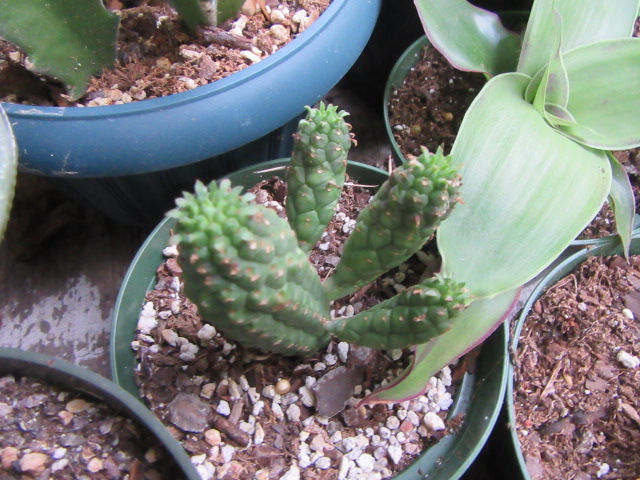
 

Euphorbia mammillaris on 5-25-19.

As tempted as I am to do something different with this Euphorbia mammillaris, I am going to leave it alone and see what happens. I really like this plant and it is going to be fun to watch grow.

****

What I would like to really talk about is meditation. Meditation can be awesome for you for many reasons. The problem for me was understanding how to do it. If you have been brought up as a Christian, meditation is something we don’t even practice and is barely ever mentioned. How can something so important and valuable not be taught in Christian churches? I don’t get it… I think I understand why, but I still don’t get it.


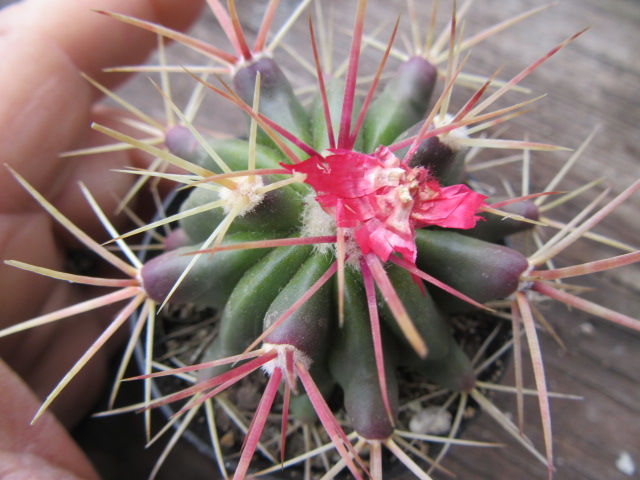
Ferocactus wislizeni on 5-25-19.

When I was taking photos, I noticed a red glow on the Ferocactus wislizeni. Apparently, the new spines emerge red from a tuft of cotton. NICE! Ummm… the glob in the photo are the remains of a strawflower that was hot glued to this plant. The hot glue is stuck to a few of the spines and won’t come off yet.

****

I tried and tried to meditate and it seemed like nothing was working. I read this and that, watched videos, and I would always wind up giving up. Well, I prayed about it… Next thing I know, I had a new follower on my blog who made a comment. I always check out new follower’s blogs and it was good I looked at hers. I sent her an email and she sent a link to DailyOM. Since then, I have taken many courses on DailyOM and have learned A LOT. The courses on the Archangels, meditation, manifestation, and so on have helped a lot. Masha’s blog is called A Sweeter Life…
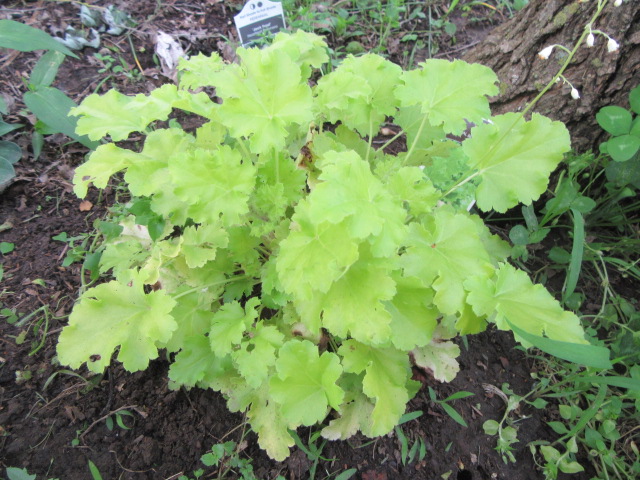
 

Heuchera ‘Lime Rickey’ on 5-25-19.

The Heuchera ‘Lime Rickey’ is really glowing now. I had to remove some Chickweed to get a good photo and noticed something interesting…


Heuchera ‘Lime Rickey’ flowers on 5-25-19.

It has the tiniest flowers I have ever seen on any of the other Heuchera. I almost pulled it off with the Chickweed!

****

Most of the courses I have taken on DailyOM have been very good, but there have been a couple I couldn’t sink my teeth into. Before DailyOM, I had difficulty meditating because of various reasons. Some say you have to quiet your mind and sit like so. Getting your mind to stop thinking is like getting your heart to stop beating. It is impossible… One said to count your breaths in order to stop thinking… Count one on the inhale, two on the exhale, and so on until you get to seven then start over. Sometimes I would be on 23 before I realized I was thinking about not thinking…
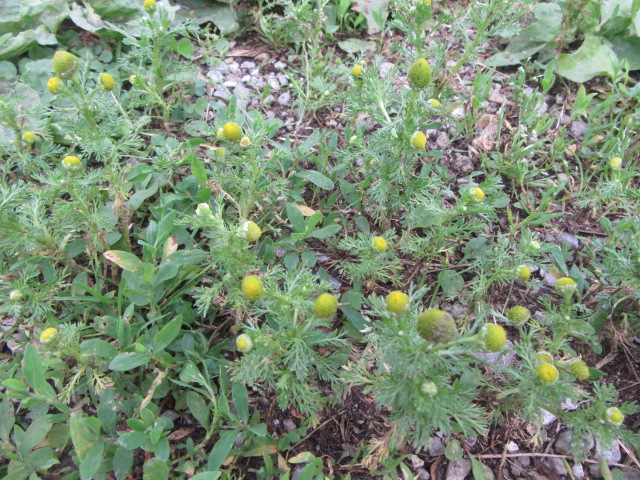
 

Matricaria discoidea (Pineapple Weed) on 5-25-19.

One of the neatest plants on the farm is the Matricaria discoidea also known as Pineapple Weed, May Flower, Wild Chamomile, Etc. It is a cousin to Chamomile (Matricaria chamomilla with 48 synonyms)
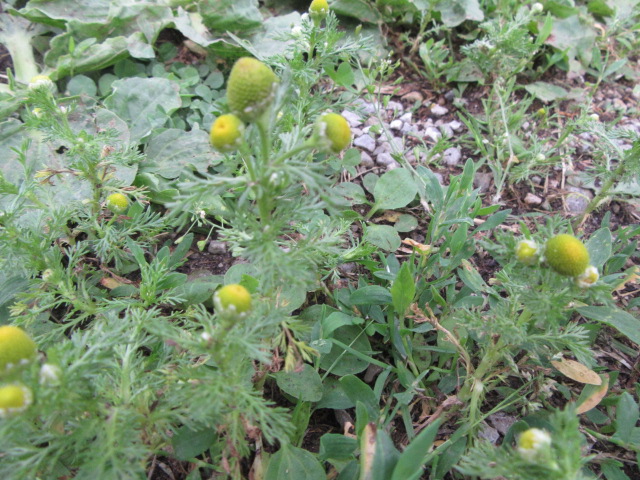
 

Matricaria discoidea flowers.

The flowers look like little yellow balls and the plant’s bloom all summer. The only place they grow here is in and along the driveway. I have tried moving a few to the flower bed to see how tall they would get if they weren’t mowed off all the time. Information online says they grow from 2-16″ tall. As one of their common names implies, they have a nice pineapple scent which fills the air when I mow. You can make tea with their leaves and flowers and also use them in salads. The Wikipedia says their leaves may become bitter by the time they flower… I have never tried them even though there are hundreds of plants.

****

Then there were the ones that said you need to “be present” but wouldn’t explain what that even meant. Well, with DailyOM, I figured it out. You can take guided meditation courses that lead you through the whole process and it works… You eventually get the hang of it.

Then, on Gaia.com, I watched an interview with Belinda Womac (Open Minds, season 7 episode 12). I had taken courses about the Archangels on DailyOM, but then I bought Belinda’s book titled Lessons from the 12 Archangels. It is very good! My favorite course about the Archangels on DailyOM is titled Angelic Infusions: Live the Truth of Who You Are by Mark Mezadourian.

While it is interesting to know about our past, knowing how much truth has been lost, hidden and destroyed and why can be a little upsetting at first. To realize how we have been deceived will only lead you to watch more documentaries and reading more about the deception. This will lead you to watch and read any and everything, a lot of which is deceptive in itself. Many authors and people on YouTube don’t agree either which can be even more confusing.

I think the most important thing is to realize who we are, what we are, how to have what we want and need, how to get it, advance spiritually and know why that is necessary. Most of all, we are to love one another, encourage one another, learn about awareness and teach others along this journey. We all have gifts, even though we may not realize it now, to use to help others.


Spirea flowers on 5-25-19.

The Spirea is LOADED with flowers as always this time of the year. When I lived on the farm in the early 1980’s, this Spirea was in front of the house with the Junipers. I moved it between the back porch and basement steps so it would have a better chance. Well, after all these years, it has survived. Dad removed the old Juniper shrubs in front of the old foundation and now there are Iris in the area… PLUS several of this Spirea that came up from the roots left behind. They don’t do well, though, because they are in full shade.

I took more photos on May 25 but they are mainly for updates on the plant pages to the right of the blog.

I think I am going to work on something different along with sharing photos and information about plants and gardening… I tried it with this post but wound up deleting and re-writing MANY paragraphs. I have a lot to talk about but I am just not sure how to go about it…

SOOOOO, for now, I will close this post before I go back and delete everything again and start over. I have photos for the next post already so I better get it posted before they become outdated. OH, I found some NEW wildflowers on another farm I need to photograph and post about. I even found an Achillea millefolium with pink flowers. I have seen HUNDREDS of Achillea millefolium but NEVER one with pink flowers! Now I need to find it again before disappears.

Until next time, be safe, stay well, stay positive be thankful AND GET DIRTY!
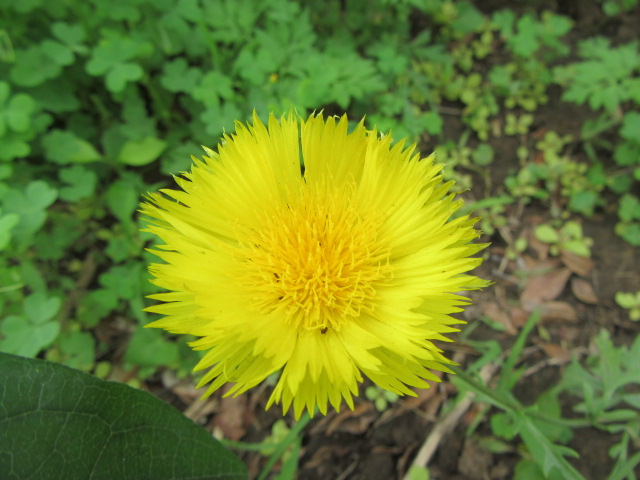


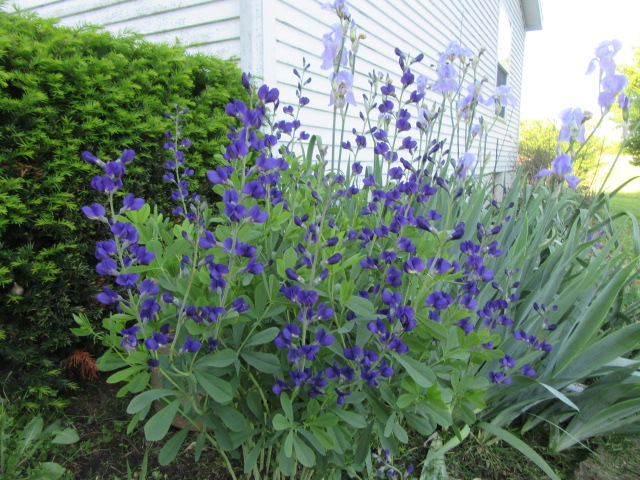
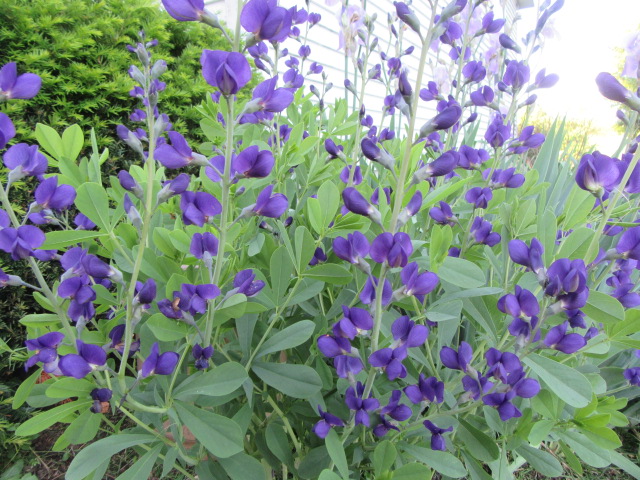
Baptisia ‘Lunar Eclipse’-NOT!

BLUE WILD INDIGO

Baptisia australis

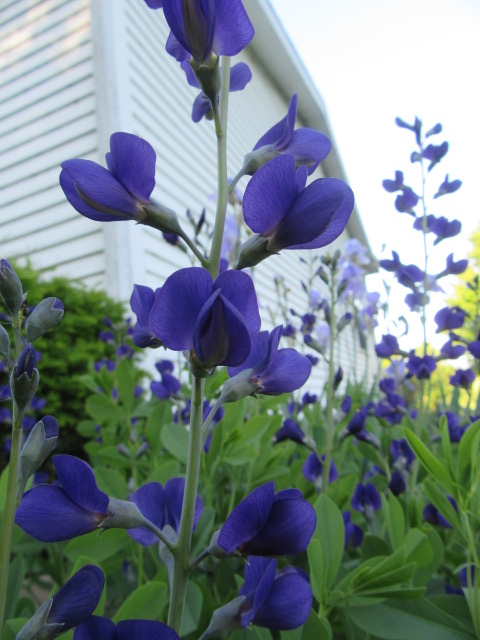
Hello everyone! I bought this Baptisia labeled ‘Lunar Eclipse’ from the Green Street Market in Clinton in 2017. There were several pots of ‘Lunar Eclipse’ flowering but they were pretty pricy so I settled for one in a smaller pot that wasn’t flowering. The label clearly says Baptisia ‘Lunar Eclipse’ which has beautiful bi-color flowers. It flowered a little for the first time last year but they were NOT like ‘Lunar Eclipse’. I thought maybe the flowers were whacky their first year so I still had hope for this year. I didn’t want to admit it was incorrectly labeled from the grower that supplies Green Street Market.


While still very impressive, it just feels weird waiting for something to happen and not getting what you expect.


Instead of being cultivar Baptisia ‘Lunar Eclipse’, it is actually Baptisia australis commonly known as Blue False Indigo or Blue Wild Indigo. Baptisia ‘Lunar Eclipse’ was a combination of many species. Since the label is incorrect I don’t know if this is just the species or a different cultivar. SO, what can I do? I have to go back to this plant’s page and change the whole thing. At least the mystery is solved and I am also happy for that.

I am not complaining that much because it is a very beautiful plant but it isn’t what I paid for. I told the owner of the Green Street Market about it a couple of weeks ago. Of course, I didn’t expect a refund or anything because I have had the plant since 2017. It isn’t her fault the grower labeled them wrong and I did take a risk in paying a lesser cost for plants that weren’t flowering in the first place. You just never know and that is part of gardening…

I still have a lot of photos taken over the past couple of weeks, but they are mainly out of date now. So, this next week I will probably take more and HOPEFULLY make another post or two. I am STILL working on plant pages, updating and adding new ones. It is always a work in progress just like life.

Until next time, Be safe, stay positive and GET DIRTY!
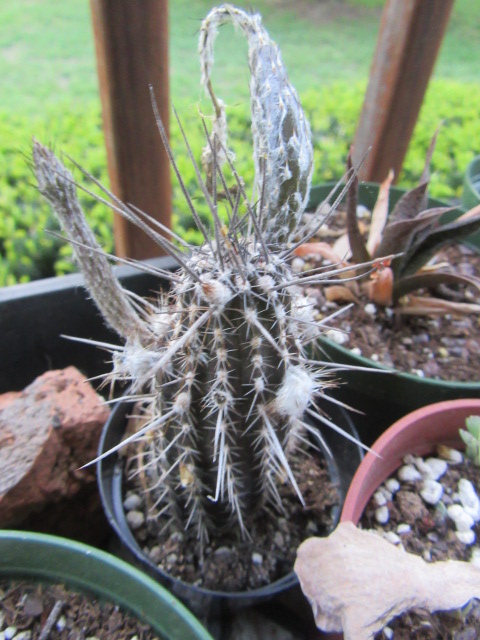
Echinopsis mirabilis-Flower of Prayer

Echinopsis mirabilis on March 30, 2019.

Hello folks! I wanted to make a post highlighting the Echinopsis mirabilis whos common name is the Flower of Prayer. The past few days has been an exciting time for this plant. I brought it home from Lowe’s on March 29 because I thought it was really neat. It is a very dark green, almost black which was one of the things I found very interesting.


There were several wooly looking appendages sticking out of it and an old flower stem. Well, of course, I had to bring it home.


Echinopsis mirabilis with a new flower stem on 5-5-19, #566-23.

On May 5 I noticed it was about to flower. WOW! I got pretty excited! This was going to be a whole new experience!


Echinopsis mirabilis on 5-15-19, #572-1.

I almost forgot all about it until May 15 when I took the above photo. I thought how neat this was going to be for this plant to flower.


Echinopsis mirabilis on 5-18-19, #574-5.

It was getting about time and even more exciting on May 18…

Then…


Echinopsis mirabilis on 5-19-19, #575-2.

On Sunday afternoon I went to check and it looked like this…


Hmmm… I had forgotten one important thing. It flowers at night and only lasts for one night.


On the bright side, there is another one starting to grow. I am wondering if all those other fuzzy appendages are past flowers or where new flowers will be.

The sad thing is that this species is monocarpic and will die after it is finished flowering at some point. The good news is that the flowers are self-fertile and produce 100’s of viable seeds. That would be really interesting if their seeds came up.

I will be watching this plant like a hawk during the day and like an owl at night when the next bud starts to open! I will NOT miss it the second time. 🙂

New Plants Update

Achillea tomentosa ‘LoGro™ Goldie’ on 5-16-19, #573-2.

Hello everyone! I hope everyone is doing well. I haven’t posted since April 28, so I thought I better make an appearance so you know I am still alive and well. I have been busy doing this and that because there is always plenty to do. The grass is growing nonstop now.

I wanted to share my new plants with you. I haven’t brought home very many yet and I haven’t even started on the south side of the house. I am waiting for the re-seeding annuals to come up and so far there is no sign. The Jewels of Opar are coming up but the Denver Daisy has been a no show. The Celosia ‘Cramer’s Amazon and ‘Brocade Marigolds SHOULD be coming up.

So, here are the new plants since the last post, in alphabetical order…

The top photo is the Achillea tomentosa (Wooly Yarrow). The tag says the cultivar is ‘LoGro™ Goldie’. I don’t know where the “LoGro™” is trademarked from at the moment but the cultivar ‘Goldie’ has been around for a few years. When I checked to see if the species name was still “accepted”, I ran into a little difficulty. Ummm…

If you want to get down to the nitty-gritty of it, there “were” five Achillea tomentosa with different authors abbreviations. All are synonyms of other species now. Achillea tomentosa Friv. ex Nyman=Achillea coarctata Poir., Achillea tomentosa Fraas ex Nyman=Achillea holosericea Sm., Achillea tomentosa L.=Achillea millefolium L., Achillea tomentosa Pursh=Achillea millefolium var. occidentalis DC.=Achillea millefolium L., Achillea tomentosa Pall. ex Ledeb.=Achillea leptophylla M.Bieb. (Actually, there are two different Achillea leptophylla. Achillea leptophylla K.Koch. ex Nyman=Achillea crithmifolia Waldst. & Kit.). All the authors who named and wrote the descriptions we all describing different plants with the same name. 

So, what is the species of this plant anyway? I did image searches online of the possibilities and many of the photos look the same with the same type of leaves and flowers. Yes, some were different, but nothing really conclusive. No database or website other than Plants of the World Online mentions anything about the name Achillea tomentosa now being a synonym. It must have been a recent change. Looks like another email to Rafael Goverts from Kew is in order… Watch him tell me the change isn’t definite yet. I agree if there are more than one scientific names of the same plant the mystery should be solved. After all, Achillea millefolium has 133 synonyms and that number will probably grow.

ANYWAY! This plant I brought home from Wagler’s Greenhouse on May 1. The plant labeled Achillea tomentosa ‘LoGro™ Goldie’, is supposed to grow to ONLY 6-8″ tall. That is smaller than “Goldie’, ‘King Edward’ or ‘Aurea’ which are also popular cultivars of Achillea tomentosa.

Moving right along…


Alworthia ‘Black Gem’ after I brought it home on 5-9-19, #570-1.

I had been working on planters for a friend so I “had to” go to the four local greenhouses on more than one occasion. Wagler’s has a few succulents but Mast’s and Wildwood have more. Sometimes I find something new at Mast’s but Wildwood normally has the best selection. Wildwood Greenhouse is smaller than the other three but their plants are AWESOME. Well, I suppose I shouldn’t rate one higher than the rest because all their plants are of high quality. Business was booming the first couple of times I went to the greenhouses, but I did get to visit with Mr. Yoder at Wildwood at length on the 8th and 9th. We talked plants in general. Anyway, one of the succulents I picked up was this nice x Alworthia ‘Black Gem’ which was unlabeled. I posted the photo on a Facebook group and was told it looked like x Alworthia ‘Black Gem’. I looked it up on Llifle and Google and decided the member was right or close enough to give it a name. x Alworthia ‘Black Gem’ is an intergeneric cross between Aloe speciosa and Haworthia cymbiformis. Interestingly, one website used the term bigeneric which was a new one for me but bigeneric and intergeneric mean the same thing. Maybe they couldn’t think of the word intergeneric. I like the thick dark green leaves.


Mesembryanthemum cordifolium f. variegata after I brought it home on 5-1-19, #564-2.

Walking through back greenhouse at Wagler’s I noticed this neat plant with a flower that looked similar to an Ice plant. There were A LOT of them but they were all unlabeled. I asked Mrs. Wagler what it was and she said it was an Ice Plant. Hmmm… When I think of an Ice plant I think of Delosperma cooperi which I have grown several times. “This is no Ice Plant”, I thought to myself. So, I brought it home mainly to figure it out.


By the time I arrived home to take photos the flower was closed up. It was pretty neat how the flower just kind of sticks out of the end of the plant.

Anyway, I went to my computer later and typed in “variegated Ice Plant” and came up with the name Aptenia cordifolia “Variegata”. Which would be written correctly as Aptenia cordifolia f. variegata. Unfortunately, Plants of the World Online says Aptenia cordifolia ONCE AGAIN is a synonym of Mesembryanthemum cordifolium. Ummm… Botanists agreed this species was Aptenia cordifolia when the name was changed by Martin Heinrich Gustav Schwantes in Gartenflora in 1928. The genus Aptenia was named in 1925 but the species were returned to the Mesembryanthemum genus in 2007. Then in 2009, several authors proposed this move be reversed. So far, no luck.


On May 6 I was finally able to get a photo of the flower. Like members of other Mesembryanthemum and Delosperma genera, the flowers of “Aptenia cordifolia” are only open during the day and close up in the late afternoon. The common name “Ice Plant” belongs to Delosperma cooperi. Aptenia cordifolia is the Heart-Leaved Ice Plant and Dew Plant *among others). The common name for Mesembryanthemum cordifolium is Baby Sun Rose. To make it a little more confusing, there is a hybrid cultivar floating around by Proven Winners called ‘Mezoo Trailing Red’ and they call it a Livingstone Daisy. It is likely a hybrid between Aptenia cordata x Aptenia haeckeliana, I mean Mesembryanthemum cordifolium x M. haeckelianum. The hybrids are found in the wild and produce red flowers while the true, whatever you call it, produce bright magenta-rose (pinkish) flowers.

All of the local greenhouses had many combination hanging baskets with these plants in them. I used them when I did the planters for a friend as well.


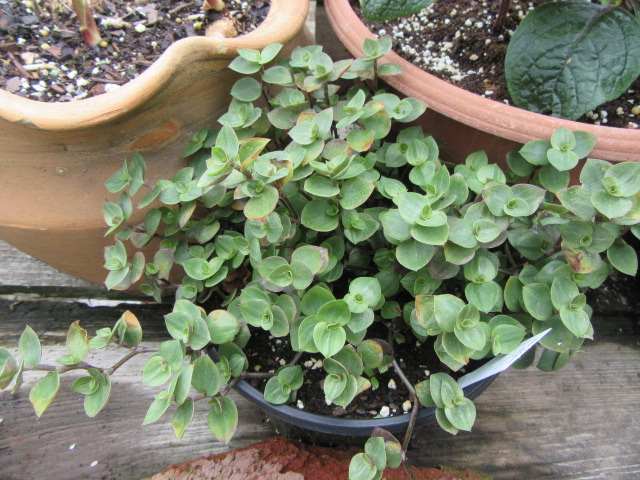
Callisia repens (Bolivian Jew) on 5-19-19, #575-1.

I also had to have this neat little plant. I look at the label and it was a Bolivian Jew and the species name was Callisia navicularis. I was pretty happy when Plants of the World Online said that was a legit and accepted name! BUT, when I was talking to a friend and sent him a photo, he promptly said it was a Callisia repens. I said, “WHAT!?!?!” I hadn’t looked online myself yet to make sure of that but he immediately knew that a Bolivian Jew was a Callisia repens and not what the label said. I checked for myself and sure enough, he was right. I met this guy through a Facebook group and he knows a lot about plants!


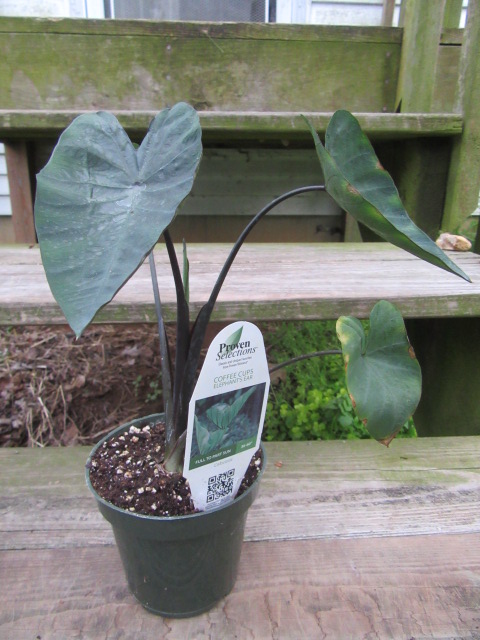
Colocasia ‘Coffee Cups’ after I brought it home on 5-8-19, #569-1.

Colocasia ‘Coffee Cups’ has been on my wishlist for a long time, so when I saw several at Muddy Creek Greenhouse on May 8 I didn’t hesitate to bring one home. I have grown both Colocasia ‘Tea Cup’ and Bikini Tini’ when I lived at the mansion in Mississippi but haven’t since I have been back in Missouri. Many believe Colocasia ‘Tea Cup’ is the same as ‘Coffee Cups’. Colocasia ‘Coffee Cups’ was discovered in the wild by Indonesian botanist Gregory Hambali and brought to the US by aroid specialist Alan Galloway.


I put it in the ground on the right side of the steps on the north side of the house. Two Achillea millefolium came up in this spot but I haven’t moved them yet. I just put the Colocasia ‘Coffee Cups’ behind them. Hmmm… Two different species with completely different moisture requirements in the same spot. How’s that for garden planning? The Achillea are MUCH taller now but C. ‘Coffee Cups’ can grow 5-6′ tall.

Colocasia ‘Coffee Cups’ and ‘Tea Cup’ are commonly advertised as a cultivar of Colocasia esculenta. In my opinion, and other growers of the ears, that is nearly impossible. It has many characteristics of Colocasia fontanesii including the dark petioles and smaller olive-green leaves. Colocasia ‘Black Stem’, which I have also grown in the past, is a Colocasia fontanesii.


Wagler’s also had a lot of very nice Gazinia so I had to bring one home for the northeast corner bed. I haven’t grown any of these for a few years but I always liked them. Their flowers start folding up in the late afternoon and open in the morning. GEEZ! I take most of my photos in the late afternoon!


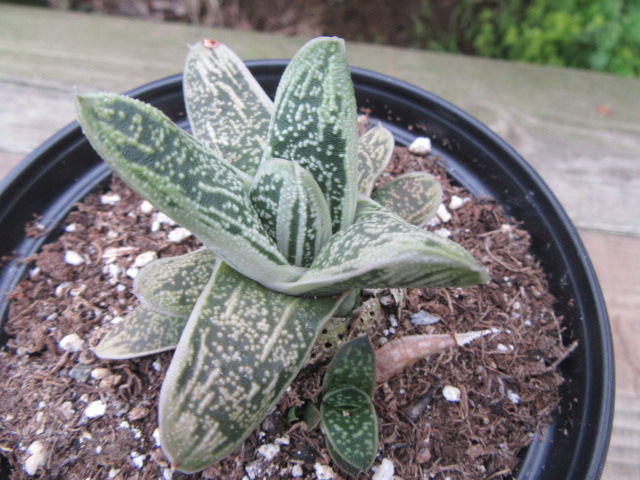
Gasteria ‘Little Warty’ after I brought it home on 5-8-19, #569-2.

When I was out at Wildwood Greenhouse for the second time, I picked up one of the Gasteria ‘Little Warty’. It was unlabeled but I knew what it was from previous research about the Gasteria species. It is a cross between Gasteria batesiana x Gasteria ‘Old Man Silver’ from the Australian hybridizer David Cumming. Gasteria species seem to be easy to grow and are worth giving a try if you haven’t. They prefer light shade to shade over full sun so they also do well inside.


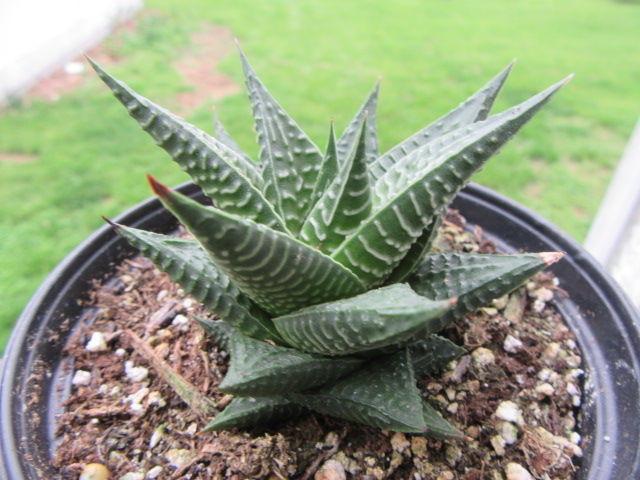
Haworthiopsis limifolia (Fairy Washboard) on 5-9-19, #570-3.

Wildwood Greenhouse had several of these Haworthiopsis limifolia (Fairy Washboard) which were also unlabeled. This species was first named Haworthia limifolia by Hermann Wilhelm Rudolf Marloth in 1910 then changed to Haworthiopsis limifolia by Gordon Douglas Rowley in 2013. A distinguishing feature of Haworthia species is their “two-lipped” flowers. After further research, three separate genera were discovered within the Haworthia genus. Now we have Haworthia, Haworthiopsis, and Tulista all with “two-lipped” flowers. Hmmm…


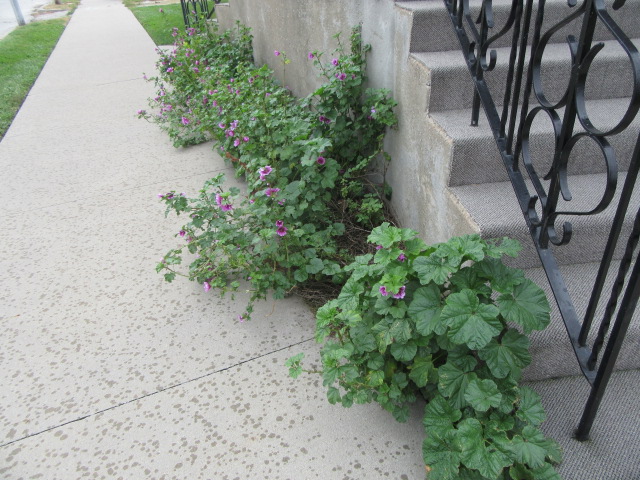
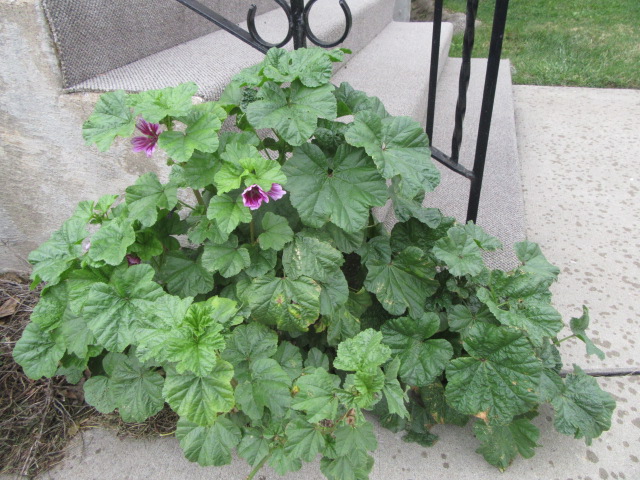
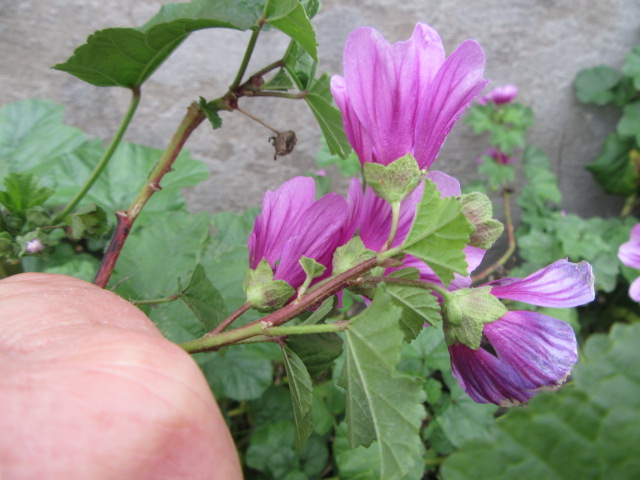
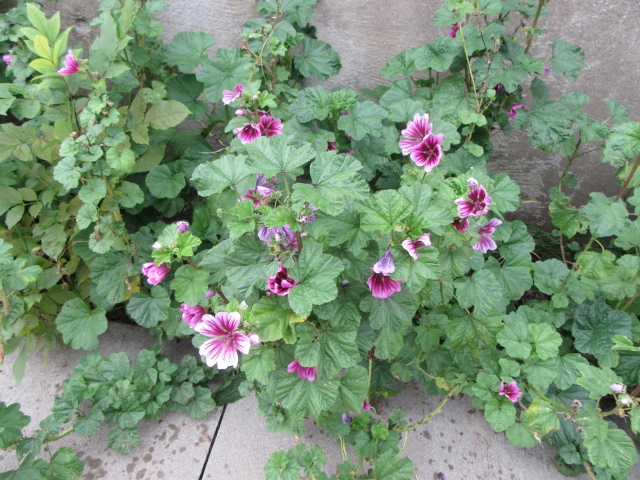
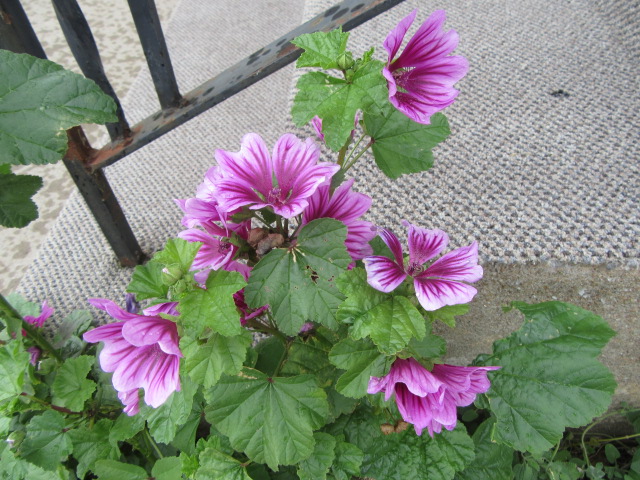
Malva sylvestris (French Hollyhock) on 5-19-19, #575-2.

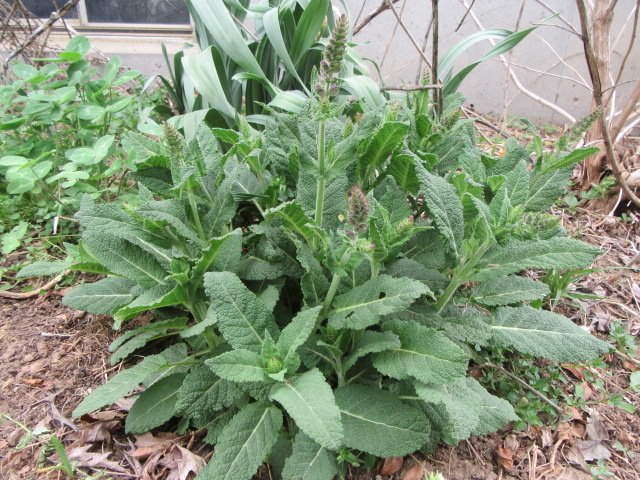
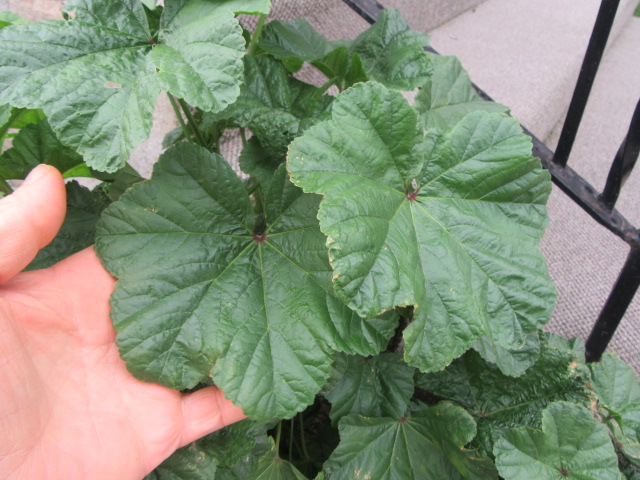
Wagler’s had several unlabeled pots of these plants with nice HUGE dark green leaves that were unlabeled. Again, I had to ask what they were. Mrs. Wagler said they were Miniature Hollyhocks and thats all she knew. It is likely Malva sylvestris. Common names include French Hollyhock, and Tall or High Mallow.

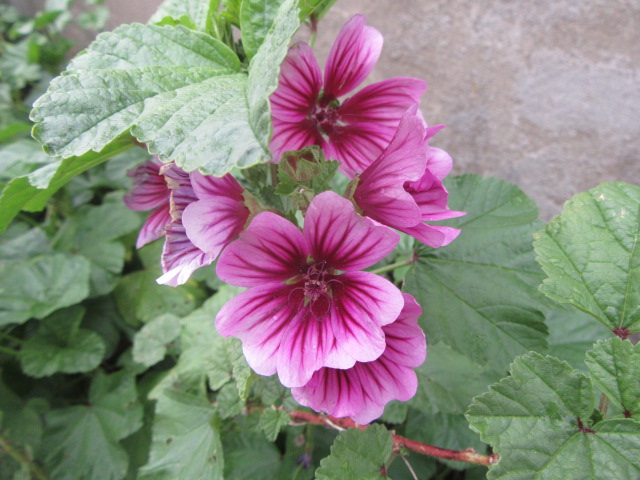
I am not necessarily a Hollyhock fan because I had a friend, now deceased, who had them growing all along his garage. They spread A LOT over the years so I have been hesitant. I thought since these were miniatures they might do well between the basement steps and back porch so I brought one home. I planted it but I keep forgetting about it when I am taking photos. Hopefully, it won’t have pink flowers…

I think that’s it for the new plants this year so far. I didn’t find any new Hosta to bring home for myself but I did find three for a friend (the one I did the planters for). They are all different than mine so I can take photos of his. 🙂

Now I have to work on an update. I have to show you what the Echinopsis mirabilis is doing and photos of the Baptisia that was labeled ‘Lunar Eclipse’. It is LOADED with flowers this year but it is definitely NOT a ‘Lunar Eclipse’. Of course, the Hosta ‘Empress Wu’ is always photo worthy and hasn’t even slowed down.

Until next time, be safe and stay positive!


NEW PLANTS-APRIL 27…

Leucocasia gigantea ‘Thailand Giant’ on 4-27-19, #563-6.

Hello folks! I hope this post finds you well. Spring is the time of year us gardeners get itchy fingers and the only cure is to get out hands in the dirt. And, of course, the only treatment for a plantaholic is more plants. Every year I think about doing something a little different with the north side of the house. The problem is space. The “Elephant Ears” do very well on the north side of the house, much better than anywhere else. That leads to a complicated problem with only two ways to solve it. For now, I am going to extend the bed farther away from the house even with the gutter on one end and curving it slightly to meet the area next to the steps. As I mentioned earlier, the larger Xanthosoma robustum rhizome rotted but I still have an offset from it. I am also getting a Xanthosoma sagittifolium from a fellow plant collector. The Xanthosoma grow wider than the Colocasia so they take up a lot of space. Then,  of course, there was the wanting another Leucocasia (Syn. Colocasia) gigantea ‘Thailand Giant’. But, there were the two VERY LARGE Colocasia esculenta that I have grown on the north side of the house for several years. The two multiplied, as Colocasia esculenta do, but I will still only put two of the largest on the north side of the house. I already ran out of room before I started…


My son, Nathan, and his friend, Chris, are here now and Nathan said they would help out on the farm doing whatever I needed them to do. Umm… Chris seems more eager to help than Nathan so I explained to him what I wanted to do with the bed. A few days ago, while I was taking a nap in the afternoon, they started. I heard them talking outside so I got up to see what they were doing. I walked out the door and probably had a very blank look on my face. He completely misunderstood and dug one strip from the end of the gutter to the other side of the bed instead of digging everywhere there were no plants. The strip he dug was crooked, which he pointed out. I reminded him again what the idea was and he said he thought I wanted to dig a ditch. GEEZ!!!! A DITCH! Needless to say, they have yet to finish their project so I guess I will do it myself as initially planned. Then when I am finished I will hear them say, “We were going to do that…”

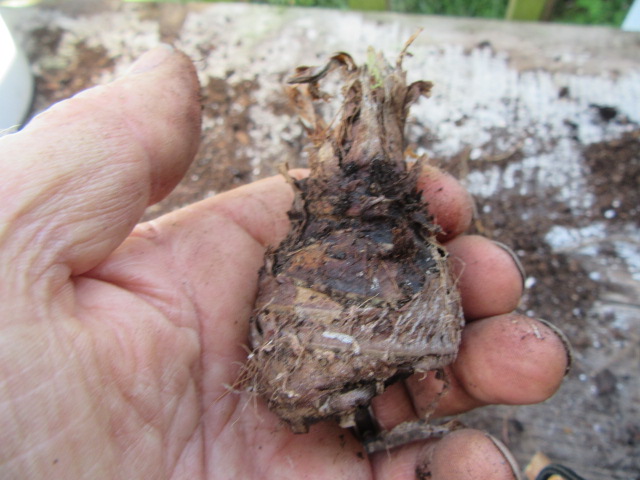
So, yesterday I decided to go to the greenhouses to see what they had available. I was going to go to Wagler’s but I needed to go to Wildwood first to see if he had another Leucocasia gigantea ‘Thailand Giant’. If you remember, in 2017  I found one there but the rhizome rotted a month before time to plant it in 2018. So, I ordered a “bulb” (as they called it) from a seller on Ebay. When it arrived it looked like a white sweet potato and it turned out to be the Xanthosoma robustum

ANYWAY! Wildwood did have several Leucocasia gigantea ‘Thailand Giant’ plants, which were formerly Colocasia gigantea ‘Thailand Giant’. They were actually Leucocasia gigantea in the first place. Being that phylogenetic testing proved they were more closely related to Alocasia than Colocasia, the Leucocasia genus was revived and the Leucocasia gigantea is there all by its lonesome. Of course, the label still says Colocasia gigantea ‘Thailand Giant’. I think I am getting a brainache… So, of course, I picked one out to bring home.


Colocasia esculenta ‘Distant Memory’ (PPAF) on 4-27-19, #563-2.

When most people think of an Elephant Ear, it is usually the Colocasia esculenta that comes to mind. Over the years I have grown several different species and cultivars and would like to start doing that again. I have a wish list with several but they are unavailable locally so I would have to order. I did find a black-leaved cultivar at Wildwood labeled Colocasia ‘Distant Memory’. It was released by Walters Gardens in memory of Harriet Walters who they say was the lifeblood of the family business. Photos on their website show a plant with very dark and puckered leaves but the leaves on the plants I saw at Wildwood are not puckered. Maybe that will come with age. I have grown Colocasia esculenta ‘Black Magic’ a few times in the past so this new version will be a new experience. The label says they grow 4-4 1/2′ tall and prefer at least 4 hours of sun. I know from experience the more light they are in the better the leaf color. I think I will probably put this plant on the left side of the porch where it will get plenty of light and attention.

You can read about it on the Walters Gardens website by clicking HERE.

I looked at the other plants at Wildwood in their front greenhouse and drooled over some of their succulents but I did not even dare pick up a single pot. They also had some very nice Veronica which tempted me… They had some VERY NICE pots of Monarda didyma ‘Cherry Pops’ like I bought from them last year, but I refrained…

Then I ventured to the second greenhouse… The back left-hand corner is where they usually have their selection of Hosta. They had several nice cultivars I didn’t have including several VERY NICE Hosta ‘Humpback Whale’ and the prices weren’t bad at $8.00 per pot. But, I took only $20 because I had a limit…

The truth is, I had already spotted several pots of a plant I thought I would NEVER see available and I HAD to bring one home.


Houttuynia cordata ‘Chameleon’ after I brought it home 4-27-19, #563-3.

Houttuynia cordata ‘Chameleon‘!!! I was given several of these by a friend, Mary Botler, when I lived at the mansion in Leland, Mississippi. She gave me the start in 2010 and by the time I left in February 2013 they had spread quite a bit. Personally, I thought they were a very delightful plant and you just never knew where they would pop up. The scent of the leaves kind of reminded me of fish lemon pepper. While Plants of the World Online continue to include Houttuynia cordata as the only species in the genus, there are two chemotypes. POWO says the Japanese type has an orange scent and the Chinese type has a scent resembling coriander. Hmmm…

Common names for this plant include Bishop’s Weed, Fish Mint, Fish Leaf, Rainbow Plant, Chameleon Plant, Heart Leaf, Fist Wort, and Chinese Lizard’s Tail. It is used in cooking, as a salad, as well as herbal medicine. You can read more online about this plant on the Wikipedia page HERE, visit my page about it by clicking on its name (above). I have several links included on its page for further reading. The Wikipedia lists another species, but POWO says it is a synonym of H. cordata. There are several cultivars also available.


Houttuynia cordata ‘Chameleon’ on 4-27-19, #563-4.

One interesting thing about this plant was the color of the leaves. Some are a colorful combination of chartreuse and dark green and some with some having reddish highlights.


Houttuynia cordata ‘Chameleon’ on 4-27-19, 563-5.

Other leaves were a solid dark green and sometimes on the same plant. No two leaves are alike. The color of the leaves also varies by degrees of light which also changes throughout the season.

I was very happy to have found this plant locally. It is supposed to be hardy in USDA zones 4-10 so hopefully, it will thrive. Actually, I am not sure how well I want it to thrive because this plant can become invasive. I have grown many perennials that are supposed to be cold hardy here that have done well during the summer but didn’t return the next spring. So, we shall see…

I only had $21 in cash and some change and I didn’t know how much the Houttuynia was. It had been with the Hosta which were $8.00 a pot. If it were $8.00 I was going to have to put something back. Amish only take cash or checks here because they have no electricity and no debit card readers. When I was checking out, he said, “Let me see. How much are those?” I told him I didn’t know but they were with the Hosta that are $8.00. The total came to $21.14. 🙂

After I left Wildwood I went to Mast’s Greenhouse to check on the Hosta. I mainly went to see if they had Hosta like the Hosta ‘Blue Angel’ I brought home last year. As I have mentioned several times, the Hosta ‘Blue Angel’ is NOT a ‘Blue Angel’. I was hoping to find pots that were correctly labeled. While they did have several Hosta available, the only pot like the one I bought was apparently one left over from last year… Incorrectly labeled. I was going to quiz Mr. Mast about where they get their Hosta but there were a lot of people there and he was very busy. They did have several nice Hosta including a gold-leaved cultivar but it looked very similar to Hosta ‘Dancing Queen’ which I already have. If I am going to buy another gold-leaved Hosta, it has to be different than what I already have.

So,  I headed back to town to go to Wagler’s on the other side of town. Just to look to see what was available. That’s why I stopped at the bank to withdraw another $20.00.


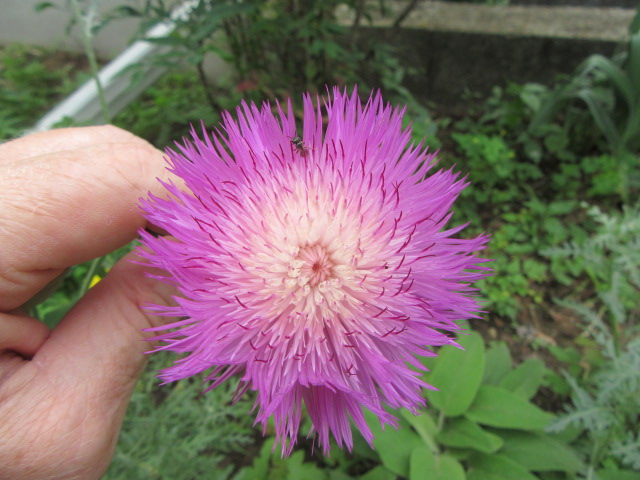
Centaurea sp. on 4-27-19, #563-1.

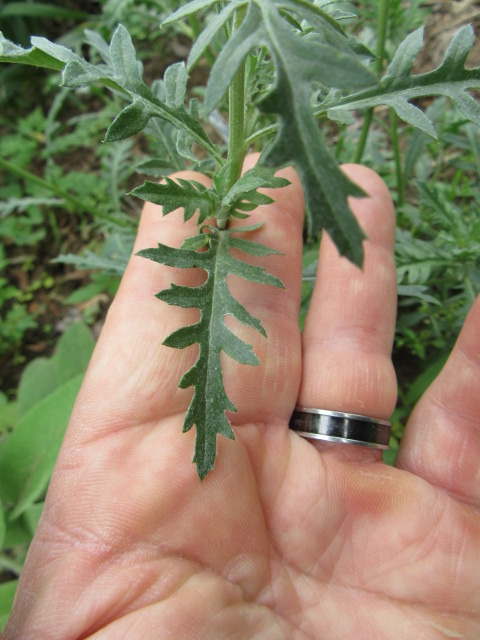
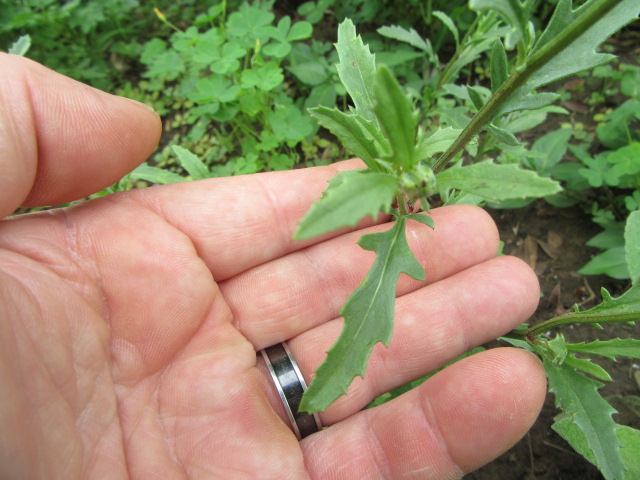
Wagler’s was also very busy so I went through their second door unnoticed. Normally, we visit a little but she was busy with customers at the counter. So, I ventured through one greenhouse then to another, then back up to another to get to the greenhouse with the perennials. The plants all looked very good. Once again, even at Waglers, the selection of Coleus was almost nothing. In the past I have planted Coleus between the Colocasia in the north bed, but last year I grew none. GEEZ! What is life without Coleus? Anyway, in the greenhouse with the perennials, the bright yellow flower on the Centaurea caught my eye. I walked past them then returned. Along the front of the table were pots with handwritten labels that said Centaurea red and some that said Centaurea purple. The pot with the yellow flowers had no labels. I also noticed the leaves of the yellow flowered plants were different and they had reddish colored main stems. I picked up one of each anyway. GEEZ! For the northeast corner bed or perhaps the southeast corner bed.


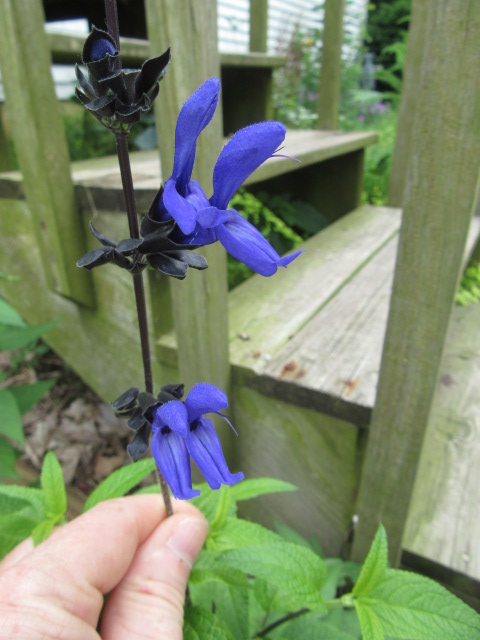
Salvia coerulea ‘Black and Blue’ on 4-27-19, #563-7.

I walked around the perennial greenhouse more and saw some NICE peach colored Foxglove which I decided to pass. Then I spotted several nice pots of Salvia labeled Salvia guaranitica ‘Black and Blue’. Salvia ‘Black and Blue’ have been on my wishlist for MANY years so I had to pick out three. Salvia guaranitica is a synonym of Salvia coerulea now… Well, it has been for many years but the industry still labels them as Salvia guaranitica.

By the time I was finished browsing, the crowd had thinned out somewhat. I went to the counter and a lady had come and was asking her daughter or granddaughter (GEEZ!) about “Voodoo” plants. She told her there were a few pots that “Lonnie” brought last year under the table that hadn’t come up yet. The girl brought up a pot and Mrs. Wagler asked me something about it coming up. I stuck my finger in the pot and told her the bulb was sprouting. Then, she told the lady I was the one that brought the other Bromeliads. Come to find out, this lady was the one who brought Mrs. Wagler all the other Bromeliads last year from Florida. I had noticed the Bromeliads late last summer when I took plants to her and they were looking very good. So far, she has only been able to get one start from one of them.

The lady from Florida said she was somewhere in Florida and this guy just started pulling off offsets from all these Bromeliads and giving them to her. She put them in her suitcase and brought them to Mrs. Wagler to see if she could have any luck getting offsets from them. I am not sure how many there are, but there are MANY and all are different.

When I went to pay for the six plants I had found, Mrs. Wagler quietly told me I didn’t owe her anything. 🙂 It is so great to be able to go to a greenhouse and not have to pay for plants. I am also grateful to be able to have a place to take plants that multiply where I can trade for plants I want.

I would like to start working on the north bed, but a thunderstorm is approaching. Rain is in the forecast all week. GEEZ!

I hope you are having a great and joyous spring. Be safe and stay positive.

Heuchera and Hosta Update

Heuchera ‘Lime Rickey’ on 4-23-19, #562-4.

Hello everyone! I hope this post finds you all well. The Heuchera and Hosta are all doing good for the most part. We have been having cool temps this week but nothing serious.  Some of the perennials are growing like weeds now while others are casually taking their time. If you grow several different Hosta cultivars from different size groups, you will find the larger cultivars grow at a much faster rate than the miniatures. At least that is the way it is here.

You can click on the names of the Heuchera and Hosta to visit their own pages.

The Heuchera ‘Lime Rickey’ in the above photo was a little off at first but it seems to be doing much better now.


Heuchera ‘Obsidian’ on 4-23-19, #562-5.

The Heuchera ‘Obsidian’ is being weird again this spring. I don’t understand how some plants can do great their first year and then go downhill after that. I dug it up, checked its roots, made sure there wasn’t a mole tunnel under it, amended the soil with cow manure, then put it back in the ground at the proper depth. So far it is still being weird!

Heuchera (Coral Bells) don’t have a lot of rules to keep them going. They need well-draining soil, kind of lose and loamy like most plants. They can go for short dry periods but they prefer consistently damp soil, but not to damp. During dry periods they like at least an inch of water per week or they begin to feel neglected. Although they don’t seem to mind Oxalis and Clover to a point, they consider most weedy companions as intruders. They don’t seem to like the pushy Chickweed or Lamium purpureum (Deadnettle) and always ask if I can remove them. Company is one thing, but enough is enough!


Heuchera ‘Palace Purple’ on 4-23-19, #562-6.

The bigger Heuchera ‘Palace Purple’ continues to do very well. The smaller plant next to this one is doing very well also. This plant handed me a “to-do list” reminding me to keep the Virginia Creeper (lower left corner) in check.


Heuchera ‘Venus’ on 4-23-19, #562-7.

The Heuchera ‘Venus’… They say a photo is worth a thousand words, but I can honestly tell you this Heuchera looks even better in person. It seems to like its Red Clover companion. That’s good because I can’t remove it. Its stem is right next to the Heuchera with much deeper roots. Heuchera ‘Venus’ is looking better than ever so I don’t think I need to bother it.

Heuchera always looks good this time of the year through most of May. Once the heat of summer sets in and the Japanese Beetles arrive… I have plenty of leaves for mulch that I am going to put on the shade bed, and maybe in the bed in the north side of the house. That will help keep the soil cool and retain some moisture.

Now for the Hosta…


Hosta ‘Abiqua Drinking Gourd’ on 4-23-19, #562-8.

The Hosta ‘Abiqua Drinking Gourd’ is taking its time making sure the coast is clear. She keeps reminding me how I couldn’t find her earlier because I was looking in the wrong place. Then she giggles so I know she is just kidding around. I was looking behind the label instead of in front of it… Anyway, the Hosta ‘Abiqua Drinking Gourd’ is alive and well. 🙂


Hosta ‘Blue Angel’ ? on 4-23-19, #562-9.

If this is a Hosta ‘Blue Angel’ I will really be surprised. It survived the winter and started leafing out faster than the rest of the Hosta. I have looked at its label several times to verify to myself, and to the plant, that it says Hosta ‘Blue Angel’. The label hasn’t changed and that is exactly what it says… This clump looks like a very nice and healthy miniature Hosta, which Hosta ‘Blue Angel’ is not… Hosta ‘Blue Angel’ grows to a mature size of 36″ tall. Its leaves also do not match Hosta ‘Blue Angel’. So, I need to find out the source of this plant from Mast’s Greenhouse to see what miniature Hosta they have available… I WILL figure it out! I am certainly not unhappy with the plant because it is very good. It just needs to have its proper name.


Hosta ‘Blue Mouse Ears’ on 4-23-19, #562-10.

It seems to take a long time for the Hosta ‘Blue Mouse Ears’ leaves to unfurl. I looked back at last years photos and it seems to actually be a little ahead. Patience is a virtue…


Hosta ‘Dancing Queen’ on 4-23-19, #562-11.

What a glowing beauty! The Hosta ‘Dancing Queen’ is definitely a winner! Sometimes I go outside in the dark to check on something, like measure a plant (yes, I really do that). If I shine my light toward the Hosta this one lights up like it is saying, “I am here!” I have had several gold-leaved Hosta on my wishlist for many years but there are never any available locally. I was fortunate to have found this one at Muddy Creek Greenhouse in 2017.


Hosta ‘Empress Wu’ on 4-25-19, #562-12.

The Hosta ‘Empress Wu’ has grown by leaps and bounds. It wasn’t the first to emerge, but once it did and the temps warmed up it took off and grew faster than any other Hosta here. I have taken several photos of it already that I haven’t posted because by the time a post is finished it has grown more. Then I forgot to take its photo on the 23rd with the other Hosta which is why this one was taken on the 25th (even though it is in the same folder). Currently, it is already 30″ wide and it just the last part of April!


Hosta ‘Forbidden Fruit’ on 4-23-19, #562-13.

The Hosta ‘Forbidden Fruit’ is looking very good now.


Hosta ‘Guacamole’ on 4-23-19, #562-14.

The Hosta ‘Guacamole’ is doing very good now. I am going to like it much better with it all on the same location.


Hosta ‘Krossa Regal’ on 4-23-19, #562-15.

The Hosta ‘Krossa Regal’ is one of my all-time favorite Hosta. I like the color and their vase-shaped habit.


Hosta ‘Potomac Pride’ on 4-23-19, #562-16.

The Hosta ‘Potomac Pride’ is an amazing Hosta for sure. It just does its thing and that is growing and looking beautiful! Beautiful large dark green corrugated leaves!


Hosta ‘Red October’ on 4-23-19, #562-17.

Talk about a miraculous recovery! I thought the Hosta ‘Red October’ was completely gone. Each time I checked on the Hosta and took photos of them coming up, Hosta ‘Red October’ was nowhere to be seen. The clump had struggled last spring because of a mole tunnel under the roots, so I dug it up. There were only two plants left in the clump so I put them beside two separate Chinese Elm trees. They didn’t do well all summer but they did survive. This spring they were gone. I dug into the soil where I had planted them and nothing was to be found. Then one day, with no camera, I saw they had both came up. Not just a sprout, but the whole plant! It had only been a couple of days since I took photos and they were not there. It was a pleasant surprise for sure! So, I took both plants and put them where The Hosta ‘Rainforest Sunrise’ had been (where one of the ‘H. ‘Guacamole’ had been last year).


Hosta ‘Sum and Substance’ on 4-23-19, #562-18.

Hosta ‘Sum and Substance’ is looking GREAT and getting bigger every time I check. This is going to be a great specimen in time.


Hosta ‘Whirlwind’ on 4-23-19, #562-19.

Hosta ‘Whirlwind’ is definitely one of those delightful and entertaining Hosta. Emerging in bright colors in the spring then darkening as the season progresses.


Hosta sieboldiana ‘Elegans’ on 4-23-19, #562-20.

All of the Hosta are doing very well except for the Hosta sieboldiana ‘Elegans’. This will be our 11th summer together and it has always been AWESOME and has never had a lick of trouble until now. Apparently, with the up and down temps this past winter, its roots heaved up exposing some of the roots. Even with leaves as a mulch, it didn’t help that much because leaves blow off. I dug up the clump and dug the hole deeper, amended the soil with cow manure, then replanted what was left of the clump. Some of the roots are sticking upward which is a little weird… Hopefully, it will get back to its old self and start growing better.

Well, that’s it for the Heuchera and Hosta update. It took five days to finish this post! Today I went to three greenhouses to see what was available. I needed to see if Wildwood Greenhouse had another Leucocasia (Colocasia) gigantea ‘Thailand Giant’ and see what else was available. I went to Mast’s because they were in the neighborhood but I didn’t go to Muddy Creek. Then, of course, I had to check with Wagler’s… So, the next post will be about the new plants which I will start on NOW…

Until next time… Be safe and stay positive. I hope you are getting dirty!

April 24 Update

A few of the plants on the front porch on 4-22-19, #561-9.

Hello everyone! I hope this post finds you all doing well. I took most of the photos for this post on April 20 then more on April 22. I did manage to get the plants on the front porch but the cactus are still in the house. Many of the perennials are growing very fast now but some are still slow because of lingering cool temperatures. The Hosta have been slow except for a few such as the Hosta ‘Empress Wu’ and H. Potomac Pride’. I will have to take new photos of the Hosta and make a separate update for the Heuchera and Hosta. I am planning a garden this year but the wind and then more rain has delayed that plan. I am also planning on extending the bed on the north side of the house… I want to add another Xanthosoma and find another Leococasia gigantea ‘Thailand Giant’. Of course, the larger Colocasia esculenta will also go in the north bed. Well, maybe I need to make the bed even larger than planned. I also moved the Alocasia outside but they aren’t exactly photo ready yet. 🙂

I met a new friend and fellow plant collector and we will be trading a few plants. No telling what I might wind up with but it will be very good!


Achillea ‘Moondust’ on 4-20-19, #560-1.

The Achillea ‘Moondust’ is well on its way to having a great summer. This is only the second cultivar of Achillea I have bought. The other was a selection of Achillea millefolium called ‘Strawberry Seduction’ which I purchased from Lowe’s in Greenville, Mississippi in 2012. I brought it to Missouri with me in 2013 but it fizzled out in 2014.


Achillea ‘Moondust’ on 4-22-19, #561-2.

Two days after the previous photo was taken, the Achillea ‘Moondust’ it has two buds…


Achillea millefolium on 4-20-19, #560-2.

The Achillea millefolium have been amusing plants (plural because I have SEVERAL clumps now). I have been calling this a Fern-Leaf Yarrow, but that common name belongs to the Achillea filipendulina (which has yellow flowers). The common names for the Achillea millefolium include Milfoil, Yarrow or Common Yarrow, Allheal, Thousand-Leaf, Bloodwort, Carpenter’s Grass, Cammock, Green Arrow, Sneezeweed, Nosebleed, Green Adder’s Mouth, Soldier’s Woundwort, Dog Daisy, Old-Man’s-Pepper and probably more. What is amusing to me is the way it travels by underground roots to where it would rather be. I initially brought two clumps with me when I moved back here from Mississippi in 2013. A friend of mine gave me quite a few plants from her yard that she had for MANY years. She said another gardening friend had given a start to her and she didn’t know the cultivar name. She just started yanking up plants because they had spread way out into her yard. Since I had several to experiment with, I put them here and there in both full sun and shady areas. The plants in too much shade just kind of fizzled out but the two mostly sun thrived. I brought two clumps with me when I came back here and put them in the bed on the south side of the house. In 2014 I moved one to the front of the chicken house and one on the north side of the house. I also put a few along the basement steps (in full sun). The one in front of the chicken house has just done so-so and that is where I thought it would spread the most. But, not so. It only did well there for a couple of years then the clump became smaller and has even tried moving around the corner. The plants along the basement steps, in full sun, only lasted a couple of years then they didn’t return one spring. On the north side of the house, where they received the least amount of sun, they have done much better and multiplied. I took one of the larger clumps and put them in front of the barn last spring in full sun. One clump on the north side of the house is only a couple of feet from the foundation and seems to like it there even though it is in the shade. The clump I moved to the barn was the traveler… It moved about 3 feet from where I initially planted it in three years to get to more sun. It has also left behind 4-5 offspring, two of which popped up this spring next to the steps. The other 2 or 3 are still in the shadier part of the bed. Supposedly, according to some, the Achillea millefolium will spread like wildfire but I haven’t had that problem. The native Achillea millefolium on one part of the Katy Trail nearby has flourished beyond comprehension. Here on the farm, I guess the cows have kept in check because there aren’t that many. You can see Achillea millefolium on a lot of back roads as well, sometimes in very large colonies. There are several nice cultivars available in several colors and sizes that do not spread.


Ajuga reptans ‘Chocolate Chip’ on 4-20-19, #560-3.

A few patches of the Ajuga reptans ‘Chocolate Chip’ are beginning to flower while some are still in bud. I really like this cultivar even though they spread like their life depends on it. Well, I guess their life does depend on it, huh? I originally brought the Ajuga reptans ‘Chocolate Chip’ home from Lowe’s in 2010 when I was living at the mansion in Leland, Mississippi. They multiply to form a thick mat so some of the plants need to be removed every year or so to avoid crown rot. They root easily so you can put them here and there. They have fairly shallow roots so they make a nice living mulch.


Astilbe cv. ‘?’ on 4-20-19, #560-4.

The Astilbe are getting with it now. They aren’t among the first perennials to emerge in the spring, but they are close behind them. Once they start they grow nonstop until they reach their size. The one in the above photo, Astilbe cv. ‘?’, is the one I brought home with the wrong label. I checked over the plant quality in many pots and didn’t notice it was mislabeled until I brought it home. GEEZ! It is a smaller plant so it is likely Astilbe ‘Visions’ or ‘Rheinland’. I guess I should take measurements of the mature height with and without the flowers so I can give ita proper name besides ‘?’…


Astilbe x arendsii ‘Fanal’ on 4-20-19, #460-5.

No mistaking this is an Astilbe x arendsii ‘Fanal’ because it has the correct label. 🙂 This cultivar is somewhat taller than the other one and has dark leaves and red flowers. Astilbe are great in a shady area and prefer somewhat moist soil and they both like it on the north side of the house. Some cultivars grow to around 30″ or taller.


Baptisia ‘Lunar Eclipse’ ? on 4-20-19, #560-6.

The Baptisia ‘Lunar Eclipse’ wannabe has grown A LOT since I took the last photos on April 7.  I had to make a decision to move this plant to the southeast corner bed because it shades the Phlomis ‘Edward Bowles’ too much. At least I think so although the Phlomis wasn’t complaining. ANYWAY, Saturday afternoon I took the shovel and stuck it in all the way around the clump to loosen the soil… Ummm… Baptisia has deep taproots and doesn’t like to be disturbed so I was going to be very careful to get as much soil and as deep as I could. It would not budge! I thought I was going to break the shovel handle. So, I decided I would move the Phlomis to the southeast corner bed instead. It was not happy about that decision… I will write about that down farther… So, for now, I guess the Baptisia stays put.


Baptisia ‘Lunar Eclipse’ on 4-22-19, #561-4.

On April 22, only two days after the previous photo was taken, the Baptisia wannabe ‘Lunar Eclipse’ has MANY buds… Now I have to watch it closely!


Cydonia sp. on 4-20-19, #560-7.

The Quince has more flowers on it this year than I have ever seen before. Maybe it will bear fruit. 🙂 This probably the most annoying shrub, besides the Crap Myrtle, on the farm. Well, I suppose that depends on how you look at it. I don’t trim it very often and it has spread into the patch of Iris next to it which I am not happy about. Other trees like to hide in it and there is also some Poison Ivy in it. My grandparents planted it here so it has been around for a long time. I have noticed other Quince’s around town that are also LOADED!


Phlomis ‘Edward Bowles’ on 4-20-19, #560-27.

Like I mentioned earlier, I had to make a decision about moving the Phlomis ‘Edward Bowles’ since I couldn’t budge the Baptisia…


Phlomis ‘Edward Bowles’ roots on 4-20-19, #560-28.

I looked it over pretty good and thought, “Hmmm… I can make two out of it.” It actually had two tap roots, which were growing crooked because the soil was so hard.


Phlomis ‘Edward Bowles’ on 4-20-19, #560-31.

After I replanted them and gave them a good soaking I continued taking more photos. Then I thought how I didn’t like the same plants in more than one location, even though they are within a few feet of each other. After all, I had just put the Hosta ‘Guacamole’ back together again for the same reason. I have to keep comparing the two plants and take two photos instead of one.


Phlomis ‘Edward Bowles’ on 4-22-19, #561-13.

So, on the 22nd, I put them back together again. It wasn’t very happy I had dug it up and moved it in the first place let alone completely disturbing its roots. It will be in more sun where it is now, which is supposed to be OK. I will just have to keep an eye on it. GEEZ! It probably thinks I have flipped!

*On April 24 it has forgiven me and looks MUCH better.


Salvia nemorosa ‘New Dimensions Blue’ on 4-20-19, #560-32.

The Salvia nemorosa ‘New Dimensions Blue’ continues to do well. These are a great Salvia is you need a plant that stays pretty compact. This is our third season together and it has always done well. It will start budding shortly.


Salvia pratensis ‘Midnight Model’ on 4-20-19, #560-33.

I was very glad to see the Salvia pratensis ‘Midnight Model’ survived the winter. This will be our second season and it is already getting off to a good start. One plant is larger than the other, but the smaller one flowered first. 🙂 At one point last summer the smaller one almost fizzled out but it came back to life and survived the winter. This Salvia has the neatest flowers which you can see if you go to its page. Salvia pratensis ‘Midnight Model’ is part of the FASHIONISTA™ Collection introduced by Walters Gardens. Maybe I can find another one so there will be three. I used to only buy one of each plant, but last year I started buying at least three to make a bigger group. That’s OK as long as I plant them all together. 🙂


Salvia x sylvestris ‘Mainacht’ on 4-22-19, #561-15.

The Salvia x sylvestris ‘Mainacht’ (or ‘May Night’) has really taken off this spring! Last year, if you remember, it took a vacation and barely did anything. It stayed small and barely flowered. I am glad its vacation is over! This will be our seventh season and is one of the first perennials I panted here in 2013. It has been in this same spot.


Sedum kamtschaticum ‘Variegatum’ on 4-20-19, #560-36.

The Sedum kamtschaticum ‘Variegatum’ is growing really well now and


Sedum kamtschaticum ‘Variegatum’ buds on 4-20-19 #560-37.

It appears to have a few buds already!


Sedum kamtschaticum ‘Variegatum’ on 4-20-19, #560-38.

Even the stem with more yellow variegation has returned. Maybe I can take a cutting this year.


Sedum kamtschaticum on 4-20-19, #560-39.

The Sedam kamtschaticum is also doing very good. Last year it sprawled out and the stems touching the soil rooted. That’s good so now the clump will be bigger. 🙂


Tradescantia fluminensis flower on 4-20-19, #560-40.

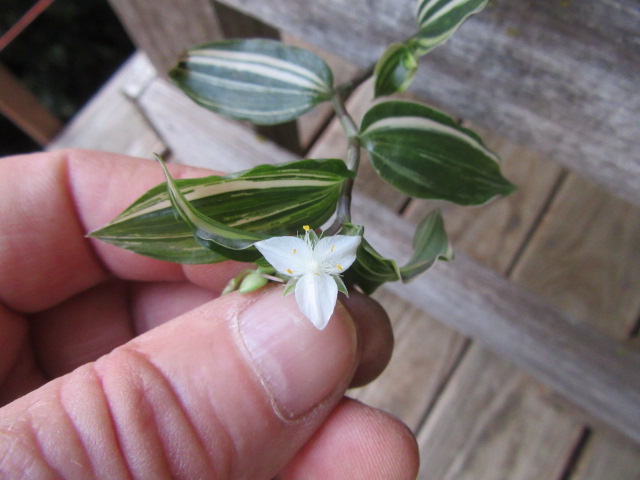
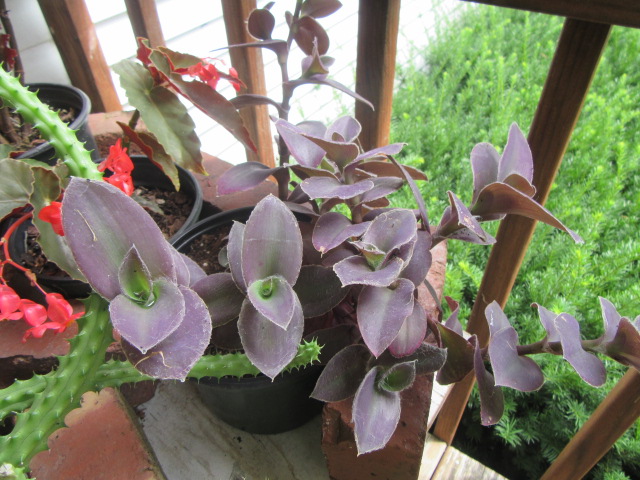
When I took the plants to the front porch on April 20, I noticed the Tradescantia fluminensis had a flower. NICE. It did pretty well over the winter. Hmmm… I don’t have a page for this plant yet.


Zantedeschia elliottiana on 4-22-19, #561-16.

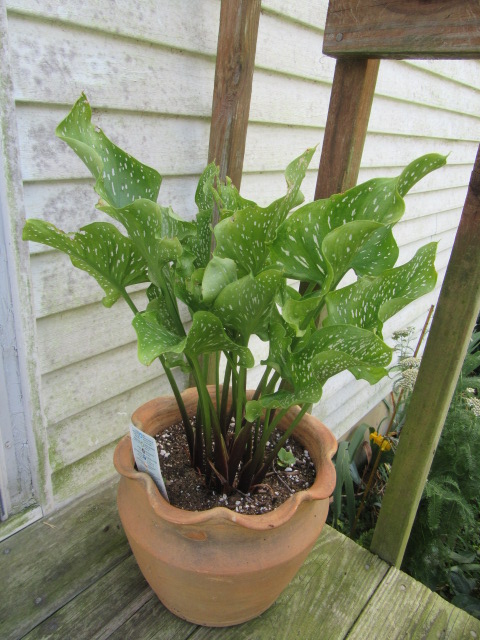
The Zantedeschia elliottiana (Golden Calla Lily) bulbs had started sprouting but the bulbs had sunk deeper into the soil. So, I gave the pot some fresh potting soil and re-planted the bulbs. They are a bit more crowded than recommended if you plant them in the ground but this is a pot… The top 1/4 of the bulbs need to be above the soil but that didn’t out so well. There is a big cluster in the center and when I watered most became covered with potting soil. Hmmm… They didn’t flower last year, so I am hoping for blooms. Hmmm… I don’t have a page for the Calla either and I have had them since 2017! How could that be? 🙂

I had to do some repotting and take a few cuttings when I moved the plants outside which can be expected when they have been inside.

I took photos of the Hosta on April 20, but some are growing so fast the photos are out of date. So, I will take photos again and do a separate Heuchera and Hosta update. Of course, there will be a cactus update once I move them back outside.

Until next time, be safe and stay positive and GET DIRTY!
 

April 7 & 10 Update

Achillea ‘Moondust’

Hello everyone! I hope this post finds you all well and excited. Excited that spring seems to have finally sprung. I started mowing the yard(s) a few days ago and hopefully, I can till the garden this week. I see the rain is now out of the forecast. Saturday night weather radar showed a thunderstorm heading our way but somehow it never came. Then all the rain forecasted for the week was kind of removed. I was talking to a friend from Mississippi and she said they have had A LOT of rain and more to come. You just never know. It seems some times of the year the weather is hard to predict.

The plants inside want out BAD but I told them later this week lows in the 30’s are predicted. Most of them smiled like they were saying they wouldn’t mind. Others had a different opinion which was kind of like mine. They decided to take a vote and strangely enough, it was unanimous they go outside now. I had to veto… Hmmm… Is it possible to veto a vote? Is that legal? They said the grass is green and growing and so are the plants outside already. I told them they may be coming up but only some were growing good. The overnight lows are still cool so most of the perennials are just sitting there waiting for warmer temperatures. I told the cactus that sometimes cooler temperatures can scar them. Well, they didn’t especially like that idea so they agreed to stay inside, for now, would be OK.

The above photo is the Achillea ‘Moondust’ I bought last spring. It hadn’t appeared yet when I took photos on March 30. I thought it may have not made it through the winter so I was glad to see it.


Achillea millefolium by the barn…

All the Achillea millefolium in the beds are up and running as is the one I put in front of the barn last summer. I am sure the “wild” Achillea millefolium are up as well but I haven’t checked.


Ajuga reptans ‘Chocolate Chip’…

All the Ajuga reptans ‘Chocolate Chip’ are going nuts now. I see they are starting to bud, too.


The unknown Astilbe cultivar…

The Astilbe have come up this past week. I never did figure out the cultivar name of the one brought home from Lowe’s in 2013. I had checked several pots to find the one I wanted, but when I came home I saw it had a wrong label in the pot. It was for a completely different plant…


Astilbe x arendsii ‘Fanal’…

The Astilbe x arendsii ‘Fanal’ I brought home last spring has also come up this past week. NICE! Grammarly thinks it should be called final…


Wanna be Baptisia ‘Lunar Eclipse’…

The Baptisia labeled ‘Lunar Eclipse’ I brought home from the garden center in Clinton in 2017 is growing well. There were two sizes available and the plants in the larger pots were blooming but very expensive The smaller pots were still not cheap but agreeable. However, they weren’t flowering and they didn’t until last year. The flowers were all blue instead of the color of ‘Lunar Eclipse’. While it is true their flowers do turn blue, they start out yellow. It is possible I missed the yellow phase but I highly doubt it. When I make a trip to the garden center within a few weeks I will take a photo of the flowers and show the owner. I know it isn’t her fault but she may be interested to know. I am somewhat acquainted with the breeder, too.


Cylindropuntia imbricata (Tree Cholla)…

The Cylindropuntia imbricata (Tree Cholla) hasn’t started doing anything weird yet. I had to pull out some chickweed in the planter and she was nice this time. Normally she bites! This plant reminds me of the Delaware hens when I gather eggs. I do not put my hands under the Delaware hens when they are on the nest and I do my best not to touch this cactus. Both are very grabby.


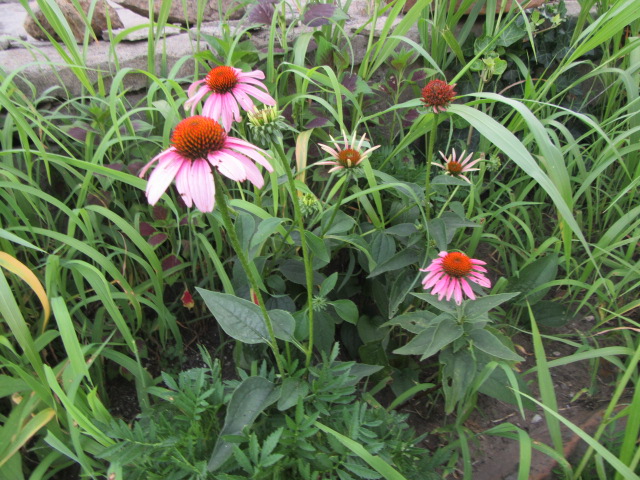
Echinacea purpurea cv. ‘?’…

The Echinacea purpurea (Purple Coneflower), whatever cultivar they may be, are doing quite well. I have a notion to dig some of the wild species up and plant them on the farm. I know where I can privately dig three species. 🙂


Heuchera ‘Lime Ricky’…

The Heuchera ‘Lime Ricky’ is all aglow and already brightening up its southeast area of the shade bed. It seems a lit stunted so I will need to check the soil under its roots. Darn moles!


Heuchera ‘Obsidian’…

I am glad to see the Heuchera ‘Obsidian’ getting off to a good start. Last year as it was starting to look good, the deer sampled its leaves. It didn’t do well all summer after that. So far, no deer have nibbled anything this spring yet.


Heuchera ‘Palace Purple’…

The Heuchera ‘Palace Purple’ is doing amazingly well. I am glad it’s happy.


Heuchera ‘Venus’…

The Heuchera ‘Venus’ is doing AWESOMELY well but she is complaining about bulbs growing in her space. I found a lot of small bulbs growing in this area when I dug this bed in 2017. I removed as many as I could see then replanted them later. Some of the bulbs were so small I guess I missed them. I attempted to identify the bulbs once they flowered again but I still haven’t decided what they are.


Hosta ‘Abiqua Drinking Gourd’…

The Hosta, for the most part, are slowly coming to life. They have come up but they haven’t made up their mind to get up and go. Kind of like I am when I need to get out of bed in the morning. I guess it is because low’s have still been fairly cool so the soil has remained cool for the most part.

The Hosta ‘Abique Drinking Gourd’ came up and now is thinking about it. She is wondering if it is safe to unfurl or if there is still an “F” around the corner.


Hosta ‘Blue Angel’…

Hmmm… I don’t know what to think about the supposed-to-be Hosta ‘Blue Angel’. It is going to be weird! It is supposed to be a fairly large Hosta but it remained so small last summer. Here it is, leaves unfurling, while all the other Hosta’s leaves are still tucked up. I am not a Hosta expert and probably need to brush up on Hosta terminology. With larger Hosta, the clump spreads over time and the “new plants” are spread out somewhat. With this plant, as with the H. ‘Blue Mouse Ears’, the cluster is fairly compact with lots of shoots in a small area. That is one reason I believe this plant is not a Hosta ‘Blue Angel’ at all.


Hosta ‘Blue Mouse Ears’…

As you can see with this miniature Hosta ‘Blue Mouse Ears’, the cluster is tight and tidy. Ummm… You know what I mean. 🙂


Hosta ‘Dancing Queen’…

The Hosta ‘Dancing Queen’ pretty much looks like it did a week ago.


Hosta ‘Empress Wu’…

The Hosta ‘Empress Wu’ has taken off like it is being paid. I think she really wants to dazzle us this summer and show us what she’s made of. Supposed to be the world’s largest Hosta but I would say there are a few grow equally as large or close such as Hosta ‘Gentle Giant’, ‘Big John’, ‘Sagae’, and so on. It really depends on which website you look at. This will be this Hosta ‘Empress Wu’s’ third summer here so she still a couple of years to reach maturity.

*Several days have passed since the above photo was taken on April 7. It is easy to notice how much it grows because it is next to the side entrance of the house. It seems like it grows a couple of inches every day.


Hosta ‘Forbidden Fruit’…

Hosta ‘Forbidden Fruit’ is doing better. It felt rejected because I thought it had fallen into a collapsed mole tunnel. It wondered why I didn’t dig into the soil and look for it if I was concerned. Hmmm… Now, what do you say about something like that? I told it I wasn’t really sure what happened at the time and then later I did realize I was looking in the wrong spot. I also reminded it that I DID scrape off the top inch or so of the soil when I found it was OK. Three of the Hosta somehow got covered with more soil and this was one of them.


Hosta ‘Guacamole’…

I put the Hosta ‘Guacamole’ #1 and 2 back together again as I was taking photos. Now, that’s better… I like keeping the Hosta cultivars together even if I divide. I moved one part of it last spring to fill the vacancy left behind by Hosta ‘Rainforest Sunrise’. Now I need to find another variegated Hosta for that spot.


Hosta ‘Krossa Regal’…

One of the Hosta ‘Krossa Regal’ clumps took off a little faster than the other two and it has spread a little. NICE!


Hosta ‘Krossa Regal’…

The Hosta ‘Krossa Regal’ in the previous photo is on the right side of the above photo. There is another group in the top center, and the other is where my finger is pointing. At least I can get them all in the same photo.


Hosta ‘Potomac Pride’…

The Hosta ‘Potomac Pride’ has REALLY done well and its clump has grown to a massive size! Even the moles seem to be scared of it!


Hosta ‘Sum and Substance’…

This Hosta ‘Sum and Substance’ I put here last spring will someday be very impressive. One of the most popular of the larger Hosta, it will grow to above 2′ tall x about 4-5′ wide within a few years.


Hosta sieboldiana ‘Elegans’…

I have no clue what is going on with the Hosta sieboldiana ‘Elegans’. It almost appears its roots have been pushed up from freezing and thawing. I need to have a closer look and perhaps bury is a little deeper. Maybe put some soil on top of it… Maybe a mole pushed it up.


Hosta ‘Whirlwind’…

I had to uncover the Hosta ‘Whirlwind’ because it is one that somehow had o much soil on top of it. I think they all need somewhat elevated in this particular bed.


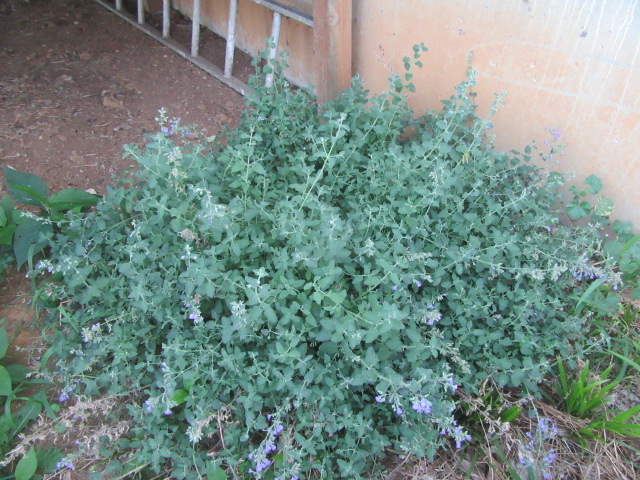
Nepeta x faassenii ‘Walker’s Low’…

The Nepeta x faassenii ‘Walker’s Low’ (Catmint) is looking awesomely well. It has not spread hardly at all but it will grow into a nice mound around 30″ in diameter.


Phlomis ‘Edward Bowles’…

The Phlomis ‘Edward Bowles’ is looking good! I trimmed the old stems and leaves so it could get more sun and look much better. I am hoping for flowers!


Salvia nemorosa ‘New Dimensions Blue’…

Salvia nemorosa ‘New Dimensions Blue’ is back again for another round. There is a Red Clover that is invading its space… Hard to remove the Red Clover because it has a tough root system and it is growing right in the Salvia!


Salvia pratensis ‘Midnight Model’…

I am really glad to see the Salvia pratensis ‘Midnight Model’ this spring. I really liked its unique flowers.


Salvia x sylvestris ‘Mainacht’/’May Night’…

The Salvia x sylvestris ‘Mainacht’ or ‘May Night’ is really looking good. It took somewhat of a vacation from flowering last summer so hopefully it will get with the program this year. It is getting off to a very good start!


Sedum kamtschaticum ‘Variegatum’…

All of the Sedum are looking better every day. I am especially keeping an eye on the Sedum kamtschaticum ‘Variegatum’. I am curious why this variegated variety is referred to as a cultivar instead of a variety. Even the way I phrased that makes no sense. Is it a natural mutation or manmade? The International Crassulaceae Network lists a Phedimus kamtschaticus variegatus, which in a roundabout way, is this plant.


Sedum kamtschaticum

The Sedum kamtschaticum is looking very good as it always does. Maybe this will be the year I can tell if it is Sedum kamtschaticum or the subspecies Sedum kamtschaticum subsp. ellacombianum. The latter is pretty likely because it a good sized growing plant with fairly large leaves. Of course, there is no “official” subspecies by that name now on POWO and it isn’t even listed as a synonym. Of course, this may be the year the botanists, horticulturalists, etc. decide to break up the Sedum genus AGAIN. In that case, it would probably be Phedimus kamtschaticus or Phedimus kamtschaticus subsp. ellacombianum. Whoops! Maybe Phedimus aizoon. Hmmm… Maybe… I think I better stop because there are a lot of “if’s” involved and a lot of decisions to be made by the folks who are trying to sort through all the thousands of multiple species. They are doing their best.

There are several genera of plants with hundreds of species representing annuals, perennials, trees shrubs, and succulents (i.e. 1,986 species of Euphorbia). Currently, there are 545 accepted species of Sedum which are mainly succulent plants. While most share something in common, or they wouldn’t be in the genus, there are many species that separate them from the rest. Over the years, many groups of Sedum have been moved to other genera only to have them put back again (Phedimus, Hylotelephium, Rhodiola, Orostachys and so on).


Sedum spurium cv. ?…

The Sedum spurium ‘?’ is looking good despite its border wall has collapsed. I need to fix that right away.


Sedum spurium ‘John Creech’…

The Sedum spurium John Creech’ is off to a rambunctious start. I think it is going to just pick up where it left off and continue invading in neighbors territory.


Sempervivum ‘Killer’…

The Sempervivum ‘Killer’ hasn’t changed much since the last time I took photos…


Stachys byzantina

The Stachys byzantina (Lamb’s Ears) are looking great! They really seem to like this spot in the southeast corner bed.


Stellaria media (Chickweed)…

It may sound funny, but this is the first year in my life I have noticed the Chickweed (Stellaria media) flowering so much. Normally, I barely even get a glimpse early in the morning and just a few buds or spent flowers. This year they are flowering up a storm everywhere. Ummm… There is A LOT!

So many of us look at Chickweed as a real pain in the neck. The flower beds are LOADED this time of the year. Chickweed is both edible and nutritious and can be included in salads. Chickweed is also used as a herbal remedy.

Chickweed belongs to the Caryophyllaceae Family along with 93 other genera including Dianthus and Gypsophila. The genus Stellaria contains 181 species.


Xanthosoma robustum rhizome…

The Xanthosoma robustum, which I have been calling Xanthosoma sagittifolium, has a problem. The rhizome has been fine all winter and then I noticed the old one and one offset has rotted.


Xanthosoma robustum rhizome…

Thank goodness there is still one good offset.


AS USUAL…

It has taken a few days to finish this post. I finally finished mowing the first round of grass on Monday. Just in time to start over again. 🙂 Tis the season… I took a few more photos on Wednesday (the 10th).

Anyway, it is nothing uncommon in the spring for…


Of course, this is a tulip. When I moved to the farm after grandpa passed away in April 1981, there was an old tulip bed in front of the house. One spring after they flowered I decided to move the tulips next to the garden fence so they wouldn’t be in the middle of the front yard. Although I managed to get most of them, there were MANY that I couldn’t find… The stem kept going and going but there were no bulbs. Evening though I was very determined and I had dug down quite a ways, there were several bulbs I could not find because they had gone so deep. That was in the early 1980’s and still, after around 35 years they are STILL coming up in the middle of the front yard.


Then on Monday, I saw this one in a completely different location. It has come up about 20 feet from where I planted them along the fence and a good 30 feet from where the bed in the front yard was. Ironically, none of the bulbs I planted long ago along the fence have come up since I have been back here. This is weird… Where did this tulip come from. Makes me wonder how deep its bulb is… Yeah, I am going to see if I can find it.


I am not 100% sure, but I think I possibly planted this one from grandmas old bed.


While I was mowing I also noticed the old maple tree is LOADED with flowers. I thought this tree was about dead a few years ago, but it keeps on going. This spring it has completely come to life like nobodies business!


A few years ago, when I thought it was going to die, it started oozing more sap from way up in the trunk. It started losing leaves and I thought it was a goner for sure. It was late blooming and leafing out the next spring.


This photo doesn’t show it well, but most of the trunk is completely black from the sap.

OH, LOOK AT THOSE ORBS! I always take two photos of everything in case one is messed up. Hmmm… The orbs are in both photos in exactly the same spot. Some claim the orbs are from dust, but it was very windy today when I was taking photos. Wouldn’t you think the “dust orbs” would have moved or even been absent in the second photo since it was so windy? 🙂


I was waiting for the wind to die down enough to get a few shots of the flowers… The flowers of this maple are a lot different than the others.


I have tried on numerous occasions to start new trees from the seed. Even from the one with purple leaves. The trees get a few inches tall then die…


The Grape Hyacinths (Muscari armeniacum) are as common around here as grass. I think they are pretty neat and I try and mow around them in the yard. Even the ones I mow off are flowering again in a few days. If I dig their bulb up in the flower beds, I just stick them back in the dirt.


Another common sight in my yard, and maybe yours, too… Some of the clumps are smaller than others and some have an oniony smell and others don’t. I have experimented a little and mowed around them to see what happens. There is a HUGE group down by the lagoon like the one in the above photo and these do smell like onions. They are one of nearly 1,000 Allium species (POWO currently says 977, which is almost 1,000). I have not ventured to try and find out the species name.


These little Daffodils in front of the chicken house are really neat. I think mom and dad ordered these from Publisher’s Clearing House and I planted them here.


A couple of them have white tepals with yellow coronas…


The rest have very pale creamy yellow coronas


There is plenty of Henbit (Lamium amplexicaule) growing here and there…


As well as its cousin the Dead Nettle (Lamium purpurea).


The Common Blue Violet (Viola sororia) is starting to flower. There are plenty of them, too.


I always like their flowers!

I can start moving plants to the front and back porch next week. If we get another cold front I will have to move them back inside.

That’s it for this post. Until next time, be safe and stay positive. Now it is time to GET DIRTY!

New Rain Gauge, New Plants, Sparrows Evicted…

Hello everyone! I hope this post finds you all well. The grass is really greening up and the trees are budding out nicely. We had rain and thunderstorms this weekend and there 2″ in the new rain gauge. Ah, yes… A new rain gauge. The old one broke so I looked online and locally and was shocked at how much a new one costs. There are all sizes and types adorned with this and that that I wasn’t interested in. I just wanted something simple that I could attach to the railing on the back porch. I found some cheap enough on Ebay so I bought one for $2.42 with free shipping. It arrived in a box from Lowe’s and was definitely shipped by Lowe’s. Inside the box was even a receipt from Lowe’s. I thought that was somewhat strange because I didn’t buy it from Lowe’s. Anyway, it is simply a glass tube that holds 5″ of rain with a piece of flimsy metal holding the tube in place that attaches with a couple of screws to the railing. It will serve the purpose and if it breaks I haven’t lost that much.


I had to go to Lowe’s on Friday because I needed a new light for the elevator at church. The elevator at church is, um, very old. If I am not mistaken, this elevator was installed in the early 1980’s and those lights are original A while back one of the fluorescent lights in the elevator burned out.


Luckily, Lynn Wilson found one in his garage with the same type of plug. We both knew then if the other light burned out we wouldn’t be so fortunate. Well, a couple of weeks ago the other light burned out. I looked locally and online and couldn’t find one with the same type of plug. The bulb in the old light cannot be removed and the whole fixture needs replaced. The writing on the fixture says GE Light Stick… Just imagine. These lights are about 40 years old and they just now burned out.


The bulb is actually glued to the fixture. Anyway, Lowe’s and Menards didn’t have any with that type of plug either. So, I wound up buying one locally and I will have to cut and splice the wires.

Of course, while I was a Lowe’s I had to go check out the plant department. I mainly wanted to see if there was any new cactus. It is just an addiction that can only be helped with more plants. Do I need more? No. It is kind of eating when you aren’t really hungry or going to bed when you aren’t sleepy. OK, so maybe that isn’t in the same category for most people. 🙂

Fortunately, or unfortunately, depending on how you look at it, Lowe’s did have cactus… The rack was in the garden center where morning low temps are still pretty cool. I wonder if they move them inside for the night… Anyway, I hadn’t been to Lowe’s for quite a while so I have no idea how long they have had these cactus. Their soil was actually and surprisingly dry which is a good thing. Maybe they have an employee that knows not to water them when it is cool. Well, maybe that is a long shot…

I couldn’t take photos of the new plants until the next day because it was dark when we arrived back home. I started my plant name research on Plants of the World Online right away. Unfortunately, the Llifle (Encyclopedia of Living Forms) website was not working. Then, the next day POWO wasn’t working either… Three days later they are both working again. GEEZ! Their plant pages aren’t all ready so I have included a link with each one for you to check them out on Llifle if you choose.

Introducing, in alphabetical order, the new members of the Belmont Rooster collection…

Echinopsis mirabilisFLOWER OF PRAYER

ek-in-OP-sis  mih-RAB-ih-liss

Echinopsis mirabilis

I thought this Echinopsis mirabilis was a strange looking creature that needed a new home. I think the very dark green color and its odd fuzzy appendages are what caught my eye right off. In a world of cactus where so many look alike, this one is definitely weird.

The label says this cactus is a Setiechinopsis mirabilis. HOWEVER, this species was named Echinopsis mirabilis by Carlo Luigi Spegazzini in 1905 (Echinopsis mirabilis Speg.). Curt Backeberg and “ex-author” Th. de Haas attempted to rename this plant in 1940 as Setiechinopsis mirabilis (Speg.) Backeb. ex de Haas. Well, it is back to Echinopsis mirabilis again.

The common name for this cactus is Flower of Prayer. Llifle and Cactus-Art both say the same thing about this cactus (and most all cactus, succulents, etc.) because I think the same guy did both websites. ANYWAY, he says Echinopsis mirabilis is “much underrated in cultivation, perhaps because it is so easy to grow, notwithstanding this, it is one of the most fascinating and showy species.”


When you buy a plant there is only so much a small stick-on label can tell you. This plant actually has more in common with some Cereus species than species in the Echinopsis genus. The flowers open at night and for only one night. The flowers are self-fertile and supposedly produce “hundreds” of seeds per fruit whether they have been pollinated or not. BUT… this silly plant is strangely monocarpic which means it will die sometime after flowering. Fortunately, it will produce several flowers in succession. The fuzzy appendages will apparently lead to more flowers. The one coming out of the top is from an old flower and the dried seed pod is hanging off the end. They flower in ther second year and the plants seldom grow to more than about 6″ tall. This one will be interesting to watch for sure. Click HERE if you would like to see the flowers on Llifle.


Euphorbia mammillaris-Corncob Cactus, ETC.

yoo-FOR-bee-uh  mam-mil-LAIR-iss

Euphorbia mammillaris

This is a Euphorbia mammillaris who’s many common names all include the word “Corncob”. It was named and described as such by our friend Carl von Linnaeus in the first edition of Species Plantarum in 1753. Typical of all or most of the 1,986 species in the Euphorbia genus (currently), it has a milky latex sap. I have grown several succulents in the genus and all have been interesting companions. Llifle says, “It is a short-stemmed dioecious shrublet producing a dense cluster.”


This species has 7-17 ribs with hexagonal tubercles in vertical rows resembling an ear of corn. It also has a few spines.


I like the small leaves and there are remnants of its small yellow flowers. To read more about the Euphorbia mammillaris on Llifle, click HERE.


Ferocactus wislizeni-FISHHOOK BARREL

fer-oh-KAK-tus  wis-LIZ-en-ee

Ferocactus wislizeni

This is the Ferocactus wislizeni (Ferocactus wislizeni (Engelm.) Britton & Rose) commonly known as the Fishhook Barrel Cactus. It was named and described as such by Nathaniel Lord Britton and Joseph Nelson Rose in Cactaceae in 1922. It was first named Echinocactus wislizeni by Georg (George) Engelmann in 1848. The International Plant Names Index (IPNI) says Engelmann’s description was published in Wislizeni Tour North Mexico 96 but gave no date. I looked the name up on the Tropicos website and it says Friedrich Adolph Wislizenus was the “in author” and the description was published in Memoir of a Tour to Northern Mexico in 1848. The tour was connected with Col. Doniphan’s Expedition in 1846 and 1847.


Anyway… This plant had a ridiculous “strawflower” hot-glued to the top of it. I was fortunate to be able to find the others without the strawflower. I was able to snip off most of it. I had a similar Fish Hook Cactus several years ago that died not long after I brought it home. I had been looking for a replacement because I really like the HUGE recurved spines.

This plant is very small but in the wild they grow HUGE and are very long-lived (up to 130 years). They have a tendency to lean south toward the equator which apparently led to one of its common names, Compass Barrel Cactus.

Llifle (and Cactus-Art) have a lengthy description about this plant which you can view by clicking HERE. The species is “variable” and this plant is very small so it will change somewhat with age.


Gymnocalycium saglionis-GIANT CHIN CACTUS

jim-no-kal-LISS-ee-um  SAG-lee-oh-nis

Gymnocalycium saglionis

Hmmm… Giant Chin Cactus? That is an odd name for the Gymnocalycium saglionis. The label says Gymnocalycium saglione but when I looked the name up on POWO I saw it was spelled incorrectly. Gymnocalycium saglionis (F.Cels) Britton and Rose was named and described as such by Nathaniel Lord Britton and Joseph Nelson Rose in Cactaceae in 1922. It was first named Echinocactus saglionis by François Cels in Portefeuille des Horticulteurs in 1847.


Since this plant is small, it has 1-3 nearly straight central spines depending on where you look, and 7-8 recurved radial spines. Llifle says the species has 1-3 central spines and 10-15 radial spines. The felted areoles sit on top of strangely large and globose looking tubercles. The apex is spineless on this plant but that could change. The subspecies Gymnocalycium saglionis subsp. tilcarense has longer spines and larger tubercles than the species. I haven’t seen the species in person, but my plant appears to have large tubercles and fairly long spines. So, it could possibly be the subspecies.

The plant can grow fairly large and grows abundantly in protected habitats in Argentina. To read more about this cactus on Llifle, click HERE.


Parodia magnifica-BALLOON OR BALL CACTUS

par-ROH-dee-uh  mag-NIH-fee-kuh

Parodia magnifica

This neat little cactus kind of sorta reminds me of the two Parodia lenninghausii already in my collection. As with them, the label had the incorrect genus name, Notocactus. Parodia magnifica (F.Ritter) F.H.Brandt is the correct and accepted name for this species of cactus. It was named and described as such by Fred Hermann Brandt in Kakteen Orchideen Rundschau in 1982.  It was first named Eriocactus magnificus F.Ritter by Friedrich Ritter in Succulenta (Netherlands) in 1966. The name Notocactus magnificus was given to this species by Hans Krainz and ex author Nigel Paul Taylor in Cactus and Succulent Journal of Great Britain in 1980 (Notocactus magnificus (F.Ritter) Krainz ex. N.P.Taylor).


It’s eleven ribs seem much more prominent than Parodia lenninghausii and its thin spines aren’t quite as long. It doesn’t really make you want to reach out and pet it as much although it is still fairly soft to the touch. I like how the wooly areoles show up well all along the ribs with the contrasting yellow spines. Very nice looking plant.

Llifle says, “This species grows in hilly grassland and on walls between cracks in the rocks or in the shade of larger growing plants in deciduous forest. It grows in one of the most temperate regions of the countries with warm and cool seasons and weather can become very cold during the winter nights, often it will fall to just above freezing without harming the plants as it is also very dry. The soil there is well drained and has a fairly high organic content, derived from the decomposition of other plants.” It has a small fragmented range in Brazil (Rio Grande do Sul) Paraguay, Uruguay, and Argentina. Click HERE to read more about this plant on Llifle.


I finally cleaned out the Martin house and gave the sparrows their eviction notice. Susie is patiently waiting for a few of them to get into a squabble and forget she is there. I kind of felt sorry for the sparrows over the winter when it was cold so I let them use the house. Soon the Martins will arrive so the sparrows will have to find other accommodations.


They aren’t very happy about the situation… I wonder what they are plotting.


UMMMM………

I took a nap in the afternoon and woke up to my son Nathan and his friend Chris on the back porch. Once again, they have done some rearranging… I reminded them that the cactus go in that spot and the table will have to go back on the front porch. They found an old percolator in the basement and had to try it out. I have been alone for a while and “certain things” go in “certain places” and “certain places” have “certain things” there. The kitchen has been rearranged and I often have to go look for “certain things”. I explain to Nathan where “certain things” go and he asks why do they belong there. My answer is simply “because they just do.” 🙂

They have been here for a few weeks now and it has been OK for the most part. Their sleep schedule is worse than mine, though. Basically, they have none at the moment. At first, I had to get used to someone being up and sometimes in the kitchen in the wee hours in the morning if I needed a snack. Old habits are hard to break especially if you enjoy those old habits. I have been told to lead by example. GEEZ!!!

That is about all I have to talk about now.

OH, WAIT A MINUTE! There is one more thing I almost forgot!

A few days ago I noticed this little shoe sitting on the floor of the back porch. I had never seen it before so I asked Nathan and Chris if they had noticed it. They said they did but we all just left it there. It was odd to me because It reminded me of another shoe I had found several years ago in the strangest place. I was on a ladder at the mansion in Mississipi cleaning a light fixture. The fixture was hanging from a chain next to the stairs across from the dining room. The shoe was on top of the light. I left it there hoping that someone would find it after I left and also find it odd. I don’t remember the color but this shoe definitely reminded me of it. Hmmm… Makes me wonder where this shoe came from on the back porch. Could it be?

Now I am finished. Until next time, be safe, stay positive, take a deep breath of spring air (if you are where it is spring).

Perfect Homemade Vegetable Soup

Not perfect because I made it. Not perfect because it is like mom and dad always made it. Not perfect because my sister said it is “almost” as good as moms. Perfect because when I went to get my second bowl there was only enough left for half.

Sunday Discovery

Hosta ‘Whirlwind’ on 3-4-19, #556-7.

Hello everyone! I hope this post finds you all doing well. I am normally a very patient guy, but my impatience got the best of me. This time it was a good thing. This afternoon (Sunday) I decided to take the camera, get the hand trowel, and go searching for the Hosta that hadn’t come up on the 7th and 10th. Guess what? I found them!

I first went to the spot where the Hosta ‘Whirlwind was supposed to be. I put the trowel in the soil past where it should have been and raised the soil a little. Then, using my fingers, gently scraped off the top a little. I didn’t want to accidentally break off any sprouts that may be just emerging. Low and behold, I found Hosta ‘Whirlwind’ starting to come up. Perhaps with the freezing and thawing throughout the winter, the roots had gone deeper which delayed it coming up.


Hosta ‘Abiqua Drinking Gourd’ on 3-24-19, #556-2.

I went to where the label of the Hosta ‘Abique Drinking Gourd was and dug down a little in the soil behind it. I found nothing. I thought that was a little weird. So, I removed the leaves in front of the label and found it. GEEZ! I usually put the labels in front of the Hosta not behind them! Well, I suppose I must have forgotten about that even though I bought it in 2017. There are three Hosta planted the same distance from the old fish pool, so after finding this one, I have an idea where the other two are now…


Hosta ‘Guacamole” #2 on 3-24-19, #556-4.

I went to the spot where I thought I put the Hosta ‘Guacamole’ #2 last spring and removed the leaves and some of the soil. AH HA! I found it! Now I can move it back with the other Hosta ‘Guacamole’ so I won’t have them in two spots.


Hosta ‘Forbidden Fruit’ on 3-24-19, #556-3.

Then I moved to where the Hosta ‘Forbidden Fruit’ was supposed to be. Remember the last post I showed a photo of a hole where I thought it should have been? Ummm… Behind the label? So, I removed the leaves in front of the label and found the remains of an old flower stem… I removed some of the soil and found Hosta ‘Forbidden Fruit’.

There is still a vacant spot where the Hosta ‘Rainforest Sunrise’ was planted in 2017. It did not come back up last spring so I should find a replacement for that area. There needs to be four Hosta about the same size along the old goldfish pool.

I also found no trace of the Hosta ‘Red October’.

Then I moved to the bed where the Hosta ‘Dancing Queen’ and H. ‘Blue Angel’ has already come up to see if I could find the Hosta Krossa Regal’.


Hosta ‘Krossa Regal’ on 3-24-19, #556-5.

I removed a lot of leaves in the area where the 3-4 Hosta ‘Krossa Regal’ were supposed to be. I had moved them to this area in 2017 and also divided the clump. I ran my fingers through the soil a little and found two sprouts. I didn’t look for any of the others yet because I know now they will be peeking through any time if they survived. Since this one survived, there is no reason to think the others haven’t.

Then I went to check on the Hosta ‘Sum and Substance’.


Hosta ‘Sum and Substance’ on 3-24-19, #556-6.

I knew finding the Hosta ‘Sum and Substance’ may be a little tricky because the label disappeared. After removing a bunch of leaves and running my fingers through the soil I finally found it!

So now all the Hosta except ‘Red October’ are accounted for. WHEW! That makes 12 cultivars…

Then I went to the bed behind the old foundation (along where the back porch of my grandparent’s house used to be).


Echinacea purpurea on 3-24-19, #556-1.

The Echinacea purpurea (Purple Cone Flower) have started coming up now. I planted several in this bed as well as one in the southeast corner bed by the house. They are all coming up now.


Sedum kamtschaticum on 3-24-19, #556-9.

I took a better look at the Sedum kamtschaticum in the bed and saw how much it has spread. It has been here for several years but never spread this much before. Last year it sprawled out quite a bit and the stems took root where they were touching the soil. NICE! As always, there is a lot of Chickweed and Lamium amplexicaule (Henbit) coming up in this bed.


Sempervivum ‘Killer’

While I was at it I decided to replant the Sempervivum ‘Killer’. The older plants had died since they flowered last spring and left behind a mass of dead leaves and roots. Since they are monocarpic, they literally flower themselves to death. The plant in the center on the left side of the photo may be the remains of one that flowered than hadn’t completely died yet. They were in the center of the planter but I moved them closer to the east side. Now there are 15.

The Cylindropuntia imbricata (Tree Cholla) is getting bigger so working in this planter is a bit tricky. It stuck me a couple of times when I was removing the Sempervivum even though I was being careful. I may just have to move it somewhere else.


Physostegia virginiana (Obedient Plant) and Rudbeckia fulgida var. sullivantii ‘Goldsturm’ on 3-24-19, #556-8.

I removed the leaves from the corner where the Obedient Plant are to see how much they have spread. I think they must spread over the winter under the leaves that blow into the corner. To think it all started with only one plant in 2017…

That’s it for now. Until next time, be safe and stay positive. I am happy now that I can start getting my fingers in the dirt again.

Hosta ‘Empress Wu’, The Crocus, and Monarda

Achillea millefolium in front of the chicken house.

Hello everyone. I hope this post finds you well. I checked on other perennials Sunday afternoon to see if any more had sprouted. Not much has changed because the evening temperatures have still been cool.

While I was at it, I took a photo of the Achillea millefolium in front of the chicken house. It is very strange how much different they grow in certain areas. I think I will do an exclusive post about the species later.


Crocus sp.

It was great to see the Crocus I mentioned in the last post is up and flowering. It would be good to find out the species of this Crocus but I would REALLY like to know where they came from…


Crocus sp.

According to Plants of the World Online by Kew, there are 245 accepted species in the Crocus genus. Plants of the World Online is a very good website for plant names now, but their distribution maps are strange. They say Crocus species are native to Afghanistan, Albania, Algeria, Austria, Baleares, Bulgaria, Corse, Cyprus, Czechoslovakia, East Aegean Is., France, Germany, Greece, Hungary, Iran, Iraq, Italy, Kazakhstan, Kirgizstan, Kriti, Krym, Lebanon-Syria, Libya, Morocco, North Caucasus, Pakistan, Palestine, Poland, Portugal, Romania, Sardegna, Sicilia, Spain, Switzerland, Tadzhikistan, Transcaucasus, Turkey, Turkey, Turkey-in-Europe, Turkmenistan, Ukraine, Uzbekistan, Xinjiang, Yugoslavia.

It also says they were introduced to Arkansas, Belgium, Connecticut, Great Britain, Ireland, Kentucky, Massachusetts, Netherlands, New York, Ontario, Oregon, Utah, West Himalaya. Hmmm… With the THOUSANDS of bulbs sold every year, how can that even be possible? There have to be millions growing in much of the United States. Raise your hand if you have seen Crocus in your state (both hands if you have some in your yard)… 🙂

I’m not complaining because I am sure it is a lot of work to manage a website like Plants of the World Online. They have done a GREAT job!


Cylindropuntia imbricata...

The Cylindropuntia imbricata (Tree Cholla) has gotten its green color back. Now it will start doing weird things with itself. This cactus is really neat and for several months it will be doing something different every time I take photos… It keeps us entertained.


Hosta ‘Empress Wu’.

Finally, Hosta ‘Empress Wu’ is sprouting! GEEZ! I always start checking the Hosta at the beginning of March. There are always a few that have already started coming up. I have no idea when they first begin because I don’t check on them in February. I get pretty anxious because some don’t appear as soon making me wonder if they have survived the winter. The size of their “sprouts” is also variable… Hosta ‘Potomac Pride’ sprouts are always large in comparison to the other Hosta I have grown. The above photo shows how tiny the sprouts of Hosta ‘Empress Wu’ are and it is supposedly the largest Hosta in the world…

Even though the Hosta are coming up, lingering cool temperatures will keep them from growing. They can sit like this for WEEKS! Continually freezing and thawing can have an adverse effect on Hosta. It is better for the ground to stay frozen, which you can prolong with a good layer of mulch that won’t blow off.


Monarda didyma ‘Cherry Pops’.

I was really surprised to see the Monarda didyma ‘Cherry Pops’ with new growth. I had to carefully examine the old stem to make certain the leaves were really coming from it. Sure enough, at least one of the two has survived the winter. The other one didn’t have new growth yet.

It is only mid-March so we have a ways to go before some of the perennials and re-seeding annuals will come up. The grass is greening up now which is a good sign.


I started this post on Sunday but I wanted to wait until today (Monday) to finish to see if the Crous flowers would be open. Sure enough, they were. There aren’t many, but they are still pretty neat.


You never know what will pop up, even when you have been at the same place for many years.

That’s it for now. Of course, I will keep checking on what else will be coming up. Probably every day or so. It is such an anxious time of the year!

Until next time, be safe and stay positive. I think it is plenty warm enough now to get really dirty!

Signs of Spring

Achillea millefolium on 3-10-19, #552-1.

Hello everyone! I hope this post finds you all well. I took a few photos of the first perennials and bulbs coming up on March 7 and 10. Some have started coming up while others are a little slower. This winter has not been near as cold and we did have snow off and on which was different than last year. It makes a big difference as to what comes up and when. The constant cold spells and followed by warmer temps and thawing in between can cause some problems for some perennials. Even older well-established perennials can rot during winters like this one if not in a well-draining location.

The above photo shows new growth on the clump of Achillea millefolium closest to the house (o the north side) The one farther away from the house has not started coming up. I haven’t checked the one in front of the chicken house or by the barn. I haven’t noticed if the “wild” Achillea millefolium has started to come up or not. 2019 is our 8th anniversary.

Some of the Hosta has started coming up in the shade beds, but Hosta ‘Empress Wu’ on the north side of the house is showing no sign. Hopefully, this is because the soil is still too cold in this spot.

I am going alphabetical order with the photos…

Ajuga reptans ‘Chocolate Chip’ on 3-7-19, #551-1.

The Ajuga reptans ‘Chocolate Chip’ (Bugleweed) under some remaining snow on March 7 is green and sending out new growth. 2019 is our 9th anniversary.


Ajuga reptans ‘Chocolate Chip’ on 3-10-19, #552-2.

The colony that is by a Chinese Elm is still looking brown…


Baptisia ‘Lunar Eclipse’ on 3-10-19, #552-3.

The Baptisia ‘Lunar Eclipse’ is starting to emerge from its winters sleep in the southwest corner bed. I need to keep a watchful eye on this one when its bugs start to open to see if it is really a ‘Lunar Eclipse’. I think someone goofed and put the wrong labels in the pots. The flowers on ‘Lunar Eclipse’ change color and I could have missed the “yellow” phase. I still think something is whacky though.


Heuchera ‘Lime Ricky’ on 3-7-19, #551-2.

All of the Heuchera (Coral Bells) are growing new leaves now. They don’t usually completely disappear over the winter even though they are dormant. Above, Heuchera ‘Lime Ricky’ is getting ready to strut its stuff again in 2019. It was definitely a top performer last summer even though the Japanese Beetles stripped its shade.


Heuchera ‘Obsidian’ on 3-7-19, #551-3.

Heuchera ‘Obsidian’ struggled a little last summer but hopefully 2019 will be better. Maybe a little of ‘The Good Stuff’ is in order. This plant was nibbled on last spring but I am hoping it will escape that fate this year.


Heuchera ‘Palace Purple’ on 3-7-19, #551-4.

I AM THANKFUL for the Heuchera ‘Palace Purple’ continuing to do well after I almost lost it a couple of years ago. I moved it only a few feet from where it was to a new bed and it perked up. I really like this cultivar. We are celebrating our fifth annversary.


Heuchera ‘Venus’ on 3-7-19, #551-5.

Heuchera ‘Venus’ made it through the winter very well and appears to have started growing before the others. Maybe it is getting off to a good start for an AWESOME 2019. 🙂

If Heuchera ‘Southern Comfort’ returns it will be a miracle. It struggled last spring so I moved it to a new location. It continued to struggle and remained small although it was growing new leaves. It basically fizzled out by the end of the summer. BUT, you never know…


Geranium sanguineum on 3-10-19, #552-4.

The Geranium sanguineum (Bloody Cranesbill) has had a few green leaves all winter. I wanted to move a few of these here and there last spring but didn’t. I think it would do better in a better-draining location. Sometimes it does very well here but sometimes not. To damp and crowded seems to cause a bit of a crown rot issue. They have survived here since dad relocated them from the “other house” in 1996. I planted them first in 1981 when I lived I “the other house” after grandpa died. Maybe this spring I can spread them around a little more. I guess this is the 38th anniversary of when I first bought the Geranium sanguineum from Bluestone Perennials in 1981.


Hosta ‘Blue Angel’ on 3-7-19, #551-6.

To be or not to be, that is the question… I bought this Hosta ‘Blue Angel’ from Mast’s Greenhouse last June 7th but it remained very small. That was very strange since this cultivar is supposed to get big. I am not sure if it was mislabeled or if the company they bought it from used a growth retardant to keep them small. Maybe they didn’t want to put them in a bigger pot. That would be weird since it is a Hosta and it seems they would have put them in larger pots in the first place (since ‘Blue Angel’ is a large Hosta). You just never know… I will see what happens this year… If it remains small I will have to figure out what cultivar it is.


Hosta ‘Blue Mouse Ears’ on 3-10-19, #552-5.

Hosta ‘Blue Mouse Ears’ is getting off to a good start although it is looked like this most of the winter. It is kind of weird and seems to like a good part of its, umm, clump above ground. I put it deeper last spring after it got going, and then again later I think and here it is like this again… GEEZ! This is my first miniature Hosta so maybe this is normal for them. I don’t know… The roots have not heaved up because it is firmly in the ground. Weird… I am just thankful it survived two winters doing the same thing.


Hosta ‘Dancing Queen’ on 3-7-19, #551-7.

Hosta ‘Dancing Queen’ is getting ready to start its second year. This is a very delightful gold-leaved Hosta that always brightens up the area. NICE!


Hosta ‘Forbidden Fruit’ on 3-7-19, #551-8.

Hmmm… There appears to be a hole where Hosta ‘Forbidden Fruit’ is supposed to be… What kind of a deal is this? Did it rot? Maybe it fell into a mole run… I will have to check in a few days.


Hosta ‘Guacamole’ on 3-10-19, #552-6.

One of the Hosta ‘Guacamole’ is just barely beginning to emerge while the other hasn’t even started. Hopefully, they will both come up so I can put them back together again. This is our 5th anniversary.


Hosta ‘Potomac Pride’ on 3-7-19, #551-9.

The always AWESOME Hosta ‘Potomac Pride’ is up and ready to rumble. When this Hosta starts coming up and temperatures cooperate, there is nothing that can stop it. It takes off and starts growing like crazy. This is quite a beautiful large dark green leaved Hosta that I really like. This may be our 10th annversary.


Hosta sieboldiana ‘Elegans’ on 3-7-19, #551-10.

The Hosta sieboldiana ‘Elegans’ is just beginning to come up. Its clump is pretty large but only 1-2 sprouts have come up so far. This multiple award winner is always beautiful and one of the reasons I like Hosta so much. This is our 10th anniversary.

Hosta’s ‘Abiqua Drinking Gourd’, ‘Empress Wu’, ‘Kossa Regal’, ‘Red October’, ‘Sum and Substance’, and ‘Whirlwind’ have not appeared yet… ‘Empress Wu’ was coming up last March 3 when I took photos. ‘Abique Drinking Gourd’, ‘Krossa Regal’, and ‘Red October’ take a little longer. ‘Sum and Substance’ and Whirlwind’ were new in 2018 so I am not sure when they normally wake up.


Lycoris squamigera on 3-10-19, #552-8.

The Lycoris squamigera (Ressurection Lily, Surprise Lily) are up and beginning to give their spring display of green leaves. After the leaves die the bulbs will lie dormant then flower around the first part of August from their dormant bulbs. I thought they were Amaryllis belladonna for many years because they look and behave very similar. Both are members of the Amaryllis family Amaryllidaceae. These have not been flowering very well for several years and no doubt have been here since at least the 1960’s. Oh yeah, it also shares the name Naked Ladies with several other members in the family.


Lysimachia nummularia ‘Goldilocks’ on 3-7-19, #551-11.

The Lysimachia nummularia ‘Goldilocks’ (Creeping Jenny) is off to a good start for 2019 because it remained all winter. When winters are very cold like last year, it completely disappears. No telling where it is heading this summer since it didn’t die back over the winter. GEEZ! That’s OK because there are several bare spots I can stick it as well as move it around here and there. It makes a great groundcover and living mulch. 🙂 This is our 5th anniversry.


Nandina domestica on 3-10-19, #552-9.

The Nandina domestica (Heavenly Bamboo) has had a few green leaves all winter. I really love this shrub and I am very glad I bought it with me from Mississippi. Although it is a Japanese native that has become invasive in some areas. The Missouri Department of Conversation website says, “Many cultivars are available having more or less reddish leaves, smaller overall size, and so on. These are currently very popular in garden centers. We urge you to try a native-species alternative.” Hmmm… Heavenly Bamboo are evergreen in warmer climates. If you haven’t tried this shrub, I suggest you do. You will see why they are one of my favorites. It has been 11 years since I met the Nandina domestica.


Narcissus pseudonarcissus on 3-0-19, #552-10.

These Narcissus pseudonarcissus (Daffodile, etc.) have also been here on the farm since the 1960’s when my grandma, no doubt, planted them. There is a HUGE group of them beside the Lycoris squamigera. If these plants could talk I am sure they could tell you a lot about their history.


Nepeta x faassenii ‘Walker’s Low’ on 3-10-19, #552-11.

The Nepeta x faassenii ‘Walker’s Low’ (Catmint) is growing again and ready to have the old trimmed away. I really like this plant because it is about as care-free you can get. Thriving in the fill in the corner by the back of the house and back porch, it doesn’t get a lot of attention but still performs amazingly well. I have concluded ‘Walker’s Low’ is a cultivar of the hybrid Nepeta x faassenii instead of Nepeta racemosa because it doesn’t seem to spread by seed. The seeds are sterile so this cultivar stays in a tidy clump. If it were a cultivar of Nepeta racemosa, it would be spreading by seed as well. Well, I am making that point because some websites call it Nepeta racemosa ‘Walker’s Low’ (i.e. The Missouri Botanical Garden). One of the parents is N. racemosa… Ummm… One reliable website also says Nepeta faassenii ‘Walker’s Low’ which is also incorrect. It should be written with an “x” to say it is a hybrid… Strange how the Missouri Botanical Garden says it is a cultivar of N. racemosa then say it has to be propagated by division because the seeds are sterile… Just saying… This will be our 3rd summer.


Phlomis ‘Edward Bowles’ on 3-7-19, #551-12.

I uncovered the Phlomis ‘Edward Bowles’ last week to see how it was doing. I usually keep a big flower pot over it over the winter just in case. The leaves didn’t even turn all brown and crispy this winter. This is our 6th anniversary.


Phlomis ‘Edward Bowles’ on 3-7-19, #551-13.

I was glad to see new growth early again this year and I am always HOPEFUL it will flower. Sometimes it does and sometimes it doesn’t. I thought surely it would flower last year since it got an early start but it didn’t. You just never know… I thought about switching places with it and the Baptisia, which I still might do. The Baptisia gets taller and somewhat pushy…


Physostegia virginiana on 3-7-19, #551-14.

The Physostegia virginiana (Obedient Plant) has been covered with leaves in the southeast corner of the old foundation. Leaves always blow in this corner so the Obedient Plant is well protected over the winter. It has spread quite a bit which is why I wanted it in this spot. It is one of “those areas” I wanted something to fill in the corner which makes mowing and trimming easier. Putting “invasive” plants in corners where they can fill in seems like a good idea to me and it works nicely. Only our 2nd anniversary.


Rudbeckia fulgida var. sullivantii ‘Goldsturm’ on 3-10-19, #552-12.

I really need to do some work on the Rudbeckia fulgida var. sullivantii ‘Goldsturm’. I have them growing in various places and they all do OK. BUT, a couple of years ago I put a few in the northeast corner bed of the old foundation. It this spot they have gone completely bananananananas so they need to be spread out a little. There are also several Rudbeckia hirta (the wild species) in this location which has also done well. This is our 7th anniversary (from Walley Morse in Mississippi).


Salvia x sylvestris ‘Mainacht’ on 3-10-19, #552-13.

The Salvia x sylvestris ‘Mainacht’ (May Night’) is always jumping and raring to go and the first of the perennials to emerge. This plants clump has barely gotten larger since the spring of 2013… This is our 6th anniversary.


Sedum kamtschaticum ‘Variegata’ on 3-7-19, #551-15.

The Sedum kamtschaticum ‘Variegata’, like the other Sedum, are all aglow in their winter colors. Well, I suppose it isn’t really glowing, more like blushing. The lower leaves of the sedum fall off during the winter while the top leaves remain and turn a reddish color. I thankful Sedum kamtschaticum ‘Variegata’ survived the winter. Hopefully, the plant with the mostly white leaves will return so I can attempt to take a few cuttings. Such a joy when one of your plants “mutates” into something different. This is our 7th anniversary (I brought it from Mississippi).


Sedum kamtschaticum on 3-7-19, #551-16.

The Sedum kamtschaticum (Orange or Russian Stonecrop) that isn’t variegated sprawled out a bit last summer which led more plants. I really like the bigger chartreuse-green leaves on this Sedum. If it does well, maybe I can determine if it is the subspecies Sedum kamtschaticum subsp. ellacombeanum which is larger with bigger leaves. This is our 3rd anniversary although it seems much longer…


Sedum spurium on 3-7-19, #551-17.

I still haven’t decided if I should call this Sedum spurium the cultivar ‘Dragon’s Blood’ or not. It has always done well but it doesn’t appreciate being called ‘?’. There are other options besides ‘Dragon’s Blood’ which determining the cultivar somewhat difficult. ‘Dragon’s Blood’ has been popular for many years and since I bought it unlabeled from an Amish Greenhouse, it is pretty likely that is what it is. This could be our 4th anniversary.


Sedum spurium ‘John Creech’ on 3-7-19, #551-18.

The Sedum spurium ‘John Creech’ has really spread a lot since 2017 and it kind of getting out of its boundary. It tells me since it is a Sedum spurium it doesn’t have boundaries. I think we need a new contract specifically describing its limitations…


Sempervivum ‘Killer’ on 3-7-19, #551-19.

Last summer the Sempervivum ‘Killer’ amazed me with so many flowers! I had not had any Semps flower before, so I was pretty impressed. The problem is, Sempervivum are monocarpic which means the plant that flowers die… That has left a lot of dead plants in this cluster although there is a number of smaller pants that are taking their place. I just have to clean up the clump and make sure all the rosettes are in the soil. There are quite a few that are just laying on the surface of the soil. This is our 2nd anniversary.


Stachys byzantina on 3-10-19, #552-14.

I think there is only one remaining clump of the Stachys byzantina (Lamb’s Ear). I am thankful it survived and has spread somewhat so I can relocate a few. This is our 6th anniversary.


Syringa sp. on 3-10-19, #552-7.

There are several Lilac (Syringa sp.) in “the other yard” that are very old. Heck, they were old and overgrown when I was a kid. There are different species of Lilac and they don’t all bud and flower at the same time. Only one is budding at the moment but the other two will soon follow. There was another one but it had Poison Ivy growing in it. I sprayed the Poison Ivy after a few years of trying other means to eradicate it. Next thing I knew, the whole Lilac bush was also dead…


Tulipa sp. on 3-10-19, #552-15.

The AWESOME cluster of red Tulips are up and soon will dazzle us with flowers. There was a big bed of tulip in the “other front yard” grandma had planted many years ago. when I moved to the farm in the 1980’s I dug what I could up and moved them along the fence by the garden (I also added more I bought). None of them are there now but there are always a few that come up in the old bed. They are still there because the bulbs are so deep I couldn’t find them.

I haven’t noticed the yellow Crocus in “the other yard” that magically came up last spring. Neither dad or I planted them and neither one of us had ever seen them before. That covers a 37 year period…

Well, that’s it for now. I hope your spring is filled with joy and happiness and you have a great summer ahead. I am so glad to see the grass beginning to turn green and the trees budding out. Time for some color! Time to GET DIRTY!
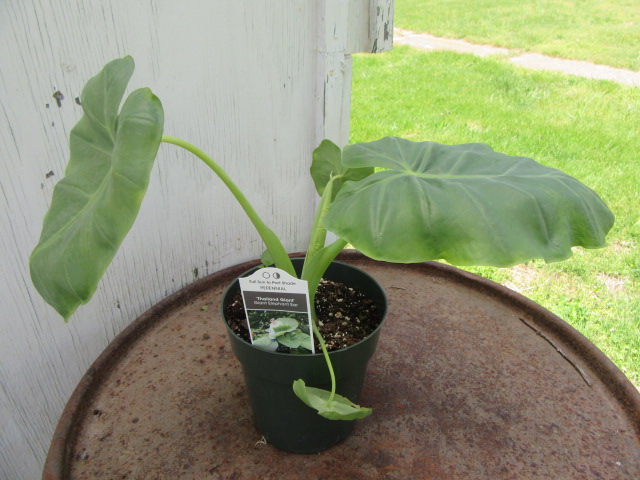
Until next time, be safe and stay positive.

TOP 10 Likes & Dislikes + Being Thankful

Hello folks! I hope this post finds you all doing well. I am seemingly at a loss for ideas to write about this time of the year. So a few times I have followed the suggestion of fellow bloggers. This time it appears Mr. Jim Ruebush of “HOW I SEE IT” has made another suggestion…

I mentioned getting stuck was on my top ten list of things I don’t like in the last post. Then, in his comment, he asked if I could fill out the list of top ten things I didn’t like. We both agreed it would be interesting to see the list of other people as well… Then Debbie agreed a top ten list would make a great post.

However….  What would a top ten list of things we don’t like without a list of what we do like?  You need to follow negative thoughts with 1-3 positive thoughts that relate to the same thing. 

For example… “I hate it when I am in a hurry and my boot string breaks.” Followed by “I love my Redwings Boots. I like having spare shoestrings on hand.” Or maybe, “It’s a good thing the strings are long enough so I can just tie a knot in the string.”

Now, what can I say positive about poison ivy? That would be tough except it wouldn’t have to be about poison ivy. It could be about a vine or a vine that turns red in the fall. Well, I’ll just stick with the fall color because I am not particularly fond of any vines…

TOP TEN THINGS I DON’T LIKE:

POISON IVY-leaves turn red in the fall

THORNS-Jim also mentioned in his comment his dislike for thorns. The one reason I don’t plant Roses is because of their thorns and having to prune them. Blackberry bushes are the same. But I do enjoy the flowers and I am thankful for the berries. 

JAPANESE HONEYSUCKLE-But I do like the flowers and the hummingbirds like them, too.

GETTING STUCK-Thankful for having experience and being careful NOT to get stuck.

FLAT TIRES-Hmmm… This recently happened on a gravel road out of the blue. I put on the mini spare and it was also flat. It has not ever been used and the car is a 1996 Buick. But, I was thankful that my best friend lived close so I walked to his house We brought his air tank, aired up the flat and I drove to town and had it repaired (then bought new tires). 

DEAD BATTERIES-But I am thankful for the battery charger. 

LOCKING MY KEYS IN THE CAR-GEEZ! Thankful for coat hangers and the fact the driver window doesn’t close all the way. I am thankful I have only done this a few times.

LOCKING MYSELF OUT OF THE HOUSE-Thankful there is at least one “secret way” to get inside. Thankful I have only done this three times and weird why it happened at all.

RUNNING OUT OF SOMETHING I FORGOT TO REPLACE-Thankful I can do without until I go shopping again. Doing without shows us we can live without certain things. It also helps us to remember next time or to make a list.

MOLES, VOLES, RATS, AND MICE-The only thing I can think of is the opposite. Not having moles, voles, rats, and mice. Using poisons isn’t always a good thing, but if there are mice or rats in the chicken house… Guess what? I use a bait called Tomcat. It works very well. I have been tempted to use it in the garden for the voles, but I have been told that wouldn’t be a good idea. I have no idea why… When I moved back here in 2013, I went to the chicken house one night and it was ALIVE! I told dad there were a lot of mice in the chicken house and he said the cats would get them. Well, there were a couple of holes in the foundation of the chicken house and the cats did sit outside waiting. But, to say there were a lot of mice was a complete understatement. Dad was 82 at the time so how long had it been since he was in the chicken house at night… After a couple of years, I couldn’t take it anymore. I bought a package of Tomcat from the feed store. In three days there were no more mice… Chicken feed consumption went down by around half. 

A couple of months ago I saw a piece of bait outside by the feed room door. I thought that was pretty weird… I opened the door and “HOLY CRAP!” A rat had been very busy and had dirt piled up about 2 feet high (I am not exaggerating). Just think of the hole under the chicken house floor… I had ran out of Tomcat so I went right to the feed store for more. Problem is, it doesn’t work as well on rats. It took a couple of days. Then a week or so ago, another rat was trying to move in. I have not seen a rat, or any evidence of any, for many years until this year. 

GETTING STUNG-For the most part, bees and wasps are beneficial and harmless. BUT, there are members that have bipolar disorder that are so territorial and protective of their nests they will chase you down the street. For those, I am thankful for wasp killer. Not just any old rinky-dink spray, I am talking about the cans that can shoot 20 feet away.

BEING SHOCKED BY ACCIDENT BY THE ELECTRIC FENCE-Sometimes I touch an electric fence to see if t is working so I get just a tingle. There have been times when I have accidentally touched it and the results have been mind-blowing. It was like a shotgun going off in my head. It made me wonder if all my memory had been erased. I am thankful we do have electric fences good fences in general, though. Well, I think this is one of those times when you say positive affirmations in the hope of having better fences in the future and won’t need to use electric. Electric fences are OK, but they need to be maintained. You have to make sure the deer haven’t screwed them up every day or so. Even though the “local” deer know where the electric fences are, dad always said that deer that are new here don’t know. I think they can see the current that we can’t although I am not sure. Sometimes they get spooked and pay no attention to where they are going. Just think about it… How many times have you ran into a closed door during the night, or stumped your toe on a table leg that has always been there? 

PLANTS DYING-I hate it when a new plant dies, or even one I have had for a long time. But, I am thankful for the plants that always do well. I am thankful for having had the experience with the ones that have died. I am thankful that there are so many plants to choose from and for the ones I haven’t met yet.

WINTER (cold, snow, frost, freezes, ETC…)-OK, so I am just going to say winter in general. Even though I close to hate winter, I have rather enjoyed the “S” this year for some whacky reason. I must have slipped a cog… Hmmm… Maybe it is the stillness on a winter’s night. I realize if you live in the city or a neighborhood where there is never a quiet moment you may not experience this. If you live in the country there is nothing quite like the stillness of the night during the winter. Especially when there are a few inches of snow on the ground. So, I am thankful that winter only lasts part of the year. I am thankful that maybe some of the Japanese Beetle grubs won’t make it through the winter. Plus all the other insects pests that feed on plant leaves. I AM thankful for the opportunity to live in a tropical climate. 

CLEANING HOUSE AND DUSTING-I don’t like cleaning house or dusting but I don’t like a messy house or dust even more. Therefore, once in a while I do have to clean. Especially when company will be coming. So, I am thankful for company once a month or so…

WEEDS-The age-old “what is a weed” statement has been overused. How about, “one man’s trash is another man’s treasure.” I have a lot of “weeds” because to me they aren’t weeds. Well, I suppose that completely depends on where they are growing and what they are. There are many “weeds” growing in the pasture along with wildflowers. Ragweed, Ironweed, and Jimsonweed are weeds because their names say so. In my opinion, any plant that is invasive and not useful as a pollinator or food for wildlife and/or growing where it doesn’t belong is a weed. Jimsonweed is a beautiful plant, but not in the garden (or the pasture for that matter). BUT… I am thankful for trimmers, mowers, and being able to pull them up.

DECEPTION AND BEING LIED TO-Believing something that we have been taught is true all our lives only to find out it isn’t true (or at least the way we have been taught). But, when you find out the way it really is, it a very liberating experience. Then you find out the endless opportunities and how AMAZING life really is… “The truth will set you free, and when you are free, you are free indeed.”

NOT BEING ABLE TO PAY OFF DEBTS-Have you ever made debts thinking you could pay them off as long as “this or that” happens”. A series of unfortunate events happened a couple of times in my life which left me unable to pay off a few debts. Not big debts necessarily… Not to mention “other” debts that keep growing you can’t seem to do anything about… GEEZ! The positive thing is that we learn by our mistakes and hopefully won’t repeat them.

CAMERA BATTERY DYING-I am thankful to have electricity and a charger.

Ummm… I think that is more than 10. If you stop to think about it, there are a lot of little annoyances we have to deal with. So many things are avoidable and we learn to “maintain” our lives so we don’t have to deal with them. Like running out of clean clothes so you won’t have to wear dirty socks for a week. You just have to buy more socks or maybe do laundry more often. I try to have as many shirts as socks so I will run out at the same time. I have two pair of jeans, one stays clean while the others get dirtier all week. Keep at least one extra of everything you use and run out of frequently. 

TOP TEN THINGS I LIKE:

Well, this one is a little tricky and not necessarily in order…

MAKING CONTACT… I could write a long paragraph about that, but those “who know” know what I am talking about. 

Ummm… I can’t mention the second thing.

A plant flowering for the first time.

Finding new plants.

Spring.

Good movies.

Watching the birds.

Comments on my blog and blogging.

Experiencing new things. 

Sunset.

Sunrise.

Hearing the birds in the morning. Being able to buy birdseed so they will also be thankful.

A well-groomed lawn… Not necessary my ard for the past few years.

Gardening. There are many reasons I enjoy gardening.

Discovery.

Trying something for the first time and it works.

Good friends.

Talking walks in the woods or on the farm.

GREAT FOOD! 

Feeling good.

My new mattress. AHHHH YYYYEEEESSSS! I recently bought a hybrid mattress on eBay. It came rolled up in a box, 10″ springs plus foam and all. That was quite an experience in itself. I placed it on the old box springs, careful to make sure it would jump in the right direction. You can imagine what happened as I started cutting the plastic wrap… Yeah, that’s what happened in a split second… 🙂 I was thinking about making a post about this and I should have set up the camera and taken a video. Anyway, the mattress is great!

Of course my iMac and camera.

Smiles and laughter.

I better stop there or you will think I can’t count… There are so many things I like and enjoy I just can’t even begin to write them all down. I (we) have so much to be thankful for. 

I was reading a few days ago that we should name three things we are thankful for each morning before we get out of bed. So, I do this every morning. 

Every night when I go to bed I give thanks. This is a good idea whether you thank God, the Universe, The Creator of All, Mother and Father God, the Archangels, or whoever you choose to give thanks to. I am not so sure it really makes any difference at first who you thank. Just saying thank you can make a big difference. You should say “thank you” for any little thing that comes along as well as the big things.

You can give thanks for the air you breath, fresh water, good food, your vehicle, the birds, the sky, the sun, your healthy body, your taste buds, your hands, your feet, the plants, the flowers, the moon and stars, your eyes, your ears, your job, the money to pay bills, your friends and family. All the good things you enjoy you should be thankful for. Even if you don’t say “thank you God”, just say thank you… After all, who is God anyway? OK, don’t get me started on that one. That would NOT be a good item for a post for someone with a research disorder… I would take you all the way back to the Sumerian Tablets. Hmmm… 

I just deleted the next paragraph…

I do have questions about a few things that I am STILL working on. Things I just don’t understand. It isn’t right not to know the answers to all our questions. In fact, we have the right to know. Don’t let anyone tell you that you can’t know. It is your life, it is my life. We need to embrace life and all it’s awesomeness and with all our awesomeness. We are spiritual beings with energy that connects to everything. This is a scientific fact. Not mere words… There are many things that we are told we aren’t supposed to do that we are supposed to do. Things we are told there are no answers to that there are answers to. If you have been brought up as a Christian you have fallen through a funnel and into a bottle. Well, I have crawled out of the bottle. Now I call myself a “Progressive Christian.”

I don’t know why people are sick and suffer through life. I just don’t understand… To be perfectly fine one day and the next miserable. I have known many perfectly healthy people that have died or now has cancer. WHAT THE HECK!?!?!? I have read a lot about cancer and watched The Truth About Cancer series. I understand but I don’t understand either.

One thing that really bugs me, and I hate to bring it up… We make people live when they want to die, or need to be able to make the choice. I am not heartless, but if I were born a quadriplegic and couldn’t feed myself… What quality of life would I have? Quality of life… We are body, soul (mind), and spirit. When your body dies your spirit moves on (one way or another-LOL!!!)!!! I say one way or another because it depends on what you believe and I am not going to argue with you. You can believe what you want, but like I always say, “THE TRUTH IS THE TRUTH WHETHER YOU BELIEVE IT OR NOT.” So, in reality, we are a spirit living in a borrowed body. So, does your spirit want to live in a broken body? I better stop there, but this could be a really good topic for discussion. How do we make a decision for someone else? After all, one of the greatest scientists of all time was quadriplegic…

One thing I have been doing lately is taking several courses on DailyOM. My thanks to Masha (A Sweeter Life) for sharing the website with me. 

I have watched a lot of documentaries on Gaia.com and some of the recent discoveries would really amaze you. From the scientific community, through archeology and spiritually. It is all coming together. We are finding out many answers about our hidden past, things we weren’t supposed to find out and how it sometimes relates to our future. Science has come a long way just by asking “who are we?” It is like the Universe is answering. It’s pretty amazing! There are also a lot of very good documentaries on YouTube. Just be aware that some people have different opinions and some are a little whacky. 

OK, I better end this post or I will never finish. I do hope you comment and even maybe post about your opinions on your blog. Everyone has thoughts on many subjects… The spoken (and written) word is very powerful.

So, what else are we going to talk about? You name it, I’ll post it. 🙂 Within reason, of course.

Until next time, be safe, stay positive, take a good deep breath, and always be thankful.

Ummm… And AGAIN!

Hello Folks! I hope this post finds you all doing well. It seems when one snow melts another comes to take its place. This one will be followed by VERY cold temps… The forecast originally said it was going to start snowing at 2 AM and snow for 10 hours. It also said we could expect a total accumulation of 6-7 inches. Well, at 2 AM the forecast had changed and said it would start around 3 AM and would last only 6 hours. I think I checked about 4 AM and it still hadn’t snowed. I don’t exactly remember the time I last checked because I was half asleep. I remember checking the radar around 3 AM and it was weird. I should have taken a screenshot. The cloud was like a horseshoe shape and we were in the middle then it surrounded us.


The wind was blowing when I got up and there wasn’t a bird in sight. They have been enjoying their new feeder in the tree in front of the house. One day a Purple Finch and a Gold Finch were on the feeder at the same time. By the time I got the camera, they had flown off. It is sometimes hard to take photos of the birds in front of the house because every time a car goes by the birds fly into the tree.


I am not sure how much snow we actually received because of the wind but I am sure we didn’t get 7 inches. Some of the drifts are well over 12″ deep, though.


My son and his friend are here now and they piled up some of the brush from the ice storm. Then yesterday we helped the preacher from church (not the church next door) remove the brush in front of a lady’s house (who goes to our church). Ummm… For some reason we brought it here instead of taking it to the city barn. The yard was a bit soft but we had no problems until the last load. I told the preacher to just put it in drive and not to put his foot on the gas pedal. That worked the first two times but not the last time. The tires started spinning and I told him to stop and I would get the tractor. Well, I had to air up a flat tire and I needed to charge the battery a little. By the time I was able to get the tractor ready he was stuck much worse. Over the years I have learned a few things about getting stuck in mud and snow. Once the tires start to spin you need to stop. If you can’t get anywhere in reverse, just stop and make a new plan. I rate getting stuck in the top 10 of things I like the least. I suppose in the winter it would be number 1 while in the summer it would move down the list and be replaced by poison ivy. Maybe thorns…


Snow and frost (the “S” and “F” words) are pretty high on the list. The “F” word is number 1 in the fall. I do like the patterns the snow makes from the wind blowing.


There was a drift on the north side of the old foundation in “the other yard” which I DID NOT jump into. I may have when was younger but it has been a while I have played in the snow…


Another drift along the southeast side…


Ummm… The Cylindropuntia imbricata (Tree Cholla) doesn’t mind the snow. Last January was so cold it turned maroon!


No plants on the front porch yet…


Nothing to say about this…


Everywhere you look is a bright white on a sunny day.


The Phlomis ‘Edward Bowles’ has been tucked under this flower pot for a while.


The Nandina domestica (Heavenly Bamboo) seems to be holding on to a nest of snow.


There was an old bird feeder in the barn so I decided I would stick it in the ground yesterday. This was dad’s feeder when I was growing up where we lived before.


A Flicker was wondering where it came from…


Back in the front yard, a few birds were enjoying their seed. Usually, there are a lot of Juncos but this time there were a few species of sparrows and a pair of Cardinals.


While taking the photo of the birds through the window I noticed the Stapelia gigantea is growing a new side branch. It is going to be really exciting when it flowers…


The forecast has changed somewhat over the past few days. For several days it said the low for tonight was going to be 1° F. Now it says 2… Well, at least it sounds better. Of course, the wind chill is a different story. Currently, at about 3:30 PM, the temperature is a windy 15° F and it feels like -6. 😐

That’s all I have to talk about for now. Until next time, be safe and stay positive. Stay warm or keep cool depending on where you live.

Here We Go Again…

Hello Folks! I hope this post finds you all well. After a few days of warmer temperatures, another cold front has moved in. The forecast over the past few days changed somewhat and seemed to vary from website to website. Last night the forecast said 2-4 inches of snow beginning after 7 AM.

The above photo and several below were taken at 10 AM. Not too much to be concerned about at that time.


I checked the forecast again and this time it said we could expect up to 7 inches…


At about noon I needed to leave. I went to turn the furnace down and as I looked out the back door… WOW! It had snowed A LOT in two hours!

Pulling out of the driveway onto the street, it appeared not too many people had been out. The wind was blowing a little and what tracks would have been made earlier were already covered up. I had two places I needed to go whether it was snowing or not. Driving down the streets in town was one thing, but when I came to a highway that had not been graded… That was a whole different story. The snow was coming down pretty good and everything was white. I could barely see tracks on the highway but I eventually made it to my first destination. I was supposed to drive a tractor around 12 miles away on the other side of town. Any of you who have ever tried driving a tractor on a slick surface knows that is a bad idea. Needless to say, I didn’t make it very far before I chickened out. I got back in the car and ran a few errands in town and went home.

At about 5:30…


It appeared it had stopped snowing but when I went outside it was drizzling a little. I normally measure the snow on the back porch railing but since the wind had been blowing there wasn’t enough to measure


I had put out more feed after I returned home and the birds were happy I did. The Junco’s and Cardinals are the main birds that eat under a maple tree in the front yard. I saw a pair of Nuthatch one day and they are always fun to watch.


No sitting on the front porch today…


A male Cardinal was resting in the Dogwood behind the house so I had to get a shot.


OH, the darn sparrows! Neglecting to clean out and cover the holes months go when “I should have” has made a cozy place for the sparrows over the winter. I didn’t cover the holes because it got cold and snowed and I felt sorry for them. I seem to have a feeling when the Martins arrive they may experience some resistance. Well, the plan is to clean out the house at least a month before the Martins arrive and cover the holes. Maybe that will encourage the sparrows to nest elsewhere.


Most of the Oxalis have went dormant, but the Oxalis triangularis subsp. papilionaceae in the big pot came back to life already. I hadn’t been giving them water so they would go dormant but when I was taking photos I saw these had sprung back into action. I don’t especially want to water them because the two bigger dormant Amorphophallus bulbs are in the same pot. I gave them a little water since they came back up hoping it won’t affect the sleeping Voodoo Lilies. You never know.  Maybe they will come up, too.

Sorry, I haven’t written to much on the blog lately but I am at a loss at what to write about. I have been working on the plant pages to the right a little but I am not sure if I will be able to get all the plant pages finished by the end of winter or not. I still have maybe 100 or so to add plus updating as I go down the list. I haven’t even started on the wildflowers!

I think that is all I needed to say so I will close this post. I hope you are all well and staying warm (depending on where you live). Be safe and stay positive.


The Belmont Rooster’s Favorite Stuffed Meatloaf

Hello everyone! I hope this post finds you all doing very well. I used to follow a few cooking blogs that were very good, but recently I started following In Diane’s Kitchen. She has MANY very interesting mouth-watering recipes she shares on her blog. Her post from December 12, 2017, was about her Pizza Stuffed Meatloaf. I left a comment telling her I had a stuffed meatloaf recipe that was delicious. She asked what I stuffed it with so I emailed her the recipe. Unfortunately, she is having difficulty with her email. I had hoped she would have received it so she would cook it and put the recipe on her blog. BUT, since that didn’t work out, I decided I would do it myself. So, I cooked it for dinner tonight. Well, Sunday evening, depending on when you read this.


I enjoy cooking because I enjoy eating. Of all the recipes I have tried, this one is my favorite to eat. It first started out when I was in Mississippi. Suzanne (Dr. Skinner) found out I liked to cook, so before I even arrived in California, she had started buying cookbooks. When I was packing the last of her truckloads to move to Mississippi I found box after box of cookbooks she had bought for me. I never counted how many, but just guessing, I would have to say over 300… She started buying them on Ebay where she could by A LOT at a time so I had many of the same cookbooks and a lot I wasn’t interested in. After she passed, I chose the ones I wanted and let the rest be auctioned off. Of course, mom and grandma had several cookbooks, which are in the bookcase in the dining room.

I cooked several recipes while she was still alive, including the Savory Stuffed Meatloaf I found in a Betty Crocker Hamburger Cookbook on page 33. I can’t find the cookbook right now, so it is a good thing I put the recipe in the computer. I will look more later and add the photo if I find it. Suzanne said the recipe was fit for a king. She said when we invite people for dinner, you can cook anything you want except for this recipe. I guess she wanted it for herself… 🙂

You will find other versions of Savory Stuffed Meatloaf online and this recipe is also on a few other websites.

I have cooked this recipe several times and have tweaked it somewhat. I will put the list of ingredients as is in the cookbook but I will tell you where I changed or omitted some of the ingredients. There are three parts, the meatloaf, the stuffing, and the topping.

I had to get up early this morning and was pretty tired in the afternoon. I tried to take a nap but couldn’t sleep. I had making this post on my mind so I got up and went to the grocery store. When I arrived back home, I began…

First, we will need to preheat the oven at 350° F and make sure the rack is in the center.


The Meatloaf…

The recipe calls for:

1 ½ pounds ground beef
1 tablespoon Worcestershire sauce
2 slices bacon, cut up (opt.)
1 teaspoon salt

½ cup milk
½ teaspoon dry mustard
1 egg
¼ teaspoon pepper
¼ cup dry bread crumbs
1/8 teaspoon garlic powder

I modified this recipe a little and didn’t add the dry mustard. I also usually substitute minced garlic in place of the garlic powder, more than 1/8 teaspoon of course. The bacon, which is optional, adds a little interest to the first bite. I had normally cooked this recipe without the bacon until the last time. It was very noticeable with the first bite, but after that not so much. Kind of wakes up your taste buds for sure, so I cooked it with the bacon again this time.

I usually buy ground beef that is 90% lean but they didn’t have any at the store today. So, I bought ground chuck which was 80% lean. That means this meatloaf may shrink a little more than usual.


Put all the ingredients in a bowl and mix well…


Dad always said when you make a meatloaf you have to mix it with your hands and squeeze everything together. So, that is always what I have done when I make meatloaf.  One more thing I need to add to the list… Paper towels so you can wipe your hands off before washing them. You wouldn’t want to get the camera all goopy, would you?


The Stuffing…

¼ cup butter or margarine
¼ teaspoon salt
1 small onion, chopped (about ¼ cup)
¼ teaspoon sage
1/8 teaspoon thyme
½ cup chopped celery
dash pepper
2 cups soft bread crumbs

This recipe wouldn’t be the same without the stuffing. Besides it being mandatory if you are going to call it a stuffed meatloaf, it is AWESOME!!! I always use butter in my food instead of margarine. There are some spices in the cabinet that are very old, including the Sage.


Melt the butter in a skillet and cook the onions and celery until tender. If you don’t make sure the onions and celery are tender, you will have crunchy stuffing in your meatloaf. That is just weird…


You can add the other ingredients anytime you want, but I usually do it after the celery and onions are somewhat tender.


Once the mixture in the skillet is ready, add the bread crumbs and stir until the butter mostly coats the bread.


Preparing The Pan For The Meatloaf…

Not all meatloaf pans are created equal. You will need a 9″ x 5″ x 3″ pan and I prefer glass for some reason. You will need to use approximately 2/3 of the meatloaf mixture to kind of make a boat, going up the sides of the pan to about 1/4″ from the top. It is best to do this right before you add the stuffing or it will sag. It is kind of hard to get this evenly but that’s OK. Practice makes perfect. 🙂


Then, fill the inside with the stuffing mixture.


Then, add the remaining meatloaf mixture to the top of the stuffing. You will need to squeeze the edges to the top part or it will separate somewhat during cooking. Kind of like pinching the bottom and top crust together when you bake a pie.


I usually cover the pan with aluminum foil and put it in the oven while I am making the topping. Don’t ask me why because I have no clue…


The Topping…

2 tablespoons Worcestershire sauce
6 tablespoons onion, chopped fine
3 tablespoons vinegar
½ cup water
1 cup catsup

Many people make meatloaf without a topping, but to me, that is like making a cake without icing. I always substitute minced garlic in place of the onions. I remember once I put way too much garlic in and realized later that wasn’t a good idea. I thought I could never have too much garlic but I soon found out there is sometimes a limit.


Mix all the ingredients together then…


Take the meatloaf out of the oven… That is if you put it in the oven already in the first place. Spread enough of the topping to evenly cover the top of the meatloaf and then but it (back) in the oven. I usually put the foil back on for a while in case it splatters, not that it will that much. I just don’t like cleaning ovens. Problem is, while the pan is full the topping will stick to the foil a little. As the meatloaf shrinks this won’t be a problem.


Baking Time…

The cookbook says to bake at 350° F for 1 hour and 10 minutes. Well, for me that is not long enough. It takes at least 1 hour and 30 minutes.

Every so often, maybe every 20-30 minutes or so, take the meatloaf out of the oven and put more topping on it. I kind of made that part up, too. You can, of course, put all the topping on at once, but experience has taught me to add a final coating when the meatloaf is almost finished. Sometimes, but not always, the meatloaf will split in the middle leaving a small gap with no topping. We can’t have that. 🙂

Oh yeah, I almost forgot. I dump out some of the oil after an hour or so and again when I add the remainder of the topping. Just go slow and be careful or the meatloaf will try to jump out of the pan.


Finished Product…

After an hour and 30 minutes, the meatloaf will be done. The coating was nice and glossy but there was a small crack in the middle. I put on a little more remaining topping, drained the oil out of the pan, then stuck it back in the oven while I took up the rest of the meal. Only 5-10 minutes.


Oh, that looks sooooooo good!

The recipe says to take it out of the oven and let it stand for 5 minutes before cutting. I can never wait that long…


Ahhhh…

The photo looks like it still isn’t quite done, but it seemed to be. I have taken it out before and had to put it back in again. I hour and 30 minutes may work, and actually, I did put it back in for another 5-10 minutes. You could probably easily cook it for 1 hour and 40 minutes. Normally, you can take a toothpick and check like you would a cake but that is a little difficult with the topping. Once the meatloaf shrinks, you may be able to stick the toothpick in from the side. Which is what I did this time because this one shrunk A LOT!

Come to think of it, some of the pink color could be the bacon…


The first bite left me speechless. I closed my eyes and savored the moment… Amazing! Makes me so thankful to have tastebuds! I always put three good-sized slices on my plate, but sometimes I have to put one back. That is like half of the meatloaf!

If you have the opportunity to prepare this meatloaf, let me know how it turned out and if you have any suggestions.

That’s all I have to say right now. Until next time, be safe and stay positive. Stay warm or cool wherever you may be. As always, GET DIRTY if you get a chance.


Ummmmmmmm…. 8″ PLUS!

Hello everyone! I hope this post finds you all well. It started raining yesterday morning and the forecast didn’t look good. The forecast said a total accumulation of 3-8 inches by the time it was going to stop snowing. It is about 2 PM on Saturday when I am writing this post and it is just barely snowing.

The above photo was taken at 12:44 AM Saturday morning and there was 4 1/4″ on the porch railing.


There was not a sound. It is so neat how calm is it while it is snowing. The wind was barely blowing and the temperature was around 30° F. This was is very wet and heavy snow.


I got up a little after 4 AM and looked out the back door. I saw what appeared to be lightning. I went and got the camera and looked out the door on the north side of the house. Then there was a green flash but it wasn’t lightning. I took another photo just as it flashed again followed by a buzz. Apparently, a limb fell on a power line or something.  I called the power company but was put on hold because of high call volume. Then I saw two pickups from the power company turning down the street across the road.


When I got up again about 8:30 AM I saw what hap happened during the night. I went and got the ruler and there was 8″ of snow on the porch railing. GEEZ! The cats weren’t on the back porch and there was still a little cat food in their pans.


Hmmm… The top broke out of the pear tree. It isn’t an edible pear, maybe a Bradford Pear or something.


The tree was damaged several years before and there are usually a few limbs that break off during the winter.


Actually, it will look better now without that limb that was taller than the rest. Natural pruning.


I don’t think I will be doing any potting today…


The maple trees stand up pretty well under a load of snow.


One of the maples in the front yard.


Hmmm…


Even the yews along the house are full of snow…


I guess I have to admit the trees look pretty neat covered with snow.


Apparently, the cats are in the barn. I saw one of the fuzzy tomcats in front of the barn earlier but he did not come to the house. The short-haired tom eventually came to the house and ate a little then ran back to the barn. I went out and made a path for them to come to the house and saw there was no snow along the barn Susie finally went up the path and came to the house.


That’s what happens with Chinese Elms…


Well, this doesn’t look so neat…


The power line going to the chicken house had stretched all the way to the ground because a few limbs fell on it. I removed the limbs which helped a little. Luckily the line didn’t break.


Fortunately, I did not lose power but I am sure many did. I messaged my daughter who lives in Springfield (about 2 hours south) and she said they just have rain. This is a wet snow and temps will be in the low 30’s for a few days. It is melting and a lot of the snow has already fallen from the trees and power lines. There is still a little more snow and freezing drizzle in the forecast for tonight and tomorrow but it is supposed to warm up into the 40’s next week.


On a brighter note… The Alocasia ‘Mayan Mask’ I have in the bedroom has decided to flower. I believe it is this plant’s first flower. I kept a few Alocasia upstairs this winter while the rest are in the basement.


The Schlumbergera truncata I picked up from Wagler’s Greenhouse is also now LOADED with buds. This one will have peach-colored flowers.

I will have to admit, this snow does look nice. I cannot believe I said that!!!

Until next time, be safe and stay positive!

Christmas & Birthday Past Once Again…

Hello everyone! I hope this email finds you all well and recovering from Christmas. I went to my sisters for Christmas because I couldn’t think of enough good reasons not to go. She didn’t like it that I spent Thanksgiving alone even though she did invite me. I didn’t see her invite on Facebook because I didn’t look until after it was over. I didn’t spend Thanksgiving alone because I had to, it was because I chose to. So, I went Christmas morning, stayed the night and came back home on Wednesday.

I made it to her home in Raytown, which is a suburb of Kansas City, with no problem. You would think to get out all you would have to do is go backward, turning right instead of left or left instead of right, on the same streets as before. Well, the last time we went, I somehow got turned around and getting back where I was supposed to be took a little longer. This time was even worse… 

How in the h— can you follow the directions backward and get lost? Well, when I was on 63rd and turned the right direction on to get on Raytown Road, it led to not being able to continue. The lane I was in ended and became one way. I did not notice that when I came… So, I thought maybe I screwed up and went the wrong way. I went back to 63rd and went straight on Raytown Road, passing 63rd. I stopped at a convenience store and asked how to get back on 50 to go to Warrensburg. The fellow was from India and he had no clue. I thought, “How can someone live here and not know how to leave?” I went to another store only to have the same strange answer, also from a man from India… I stopped at another store and a man not from India gave me the same answer. A delivery man was bringing in supplies, who must drive all over the city, and he didn’t even know… Then after driving around more, I stopped at yet another convenience store and asked a lady at the counter. She had no idea. Luckily, another lady was there and told me to turn right at the intersection and go as far as I can then take a left… So, I did that and somehow got to where I needed to be.

Now, Christmas evening, my sister and her husband went to see the lights at a park. It took a while to get there but the wait came after we arrived. Ummm… We have a very nice “Christmas In The Park” here in town where the churches and other business have their own displays. It’s very nice and you can drive through with no waiting. But, in Kansas City, it is not so easy. I am not sure how many miles it was from the main road, winding around, and waiting in this long line of traffic. I am not even sure how long it took because I didn’t want to know. Once there, though, the wait was worth it. It was a grand display and Lawrence County has been doing this for 31 years. 

On the way there, my brother-in-law started out driving similar to the way I came except he turned on Raytown Trafficway instead of Raytown Road. Then, on the way back, he came on Raytown Road and said, “This is the way you came in.” 

On the way home, I was thinking maybe you are supposed to take Raytown Road to their house and Raytown Trafficway when you leave. So, I check online to see. Sure enough, that is correct. You don’t leave the way you go. GEEZ! I didn’t tell my sister what happened but I will definitely remember for the next time. If she reads this post, she will see anyway. I never bothered to get driving directions for the return trip because I didn’t think it would be different. Lesson learned… Well, I very seldom ever get more than 30 miles away from home and I HATE driving in the city. I will be so glad when we can step in a booth and say where we want to go and get out and be there in a matter of seconds.

I also wanted to tell you I had a breakthrough. I realize why I don’t like Christmas. Deep down in my subconscious mind, it is because of glitter… Last Tuesday when I went to take the trash out at the church I saw where the youth had been working on their Christmas play for the following Sunday. The glitter was everywhere! The table was covered! I knew then that it would be trailed all the way up the stairs and into the sanctuary. Then, when I went on Saturday to clean for Sunday morning, it was terrible. Sure enough, it was all over the stairs and hallway. 

I didn’t go to the Sunday service because I didn’t want to see all the glitter during the program. Reminding me of what I had to clean up. I went on Monday to clean for the Christmas Eve service… While they must have cleaned a little because the sanctuary wasn’t that bad, the pulpit was covered. I had to wash it off with water because the vacuum cleaner wouldn’t touch it. I didn’t go to the Christmas Eve service either.

Then, on Saturday (today or yesterday depending on when you read this), I went to clean the church to get it ready for Sunday. GEEZ!!! I did vacuum, as usual, vacuuming the carpet as always, cleaning the restrooms, taking out the trash as usual. Once glitter is on the carpet you can’t worry about getting it all off. That much is just impossible. So, I will just vacuum as always every week and little by little most of the glitter will eventually get sucked up or go further down into the carpet. Just in time for more glitter next Christmas… 

It is now December 29. One good thing about my birthday being on the 29th is that no one seems to notice. Only three people remembered and the lady at the bank also noticed the 29th was my birthday. Even on Facebook, where you get a notification when it is someone’s birthday on your friend’s list. I “usually”, but not always, send a Happy Birthday. Not one Happy Birthday. 🙂 Very good! I don’t really need a reminder. To the young people, I am an old man, so I sure don’t want them to know. I am only 58 and far from being old… Now, if I was 90 and they didn’t remember, I would throw a fit! We sing Happy Birthday to people at church, but usually, they somehow forget about mine. I don’t bring it up either. 🙂 Even growing up as a kid, we didn’t celebrate birthdays. For me, we just had Christmas anyway. 

Well, I guess that is all I wanted to talk about for now. Another year is almost over and we will be in 20… Umm… 19.

Until next time, take care, be safe, and stay positive! I am not sure how dirty you can get, but I seem to be doing fine in that respect.

The controversial canola oil

I have read some very interesting posts by Naume G., so I suggested she look into Canola Oil. Well, she did, and this is her post.

Still Alive and Kicking…

Hello everyone! I hope this post finds you all doing well. I just wanted to make a “short” post and let you know I am still alive and well. I have been working on a new post since October 29, which will not be short. 🙂

I wanted to talk a little about cactus and show the differences between the plants in my collection. October 29 was a nice spring-like day so I took the cactus outside for a photo shoot. Then, as I was working on the post on December 1 I decided to see if I could get good close-ups of their spines. It worked out amazingly well with the help of a magnifying glass.


While I was working on the post I was also doing further research about the individual species description, mainly on Llifle (Encyclopedia of Living Forms). I also had to use the glossary on CactiGuide.com. So, I learned a lot more about my plants. I always enjoy making posts and pages while learning as I go.


Cactus are indeed very complex plants and I wanted to share some very interesting features about each one in my small collection.

I normally only work on the blog in the evening so it takes time to write a very long post. This didn’t seem to be a post I could write in parts because of the information in the beginning.

Once this post is finished I can get back to reading your posts and catch up. Until then, be safe, stay positive, stay well… GET DIRTY if possible.

Third “S”…

Hello everyone! I hope this post finds you all well. I took a nap in the afternoon and a few times I woke up and could hear the wind blowing. The forecast said the day would start out rainy and was supposed to “S” in the afternoon. Before I got out of bed I was thinking about what I could prepare for dinner. I needed to go to the store because I had run out of ice cream.

I got out of bed and went into the kitchen to warm up a cup of coffee and saw it was “S—ing”. After a week of nice weather we wish would last all winter, we get another “S”.  The National Weather Service said it was 30° F with a wind chill of 16. The wind speed was 26 mph with gusts up to 36 mph.


There quite a mixture of the size of flakes, some fairly big. It was ‘S—ing” so much I could barely see the cows gathered around the bale of hay I took out yesterday. There is still one in the smaller lot in reserve.


The House Sparrows are thankful I didn’t finish cleaning out the Martin house… Well, I thought about it but saw it was going to “S” and get cold so I decided maybe they might need shelter. GEEZ!


I had to open the sliding door to get good photos and was very surprised when The Barn Cat (yeah, that’s her name) came in the house. I have been here five years and she never came into the house. Once she did stick her front feet in, but never all the way. She didn’t stay long, though.


The front porch looks strange with no plants on the tables…


Umm… According to the calendar, the first day of winter isn’t until December 21. Here, in mid-Missouri, we have already had three “S—‘s” with temps in the teens! Some parts of the country have had a lot worse. I have been in much worse so I am not going to complain. I am thankful to have a warm place and food to eat.

As I walked past the living room, guess who I saw? Susie. She snuck in while I was taking photos… She was hoping I was going to let her stay in. I suppose it would be OK but I don’t really need a house cat… There are four others and it wouldn’t be right for her to be inside. I had cats inside in Mississippi which were no problem and were in and out as well as litter box trained. Mom always had cats that would come inside and so did my ex… There were all housebroken and would go out when they needed to. The cats here are outside cats and not housebroken so that could prove not to be a good idea to allow them to be inside… If you want a cat inside, they need to be housebroken and litter box trained. Mom had a cat before that would actually “go” in the drain in the bathtub…


The view from the north side of the house… The forecast for a few days will be cold.


Wednesday will be the beginning of a warming trend at 42° F with a low of 33.

I still needed ice cream, so after I finished with the photos I went to the grocery store. There weren’t many people driving around downtown, but I was very surprised at how many were at the grocery store. Apparently, I am not the only one who needed ice cream. At 6:50 PM when I am finishing this post, it is still “S—ing” like crazy and the wind is still blowing.

How is the weather in your neck of the woods? Until next time, take care, be safe, stay warm and stay positive. It may be a little difficult to get dirty for a few days, but I am sure I can find a way. 🙂

Thanksgiving Day Update

Hello everyone! I hope this post finds you all well. I struggled to think of a title to this post. There are several bloggers who do a Wordless Wednesday but I always have plenty to say. I have also done a Wednesday Wanderings but I really didn’t go anywhere with my camera but on the farm. Then another day past and it is, or was, Thanksgiving day.

I did miss another chance for a great photo and video a few days ago… A really neat whirlwind of leaves in the south end of the back pasture. It lasted for quite a while, too. GEEZ!

I did manage to get a photo of our resident villain on Tuesday. The Red-Tailed Hawk has been visiting near where the hay is stored. I have seen it several times but never had the camera. It flew behind a tree by the pond probably thinking I couldn’t see it… No doubt it is hunting for mice or voles, but it doesn’t hesitate to nab an unsuspecting small bird.

(Note: Lisa commented and said the hawk is a Red-Shouldered Hawk and not a Red-Tailed Hawk. I noticed it didn’t look like the Red-Tailed Hawk that stays in the back of the farm. The maps online say the Red-Shouldered Hawk are farther south and to the east of this area. I am not sure they stay here year around, but I have seen one of them, sometimes two, in this same spot in the past.)


I still haven’t finished cleaning out the Martin House. The House Sparrows moved in right after the Martins left and they have almost every nest stuffed full! They spend the day in search of seeds and insects but they are usually at the house in the morning and by early evening.


I did finish cutting the Cannas Wednesday afternoon and the bed is all mulched for winter now. I am sure glad I don’t have to dig their rhizomes and bring them inside for the winter. I am thinking about contacting my good friend Walley in Mississippi to see if he still has his yellow Cannas. He gave me a start before when I lived in Mississippi but I accidentally left them behind when I moved back here. Maybe he could send a few my way.


The cats always enjoy sleeping on the pile of leaves especially when it is cold and sunny. This cat has been known to sleep in some very strange places, though. He even likes to get in small boxes and flower pots just barely big enough to curl up in.


The moon looked really nice when I went to get the cows from the back pasture. The time on the photo says 4:53 PM and the moon is on its way up. A few months ago I could leave the cows in the back until about 9 PM…


A few of the cows were already waiting at the gate. I think they heard me singing or talking to myself. Sometimes, not always usually lately (which means maybe less than 40% of the time but not necessarily) they are at the gate. Sometimes, like Tuesday, a few were at the gate but walked away when I arrived while others were coming toward the gate. The calves are getting the hang of it and walk toward the gate when they hear me or see me approach.


Sometimes they are eager to get to the front pasture for the evening and I have absolutely no problem. Sometimes… Oh, I am sure you get the picture by now. 🙂

One thing I have learned is that cows are not the most patient of critters. Tuesday morning when they were waiting at the gate to go up the lane, I thought I would scratch a few of them behind the ears. The first three really liked it, but the fourth said, “OPEN THE GATE ALREADY!”  Even though they don’t have hands, so they can’t make a fist, she has learned that is what the top of her head is for. She is one of the older cows and is pretty much intolerant when it comes to friendliness if she is anxious. July, however, is the opposite. I think she would stand and let you pet and scratch her for an hour.


The calves are always funny. When I open the back gate the cows, if they are at the gate, come right into the lane. If I am still standing in the lane the calves are a little hesitant to walk past me. They will stand there at the opening and talk it over first. Wednesday evening, after much deliberation, they all managed to build up the courage to go past me but one. It was the first born heifer with the completely white face. She walked away from the gate and for a minute I thought she may jump the fence. I walked into the pasture toward the Persimmon tree and she finally went in. I had to check to see if there were any Persimmons left and I found only two… So, I guess that’s it for them until next fall.

I took a few plant photos Wednesday evening then a few more this morning. The camera battery went dead and I had to recharge before I could finish.

I hope you don’t mind another long post. I could easily break down every photo for a single post…


The newest members of the cactus collection are in the kitchen windowsill. I plan to make an insert with two shelves.

A friend of mine and I were recently discussing plant markers. I told him the last ones I had bought were too small and he said he uses old mini blinds. I had one I was going to throw away, so this Wednesday morning I cut several 5″ pieces and they work great! They are wide enough to get plenty of information on them on both sides. I like putting the scientific name and common name on one side while the date I brought them home on the back. I also write down the dates when I repot them into larger pots. Eventually, the permanent marker’s ink fades and I have to rewrite. He said he uses a pencil… Hmmm…


The Kalanchoe delagoensis plantlets are still doing OK. They have grown a little but probably won’t do much during the winter. Just as long as I can keep them alive until spring… I mist them about once a week.


When I brought the cactus inside from the back porch, I just carried their table in and put it in front of the sliding door. This is not an ideal spot because they don’t receive much sun so it was just a temporary solution. Several of these were in the kitchen windowsill for two winters but they are now in larger pots.

I discovered something when I brought the cactus inside and had to re-pot a few into larger pots. Normally I don’t re-pot until the spring but I had just received my bag of pumice and was itching to try it out. One of the biggest problems I have with cactus and succulents in the winter is their soil gets very hard. I barely ever water them during the winter, some not at all but their soil needs to be loose, not hard. I think this happens because the peat in the mix drys out and a lot of the perlite has floated to the top. Pumice is similar to grit but acts more like perlite because it absorbs water. When the water is released it also adds nutrients to the soil. By repotting the cactus in the fall, their soil will remain loose throughout the winter. 🙂


The new shelf I made for the south window is working out very well. I used boards from the loft in the barn. I made it similar to the one I made in Mississippi for the kitchen window (out of old Cypress boards).


The shelves are adjustable so I could possibly lower the top two or even remove the bottom shelf. That way I could add another shelf. Last winter I just had a table here which was high enough to put some of the bigger succulents under it. The bottom of the window is only 10 1/2″ from the floor so they received plenty of sun. While cactus, for the most part, isn’t that particular about being in full sun, especially over the winter, a lot of succulents will stretch and get weird if they don’t have enough. That’s why I have to avoid growing Echeveria and a few others I have grown in the past.

For the most part, all the succulents are on this shelf plus a few cacti.


They are all doing well but I noticed some brown scale on the Peperomia obtusifolia. The Cotyledon ‘Silver Storm’ seems to be making progress with its spraying program. So far, the new leaves are scale-free. There are a few succulents that are very prone to brown scale which I have learned to avoid. Some get it a little and are easily plucked off. I keep an eye on the Crassula ovata ‘Lady Fingers’ or ‘Gollum’.


I say “or” because I bought this plant unlabeled and it looked like a ‘Lady Fingers’ at the time (I had one before). It has grown quite a lot and now it’s leaves look like ‘Gollum’. Anyway, I noticed it also has a few scale as well but they can be removed without spraying.


If you have scale and need to spray, make sure you use something that is ORMI certified and does not smell like alcohol. Neem oil may work but I haven’t tried it. I do have a product with Neem oil as an ingredient which is also certified organic that would also work. Unfortunately, the brown scale doesn’t actually fall off even when they may be dead. You have to remove them by hand or remove the leaf. You could remove the infested leaves, but sometimes that isn’t possible. The Cotyledon is really bad and even the stems have scale. I have thought about throwing it away but I couldn’t see myself doing that. I tried neglecting it this past summer, thinking it might die on its own. Well, it seemed it seemed like it and thrived… So, I sprayed.


The Huernia schneideriana is doing very well and there are new offsets coming up.


The new Stapelia gigantea is also doing very well. This plant is a cousin to the Huernia and both are Carrion Plants. Even though this one will have big and beautiful flowers, the smell will be less than pleasant…


Sedum adolphii and its Oxalis friend are doing good. Yeah, I know… This Oxalis is probably a weed to most people but I kind of like them. I don’t hardly pull any of them up in the flower beds so why wouldn’t I allow it to grow in the house? 🙂


The Kalanchoe x laetivirens is doing good, as usual, but feels a little annoyed with me right now. I removed all its plantlets so they wouldn’t be jumping into the nearby pots. There is a nice row of them along the wall behind the shelf…


There are several Kalanchoe luciae on the shelf, but this one looks the best. When I see its leaves start to wrinkle I know it needs a little water. Otherwise, no water for the succulents during the winter…


The Aloe juvenna and Kalanchoe orgyalis are enjoying the winter on the bottom shelf. Aloe juvenna are very easy to grow but need a good amount of light or their leaves will stretch. The Kalanchoe orgyalis keeps growing taller and may be touching the bottom of the next shelf before long.


Umm… Almost every plant on this table should be in the basement. Last year the Oxalis went dormant before I even brought the plants inside for the winter but this year they have not gone dormant yet. I guess I am going to have to take them to the basement anyway. The Begonias can also be in the basement but they look so good where I can mingle with them once in a while. The Begonias on the table have hardly lost any leaves since I brought them inside. They have pretty much been on the dining room table except for a few days last month. I put them on the table in the front bedroom Tuesday evening after I gave them water.

The bigger pot in the center of the table has the two bigger dormant Amorphophallus in it… So, watering the Oxalis in that pot may not be a good idea… I need this table for the cactus in front of the sliding door…


The Begonia withlacoochee ‘Brazilian Lady’ always loses a lot of leaves when I bring it inside. That’s OK, though. It will be fine. One winter it went completely dormant and came back in the spring. Well, I guess a change is in order for the name of this plant. While it is available under the name Begonia ‘Brazilian Lady’, I just found out the registered cultivar name with the American Begonia Society is ‘Withlacoochee’ (ABS #765) and it IS definitely this cultivar. ‘Brazilian Lady’ IS NOT a registered cultivar. It was registered as Begonia ‘Withlacoochee’ by someone named Michelson in 1977. Someone came up the hybrid name Begonia withlacoochee and was even listed as such in the Encyclopedia of Life (EOL). Click on that link now and it will say “server error”… The cultivar is a cross between two unidentified species, one being an unidentified “Brazilian” species… So, now I have to work on the plant’s page to the right. >


The Ledebouria socialis and Ledebouria socialis ‘Violacea’ are doing quite well. I am not supposed to water them over the winter so they will kind of go dormant. I read where if you wanter them over the winter they will continue growing new leaves and not go dormant. You want them to go dormant so the new leaves in the spring will be larger and it will flower. If it doesn’t go dormant, it won’t produce flowers.  Ummm… That would be a disappointment because of the reasons I bought them was for their awesome flowers. SO, I am trying to avoid watering them…


Ummmmmm… How’s that for a neat leaf? The Oxalis triangularis subsp. papilionaceae grow these impressive leaves. The color and size… Maybe I should keep this one upstairs for a while longer. 🙂


The Oxalis tetraphylla (Iron Cross) leaves aren’t so big right now… The bigger leaves died and the new leaves are small. Weird…


The Tradescantia sillamontana are waiting to go to the basement so they can sleep for the winter. I will cut their stems off once the plants go dormant and they will come up after a few months. They have done very well all summer and now it is time for a rest. They would stay awake upstairs all winter but they get really out of shape.

So, it is best

for them to rest…

The Tradescantia pallida (Purple Heart) will also be going to the basement but I may take a few cuttings first…

BUT…


The Tradescantia fluminensis variegata (maybe I should write that “var. variegata”) and…


The Tradescantia zebrina will be staying upstairs for now. It is my first winter with them so I am not sure how they will do either upstairs or down in the basement. I know they will do OK upstairs but I am not sure about a stretching issue. If they go dormant in the basement… Will they come back up or will they be dead. Maybe I should take cuttings and experiment. 🙂 How else will I know?

In the other bedroom…


Well, the table in the other bedroom is experimental. I had the Callisia fragrans and Tradescantia sillamontana on this chest but grew tired of that. The Tradescantia needs to be in the basement so they can go dormant. Tuesday evening I moved the Callisia and Tradescantia sillamontana and put a few other plants here. This spot only gets good sun in the afternoon so a lot of plants won’t do well here over the winter.

I kept the smaller Alocasia upstairs because they don’t do well in the basement. When I say smaller, I mean the ones that are under 12″ tall. Somehow, when I was moving plant s inside, one of the bigger Alocasia ‘Portora’ managed to sneak in the dining room. Then, when I moved the Tradescantia sillamontana out of the bedroom, the Alocasia ‘Portora’ somehow snuck into the bedroom… Of course, I could bring up a couple of other Alocasia to keep it company. How about the biggest ‘Calidora’? It will probably touch the ceiling even with its pot on the floor.


As I mentioned earlier, the smallest of the Amorphophallus finally went dormant a few days ago. I was beginning to wonder if it was going to stay green all winter.


Ummm… Yep, this is the Ruellia simplex (Mexican Petunia) Mrs. Wagler gave me a few months ago. I know if I had have put them in the ground they wouldn’t have made it through the winter because they barely had any roots. Typically they are only hardy in USDA zones 8-11 but the ones I brought here from Mississippi in 2013 did survive at least one winter. I was surprised that Mrs. Wagler had some in one of her flower beds and happy she offered to give me a start. These will have blue flowers instead of pink like I had before. Walley Morse gave me the first start in Mississippi in the fall and I kept them inside until the next spring. So, I know they will grow in the house. 🙂 Well, they are a very neat plant and they will spread in the right conditions…


I moved the Tradescantia ‘Pale Puma’ in this bedroom on Tuesday evening even though it may well be moved to the basement. It just depends on how well it grows here. The one I had before went dormant in the basement and came back up in the spring with no problem.


The Callisia fragrans that were on the chest are now on top of the bookshelves… I think they will survive anything and anywhere. If you know someone who says they can’t grow plants, take them one of these… I have proof…


On July 12 when I potted all the offsets from the original plant, a couple were very small and I thought I had more than enough in pots. So, I threw these two smaller offsets in the yard. When I was mowing a few days later I picked them up and put them on the back porch. They have survived with NO soil and no additional water since July 12… Now you can turn me into the plant humane society for neglect. I am experimenting, but I think I am about to give in.

OK, I think I am finished with this post now. I want to get it published before midnight or I will have to edit it again. Grammarly says I have 11 errors but we have been in a little dispute over a few words. Like the words lose, loses, and loose… I used all in this post correctly but Grammarly doesn’t agree… OK, I went back and fixed the “errors”. I did mess up a few times I didn’t originally catch, some I clicked on “ignore” which is only a one time deal. You can add words to the dictionary if it is a word Grammarly doesn’t recognize (like botanical names :)). So, I teach text edit and I teach Grammarly and it likewise shows me when I screw up. Text edit sometimes jumps to conclusions but all you have to do is click on the “x” and it changes the word back and you can then click on “learn” so the word is added to its brain. If I am in doubt, I highlight the word and click “look up” and the dictionary tells me if I am right or wrong. Then if I have to install a new hard drive or need to use Firefox or Google, I have to teach again. That’s OK. Just part of life. We learn and we teach. I know if I go back over this post several more times I am likely to find something else every time. I don’t mind if you correct my grammar. In fact, I would appreciate it if you did. But you also have to recognize people from different countries spell and use words differently… 🙂

Now, I better quit. Until next time, take care, be safe, be well, stay positive… You know the drill. Just be good and GET DIRTY!

Abomination — Sweetgum and Pines

While visiting a local home improvement store today, I took a look at the garden section to see what grotesqueries the plant wholesalers have cooked up lately. They did not disappoint. I am, by now, inured to things like paper flowers glued to cacti or Phalaenopsis orchids with dyed blooms–If you desperately need a cheap […]

via Abomination — Sweetgum and Pines

Mulching The Canna Bed, Etc.

Hello everyone! I hope this post finds you all well. Today was a good day to start mulching the Maple leaves in the “other yard” (across the driveway) and cut down the Cannas.

I had planned to go to the Farmer’s Co-op to pick up a friend’s feed for his cows since he was out of town. Someone else comes to feed his cows and would be at his house at 3:30. After that, I was scheduled to meet with someone else at 4. The plan was to work on the leaves and the Canna bed between picking up the feed and before and after my other appointment. Well, it didn’t happen that way…

When I went to pick up the feed at 1:00 I was told to come back at 4. His feed gets mixed and put in a hopper on the back of his truck and they were to busy when I went. SO, I went back home and called him and explained what had happened. He then texted the other guy so he would know the feed would be late. Then I called the other person I was supposed to meet with at 4 and told him we could go ahead with our meeting ahead of time. But, he and his wife had to go somewhere else first and he said he would just come over when they were finished. He didn’t make it until after 3 and stayed until I had to go back to Farmer’s Co-op. Then, when I get there, they told me they still weren’t ready and would be at least another 30 minutes. So, I went to my friend’s farm and met up with the guy who was there to feed his cows. When he was finished with some of the feeding he told me he would go get the feed himself because he needed to tell them he needed more for tomorrow. I don’t know how he will do that since they apparently don’t mix feed on Saturday.

Anyway, while I was waiting, I decided to go ahead and start on the leaves.

I usually run over the leaves and suck them up in the mower’s grass bags. That always proves frustrating because the tube keeps getting clogged. Then I have to turn off the mower, take the tube off, and shake out the leaves. I have tried different things to prevent that but it still happens. Last fall, on the south side of the house, I just ran over the leaves and blew them toward the south bed where I ultimately wanted them. It worked much better with no frustration. So, this time I ran around the leaves in “the other yard” in a circle blowing them toward the center. I know that means some of the leaves get chopped up over and over, but the whole point is to get them mulched. So, it worked out pretty good.

After a while, the mower started having some difficulty because the leaves were getting too deep. The bigger mower would have probably handled it fine, but one of the belt pulleys broke the last time I mowed. Good thing it was the last mowing of the season…

The goal was to get the leaves mulched and into somewhat of a pile so I could put them in the trash can and take them to the Canna bed.


It’s amazing how plants that were 10′ or so tall a few weeks ago could look so pitiful now. After a few “F’s”, two snows, wind, and very cold temps they look like a disaster.

After I finished mulching the leaves I started cutting down the Cannas. Remember, there used to only be 10-12′ of Cannas along the garage but I spread them out the entire length this past spring. After cutting down about 1/3 I decided I needed to stop and cover them up before my company came and I couldn’t finish. I didn’t want the rhizomes exposed to the cold air with nothing. I will try and work more on them Saturday, but I am not sure how much time I will have. We are supposed to have a “wintry mix” move in Saturday evening… 😦


There are plenty of leaves from the Maples trees on the south side of the house. Their leaves are 99% on the ground. Dad said these were Jefferson Maples…


The two Maple trees in front of the house are a different story. These are the last to change color and they hang on longer. Dad said these two trees are Sunset Masples…


The northeast corner bed doesn’t look so amazing now… Salvia microphylla ‘Hot Lips’ still has some dull green…


The Lysimachia nummularia ‘Goldilocks’ doesn’t seem to mind the snow. It’s not the snow that kills plants (well… I guess that depends on the plants and how cold it gets, huh?). When it gets really cold, there won’t be a trace of this Creeping Jenny. Then, like a miracle, they start popping up off and on in the spring to check the temperature. It’s kind of funny actually…


The Geranium sanguineum (Bloody Cranesbill) can take pretty cold temperatures. There have been winters they have remained green the whole time. Still growing after about 35 years.


The Nandina domestica (Heavenly Bamboo) I brought with me from Mississippi doesn’t mind a few “F’s”, snow, or cooler temps. Well, to a certain point… It thought last January was a bit much and I agreed…


Ummm… The south bed… The Salvia‘s and Elephant Garlic are pretty much all that is green. That is beside the grass and weeds… The Iris are growing again which is always a good sign.


OH, poor Phlomis! Every winter as soon as there is a forecast for an “F” I cover the Phlomis ‘Edward Bowles’ with the big flower pot. The pot that is behind it as a matter of fact. I really like this plant so I am very protective of it when it comes it getting ZAPPED. This time I had other things on my mind and completely neglected this plant. I guess we know now it is fairly “F” tolerant and can withstand temps down to 12° F. Thank goodness! I now have a sticky note on the wall that says “PHLOMIS” to remind me to cover.


The Sempervivum ‘Killer’ seems to be enjoying the cooler temps. It flowered like crazy starting late in the summer. I had never seen a Sempervivum flower before, so it was quite a treat. The sad thing is that Semps are monocarpic which means the plants that flower will die. The good thing is there are plenty of new offsets.


Yep, I always laugh when I look at the Cylindropuntia imbricata (Tree Cholla). Not because it is a funny plant, but because it always looks different from one time to the next. It always smiles at me but I dare not give it a hug and you can definitely forget about a kiss! It always asks me if its name has changed and I always tell it no. I am trying to keep it a secret that there are two subspecies of this plant and one variety (plus 12 synonyms). I do tell it that is a bit short because it is actually a succulent sub-shrub that grows 3-6′ tall. It seems to like spreading outward instead of growing upward which is one reason I always laugh. I can hardly wait until it flowers, which could take a few more years…

I stopped by the grocery store on my way home and the cashier said he heard we were supposed to have a “five-year winter.” I have no idea what that means and I am not that anxious to find out. Umm… I am not going to look it up on the internet either because I don’t want to know… Five years ago is when I moved back to the farm and we did have plenty of snow… Now my sister can say, “See the persimmon seeds were right.” GEEZ!

Well, that is it for now. The post would have been longer but I ran out of photos. 🙂

Until next time, be safe, stay positive, stay well, don’t fall down the steps, don’t burn yourself cooking, don’t stick yourself while sewing. When you get aggravated try some breathing exercises to relax. Life has its ups and downs but it is actually a miracle in itself and we are truly amazing creatures. I know eventually, our bodies get old and we may become bald, fat, and wrinkly. Some of us have worse health problems than others. We still have a lot to be thankful for even though we may not feel like it sometimes. Sometimes when we aren’t doing so good just knowing that others love and care about us makes us feel much better. Sometimes we may need a change of environment, take a vacation to get away for a while (or permanently). Maybe all we need is to take a walk with someone we are close to. Maybe we need some time to ourselves to be alone with the Universe, with God, or whoever you choose to call him (or her). I have come up with this neat little exercise that always makes me smile.

Well, I better stop for now. Take care always and GET DIRTY if you can!

Second Snow…

Hello everyone! I hope this post finds you all well and warm. I realize that some of you are in warmer climates and are in the spring season. Here, as you can see, it is not warm and there are no spring flowers blooming…

The forecast yesterday said it was going to snow, so throughout the night, I kept looking out the sliding door to check. Eventually, I did go to sleep. Then, this morning when I got out of bed…

The cows were eating hay, which they were glad to have available. I had also put a second bale in the small lot by the barn in reserve.


It didn’t get below freezing so I didn’t have to go cut ice on the pond. That’s good!


Susie and The Barn Cat aren’t very enthused about the snow. The other three cats had eaten and probably went to the barn by the time I took this photo. The Barn Cat (in the box) was given her name by my parents because she seemed to always stay in the barn. She has spent most of her time on the back porch this past year so maybe a name change is in order. Susie is the only cat that comes inside the house when she can sneak in. She makes her rounds and when she is satisfied she attempts to stay in longer. She tells me she will be OK in the house and won’t bother anything… One evening I let her stay in to see what she would do. Next thing I knew she was on the bed getting ready to take a nap…


Winter… Snow… Cold… No plants on the front porch.


Just a dreary cold wind and still snowing.


Seasons come and go and I know winter will eventually lead to spring. For many years we didn’t have any snow before the first of the year. I hope this isn’t a sign we will have a very snowy winter.

I can just hear it now… “Well, the persimmon seeds had a spoon inside. That means we will get a lot of snow.” I left the snow shovel on the side porch from the last time. Does that mean I was asking for more? I certainly did not ask.

I have been making some good progress updating the plant pages on the right. I have A LOT more to add but I wanted to get the pages that are already published updated with recent photos, proper links, and make sure their scientific names are still correct. I am also trying to discipline myself to keep current with your posts as well. Once I get started reading I get sleepy. I try to make a comment but sometimes I don’t know what to say and just click on “like”. I do read your posts, though, so if I just “like” I have read it. I haven’t really started promoting my blog yet so I only have 87 followers on WordPress. Some days I have well over 100 visits to the pages on the right but very few readers leave “likes” or make comments. Maybe no one can leave a “like” or make a comment unless they have a WordPress account, have signed up to follow (even by email), or something. I don’t know. I do enjoy reading your posts and I am thankful for all who make comments here.

I thoroughly enjoy the WordPress community and being able to share photos and experiences here. I have a great appreciation for bloggers who take time to do the same and I thoroughly enjoy reading your posts. My first blog was The Mystical Mansion and Garden which I started in 2009 from when I was living in Mississippi. I had a lot of pages and information about porcelain companies and Japanese Kutani and Satsuma, Televera, etc. Of course, most of my posts and pages were about plants and gardening. I received A LOT of comments from people asking questions about antiques. I started my first Belmont Rooster blog in 2013 when I moved back to the family farm here in mid-Missouri. This is my third Belmont Rooster blog and hopefully it will remain for many years to come… Many bloggers that I used to follow, and were followers, have stopped blogging. I feel like I missed something when I was in between blogging. Where did they go? What happened to them… Blogging does take time and many people who have families have to juggle between jobs, family, and blogging. I also have Facebook and Twitter accounts. I haven’t been on my Twitter accounts for a very long time, though. I just can’t get into Twitter… I guess I have a Twitter block. 🙂

I follow a few blogs that I followed since 2013 and some haven’t posted for a few years. I used to have close to 500 followers and climbing. I would spend hours promoting the blog, following, and making comments and looking for more. We went through this “award” phase which I am glad has settled down. I don’t remember how many blogging awards I had in 2013, but there were many. For me, I think I like quality and not quantity. I am not here to set records, be awarded, or even claim to be a great gardener or blogger. I just enjoy growing plants, gardening and sharing my experience that may be helpful to others. I also enjoy the relationship with my fellow bloggers in the WordPress community. I am also on another journey which I may share at a later time…

Well, I guess I better stop writing and get a few other things done for the day. It has finally stopped snowing for now but I doubt I will be making a snowman. 🙂

Until next time… Be safe, stay positive, healthy… You know the drill. Try and GET DIRTY when you can! Even if you have to stick your finger in a pot.

Ummm… First Snow of 2018

Hello everyone! I hope this post finds you all well and keeping warm. The weather forecast has been predicting snow for today. By this afternoon we hadn’t had any, so I did a little work in the yard. I was hoping it would not happen. Then I took a nap and got up about five. I looked out the sliding door in the dining room and what did I see? It was snowing…

The car was outside because I hadn’t cleaned up the sawdust in the garage from a few projects I had finished. So, I cleaned up the garage, swept the snow off the car then moved it into the garage.

Needless to say, sometimes I can be a bit of a procrastinator. I put off digging the bigger Colocasia esculenta rhizomes until yesterday (one is the largest I have ever seen). I haven’t raked any leaves yet because I am waiting for them all to fall off and dry. My “higher self” kept telling me that it may be a good idea to rake the leaves anyway because of the weather. How will the leaves dry when they are wet? Did I listen? Nope…

When I was going to take the cows to the back pasture today they weren’t around. They were probably in the north hayfield grazing in the back so I just left them alone. Once again, my “higher self” reminded me I should take a bale of hay out in case it snows. Well, it wasn’t snowing, so I started cleaning the Martin House out instead.

It was pretty chilly and my hands got cold, so after I cleaned out the top tier, I went inside. Normally, I clean out the birdhouse after the Martins leave. This time the sparrows moved in and my sister, who was visiting earlier, suggested I just let the sparrows have it. So, maybe I can blame her for persuading me not to clean it out at the time. I didn’t see a single sparrow this afternoon when I was cleaning out the birdhouse but almost EVERY nest compartment is FULL of their nests.

During the heat of the summer, many things were put off until it got cooler. Now it is cooler but it has been rainy. When it wasn’t raining, I found other things to do and always tell myself there will be plenty of nice, warmer days it can be done…

That’s the good thing about not having a “to-do” list anymore.

So, tell me… What have you been putting off?

Until next time, stay positive, stay well, be safe… GET DIRTY! I can always get dirty because right now there is plenty of dirt in the house (with all the plants inside).

Crazy Cow and No Camera…

Hello folks! I hope this post finds everyone well. A couple of strange things happened this evening. If I take the cows to the back pasture I go back and get them before it gets dark. Normally when I call them they come but sometimes I have to whack a stick on a tree limb. This evening that did not happen. One of the cows was next to the back fence but most of them were by the gate they were supposed to go through. Instead of the other cow coming to the gate, the rest of the cows where she was. Then they started walking the fence in the wrong direction. So, I tagged along in case they knew something I didn’t. Well, you never know.

As it turned out they were just being weird. Once I got them turned around, instead of going toward the gate they went to the north end of the pasture. So, I went around the back side of the pond to get them headed in the right direction.

Well, when I got to the cows they could apparently sense I was a little perturbed by their behavior. One of the cows, I think maybe Fatty, was 3-4 feet from me and she looked at me and said, “WAIT!” She reached down and picked up an Osage Orange ball. Well, here we call them hedge apples… Anyway, I thought she lost her mind! It was huge and she was acting like a dog wanting to play fetch or something. Well, it fell out of her mouth and she picked it up again. It fell out of her mouth again and it landed at my feet. She picked up another one and it also fell out. She didn’t give up, though, and found one that was smaller. This one went all the way to the back part of her mouth.

Now, although I was anxious to get the cows to the front pasture because it was getting dark, I was kind of concerned about this cow with a hedge ball in the back of her mouth. She just stood there looking at me, trying to chew this big ball in her mouth. She stood there, slobber running out of her mouth, attempting to chew this thing up. I began to wonder if she was choking… What if she did choke? How in the world would I perform a Heimlich maneuver on a HUGE cow?

FINALLY, she made progress and the hedge apple started breaking up. I stood there and watched this crazy cow eat a hedge apple until I knew she was going to be OK.

For the most part, cows seem to be pretty particular about what they eat and a cow as old as this one should have plenty of experience. I wasn’t too worried about it being harmful but I checked online anyway. Apparently, cows and other livestock have died from Osage Orange. Not because it is toxic, but because it can lodge in their digestive track if they try to swallow it whole…

Cows, like us, use their molars to chew, so she had to have the fruit in the back of her mouth. With all their slimy saliva, it could have easily slipped down her throat…

After that experience, I wished I had the camera with me so I could have taken a video. Almost always when I don’t take the camera I see something I would have liked to have a photo or video of. In all my years around cows, I have never seen one eat an Osage Orange fruit. I have seen them pick them up but they always spit it out.

This experience reminds me of one of the Old English Game hens that got the front of its top bill stuck inside of its lower bill. She came out of the chicken house and walked up to me like she was saying, “Ummm….” I could tell she looked a little off, but in a few seconds, I didn’t get a good look at her. She ran off and I had to chase her down. I picked her up and saw her predicament. I took her to the back porch and sat down with her trying to figure how I was going to get her beak unstuck. Then she shook her head and it popped out. Again, it would have made a very interesting and memorable photo… One of those YouTube moments that no one would ever believe could happen.

How many photos have you missed?

Here I am wondering what to post about this winter. You just never know…

Until next time… Stay positive, be safe, stay warm (or cool), and GET DIRTY!

Malva sylvestris Fall Show

Hello folks! I hope this post finds you all doing well. For the past few weeks, the Malva sylvestris in front of the church I attend has been going crazy. Apparently, it likes the cooler temps and moisture fall brings. They don’t seem to do well during the heat of the summer, but now it is strutting its stuff.

Malva, Mallow, French Hollyhock, Etc.

Malva sylvestris ‘Zebrina’ ?

MAL-vuh  sil-VESS-triss

Malva sylvestris L. was named and described by Carl von Linnaeus in the second volume of the first edition of Species Plantarum in 1753.

The genus, Malva Tourn. ex L., was named and described as such by Carl von Linnaeus in the second volume of the first edition of Species Plantarum in 1753. It was first named and described by Joseph Pitton de Tournefort, but I am not sure what the complete name was or when he named it. I read the pages online but I can’t make sense out of it. 🙂

Carl Linnaeus published two volumes of the first edition of Species Plantarum in 1753. The second edition was published in 1762-1763 and the third in 1764. Other volumes were published after his death by other authors.

Plants of the World Online by Kew currently lists 53 accepted species in the genus Malva. They grow in various parts of the world and may be annual, biennial, or perennial. I’m not 100% sure if they are perennial in this bed or if they come up every spring from seed (even though I clean out the bed every spring). Some species that are annual in some places are perennial in others. Several species have become popular as garden plants and many species are also edible. Some species are also considered an invasive weed…


A few of the plants in the right side of the bed have grown very large leaves.

Malva species have been mentioned as far back as the third century when Diphilus of Siphnus, a physician, wrote that mallow juice lubricates the windpipe, nourishes, and is easily digested.


Almost as large as my hands…

Lord Monboddo wrote that Malva was planted upon the graves of the ancients, stemming from the belief that the dead could feed on such perfect plants.


The flowers are a purpleish-pinkish color with darker stripes. This may be the cultivar ‘Zebrina’ but I am not sure.


After trying to figure out the different species of wildflowers on the farm, it has become a habit to look at the backside of the flowers…


The Organic Facts website states Malva sylvestris speeds up wound healing, protects against infection, reduces inflammation, reduces signs of aging, improves respiratory health, optimizes digestive function, improves sleep, and is used for the treatment of headaches. Malva sylvestris is powerful, so if you take prescription drugs you should consult a physician before using because of the possibility of drug interactions.


I have wanted to do something with the bed in front of the steps at the church but I haven’t decided what would look good. No one really takes care of it except for when I do occasional weeding. The bed is long but not too deep… I have some ideas, though. The Gomphrena globosa ‘Gnome White’ I grew in the northeast bed is a good candidate, but it just depends on what is available at the local greenhouses.

The temperatures have taken a drop today and the forecast says we have a chance of snow maybe on Thursday. After the “F” a few weeks ago, it warmed up so I put some of the potted plants back on the front porch for a while longer. I moved them back in earlier Tuesday evening… The leaves on a few of the maple trees are almost all on the ground now, but the two in the front yard and hanging on… Almost time for Fall cleanup.

Well, that’s it for this post. Stay well, stay positive, be safe, and GET DIRTY!


Three Very Good Plant Documentaries

Hello folks! I hope this post finds you all doing well. I watch a lot of documentaries on YouTube about various topics and stumbled upon Botany: A Blooming History Part 1 of 3. It was AWESOME! So, I had to search for the other three parts.

They are REALLY good and I know they answered a lot of questions. I always wondered how Carl Linnaeus named so many plant species. I always thought, even though his abbreviation was used, maybe he didn’t actually name them all but was the first to write about them. In this first part, I found out that before Linnaeus “re-named” plants, they had VERY long names. Besides genus and species, the rest of the name had to do with plant features and characteristics. So, Linnaeus shortened their names to just genus and species, sometimes completely renaming them or reclassifying them. Of course, over the years, many plants have been renamed and reclassified several times.

The narrator does a very good job talking about the earlier botanists whos work shaped the way we classify plants today.


Botany: A Blooming History Part 2 of 3 Photosynthesis.

It wasn’t until the 20th century that photosynthesis was figured out. In history, a physician/botanist that opened his mouth to say that plants had healing properties was arrested. To think plants could heal was blasphemy toward God. He was put on house arrest. Until one of his research projects, people thought plants ate soil. So, he set out to see if it were true. He took a few fig trees, weighed the plant and the dry soil and waited. After five years, he re-weighed the trees and the soil. Although the trees had grown the soil weighed almost the same that it did five years earlier. His conclusion? Plants drink water…

They didn’t get the picture and even 17th-century botanists didn’t know much about how plants grow. They had been so busy identifying and classifying plants, writing books and making a name for themselves (and arguing among themselves) that little attention was given to what makes a plant tick.

I could say more but I think if you are interested you would like to watch the documentary for yourself. In one part, though, “the man” who figured out what plants do with carbon dioxide was “let go” from “a” university and later his boss was given the Nobel Prize… Thirty years later, he wrote a book telling about his “teams” work and never mentioned the name of “the man” who actually figured it out. Well, in the beginning, “the man” and his boss were working on the same question but they were in disagreement. Actually, “the boss” didn’t realize “the man” didn’t agree with him because “the man” was working on his own experiment behind his bosses back… As a result, “the bosses” theory was proven wrong and “the man’s” theory was correct… Well, there is a little more to the story, but you get the idea.


Botany: A Blooming History Part 3 of 3: Hidden World

Part 3 takes a closer look at plant breeding and inheritance. It’s amazing how the early botanists and researchers did such hands-on experimenting all without the use of modern science. Much like we would do in our own garden and flower beds.

YouTube has a lot of very good documentaries in just about every niche you can think of. Since December 2016 I have become interested in ancient civilizations. As a kid, history wasn’t one of my favorite subjects but lately, it just fascinates me what has been discovered in recent years. From YouTube, I also subscribed to gaia.com. Some of the videos on gaia.com are somewhat out of date because I have watched newer videos that contradict or improve on the older ones. Well, many people have their own opinions, too.

OK, now I will stop so I can continue. Until next time, have an enjoyable weekend. Be safe, stay positive, embrace life around you, and just go outside and take a deep breath. Of course, as always, GET DIRTY!
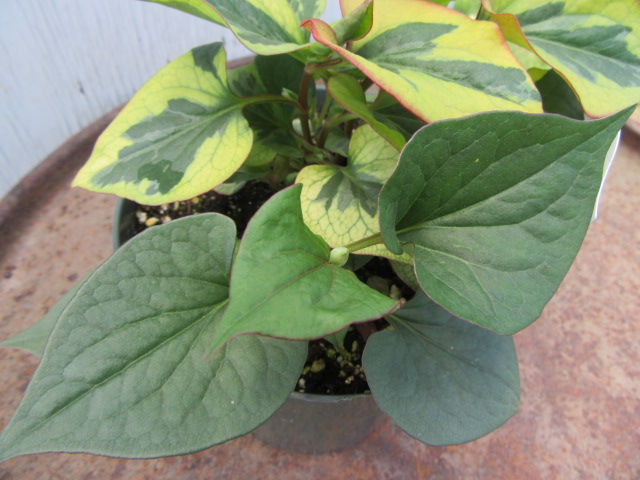
End of October Update: After the “F”

Northeast corner bed on 10-28-18.

Hello folks! I hope you are all doing well. Our first frost came and went and as usual, it warmed up again. I think that’s what I don’t like most about the “F”. The plants get ZAPPED then it warms up again! After moving the potted plants in I can move them back out after a few days. Not all the perennials were affected, though, and some are quite enjoying the cooler temperatures. I took a lot of photos today and still wound up with 80 after editing. I usually take two of each in case one is blurry or comes out whacky. Sooo… Do I put them all on one post or spread them out? I think all at once this time. 🙂 Never know what tomorrow will bring and it may take a week or more if I spread them all out… Been there done that…

The top photo is of the northeast corner bed. The Salvia microphylla ‘Hot Lips’ is still looking very good (even without flowers). Pretty much everything else has given up. There are still a few green leaves on the Coloclinum coelestinum.


The Gomphrena globosa ‘Gnome White’ did awesomely well all summer but one ZAP did them in…


The poor Heliotropium arborescens ‘Marine’ was looking so GREAT the day before the “F”. Darn it! The Heliotrope is always one of my favorite annuals and this one did better than others I have planted in the past. Hopefully, I can find it again next spring.


And what do we have here under everything? Oh yeah! I almost forgot about the Blue Star Creeper (Isotoma fluviatilis). When I planted it in this bed I didn’t expect for it to get covered up. Then the Conoclinum coelestinum came up late and it really did get covered up then. Every time I checked on it it was still alive, though. It was a tiny cluster of plants to start with and now there is only one stem. Maybe it will survive the winter and come back up in the spring. We shall see. I will have to put a stake by it so I will know where it is because it will either die or go likely go dormant…

On the other side of the steps…


The Monarda didyma ‘Cherry Pops’ is still alive and well. This is the only Monarda I have grown that hasn’t gotten mildew and died. I know there are mildew resistant cultivars but I have not seen any locally. The Monarda fistulosa growing in the pastures are all gone now, but they aren’t bothered with mildew either.


The Conoclinum coelestinum (Hardy Ageratum, etc.) in this bed are still green and lively although their flowers don’t look so hot. I hope they reseed for next year and come up a little earlier this time… Maybe I should save some seed because I would hate to completely lose these plants. Dad got his start from Aunt Inez (his mother’s sister) many, many years ago. Last winter was very hard on them…


The Hosta ‘Empress Wu’ had a very good summer and grew quite a bit. It is the worlds largest Hosta and will grow larger next year. Supposedly it will mature after five years…


The Astilbe x arendsii ‘Fanal’ did well this summer and still looks good after getting ZAPPED. I forgot to take a photo of the other one…


The Lysimachia nummularia ‘Goldilocks’ (Creeping Jenny) had a great summer and spread even more. It spread clear up to the front of the steps! It seems to do much better in more sun even though I keep telling it to spread more in the shade. It just won’t listen!


Well, now that’s just pitiful! The Colocasia esculenta got ZAPPED and now it is growing new leaves. The smaller ones I planted on the north side of the chicken house and under a few trees (I have so many!) didn’t even get ZAPPED and are still alive and well. The Xanthosoma sagittifolium is doing well in the basement. It still thinks I lost my mind for putting it in a pot and putting it in the dark.


I know I need to just dig them up and store them for winter but I haven’t gotten around to it yet… Next thing you know, this one will be blooming like the other one… Well, I think that time has passed. This isn’t Mississippi.

Now for the south bed…


The Phlomis ‘Edward Bowles’ is as happy as ever. It doesn’t mind the heat of the summer or the cooler temperatures. The big flower pot behind it is on standby for later. I turn the pot over and stuff the whole plant inside the pot during the winter. Trust me, when the temperature drops, it will fit one way or another. This frost wasn’t a freeze, but when the time comes and we are going to have a hard one… It will fit. Then when we have warm days, I uncover it to get some sun. Eventually, however, it will turn brown and go dormant. Seems like a lot of trouble for a plant, I know, but I think its worth it. Truthfully, it may survive without the trouble but I am not ready to take the risk yet. It isn’t supposed to be hardy here but it has survived five winters so far… Thanks to the pot. 🙂 It will fit.


The Baptisia ‘Lunar Eclipse’ which turned out not to be a ‘Lunar Eclipse’ thinks its time to grow new leaves. I sheared it a while back to give the Phlomis more sun because it was getting carried away. Maybe this coming spring it will decide to be a ‘Lunar Eclipse’ after all…


The south bed has certainly seen better days. The Celosia argentea var. spicata ‘Cramer’s Amazon’ had another successful summer. Now it can drop THOUSANDS of seeds for next spring… If you would like some seed, just ask… I have to send some to Raphael Goverts, senior content editor at Kew, so you just as well have some, too. He asked for some seed and I am happy to send them. Once they grow, I hope it encourages them to re-evaluate and change the name back to Celosia spicata instead of saying it is a Celosia argentea… At least include the infraspecific name Celosia argentea var. spicata as a legitimate name. Whether that happens or not, I am calling it that anyway. 🙂 Nuff said… (for now). Well, it is totally impossible for Celosia spicata to be a synonym of Deeringia spicata!


I was very surprised to see Ms. Argiope still alive and kicking… She seems to have lost some weight though.


The Salvia nemorosa ‘New Dimensions Blue’ is still flowering as are the…


Salvia pratensis ‘Midnight Model’ and…


Salvia farinacea Cathedral ‘Blue Bicolor’.


The Salvia x sylvestris ‘Mainacht’ is still OK but it flowered poorly all summer. It says it was on vacation after five years… It may be secretly on strike because it wants a sunnier location. I moved the Elephant Garlic that was growing behind it because I thought it might spread a little better then it barely flowered. What’s a guy to do? It follows my 15-second rule about complaining, which I am grateful for. Complain for only 15 seconds about a subject and you will always know what I think… It complained about the Butterfly Bush in 2014 and I still know it isn’t happy about it… When I removed the Elephant Garlic, all it said was, “Ummm…”…


All the Talinum paniculatum (Jewels of Opar) are still alive. I am not going to mention their seeds… I will just say they are well prepared for future generations.


The southeast corner bed can speak for itself… There are plenty of Brocade Marigld seeds here and in the corner by the back porch. If you would like some seed, just ask and I will happily send some to you.


The Nandina domestica (Heavenly Bamboo) I brought from Mississippi is still looking great. I know I have mentioned it is my favorite shrub several times, but it is my favorite shrub. They are evergreen in the south, but here, if the winter is very cold it will go dormant.


The three Angelonia angustifolia ‘Perfectly Pink’ are not dead yet but the “F” knocked their flowers off. Angelonia are perennial but maybe not here. We shall see when spring arrives… You just never know what kind of winter to expect.


The Echinacea purpurea (Purple Coneflower) I out in the southeast bed is looking good still.


All the Elephant Garlic started coming up a while back and will remain green and growing most of the winter. It just depends on the temperature. Last January was definitely a test for their hardiness.


The Stachys byzantina (Lamb’s Ears) is enjoying the cooler weather.


The two maple trees on the south side are looking really nice now but the two in the front yard haven’t even changed color yet.


The roses between the basement steps and back porch are flowering pretty good now. They can flower all they want without the Japanese Beetles eating them now…


You don’t have to say much about Roses. They speak well on their own…


All of the Iris are getting on with their fall growth and the Iris x violipurpurea ‘Black Gamecock’ is really spreading! There have never been this many!


Dad’s red Cannas… That’s all I can say…


The Nepeta x faassenii ‘Walker’s Low’ (Catmint) is very hardy and will remain green pretty much all winter. I have been really surprised how well it has done in this old fill dirt along the wall. This will be its second winter.

Now, for the “other yard”.

The big old maple tree in the “other yard” (where my grandparents lived) is all glowing in its autumn colors.


The Physostegia virginiana (Obedient Plant) may appear to have been set back by the “F”, but it is just pretending. It has a hidden agenda…


Ummm…


Those dead flowers are LOADED… That is just a small sample.


The ZAP didn’t affect the Sempervivum x ‘Killer’ one bit. It wants to flower even more! This is its first year flowering and it doesn’t want to stop.


The Cylindropuntia imbricata (Tree Cholla)… Like I mentioned before, it looks different every time I take photos. It grew this long branch this summer and now looks lop-sided… GEEZ! With spines like this who would want to argue with it?


The Sedum spurium ‘John Creech’ loses most of its leaves during the winter but it will be fine…


The Sedum kamtschaticum ‘Variegata’ loses more than its leaves but it will be fine, too. If it can survive last winter, it can survive this winter. It has survived since 2012…


This Sedum spurium, maybe ‘Dragon’s Blood’ keeps its leaves most of the winter. It was unnamed when I brought it home but I am 99.9% sure it is a Sedum spurium but only 40% sure it is ‘Dragon’s Blood’.


The Sedum kamtschaticum has been weird most of the summer. I kept the Celosia from growing in this bed this summer so it could have more sun but it decided to be silly. It sprawled out and developed a hole in the center of the clump. It never did that before. I don’t know…


This is the rest of the Echinacea purpurea (Purple Cone Flower) I dug up from the, um… In front of the sign up the street. They did very well and I am hoping to spread them out in this bed this coming spring.


This is the northeast corner bed next to the old foundation in “the other yard”. The rhubarb completely went dormant after the “F” but the horseradish is looking great! I didn’t deadhead the Rudbeckia hirta (the wildflower) or Rudbeckia fulgida ‘Goldsturm’. The Rudbeckia hirta will spread by seed while R. fulgida ‘Goldsturm’ seems only to spread by rhizomes. They need to be spread out more this coming spring…


There are a lot of Rudbeckia fulgida ‘Goldsturm’ in there. Want some? They don’t spread that much in a shadier location, but give them full sun… Yeah, they like it a lot! They are drought tolerant but do like a little extra water when it stays hot and dry for several weeks in the summer.


The rhubarb and horseradish need to go to the garden istead of being in the flower bed.

Now for the shade beds…


The Hosta ‘Potomac Pride’ looks a little beaten up but it is still green. Most Hostas get a little weird when the temps start cooling down even before an “F”. Once they have performed well all summer they are ready for a winter’s hibernation…


Umm… That is, or was, the big and beautiful Hosta sieboldiana ‘Elegans’.


Believe it or not, this is Hosta ‘Sum and Substance’…


Hosta ‘Guacamole’ #1 still looks pretty good…


Hosta ‘Krossa Regal’ (right) almost looks variegated now. H. ‘Dancing Queen’ doesn’t look like a gold Hosta when the temps get cooler because its leaves turn green. I forgot to take a good photo of the new Hosta ‘Blue Angel’ (in the background). I am hoping it survives the winter and proves to me it really is a Hosta ‘Blue Angel’. As I mentioned in an earlier post, Hosta ‘Blue Angel’ should be a large plant but this clump looks more like some miniature cultivar. If it doesn’t grow like it should next spring, then it definitely is NOT a ‘Blue Angel’. It is possible Mast’s supplier used a growth retardant but I can’t imagine why they would do that with a Hosta unless they didn’t ant to put them in a larger pot…


Although this photo is a little blurry, the Heuchera ‘Palace Purple’ made a great comeback this past summer. The mole runs in the other bed may have been one of its biggest problems.


The Ajuga reptans ‘Chocolate Chip’ also made a great comeback after many died last winter.


Heuchera ‘Obsidian’ is growing new leaves like it was spring. It didn’t do that well this summer. I really need to mulch the shade beds better to keep the soil damper and cooler. The Japanese Beetle invasion didn’t help either when they stripped the leaves off the Chinese Elm trees…


Hosta ‘Forbidden Fruit’ definitely wants to hibernate for the winter.


Heuchera ‘Venus’ is also enjoying the cooler temperatures. It did fairly well all summer but not as well as 2017.

Heuchera ‘Southern Comfort’ got off to a bad start and ultimately didn’t make it.


Hosta ‘Abiqua Drinking Gourd’ wants to hibernate, too.


Hosta ‘Whirlwind’ says a blanket would be nice…


Hosta ‘Guacamole’ #2 is also still looking pretty good. I still think I will put this one back with #1 in the spring. I don’t like the same plants in different locations…


The Hosta ‘Red October’ never quite recovered from its issue with the mole run in the other bed this spring. I put them in two different locations but will put them back together this spring.


Heuchera ‘Lime Ricky’ was new this spring and it has done well all summer.


Hosta ‘Blue Mouse Ears’ was one one of the top performers this summer despite its small size.


The Equisetum hyemale (Horsetail) went nuts as usual… Many people comment about how neat it looks but none have committed to taking any home with them/ 🙂 This has proven to be a perfect location for the Equisetum, but it thinks any location is perfect.


The Achillea millefolium has done fair in front of the chicken house but it trying to sneak around the corner. It says it doesn’t get enough sun but I told it that was a good thing. Somehow it doesn’t believe me… I think its funny how the Achillea will move all by itself… The clump I moved in front of the barn is doing well but I think the cows reach through the fence and nibble on it… Of course, there are still two clumps in the north bed… One is completely in the sun now and I have no idea how it got there.

Now, it’s time to get the cows from the back pasture…


It is strange how all the Mulberry trees on the farm have practically lost all their leaves except for the one that is leaning. It leaning over is strange in itself. It just started doing that last spring…


It was 6:30 PM when I took this shot. The air is getting cooler and there was hardly any breeze at all. No birds chirping, no cicada making their evening racket, no lightning bugs (fireflies)… All the bugs and butterflies have found shelter for the evening.


The north hayfield is full of Redtop that grows after the hay is baled.


Not sure why I took this photo of an old hedge post (Osage Orange) covered with dead Virginia Creeper.


I finally finished mowing the back pasture so the cows can go to the back and graze. A friend and I had to work on the mower before I could use it. The old mower had a wheel but no tire and dad may have bought it that way. I had been using it like that but not allowing the wheel to touch the ground. Then, this past summer when I was mowing brush, the pin came off of the gizmo the wheel is on. I bought a new one but the pipe the gizmo goes through was too small. So, we got another pipe and my friend cut the old one off and welded the new one on. Good to have a friend with a cutting torch and welder. Good to have help when you need it, too.


The cows really enjoy being in the back pasture.


When I go get them to bring them back to the front pasture all I usually have to go is say, “Come on. Let’s go.” Well, usually that works. If it doesn’t I get a stick and smack it on a tree limb or something. Then they say, “Oh, now the human has a stick.”


They are growing their winter fur now…

One of the best things about fall is…


The persimmons…


I always have to eat as many as I can find on the ground. They are the ultimate fall fruit. 🙂 Just don’t bite into one that isn’t ripe. :):)

My sister asked before what was inside the seed. She said that someone posted on Facebook that there was a spoon inside the seed. People used many methods in the past to predict winter weather but most are just myth. I have checked persimmon seeds in the past and they all have an image of a spoon inside no matter what the weather is like during the winter. It’s like looking at the Wooly Bear Wooly Worm. As folklore says, it depends on how many black bands are on the wooly worm. Research has shown that the color of the bands reflects the past summers weather and not the upcoming winter.


On the way back to the front pasture, July had to lag behind as always. She enjoys a good scratch behind the ears. I kept telling her to come on because the other cows were way ahead of her. She looked at me and said, “You don’t have a stick…” So, I left her behind and caught up with the other cows. Eventually, she started coming and a few of the other cows started mooing at her… Cows can be quite entertaining sometimes.

Well, that is it for this post. I have been working on the pages to the right, getting them updated, adding links for further reading, etc. I still have a lot of pages to add but that will be a winter project. I am not sure what all I will blog about over the winter but I am sure I will think of something. Have any suggestions? I promise I will start reading more of your posts over the winter, too. I changed the email address to where your posts will be sent so I think that will help.

Until next time, be safe, stay positive, stay warm (or cool depending on where you are). As always, my friends, GET DIRTY!
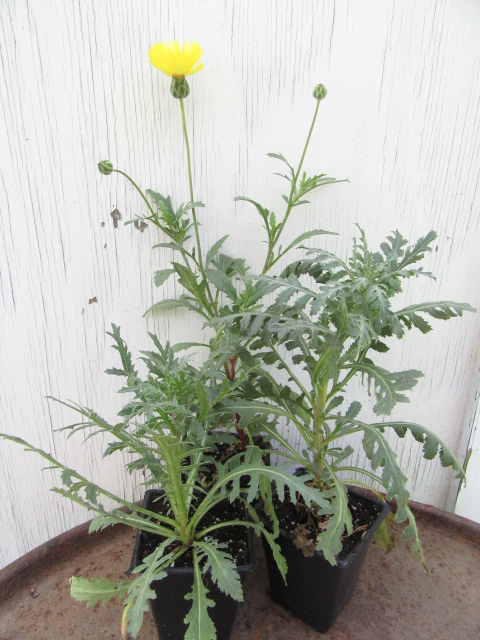
First “F” of 2018

Hello everyone! I hope this post finds you all well. I am a little tardy with this post but that isn’t unusual. The forecast said we would be having our first frost on Monday evening (the 15th) so I reluctantly prepared for the event. I moved the potted plants inside on the 10th but they are still not all in their proper places for the winter.
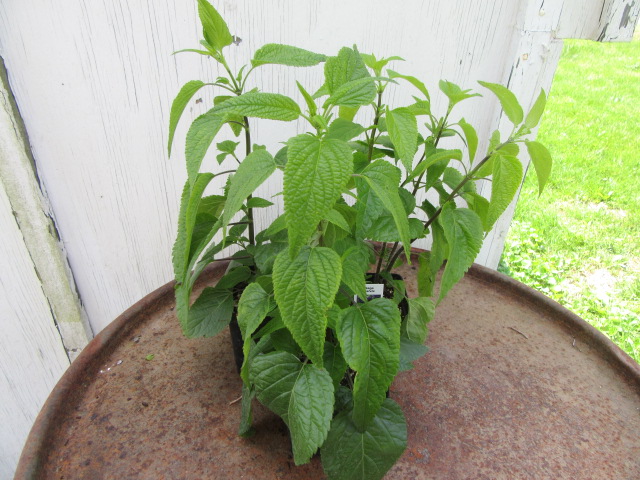
I discovered a few problems. #1, I have more plants than before, and #2, a lot of them are in bigger pots so they now take up more room.

Several of the plants on the table will overwinter in the basement. The Alocasia, for the most part, are already there. The Begonias will rest but not lose all their leaves (well, they didn’t last year anyway). The bigger Amorphophallus in the green pot in the center of the table have already done dormant but the Oxalis have remained wide awake. Last year they went dormant before I bought the plants inside. Instead of one pot with Oxalis, I have four. It is so funny how the leaves close up at night. So, I suppose I will put them on the table in the front bedroom until they go dormant. The succulents should go into the back bedroom window so they can have sun from a south facing window.


Ummm… The cactus that were on the back porch are temporarily in front of the sliding door. Last winter, and the winter before, I kept most of the cactus in the kitchen windowsill. BUT… They are all in larger pots than before. PLUS…


The new cactus are in the kitchen windowsill now. The pot on the left has the Kalanchoe delagoensis offsets in it. I am hoping they will grow even though I know what will happen when they do. 🙂 My plan is to make a shelf and put another row of cactus in this window. I may be able to make two more rows. The glass on the right… The last time my sister was here we went to Wagler’s Greenhouse because she wanted ANOTHER Popcorn Plant. Hers keeps dying but she keeps buying more. Wagler’s didn’t have any small plants but they had a HUGE hanging basket. So, Mrs. Wagler took several cuttings and told my sister she never had any luck growing them from cuttings. Then, she gave me the cuttings and told my sister, “Maybe he can get them to grow.” I put a few in a pot and the rest in water. I kept the pot damp but they died after a couple of weeks. The cuttings in the water are still not dead but they have not rooted. WAIT A MINUTE!!! I mean Candy Corn plant not POPCORN!  It is also called Firecracker Vine. Well, I don’t think it will work. It needs to be done in the spring and not in the fall… There is a moral to the story of my sister continuing to buy plants that she fails with, but I am not going to say anything. It would be like giving advice I am not using. 🙂 I usually try three times and that’s it… The keyword here is “usually”.

My problem is not with plants dying, it’s the ones that barely hang on and never die… I try this and that until they perk up and take off or they die.


Right now, the Tradescantia sillamontana and Callisia fragrans are in the north bedroom in a west facing window. I am trying to give most of the Callisia away because I certainly only need one. The Tradescantia sillamontana will go to the basement (as well as the other Tradescantia) so they can go dormant because they get all weird growing inside over the winter. Best to let them go dormant and regrow in the spring.  I have an experiment going on with two of the smallest Callisia offsets… I didn’t put them in pots several months ago but they are still alive. Honestly, I threw them in the backyard but when I was mowing I saw them and put them on the back porch. I guess since they are so persistent I will have to put them in pots after all. GEEZ!

Since the forecast said “you know what” was inevitable, I had to make a decision about the Xanthosoma. I messaged a new Facebook friend who is a member of the International Aroid Society Group (among other groups) to quiz him a little more about what he suggested I do about it during the winter. He is actually the one who told me what it was in the first place. The question is (or was), should I let it get ZAPPED and then dig the rhizome like I do with the Colocasia or should I put it in a pot then take it to the basement. Since I am a Xanthosoma newbie… After a very lengthy discussion with him about the Xanthosoma and many other plant related subjects, I was still somewhat confused. He didn’t recommend it get zapped, though.

Well, on Sunday afternoon I had to dig the three Alocasia I had been experimenting with over the summer. I wanted to see if they would grow larger in the ground than in a pot. After being in the ground all summer I couldn’t tell that it made that much difference if any at all. I had plants that were the same size that I left in pots and they were all the same size by the end of the summer…

Anyway… After I potted the Alocasia I went for the Xanthosoma… I am so glad the Alocasia I have now are hardier than some I used to have. They can take cooler temps pretty well as long as they don’t get zapped. Some of the species I had in Mississippi would go dormant even if they thought it was going to get cold… I had to move them inside before 45° F. The three Alocasia in the ground took temps below 40.


As with Alocasia and Colocasia, I am always surprised by their lack of roots. Strange how such HUGE plants can have so very few. After I dug it up I could see it had three offsets that hadn’t made it to the surface yet. The offsets are definitely MUCH larger than what Colocasia or Alocasia produce. I had been confused about the difference between bulbs, rhizomes, tubers, and corms but I think I have it figured out now. Colocasia, Alocasia, and Xanthosoma grow from rhizomes (even though they don’t look the same). The Amorphophallus grow from corms.


Now the Xanthosoma is in a pot for the winter. The plant is 60″ tall and spreads out 80″! The Alocasia in the basement grow upwards so they don’t take up a lot of space. This plant takes up a lot of room!

One thing “the guy” said was that he was mistaken about my Xanthosoma’s identity… He initially said it was a Xanthosoma sagittifolium but he has since changed his mind. He said it may be either a Xanthosoma robustum or X. atrovirens because it hadn’t produced as many offsets as X. sagittifolium normally does, its glossy leaves, variegation, and how it has grown so wide. He said the random variegation was a characteristic of X. atrovirens but they don’t get such wide leaves and aren’t so broadly spreading. He also said they don’t have such dark green (almost teal) leaves and not so glossy. So, he thinks my plant is X. robustum. I checked with Plants of the World Online and it says Xanthosoma atrovirens is now a synonym of X. sagittifoliumX. robustum is an accepted name. SO, now I guess I have to go back and change everywhere I have the incorrect species name. That includes its page to the right, several posts, and all the photos.

I did take photos of the beds before the “F”. Even so, not all the perennials were affected. Luckily, the Phlomis is still looking as AWESOME as always. That’s good because I forgot to cover it with the big flower pot…

Well, I guess that’s it for this post because I am running out of words for now. Until next time, stay well, positive, and GET DIRTY!

What Just Came In The Mail?

Hello folks! I hope this post finds you all doing well. We have had some cooler temperatures in my neck of the woods the past few days. While the cooler temps are a nice break from the heat, it means “you know what” is on the way. I know many people like fall, and for some, it is their favorite time of the year. For me, it means I will soon have to bring plants inside then the big ZAP will come. It actually got down to 44° Wednesday night (Thursday AM)! It also said it would be warmer the following days and evenings. While many plants are still OK, it will trigger dormacy in others. My bigger Amorphophallus already went dormant last week but the smaller plants are still alive and well. That’s weird. Why did the older plants go dormant and the smaller ones didn’t? Just another learning experience, huh?

A few days ago I went to get the mail and was surprised to find this little box. Hmmm… What could it be?


When I came back inside I opened it to have a look. Hmmm… What is that?


Ummm… Someone sent me a wad of toilet paper… It feels like something is inside.


I unwrapped it and found a surprise!


Looks like a ball of cotton with roots!


OK… Just kidding around a little. I had been browsing around a little on Ebay looking at the cactus and succulents and found this gem. I know, I know that isn’t a good thing sometimes. There are a lot of nice plants on Ebay and so many you don’t find locally.


I ran across a listing for this Mammillaria plumosa also known as Feather Cactus. It was definitely something I have not seen at Wal-Mart, Lowe’s, or the local greenhouses. It reminds me of a very hairy Thimble Cactus (Mammillaria vetula subsp. gracilis).


Well, the seller did say he was sending a pot. This is just a teaser pot that attaches to other pots for form a stack of pots he has available. I am sure many people go ahead and buy more pots, but I think I will pass. I suppose it is a good idea and it would save space.


There are several plants in this cluster but it is impossible to tell how many with all the wool. VERY NEAT for sure. Who could pass up such an AWESOME find? A single specimen could take a couple of years to offset.

The name Feather Cactus comes from 40 or so interlacing radial spines that are kind of arranges like fathers. This furnishes protection against the hot desert sun. It has no central spines.


I can only imagine finding a plant like this in the desert in Mexico. It would look like a pile of snow, Maybe this species lives where it cooler and grew its own blanket.

Its status in its natural habit is listed as “near threatened” by the IUCN Red List. Llifle said it grows on limestone cliffs in sparse xerophytic shrubland and there is a continuing decline due to ongoing plant collecting. Apparently, the species is illegally collected for the ornamental trade. Locals collect the plant from the wild and sell them at local markets at Christmas time as they are used to decorate nativity scenes.

Well, it is getting late so I better warp up this post. Until next time, stay well, be safe. eat your vegetables, drink plenty of fluids and give your “other half” a big hug if you have one… Don’t forget to get dirty if you have a chance.

What Can I say? Lowe’s Had A Clearance

New cactus on September 21.

Hello folks! I hope this post finds you all well. A few days ago I went to Lowe’s to see if they still had the Mammillaria vetula subsp. gracilis I had left behind before. Unfortunately, or maybe fortunately, it was no longer there BUT there were other cactus and succulents on clearance. 🙂 They were all labeled but the names of all but one were incorrect. Well, not actually incorrect I suppose, they are now synonyms of another species. I wonder how long it will take the industry to catch up with the name changes? Since all these cactus are from The Cactus Collection from Altman Plants, maybe when they run out of labels they will change the names. Kelly Griffin, one of the foremost Aloe breeders, works for Altman. Hopefully, he has some influence.

I have learned a lot about plants over the years, and the world of cactus has taught me a lot. What we think of as thorns on a cactus are called spines. Spines are actually leaves. The body of a cactus is a stem. Stems can be smooth or covered with “protuberances” which are usually called tubercles. The tubercles of Mammillaria species are “nipple-like” while other species are ribbed or fluted in shape. The size of the tubercles sometimes depends on how much water the cactus is storing. Up to 90% of the mass of a cactus may be water.

I could go on, but maybe I should make a post about cactus anatomy. 🙂

So, let me introduce you to my new companions in alphabetical order…


The Echinopsis huascha (Desert’s Blooming Jewel, Torch Cactus) was labeled Trichocereus grandiflorus Hybrid. When I checked with Plants of the World Online by Kew, it said the name had changed. I also checked with Llifle (Encyclopedia of Living Forms) and it listed several varieties and another species in the Echinopsis huascha Group. I found the Echinopsis huascha var. grandiflora more closely matched my new plant because of the length of the spines. My plant’s spines are fairly short where the others are longer. The problem is, Britton & Rose, who gave the variety that name, apparently didn’t validly publish their description… Hmmm… I read a very long list of comments on a forum about this plant. Even though I want to call it Echinopsis huascha var. grandiflora, I guess I better stick with Echinopsis huascha for now… You can call a plant any name you choose as long as the scientific name is validly published. There are “rules” that apply when someone names a plant…


As I was walking around the plant department I ran across this 8″ pot on clearance for $5.00.  As you can see, they are good sized plants. Unfortunately, the one in the center had died and was laying on the shelf… Funny I saw the pot had a label but didn’t read it until I was home and started writing their journal pages… The label on the pot says Trichocereus grandiflorus Hybrid… If I had looked when I was at Lowe’s I would have put the smaller pot back. 🙂

Then, of course, there were several Mammillaria I’ve never heard of before. Many Mammillaria species have a lot of similar characteristics but certain things separate them from the rest. Mammillaria is a VERY LARGE genus and most are quite easy to grow. Some have, and still do have, multiple scientific names because different people have discovered them in various locations throughout Mexico and some are, umm, variable. Reclassifying is a work in progress and now we are down to 162 accepted Mammillaria species (according to Plants of the World Online by Kew). The Plant List named 185 species in 2013 (plus 93 infraspecific names), a total of 519 synonyms, and only 448 unresolved species… I currently have 10 species which means I have 175 to go. 🙂 Well, I could have mentioned how many species there are in the entire Cactaceae family…


This lonesome fellow is labeled Mammillaria nejapensis. I thought, “GEEZ! What kind of a name is that?” I checked out the name on Plants of the World Online and now its correct and accepted name is Mammillaria karwinskiana (mam-mil-AR-ee-uh kar-winz-kee-AH-na). Kind of reminds me of when you have to type in the letters to prove you aren’t a robot. Sometimes I can’t make them out and ask for another set which is sometimes worse than the first set. Maybe that means I am a robot… Well, this is undoubtedly one of those cacti I will have to call by its common name when in a hurry which is Silver Arrows. Plants of the World Online lists 45 synonyms of this cactus! You can click on the plant’s name to find out more details… Oh, one more thing… This species is one of only a few that are also known as “Owl Eye Cactus” which are known for their dichotomous branching. That means the stem will divide.


This one was in a predicament when I found it… It was laying on the shelf out of its pot with very little soil on its roots (or in the pot). I thought it looked pretty neat, kind of “club-shaped”. I picked it up and it automatically knew it was going to a new home. What could I do? Although the label says it is a Mammillaria celsiana, Plants of the World Online and Llifle say that name is now a synonym of Mammillaria muehlenpfordtii (Golden Pincushion). Not even Dave’s Garden has a pronunciation for that name! This fellow is very spiny but friendly. This one also divides dichotomously.


The forth cactus is labeled correctly and the easiest to pronounce. It is Mammillaria mystax (mam-mil-AR-ee-uh  MY-staks). Like many species, information says it is a solitary cactus. I could never figure out why it says they are solitary when they usually have plenty of company. If not accompanied by many other plants of other genera and species, it makes its own company. Solitary, in this case, means they are at first a single stem. Here again, this one divides dichotomously. That is weird because when I first started this post and was researching Mammillaria karwinskiana, I thought it was special because information says very few species do this. Now I see all three new Mammillaria species in my collection do the same thing. Hmmm… Information online lists a few species but these are not on the list which is because they are now synonyms of other species. 🙂 So, does that mean they are all Owl’s Eye Cactus? Apparently, Owl’s Eye is in reference to the way they look when they start to divide. Kind of like the way a persons head looks when they have two crowns instead of one. (I have an old friend who has two crowns…).

What makes Mammillaria mystax so special? Well, according to Llifle, this fellow grows long entangled spines around its crown. It says it does this “in the wild” but doesn’t say whether it does this in captivity (cultivation). Sometimes plant language makes one scratch their head. When we write about characteristics we learn a few things we can pass along but have to sometimes translate. Makes us sound brilliant when actually we also just learning. There is a lot to learn and I always learn something with each new plant I bring home.


This is a few Kalanchoe delagoensis (Chandelier Plant, Mother of Thousands) plantlets. Lowe’s had several very nice succulent combination planters but they were pretty expensive. One of the planters had a really nice Kalanchoe delagoensis in the center. The planter was $22.00 and I certainly didn’t want to pay that much when all I wanted was the Kalanchoe. It had quite a few plantlets that somehow made their way into my pocket. They are pretty small and didn’t have aerial roots yet so I am not sure if they will survive or not. Ummm… Was it stealing when I am actually rescuing the plantlets?

Well, I better close for now. It took a while to finish this post because there seems to be a lot going on now. I have several posts in line so I better get caught up.

So, Until next time… Stay well, be safe, enjoy the cooler temps because “you know what” is right around the corner. As always, GET DIRTY!

Whoops! NOT Leucocasia gigantea ‘Thailand Giant’

I haven’t really spoken to her that much because I am a little shy toward plants that confuse me. Something seemed very, very mysterious about her right from the beginning. I could sense she had a dirty little secret. Just her flirtatious glances and smiles, pointing to the upper part of her leaf and the apex… Oh, I look, because she is hard to ignore… She is trying to tell me something but she wants me to find out on my own. When she starts to grow a new leaf, she will say, “I wonder what this one will look like.” I just give her a speechless look and walk away. Even when I mow by her, she is always giving that mysterious look and sultry smile. When I walk out the door or walk by her, she always knows I will look at her. No matter how hard I try to resist, I can’t help myself. A while back, temptation really got the best of me. I ran my hand along one of her leaves to feel the seam along the edge because I noticed something else different about her. Hmmm…

Hello folks! I hope this post finds all of you doing very well. Remember in the spring when I posted about buying the Colocasia gigantea ‘Thailand Giant’ bulb from a seller on Ebay? I was somewhat hesitant but I bought one anyway. I admit, I kind of manipulated the guy into sending me the largest bulb (tuber) be had. I told him I was a blogger, and sent a link, and said I would mention him whether this bulb turned out to be an actual Colocasia gigantea ‘Thailand Giant’ or not. I questioned him because he was selling this cultivar as a bulb and not as a plant like everyone else. The other thing he said that got me to wondering was that he said he was getting them from a ‘supplier” and he said they were from the Wellspring strain… Ummm… I knew he was taking about Wellspring Gardens from Florida because I had bought A LOT of plants from him in 2009 and 2012. In fact, my first Colocasia gigantea and Colocasia gigantea ‘Thailand Giant came from him. Not to mention the ancestors of my Alocasia. This guy sells inexpensive starter plant from tissue culture, not bulbs… Anyway, the seller on Ebay said he sent the largest bulb and even lost money because it cost more to ship. Hmmmm….

Well, the plant came up about the same time the Colocasia esculenta did. As they all grew, I figured it would at least keep up with the Colocasia esculenta. It was from a bulb, after all, so I actually thought it would outgrow its neighbor. But, that didn’t happen. Colocasia, I mean Leucocasia gigantea ‘Thailand Giant’ is the biggest… Ummm… Well, it was the biggest Colocasia, but since the name changed back to Leucocasia, I can’t say that now. Anyway, whatever you call it, it is supposed to be big.

Then its first variegated leaf emerged. That was very odd since I had never seen any variegated Leucocasia gigantea with variegated leaves. I searched the images on the internet and there was none. There are variegated cultivars of Colocasia, but not of the C. gigantea… When this happened, I tried post the photo to the Aroid group on Facebook. Well, the post wouldn’t post… After the second variegated leaf emerged I needed to try it again. Not only that, but the top part of the leaves looked different than the plant from last year. 

I had taken another photo of its leaves a few days ago, so Sunday afternoon I tried posting a couple more photos to the group. This time it worked… The first comment said, “It is a Xanthosoma.” The second said…  “Agree. X. sagittifolium. Not Leucocasia or Colocasia or Thai Giant. Cool that it has some variegation, though. I hope it does not outgrow it. Perhaps it will show up with more variegation in a stable form in some of the hundreds of pups with which it will fill your garden.” More would be great, but so far, no offsets…

Knowing this plant’s actual identity is great and now we can stop looking at each other weird. The correct common name is Arrowleaf Elephant Ear. It is also great to add another plant to my list. Oh, crap! Now I have to completely change the Leucocasia gigantea ‘Thailand Giant’ page and add one for Xanthosoma sagittifolium (zan-tho-SO-muh  sag-it-ee-FOH-lee-um).

Until next time, stay well and be positive! As always, GET DIRTY!


I Just Went To Take Plants…

Hello folks! I hope this finds you all doing well. Yesterday, Friday the 14th, I went to Wagler’s Greenhouse to take a few plants. I took all but three of the Billbergia nutans (Queen’s Tears) and two of the four Alocasia ‘Portora’ I had separated and divided. Last time I went there I resisted temptation and didn’t bring any plants home. That wasn’t the case this time… I brought home eight plants. Well, I couldn’t help myself and I wasn’t in the resisting mood. After all, when I take plants and give them to her she gives me plants. This time she also slipped me a $20. 🙂 I still have two Alocasia ‘Portora’ to take because I couldn’t get them in the car. Mrs. Wagler was excited about the Queen’s Tears, especially when I showed her photos of their flowers. A few other people have brought her several other Bromeliads so it will be interesting to see how they work out. They do look AWESOME! Fortunately, she only has one of each.

All the plants I brought home were unnamed, but I already knew what six of them were. Two I didn’t know so I put their photos on the Facebook group called Succulent Infatuation. Within minutes, a member sent the ID of one of them. The other, however, remains unnamed for the time being. It is MUCH easier than looking at hundreds of photos. 🙂

In alphabetical order…

This cactus is an Acanthocereus tetragonus also known as the Fairytale Cactus. I think I had one of these several years ago that didn’t make it. I didn’t have an ID for it, but a member of Succulent Infatuation gave me the name not long after I posted the photo. I wasn’t going to bring one of these home, but this little guy kept giving me a sad look. I told him to stop looking at me like that and Mrs. Wagler said he was saying, “Take me home with you.” So, I gave in…


I really like Begonias and I spotted this miniature beauty that I had to bring home. It is a VERY small plant so I figured I could easily slip it in somewhere.


Its largest leaf is only 3″ long by 2″ wide. I like the way its leave spiral…


This one is a Crassula tetragona, also known as Miniature Pine Tree. I recognized this plant because I had taken a cutting from one at Lowe’s in 2012. Well, it was a very small cutting and it didn’t take root. This plant is currently 9 1/2″ tall. There were quite a few pots in the greenhouse with Kalanchoe diagremontiana growing in them as well and there is one in this pot. She has the same problem with them falling off in all the nearby pots like I do. She has the biggest plant I have ever seen anywhere!


She had several Peperomia obtusifolia so I brought one of them home, too. I had one of these before but gave it up in 2014. They make nice companions but have strange flowers…


I finally picked up another Schlumbergera truncata. Normal people know these as Christmas Cactus, Holiday Cactus, etc. She had pink, scarlet. and peach flowering choices so I decided on the peach. She said the scarlet was more of a bright reddish pink and the peach was more of an orangy color. I have enough pink flowering plants so the choice was clear. I am not a “pink” person except for maybe a couple of things in particular.  We are not going to discuss those on a plant and gardening blog, though. I haven’t had a Schlumbergera as a companion since I gave them up when I moved back here in February 2013, so I was happy to bring this peachy girl home…


She had several different Wandering Jew and I had been thinking about trying a few but never brought any home before. So, I decided I would bring this Tradescantia fluminensis variegata home with me. It could be the cultivar known as “Quicksilver’ but who knows… No telling how many years this plant been passed around or who she even got her start from and where they got theirs.


From photos online, ‘Quicksilver’ seems a little paler. The species Tradescantia fluminensis has green leaves but this is the variegated form. There are other cultivars available with different variegation, some half-and-half and one with a pinkish cast. This Tradescantia species is also known as the white-flowered Wandering Jew. It will be interesting to have a white-flowered member of the family although she said hers has never flowered…


At one time or another, this species has been a separate species. One of several names was Tradescantia albiflora


I cut one of the stems in half and the other twice and stuck the cuttings evenly around the pot.


While I was at it, I decided to pick up a Tradescantia zebrina… This species is quite common but I have never had one so what could I do?


The undersides of the leaves are solid purple…


Who could resist a smile like that? 🙂


I still haven’t figured out what this little fellow is and I don’t even want to guess. Hopefully, someone on the Facebook will have an idea. If not, then I will post a photo on the CactusGuide Forum. There are so many possibilities and just guessing would always leave me wondering.

Later on, I re-potted the xGasteraloe ‘Flow’ and removed its four offsets. I also re-potted the Huernia schneideriana into a larger pot. I was going to re-pot the Aristaloe aristata (Lace Aloe) but became dark… Getting used to the decreasing day length now is cutting down on how long I can stay outside in the evening. Oh well, it happens like that every year. Sad to say, it will likely “F” next month. Some of you didn’t follow my blog before, so you don’t know what my “F” and “S” mean. Frost or freeze and snow… Once I get the Aristaloe aristata repotted I will post about all three.

I am STILL working on the wildflower post. Yesterday afternoon I went out to take some better photos of a couple of plants. Wouldn’t you know it, I found another plant to photograph and ID. It has very, very interesting TINY flowers that I couldn’t get good photos of. Sometimes I have to take the magnifying glass to get good photos but I didn’t have it with me… It is weird how many weeds we take for granted have such neat flowers if we just take a closer look. You have to be careful, though, because while some wildflowers are herbal remedies, some are VERY poisonous… This plant didn’t look like something I would want to sample.

Well, I better close this post for now. I have a lot to do today but just wanted to get this post finished while I am drinking my morning coffee. Now I am finished with my coffee so off I go…

I hope you have a great weekend! Stay positive, safe, and be well. Smile at the world and it will smile back. Well, usually. 🙂 Don’t forget to GET DIRTY if you have time!


Welcome Kleinia stapeliiformis

Hello folks! I hope this post finds you all doing well. I know I am enjoying a break from the heat since it rained. I like being able to sleep with the window open at night and hear the frogs and crickets. Last week I was browsing the Facebook Group called Succulent Marketplace USA and found a member offering Senecio stapeliiformis. It looked pretty interesting, so I just couldn’t resist. I checked the species out online and it seemed it may be a fairly uncomplicated plant to have as a companion. I made a comment asking about the plant and the seller promptly responded. I received the package today and was surprised to find six individual rooted stems. I was only expecting one! My thanks to Lanie Ruiz for a smooth transaction and successful shipping. Thanks, too, for introducing me to this plant.


Of course, I had to do a proper name search to make sure the name was still Senecio stapeliiformis. According to Plants of the World Online by Kew, the accepted name has changed to Kleinia stapeliiformis. Well, the name of several species of Senecio has changed back and forth among the two genera for a while. In fact, it was given the name Kleinia stapeliiformis by Otto Stapf when he described it in the Botanical Magazine in 1924. It was first named and described by Edwin Percy Phillips in Flowering Plants of South Africa in 1921.

It was strange that the scientific name is written Kleinia stapeliiformis Stapf instead of Kleinia stapeliiformis (E.Phillips) Stapf. Shouldn’t it be that latter using Senecio stapeliiformis E.Phillips as the basionym since it was the first name? Weird. It was also strange that, even though Version 1.1 of The Plant List says Kleinia stapeliiformis is now the correct and accepted name, Tropicos doesn’t have this name in its database. As I have mentioned before, The Plant List was a cooperative effort by the Missouri Botanical Garden (of which Tropicos is a division of) and the Royal Botanical Gardens at Kew. The Plant List has not been maintained since 2013.

Llifle (Encyclopedia of Living Forms) still lists this species as Senecio stapeliiformis and also lists (without photos) a Senecio stapeliiformis subsp. minor. Dave’s Garden has a page for both Kleinia stapeliiformis and Kleinia stapeliiformis subsp. minor.

This plant is a member of the Asteraceae Family of flowering plants along with 1,867 other genera. According to Plants of the World Online, the Kleinia genus contains 72 (hmmm. It was 67 the night before) accepted species. WAIT A MINUTE!!! They list TWO accepted Kleinia genus. Kleinia Mill. and Kleinia Jacq.! Something is whacky with that. I think I will email Raphael Goverts, the senior editor of Kew, to find out what’s up with that… POWO lists no accepted species in the genus Kleinia Mill. while Kleinia Jacq. has 72 accepted species…  Llifle says the accepted species are in the genus Kleinia Mill. Some databases say that all the Senecio species are now in the Kleinia genus, but Plants of the World Online maintain a whopping 1,441 accepted species of Senecio… Plants of the World Online is still uploading data and MANY of the other databases aren’t up-to-date. It is very difficult to keep track of name changes when they don’t all agree. Maybe they feel the names will eventually change back… Besides that, anyone can use whatever names they choose based on a “legit” description by the person who named the plant. So, even though some databases say one name is correct, others can correctly use a synonym as the correct name. That’s what confuses me…


I like reading all the information on the Lifle (Encyclopedia of Living Forms) website but sometimes it can be a bit confusing. The editor writes VERY LONG sentences and leaves out a few punctuation marks where needed. I think MOST of the information is contributed by Cactus Art and both websites may, in fact, be from the same person. I have sent emails to both and get no response. Well, Llifle says readers can contribute photos but I have not been able to do that.

Anyway, the Senecio stapeliiformis, I mean Kleinia stapeliiformis, is a perennial succulent with erect to reclining stems branched from the base. It spreads by rhizomes and can apparently be grown as a groundcover in frost-free climates. Llifle says it is “probably” a winter grower which needs water beginning in October. Hmmm… It produces leaves on the growing tips which apparently turn yellow and fall off in April. I guess it in its native habitat in Africa it goes dormant during the summer months when it is hot. So, in nature, this plant doesn’t receive water during the summer months (which is why it goes dormant). However, according to Llifle, “others say” it is an opportunistic plant which will grow year round if given water. They also say it should be grown “hard” in the nursery so it will keep a compact growth habit… Apparently, if given water, it is a fast grower and will even cascade and make a good plant for hanging baskets. It sounds like my Huernia schneideriana (the Carrion Plant).

The page for this plant on Llifle shows several nice photos which include its flowers. It says they produce “large orange hawkweed-like flowers.”

So, this plant should be interesting… 🙂


While putting the new plants in their new pot I noticed there was a tiny stowaway. I wasn’t sure whether to call the immigration department or maybe child services. I messaged Lanie and told her about the stowaway and she said he looks like he needs a new home. She said she thought it was part of the Peanut Cactus she had next to it. If that is what it is, I now have an Echinopsis chamaecereus, too. It is very tiny and is now happily resting in its own little pot. 🙂

If you want to know more about my new companion, you can click HERE which will take you to the page about the species on Llifle.

I am just about finished identifying all the wildflowers I took photos of last Thursday and Saturday but I have to go look at a couple of plants again. The flowers of another plants photos were kind of blurry so I may retake those, too.

So, until next time, stay well, be positive and take a deep breath of fresh air. Get out in nature and just embrace the fact that we are all part of an amazing planet. Don’t forget to GET DIRTY whenever you have a chance!

Repotting Alocasia ‘Portora’ & Billbergia nutans

Alocasia ‘Portora’ waiting to be separated…

Hello everyone! I hope you had a great weekend. We have had several days of rain and seeing the sun was a welcome site. Even though we needed the rain and I am grateful for it, I didn’t get much done outside. Thursday and Saturday I went for a walk and took quite a few wildflower photos. I am still working on identifying a few so that post will be ready on… Well, I better not say when because it might not happen that day either. 🙂

After church, I decided it was a good day to separate the Alocasia ‘Portora’. I couldn’t think of anything else to keep me from it (as I hoped), so I put the pot on the potting table. Then I went to get the wheelbarrow to mix soil in. Since the new bag of potting soil was in the garage, I thought it would be a good time to air up the tire then use it to move the bag to the back porch. After the tire was aired up, I thought maybe I should go ahead and air up the front tire on the tractor. Well, I went ahead to the back porch.


Then I remembered I needed to water the chickens. It was such a nice day and the chickens had not been out for a long time. Since I was going to be on the back porch I decided it would be a good time to let them out for a while. Talk about happy chickens! They were so glad to get outside!


Once the big chickens went around the chicken house I let out the Old English Game Bantams. They were also very happy to get out. One of the hens wasted no time stretching out in the sun.

OK… What else can I do before I start on the Alocasia?


I couldn’t think of anything else so I went to the back porch. There were five pretty large plants that needed to be separated plus a couple of very small plants. The old bulb in the center finally went all the way dormant and part of it has rotted. Well, it is several years old… It “was” the Alocasia ‘Portora’ I chose to bring with me when I moved back here in 2013. It was removed from its mother’s pot in 2012, I think. Its mother was the original Alocasia ‘Portora’ I bought from Wellspring Gardens (in Florida) in 2009. She was so HUGE when I left Mississippi in February 2013 I decided to leave her with a friend. Little did I know then, I could have just cut the leaves off and brought it with me…

Then I had to get the pots Mrs. Wagler gave me a couple of weeks ago for the plants. She also gave me some “previously used” potting soil to mix with the new potting soil. Since they foliar feed, and since four of these plants will be going to Wagler’s, there wasn’t any point in putting 100% new potting soil with timed-release fertilizer in those pots.


When I started separating the pots I found a good-sized nest of ants in the bottom pot. I found one a few days earlier in a smaller pot, too. GEEZ! Every fall when I bring plants inside for the winter there is always one that has a nest of ants in it.


After I mixed the potting soil, I took the pot of Alocasia ‘Portora’ to the wheelbarrow and removed the plants from the pot.


There were a lot more roots, but you always lose a few when you separate the plants. They will grow more roots and be just fine. It is much easier to remove the plants when they are smaller, but I almost think they do better when they are larger. I have been doing this for almost 10 years and I have great success either way. Smaller plants have a tendency to go dormant in the winter and sometimes they don’t recover.


Most of the dormant bulb had rotted but the top part and part of the bottom are still solid.


Susie Q jumped on the table to see if she could help. She didn’t stay long, though and was content watching from the railing. You can see the yellow tom cat is curled up in a box sleeping in the bottom left corner of the photo. He likes getting inside of anything snug to sleep, even empty flower pots that are barely big enough for him to curl up in.


Alocasia doesn’t have a really extensive root system but they do need a large enough pot to hold them up. You can put them in larger pots right from the start, but I have found I like to “pot-up” as they grow larger. Once I get the plant in the position I want them, I will up the pot with soil then put three stakes in the pot and tie the plants to them. The stakes keep the plant in the center and standing upright until their new roots can hold them up.


I had filled several pots with the potting soil I mixed and when I went to get the second one there was a tree frog on one of the rims. We have LOTS of tree frogs and you are liable to see them in the strangest places during the day. One day there was one sleeping on top of the handle to the screen door. One even liked the doorknob on the garage door. Come to think of it, I have several photos of them on doorknobs and the door handle to the shed and chicken house.


I removed the top part of the rhizome and put in its own pot as well as the smaller plants.


Well, the seven Alocasia ‘Portora’ and the top part of the tuber (bulb…) all have their own pots now. I will take the four bigger black pots to Wagler’s and keep the others. I also have a couple of other Alocasia ‘Portora’ besides these. Of course, there are still several pots of Alocasia gageana, ‘Calidora’, and ‘Mayan Mask’…

I could have stopped there and called it a day but SOMEONE is giving me the eye and tapping its foot…  Someone is actually not a single being, but many now, who have been patiently waiting for… Ummm… How long? I can hear them whispering among themselves. I heard one of them say, “Why did he put us on the back porch last month? Wasn’t it to remind him we needed new pots of our own?” I also hear, “No, maybe not. I think it was because of the Japanese Beetles. But he did say he was going to give us our own pots.”


Let me see now… How many times I have upgraded the Billbergia nutans (Queen’s Tears/Angel Tears) pot? I have only had a few bromeliads as companions and this one is by far the most AWESOME! I am grateful to Walley Morse, a good friend and fellow plant collector from Mississippi (who I have mentioned MANY times), for giving me the start of this plant. No doubt the original cluster is in the middle of this pot somewhere. It will NOT die. Billbergia nutans may be one the most indestructible Bromeliad in the history of mankind. (I have to butter it up because it has been waiting for so long).

I took it out of the pot a few years ago and put it back in… It was packed then and it just keeps on keeping on. What would it be like if I lived in a climate where it wouldn’t have to be in a pot. Well, just check online and you will find out. These plants are actually grown as a ground cover… To top that off, check out their page on the right by clicking on its name (above) and you will see their AWESOME flowers.


The reason I keep putting off doing anything with this plant is because I had no clue what to do. How do you separate such a mass of plants and roots? I mean, they are packed in this pot much tighter than sardines in a can! What if I kill it?

OK, so that is just an excuse, right? After all, I am The Belmont Rooster… 🙂 Walley called me his “gardening guru” on the answering machine so I guess I better live up to it, huh? What would he think if the plant he gave me is cramped in this pot? Oh, no! He may even read this post!


I heard something jump on the table and looked down to see the tree frog had made its way to the table. He found a pot to scoot under.


So, I removed the, ummm, plant from the pot. With all the rain we have been having, the roots were completely soaked. The last time I did this, maybe in 2015 or 2016, it was dry and the roots were white. It appeared the bottom half of this mass was mostly rotten. Hmmm… I wonder if the good roots are feeding off of the old rotting roots. I would like to say I never had a plant get this root bound before, but that wouldn’t be true. I will never forget the Parlor Palms… If you have a Parlor Palm and it has been in the same pot for a couple of years, it’s time for a larger pot… Trust me. 🙂

Anyway…..

Sometimes when you are unsure of what to do, just do it anyway. Making mistakes and learning is just part of life…


So, I went ahead and took a big butcher knife and removed the lower half of the roots. The last time I did that was with the Parlor Palms in Mississippi. I only removed a few inches from their roots, though, and they did NOT approve.

But the Billbergia nutans is a completely different type of plant than Parlor Palms. The butcher knife, even though dull, easily sliced through the mass of roots. Then I started slicing what was left in half. Now that was a different story… I did get it cut in half, then quarters, and so on. It appears this plant is all connected… but separate. 🙂 After all, they do spread by rhizomes…


Ummm……….. I think they expanded after I took them out of the pot! How did they all fit in the pot? The clay pot on the left is the original pot Walley gave me my start back in 2012… The pot on the right is the one they just came from… It could have easily filled one twice that size by now.


I put the largest cluster in the pot I just took them from and the rest I will give away. They can easily be divided even more… They are much happier now and have some soil to sink their roots in. I will wait a while before I pass these on because I want to make sure they will be OK. (If you know what I mean. I have to whisper because I don’t want them to think I have any doubts).

After I finished repotting, I took a few photos around the house… It is 1:03 AM, so I think I will post them tomorrow… Oh, crap! I have to finish the wildflower walk first…

So, until then, be safe, stay positive and well, take care, be AWESOME and GET DIRTY!


R.I.P. Mr. Argiope

Hello folks! I hope this post finds you all well. Sunday afternoon I planned on taking a few photos which led to some weeding. As I was taking photos, I asked Mrs. Argiope where her husband was. She became a bit testy at the question and abruptly informed me that he was NOT her husband. But, she went on to explain that she invited him to dinner one afternoon but it had been a slow day… Sometimes I throw a grasshopper in her web, but Sunday there was none to be found. That in itself is a bit strange… Then Mrs. Argiope didn’t seem to happy with me when I was trimming and pulling weeds under her web. This darn maple tree keeps sending up sprouts along the wall and her web happens to be attached to one of the sprouts. I removed the other sprouts and one messed up her web. She ran for cover are gave me a very bad look. For a minute I thought she would invite ME to dinner…

I am still working on part two of the cactus and succulent update. Some of the photos I took earlier are out of date so I took a few more on Sunday. Umm… 42.

So, until next time… Have a great and awesome day, evening, rest of the week and so on. Stay positive, amazing, and be well. Most of all… GET DIRTY!


Bed & Plant Update Part 4: Cactus & Succulents Part 1

Hello again! I hope this post is finding you all well. I decided to make the forth plant and bed update about the cactus and succulents. I really like cactus and succulents and over the years have had success and failure. I had many more, but I gave up most of my plants in 2014 and had to start over again. I buy most of my cactus and succulents from the local greenhouses, Wal-Mart, and Lowe’s. The bad thing about starting over is that I haven’t found many of the plants I really enjoyed before. Some plants I gave up had sentimental value that can never be replaced. Well, life is full of making changes and sometimes we make a wrong decision. I hope I am much wiser now than before. I don’t mind making changes, or even giving away all my plants, as long as the change is for the better. I can always find more plants and even make their conditions better next time.

This post will probably be pretty long and I am going to try and update the pages for these plants as I go along. That will be OK unless I run into some name changes and get frustrated. 🙂 That has happened a lot lately. Then I get frustrated, write an email to the content editor of Kew, write a lengthy reply that I don’t send, and then get writer’s block for a few days. Well, be happy because I just deleted a long paragraph… 🙂


Agave univittata (Center Stripe Agave)…

The Agave univittata (Center Stripe Agave) is doing very well and is happy in its larger pot. I have grown several Agave species and most have done very well. I have found that the smaller species, like this one, are MUCH easier to handle. I don’t think it was getting enough sun, but it is getting more here on the front porch now.


Aloe juvenna (Tiger Tooth Aloe)…

I acquired my first Aloe juvenna (Tiger Tooth Aloe) in 2009 from a piece that had broken off of a plant at Wal-Mart in Greenville, Mississippi. I looked around to see where it may have come from and found a plant labeled Aloe squarrosa. Then, in 2012, I bought a similar looking plant labeled Aloe zanzibarica (Zanzibar Aloe). As it turned out both of the names were incorrect. There is no such species as Aloe zanzibarica and practically all plants labeled Aloe squarrosa are actually Aloe juvenna. In fact, Aloe squarrosa is rare in today’s marketplace. I was glad I found another one of these plants at a local greenhouse in 2017. They are a really nice small clump-forming Aloe that is very easy to grow. You just have to put them in a larger diameter pot every few years and give them adequate light during the summer months when they are actively growing. Their leaves should be somewhat short and if they grow longer they aren’t in enough light. To much sun and their leaves will burn. You have to be somewhere in the middle. I put this Aloe juvenna in a larger pot on July 12. You will notice there are short and long leaves on the plant(s) in the above photo. Sometimes they were in enough light and sometimes not. 🙂 Oh, yeah, there are a few babies in this pot.


Aloe maculata ‘Kyle’s Grandma’…

Well, I will tell you, this Aloe maculata (Soap Aloe) is MUCH, MUCH, MUCH happier now. It is in a larger pot on the front porch where it can get the attention it likes. Some plants are kind of shy and some like attention. Just like people. This Aloe loves it when you touch its leaves and tell it how well it is looking. Yeah, I know. You think I’m crazy. Just click on the name and go to its page and you will see for yourself… This plant and I have a LONG history dating back to 2009. This plant’s ancestor was the first of many plants and cuttings brought to me by my good friend Kyle Hall while I was living in Mississippi. It was my first Aloe, and maybe my first succulent. I didn’t know the species name so I called it Aloe ‘Kyle’s Grandma’ (I didn’t know his grandmothers name at the time either). Go to the page and you can read all about how many offsets I had… I was the Aloe maculata king. 🙂 The page covers 8 years… I skipped 2015 because I didn’t have it then.

When I had to start plant collecting again, I had given several of these plants to Wagler’s Greenhouse. So, I brought another one home from there in 2016. It did not do well because I was busy doing this and that and did not pay much attention to it. Then, when I moved the plants to the front porch, put it in a larger pot, and it is where everyone can see it… Most everyone who goes to the front porch notices this plant right off. It is soaking in the attention and thriving. 🙂

I think I owe a lot of my enthusiasm about plants to the Aloe maculata. It encouraged me to be myself and never give up. I made many new friends in Mississippi because I gave them offsets of this plant.


Aristaloe aristata (Lace Aloe)…

I bought this Aristaloe aristata (Lace Aloe) in March. I put it in a larger pot and it has done very well. Although this was originally thought to be a species of Aloe, phylogenetic studies show the Aloe genus is polyphyletic and this unusual species IS NOT an Aloe. It is closely related to the Astrolabes and to the four Robustipedunculares species of Haworthia. Because its genetics are unique, this species is in a new genus of its own. The Aristaloe aristata has been used to create many x Gasteraloe hybrids.


Cereus repandus f. monstrose on 7-29-18, #487-29.

The new Cereus repandus f. monstrose ‘Rojo’ I bought from Wal-Mart in March is still doing very well. If you have or purchase a plant labeled Cereus peruvianus monstrose ‘Rojo’, it is the same plant. Even though it may not look like this one because there are many shapes to the monstrose forms. I bought my first Cereus peruvianus ‘Rojo’ in 2009 and had it until 2014. The species name has changed MANY times… I like the “monstrose” or “monstrosus” form better than the straight species and this particular plant because it is growing upright. Monstrose forms appear in nature in several species of cactus but the cultivar ‘Rojo’ was created by man. 🙂


Cotyledon orbiculata ‘Silver Storm’…

GEEZ! What can I say? I first saw the Cotyledon orbiculata ‘Silver Storm’ (Pig’s Ears, etc.) at Wagler’s Greenhouse in May 2017. They had quite a few plants and they looked really nice. I was tempted but I knew what would eventually happen. I knew after I bought it home it would eventually become infected with brown scale. I also knew it needed a lot of light to keep it looking as good as it dit at the greenhouse. Well, eventually I gave in and brought one home on June 6 (2017). It took off growing like a weed and started to stretch. By July it was showing signs of brown scale. Fortunately, I don’t have any other plants that are that susceptible to brown scale. By the time I needed to bring the plants inside for the winter, the Cotyledon looked like a completely different plant than when I bought it. I was tempted to leave it in the basement, but I moved it to my bedroom for the winter. Well, it survived and is STILL growing, stretching, and it has LOTS of brown scale. I really need to cut the tops off of all the stems and regrow them on the back porch. I think I will do that this week… Just in the short time it has been on the back porch, the top leaves are doing what they are supposed to and not stretching. That shows me this plant absolutely needs the brightest light possible. It has also proved to me it isn’t about to die…


Cotyledon orbiculata ‘Silver Storm’ cuttings…

As I am writing this post and got this far (on August 6), I decided to go right out and take cuttings from the Cotyledon ‘Silver Storm’. Now, we will see what it will do. First, the cuttings need to scab over for a few days before I put them in pots. Now, I have to figure out what to do with the scale. Normally brown scale are easy to remove, as with the Crassula ovata. You can just pick them off with your fingernail. Well, the scale on this plant is different and they can’t be removed with my fingernail. So different it may not be scale at all. I don’t know… Maybe I should attach photos on a Facebook group to see what the members have to say. I do have a bottle of insecticide that is OMRI certified with neem oil. Maybe I will try it.


Crassula ovata ‘Lady Fingers’…

The new Crassula ovata ‘Ladyfingers’ is also doing well. I bought this plant from one of the local Amish greenhouses on May 5. I had one before for several years so I was very glad to find another one. Although there was no label with it I knew what it was. If you find a plant at Lowe’s or Wal-Mart like this it will probably be labeled Crassula ovata ‘Gollum’ or Crassula ‘Gollum’. If you click on the link you will go to this plants page. On the page, you will find a link to the article written by Roy Mottram explaining the difference (with photos) explaining the difference between ‘Gollum’ and ‘Ladyfingers’. A few of the leaves may be a little Gollumy, but most of them definitely say ‘Ladyfingers’.


Cylindropuntia imbricata (Tree Cholla)…

Well, the Cylindropuntia imbricata (Tree Cholla) has definitely gone through a growth spurt this summer. It has gone completely silly! But, that’s what I like to see. I was given this plant when it was very small by Wagler’s Greenhouse in 2016. It is very interesting because it is doing or has done something different almost every time I take photos.


Delosperma cooperi ‘Jewel of Desert Grenade’…

This Delosperma cooperi ‘Jewel of Desert Grenade’ has been weird. It looks like it isn’t happy but it is ALWAYS flowering up a storm. When I was at my cousin’s house they had these in a planter and they were so full and lush… Sometimes I wonder if I shouldn’t use my cactus and succulent recipe on the Ice Plant. The last one I had was in 2010 in Mississippi and it did great then all the sudden it died. I think I overwatered that one, though. But my cousin’s wife waters their almost every day! Hmmm… Maybe I should buy several of these next year and experiment a bit. 🙂 I may repot this plant and put in regular potting soil with fertilizer. Yeah! That’s what I will do!


Echinocactus grusonii (Golden Barrel Cactus)…

The Echinocactus grusonii (Golden Barrel Cactus) is still alive and kicking, or should I stay “sticking”. I bought these two Golden Barrel Cactus in 2016 and they have slowly grown. I always measure the cactus at least once a year to see how much they have grown. According to Plants of the World Online by Kew, there are only six accepted species of Echinocactus. Version 1.1 of The Plant List (2013) named six accepted species (plus two infraspecific names), a total of 107 synonyms, and 469 names that were still unresolved… This species has received the Royal Horticultural Society Award of Garden Merit. When the cactus were close to the Chiese Elm Tree, the dead leaves would stick on their needles. The Japanese Beetles were always getting stuck in this particular cactus more than the others.


Echinopsis ‘Rainbow Bursts’ on 7-29-18, #487-39.

Well, I don’t know… When I bought this cactus in 2016 the label said Echinobivia ‘Rainbow Bursts’ and it said it was an intergenetic cross between Echinopsis and Lobivia. Well, all the species of Lobivia were moved to other genera, mostly the genus Echinopsis. So, now I am just calling it Echinopsis ‘Rainbow Bursts’. Recently I have narrowed the actual name down to two species. Funny how none of the photos on Llifle (Encyclopedia of Living Forms) or other websites show the offsets growing on the side of the plant like this. The reason the cultivar name is ‘Rainbow Bursts’ is because the plants can have different colors of flowers (not on the same plant). The reason I haven’t removed its kids is because I only need one of these plants… Several have fallen off but I don’t know where they rolled off to.


Espostoa melanostele (Peruvian Old Lady)…

The Espostoa melanostele (Peruvian Old Lady) is still alive and well and growing. Some cacti are very slow growing, but this one has grown 5/8″ so far since I last measured it in October last year. It is now 6″ tall and it was 2 3/4″ tall when I bought it in February 2016.


x Gasteraloe ‘Flow’ on 7-29-18, #487-42.

The x Gasteraloe ‘Flow’ is doing very well as always. I have had several x Gasteraloe cultivars and all but one did very well. The four offsets are getting a little cramped so I either need to remove them or put the whole clump in a larger pot. I bought this plant in July 2016 and it is currently the only x Gasteraloe I have.

I just finished updating the x Gasteraloe ‘Twilight Zone’ page I had been calling Aloe x ‘Twilight Zone’ since 2012. The plant had a Proven Winner’s tag that said Aloe Hybrid ‘Twilight Zone’. The National Gardening Association was calling it an x Gasteraloe. So, I sent the creator, Kelly Griffin, a message and quizzed him about it. He said it was indeed a Gasteraloe and told me what species he used to make the cross. He named it after the intro to Rod Sterlings Twilight Zone (the TV Show).

I think I will go ahead and publish this post and start working on the next cactus and succulent update…

Until next time, stay positive and stay well. Most of all… GET DIRTY!
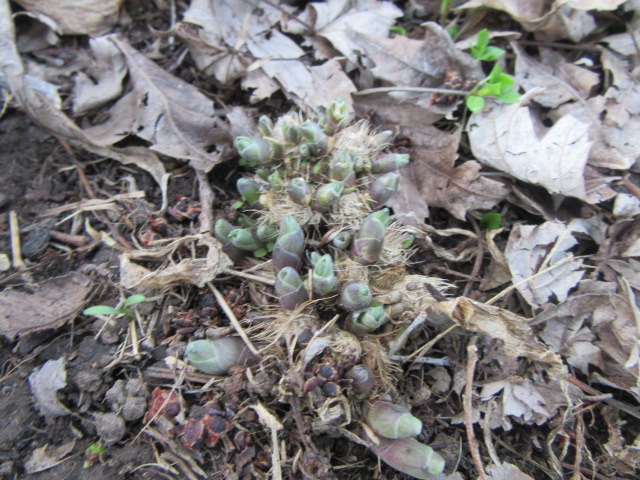


Begonias and Sedum adolphii Repotted

Begonias ‘Sophie Cecile’, ‘Fannie Moser’, ‘Frosty’ and the unknown, plus the Sedum adolphii re-potted…

Hello again already! I finally re-potted the other four Begonias early this evening. When I was bringing the Begonias to the back porch, Sedum adolphii yelled out, “WHAT ABOUT ME? YOU HAVE PROMISED ALL SUMMER!”


Sedum adolphii in its new pot…

Sedum adolphii has watched me take plants and bring them back in new pots and potting soil all summer. I promised him during the winter I would give it a new pot and soil if it survived the winter and did better this summer.  Well, he has done much better so today I gave him a new pot and fresh potting soil. I call this plant he because adolphii sounds like a man’s name.

Sedum adolphii (Golden Sedum) was named by Raymond-Hamet in 1812 and is a native of Mexico. I believe the species was named after Adolphe-Théodore Brongniart. He was a French botanist and scientist and one of the founders of modern paleobotany. He also helped prove that pollen existed. Hmmm…

If you find plants similar to this labeled Sedum nussbaumerianum, it is this plant. That name is a synonym of Sedum adolphii… The industry markets a lot of plants under the incorrect name.

That’s all for now. The cactus and succulent updates are coming up next I think. Until then, stay well, be safe, and enjoy all the nature around you. As always, GET DIRTY!

Argiope aurantia-Black & Yellow Garden Spiders

Argiope aurantia (Black and Yellow Garden Spider) male and female…

Hello everyone! I hope this post finds you all doing well! Yesterday when I was watering in the north bed I discovered a couple of new friends. If you remember last year I posted about three different Black and Yellow Garden Spider females I had been watching. The bigger one in the Forsythia disappeared. Now I have another one to watch. 🙂

This time, she is not alone…


Argiope aurantia female on 8-12-18, #495-2.

This girl is pretty good sized already. I didn’t get the take measure out because she was already not happy with me… I was watering the Colocasia esculenta and she got a good soaking. I didn’t know she was there until she moved…


Argiope aurantia male on 8-12-18, #495-3.

Then I noticed she was not alone in her web. She is being courted… This is the first time I have seen a male Black and Yellow Garden spider in my life and it is pretty exciting. He is so much smaller than she is.

I think the story goes that she doesn’t like him she will eat him. If she does like him she “may” allow him to live after they, you know, do their thing…

DAY TWO AFTER DISCOVERY…

Today, Monday, he is still alive and well. He is keeping his distance, though. He is so small and hiding up my the leaves you can barely see him. He is giving her the eye and she is giving him the eye but perhaps for different reasons. Maybe she is thinking he is just a boy and she needs a man. We shall see how this plays out…

Well, I am afraid one of them may not be long for this world. I am pretty impressed he has lasted this long.

There is another interesting spider with its web attached to the water hydrant I need to take photos of, too. I just haven’t remembered to take my camera when I am getting water for the chickens.

Until next time, which may be sooner than you think, stay well, be safe, positive and so on. You may not have time to get dirty before my next post. 🙂

Bed & Plant Update Part 3

The bed on the south side of the house…

Hello again everyone! I hope this post finds you all doing well. After a week of nice weather, it became very hot again… One day it was 98! A couple of times we were SUPPOSED to get rain, but we didn’t get a drop that I noticed. We did get a few drops as a teaser on Thursday afternoon.

I was working on the cactus and succulent post and updating their pages as I went along then I realized how long that would take. There are 40 different cactus and succulents so I will probably put them in 2-3 posts. Then I realized that by the time I was finished, the photos I took of the other plants would be out of date. So, I decided I better finish with the perennials and then go to the cactus and succulent update. Then I have to take photos of the Alocasia… I had to take a few more photos for this post because a few were already outdated. Umm… Even the photo of the bed is outdated now! The south bed has plants that are very drought tolerant but a little water really gets them growing… I think the Celosia ‘Cramer’s Amazon’ and the Canna stragglers must have grown a foot or more since I took the above photo on July 29…

So, here we go with round three of the plant and garden update… I am kind of going in order, not alphabetically…


Phlomis ‘Edward Bowles’…

The Phlomis ‘Edward Bowles’ feels like it has been dethroned. It is still doing amazingly well even though its new neighbor has taken over the southwest corner bed. I think maybe I need to make some changes in this bed because the Phlomis is no longer the tallest plant here. So, next spring, I may trade places with the Phlomis ‘Edward Bowles’ and Baptisia x ‘Lunar Eclipse’. Even though the Phlomis came up early this spring than normal (under the pot I cover it with over the winter), it did not flower. I am still scratching my head over that…


Baptisia x ‘Lunar Eclipse’…

Although the Baptisia ‘Lunar Eclipse’ (False Indigo) has done extremely well, it was a bit of a disappointment. When it FINALLY did flower it seems it turned out not to be ‘Lunar Eclipse’ after all. I had to double check the label and it does indeed say ‘Lunar Eclipse’. It only had a few flowers and they didn’t last very long. It was not near the show that photos online depict. I planted it last spring and it didn’t flower until this year, so maybe it will have more flowers next year. And you never know… Maybe next year it will decide to be ‘Lunar Eclipse’. One thing for sure, it is certainly a strong grower. BUT, the Phlomis ‘Edward Bowles’ is hidden between the shrubbery and this plant. Maybe I need to cut it half off.


Celosia argentea var. spicata ‘Cramer’s Amazon’… On July 29.

Oh, yeah! The Celosia argentea var. spicata ‘Cramer’s Amazon’! This is a plant no one should be without. They are heat and drought tolerant, will grow in full sun to part shade, have nice dark green and maroon leaves, have flowers that attract bees and butterflies, etc. Although they “can” grow to 8-9 feet tall, you can pinch them back when they are young and they won’t get that big. Some of my plants don’t get that tall, though. The other problem is they self-sow. Well, I guess that is a good thing in a way, but they produce a lot of seeds which leads to a lot of seedlings the next year. I used to try and find somewhere to plant them all or give as many away as possible. I thought about planting some along a few country roads or maybe along the highway. But, you know, once you give someone these plants they either have plenty or don’t want them again. Apparently, you either love them or hate them…


The longest flower spike so far on a Celosia argentea var. spicata ‘Cramer’s Amazon’ on August 11.

I ran into a little snag a few weeks ago while updating the ‘Cramer’s Amazon’ page to the right… I deleted a very long paragraph explaining the dilemma. In fact, I deleted it several times. If you want to read about it, you can click on the plant’s name above. 🙂 I am leaving the name of this plant as Celosia argentea var. spicata even though that name is not an “official” accepted name on Plants of the World Online. I better stop or I will be deleting another paragraph… Deeringia spicata!?!?!?!? OK, OK! You have to read the page…


Salvia nemorosa ‘New Dimensions Blue’ on 7-29-18, #487-84.

The Salvia nemorosa ‘New Dimensions Blue flowers very well when I remember to keep the dead flowers removed. It has been a bit of a sprawler this year for some reason…


Rudbeckia hirta ‘Denver Daisy’…

The Rudbeckia hirta ‘Denver Daisy’ has pretty much run its course I think. They have been flowering non-stop for several months. I think I am going to cut the plants back and see what happens. Maybe they will regrow and flower again. If you would like some seed, just let me know…


Salvia pratensis ‘Midnight Model’…

The Salvia pratensis ‘Midnight Model’ flowered then stopped after I deadheaded it. Now it has another flower and several buds. The flowers are really neat, though!


Salvia farinacea Cathedral™ ‘Blue Bicolor’ on 8-11-18, #494-8.

Salvia farinacea Cathedral™ ‘Blue Bicolor’ has been at it all summer. The plants are not near as tall as the Salvia farinacea ‘Blue Bedder’ I grew in Mississippi which is a good thing. I like tall plants, but I had to keep the ‘Blue Bedder’ tied to small bamboo stakes.

Those little plants in the middle are Talinum paniculatum (Jewels of Opar). They were slow coming up this spring and some of them are STILL coming up… There are hundreds of tiny plants along the border of the bed.


Rudbeckia hirta ‘Cherokee Sunset’ on 7-29-18, #487-80.

The Rudbeckia hirta ‘Cherokee Sunset’ has done OK but… I really like the color of the flowers but I think the plants are lacking something. They don’t seem to mind the full sun here, but they just don’t have any ZIP. I think adding ‘The Good Stuff” in the spring is a good idea, but I am wondering if a good timed-release fertilizer incorporated into the soil would be a good idea, too. Of course it would be a good idea? Now I am sounding like an idiot!

Well, I don’t like using commercial fertilizers in the garden and flower beds. The soil in the garden is AWESOME but not so good around the house. I mix “The Good Stuff” in the soil in the spring but maybe I haven’t been using enough. I foliar fed with AlgoFlash fertilizer when I was in Minnesota and in some in Mississippi and I still have about a half a bottle. Now, where is that hose-end sprayer?


Talinum paniculatum (Jewels of Opar) on 7-29-18, #487-97.

The Talinum paniculatum (Jewels of Opar) that did come up and grow are doing very well. These plants will get bigger but not overwhelming. It’s the flowers and seed pods you have to watch out for. Once the flowers become seed pods they need to be deadheaded very soon. They will continue to flower over and over after they are deadheaded then you leave the last batch of seeds for next years plants… Well, don’t leave them all. 🙂


Achillea ‘Moondust’…

The Achillea ‘Moondust’ has been nothing at all like the Achillea millefolium. This guy is short! Well, after all, it is only supposed to get 12-18″ tall. After it spreads a little it will look even better. Sometimes only planting one plant isn’t a good idea and I should have bought more of these… Whereas the Achillea millefolium is a spreader, this one apparently has better manners. 🙂


Salvia x sylvestris ‘Mainacht’ on 7-29-18, #487-85.

The Salvia x sylvestris ‘Mainacht’ seems to be enjoying itself but it is taking a break from flowering. Normally it flowers all summer if I deadhead it from time to time. There was a good-sized clump of Elephant Garlic behind it that was getting a little pushy which I removed a few months ago. It seemed to appreciate that and started spreading out but where are the flowers?  I asked it what the deal was and all it does is smile at me. I have had this plant since 2013… It is usually more upright but this year it is laying down on the job.


Buddleja davidii ‘White Profusion’…

Butterfly Bush Buddleja davidii ‘White Profusion’ is now getting with the program. The above photo was taken on July 30 but it is looking even better now. It is attracting a lot of butterflies and Hummingbird Moths. I need to take another video of the Hummingbird Moths…


Angelonia angustifolia Angelface®’Perfectly Pink’, 1 of 3…

The three Angelonia angustifolia Angelface® ‘Perfectly Pink’ in the southeast corner bed are really awesome. They have been non-stop bloomers and the flowers last a very long time. They were flowering when I planted them and I have never had to deadhead them. They just keep going and going!


Marigold ‘Brocade Red’…

The ‘Brocade’ Marigolds (Tagetes patula) are doing very well everywhere they are. I had worked for several years collecting the seed of only the red-flowered ‘Brocade’. For a while it proved to be successful, but when they self-sow not all the flowers turn out to be red… Now, they come up by the hundreds and I don’t have to save seeds anymore. But if I want only red flowers, I would have to deadhead all the flowers and continue saving only the seeds from the red. Then, any that come up on their own the following year would have to be pulled up. I did that for several years when I was trying to get them going, but now that they are really going it would be a lot of work… I did manage to keep them from coming up in the south bed, however, and I think this little bed at the corner of the back porch is plenty. There are a few in the southeast corner bed and the corner bed behind the old foundation (and a few other places). Umm… I really need to update their page soon.


Physostegia virginiana (Obedient Plant)…

Talk about a spreader! The Physostegia virginiana (Obedient Plant) has filled in this corner really well along the old foundation. I bought one plant at one of the local garden clubs plant sales in the spring of 2016 to fill in this corner and it has really done its job well. I don’t know what cultivar this is, maybe ‘Alba’. There are cultivars available, such as ‘Miss Manners’, that doesn’t spread aggressively. Actually, this could be ‘Miss Manners’ and maybe it would even be more aggressive is it weren’t. 🙂

There is a strange problem with this plant I haven’t figured out yet. The tops and some of the leaves turn brown as if they were scorched. They have done this from the beginning and watering has nothing to do with it. I only water my plants after they are in the shade. This happens as soon as they start growing in the spring and continues until frost…


Echinacea purpurea (Purple Coneflower)…

The Echinacea purpurea (Purple Coneflower) I transplanted in the bed behind the old foundation in May has basically finished flowering. I think they did pretty good considering this was their first year here. The one in the southeast corner bed is doing well although it didn’t flower. I am pretty sure they are a cultivar, but which one is a complete mystery. One thing is for sure, they are definitely NOT the straight species you find growing along the highway… I may have to go collect some seeds and scatter them in a few locations on the farm.


Rudbeckia fulgida var. sullivantii ‘Goldsturm’…

The Rudbeckia fulgida var. sullivantii ‘Goldsturm’ in the corned bed behind the old foundation WAS doing very well. This is a really nice cultivar and one everyone should try. They grow well and flower in full sun to light shade (even part shade to some extent) with no problem. Flowers can be deadheaded to encourage repeat blooming and to keep them looking tidy. They slowly spread by underground rhizomes but do not come true from seed. Mine have not self-sown as far as I can tell. They are getting a little thick in this bed because I transplanted them a little to close in the first place. They need good air circulation and prefer moist soil… OK, so I gained a little more experience. In the north bed, where it was shadier so the soil stayed damper, they did very well… Here, in the full sun, they need to be watered more often. I water the beds every two or three days which I suppose isn’t often enough for this bed…

Being as crowded in this corner bed as they are is not a good idea because too many plants do cause an air circulation problem, especially when there is no breeze. If I watered more often bacterial infection would be worse when plants are too crowded. So, with this summer being so dry, this bed has had some real issues… Everything in this bed, including the Marigolds around the edge, have just about dried up. I use an automatic sprinkler for the south bed and Cannas, and also used it with the shade bed, to give them a good thorough soaking. But it won’t work in the corner bed behind the foundation. Somewhere I have an old round sprinkler I brought from Mississippi… I wonder where it is… 🙂

There are also a lot of Rudbeckia hirta (the wildflower called Black-Eyed Susan) growing in the south bed and in the corner bed behind the old foundation (in front of the ‘Goldsturm’ above). I let them pretty much grow wherever they want and we get along fine. The plants in the corner bed, however, up and died…

Well, I think that is it for this post. The next post will probably be about the Hosta and other plants in the shade bed. Then one about the Alocasia. By then, I may also have the Cactus and Succulent Update ready… Ummm… It took several days just to get this post finished. GEEZ! I just looked at the clock and it is 2:50 AM!

Until next time, be safe, stay positive, stay well, and GET DIRTY!
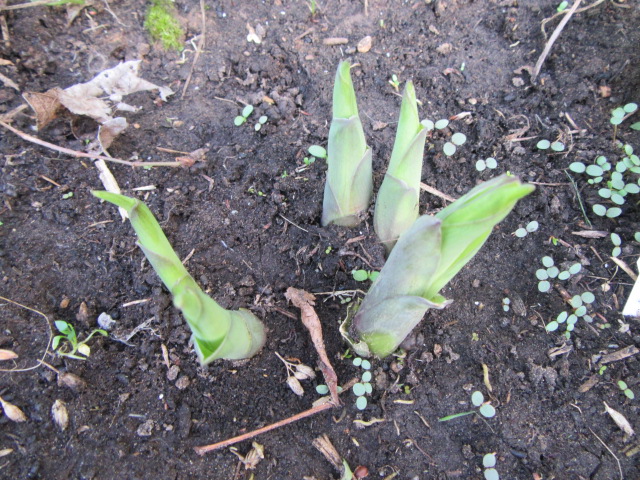
Bed & Plant Update Part 2-Plants On The Front Porch

The front porch…

Hello folks! I hope this post finds you all doing well! Well, it’s time for the 2nd update. I have to laugh as I look at the above photo. It is a mixture of cactus, succulents, tropicals, and just plants… They are kind of arranged by the amount of sun they like and get, which isn’t necessarily the same. Being on the front porch is a little challenging because I am trying to mimic light shade to mostly sun… At first, I had most all of them on the table but the Oxalis didn’t like that at all. I moved the plants to the front porch because their world changed after the Japanese Beetles destroyed their light to partly shady area behind the shed. I will admit, I like them closer instead of in “the other yard” where they were farther away. I can even water them at night if I have to. A few of the cats used to sleep on the front porch but I rarely see any here now. Sometimes the yellow cat sleeps on the railing.

So, how am I going to do this post? Hmmm… Most of the plants on the porch are succulents and one cactus. All of the plants on the back porch are cactus except for one succulent and the Alocasia ‘Portora’ which doesn’t belong there. She is just visiting until I get the four plants separated. In a few days, a lot of the plants at the far end of the table will be gone (taking them to Wagler’s Greenhouse) and then I will move the cactus on the back porch to the front porch.

All but two plants in this post have links to their page on the right side of the blog. They are probably not 100% up-to-date yet.


Amorphophallus sp. at 20″…

The Amorphophallus sp. (Voodoo Lily, Corpse Lily, Devil Tongue, etc., etc.) is doing great. They were getting a little scared under the Chinese Elm with all those hungry beetles flying around. Once they started sampling the Amorphophallus, I moved this pot to the porch on the north side of the house. Right now, these two plants are 20″ tall.  The sun proved to be a little much for the Oxalis triangularis when this pot was on the side porch, so after I removed the nine babies I put them on the front porch.


Some of the Amorphophallus kids on 7-29-18, #487-12.

For those of you who may have missed the post where I removed the babies, you can click on “Re-potting The Amorphophallus”. All nine of them are doing great, even the very small one and the one I accidentally broke off.


The four Begonias on the corner table…

The Begonias are doing great on the front porch. I thought they may have been getting to much afternoon sun here, but they seem to like it. Pictured here are Begonia “Frosty’, ‘Fannie Moser’, and ‘Sophie Cecile’. I bought those three from Wagler’s Greenhouse in 2017. The plant on the lower right corner is older and I do not know its name. It has thicker leaves, maroon undersides, and some of its leaves are spotted and some not…


Begonia x withlacoochee ‘Brazilian Lady’…

Of all the Begonias I have grown over the years, I really like the Begonia x withlacoochee ‘Brazilian Lady’. I acquired my first plant from Pleasant Acres Nursery in Leland, Mississippi when I lived there in 2012. Begonia x withlacoochee isn’t an “accepted” infraspecific name, but it is the “official” hybrid name between Begonia thelmae and either Begonia juliana or Begonia peruviana. It has looked better than it does in this photo but it is better than it was a few weeks ago. The above photo was taken on July 29, and today (August 4) I noticed it has A LOT of flowers coming on…


Callisia fragrans offsets…

The Callisia fragrans (Grandpa’s Pipe, Inch Plant, etc.) is quite a plant for sure… I am not just saying that because I want to give you a plant. 🙂 Most of the time I can give my extra plants to Wagler’s Greenhouse, but I asked her a few days ago if she wanted these offsets (I only need one). I couldn’t hardly believe she said no… She never said no before! So, I have 12 pots with offsets and the pot with the old stem… Why did I keep the old stem? I have no idea. Today I noticed several of the small plants are already sending out offsets. GEEZ! Here we go again! The offset with the flower… Well, I should have taken a photo. This plantlet started flowering MONTHS ago and the flower stem is still getting longer and the flowers are getting bigger. The flower stem is growing straight up and is 24″ tall. Well, if you want to know more about this plant, it does have its own page… Click on its name.


Oxalis tetraphylla

The Oxalia tetraphylla (Iron Cross) is doing much better now. I had to move the Oxalis to the back of the porch because they don’t like to much sun. One of its common names, Iron Cross, comes from an old cultivar by that name. It is also known as Lucky Clover, Four-Leaved Sorrel, and Four-Leaved Pink Sorrel. Since I have a four-leaved clover now, I am sure to win the lottery. 🙂 The Japanese Beetles sampled this plant earlier…


Oxalis triangularis subsp. papilionaceae

The Oxalis triangularis subsp. papilionaceae (False Shamrock) are delightfully happy. You can never have too many Wood Sorrels. They are just AWESOME. You can grow these inside as a potted plant or allow them to go dormant. You can also force their dormant bulbs to come up…


A couple of Oxalis triangularis subsp. papilionaceae flowers on 7-29-18, #487-74.

Plants of the World Online lists 545 accepted species of Oxalis. They produce pink, yellow, and white flowers. Some species are “variable” and can have either pink or white flowers.


Oxalis triangularis subsp. papilionaceae flowers closed for the evening on 8-4-18, #491-1.

Not only do their flowers close for the evening, but their leaves fold up as well. Well, at least the Oxalis tetraphylla and O. triangularis do this because I have them on my porch…


Oxalis stricta (Yellow Wood Sorrel) closed for the evening…

Out of curiosity, I went outside to see if the Yellow Wood Sorrel (Oxalis stricta) closes at night. Yep… All closed for the evening.


Soleirolia soleirolii (Baby’s Tears)…

To think this Soleirolia soleirolii (Baby’s Tears) started out as a tiny “break off” from my sister’s plant she bought last year while we were out plant shopping… At the time, it looked like a species of Sedum with its tiny leaves. The leaf tips were kind of sorta serrated at the end and I thought, “this is not a Baby’s Tears” (I said that to myself…). Well, after all this time, I think it may be possibly, probably a… Ummm… Baby’s Tears.


Scabiosa columbaria ‘Blue Note’…

The Scabiosa columbaria ‘Blue Note’ (Pincushion Flower) seems to be doing well. It will have a few flowers then after I deadhead it will flower again. This is the first year I have grown Scabiosa so I am not sure if it doing well or not. At least it is still alive.


Scaevola aemula ‘Scalora Brilliant’ on 7-30-18, #730-18.

The Scaevola aemula ‘Scalora Brilliant’ has been weird… I lost two last year and this one has died and came back to life twice. My cousin has a few of these plants in a planter and they look AWESOME! They are supposed to like full sun and heat this plant doesn’t appear to like that either… I really like Scaevola and I am determined to be successful with them.


Tradescantia sillamontana on 7-30-18, #488-20.

The Tradescantia sillamontana (White Gossamer Plant, White Velvet, etc.) is doing very well. It is looking much better now but for a while, it looked a little ragged. The Japanese Beetles didn’t snack on it’s leaves that much, but its fuzzy leaves collected a lot of their poop and debris from the tree. There are three pots of these plants (somehow). I take them to the basement in the fall where they go dormant. After a few months they start coming back up then I give them a little water. They make good houseplants but get a little strange if they don’t have the right amount of light. Hmmm… I don’t have a page for this plant yet…


Tradescantia pallida (Purple Heart) from Walley on 7-29-18, #487-99.

My good friend and fellow plant collector, Walley Morse, from Greenville, Mississippi sent me a box with three different plants and some Cosmos seeds. In that box were several cuttings of the REAL Purple Heart (Tradescantia pallida). I gave him his start in 2012 so I was very glad he sent these cutting to me. There were a lot of cuttings, but I cut the stems down a little and put a few in this pot. The rest are elsewhere. They will take off in no time. The other two plants he sent are succulents I have not identified yet. 🙂

Walley and I became good friends when I lived at the mansion in Mississippi. We have exchanged a lot of plants and his yard and flower beds are AWESOME! Did I say AWESOME? Many plants I grew for the first time in Mississippi came from him. Then when I was leaving Mississippi to move back to Missouri in February 2013, I gave him most of the plants I left behind. I am not sure how many times we filled his car…


Tradescantia pallida ‘Pale Puma’…

The Tradescantia pallida ‘Pale Puma’ is doing great. Walley gave me a pot of these in 2012 and I gave him the “other” Purple Heart. I found another one of these this spring, thinking it was the “real” Purple Heart. I was so excited to find it I didn’t really pay attention until I moved the plants to the front porch on July 4 then I saw what it really was. This plant stumped me before because I could not figure out what species it was… I thought it must be a cross between Tradescantia pallida and Tradescantia sillamontana. Then after I did more thorough research in July, I finally figured out it was Tradescantia pallida ‘Pale Puma’. Now, that name was advertised by Plant Delights Nursery and mentioned on the San Marcos Growers website. San Marcos has it listed under a different name. I am not sure if ‘Pale Puma’ is an official cultivar name or just a name made up by Plant Delights. I sent Tony an email to find out.


Zantedeschia elliottiana (Golden Calla Lily)…

I almost forgot about the Zantedeschia elliottiana (Golden Calla Lily). Last year it was flowering when I bought it and it flowered most of the summer. When it went dormant, I brought the bulbs inside and stored them in the basement over the winter. When I noticed them starting to sprout I brought them upstairs. It was a few weeks before I put them in a pot. They have not flowered at all… Hmmm… Calla’s are one of my favorite plants. Umm… I don’t have a page for the Calla yet either… I haven’t gotten that far down on the list.

Well, I think I better stop for now. I still have the cactus and succulents, the south bed, the “other yard”, the shade bed, and the Alocasia

Until next time, stay well, healthy, safe, and GET DIRTY!
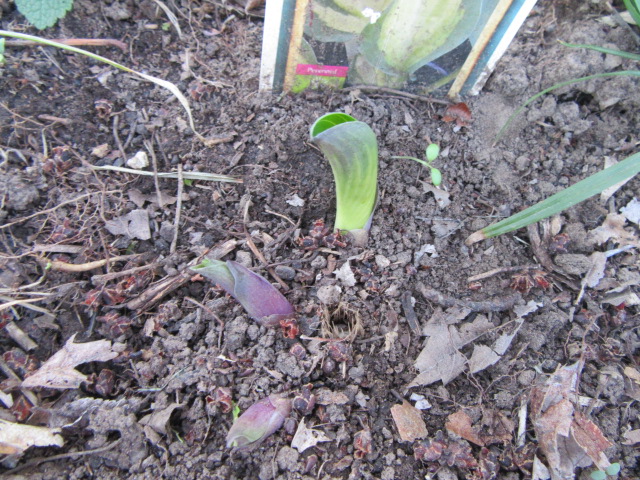
End Of July Bed & Plant Update Part 1

Bed on the north side of the house on 7-29-18, #487-17.

Hello again! I hope this post finds you doing well. We have been enjoying a break from the heat but summer still isn’t over. As I mentioned at the end of the last post, I took a lot of photos Sunday and Monday. After I deleted the ones I didn’t need I wound up with a total 131 photos. Even after all those photos, I saw that I missed a few so I took six more on Wednesday.

I don’t know about your beds, but mine don’t look as well this summer. Many of the plants just don’t seem to have much zip while others are doing just as well as always.

The bed on the north side (top photo) just doesn’t have any spunk! Something is definitely needed here that is an attention grabber. If the Colocasia esculenta and Leucocasia gigantea ‘Thailand Giant’ were bigger that would do the trick. I know, it takes time and this is still only the end of July. They still have August, September, and part of October. This is the first year I haven’t had Coleus, so they are definitely missing. The Geranium sanguineum (Bloody Cranesbill) have hardly flowered at all this summer. The Creeping Jenny (Lysimachia nummularia) is growing like mad, though.

If I were to stay here, I would definitely consider extending the north bed to at least the end of the porch steps. I would also dig a bed all the way around to the steps on the back porch.


PLANTS IN THE NORTH BED…

Agastache ‘Kudos™ Gold’…

The Agastache ‘Kudos™ Gold’ has performed very well. It flowers like mad and has awesome scented leaves. I am not particularly fond of the color because it just kind of lacks the pizazz that the purple-flowered Agastache ‘Black Adder’ had when it was in this spot. I also prefer a taller plant for this area and the Agastache ‘Kudos Gold’ is fairly short. It needs a little deadheading to tidy them up a bit. Removal of the smartweed under the porch would tidy the area up. 🙂

My favorite plant here was the Pineapple Sage (Salvia elegans) in 2015. I haven’t seen any at the greenhouse since…


Astilbe x arendsii ‘Fanal’…

The Astilbe x arendsii ‘Fanal’ is doing very well. Too bad it doesn’t flower all summer, though. The other Astilbe in the north bed is doing very well as always.


Achillea millefolium

I had decided last year and this spring to relocate the Achillea millefolium in the north bed. I did get the bigger one moved in front of the barn, but this one didn’t get moved. Someday I am going to put on the south side of the house. There are also several little stragglers that have popped up in the bed and next to the steps. Like I always said, if the Achillea millefolium doesn’t like where it is, it will move all by itself… There is also one in front of the chicken house that doesn’t like where it is either. To much shade… They like it hot and sunny.


Hosta ‘Empress Wu’…

The Hosta ‘Empress Wu’ is doing very well here. Lately, I have thought very seriously about moving all the Hosta to the north bed. But, there is one problem with that idea I didn’t notice until I put the ‘Empress Wu’ here. There are a few snails here as you can see by a few holes in her leaves. I have only seen one snail, though. In time, this Hosta will be huge because ‘Empress Wu’, I believe, is the world’s largest Hosta. Time will tell… It is definitely much larger than last year and it will get larger every year until it reaches maturity after five years.


Crocosmia x Curtonus ‘Lucifer’ on 7-13-18, #477-8.

I had forgotten to post about the Crocosmia x Curtonus ‘Lucifer’ (Montbretia) when I took the above photo on July 13. A friend of mine in Mississippi had a HUGE patch of Crocosmia. They can multiply fairly rapidly, so we shall see how well they do in this spot. They are strange plants because they seem to like to grow sideways.


Leucocasia gigantea ‘Thailand Giant’…

The Leucocasia gigantea ‘Thailand Giant’ is about the same since the last post about its variegated leaf. I have also noticed a few spots on the petioles. I tried to post about it on the Aroid group on Facebook, but I couldn’t get the photos to load so I will have to try it again. I am PATIENTLY waiting for the next leaf…

UPDATE!!!! Ummm… I found out this plant is NOT a Leucocasia gigantea ‘Thailand Giant’. It is, in fact, a Xanthosoma robustum


Colocasia esculenta, one of two in the north bed…

I have been putting the largest Colocasia esculenta bulbs in this bed for several years now. They really like it here and get fairly large. Two plants came up from this one bulb. Of course, there will be several more offsets…


Colocasia esculenta, 2nd of two in the north bed…

This is the second and largest of the Colocasia esculenta in the north bed. This is also the one that surprised me with a flower earlier. The Colocasia esculenta flowered profusely when I was in Mississippi but the season isn’t long enough here. They normally started flowering in Mississippi in September, so I was shocked when I saw this one had a flower on July 8.


Geranium sanguineum (Bloody Cranesbill) on 8-1-18, #490-3.

The Geranium sanguineum (Bloody Cranesbill) have been weird this summer. There is a lot of dead leaves in the bed AGAIN. I still didn’t move a few to other areas to see if they would do better in more sun. I am still not sure, but this could be Geranium sanguineum var. striatum


Lysimachia nummularia ‘Goldilocks’ and Oxalis stricta….

The Lysimachia nummularia ‘Goldilocks’ (Creeping Jenny) and Oxalis stricta (Yellow Wood Sorrel) pretty much have the run of the north bed. They seem to be able to go wherever they want without getting into trouble. They have shown me just how much they enjoy their freedom.


Rudbeckia fulgida var. sullivantii ‘Goldsturm’ in the north bed…

There are still several Rudbeckia fulgida var. sullivantii ‘Goldsturm’ in this bed to keep the area lively. They don’t seem to mind the shade from the Leucocasia gigantea ‘Thailand Giant’.


THE NORTHEAST CORNER BED…

Northeast corner bed.

The northeast corner bed is doing very well. The Salvia macrophylla ‘Hot Lips’ has not flowered like it did when I had one in the south bed in 2013 and 2014. I believe the problem is because of the yard light. After I planted it here and it stopped flowering, I remembered reading where certain species of Salvia will not flower if there is a light at night nearby. One thing is for sure, though, the plant has really grown! The Gomphrena globosa ‘Gnome White’ has also done really well. I had two ‘Gnome Purple’ between the white plants and they both fizzled out soon after I planted them. The grass, nearly hidden, is Cenchrus setaceus ‘Rubrum’ (Purple Fountain Grass). It was supposed to go next to the front step but instead, I put the Heliotrope ‘Marine’ there. It has done pretty well. The Agastache aurantiaca ‘Apricot Sprite’ has done very well even though its neighbor wants to take over the neighborhood. Somewhere in there is an Isotoma fluviatilis (Blue Star Creeper) whose photo I also forgot to take. Oh yeah! I almost forgot the Conoclinum coelestinum (Hardy Ageratum, FlossFlowert, etc.). They had pretty much been the only thing growing on both sides of the steps but only a few came up (from seed) this spring. They are always a little slow anyway. I think two came up on both sides of the steps.


Salvia microphylla ‘Hot Lips’…

If you want a Salvia that gets fairly large, then the Salvia microphylla ‘Hot Lips’ will definitely do the job. But, as you can see, it hasn’t been flowering all that great. If you click on the link to the page for this plant, you will see photos of how well it did on the south side of the house. It flowered non stop all summer.


Red flowers on the Salvia microphylla ‘Hot Lips’…

Most photos you see online of the Salvia microphylla ‘Hot Lips’ show the neat red and white bicolor flowers. Well, they don’t always produce bicolor flowers. At certain times of the summer, their flowers will be all red and sometimes mostly white or pink. Right now, it has only a few red flowers but there seems to be a lot of buds…


Gomphrena globosa ‘Gnome White’…

The Gomphrena globosa ‘Gnome White’ has been a great performer in the southeast corner bed. Even when it has been very hot and dry, they have kept growing and blooming like crazy. This is the first year I have tried Gomphrena and I have been pleased with them. Too bad the purple didn’t survive…


Agastache aurantiaca ‘Apricot Sprite’…

The Agastache aurantiaca ‘Apricot Sprite’ is much taller than ‘Kudos Gold’. They have done very well and have flowered non-stop. I also like the color better than ‘Kudos Gold’.


Isotoma fluviatilis (Blue Star Creeper)…

The Isotoma fluviatilis (Blue Star Creeper) has done pretty well considering it is under the other plants. I had to push the Gomphrena and Agastache aside to get the photo. Supposedly they like sun or shade but flower better in more sun. You just never know how some plants will spread out when you haven’t grown them before. I never heard of this plant before and it is very interesting it is being used as a grass substitute for lawns…


Cenchrus setaceus ‘Rubrum’ (Purple Fountain Grass)…

The Cenchrus setaceus (Purple Fountain Grass) is sorta holding its own stuck back in the corner. It would have been much better if I put where I intended for it to be. Sometimes we gardeners have to change our mind several times unexpectedly. Well, names change unexpectedly, so I guess making changes is just a part of life. The Purple Fountain grass has been known as a species of Pennisetum for many years then the name changed in 2010.


Conoclinum coelestinum on 7-29-18, #487-22.

The Conoclinum coelestinum (Hardy Ageratum, Blue Mistflower) that did come up are doing very well and are starting to bud. That will add more color to this bed. Hopefully, they won’t grow as tall as they did last year. GEEZ! The two on the other side of the steps came up later and not in the right place. You can never predict where self-sowers will emerge. I usually have quite a lot of them coming up, but this year they were even later than usual. I didn’t think they were going to come up at all so I went ahead and put the other plants here. In the past, I have transplanted a few in other areas but they never returned.


Heliotropium arborescens ‘Marine’ (Heliotrope)…

The Heliotropium arborescens ‘Marine’ is still alive and STILL blooming. This one seems a bit smaller than the last one I had a few years ago. According to information online, they are supposed to grow 15-20″ tall. Hmmm… It has very nice dark green leaves and the purple flowers last a long time.

That is all for the northeast corner bed.

I am going to break the plant and bed update down into several posts. The photos below are a glimpse of what is coming up…


The front porch…

Plants on the front porch. Besides what is in this photo, there are a few plants on the porch and the steps you can’t see. Every plant will be represented in the next post…


South bed…

The south bed is MUCH different than last year without all the Marigolds. Well, that was almost a disaster then but this year a few would have been a good thing. The just got too large and crowded the shorter plants out. I never saw them get so HUGE which is why I didn’t transplant any to this bed this spring. I made a mistake last fall in this bed, which I have mentioned before and will again when I post about the plants in this bed.


Southeast Corner Bed…

The southeast corner bed is looking very good. The Angelonia ‘Perfectly Pink’ has definitely livened the area up. I did not plant the Marigolds, Talinum paniculatum (Jewels of Opar), or the Celosia argentea var. spicata ‘Cramer’s Amazon’ here. They came up on their own from seeds. I had to remove quite a few Celosia or they would have taken over.


Part of the cactus collection.

I decided to move the rest of the cactus from by the shed to the back porch. A few of the cactus have been on the front porch for a while and would probably be better off with these. I was kind of hesitant to move any plants to the back porch because of the cats. So far, they haven’t caused any problem. Well, if I were a cat, I wouldn’t bother anything sharper than my own claws. The only problem I had with the cats is them waiting to lay on the shelf on the potting table. So, we compromised and I made an opening for them. Sometimes I still have to pick up a few pots. The cactus and succulent update will feature all cactus and succulents… Since there are several on the front porch, I will have to may have to merge them all together in one post. Hmmm…


Group of Alocasia…

To say the Alocasia are doing well would be an understatement. They always do well despite them needing larger pots. I only need ONE of each, maybe two. The problem is, when I transplant the offsets into larger pots and give them away, I lose the pots. Then the next year, I have no larger pots. I will probably take more photos of the Alocasia for a special update. Maybe by then I will have more potting soil and a few more larger pots and have them all separated AGAIN. We shall see.

I am continually updating the pages to the right and it seems I am behind… So, if you clicked on any of the links connected with the plants on this post to their page, you will see some of them are not up-to-date. It is a continual work in progress… 🙂

I hope you enjoyed this post as much as I enjoy the plants. Until next time, stay well, safe, positive and GET DIRTY!
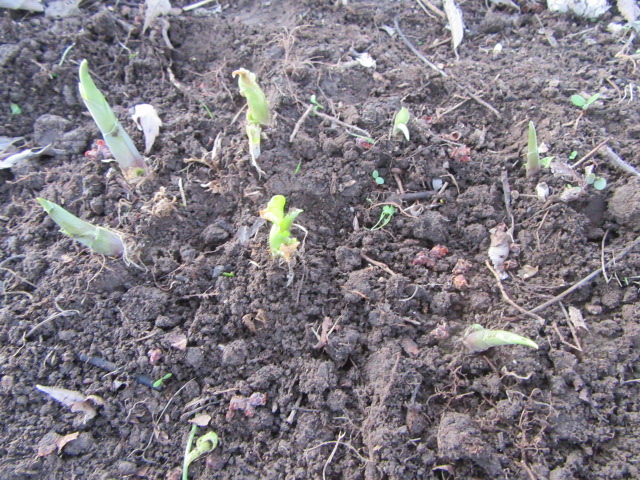
 

Surprise! Surprise! #8 Is A Heifer Calf!
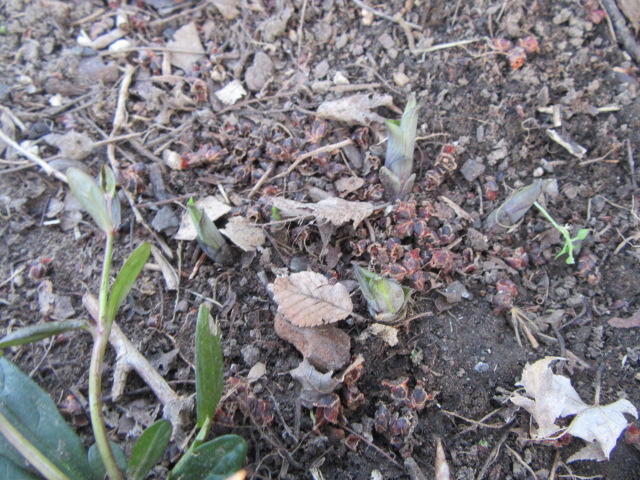
Hello everyone! I hope this post finds you all doing very well. This afternoon I decided to move the hay from the south hay field. The cows and calves were in the other hay field so I could shut the gate and keep them in. I counted the cow and calves to make sure they were all there and there was a cow missing. On my way to shut the gate, I had noticed several buzzards on the other side of the pasture in the corner by the walnut trees. At first, since one of the cows was missing, I thought maybe the old cow died. That would be weird because she was fine yesterday. So, I walked farther back in the hay field thinking maybe the cow was in the back. But, no, she wasn’t there. I came out of the hayfield where the cows were and looked toward where the buzzards were. Ahhh, she was standing in the corner… Hmmm… Even though I was quite a distance from her, I said, “What are you doing over there in the corner?” (Someday I expect one of the neighbors to answer…) She mooed and looked on the ground to her right. There must have been 10-12 buzzards right in front of her.

Well, I wasn’t sure what was going on at the time because all but two of the cows had calves. The heifer had lost her calf and the other one didn’t appear to have been bred. The last calf was born May 19. So, I went to the barn to get the tractor since I was going in that direction to start moving hay.

Once I got up close to where she was, the buzzards flew off  (there were a lot more in the trees) and she started looking on the ground on her right… Umm… There was a pile of something black next to her. HOLY CRAP! She had a calf!!! I went up to see it and it was sleeping. So, I got back on the tractor and went to the house to get the camera.


By the time I returned, the calf was standing up and walking around a little.


By the time I walked up to them, the calf was tuckered out again and laid down.


Baby calves have a lot to learn and usually aren’t scared of anything. They are more curious than anything. She didn’t run as I leaned over to introduce myself. She smelled of my hand then I gave her a few scratches behind her ears. She thought if all she ever got was a few scratches behind her ears, it was worth being born… 🙂

Well, I kind of elaborated a little in the beginning of this story… When I saw the cow standing in the corner by herself I pretty much knew she had a calf even though it was unexpected. When your cows all look pretty much alike, it gets somewhat confusing which cow had who… There are a few I can recognize because of this feature or that, or their personality. I can tell the older cows from the younger ones, but there are 3-4 that are very hard to tell apart even though there are only 9 cows.


After I took a few photos, I went into the south hayfield. There were several buzzards waiting on the bales of hay and on top of the poles along the field. One sat on top of a pole long enough to get a good photo.

Sunday afternoon I decided to take a few photos of the plants and flower beds. I hadn’t done a complete photo shoot for a while. Then, when I was labeling them, I realized there were some plants I had missed. So, I took more this morning. In all, I took close to 200 photos… Once I delete the duplicates (since I usually take more than one of each plant), I should still have around 130. So, the next post may be pretty long unless I do part 1 and 2.

So, until next time, take care, stay well, be positive! GET DIRTY!!!

Ummm… Leucocasia gigantea ‘Thailand Giant’ Update

Hello there again! I hope this post finds you all well. When I was mowing on Monday I was stopped dead in my tracks. The new Leucocasia gigantea ‘Thailand Giant’ had done something very weird…


(UPDATE!!!! Ummm… I found out this plant is NOT a Leucocasia gigantea ‘Thailand Giant’. It is, in fact, a Xanthosoma robustum…)


Ummm…A VARIEGATED LEAF?!?!?! Its new leaf started emerging from the last petiole a while back showing no sign of it being weird. I am always anxious to see how big the next leaf will grow to. Each new leaf usually grows larger than the one before. While there are variegated cultivars of Alocasia and Colocasia, which I have never grown or seen in person, this is completely strange. I have never heard of a Leucocasia gigantea ‘Thailand Giant’ with variegated leaves.

Remember, Colocasia gigantea is now a synonym of Leucocasia gigantea. It is in a genus all by itself now… Testing showed this species is more closely related to Alocasia than Colocasia but it has several traits that separate it from both genera. Some information online suggests it may be a naturally occurring cross between Colocasia esculenta and Alocasia macrorrhizos. That would be strange because the way Leucocasia gigantea flowers is completely different than the other two.

The species was first named was Caladium giganteum by Carl (Karl) Ludwig von Blume in 1823. Then in 1857, Heinrich Wilhelm Schott named it Leucocasia gigantea. Joseph Dalton Hooker decided it should be Colocasia gigantea in 1893 and that’s what it remained until maybe 2016. Now it is back in its own genus AGAIN where Mr. Schott put it in 1857. Of course, most websites and sellers are still calling it Colocasia gigantea because they have no idea the name changed or they just don’t want to change it. Ummm… I just updated the Leucocasia gigantea ‘Thailand Giant’ page and had to change everywhere I had Colocasia to Leucocasia.

Although this plant is doing very well, it sure seems like it is growing slower than the one I had last year. Maybe I am just anxious. After all, it is just the end of July. Hopefully, someday I will have a 12′ Leucocasia gigantea ‘Thailand Giant’…

That’s it for now. Stay well, safe, amazing, and positive. Be thankful and count your blessings! And by all means, don’t forget to GET DIRTY!

The Killdeer-Craziest Bird On The Farm

A Killdeer along the pond bank on August 1, 2013.

Hello everyone! I hope this post is finding you all well. Many birds come and go with the changing seasons. Some are quite comical to watch like the Greater Yellowlegs that like the pond. Summer brings birds that have migrated south for the winter then they return back here to nest. One of those birds is the Killdeer.

The Killdeer (Charadrius vociferus) are plovers that seem to prefer open areas with short grass like pastures. Plovers are commonly shorebirds, and while the Killdeer do run around the pond at times, they still prefer the pasture.


I don’t really remember much about birds when I was a kid, but I vividly remember the Killdeer. Back then there were many more, maybe 20 or so, running around in the pasture. Perhaps when they arrive in the spring there are more because they are choosing mates and dividing up territory.


When you go out into the pasture, the Killdeer are running here and there like they have no clue where they are going. They make this shrill noise that almost hurts your ears.

Earlier in the summer, there were maybe 10 or so. Last time I paid attention, I could only spot two pair. The resident Red-Tailed Hawk may be one reason their numbers have dwindled.


As I was mowing the weeds down in the pasture on July 9, I was trying to watch out for possible Killdeer nests. They nest right on the ground and I always wondered what kept the cows from stepping on their eggs. As I was mowing in the lower part of the front pasture, I turned the corner and just happened to look at the ground on the left side of the tractor. Low and behold, there was a Killdeer doing her crazy dance maybe 3-4 feet from the tractor. I stopped the tractor and kind of yelled, “WHERE?” Yeah, I know, that sounds like the heat was getting to me talking to a crazy bird. But, she must have understood because she stood up and moved over and showed me her nest. So, I got off the tractor and marked the spot so I wouldn’t run over her eggs. It was definitely one of those times I wish I had my camera. How many times have I said that? It would have been a perfect shot! One thing I noticed was where she had laid her eggs… They are pointed side down right smack in the center of an old cow pile. For those of you who know anything about cows, you know they don’t eat the crass around where they… you know… poop. During the heat of the day, the eggs don’t need to be intubated because of the sun. Since they are on a cow pile, it probably absorbs heat.

Over the next week or so I went down to check on the eggs. They were still there but I never saw the mother sitting on the eggs. Then one day last week, they were gone. No trace of any shell like the chicks had hatched or anything.


Then Friday (July 20), when I came from the back pasture and was getting close to the barn, the Killdeer flew in front of me and started doing her “OH, I’m hurt” dance about 20 feet from the barn. This time I had my camera. 🙂 Hmmm… The only reason they do that is to lead you from their nest or their babies…


She squatted down where I could barely see her then she would stick her head up to see if I was coming. This went on until I got a little closer…


Then she got up and ran to another spot and repeated her ordeal.


They do this out in the pasture, too. (I hate to tell you, but I have spent some time following a Killdeer around in the pasture in the past trying to spot nests or their young until I would give up. Then they would fly over me laughing.) Anyway, after she thought she was far enough away and I wasn’t watching her, she stopped her act. I started looking in the taller grass close to where she had been while she was watching and shrieking from farther away. Like she was telling her kids to stay hidden. After a few minutes, I wondered if they would come out if I walked away like I gave up.


Well, it worked! After I walked away from the barn about 40 feet or so, I turned around and spotted two chicks. Just for fun, I went back up to where I saw them and they were completely hidden once again. They just completely vanished like they became invisible.

Earlier, on my way back from the back pasture with the cows, I spotted another bird I had never seen before.


I looked on the Missouri Department of Conservation website’s field guide and I think this bird is called the Eastern Kingbird (Tyrannus tryannus). they are good sized flycatchers measuring approximately 8 1/2″ from the tip of their bill to the end of their tail. According to the website, they arrive in Missouri around mid-April and stay until mid-August through September. They migrate to and from South America in large flocks. They primarily feed on wasps, beetles, grasshoppers, etc. I think I need about a million to eat the Japanese Beetles.

Well, that’s it for this post. I saw something weird yesterday while I was mowing but I am saving it for the next post… So, until then stay well, be safe, and stay positive. GET DIRTY!

Being Thankful…

Hello folks! I hope this post finds you all well. Yesterday morning I was awakened by high wind, thundering, and pouring rain. I think it is called a thunderstorm. 🙂 It rained a little a few days ago, around 1/4″, but there was barely any breeze with it and I wasn’t at home when it happened. Anyway, somehow 1/4″ appeared in my rain gauge.

Remember I had to move the potted plants to the front porch because of the Japanese Beetles? They are doing very well here. The front of the house faces west but there two maple trees in the front yard that give shade from late afternoon sun.

Some have asked why there are bricks around the pots. I started doing that a long time ago so the wind won’t blow the pots over or out into the yard.


At first, I didn’t want to get out of bed to see the plants without bricks blown away. When I did take a look I saw that they were fine.


Even the two very small empty pots on the railing were still sitting where I had left them. All that wind and they are still sitting there. 🙂


The rain wasn’t over and we continued getting a few showers throughout the day and evening.


The rain was a great blessing and we really needed it.


I went to the back porch and saw that even the pots on the potting table were still where I left them the night before.


The bowls I mix soil in were nearly full of water.


The Alocasia ‘Portora’ was smiling with her leaves waving in the breeze. I still need some bigger pots so I can separate the four or five plants in this pot. I think that’s why they are so small.


As of yesterday around noon, we had received around 2 3/4 of an inch. It rained off and on since then but still hasn’t made the 3-inch mark.

All is well and we have a lot to be thankful for. The cows, calves, chickens, and cats are all well. The plants are doing great for the most part. The Brunnera macrophylla ‘Jack Frost’ in the shade bed succumbed to the additional light caused by the Japanese Beetles eating the leaves on the trees. I expected that and was thinking about moving the plant but didn’t get it done in time. It may not be too late to save it so I better give it a shot. I don’t know that much about Bugloss. The two purple Gomphrena didn’t make it, but the white-flowered plants are making up for their loss.

Well, it’s time to get up and get busy for the day. I am finished with my morning coffee now.

Until next time, stay well, positive, be safe and I hope you have a great rest of your day. As always, get DIRTY!

Miracle of Nature! Night Blooming Cereus

Hello folks! I hope this post finds you all doing very well. A couple of weeks ago I was asked to tend the plants, cats, and chickens on my cousin and his wife’s farm while they were away. She asked me to come by on the 7th so she could show me what needed to be done. Dad and I had been thinking about stopping by for a visit for a long time but had never gotten around to it. She has a lot of very nice plants in beds and planters and I was more than happy to take care of them while they were away.


One of their plants was a Night Blooming Cereus. A fellow blogger shared photos of her Night Blooming Cereus with me back in 2013 but it was not this plant. So, when I came back home I looked Night Blooming Cereus online to see what I could find out. According to the Wikipedia, there are several plants that are known by this name.


When I went back after they had left the buds were getting bigger.


She told me they only bloom at night after it gets dark…


The buds just grow right out of the side of the leaves. How weird is that?


Then on the 16th, I saw one of the buds had opened during the night.


The other buds looked like they may open up that night.


I decided I would go later and stay until they opened up even if I had to stay all night.


So, I went later and found they had returned home. We went to look at the Night Blooming Cereus to see what they looked like. The above photo was taken at 9:49 PM. We went inside and visited for a while then at about 10:40 she went outside to check.


She came back inside and said they had opened. So, we went back outside to have a look.  I had no idea how the photos would turn out, but I was going to take a few anyway. I raised the flash and started shooting. I could tell as I was taking photos that they “may” turn out good but I wouldn’t really know until I uploaded the photos on the computer.


She shined the flashlight on one of the flowers in case that would help a little. At the time I thought they looked better without the flashlight on, but that photo looks pretty neat.


Honestly, I have seen a lot of pretty neat flowers, but the Night Blooming Cereus is without a doubt on the top of the list. The flowers are very sweet smelling!


The above photo was also taken with the flashlight shining on a flower.


As I was taking photos, I was trying to think of a word to describe these flowers. There is no one single word. Photo’s don’t even capture how AWESOME they are.


It looks like a flower coming out of a flower.


She broke off a couple of flowers and gave them to me. She wouldn’t have done that if they lasted longer than one night.


So, when I came home I quickly took a few more photos. I didn’t know how long they would stay open.


WOW!


It’s a good thing I took the photos when I did because within an hour or so they had shriveled up. The scent of the flowers filled the room for hours.

So, I went online and found out the scientific name for this particular Night Blooming Cereus is Epiphyllum oxypetalum. According to Plants of the World Online, they are native to Belize, Costa Rica, El Salvador, Guatemala, Honduras, Mexico Gulf, Southeast and Southwest Mexico, and Nicaragua. They were later introduced to Northeast Brazil, South and Southeast Brazil, Cuba, Dominican Republic, Leeward Island, Puerto Rico, Venezuelan Antilles, and Windward Island.


Epiphyllum oxypetalum (DC.) Haw. 

Epiphyllum oxypetalum was named and described by Adrian Hardy Haworth in the Philosophical Magazine in 1829. It was first named Cereus oxypetalus by Augustin Pyramus de Candolle and first described by him in Prodromus Systematis Naturalis Regni Vegetabilis in 1828. Since then it has been given 10 other scientific names. Besides there being 10 synonyms of this species, there are also 10 other accepted species in the genus which are members of the Cactaceae Family.

The Epiphyllum genus was actually named and first described by Mr. Haworth in Synopsis Plantarum Succulentarum in 1812.

To me, it kind of resembles a HUGE Christmas Cactus. That leads to another genus that had also previously been named Epiphyllum by another botanist, Louis (Ludwig) Karl George Pfeiffer. Somehow, Mr. Pfeiffer had named another group of plants with the same genus name in 1837 and gave the description in Enumeratio Diagnostica Cactearum. That genus was then named Schlumbergera by (Antoine) Charles Lemaire as described in L’Illustration Horticole in 1858. Schlumbergera is the genus of Christmas cacti with 9 accepted species… 

This species of Night Blooming Cereus is also known as Dutchman’s Pipe Cactus, Queen of the Night, and Gooseneck Cactus. It is the most popular Night Blooming Cereus.

They are a large epiphytic cactus that can grow up to 20’ in nature and its branches can grow up to 36” long. Flowers can be up to 11” in length and 5” wide. 

Well, I hope you enjoyed these photos as much as I enjoyed the opportunity to witness this AWESOME and AMAZING plant in person. The links below will give you a little more information if you want to read about the Epiphyllum oxypetalum.

FOR FURTHER READING:
Plants of the World Online
Wikipedia
Llifle (Encyclopedia of Life)
Dave’s Garden

Until next time, stay well, be safe, stay positive and GET DIRTY!

Re-potting The Amorphophallus

Hello folks! I hope this post finds you all well. My neck of the woods has been very hot and dry. We did manage to squeeze 1/4 inch of rain out of a cloud a couple of days ago and it rained a little more or less in surrounding areas. It was a very spotty system.

I am going to talk about my Amorphophallus in this post. That sounded a little weird. Anyway, if you want to read about this plant from the time it was given to me by Mrs. Wagler, you can go to its own page HERE.

The Amorphophallus was still dormant when I took the potted plants outside for the summer. Well, maybe I should back up a little. As soon as the temperatures started getting a little cooler last summer, the Amorphophallus went dormant. Even before I moved the plants inside for the winter. A month or so after that, I dug around in the top few inches of the pot and found nothing but the Oxalis bulbs. Then spring came and I put the plants outside. In an earlier post, on May 24, I had written about finding a few Amorphophallus bulbs, etc. Well, as time went by, there were more than I had originally found. In all, by the time they stopped coming up, there were eleven. At least I think they have finished coming up.

This spring I probably should have added new potting soil to this pot. Last year I transplanted them into a larger pot and added Miracle Grow or Schultz Potting Soil which has timed-release fertilizer. This spring, I didn’t add any new potting soil to this pot, so it is a high probability there was no fertilizer left. As the plants grew their leaves were not the healthy dark green they were last summer. I supposed that may be the result of not enough nutrients.

One mistake I made this spring, and I am ONLY going to tell you about one, was buying a HUGE bag of potting soil from an Amish greenhouse. It had nothing to do with Amish so you can scratch that word if you like. It was just a big bag of commercial potting soil and is probably the kind they all use. Their plants always looked so good, so I figured it must be good potting soil. When I first opened the bag it has WAY MORE perlite than Miracle Grow or Schulz. After a while, I realized I kind of sorta screwed up a little. So, a couple of weeks ago I went to Lowe’s and bought a big bag of Sta-Green potting soil with fertilizer. Why did I buy Sta-Green instead of Miracle Grow? Well, the bag was somewhat bigger for one thing. Even so, all potting soil is definitely not created equal. Every brand is a little different and even more so if you live in other states. From the top of my head, if you live in California, Georgia, Idaho, etc., the ingredients are slightly different. The Sta-Green brand doesn’t have as much perlite which was fine because I have extra. I liked the Schultz brand because it doesn’t have the big chunks of bark that Miracle Grow does, which was better for cactus and succulents. I use 2 parts of potting soil with 1 part chicken grit and 1 part perlite for cactus and succulents. The “experts” recommend using pumice instead of perlite for cactus and succulents, but I have not found any pumice locally. The bag of potting soil I bought from the greenhouse has so much perlite I only added chicken grit. Earlier, I also bought a bag of organic potting soil from Dollar General that had a hole in it. They sold it to me at a discounted price I couldn’t pass up. It is AWESOME and I mix it with the other potting soil for plants that needed more organic material that would decompose.

I could write a whole post about potting soil but this post is supposed to be about the Amorphophallus.

I moved the Amorphophallus and Calla to the side porch on July 2 after the Japanese Beetle attack. The light behind the shed completely changed and I didn’t want the beetles chewing on their leaves.

On July 16 I decided to do something about all the Amorphophallus plants in this pot. I have no idea if this is “allowed” or not at this time of the year, but sometimes you just have to do what you have to do. I am not an Aroid expert, so I have a good excuse if I screw up.


Common sense just seems to tell me there are too many plants in this pot. Total, besides the Oxalis, there are 11. The Oxalis didn’t appreciate being moved to the side porch in more sun.


When a plant is in a pot you can’t see what its root system looks like, of course. You never know if there aren’t many roots and all the soil falls off, or if there are a lot of roots and everything comes out nice and clean. In the above photo, you can see there are plenty of roots and everything came out perfectly well.

Then the question was, “Ummm…?” I lightly pulled on the stems on one of the smaller plants and it was in there pretty good… So, I realized this was not going to be as easy and I thought. Sometimes smaller plants with not much of a root system will pull right out, as with Alocasia.


These little guys were anchored in pretty good! I accidentally broke the first one off. So, I started running my fingers through the roots to see if I could get them separated and get the plants loosened up a bit so I could pull them out. I was also surprised how deep some of their bulbs were. No wonder I didn’t find them before!


The second one came out better. The third one had even more roots!


Some of their roots were so long that they had to be broken off a little to get the plants out. Normally it is OK to trim the roots anyway since they will go back. It is a lot easier to trim the rooms than try and put them all in the pot. I used to not trim the roots, but after so many years of re-potting plants, I learned it is perfectly fine and doesn’t hurt the plants. They don’t bleed.


After I separated all the smaller plants, I left the two bigger Amorphophallus together just like they were in the beginning (as I bought them in 2017).


I also left the Oxali triangularis subsp. papilionaceae in the pot where it had always been.


Ummm… I found another mystery bulb. Well, it doesn’t exactly look like the Amorphophallus bulbs did in the spring, but this is likely from the stem I broke off in the beginning.


I found this Oxalis bulb so I put it back in the soil. I added fresh soil with timed-release fertilizer to the big pot amended with a little more perlite and organic potting soil.


Looks like a big happy family to me…


So, after starting with two plants in 2017, there are now eleven…


I put the mystery bulb in its own pot, even though it is likely to be the Amorphophallus that broke off. The stem with no roots or bulb is likely not going to make it, so it will still make a total of eleven. I put the stem with no roots in a pot anyway to see what happens. It would be weird if it actually grew roots, then there will be 12.

That’s it for this post. My next one will be about what I saw Monday night at almost 11 PM. It was AWESOME!!!

Stay well, safe, positive and GET DIRTY!

Trying Out A New Potting Area, Etc.

Abandon plant and potting area behind the shed.

Hello folks! I hope this post finds you well and enjoying our nice weather. I have to say nice even though it is plenty hot here. I have to keep it positive, you know. It could be worse and be -40 with 3 feet of snow.

The Japanese Beetle invasion left me a little bewildered for a while. I am normally very positive and enjoy life as it comes. I don’t worry even though I could, and maybe should sometimes. I think it is called avoidant personality disorder. Well, the mental health folks had to come up with a disorder to describe people who are positive minded, don’t worry, and realize most everything will work out just fine without getting worried or pissed off. We accept everyone has a right to their own opinion and find plenty of common ground. (Even though we know we know we are always right, we don’t rub it in. 🙂 )

Where was I? Oh yeah. I think I have said “What the hell!” more times in the past two weeks than ever before. If I had a psychiatrist they would tell me I am making progress. I had one of those moments today. NO! I had two! One this afternoon and one at about 12:30 AM. Oh, Crap! It is now 1:02 AM and I am just starting this post. It is already tomorrow! Oh well, that just means it is another day already and I don’t have to wait until I get up to start.


Alocasia ‘Portora’ on the potting table.

My sister and niece came down so I asked her if she could help me do something. She said, “Sure” without even knowing what I wanted. Then she asked. I told her I needed help moving the potting table and she asked where I was going to put it. I told her I didn’t know but had a couple of ideas. I went outside and looked at the options AGAIN (!). There were no good ones but I knew I didn’t want to leave the table where it was behind the shed. I would have too many of those “WHAT THE HELL” moments with no shade and all the dead leaves on the ground and constantly falling.

I decided the best place was on the back deck. I had to remove all the pots from the shelf and sweep all the dead leaves and beetle poop off the table. Then I stood the table on its end and then on its top and drug it to the back porch. I didn’t want my sister carrying it all that way.

After they left, I decided to try the new spot out. There are several plants that need to be re-potted, but I thought I better start with the pot that needed working on the most. A few days earlier I had gone to Wagler’s Greenhouse to see if they had some good sized pots for several Alocasia plants because I had run out of bigger pots. After all, I was going to take the plants to them anyway. Unfortunately, the pots I brought home weren’t big enough… I used to have plenty of pots! Where did they all go? Oh, yeah… I put plants in them and gave them away.


So, this afternoon, or yesterday afternoon since it is tomorrow already, I decided to put a few empty pots on the table and bring up a few other plants that needed attention. The Callisia fragrans (center pot), Agave univittata, two pots with four smaller Alocasia ‘Mayan Mask’, and a pot with a few smaller Alocasia gageana. I also brought the Aloe juvenna to the table after the above photo was taken.


One of the larger “plantlets”, or whatever you call them, of the Callisia fragrans had sprouted flowers. Very interesting, huh?


A week or so ago I removed one of Callisia fragrans kids and put it in a pot to see what would happen. Since it is doing just fine, decided to remove all the stems and cut the plantlets off. Some of them were not in very good shape, though. Normally, I would have put them all in pots but I decided to just save the better ones. I also cut the top off the main stem so it would regrow.


Now, there are 11! Make that 12 since the other one is on the front porch. PLUS the old stem in the bigger pot which I kept to see what it will do. I hate throwing a plant away! Once they start rooting I will give them away. Probably take them to Wagler’s since she gave me the start in the first place and she knows what they will do. Sometimes it is hard to give plants away if you tell them they multiply. A Spider Plant multiplies like this, so what’s the difference?


The Aloe juvenna (Tiger Tooth Aloe) was getting a little cramped up in its pot, so I put it in a 6 1/2″ diameter x 5 1/2″ tall pot. Now it can send up some new pups and fill the pot.


The Agave univittata (Syn. Agave univittata var. lophantha)(Center Stripe Agave) has been telling me its feet were needing more room. So, I checked and sure enough, it needed a bigger pot.


Now it has been upgraded to a 9″ diameter x 6″ tall pot.


The new potting area is officially broke in. I made this table when i was in Mississippi from boards that were stacked in the old covered patio behind the mansion. The neighbor told me that they were from an old board fence that used to be around the backyard. I made a lot of plant tables for two of the sunrooms out of those boards.

After I finished re-potting, I went out to get a photo of the Hosta ‘Sum and Substance’ because its flowers are now open. On the way, I had my first “what the hell” moment of the day…


The Vitex agnus-castus ‘Shoal Creek’ is flowering up a storm and really looks AWESOME. At first, I thought it was LOADED with bumblebees because they were flying around the flowers. Then, I saw the Japanese Beetles! “WHAT THE HELL?” First the Chinese Elm trees, chewing the leaves of the Amorphophallus and Calla, the flowers on the roses, and now the Chaste Tree! Oh, they are on a few other trees down by the hay lot, too.


Then I walked over to the shade bed and took a couple of photos of the AWESOME Hosta ‘Sum and Substance’ with its first flowers. The stem is 34″ tall!


AWESOME!


Alocasia ‘Portora’ is patiently waiting…


At 12:45 AM I walked by the sliding door on the way to the kitchen. I looked out the door and said, “WHAT THE HELL?” A mother Racoon with FOUR babies! The mother is a smaller Racoon and she isn’t all that wild. She may be one of the babies I took the videos of last summer. There have been several times I have sat on the back porch and she continued to eat cat food. Tonight, I couldn’t get a good photo, so I opened the door and turned on the light. She walked toward the steps then came back.

That’s it for this post! Until next time, stay well, positive, be safe and GET DIRTY!

Mystery Solved? Tradescantia pallida ‘Pale Puma’?

Tradescantia pallida ‘Pale Puma’ ? on 7-6-18, #471-10.

Hello folks! I hope this post finds you all well. When I left the mansion in Mississippi and moved back to the family farm in February 2013, I had to leave behind a lot of plants. Some I left behind because I thought surely I would find them here so I could just get new ones. One such plant was the Tradescantia pallida (Purple Heart).


Tradescantia pallida (Purple Heart) on 9-15-10, #59-31.

While I was living in Mississippi, a good friend of mine (Kyle Hall) would bring me cuttings of plants he picked up here and there. One day, in 2010 or maybe 2009, he brought me a cutting of Purple Heart (Tradescantia pallida). The cutting soon took off and by the time I left in 2013, I had several pots of Purple Heart, it was growing in the west flower bed, plus there were several pots of other plants with Purple Heart growing with them. Every time a stem would break off, I just stuck it in a pot with another plant or in the dirt somewhere.


Tradescantia pallida ? from Walley Morse on 10-27-18, #125-15.

Then later, I think maybe in the spring of 2012, another friend and fellow plant collector (Walley Morse) also brought me a plant he said was a Purple Heart. I told him I had Purple Heart but it didn’t look like his. So, of course, I gave him a start of the Purple Heart I had already. I was very surprised he didn’t have it already since it was very common there and he was a plant collector. Anyway, the plant he gave me had shorter leaves and were kind of fuzzy. Mine had longer leaves with no fuzz.


Tradescantia ?!?!? on 6-1-13, #151-70.

So, when I came back to the family farm in mid-Missouri in February 2013, I only brought the plant Walley had given me. I thought surely I would find the “other” Purple Heart with no problem. The one Walley had given me was, in my opinion, kind of unique. Now, the amount of light Tradescantia pallida receive effects the color of the leaves. I had put the above plant in the basement for the remainder of the winter where it actually went dormant and came back to life right before I moved the plants outside for the summer. I thought it went dormant because of the 8-9 hour trip in 30 degree F. temperatures. When the new growth emerged, in the basement with poor light, the leaves were green, not purple… This was my first experience with plants going dormant in the basement then miraculously coming up before I put them outside in the spring. How do they know when to come up when they are in the basement in a steady temperature?


Tradescantia ?!?!?! on 7-14-13, #162-53.

Then, after it was outside for a while, the leaves turned purple and became very hairy. Well, I now had a good computer and internet, so I began my search to find out what in the heck this plant was. I read forums from people who had the same questions and none were answered very well. The ONLY species of Tradescantia I could find with hairy leaves was the Tradescantia sillamontana, which this plant definitely was not. So, I decided I would let my search rest for a while and surely I would accidentally find the answer. I wondered, though, if this plant was a cross between Tradescantia pallida and Tradescantia sillamontana. Time went by and I gave up most of my plants in the late summer of 2014.


Tradescantia sillamontana on 5-23-15, #261-7.

Then, LOW AND BEHOLD, when I was at Wagler’s Greenhouse on May 23, 2015, I found the plant in the above photo… I thought surely this must be a Tradescantia sillamontana with its green leaves and white hair. It was growing a little out of whack compared to photos I had seen online, but…


Tradescantia sillamontana leaves on 5-23-15, #261-8.

But definitely, I thought, this plant was surely a Tradescantia sillamontana. It goes by several common names including White Gossamer Plant, White Velvet, and Cobweb Spiderwort (and probably other names). Yep, it is in the same family as Spiderworts.


Tradescantia sillamontana (in three pots) on 5-15-18, #448-30.

I have had this plant for three years now. It grows like crazy during the summer, then goes dormant in the basement over the winter. After a few months, it starts coming up again. I tried growing it upstairs over the winter, and it just grew all weird. Much better off in the basement dormant.


Tradescantia pallida ‘Pale Puma’ ? on 6-7-18, #455-23.

Then, when my sister and her husband and I were plant shopping on June 7, I found this plant at Wildwood Greenhouse. I really didn’t pay much attention at the time, but knew it was a Tradescantia pallida, a Purple Heart. Well, I just grabbed it because I had finally found another Purple Heart! It was one of those “HOLY CRAP” moments!

After a few days, I put it in a larger pot and placed it with the other plants. I thought the color was a bit off and the leaves were a bit short, but I thought perhaps it was because of the light it was growing in. It didn’t click right away what was really going on.


Tradescantia pallida ‘Pale Puma’ ? on 7-6-18, #471-10.

Then, on July 4 when I moved the plant table and plants to the front porch because of the Japanese Beetle invasion, I took a closer look at this plant. Ummmmmmmmm…. This plant is NOT like my first Tradescantia pallida from cuttings Kyle gave me, it is like the plant Walley brought me. It has shorter, wider leaves with a little fuzz. HAH!

So, that triggered a little research again. This time, instead of searching for images of Tradescantia pallida, I just searched Tradescantia images. I ran across a page from San Marcos Growers that had this plant but had named it ‘Greenlee’ after the man who gave them their start. Their information also says Plant Delights also offered this plant under the name ‘Pale Puma’. They were also told by Scott Ogden (a plantsman in Austin, TX) it was an unnamed heirloom widespread in the Austin area. He suggested it was a hairless selection of Tradescantia sillamontana, or possibly a cross between Tradescantia pallida and Tradescantia sillamontana (as I had previously thought because of the similarities of both species). The link attached to San Marcos Growers takes you to their page if you are interested in reading it. It would be very interesting to know where the name ‘Pale Puma’ came from and what I am actually supposed to call the species name. It seems since San Marcos Growers and Plant Delights are calling it Tradescantia pallida, then I guess I will, too. Plant Delights noted ‘Pale Puma’ was popular and widely grown in the Texas Panhandle since the 1990’s. Maybe I need to email Tony and quiz him a little.


Tradescantia sillamontana with flowers on 9-27-17, #379-12.

One interesting thing is that the information from Plant Delights says Tradescantia ‘Pale Puma’ produces white flowers while San Marcos says pinkish white. Tradescantia pallida and Tradescantia sillamontana produce pink flowers. Hopefully, the new Tradescantia ‘Pale Puma’ will flower so we can see for ourselves.


Tradescantia sillamontana on 10-3-15, #272-29.

From my experience, Tradescantia sillamontana leaves may take on a pinkish tint sometimes (I have photos), but they do not turn purple. The leaves and stems are very hairy all the time not just sometimes. The leaves also grow opposite one another whereas Tradescantia pallida grow in whorls (well, I have photos of them growing in whorls and opposite as young cuttings). What can I say, they are variable (I am beginning to dislike that word). Light, soil, water, time of year… All contribute to this plants variability. Of course, there are the many species in the genus that grow like wild onions with blue flowers along country roads, highways, trails, and in my yard in Mississippi… Plants of the World Online currently list 79 accepted species in the Tradescantia genus of spiderworts.

THEN, on the 6th, my cousin’s wife called and said they were going on a trip and would like me to water their plants, etc. while they were gone. So I went for a visit and she showed me what she needed me to do. It had been several years since I had been to their house so it was a nice tour of their flower beds. Guess what she has growing inside her sunroom? A REAL Tradescantia pallida! After all these years, I found someone with this species and we are related! They have a lot of plants and it will be a great treat watering them while they are gone. I took a few photos already.

I have been wanting to give them several plants, such as a few of the Alocasia and Callisia fragrans. They would look good in their sunroom.

Well, I better close this post and work on a few more pages. Until next time, stay healthy, safe, positive and GET DIRTY!

Japanese Beetle Damage Plus A Big Surprise

Hello folks! I hope this post finds you all well. On July 5 I posted about the Japanese Beetles and having to move the plants to the front porch on the 4th. The next day was weird. I expected to see the Japanese Beetles still feeding on the trees just like they had been prior to the 4th. Now, they had been here on the trees for several weeks, just not so many. On the 5th, it was like 99% had left or died. There are still a lot in the trees, but not anything like there were. The yard between the shed (where the plant tables are) and the chicken house has three big Chinese Elm trees. The grass is covered with dead leaves

I took the photos in this post today, Sunday June 8.


The patch of Violas along the shed covered with leaves. It was worse than this a day or so earlier but the wind blew some of the leaves off.


The shed is sitting inside of the foundation of grandpas old garage and the potting table is behind the shed. The floor and potting table is covered with leaves.


This is the tree closest to the shed and the one with the worse damage so far. A few of those limbs were dead already. Chinese Elms are a pain in the neck anyway and I am continually picking up after them. Every year the leaves are somewhat see through by the end of summer, but the plants easily adapt to the slow change and even welcome more light as the summer progresses. It worked out pretty well even though I had to remove leaves from the pots off and on. When you first take plants outside in the spring, they need to become acclimated to more light gradually. Under the elm tree was a great place because there was shade in the beginning. Then gradually, as insects ate holes in the leaves, there was more light.


The table with some of the cactus and succulents is along one side of the shed. They were covered with dead leaves and there is still a lot and they continue to fall.


The Billbergia nutans looked at me and said, “Ummm… Can you get this crap off of me?”

Then I went over to the shade bed to get a few photos. I had watered the evening before and washed a lot of the leaves off of the plants. I should have taken photos before I watered, but I was running out of light.


The shade beds are under two Chinese Elm trees and a Maple. The light has completely changed…


The Ajuga reptans ‘Chocolate Chip’s thought winter was coming and the trees applied a mulch of its leaves… I told them if it was winter in July I was leaving.


Hosta sieboldiana ‘Elegans’ is a bit uppity at times, and sometimes has a lot to say. Right now, she is completely speechless. This is no time for more sun because it is still way to hot. Later on would be fine as cooler temps approach.


Hosta ‘Potomac Pride’ is to busy strutting right now but would prefer the leaves from the trees would fall somewhere else.


She is blooming late this year… Seeing this flower brightened my mood a little so I took a few photos elsewhere.


The Echinacea purpurea (Purple Coneflower) I moved here from the bed down the street this spring are now flowering. The foxtail needs pulled out of the bed AGAIN…


I noticed the Catmint (Nepeta x faassenii ‘Walker’s Low’) next to the back porch is contining to do very well. I am so glad I put it here.

Yesterday I was very shocked and surprised at what I found when I was watering. Something I absolutely did not expect to find. 


The Colocasia esculenta in the left side of the north bed has a flower… I was really surprised! They always flowered up a storm in Mississippi but have never flowered here since I have been back. It has been SIX YEARS since I have seen a Colocasia esculenta flower! The Alocasia bloom all the time during the summer and are sweet smelling. The Colocasia flowers stink really bad…

So, it just goes to show you gardening has its ups and downs. The moles are still working in the flower beds and sometimes I need to fill in their runs before I can water. I also realize that the Japanese Beetle problem could be much worse next year and think I need to check on the cost of milky spore to apply to the yard. At least where the Chinese Elm trees are and in the flower beds. That will help control the larvae and perhaps the moles.

Well, that’s all for now. Take care, stay well, safe, and positive. I hope you are finding time to GET DIRTY!

Cephalanthus, Monarda, & Teucrium

Cephalanthus occidentalis (Buttonbush) on 7-4-18, #469-10.

Hello folks! I hope this post finds you all well. Spring is an amazing time of the year and filled with a lot of anticipation. What will return and what will not. Some plants can hardly wait to start flowering while others take a bit longer. Some flowers bloom over a long period while others for only a week or so (or even a few days). There have been flowers I have seen in the pasture and along fence rows I needed photos of but didn’t have my camera. Then, when I went back later to take photos, it was already too late.

I have been watching the two Buttonbush trees (Cephalanthus occidentalis) behind the south pond so I could get some photos of their flowers. I thought I had taken photos before, but there were none in the folders by plant name or finder. So, I guess these fall under the “flowers I missed” category.


The two Buttonbush trees (Cephalanthus occidentalis) are indeed a strange looking pair.


They are small trees here on the farm, but in some areas, they are more of a bush.


Their trunks are kind of contorted and interesting. They are suitable trained as a small shrub for home landscape use. However, they prefer moist conditions and are often found in low areas around ponds and creeks. These two trees are growing behind the old pond next to the ditch that runs from the other pond. The ditch drains water from the ponds and pasture and eventually runs into the park lake.


The flowers have a very sweet scent and are loved by bees and butterflies.


Two of the common names are Honey Balls or Honey Plant. After flowering, they have small seed capsules containing two seeds that persist throughout the winter.

For more information, visit the Missouri Botanical Garden, Missouri Department of Conservation, and the Wikipedia page.


<<<<+>>>>

The Monarda fistulosa (Bee Balm, Oswego Tea, Bergamot, etc.) are definitely in full swing now. This group is in the fence row between the pasture and the south hayfield. There are a few smaller patches along the lane that goes to the back pasture.


I don’t remember seeing these when I lived here before. Even when I moved back in 2013 there were just a few here and there.


Now there are big patches everywhere! There are MANY huge patches along the boundary of the pasture and the Rock Island Trail.


There is even a HUGE patch between the street and fence along the front of the pasture. The Bumblebees were on this patch by the hundreds. I never saw so many in one place at the same time. As strange as it may sound, I never even noticed this patch along the street until this year. Let me see… A neighbor cut this area before in 2013. In 2014 or 2015 (or both) we had an Amish cut it. Last year, I think the county did it. Anyway, we came home from somewhere one day and it was all cut down. I don’t cut the right of way because there are too many stumps for the mower and it is not very wide between the fence and deep ditch. There is a telephone pole in the way and I can get in there anyway unless I go all the way down to the end of the pasture. Then how do I get back out? 🙂 Excuses, excuses! Well, the other reason is that I don’t want to.


I wish I could get the red flowered Monarda started to do as good…


Some of the flowers had a lot of ants on them. Even though the flowers are pinkish, they are nice and provide food for bees, butterflies, hummingbirds and the hummingbird moths. They flower over a long period, too.


<<<<+>>>>

I just noticed the Teucrium canadense (American Germander) a couple of years ago next to a HUGE Multiflora Rose bush in the back pasture.


The individual flowers aren’t very big, so taking good photos wasn’t easy. ID wasn’t that hard, though.


While this species has a lot in common with other members of the mint family, this one is unique… There appears to be NO upper lip. You can see the two upper lobes that point upward like horns. Then the other two rounded side lobes that look like ears to me. Then, the larger lower lip with the cup-shaped bottom lobe… This is the only member of this family in Missouri with this unique corolla configuration.


Characteristic square stems…


Leaves are opposite, lanceolate, and sharply pointed…


I think we are blessed to have so many wildflowers on the farm that feed such a wide variety of insects and birds. I haven’t been to the swamp for several years, so I think I need to do that soon. Well, I guess it really isn’t a swamp, but that’s what I call it. Dad called the area “OH, you mean back in the corner”. Yep, back in the corner for sure. There are some very interesting wildflowers in the swamp and one I have seen nowhere else but here. Then again, I don’t get out much. 🙂 I will go check tomorrow… Oh. It is 1:28 AM. It is tomorrow already.

Until later… Stay well, be safe, stay positive, keep warm or cool depending on where you are. GET DIRTY if you can!

Overnight Disaster-Japanese Beetle Invasion

Hello folks! I hope this post finds you all well. The Japanese Beetles (Popillia japonica) have been back for a while now, but they are getting ridiculous. Every year they come and feed mainly on the leaves of the Chinese Elms. They also eat the flowers on the roses. My plant tables next to and behind one of the sheds is under a Chinese Elm. It normally provides the perfect light for the potted plants, cactus, and succulents. The shade beds are also under a maple and two Chinese Elms. In that area, the light changes from shade to light shade.

Well, that is just nature. Until last year, there was really no problem. Then last year, the Japanese Beetle population turned into an invasion. I hoped that the colder than usual January would have helped control them and there wouldn’t be as many. But, that wasn’t the result. This year, they are worse than ever. Now, the Japanese Beetle lay eggs in the ground and then turn into their larvae stage. Then in June (maybe starting in late May), they become adults. Their main goal is to feed and mate.

They had really done no damage to the potted plants, mainly feeding on the leaves of the Chinese Elm. Then, on July 2 I noticed them on the Amorphophallus and a few on the Calla. So, I moved those two plants to the side porch.

Then, on July 4, it was much worse…


They attacked the Begonia ‘Frosty’ and even the Oxalis triangularis subsp. papilionaceae and Oxalis tetraphylla (Iron Cross).


GEEZ!!!


They are easy to get off. Just shake the plant they fly off.


The bowl I mix potting soil in had water in it and A LOT od drowned Japanese Beetles.


They attacked the Begonia ‘Brazilian Lady’…


And even the Bryophyllum daigremontiana (Mother of Thousands).


I went over to the Chinese Elm growing on the old back porch to get a photo, but they took off by the thousands!


They didn’t chew much on the Tradescantia sillamontana, but their leaves were covered in poop and debris from the elm tree.


I had to take all the plants off the longer table behind the shed and drag it (upsidedown) to the front porch. Then I took several wheelbarrow loads of plants…

The light here is not the best for some of the plants, either too much or not enough for some, but it will have to do for now. The beetles didn’t chew on all the plants I moved, but you never know. Not only that, they leave a big mess behind on the leaves from the elm tree. Fallen leaves and lots of poop. I watered the shade bed and the leaves of the Alocasia and Hosta were covered with poop and debris from the elm trees. So far they haven’t been feeding on them.


The Amorphophallus sp. is now safe on the side porch. Believe it or not, there are eleven Amorphophallus in this pot now… Up from two last year!


They had just chewed on a few leaves of the Calla, but I moved it to the side porch, too.

As far as the shade beds are concerned… It won’t be so shady now. Most of the plants will be OK except for maybe the Brunnera ‘Jack Frost’. Unless the beetles turn to the Hosta, Alocasia, and Heuchera.

I can see why the moles are so active in the yard in front of the chicken house and the shade beds. They are after the larvae… Spraying plants with neem oil doesn’t help fight against Japanese Beetles. About the only thing is to use milky spore which was developed by the USDA and applying it to the soil to kill their grubs.

You can read more about this crazy critter on the Wikipedia page by clicking HERE. Ther are thought to have come to the US on shipments of Iris bulbs from Japan before 1912… They have natural predators in Japan which keep them in control, but here and other countries they are now in, they have none… They feed on many plants besides the Chinese Elm, including many vegetables and other food crops and ornamentals.

Well, that’s it for this post. I hope you are all well and staying cool during the heat of the summer. Take care, stay well and be positive! Of course, GET DIRTY when you have the chance!

Beetles In The Pasture Video

Hello folks! I just wanted to show you a short video of the beetles I saw in the pasture a couple of days ago. I was living in Arkansas in 1989 (I think) in an old country home when I first saw this ritual. I saw them here a couple of years ago and then again a few days ago. I think they only do this a few days each year.

I was told the males fly around looking for a mate then go down into the grass. Well, I didn’t do any research for this post, so I’m not sure about the details…

I hope everyone is enjoying your 4th of July. Until next time, stay well, be safe and GET DIRTY!

<<<<UPDATE ON THIS VIDEO>>>

I looked up what type and species of beetle this could be on the Missouri Department of Conservation website. My best guess is that it is a Green June Beetle (Cotinis nitida). It is one of over 1,700 species of Scarab beetles native to North America above Mexico.

The Wikipedia has some interesting reading about this species. If this is indeed a June Beetle, it isn’t a dung beetle. Click HERE for the Wikipedia article.

Short Sunday Drive And A Visit

Echinacea paradoxa (Yellow Coneflower) on 7-1-18, #467-15.

Hello folks! I hope this post finds you all doing very well. A week or so ago I went to visit a friend who lives a little farther in the country and noticed a few nice patches of Yellow Coneflower (Echinacea paradoxa) along the way. I had left my camera at home so I didn’t get a photo then. I am trying to remember to always take my camera because you never know what you will find to shoot. So, early Sunday evening I decided to go for a little drive. It was only a few miles away and I needed to take some photos.


Echinacea paradoxa is the only species in the genus to have yellow flowers. All others are purple shades. Hmmm… I thought there was a white-flowered species. Of course, that is not counting the varied colored and weird looking cultivars of Echinacea purpurea. As a matter of fact, I think I have seen a few with white flowers along the highway. Maybe they are a variation (mutation) of Echinacea purpurea. Echinacea paradoxa does hybridize with other species in the genus if they are close by.

Most of the plants are at least 3 feet tall, and some came up to my shoulder which is close to 5′. Well, I suppose I was standing a little lower than the plants. 🙂


The genus name comes from the Greek word, echinos, which means hedgehog or sea urchin because of the shape of the cone. The species name, paradoxa, is in reference to it being a paradox as to why its flowers are yellow instead of purple like the rest of the species in the genus. 

The cones remain erect after the flowers fade and the seeds are eaten by Goldfinches during the winter.


The leaves are very different from the Echinacea purpurea I brought home this spring.


Very interesting how a stem grows between the main stem and the leaf. Kind of like a sucker on a tomato.

I headed down the road and found…


A nice clump of Asclepias tuberosa known as the Butterfly Weed. I have a lot of Milkweed on the farm but NONE of these. There is a very small single clump across the back fence that I have been tempted to dig up, though. But when it is time to dig, I may not be able to find it. I could mark it with an electric fence post or something. Oh, yeah, it isn’t on our property. Oh well, maybe some will miraculously appear someday.


I had never been up close and personal with an Asclepias tuberosa before and this was my chance when no one was looking. Just look at this AWESOME flower!


Asclepias tuberosa does not have milk-sapped stems like most species of milkweeds. The flowers are a favorite food source of butterflies and bees and of course, the leaves are food for the Monarch Butterfly caterpillar.


The genus name comes from the Greek god of medicine, Asklepios. The species name is in reference to the plant’s deep taproot.

Then I ran across a plant I have seen along the highway in huge groups. I have often wanted to get out and photograph…


I didn’t know what this plant was until I got out of the car and saw its leaves. Instantly I knew it was a species of Baptisia. It is kind of hard to tell when you are driving down the highway about 60 mph. and have no safe place to pull over and investigate. When I returned home I did a search and found out it was definitely a Baptisia alba. The Wild White Indigo (or False White Indigo, False Indigo).


Tall flower spikes, easily between 12-18 inches long or more.


The flowers are pea-like, like other members of the Fabaceae family.


The leaves look similar to the Baptisia ‘Lunar Eclipse’ in my flower bed.


Not far from the first plant I saw was another small group. They had a more open growth habit and the flowers were not as close together on the stem.

I went down the road and headed back toward town. I got to my friend’s mother’s farm and decided I would get out and take a photo of her…


Opuntia compressa which is a species of Prickly Pear intermingled with some very healthy Poison Ivy.


The pads of this species are not near as thorny as the Prickly Pear I had in Mississippi. I think it was last year when I was talking to his mom when she was out working in the yard. The cactus had fruit at the time and I asked her if she had ever eaten any. She said no and went right over a picked one off and ate it. 🙂


She also has several Yucca filamentosa (Adam’s Needle) growing in her yard.


They were LOADED with flowers earlier now they are LOADED with seed pods.

Then I went down the road toward home but I had to take the opportunity…


To have a closer look at this Cylindropuntia imbricata (Tree Cholla). I remember earlier when I first saw it I almost ran off the road. How could I have missed it before since I had driven by it so many times? This time there was a car in the driveway so I pulled in to see if I could take a photo. Low and behold, when the lady came to the door I recognized her. She was in my sister’s class in school. Anyway, she said the cactus was her brothers but said I could take a photo.


She came outside and we walked in her yard so I could get a good photo of the whole thing. She seemed a little embarrassed because the crabgrass was so tall and thick and started pulling it away from the cactus. I started helping a little and said I understood. It had been hot and then it rained… Not to mention chiggers and the grass was a little wet. You know how crabgrass is. She said she wasn’t bothered by chiggers as I could almost feel my hands starting to itch. 🙂 I hate chiggers and pulling crabgrass because of them.

As we walked back to the house, she said her brother “Bill” had a lot of plants and said that was his garden as she pointed toward it. She said he had more plants in the back. Many years ago, another friend of mine lived in her house for many years and had a tackle shop behind the house. He was a very well-known rod maker and famous for “The Crappie Stick”. Anyway, Bill now lives in his old shop.

We walked to the back of the house and Bill came out. We shook hands and I told him I hadn’t seen him in years. We started talking and he took me to his garden and showed me his Prickly Pear, cucumbers, and tomatoes.


He had a nice group of Tiger Lilies (Lilium lancifolium) which were the real deal!


My grandma had these in her yard but they eventually fizzled out. Big, bright orange, spotted flowers with recurved petals. The plants are very tall.


One characteristic of this species is the seeds that grow along the stem.

After visiting around the garden, we walked back over to his Tree Cholla. He said he had it for around 15 years and was given his start by another old friend around the corner who passed away several years ago.

So, Sunday was a good day. I never would have thought that Bill was a gardener. I took photos of the Echinacea paradoxa which is the only place I have ever seen them growing. I was able to photograph an Asclepias tuberosa and Baptisia alba without getting run over along the highway.

What discoveries have you made recently? That’s it for now. I hope you have a great week ahead. Stay well, positive, enjoy nature when you can, and GET DIRTY!

A Little Repotting

Adromischus cristatus at 1 1/2″ tall X 4″ wide on 10-17-17, #384-1.

Hello folks! I hope this post finds you well. Some of the plants in the beds are growing like crazy and I really need to work on the south bed before it gets out of hand. It is just to hot during the day and that bed remains in full sun until late in the afternoon. It was OK, then it rained last week so the plants I need to remove really shot up. Then, of course, the grass needs cut again and the shrubs in front of the house need to be trimmed now.

I took a little time last week to do a little repotting and dividing when the grass was wet. The Key Lime Pie (Adromischus cristatus) did very well last summer then went mostly dormant during the winter. The above photo shows what it looked like on October 17 last year. Most of the leaves fell off over the winter and then it grew an offset.


Adromischus cristatus (Key Lime Pie) on June 14, 2018, #459-4.

It started growing more of these roots along the stem and the offset was also growing. At least I think this is an offset of this plant. 🙂 So, while everything was wet from all the rain, I decided to take the opportunity to give this plant a makeover on June 28.


I removed the plant from the pot and separated the offset


Then I put the older plants deeper into the soil and put the offset in its own pot. Now, I will see for sure if the offset is from this plant or a sneaky Bryophyllum daigremontiana (Mother of Thousands)(Syn. Kalanchoe daigremontiana) I don’t think it is a Kalanchoe (or whatever you call it now), because this offset appeared over the winter and the Kalanchoe was under the table and the Adromischus was on top. The “other plant” had no plantlets at the time either. It is so hard calling the Kalanchoe daigremontiana a Bryophyllum after all these years of it being a Kalanchoe.

The other strange thing is the new growth on top of one of the older plants… Hmmm…


Then on June 30, I separated the offsets from the Kalanchoe luciae (Paddle Plant, etc.).The original plant looks a little weird after it took a growth spurt last fall and its stem grew crooked. There are roots growing under the leaves but it would be very difficult to restart it the plant like that. So, I just put the plant farther down into the soil. I put her babies in their own pots so they can all do their own thing.


The Oscularia deltoides (Deltoid-Leaved Dew Plant) was growing all silly and lop-sided so I put it in a different pot, too.

I am trying a new potting soil this year that has a lot of perlite so I just added chicken grit to the mix. So far it seems to be working OK. Cactus and succulent specialists recommend mixing 2 parts potting soil with 1 part grit and 1 part pumice. I can’t find pumice around here and haven’t bought any online.

That’s it for this post and on to the next one. Stay well, be positive, and give someone a big hug. As always… GET DIRTY!

Ahhh… New Cactus Flowers

Hello there! I hope this finds you all doing very well and enjoying the heat of the summer. Thursday afternoon I was surprised to find the Mammillaria decipiens (Bird’s Nest Pincushion) with flowers. I noticed it had a few buds on June 24 and I took these photos on June 28.


I really enjoy cactus and this one is one of my more recent finds from Wal-Mart on March 18 (2018). I put it in a larger pot shortly after I brought it home because the side of the one it was in was bulging.


I really like it when my cactus flowers, especially when they aren’t pink… Mammillaria decipiens have long white radial spines that grow sideways from the tubercles and brown central spines that stick out like stiff hair. Cactus that have protruding tubercles like this one are often called nipple cactus. OUCH!


The Mammillaria pringlei (Lemon Ball Cactus) is also at it again after MONTHS of buds. It started budding right after its last flush of flowers in October-November. It is so weird how long it takes for buds to open.


The “definitely pink” flowers are arranged in a circle around the top of the cactus. I guess they are its halo. 🙂


They start closing up in the late afternoon/early evening and kind of resemble tiny tulips.


The Mammillaria elongata (Lady Finger Cactus, Golden Stars) has remnants of a few flowers when I brought it home from Wal-Mart on March 18. Of course, there were “strawflowers” hot-glued to the top of a few of the spiny fingers. Now I see it has a fruit where the flower had been. I never had a cactus do that before. I always remove the strawflowers the best I can without damaging the plant. Supposedly the hot glue will eventually fall off. Removing the glue yourself is very tricky and you can damage the plant if you force it off. Been there, done that. Every so often I check to see if more will come off with a little gentle persuasion. Sometimes it is just stuck in the needles, but sometimes it is stuck on the fleshy part.

Personally, I think hot-gluing strawflowers on cactus and painting them different colors is inhumane to plants and is also a deceptive selling tactic.

I think this is one of the shortest posts I ever made. Well, the next one will also be short.

Until next time, I hope you stay well, be positive, and GET DIRTY!