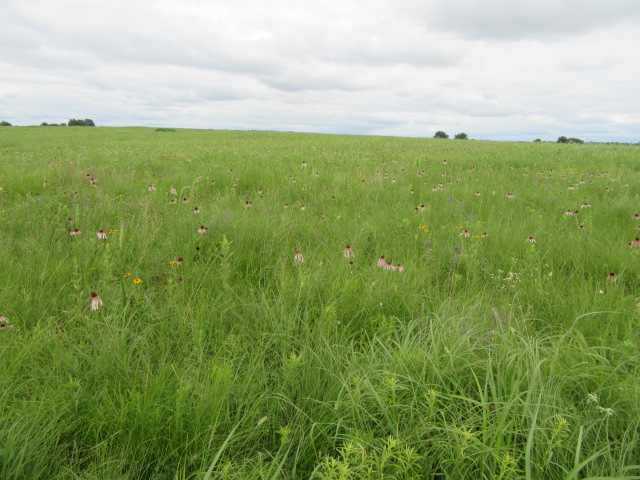
Echinacea pallida (Pale Purple Coneflower) area at the Friendly Prairie on 6-22-26.
Hello everyone! I hope this post finds you well. It’s been a little over a month since my last visit to the three prairies, so I thought I better get a post published before I go back. It has been very hot and I’ve been fishing for a couple of hours almost every evening at the park (in the shade). Just sitting there with 4 lines in the water visiting with a good friend is very relaxing… I thought I needed to get pages published for the new species, at least some general information and the photos, before I wrote this post. I didn’t quite get that accomplished though.
Since the last post on April 29, I went back to the private prairie with a couple of good friends on May 3 and there were hardly any wildflowers blooming at the time. Rather disappointing to be honest. I had hoped to have their mind blown!
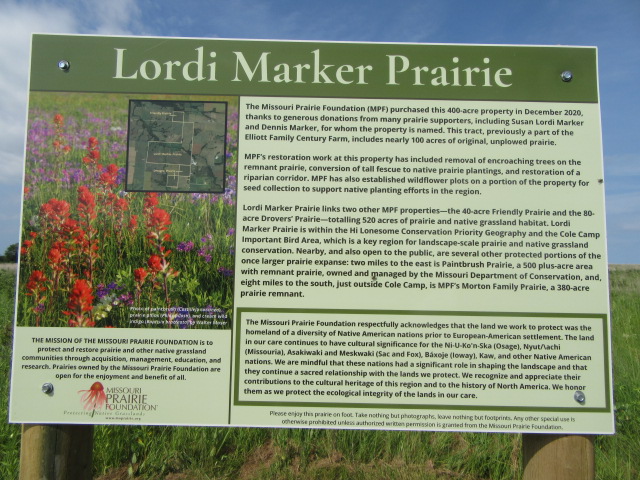
Front of the sign at the entrance to the Lordi Marker Prairie.
Then, Walter, the friend who introduced me to the prairies in the first place, told me about an event coming up at the Lordi Marker Prairie on June 6 and 7. Well, I didn’t go, but Walter did and he sent a few photos… That perked my ears up, so Walter took me on the 8th. I took LOTS of photos there then we went to Drover’s Prairie which is across the highway and up a gravel road just a short distance away.
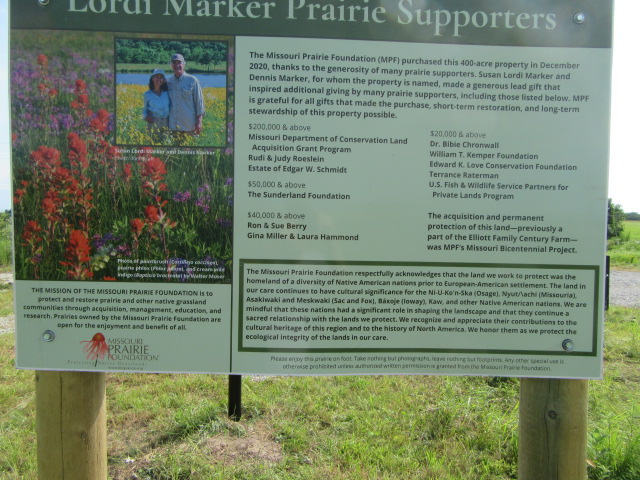
Back of the sign at the entrance to the Lordi Marker Prairie.
I photographed 19 species at the Lordi Marker and Drover’s Prairies on June 8. It was quite a visit and I think 11 species were new to me.
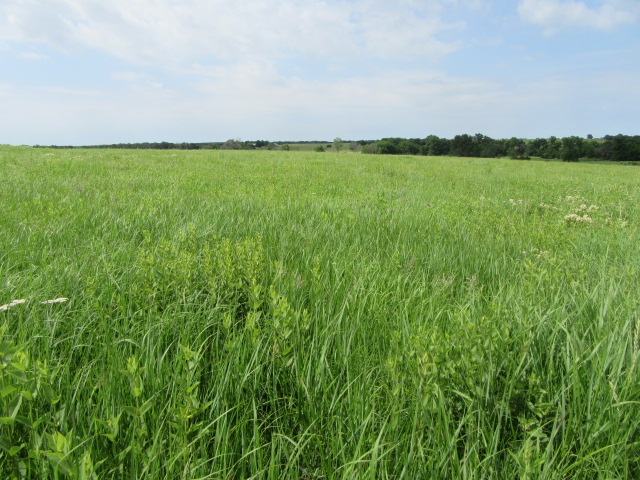
Just a glimpse of the Lordi Marker Prairie on June 8, 2026.
Then, on June 22, I had an itch to go to the Friendly Prairie across from the private prairie whose name I promised I would mention. Well, if you ever go to the Friendly prairie, you would know who owns the private prairie since there is sign that has the name of their farm on it. Her name is also mentioned in the big sign at the entrance to the Lordi Marker Prairie. The land Lordi Marker is on used to belong to her family… Anyway… June 22 proved to be perfect timing for A LOT of species.
I photographed 22 species at the Friendly Prairie on the 22nd, 8 new to me. I went on to The Lordi Marker Prairie and took photos of 6 species and then back to Drover’s Prairie and photographed 17 species there including 10 new to me.
I really can’t explain the awesomeness of a prairie, so I’m not even going to try. Words or photos can’t explain the beauty. I walked out in the prairie and looked all around me, enveloped in its majesty. I had a sense of being so small yet very welcome.
I wanted to get pages published for all the new species before I wrote this post, but then I realized how time has flown by. So, not all the wildflowers on this post have published pages. The ones that do, their pages don’t have descriptions yet… Just more photos…
So, here are most of the new-to-me species I found at the three prairies in June…
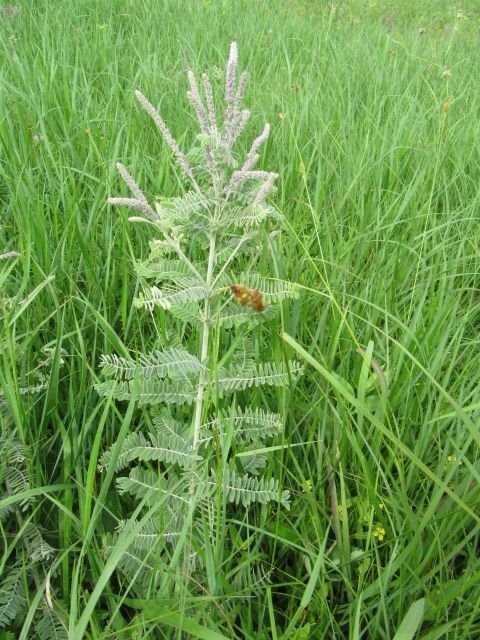
Amorpha canescens (Lead Plant) from the Lordi Marker Prairie on 6-8-26, #1096-1.
One of the first plants I noticed at the Lordi Marker Prairie on June 8 was the Amorpha canescens (Lead Plant). Common names include Lead Plant, Downey Indigo Bush, Prairie Shoestring, Buffalo Bellows, False Indigo, Lead Plant Amorpha, and possibly others.
It was named Lead Plant because people used to believe plants growing in an area was an indicator of lead being present in the ground. The flowers are an interesting bluish-purple with gold anthers. Roots can grow to 16 feet deep.
Native Americans used it medicinally, some believing it could treat pinworms, eczema, rheumatism, neuralgia, open wounds, and cuts.
<<<<+>>>>
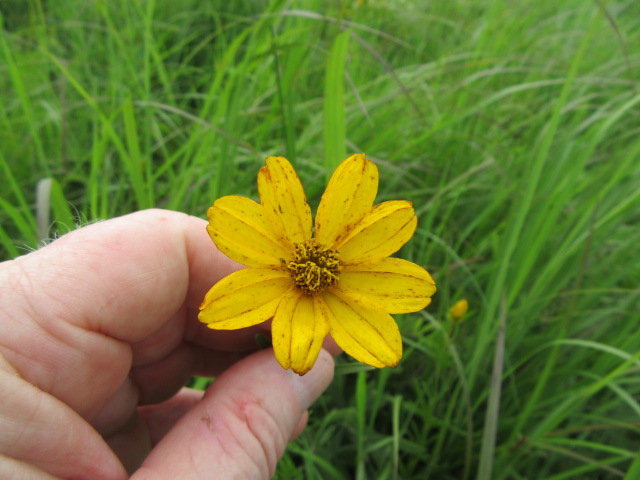
Anacis palmata (Syn. Coreopsis palmata) (Prairie Coreopsis) at the Lordi Marker Prairie on 6-8-26, #1096-35.
This new-to-me species was Coreopsis palmata when I first photographed and identified it on June 8. By the time I published it page on July 12, the name had officially changed to Anacis palmata (Prairie Coreopsis). Apparently, DNA testing showed the species didn’t belong in the Coreopsis genus and is more closely related to members of the Bidens (Beggarticks) genus. Botanists then moved this species and five others into the resurrected Anacis genus (first named in 1817). One of the species had been in the genus before. Interesting, Thomas Nuttall originally named this species Coreopsis palmata in 1818… Well, I found it interesting… I am certainly glad they didn’t put it in the dreaded beggarticks genus…
I first ran across this species at the Friendly Prairie but the flowers weren’t as good as those on the plants at Drover’s. However, I originally screwed up and misidentified the best flowers at Drover’s that I originally thought were Coreopsis palmata. Well, you know what Coreopsis flowers look like, right? They all look pretty much similar. Well, the kind of faded Coreopsis palmata flowers from the Friendly Prairie didn’t exactly look Coreopsis flowers. I suppose now it is because they weren’t. No wonder the flower photos online for Coreopsis palmata didn’t look like Coreopsis. Anyway, now I have to fix the goof on the Anacis palmata page… Down farther is Coreopsis grandiflora (Large-Flowered Tickseed).
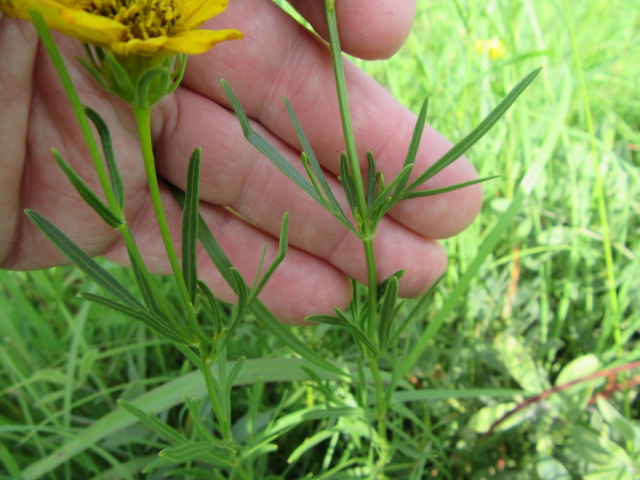
Anacis palmata (Syn. Coreopsis palmata) (Prairie Coreopsis) at Drover’s Prairie on 6-8-26, #1097-3.
I think it gets the species name from its leaves which are small and kinda sorta palm-like (in someone’s mind). Other common names include Stiff Tickseed, Wedgeleaf Coreopsis, Prairie Tickseed, Finger Coreopsis, and possibly others. I think the leaves are finger-like for sure, but it would be hard to explain. Click on the link above to its page and have a look at the photos and see what you think…
<<<<+>>>>
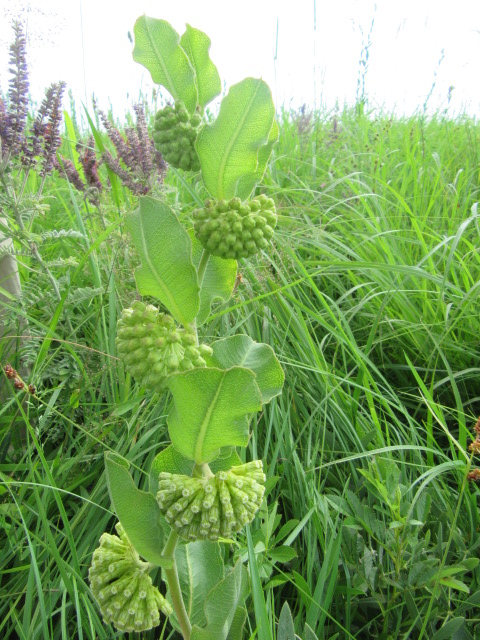
Asclepias viridiflora (Green Comet Milkweed, Etc.) from Lordi Marker Prairie on 6-8-26, #1096-15.
The Asclepias viridiflora (Green Comet Milkweed) is a new to me milkweed species. Other common names include Green Milkweed, Green-Flowered Milkweed, Short Green Milkweed. Wand Milkweed, and possibly others. I only saw these on June 8 but not on the second visit… The flowers grow in umbels along the fairly tall stems…
I knew milkweeds have a milky sap that can cause contact dermatitis with some people, but I didn’t realize is causes birds to avoid insects, like Monarch Butterfly larvae, that feed on this plant.
<<<<+>>>>
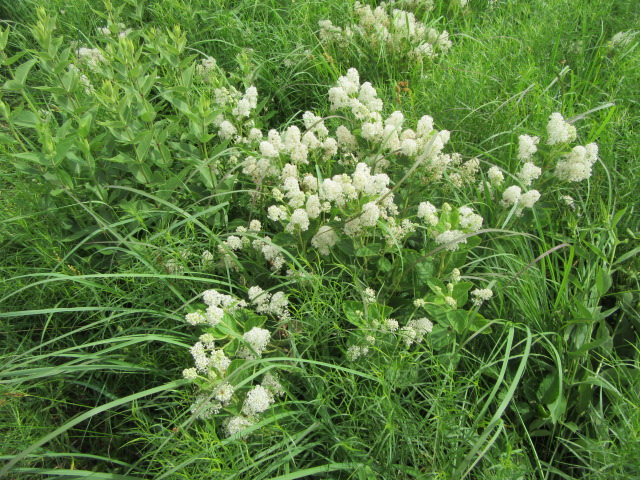
Ceanothus americanus (New Jersey Tea) at the Lordi Marker Prairie on 6-8-26, #1096-21.
One of the neatest species I found at the Lordi Marker Prairie on June 8 was the Ceanothus americanus (New Jersey Tea). Another common name is Mountain Snowbell. I took several photos of this one… It is a deciduous shrub that grows 3-4 feet tall x 3-5 feet wide with thick weedy roots that help it withstand drought. Named New Jersey Tea because the leaves were used as a tea substitute during the American Revolution… The leaves have a fresh scent of wintergreen although I didn’t know that when I was taking photos or I would have taken a whiff… Roots and flower extracts can be used as dyes.
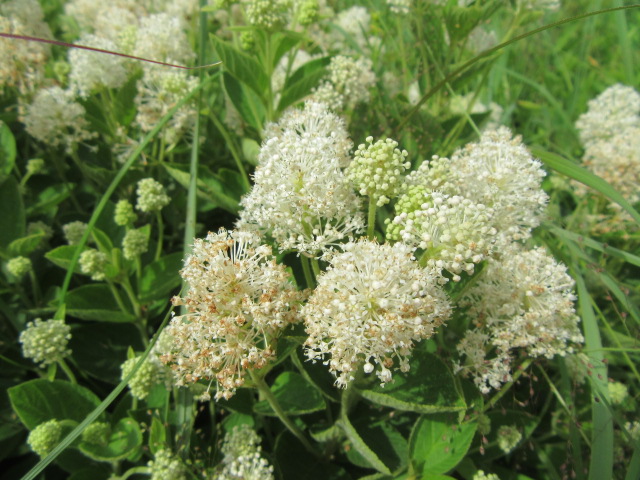
Ceanothus americanus (New Jersey Tea) at the Lordi Marker Prairie on 6-8-26, #1096-28
Food source for the larvae of the Mottled Duskywing, Spring Azure, and Summer Azure Butterflies. Deer eat the twigs of this plant during the winter, and wild turkey and quail eat the seeds during the winter.
Wikipedia says Native Americans used the red roots and bark for upper respiratory infections. They also used it to treat syphilis and cancer. Other parts of the plant were used for treating dysentery, gonorrhea, and eye problems in children.
<<<<+>>>>
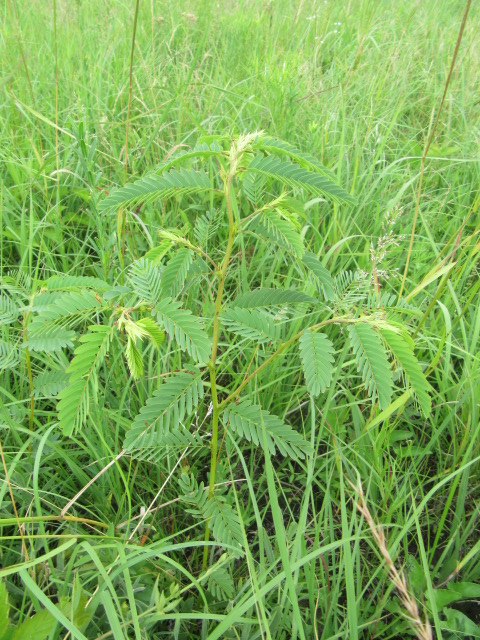
Chamaecrista fasciculata (Partridge Pea) at Drover’s Prairie on 6-22-26, #1099-31.
I found A LOT of Chamaecrista fasciculata (Partridge Pea) at both Drover’s and the Friendly Prairies on June 22. Other common names include Prairie Senna, Golden Cassia, Large-Flowered Sensitive Pea, Sleeping Plant, Locust Weed, and possibly others. There were no flowers yet, which is one reason I need to get back to the prairie soon. Missouri Plants say they flower from July through October… They have very unique flowers for a member of the plant family Fabaceae with yellow petals with red and yellow stamens. The leaves are supposed to fold when touched, but that didn’t happen when I checked. Well, I touch all ferny-leaved plants to see if they fold up… The leaves are supposedly light-sensitive and start folding automatically in the late afternoon.
<<<<+>>>>
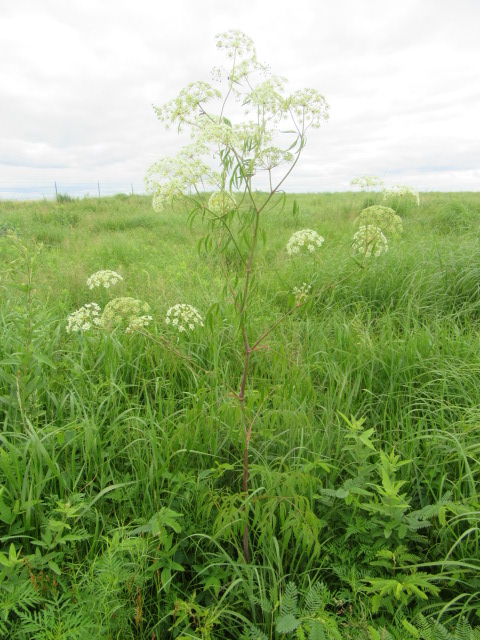
Cicuta maculata (Water Hemlock) from the Drover’s Prairie Conservation Area on 6-22-26, #1099-35.
While at the Drover’s Prairie, I saw this plant on a hillside quite a distance from where I was. It seemed to take a while to get to it because there was so many other plants to look at. When I finally got to it, I thought how interesting and majestic it was. The flowers, however, reminded me of members of the plant family Apiaceae so I knew it could be poisonous. I took photos several photos without paying much heed to its poisonous possibilities. When I arrive home and started working on the photos and submitting them to iNaturalist, it suggested its name was Cicuta maculata (Water Hemlock). I did a little reading about it and found out it is, in fact, considered to be America’s most toxic native species… Cattle can die within 15 minutes after injecting it! GEEZ!!! It has several common names including Beaver Poison, Spotted Hemlock, Spotted Water Hemlock, Water Hemlock, Spotted Parsley, Cowbane, Spotted Cowbane, and possibly others. Next time I won’t be so friendly with it… Plants just grow rosettes the first year, but can reach up to 8 feet tall the second.
<<<<+>>>>
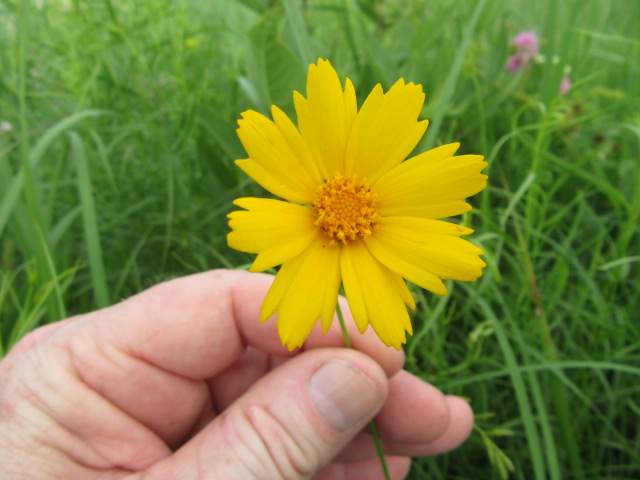
Coreopsis grandiflora var. harveyana (Large-Flowered Tickseed) at the Lordi Marker Prairie on 6-8-26, #1096-30.
This Coreopsis grandiflora (Large-Flowered Tickseed) is a REAL Coreopsis species. Apparently, I only took photos of this species at Lordi Marker Prairie on June 8 and Drover’s on June 22. Other common names include Bigflower Coreopsis, Common Coreopsis, Largeflower Tickseed, Large-Flowered Tickseed, Tickseed, and possibly others.
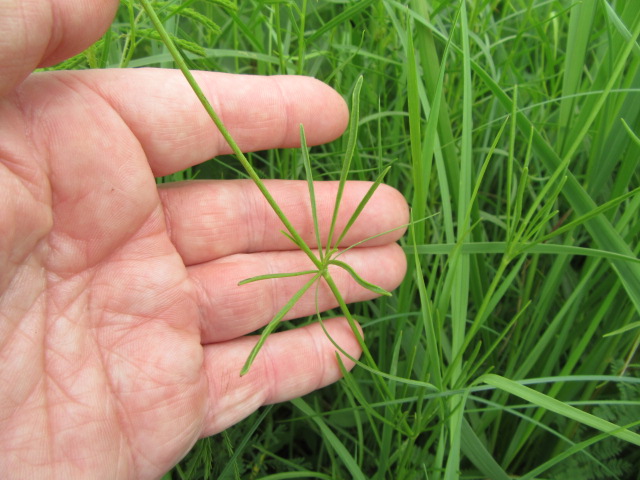
Coreopsis grandiflora var. harveyana (Large-Flowered Tickseed) at the Lordi Marker Prairie on 6-8-26, #1096-32.
The leaves are very fine…
<<<<+>>>>
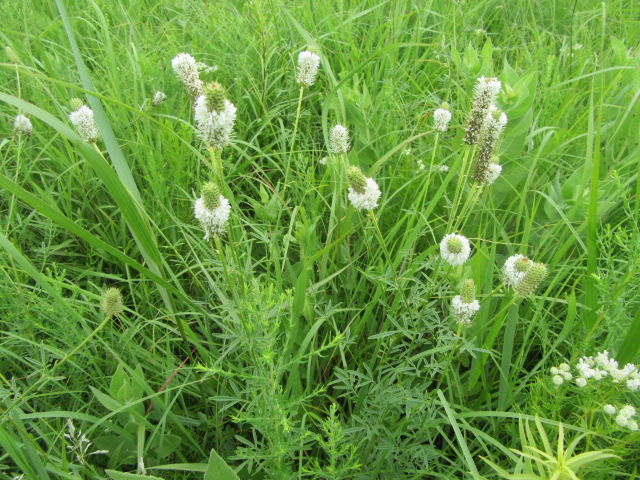
Dalea candida (White Prairie Clover) at the Friendly Prairie on 6-22-26, #1099-44.
I ran across two new species of clover at the Friendly Prairie on June 22 I hadn’t seen before. They are the Dalea candida (White Prairie Clover) and Dalea purpurea (Purple Prairie Clover).
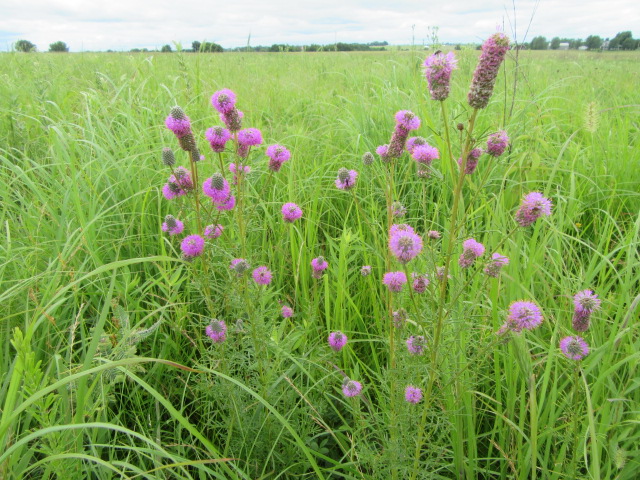
Dalea purpurea var. purpurea (Purple Prairie Clover) at the Friendly Prairie on 6-22-26, #1099-49.
Both species are valuable in prairies as they provide food for grazing animals and nectar for bees and butterflies. They have long tap roots, up to 6 1/2 feet deep, and can survive drought and fires. Controlled burns are used to control woody species that would otherwise take over prairies and displace species that aren’t tolerant of shady areas such as Dalea species. Dalea is considered one of the best nitrogen fixers and they also help control erosion.
Currently, there are 193 species in the Dalea genus native to Canada down through Argentina in South America. A few species have also been introduced to the Philippines.
<<<<+>>>>
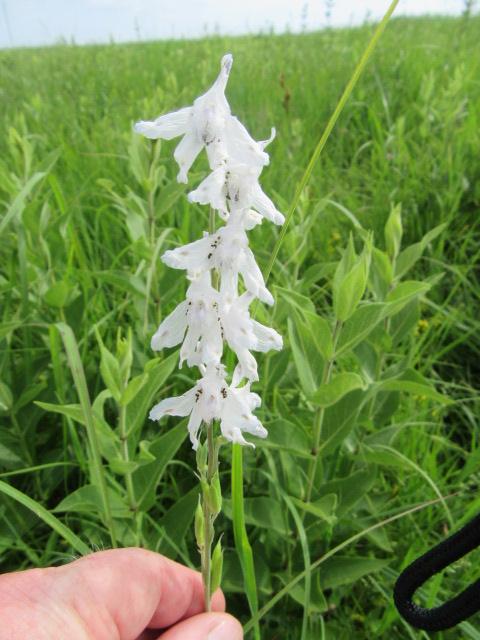
Delphinium carolinianum subsp. virescens (Prairie Larkspur) at the Lordi Marker Prairie on 6-8-26, #1096-38.
I found several Delphinium carolinianum subsp. virescens (Prairie Larkspur) at the Friendly Prairie and Drover’s Prairie on June 8. I took several photos but only two were good enough to save so I didn’t publish a page.
<<<<+>>>
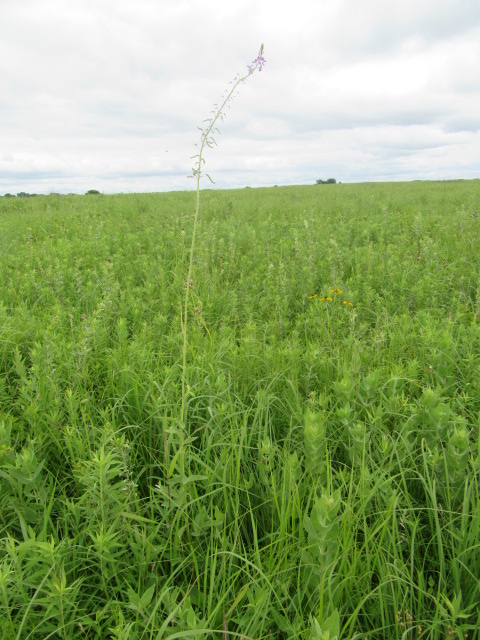
Desmodium illinoense (Illinois Tick-Trefoil) at Drover’s Prairie on 6-22-26, #1099-55.
When I first ran across this species at the Lordi Marker Prairie on June 8, I thought it sure did look like a Desmodium, but it had a single stem with flowers in the upper part. Well, sure enough, it turned out to be Desmodium illinoense (Illinois Tick-Trefoil) and I found it at all three prairies.
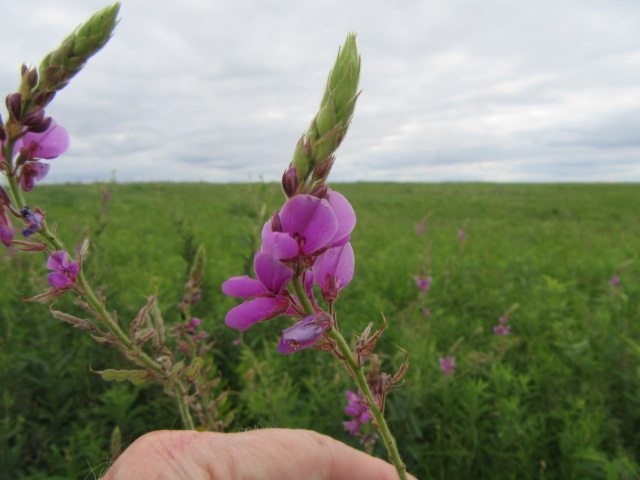
Desmodium illinoense (Illinois Tick-Trefoil) at Drover’s Prairie on 6-22-26, #1099-54.
Yep, the flowers sure looked like Desmodium flowers… As a plant they aren’t so bad, but their seed pods make them a species I love to hate… At least this species has a tall stem 4′ stem so you can see it before you get bombarded.
<<<<+>>>>
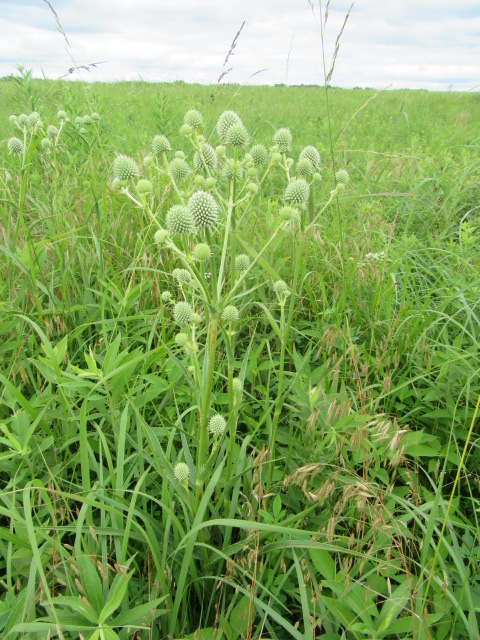
Eryngium yuccifolium (Rattlesnake Master) from the Friendly Prairie on 6-22-26, #1099-63.
I first heard of the Eryngium yuccifolium (Rattlesnake Master) when Walter send me a photo during the event at Lordi Marker Prairie on June 6. I really wanted to see it in person which I did when he took me on June 8. I found them again at the Friendly Prairie on June 22. Other common names include Button Snakeroot, Button Eryngo, Beargrass, Bear’s Grass, and possibly others.
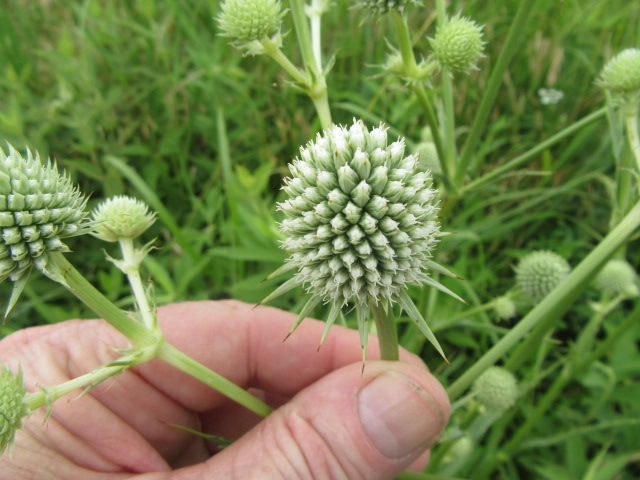
Eryngium yuccifolium (Rattlesnake Master) from the Friendly Prairie on 6-22-26, #1099-67.
It has thick, fleshy leaves and really neat spiky flowers. The somewhat narrow leaves are “yucca-like” with teeth along the margins. Plants can grow to around 5 feet tall, but usually shorter.
The common name comes from the belief the plant was an antidote for rattlesnake venom, which was likely due to John Adair’s documenting it was used during ceremonial handling of rattlesnakes by Native Americans.
Numerous species of bees, flies, butterflies, beetles, and wasps feed on the flowers nectar and pollen. The Rattlesnake Master Stem Borer (Papaipema eryngii) depends on this species to complete its life-cycle. This moth’s caterpillars burrow in the stems and roots. Surviving populations are now restricted to areas with large populations of this plant and limited only to the central United States.
<<<<+>>>>
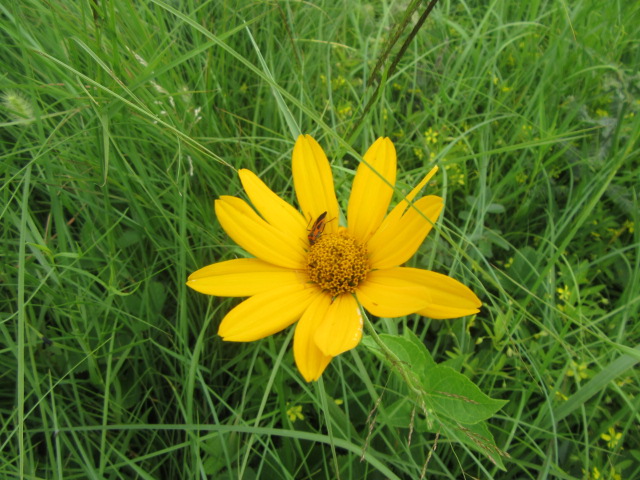
Helianthus mollis (Ashy Sunflower) at the Lordi Marker Prairie on 6-22-26, #1099-72.
There were a lot of Helianthus mollis (Ashy Sunflower) at both the Friendly and Lordi Marker Prairies on June 22, but unfortunately, most of the flowers were still buds…
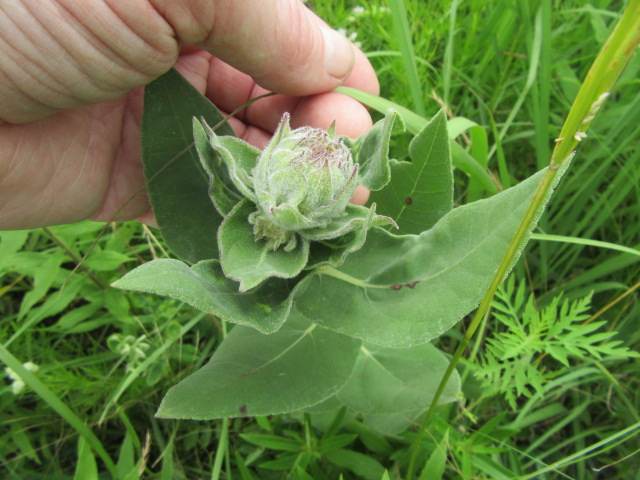
Helianthus mollis (Ashy Sunflower) at the Friendly Prairie on 6-22-26, #1099-71.
They have very distinctive, rough-textured leaves…
<<<<+>>>>
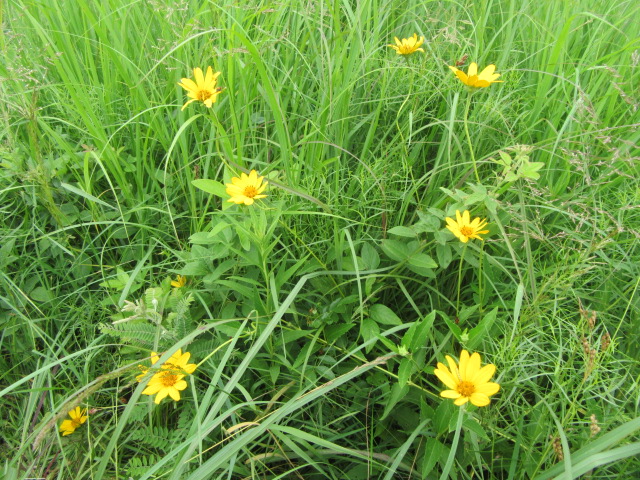
Heliopsis helianthoides (False Sunflower, Etc.) at the Lordi Marker Prairie on 6-22-26, #1099-79.
I ran across several colonies of Heliopsis helianthoides (False Sunflower, Etc.) at the Friendly Prairie and Lordi Marker Prairie on June 22. These plants can grow up to 5 feet tall in the right conditions. Other common names include Rough Oxeye, Smooth Oxeye, and possibly others. There are several cultivars of this species available for home gardens.
<<<<+>>>>
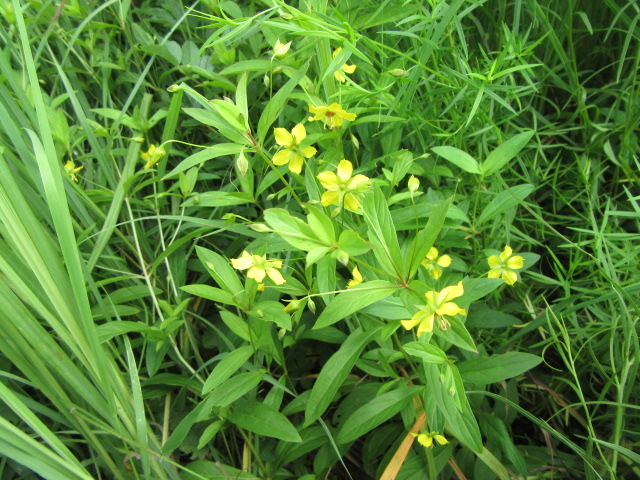
Lysimachia lanceolata (Lanceleaf Loosestrife) at the Lordi Marker Prairie on 6-8-26, #1096-53.
There were quite a few colonies of the Lysimachia lanceolata (Lanceleaf Loosestrife) at the Lordi Marker Prairie on June 8. When I was first looking into this species, I thought perhaps the name had changed since there wasn’t a Wikipedia article. Heck, it isn’t even listed as a species. Well, that isn’t the case since it is certainly an accepted species. Perhaps a listed species is a synonym instead. I’ll check into that later… I found this species quite interesting and took a lot of photos of the flowers. It was a good thing I did because many didn’t come out so good…
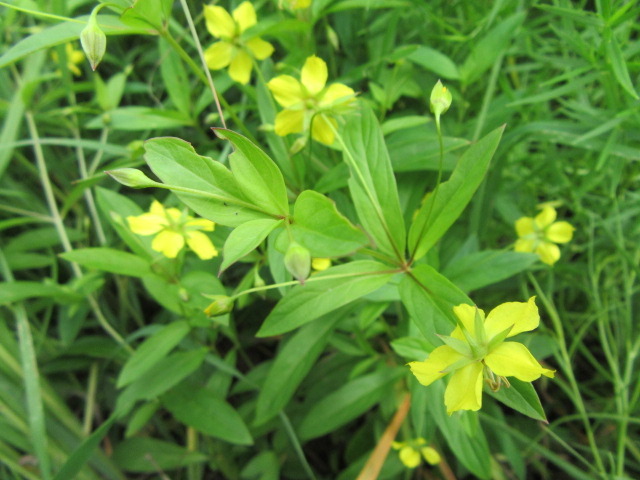
Lysimachia lanceolata (Lanceleaf Loosestrife) at the Lordi Marker Prairie on 6-8-26, #1096-54.
Ummm… The flowers hang upside-down, dangling from long, thin flower stems that just kind of, umm… Well, they just hang there upside-down. What else can I say.
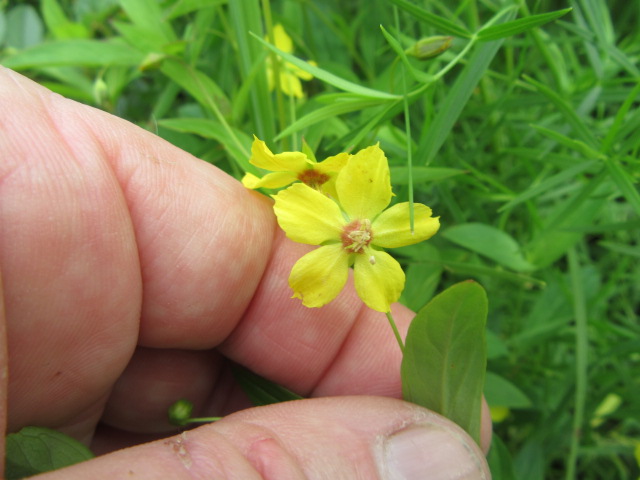
Lysimachia lanceolata (Lanceleaf Loosestrife) at the Lordi Marker Prairie on 6-8-26, #1096-56.
As you can tell, the flowers are small because my fingers aren’t near that huge! I was quite proud that photo came out so well after so many were blurry. Near little yellow flowers with reddish centers… No page yet…
<<<<+>>>>
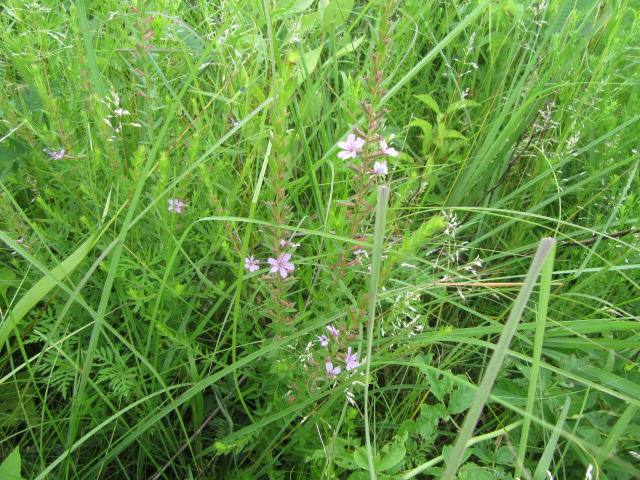
Lythrum alatum (Winged Loosestrife) at the Friendly Prairie on 6-22-26, #1099-98.
I found several Lythrum alatum (Winged Loosestrife) while browsing around at the Friendly Prairie on June 22. I probably missed a lot of them because they were just kind of hidden among taller grass at the time even though they can grow to around 3 feet tall. Information online says they are found wet areas. Hmmm… Perhaps I wasn’t paying attention, but I didn’t notice them growing in a wet area at the Prairie. Maybe I should pay more attention to where I’m at instead of looking for more species of plants. I could get lost! No page for this one…
<<<<+>>>>
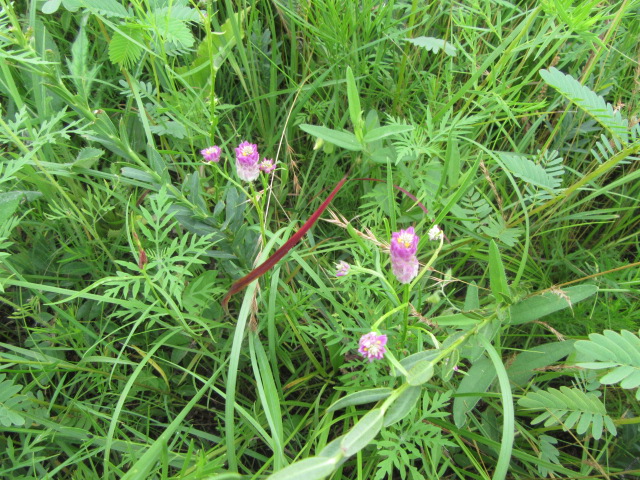
Senega sanguinea (Field Milkwort) at Drover’s Prairie on 6-22-26, #1099-134.
As I was meandering around at Drover’s Prairie on June 22, I happened upon this small patch of flowers that somewhat hidden among the taller vegetation. I took a few photos, of course, and uploaded them on iNaturalist. The suggested name was Senega sanguinea (Field Milkwort). Not only was it a new species for me, the family it is part of, Polygalaceae, is also new for me. Other common names include Purple Milkwort, Blood Milkwort, and possibly others.
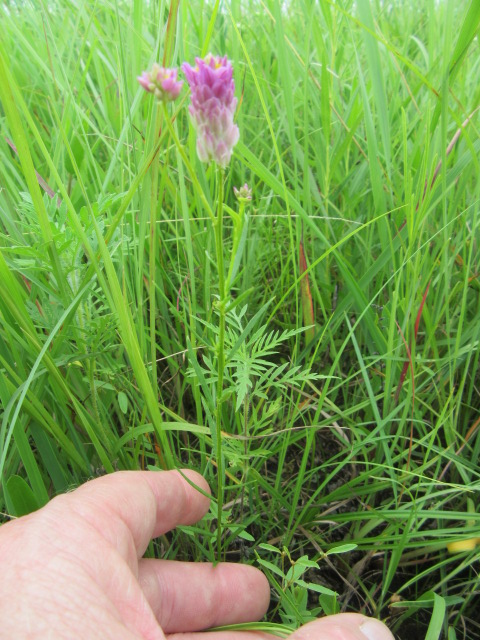
Senega sanguinea (Field Milkwort) at Drover’s Prairie on 6-22-26, #1099-133.
It is an annual species rather than being perennial or biennial, and its flowers can be pink, green, or white. The species has a broad range from the midwest eastward and as far down as Texas and way up into Canada.
<<<<+>>>>
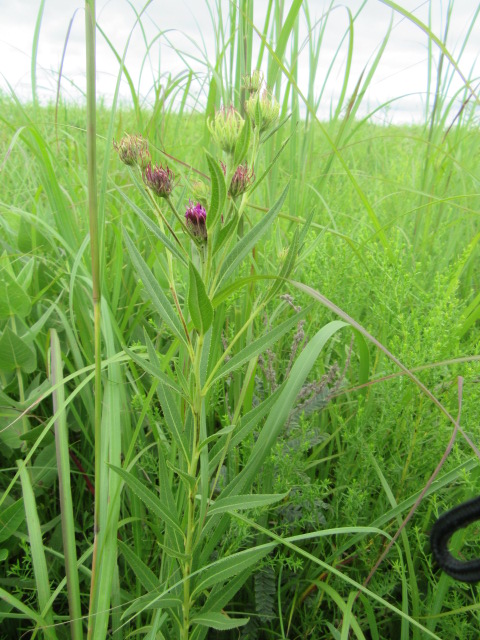
Vernonia arkansana (Arkansas Ironweed) at the Friendly Prairie on 6-22-26, #1099-145.
When I was at the Friendly Prairie on June 22, I noticed several plants that looked like an Ironweed, but they had strange looking buds. I took several photos to upload on iNaturalist for an ID, and it said the species was Vernonia arkansana (Arkansas Ironweed). My first thought was, “Another Ironweed to get confused about.” Here on the farm, and most other areas I have been in, have Vernonia baldwinii, Vernonia gigantea, or Vernonia missurica that are fairly controversial. Hardly anyone will commit to which species they are and they cross-pollinate which makes it even more difficult.
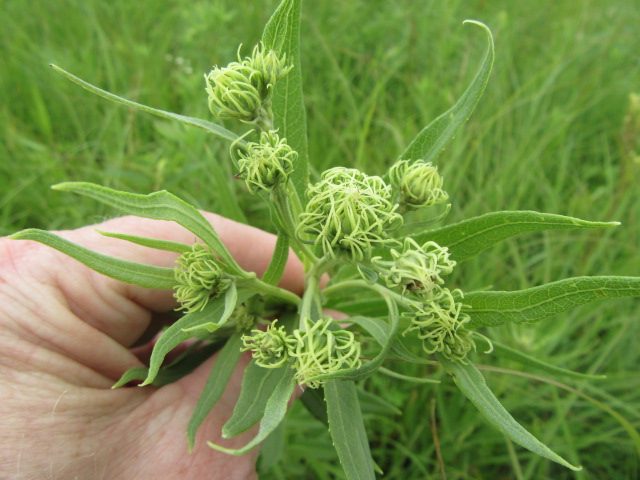
Vernonia arkansana (Arkansas Ironweed) at Drover’s Prairie on 6-22-26, #1099-144.
When I saved the observation of this one on iNaturalist, almost immediately a member agreed and the observation became Research Grade. Finally, an ironweed that is easy to identify… I don’t think, as far as I have seen, any other ironweed with buds like that. Well, there are 325 species in the genus…
Oh, something interesting happened… I don’t really pay much attention to the stats, but I received an interesting notification from WordPress. It said, “Congratulations! Your site, The Belmont Rooster, passed 500,000 all-time views.” I checked the stats and apparently views have went up A LOT in the last year.
Well, I am finished with this post! Now I have to go back to the prairies to take more photos and see if I can take photos of plants that weren’t in flower and see what else I can find. It has been miserably hot, though, but I will still go. Hopefully this week.
Until next time, be safe, stay positive, keep cool, always be thankful and GET DIRTY!

