North Bed Up & Growing…

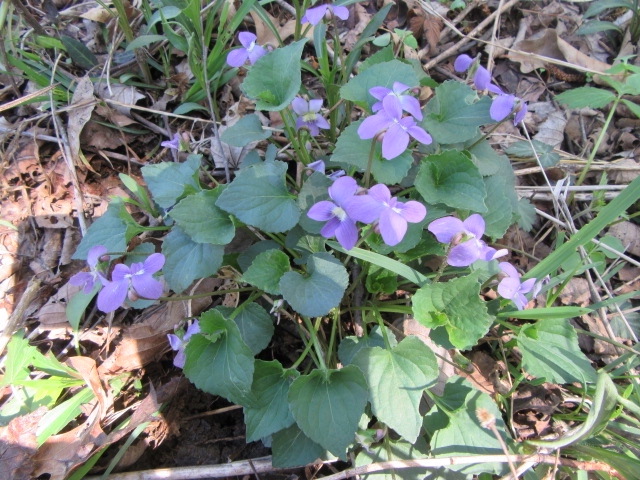
Viola sororia (Common Blue Violet) on 4-5-26, #1085-5.

Hello everyone! I hope this post finds you well. I’ve been working on this post since March 28, but the plants in the north bed have been growing so fast I had to re-take photos three times. This spring has been weird with temps up and down, not to mention the wind and rain. The plants inside want to go out, so that is coming up soon. The grass is growing and I need to fix the riding mower very soon.

The above photo is of a clump of Viola sororia (Common Blue Violet) I photographed in the back of the farm on 4-5-26. I originally photographed a clump from the north bed for this post, but I really liked the way the plants looked at the back of the farm better. Common Blue Violets grow in abundance in several areas on the farm and are always a welcome sight in the spring. There are several other species of Viola here, and I noticed a lot of Viola rafinesquei (American Field Pansy) in the woods next to the old lane that goes to the back of the farm. I rarely get into those trees so I didn’t know they were there in such abundance.

I’m planning on an adventure to my friends secluded woods very soon… You know, one of my favorite spots. I have also decided to go to several native prairies in the area at some point.

Before the photos for this post get out of date, I’ll get started with the bed along the north side of the house…
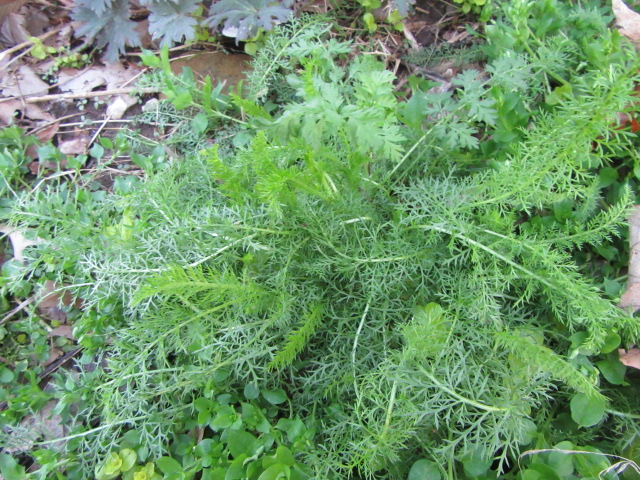
Achillea millefolium cv. ‘?’ on 4-4-26, #1084-1.

First, in alphabetical order, is the Achillea millefolium cv. ‘?’ (Yarrow) that has made its home next to the steps. It is a descendent of plants given to me by my friend Mary Botler when I lived in Mississippi. She gave me a start in 2011 and I have since transplanted them in a few places. It was first closer to the house where it received too much shade so it moved all by itself. This clump has been in this spot for several years, so I guess it has found its home.

<<<<+>>>>
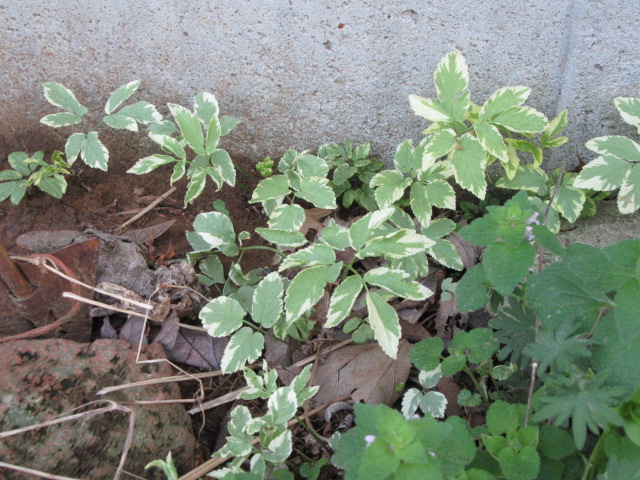
Aegopodium podagraria (Snow-On-The-Mountain) on 4-4-26, #1084-2.

Hmmm… I’m not sure what to say about the Aegopodium podagraria (Snow-On-The-Mountain) except that I was warned about it being rather pushy after I put one plant in the north bed in 2024. I know some perfect places where it could run rampant, but perhaps not where it is… It seems it has somehow spread underground over the winter when its neighbors were sleeping. They woke up to an invasion! Well, it’s not bad yet, but I think it has its own agenda to explore new territory. I don’t have a page for this one yet…

<<<<+>>>>
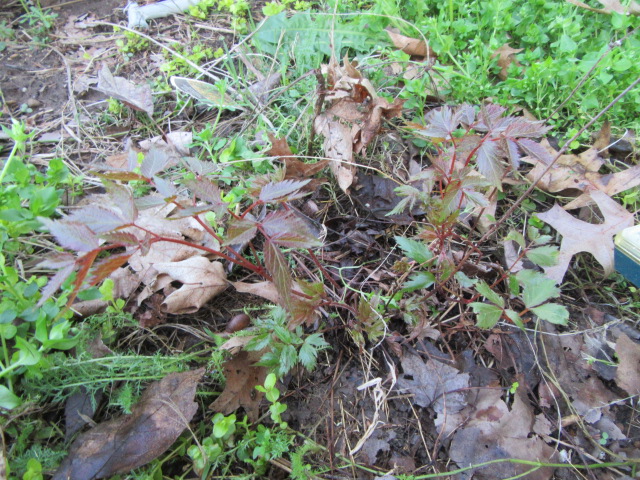
Astilbe x arendsii ‘Fanal’ on 4-4-26, #1084-3.

The Astilbe x arendsii ‘Fanal’ seems to be getting off to a good start. I had to move it over a few feet last spring (I think) because it was next to the ever growing Hosta ‘Empress Wu’. It didn’t seem to appreciate it at the time since it didn’t get very large last summer. I hope it has realized now it was for its own good and will do better this year. I have had this plant since 2018 and have enjoyed its foliage and flowers. This cultivar won the Royal Horticultural Society Award of Garden Merit in 1993.

<<<<+>>>>
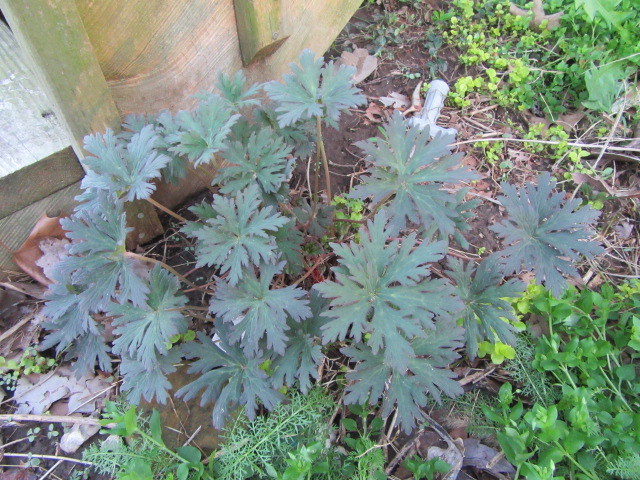
Geranium pratense ‘Boom Chocolatta’ on 4-4-26, #1084-4.

I was very glad to see the Geranium pratense ‘Boom Chocolatta’ had returned for 2026. I brought this plant home from Muddy Creek Greenhouse in 2024 and it has been a great performer, especially last year. I finally have its page finished…

<<<<+>>>>
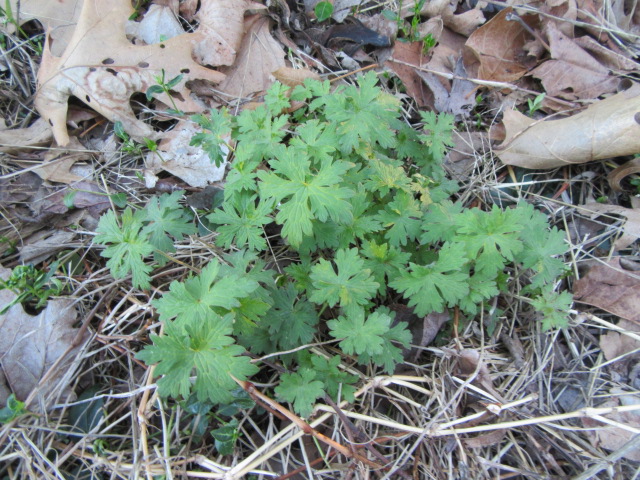
Geranium pratense ‘Johnson’s Blue’ on 4-4-26, #1084-5.

I was equally glad to see the Geranium pratense ‘Johnson’s Blue’ return on the other side of the steps. I’m happy its clump has gotten bigger, too! Although I just brought it home from Wagler’s Greenhouse in 2024, this cultivar has been popular since it was released somewhere around 1950. It has received the Royal Horticultural Society’s Award of Garden Merit and is frequently cited as a top performer. It has a new page, too.

<<<<+>>>>
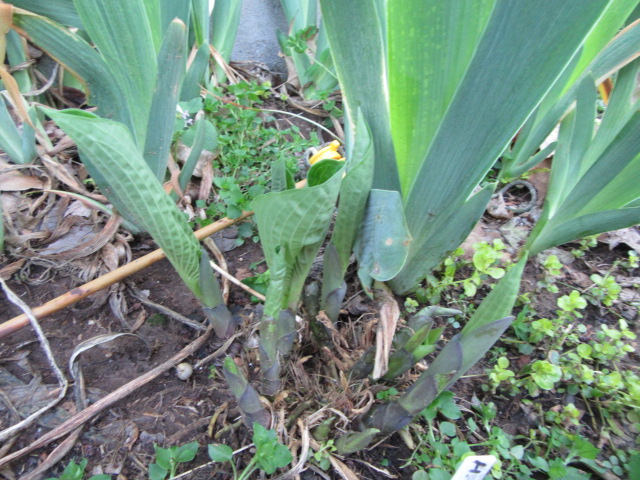
Hosta ‘?’ on 4-4-26, #1084-10.

The Hosta ‘?’ is coming up once again. I brought it home from one of the garden club’s plant sales several years ago and it has done great. It is undoubtedly one of the more popular blue-leaved cultivars, I just don’t know which one since it was unlabeled. Yeah, it was one of those “rule-breakers” where I always say not to bring home plants without labels. There are many blue-leaved cultivars that look so much alike figuring it out would be nearly impossible. I’ve grown several in the past and this one looks like all of them! It grows into a good-sized clump with nice big, puckered leaves and produces bright while flowers. It is just weird it doesn’t have a name… Well, it has one for sure, I just don’t know what it is…

<<<<+>>>>
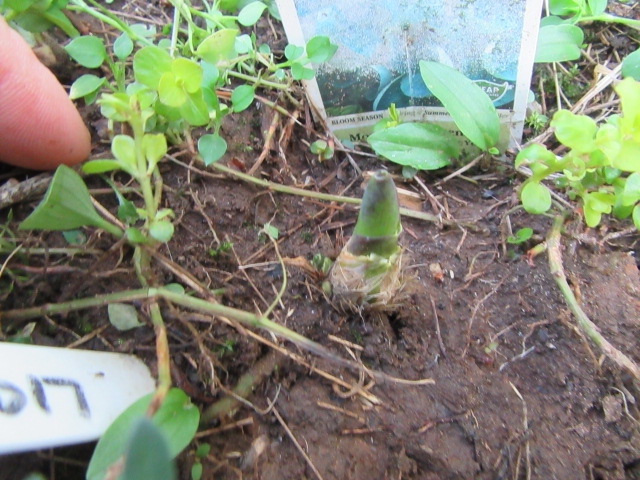
Hosta ‘Abiqua Drinking Gourd’ on 4-4-26, #1084-11.

The Hosta ‘Abiqua Drinking Gourd’ is working on its 10th season. It didn’t do all that great last summer, and has emerged with only one shoot this spring (so far). I really like its puckered, cup-shaped leaves… The American Hosta Society awarded it with the 1996 Lucille Simpler Award and the Best Green Hosta Award also in 1996. It was awarded the Royal Horticultural Society of Garden Merit in 2012 and the American Hosta Growers Association Hosta of the Year in 2014.

<<<<+>>>>
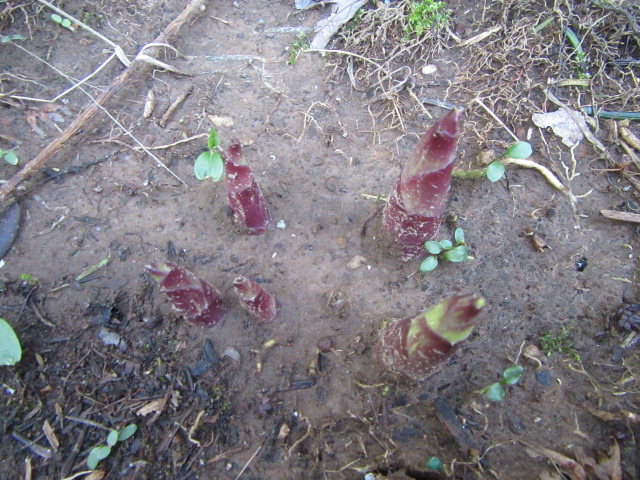
Hosta ‘Dancing Queen’ on 4-4-26, #1084-12.

It seems like the Hosta ‘Dancing Queen’ only one or two tiny sprouts a few days ago, now it is really going! I always liked this cultivar for its bright chartreuse leaves that seem to glow. Hosta ‘Dancing Queen’ was introduced in 2005. The American Hosta Society awarded it with the Benedict Garden Performance Honorable Mention in 2014 and the Benedict Garden Performance Award of Merit in 2015. It was awarded the 2020 Hosta of the Year by the American Hosta Growers Association.

<<<<+>>>>
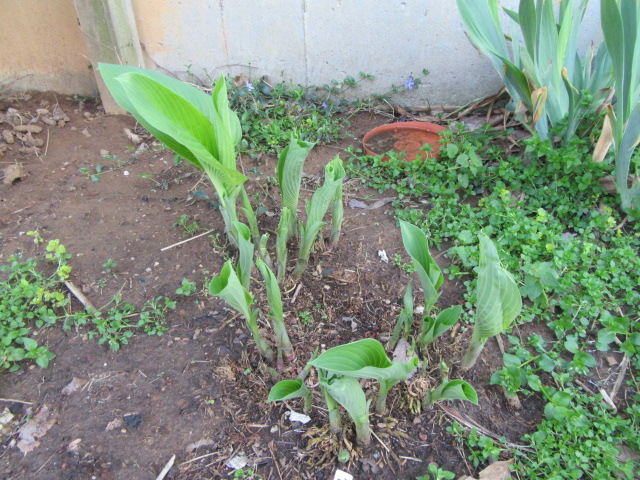
Hosta ‘Empress Wu’ on 4-4-26, #1084-13.

The Hosta ‘Empress Wu’ is up and growing and covering a larger space than before. It didn’t grow as large last year, so maybe it is a sign I should give them all a little food… Sometime the soil runs out of ZIP, you know… Working on its 10th season. I think it is still claiming to the largest Hosta cultivar… In 2023, it was awarded the Proven Winners Hosta of the Year as well as the Hosta Growers Association Hosta of the Year.

<<<<+>>>>
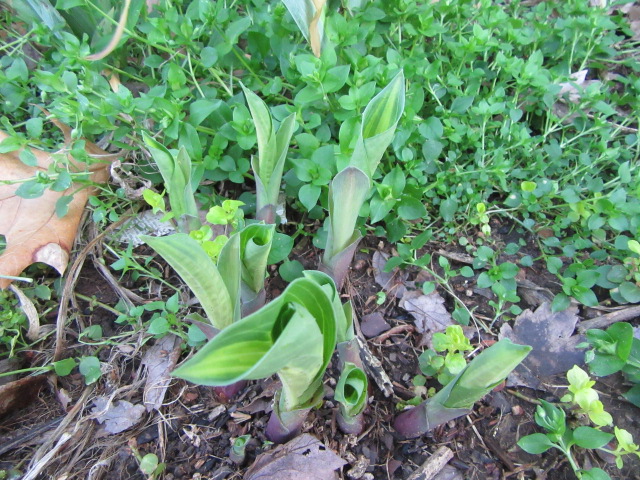
Hosta ‘Forbidden Fruit’ on 4-4-26, #1084-14.

The Hosta ‘Forbidden Fruit’ is always one of the first to come up in the spring and it has really shot up in the past few days. It has always been one of my favorite and always a great performer. Its leaves are nicely variegated and slug and snail resistant. At some point, it was awarded the Royal Horticultural Society of Garden Merit. Even though it hasn’t won that many awards, it is an award winner to me. It is working on its 10th season.

<<<<+>>>>
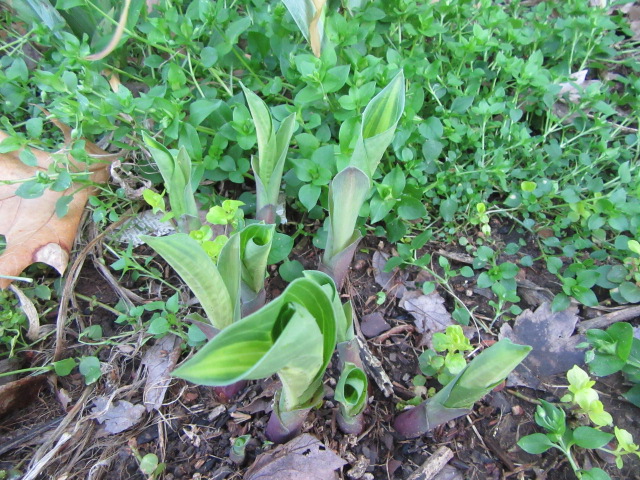
Hosta ‘Guacamole’ on 4-4-26, #1084-14.

It is always great to see the Hosta ‘Guacamole’ coming up in the spring. I always liked its leaves in various shades of green. Always a top performer! It was introduced by Bob Solberg of Green Hills Farm in North Carolina in 1994. It is a reverse sport of Hosta ‘Fragrant Bouquet’ and a descendant of Hosta plantaginea. It was the 2002 American Hosta Growers Association Hosta of the Year. In 2006, the American Hosta Society awarded it with the Benedict Garden Performance Honorable Mention Award, and in 2009 their Benedict Garden Performance Award of Merit. It was also awarded the Royal Horticultural Society Award of Garden Merit.

<<<<+>>>>
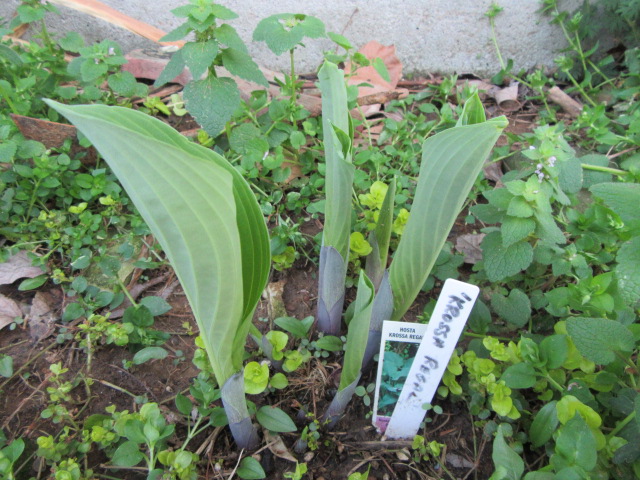
Hosta ‘Krossa Regal’ on 4-4-26, #1084-16.

Hosta ‘Krossa Regal’ has been one of my favorite Hosta cultivars since I first grew it in the 1980’s when I lived here after my grandfather passed away. I purchased my second one in 2009 when I lived in Mississippi and brought it with me in 2013. It did well until the deer kept eating the Hosta leaves in 2021 and it didn’t do so well in 2022. In 2023, only one sprout came up and I moved the Hosta to the north side of the house. I put it in a pot but it barely grew over the summer. It didn’t return in the spring of 2024 but fortunately I found a replacement at Wagler’s Greenhouse. I always liked this cultivars vase-shaped growth habit and chalky blue-green leaves. Last year, one of its flower stems grew to 60″ tall! It is a multiple award winner receiving the Eunice Fisher Award in 1974. The American Hosta Society awarded it with the Alex J. Summers Distinguished Merit Hosta Award in 2001, the Benedict Garden Performance Honorable Mention Award in 2006, and the Benedict Garden Performance Award of Merit in 2008.

<<<<+>>>>
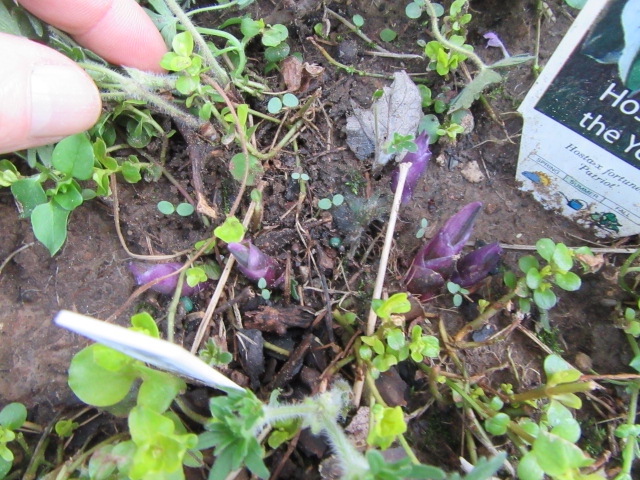
Hosta ‘Patriot’ on 4-4-26, #1084-17.

I was happy to see the Hosta ‘Patriot’ emerging with its lavender sprouts. This one is working on its third season and is sure to be a stunner. It was registered by John Machen, Jr. in 1991 and has become one of of the most popular Hosta cultivars of all time and was the first recognized tetraploid Hosta sport. It was named the Hosta of the Year in 1997 by the American Hosta Growers Association and received the Royal Horticultural Society Award of Garden Merit. It is claimed to be the most popular white-margined Hosta.

<<<<+>>>>
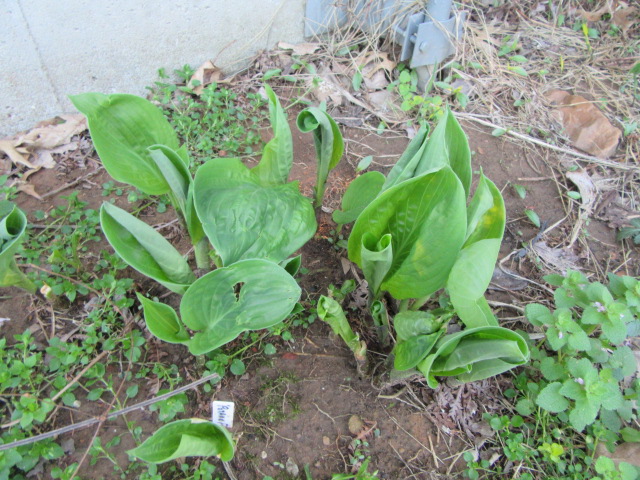
Hosta ‘Potomac Pride’ on 4-4-26, #1084-18.

The Hosta ‘Potomac Pride’ is the oldest cultivar in my small collection. I believe I ordered it from a seller on Ebay in 2009 when I lived in Mississippi, although I have no photos of it until 2010. I moved it to Missouri with me in 2013 and it has done great! Despite the deer nibbling on its leaves nearly every spring in the old shade bed, it continued to grow and thrive. I divided it when I moved it to the north bed along the house in the spring of 2023 and it has continued to do great. It was always one of the first to emerge in the spring and 2026 was no exception. This cultivar was developed by Tony Avent of Plant Delights Nursery and registered with the American Hosta Society in 1995. It was selected as the AHS Convention Plant in the same year. It is a great Hosta with nice dark green leaves and a great performer. It is working on its 18th season!

<<<<+>>>>
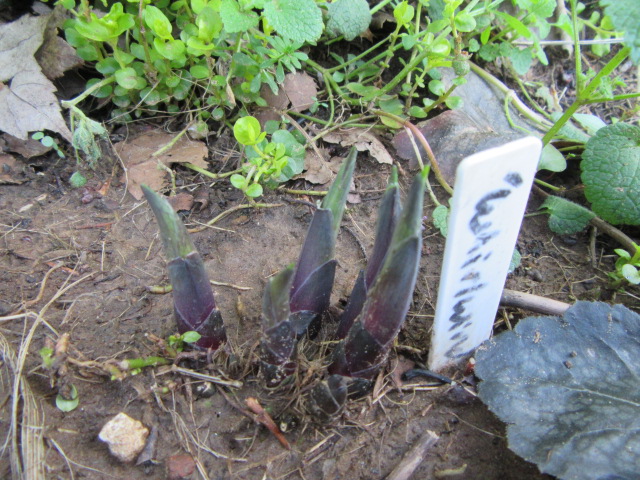
Hosta ‘Whirlwind’ on 4-4-26, #1084-19.

The Hosta ‘Whirlwind’ is looking great so far with several sprouts. I always like this one with its medium and dark green variegated, kind of twisted leaves. They are thick textured so they are slug and snail resistant. I brought this one home in 2018, so it is working on its 9th season. It won the America Hosta Society Benedict Garden Performance Award in 2007 and the Royal Horticultural Society Award of Garden Merit.

Well, I’ll close for now.

Until next time, be safe, stay positive, always be thankful AND, as always… GET DIRTY!


New Plants Update

Aegopodium podagraria (Snow In The Mountain/Goutweed) on 7-5-24, #1000-1.

Hello everyone! I hope this post finds you well. I thought I would write a post about the new plants I brought home in 2024. Some of the new plants complained because I didn’t write a new post when I brought them home, so this is an apology to them. A few are grouping together and are still snubbing me. GEEZ!

Some plants listed are replacements and already have a page (highlighted in green) but most are new and have no page YET. In alphabetical order…

<<<<#1>>>>

I remembered my grandma Miller having plants along the back of their house that were green and white variegated. I didn’t know what they were called and couldn’t find any locally. I saw a house on Main Street that had A LOT next to their house but I didn’t want to stop and ask for a start…

Finally, I found a few at Wagler’s Greenhouse on May 25. Well, of course, I had to grab one. I really knew nothing about their behavior, or even their name, until I drug a photo onto iNaturalist… I think drug is an appropriate word for drag and drop. Anyway, Aegopodium podagraria is the scientific name for this plant that, according to information online, will soon become “plants” as it is a spreader. The common name is Goutweed while the variegated form is usually called Snow-In-The-Mountain… Umm, a different species is called Snow On The Mountain so we don’t want to get confused. Time will tell if I actually want it in the north bed but I can’t hesitate if I choose to relocate it. I read it can be hard to get rid of…

<<<<#2>>>>

Aloe x ‘Amethyst’ on 7-5-24, #1000-2.

I really like Aloe, so when I find a new one of interest I have to bring it home. This Aloe x ‘Amethyst’ caught my eye at Lowe’s on May 9 so I brought it home. Its leaves are definitely unique with all the lumps and strangely toothed margins.

<<<<#3>>>>

Aloe x ‘Pink Blush’ on 7-5-24, #1000-3.

Then on May 10, I ran across this Aloe x ‘Pink Blush’. I had one before, in 2014, that I guessed was ‘Pink Blush’ although it was unlabeled. This time it had a label. Well, I brought it home…

<<<<#4>>>>

Aloe humilis (Hedgehog Aloe) on 7-5-24, #1000-4.

Then there was this really spiny Aloe at Walmart on May 6 I put in my cart (not alone). This one was unlabeled and I had a heck of a time deciding what it was. I put photos on a couple of Facebook Groups and it seemed, at first, one of the suggestions for Aloe x spinosissima could have been correct. But, when I looked up information online, I hoped it wasn’t. Then, while adding captions to the photos I remembered putting the photo on the SucculentGuide Forum. I checked the post I made and several members posted suggestions that didn’t match this plant. One, however, suggested Aloe humilis (Hedgehog Cactus). I happily changed the caption because I like it much better. I’m certainly hoping it is an Aloe humilis

<<<<#5>>>>

Amaranthus cruentus ‘Red Spike’ (Red Amaranthus) on 7-5-24, #1000-5.

I spotted several Amaranthus cruentus ‘Red Spike’ (Red Amaranthus) at Wagler’s Greenhouse on June 11. At first, I just looked at them as I passed by but then turned around and picked one up. Hmmm… I haven’t grown any Amaranthus since 2012. It has grown A LOT!

Amaranthus cruentus ‘Red Spike’ (Red Amaranthus) on 7-5-24, #1000-6.

Now it has a bud…

<<<<#6>>>>

Coleus ? on 7-5-24, #1000-7.

I haven’t grown any Coleus (Coleus) for several years because I couldn’t find any suitable. I found this one at Wagler’s on May 20 that looked similar to one of the Kong Series so I brought it home. It has done quite well but the flowers need to be removed… I have grown some nice Coleus, and this one is proving itself quite well.

<<<<#7>>>>

Euphorbia ferox (Pincushion Euphorbia/Thorn Noors) on 6-5-24, #1000-8.

You know I couldn’t pass this thorny guy up when I found it at Walmart on May 6. Euphorbia ferox is called Pincushion Euphorbia on many websites, but iNaturalist says its common name is Thorn Noors. Hmmm… I’m not sure what that means but the thorn part is quite evident. If you look closely, you can see small leaves. Yep, it is a Euphorbia… It isn’t fond of being touched…

<<<<#8>>>>

Thelocactus setispinus (Miniature Barrel Cactus) on 7-5-24, #1000-9.

This Thelocactus setispinus (Miniature Barrel Cactus) was the featured photo in the last post. It has had many buds, but it has been somewhat difficult to see them open. I watched every day and all I would see was buds about to open, then the next day they would be wilting like they had already opened. The few times I did see them, they would be fully open for several days. What the heck is that? Now there are three at once… I hope it doesn’t bloom itself to death.

*NOTE: Originally, I thought this cactus was Ferocactus hamatacanthus (Turk’s Head), but thanks to an anonymous reader, I changed the name. So, in alphabetical order, now it should be on the bottom…

<<<<#9>>>>

Geranium pratense ‘Boom Chocolatta’ on 7-5-24, #1000-10.

This Geranium pratense ‘Boom Chocolatta’ is from Muddy Creek Greenhouse that I brought home on May 10. It has very dark green leaves and now it has flowers. NICE!!! Muddy Creek usually sells out early, so I was fortunate this one was still there.

Geranium pratense ‘Boom Chocolatta’ on 7-5-24, #1000-11.

How’s that for a happy leaf? I put this plant between the steps on the north side of the house and an Achillea millefolium… The Achillea was taller, so the Geranium had to grow even taller to strut its stuff.

<<<<#10>>>>

Geranium pratense ‘Johnson’s Blue’ on 7-5-24, #1000-12.

I have wanted a Geranium pratense ‘Johnson’s Blue’ for many years and Wagler’s has several to choose from. I didn’t bring one home until May 28 because I didn’t know where I would put it. Finally, I brought one home anyway… On the third trip… It set in its original pot for so long that it started objecting about its roots getting cramped up. SO, I put it in the northeast corner bed next to the steps. Ummm, between the Amaranthus ‘Red Spike’ and Echinacea purpurea I put there previously…

Hmmm… I moved an Echinacea purpurea to this spot because it came up right next to the Phlomis ‘Edward Bowles’ in the southeast corner bed. Edward objected so I moved the Echinacea. When my sister was here plant shopping, when I first saw the Geranium ‘Johnson’t Blue’, I had a plan to give her the Echinacea so I could go back and get the Geranium. Well, it didn’t work… She wants this and that, but for some reason, she doesn’t want a Purple Coneflower…

Geranium pratense ‘Johnson’t Blue’ on 5-28-24, #994-3.

The above photo was taken of its flower when I brought it home on 5-28-24… NICE!

<<<<#11 & 12>>>>

Heuchera sanguinea ‘Coral Forest’ on 7-5-24, #1000-13.

OK, so Wagler’s had quite a few Heuchera but I was somewhat confused. There were plants with variegated leaves and some with plain green leaves all in the same flats. Some of each had the same label that said Heuchera sanguinea ‘Coral Forest’. I brought home one of each on May 25. A few days later, I went back and there were other flats farther down the greenhouse that were the same but with other labels… Some said Heuchera americana ‘Dale’s Strain’ and others said Heuchera sanguinea ‘Firefly’. Hmmm…

Heuchera americana ‘Dale’s Strain’ on 7-5-24, #1000-14.

I did some research and found out that H. ‘Coral Forest’ has variegated leaves, H. ‘Firefly’ has green leaves, and the leaves of H. ‘Dales Strain’ start out green then they develop olive-green markings… At first, I thought I must have an H. ‘Coral Forest’ and an H. ‘Firefly’. The next thing I knew, ‘Firefly’ became ‘Dale’s Strain’. GEEZ!!!

Now, I have to back up a little. In the spring of 2023, I moved the Hosta and Heuchera from the shade bed to the bed along the north side of the house (the north bed). I had lost several and wanted them replaced. So, on May 6 I went to the Green Street Market (a garden center) in Clinton since they always have a good selection of Hosta.

<<<<#13>>>>

Hosta ‘Dancing Queen’ on 7-5-24, #1000-15.

At Green Street, I found a Hosta ‘Dancing Queen’ to replace the one that the deer destroyed in 2021. Only one leaf came up in 2022 then it fizzled out… The new one likes its new spot except for one thing. The Viola sororia are rather pushy…

<<<<#14>>>>

Hosta ‘Guacamole’ on 7-5-24, #1000-16.

The Hosta ‘Guacamole’ also didn’t return in 2024 so I was happy I found a good selection at Green Street. What would a Hosta collection be without this one? As you can see it is looking great and getting ready to flower.

<<<<#15>>>>

Hosta ‘Patriot’ on 7-5-24, #1000-18.

The Hosta ‘Patriot’ is a new one I decided to bring home from Green Street. It is doing well and it has already produced flowers. No page yet…

<<<<#16>>>>

Hosta ‘Krossa Regal’ on 7-5-24, #1000-17.

Then on May 10, I found a Hosta ‘Krossa Regal’ to replace the one that didn’t return in the shade bed in 2023. I had it since 2009… It is OK but seems a little bewildered by so much company… Ummm… Its color is a bit off, too.

<<<<#17>>>>

Kumara plicatilis (Fan Aloe) on 7-5-24, #1000-19.

For #17 is the Kumaria plicatilis (Fan Aloe) from Walmart on May 20. The label said it was Aloe plicatilis, but it was given a new name in 2013. Ummm… The genus name, Kumaria, was conserved and there are only two species in the genus. The other was renamed in 2014. I thought it was a neat plant but after reading about it I found out it can get quite large and tree-like. Hmmm… Perhaps the tag is totally wrong and it is the other species, Kumara haemanthifolia which is a low-growing species. Well, I guess time will tell…

<<<<#18>>>>

Orostachys malacophylla var. iwarenge (Chinese Dunce Cap) on 7-5-24, #1000-20.

Probably the weirdest plant I brought home this year is the Orostachys malacophylla var. iwarenge (Chinese Dunce Cap) I found at Wagler’s on May 28. It is native to Northern China Mongolia, and Japan and it is cold hardy in USDA Zones 5-10. Hmmm… It is a member of the plant family Crassulaceae and its growing habit is similar to Hens and Chicks. It is named for its “spires of silvery lavender cone-shaped rosettes.” As you can probably guess, it spreads from the runners. So far, it seems happy here, but time will tell. According to what I read about its “needs”, it should be repotted into a more suitable potting mixture…

<<<<#19>>>>

Parodia concinna (Sun Cup) on 7-5-24, #1000-21.

I found this Parodia concinna (Sun Cup) at Lowe’s on May 9. I brought this one home because it had several buds. The label said it was a Notocactus elegans, but there was no such accepted name in the Notocactus genus… Notocactus species were mostly moved to the Parodia genus some time back. I put photos on a couple of Facebook groups and the Cactiguide Forum. Several names were suggested which I checked out but none clicked. Finally, someone suggested Parodia ottonis which is a synonym of Parodia concinna. BINGO! It is a short, squatty fellow with a concaved apex which sets it apart from most members of the genus Parodia… There were a few other possibilities, but I am sticking with Parodia concinna.

Parodia concinna (Sun Cup) ? on 5-12-24, #990-2.

How’s that for a flower? It bloomed several times, once with two flowers at once. The above photo was taken on May 12…

<<<<#20>>>>

Pelargonium denticulatum (Tooth-Leaved Pelargonium) on 7-7-24, #1001-1.

Hmmm… I needed photos for the Pelargoniums, but when I was taking photos on July 5 they weren’t looking so hot. Well, I think they were hot and needed water. They looked much better after a good drink. Then on the 7th, they were in too much sun when I was working on the post, so I decided to take a nap. It was sprinkling when I woke up but I stood back under the roof and zoomed in a bit to get a couple of shots.

I found the above mislabeled plant at Wagler’s on May 28. The label said “Mosquito Plant” and said the name was Pelargonium citronellum. I could have easily called it that but the photo on the tag wasn’t the same as the plant I brought home. I had already figured out the above plant was Pelargonium denticulatum (Tooth-Leaved or Toothy Pelargonium) but I became stumped. I had a previous Pelargonium denticulatum in 2014 that looked completely different with more frilly leaves. Then I found a website belonging to a Pelargonium specialist from Greece. It is an awesome site and the Pelargonium denticulatum on her site had leaves like the one in the above photo. Well, she has a Facebook page, so I messaged her. I sent her photos of this plant and the one below. She, like me, said they were P. denticulatum and P. quercifolium like I thought. One thing led to another and I wound up sending photos of the Geraniums in the flower bed and the two native species…

OH, when I sent her a photo of the P. denticulatum from 2014, she replied that it looked like a cultivar called ‘Filicifolium’… Well… The caption under the photo and on its page says Pelargonium denticulatum ‘Filicifolium’… Before she had messaged me back, I had already looked it up online and had a good laugh. The cultivar has more frilly leaves. I wrote the page about it in 2014 which was transferred to this site in 2017. Ummm… That’s all I have to say about it…

If you want to learn more about Pelargoniums, go to Pelargonium Species World. If you have bought a Pelargonium, the name on the tag is likely incorrect like both of mine this year. Click HERE to go to the photo gallery and scroll all the way down for a chart with leaves. There you can click on a links to the various species that match the leaf shapes.

Pelargonium denticulatum (Tooth-Leaved Pelargonium) on 6-29-24, #999-4.

The above photo of the flowers of P. denticulatum was taken on June 29. Oh yeah, it has a caption…

<<<<#21>>>>

Pelargonium quercifolium (Oak-Leaved Geranium) on 7-7-24, #1001-2.

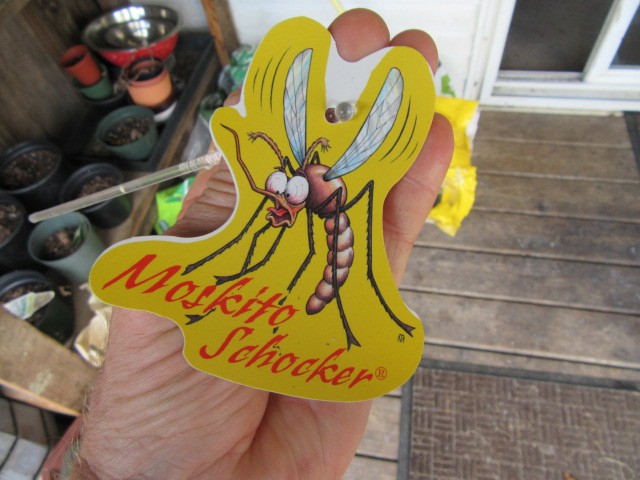
I brought this Pelargonium quercifolium (Oak-Leaved Geranium) home from Walmart on May 20. It had a dangly tag that said… Well, I’ll just show you a photo…

Hmmm…

The back of the tag says “Selection of Pelargonium Crispum or Quercefolia”… Well, it isn’t a P. crispum and P. quercifolium is spelled wrong. 🙂 As far as either one being a mosquito shocker… There are still mosquitos on the back porch. I didn’t buy them to repel mosquitos although they both smell very good.

Pelargonium quercifolium (Oak-Leaved Geranium) on 6-21-24, #997-2.

As the caption says, the above photo was taken on June 21.

<<<<#22>>>>

Peperomia graveolens (Ruby Peperomia/Ruby Glow) on 7-5-24, #1000-22.

When I went to Mast’s Greenhouse last year, I spotted a couple of Peperomia graveolens (Ruby Peperomia/Ruby Glow) in one of Mr. Mast’s daughter’s private collection. She reluctantly gave me a cutting which didn’t work out so well. This year, there were a few available for sale so, of course, I brought one home. It is doing fine so far but it seems to be a slow grower. Of course, it needs a better potting mixture since it is in commercial potting soil…

<<<<#23>>>>

Ptilotus exaltatus ‘Joey’ (Pink Mulla Mulla) on 7-5-24, #1000-23.

The strange flowers of this plant caught my eye when I was at Wagler’s on May 25. There was no label or tag so I used the drag-and-drop feature on iNaturalist. To my surprise, it came up with the name Ptilotus exaltatus (Pink Mulla Mulla). Then I checked online and came up with a cultivar called ‘Joey’. The species is an annual native to Australia… It has done OK, but I don’t think it likes as much rain as we have gotten lately.

<<<<#24>>>>

Selenicereus anthonyanus (Fish Bone Cactus/ Zig Zag Cactus) on 7-5-24, #1000-24.

On my fifth and final trip (so far) to Wagler’s on June 12, I found this Selenicereus anthonyanus (Fish Bone Cactus, Zig Zag Cactus). I asked Mrs. Wagler what it was, and she gave it to me. Well, I asked what it was not because I wanted it, but how could I refuse? According to the Wikipedia article, it was first discovered in 1946 and first flowered in captivity in 1950. It is a rarely collected and most plants in cultivation descend from the first collection. It is an epiphyte growing in trees whose stems are ascending or climbing, branching in clusters at intervals along the stem. The flowers in the photos are quite interesting, but it flowers at night and only for one night… Other common names include Rickrack Cactus and St. Anthony’s Rickrack. Hmmm…

I am finally finished with this post and I promise I will get another one ready soon. Probably about the garden.

Until next time, be safe, stay positive, be thankful, and GET DIRTY!