Six on Saturday: Garden Update 7-26-24

Hello everyone! I hope this post finds you well. I just wanted to write a quick post about how the garden is coming along.

I wrote this post on Thursday evening and set the time to publish for Friday at 9 AM. Well, it didn’t work. Here it is 10:40 PM and I am just now checking… I saved it as a draft, so maybe that’s where I messed up… Any suggestions?

I decided to go ahead and make this a Six On Saturday post…

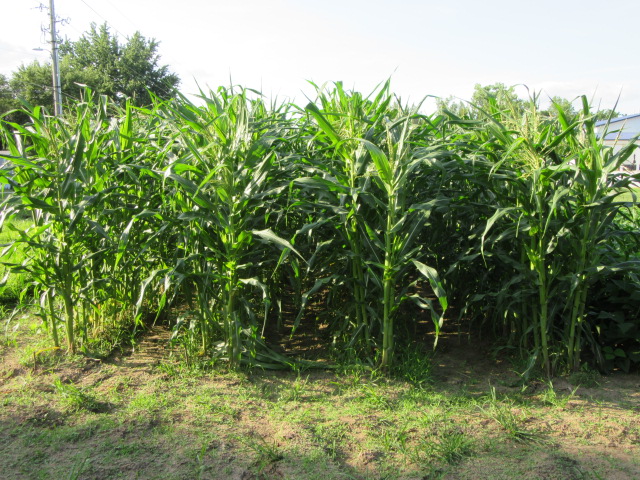
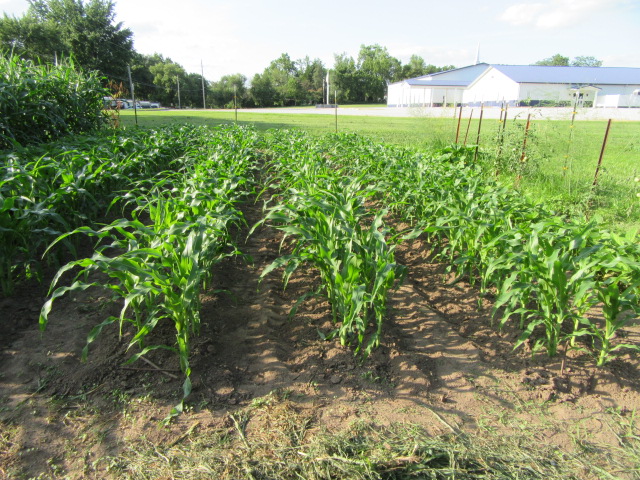
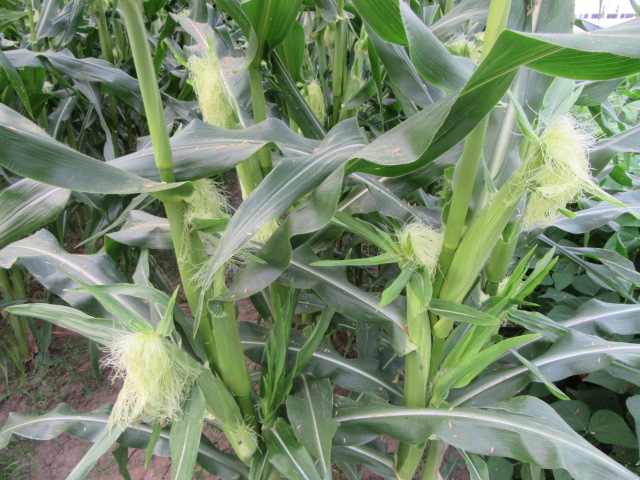
#1) The Sweet Corn ‘Incredible’ is looking great!

The pollination is coming along really well and the honeybees are hard at work collecting pollen.


I saw one collecting pollen, or trying to, where it has collected where the leaves come from the stalk… Those flying around the tassels had their legs full. One was so heavy it was having a hard time flying.


Some of the pollen is really packed…


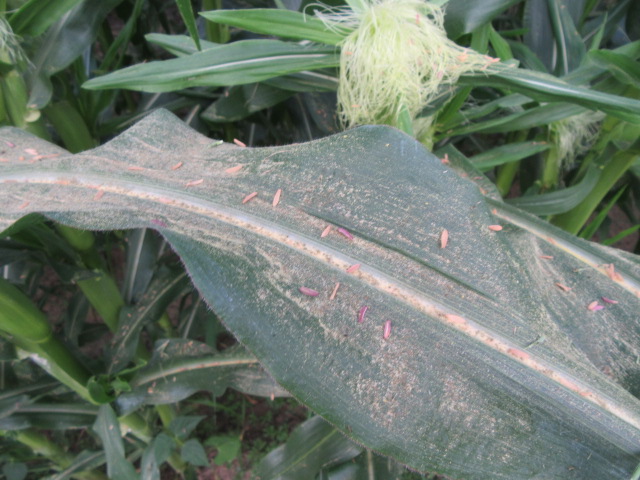
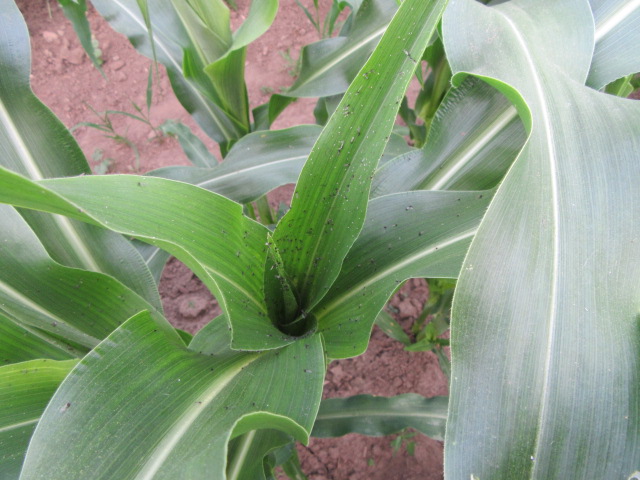
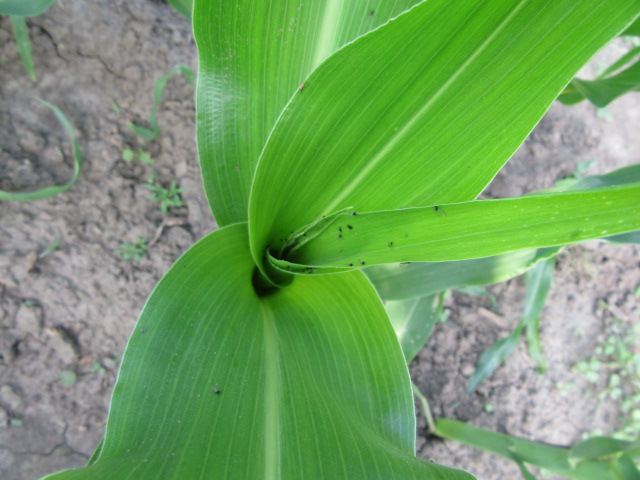
OH, the carnage! Dead aphids were everywhere on the 2nd planting… I bought a new sprayer. Well, the Neem oil killed most of them when I just sprayed the tops of the stalks the day before. I sprayed Sevin the next day from top to bottom and under the leaves.


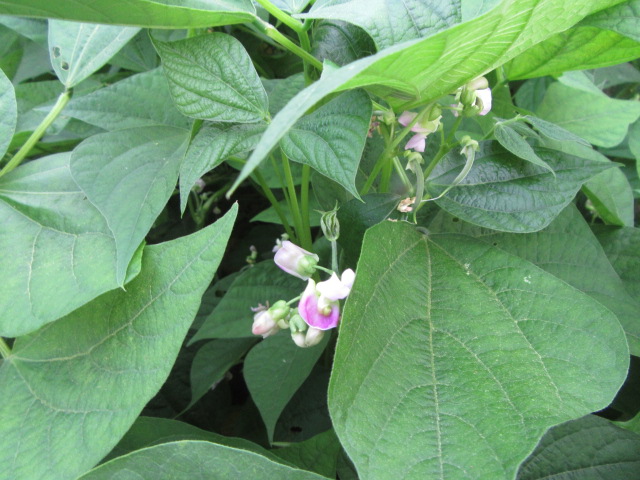
#2) The ‘Provider’ Bush Green Beans are still loaded with flowers on top of the plants.


I picked around 3 gallons early Friday evening. My neighbor helped pick them, so I gave him the whole bucket.


#3) The above photo is the biggest ‘Hale’s Best Jumbo’ Cantaloupe. NICE! Friday after the greens were picked, I found A LOT of aphids on the cantaloupe, so I retaliated with Sevin. GEEZ!


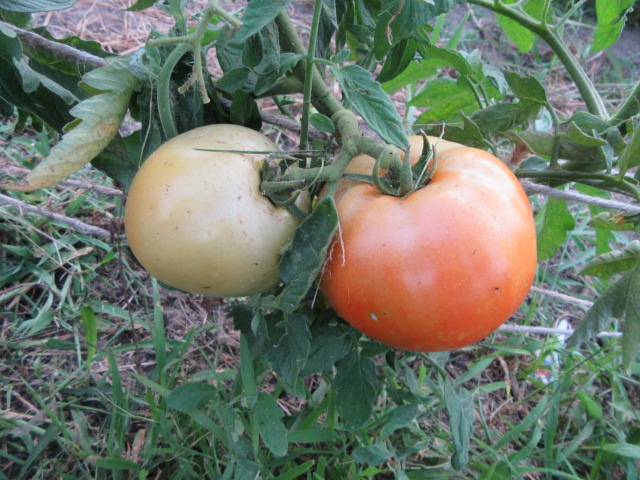
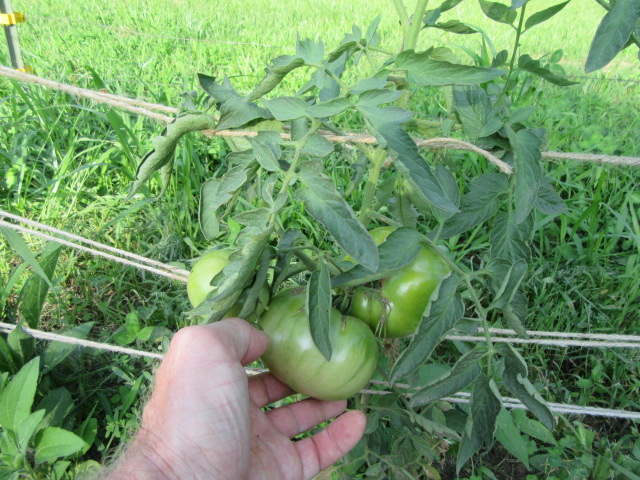
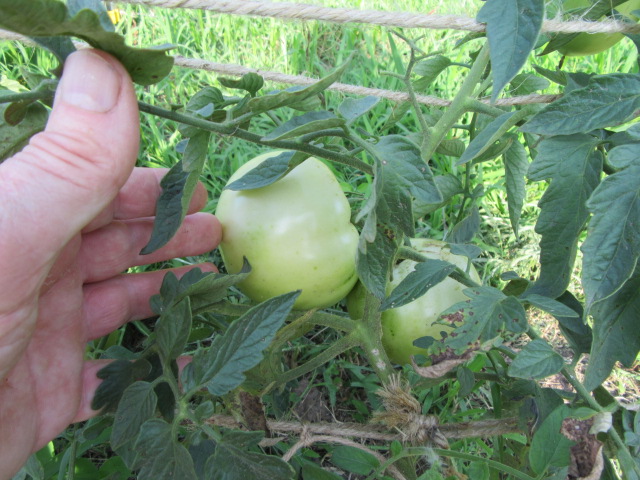
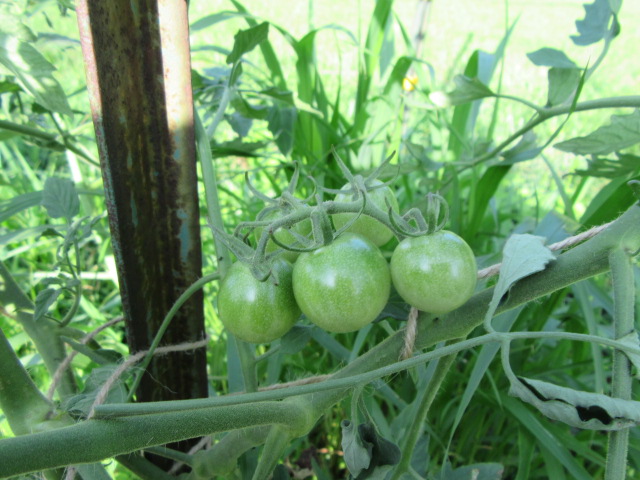
#4) One of the ‘Red Duce’ Tomatoes is almost ripe. One of the ‘Celebrity’ is next in line…


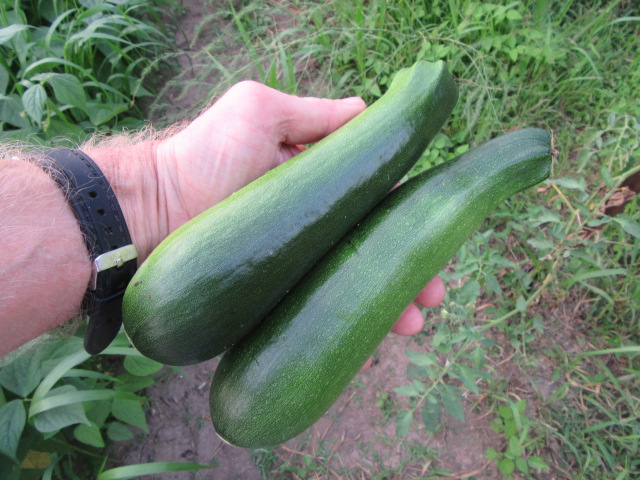
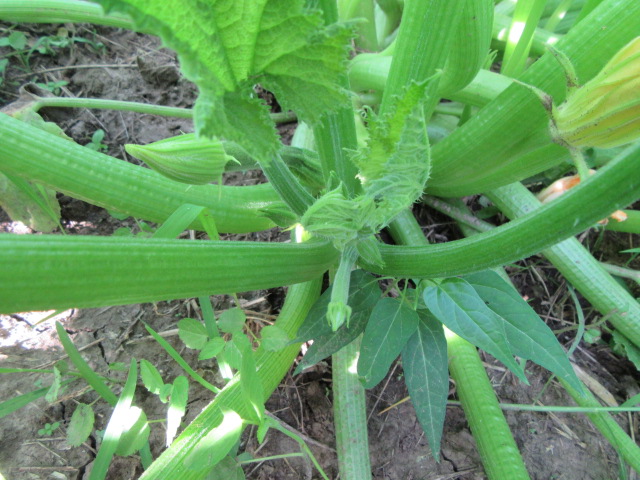
#5) I picked the first two ‘Black Zucchini’.

Amaranthus cruenthus ‘Red Spike’.

#6) I had to take a photo of the Amaranthus cruenthus ‘Red Spike’ on my way inside. It seems to get taller every day.

Amaranthus cruenthus ‘Red Spike’.

Pretty neat with all those tiny flowers.

That completes my Six on Saturday kindly hosted by Jim from Garden Ruminations. Be sure to check out the other Six on Saturday posts.

Well, that’s it for this post! Until next time, be safe, stay positive, always be thankful, and GET DIRTY! It will pay off!


Commelina communis var. ludens (Asiatic Dayflower)

Commelina communis var. ludens (Asiatic Dayflower) on 7-25-24, #1010-1.

Hello everyone! I hope this post finds you well. As I started this post at 10:48 AM, it is a sunny Thursday morning at 82° F. It is supposed to get up to 90…

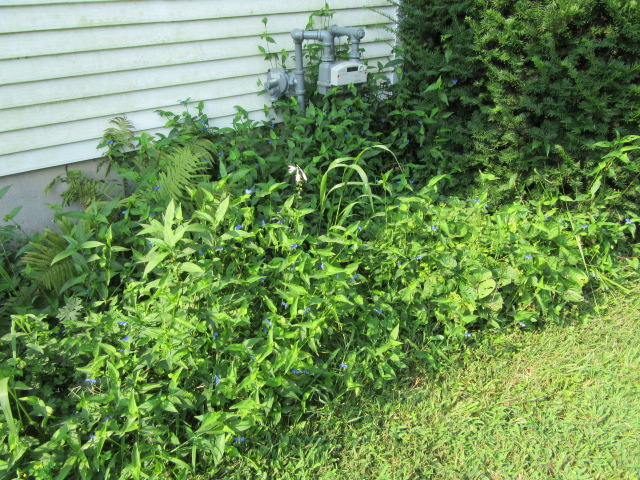
I thought I would highlight the Commelina communis var. ludens (Asiatic Dayflower) that are growing in the north bed in this post. It has been a great year for the Asiatic Dayflower…

Commelina communis var. ludens (Asiatic Dayflower) on 7-25-24, #1010-2.

They have been producing A LOT of flowers for a while and seem to be trying to become a common weed…

Commelina communis var. ludens (Asiatic Dayflower) on 7-25-24, #1010-3.

Commelina communis is an introduced species from several Asian countries. It can be found in North America from the midwest eastward. Commelina communis var. ludens has a much smaller range being found in only a handful of states, and a small range in their native countries.

Commelina communis var. ludens (Asiatic Dayflower) on 7-25-24, #1010-4.

Here on the farm, Commelina communis var. ludens primarily grows in the north bed and several other areas in the yard. This year, they have been pretty abundant…

Commelina communis var. ludens (Asiatic Dayflower) on 7-25-24, #1010-5.

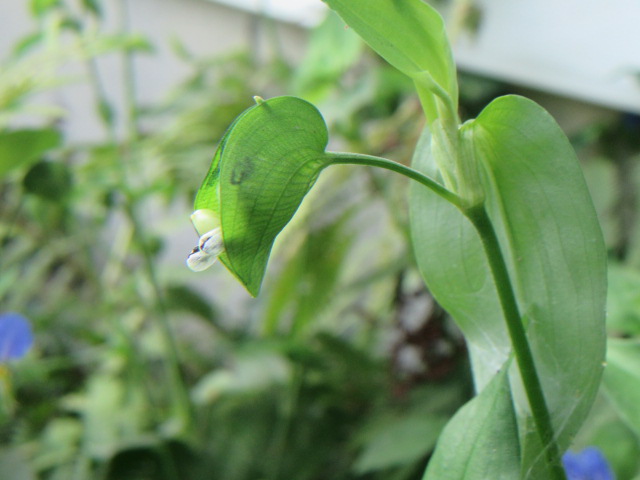
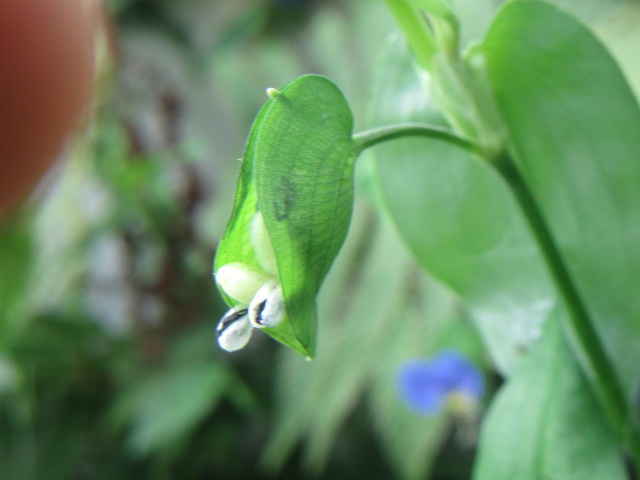
This subspecies features maroon dots on their false anthers which sets them apart from from Commelina communis var. communis.

Commelina communis var. ludens on the left and Commelina communis var. communis on the right on 9-1-19, #620-10.

I had a lot of fun with both of them in 2019 when both varieties were quite abundant. In fact, Commelina communis var. communis had quite a territory in two areas… Strange, but I haven’t found any since 2019…

You will notice Commelina communis var. communis on the right has paler petals and there are no maroon dots on their false anthers. I initially thought they were Commelina erecta, which is a native species with a BROAD range, but I was mistaken…

Commelina communis var. ludens (Asiatic Dayflower) on 7-25-24, #1010-6.

Dayflowers always seem so happy-looking. Perhaps looks are deceiving and those filaments hanging down could be perceived as fangs…

Commelina communis var. ludens (Asiatic Dayflower) on 7-25-24, #1010-7.

Looks like the kids are trying to leave their cradle…

Commelina communis var. ludens (Asiatic Dayflower) on 7-25-24, #1010-8.

Hmmm…

Commelina communis var. ludens (Asiatic Dayflower) on 7-25-24, #1010-9.

The spath-like bracts resemble a taco, folded in the center, with the flowers emerging… One of the distinguishing features of this species is that the spath-like bracts enclosing the flowers are free to the base… In other words, the outer margins of the bract are not fused together from about the midpoint to the base as with C. erecta… With some flowers, they may appear fused, but they can easily be separated. Up to three flowers can emerge from the same bract in succession (usually). The ovaries are formed inside the bracts…

Commelina communis var. ludens (Asiatic Dayflower) on 7-25-24, #1010-10.

The bracts are smoothly rounded, while they have kind of a flat area with C. erecta. I have not personally found any C. erecta, but that’s what the descriptions say.

As with many wildflower species, Commelina communis can be somewhat variable which can make ID more challenging…

I have pages for both varieties which you can view by clicking Commelina communis var. communis and Commelina communis var. ludens

Until next time, be safe, stay positive, always be thankful, and GET DIRTY!

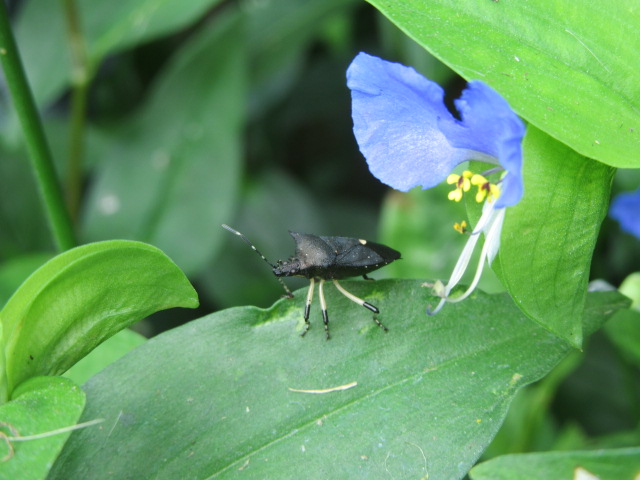
Wordless Wednesday: Proxys punctulatus (Black Stink Bug)

Proxys punctulatus (Black Stink Bug) on 7-24-24, #1009-6.

Four In A Row…

Lathyrus latifolius (Everlasting/Wild Sweet Peas) on 7-26-22, #901-26.

Hello everyone! I hope this post finds you well. I received a notification from WordPress saying I posted 3 days in a row… Hmmm… I couldn’t break very well stop now when I am on a roll!

I couldn’t think of anything to write about, so I thought I would just add a photo of something that has caught my attention for the past week. The Wild Sweet Peas are blooming up a storm that are growing in the ditch have been in flower for a while. Tony Tomeo wrote about them in his Six on Saturday post which got me to thinking about them even more…

I haven’t taken any new photos of them since 2022, but I guess I should. Besides growing in the ditch, they also grow in and around a brush pile (that keeps getting bigger) in an area east of the garden. I am pretty sure they are Lathyrus latifolius. Common names include Broad-Leaved Sweet Pea, Everlasting Pea, Wild Sweet Pea, Perennial Pea, Perennial Peavine, Everlasting Vetchling, Sweet Pea, and probably others.

There are 30 species of Lathyrus that are native to North America but Lathyrus latifolius is native to parts of Europe and Northern Africa. This species made its way to American gardeners in the 1700’s and escaped. Now, they are a common wildflower throughout the country and is even declared an invasive species in some areas.

I remember as a kid there were several growing on the fence between our house and the neighbors. Likely, my grandmother planted sweet peas here which could be the ancestors of what is here today.

Even though there are many cultivars of Sweet Peas available in seed catalogs and online I rarely hear much about them. I have plenty of fences for them to grow on, so I think next year I will give a few a shot… Sounds like a good plan. How about you?

Maybe I’ll find something to photograph for Wordless Wednesday. Heck, it is 11:10 PM. It’s almost Wednesday already… Could it become 5 days in a row?

Until next time, be safe, stay positive, always be thankful, and GET DIRTY!


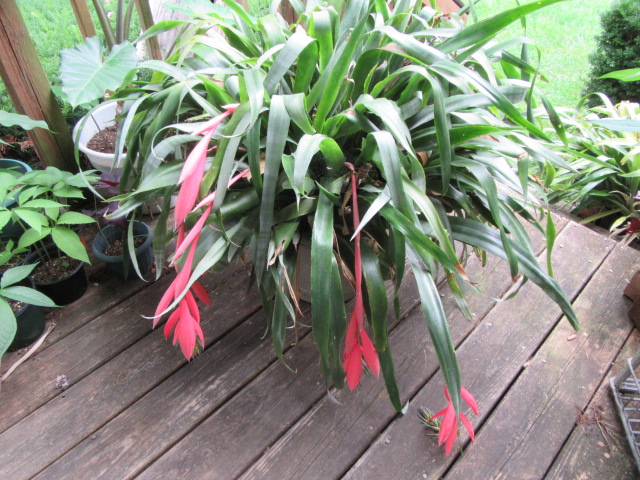
Silent Sunday: Billbergia nutans (Queen’s Tears)

Billbergia nutans (Queen’s Tears) on 7-21-24, #1008-1.


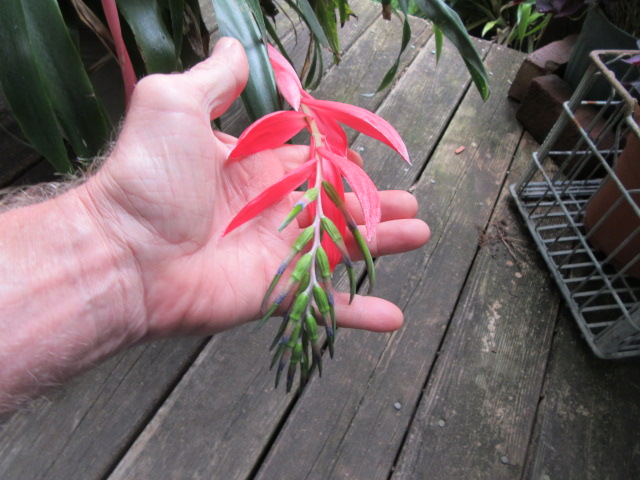
Billbergia nutans (Queen’s Tears) on 7-21-24, #1008-1.

Garden Update 7-19-24

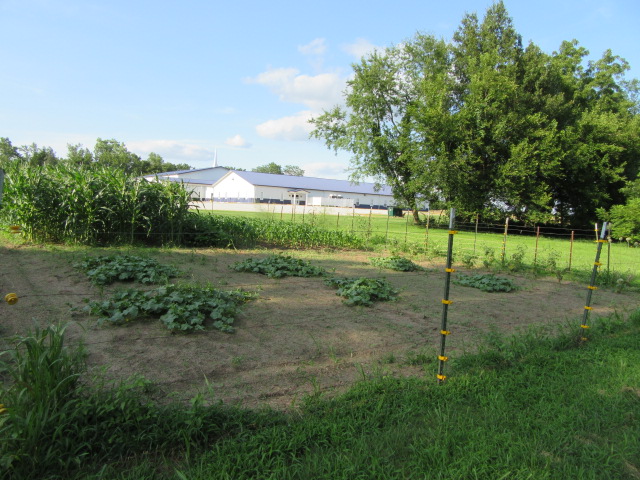
2024 Garden from the southwest corner.

Hello everyone! Back again so soon. 🙂 I hope this post finds you doing well. I thought it was time I made a post about the garden. It has been a weird summer because it wouldn’t stop raining. I’m certainly not going to complain about the rain compared to the heat and drought last summer. It just takes longer to keep the grass and weeds out of the rows, but it eventually gets done. We haven’t had any rain for a few days and the soil is crusty on top now.

Rhubarb.

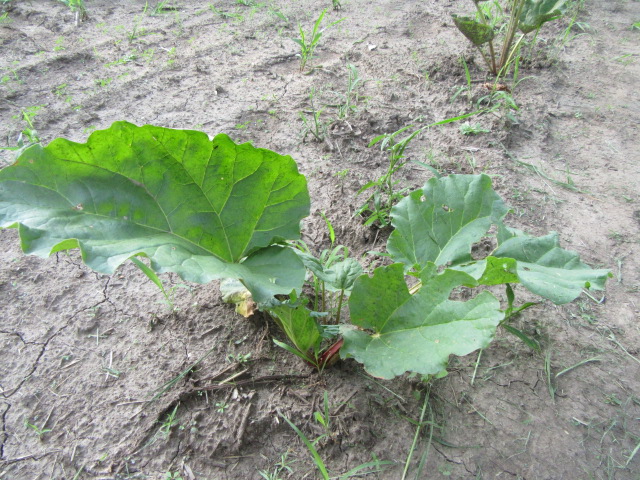
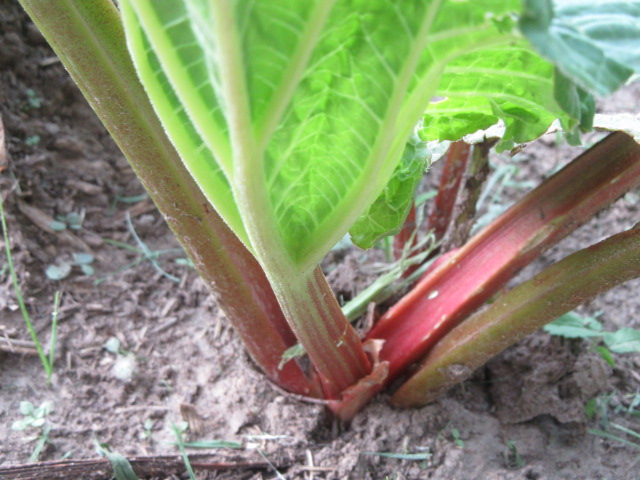
Where should I begin? Well, just as well start with the rhubarb… I think it was back in 2o13 (the year I came back home) when dad went to an old friend’s home and brought back some rhubarb plants. He wanted me to plant it in the old flower bed by the northeast corner of the old foundation with the horseradish. I did but it has been iffy for the past several years and I wanted to move it to the garden. On May 28 when my sister and her husband were here plant shopping, I brought home 6 Rhubarb ‘Victoria’.

Rhubarb ‘Victoria’.

I put them in a row next to the tomatoes. I dug their holes and dumped in compost and cow manure and planted the rhubarb… All the plants did very well except for one. It up and died… Rhubarb are clumping plants, so I can fill in the spot.

Rhubarb ‘Victoria’.

Rhubarb ‘Victoria’ is a popular red variety that has been around for many years. I thought I would give it a shot.

Green Rhubarb.

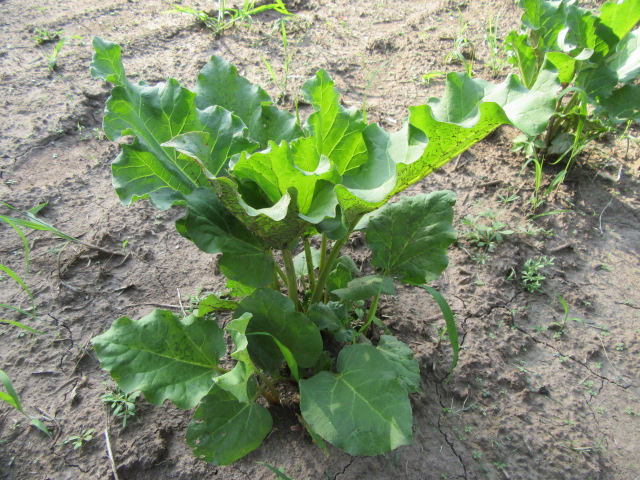
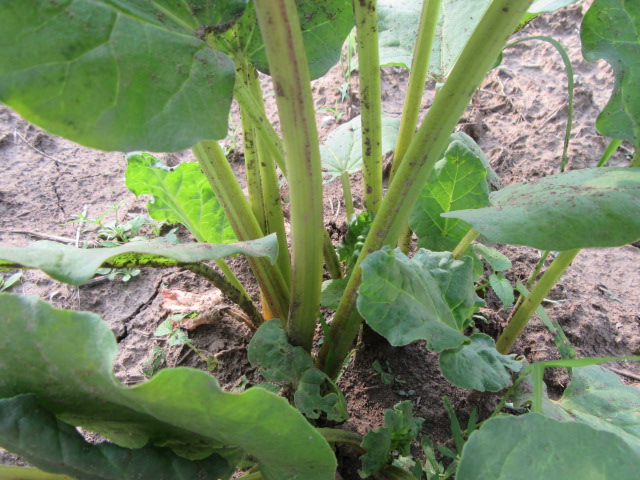
I dug up most of the green rhubarb from the flower bed, divided it, and then filled in the rest of the row. I grew up on green rhubarb so I was very glad when dad brought it home. He had a HUGE patch of it in the garden where I grew up but for some reason, he didn’t bring any here when they moved.

Green Rhubarb.

NICE! There are still a few plants in the flower bed for back-up…

Tomato ‘Celebrity’.

I have grown ‘Celebrity’ for several years since Jim Ruebush of “How I See It” said he planted this variety and recommended it. Most tomato varieties do OK, but this one has done somewhat better than some of the others, so I keep planting it. I really like homegrown tomatoes but it seems like I really haven’t mastered growing them. I think I expect fruit that looks like the ones from the grocery store with the homegrown flavor and juiciness… I have seen other people’s tomatoes and wondered how they look like that? Notice I am not showing you the stem where the fruit is attached… There is a black ring. Perhaps it is from so much rain…

Tomato ‘Red Duce’.

While I was a Mast’s Greenhouse, I ran across a variety I hadn’t seen before called ‘Red Duce’. I decided to give them a shot, and so far they have done very well. I’m not going to say it out loud in the garden, but to be honest with you, ‘Red Duce’ is… UMMM… Outperforming ‘Celebrity’. Now, to be honest with you again, I brought home four of each and two plants of each are doing better than the others. Well, a cutworm destroyed one of the ‘Celebrity’ so there are only three left.

You may have noticed the excessive use of jute twine in the above photos. Well, last summer I watched a video on YouTube from Hoss… He was trellising determinate tomatoes using what he called the “Florida Weave’ so I thought I would give it a shot. The only difference is that he plants two tomato plants between the stakes and I only have one… That’s because I’ve been leaving the stakes in the garden from one year to the next… What is funny is that I thought ‘Celebrity’ was an indeterminate but the tag, which I didn’t pay any attention to until this year, says they are determinate… Hmmm… ‘Red Duce’s is also determinate so I am trying a variation of the Florida weave.

Tomato ‘Pineapple’.

Normally, I plant ‘Goliath’ and an heirloom variety (like ‘German Johnson’), but this year I couldn’t find either one. So, I brought home four ‘Pineapple’ which I had grown before. The plants are going insane…

Yellow Cherry Tomato.

When we had our family reunion, my niece brought a container of cherry tomatoes ith her. They were very good, so I went to Wagler’s Greenhouse to see if they had any ‘Sweet 100’ because I thought I had seen them earlier. Mrs. Wagler said they didn’t have any, but there were a few yellow cherry tomato plants left. She said they were very good so I brought one home to try out.

I grew red cherry tomatoes in Mississippi and several plants would come up every year in the garden where they hadn’t been before. Grandpa always grew red and yellow pear tomatoes in their garden and they would always come up volunteer. I guess perhaps birds eat them which is how the seeds spread…

Black Zucchini.

Hmmm… I learned my lesson with planting zucchini so I only planted one. Next thing I knew two plants were coming up. I must have dropped a seed…

Black Zucchini.

Yep! Already underway…

Cantaloupe ‘Hale’s Best Jumbo’.

I couldn’t find enough cantaloupe last year so I planted my own. I have had less than desirable results with watermelon and I haven’t grown cantaloupe since the 1980’s.

The worst thing about growing melons is tilling around the vines. GEEZ! All those little weeds and the Foxtail popping up here and there…

Sweet Corn ‘Incredible’.

When I moved back here in 2013 and it was time to plant the garden, we went to my cousin’s seed company in Clinton (Miller Seed Company). Several years prior my cousin had recommended the sweet corn ‘Incredible’ when it came out. The local farmer’s co-op had it at $14.00 per pound which was more expensive than any other variety! Mike always gave Dad his seed which was a much better option. Now, I buy it from the co-op for $7.95 per pound… It is one of the best varieties I have grown, so I will keep growing it. I was late getting it planted, June 7, because of the rain. Umm… I could have planted it sooner, but I could hear  dad in my head saying, “It isn’t the right sign yet.” So, I waited until the moon sign said it was time.

A couple of weeks ago, I started having a slight issue with corn borers. The moths lay eggs on the leaves and when they hatch the caterpillars start chewing on the leaves, As they get bigger, they make their way to the rosette of leaves on top and then bore down into the stalk. Well, I couldn’t have that so I bought a Sevin and sprinkled it on the affected corn… The next day I found a couple of dead caterpillars. Then I got to thinking it wouldn’t do much good to use it on the plants that were already damaged, so I bought Sevin as a hose-end sprayer and sprayed the entire garden. Since then, I have hardly seen a bug of any kind… I’m not one to use chemicals in the garden, but I thought it was necessary… The sweet corn is looking great and it looks like there will be a bumper crop…

Bush Green Bean ‘Provider’.

As always, I went to Green Street Market in Clinton to buy green bean seeds. It was no surprise when they were out of ‘Top Crop’, so I bought ‘Provider’ again. Last year I tried three varieties because there was no ‘Top Crop’ and ‘Provider’ came to the rescue because the other two fizzled out from the heat (even though I watered it). As you can tell, the ‘Provider’ is looking great… I still have green beans from last year in the freezer, but I planted more.

Bush Green Bean ‘Provider’.

There are A LOT of flowers and even a few tiny beans here and there. Looks like someone had been nibbling on the leaves…

Sweet Corn ‘Peaches and Cream’.

I also planted four double rows of ‘Peaches and Cream’ sweet corn… I haven’t been able to find ‘Peaches and Cream’ for several years because it was always sold out. I tried ‘Ambrosia’ in its place for a couple of years, but it didn’t do very well. Luckily, I found ‘Peaches and Cream’ this time around and so far it has done well. I finally finished weeding and hilling these four rows after a couple of weeks of rain every few days. Normally, I pile up dirt around the sweet corn several times, but this year only once… I am sure at some point the wind will come and I will have to stand it back up…

Aphids…

Now, there are aphids to deal with… In the past, there have always been beneficial insects to help with the aphids. This year, I have seen very few anywhere. It’s not because I sprayed with Sevin a few weeks ago, either. Well, perhaps that didn’t help, but even where I haven’t sprayed there have been very few.

Bush Green Bean ‘Provider’.

I’m not sure what I was thinking, but I planted a second double row of ‘Provider’… I fertilized the sweet corn but definitely not the green beans.

That’s it for the 2024 garden…

Until next time, be safe, stay positive, always be thankful, and of course, GET DIRTY!


Farewell To An Old Friend…

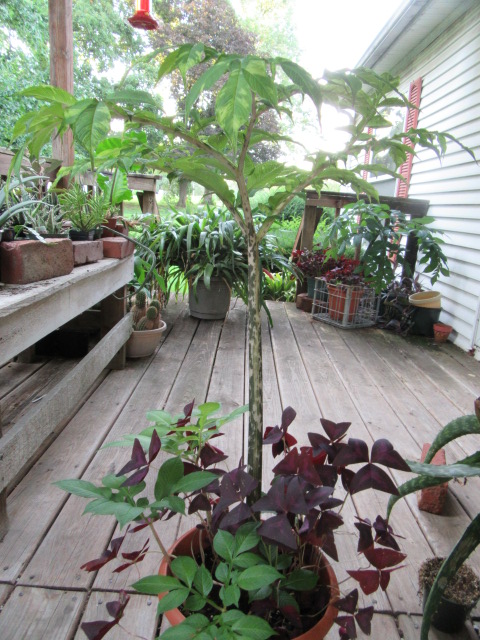
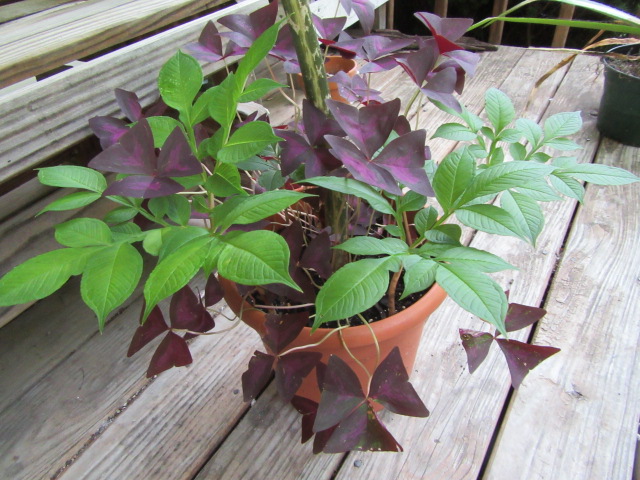
My  Amorphophallus after I brought them home on 7-1-17, #353-1.

Hello everyone! I hope this post finds you well. It took me a week to write this post because I kept taking more photos…

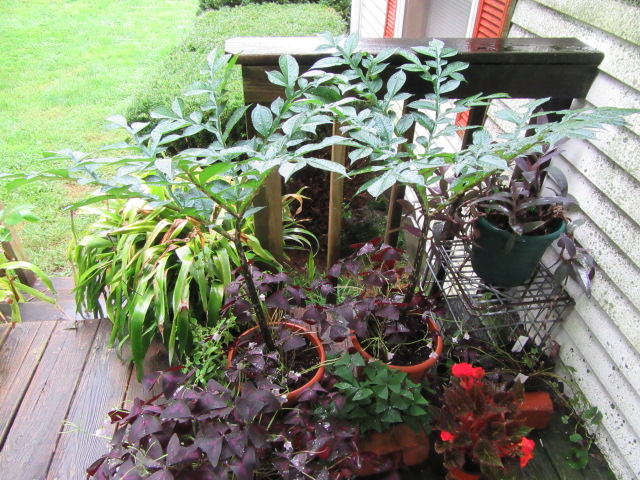
Tragedy has struck… The above photo is of the two Amorphophallus I brought home from Wagler’s Greenhouse on July 7 in 2017. I picked this pot because not only were there two, but there was also an Oxalis tetraphylla (False Shamrock) with them. Since 2017, the Amorphophallus have produced MANY, MANY offspring (corms) and the Oxalis has done quite well, too.

Amorphophallus konjac (Konjac) on 7-9-24, #1002-.4.

When I took the plants to the front porch, I checked both Amorphophallus by sticking my finger in the hole where the petiole (stem) was before. Both had sprouted but it takes a while for them to emerge from potting soil. After a while, one came up but the other was still way down in the hole. I thought something was weird, so I took the pot to the table on the back porch and removed the potting soil down to the corm. It seemed fine, so I covered it back up. I found several corms that I put in the potting soil along with Oxalis triangularis rhizomes, which I had to remove.

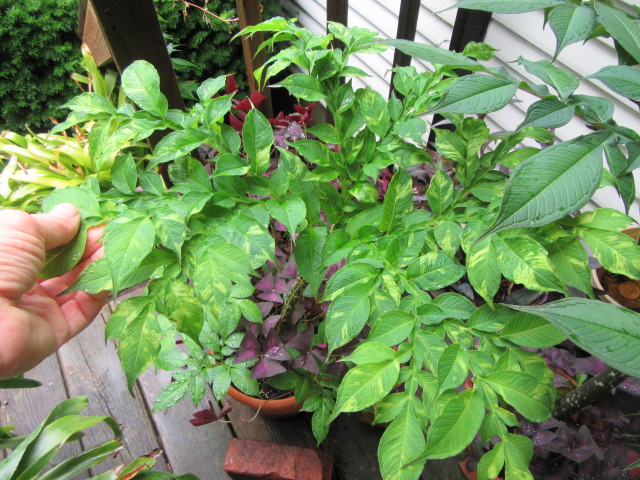
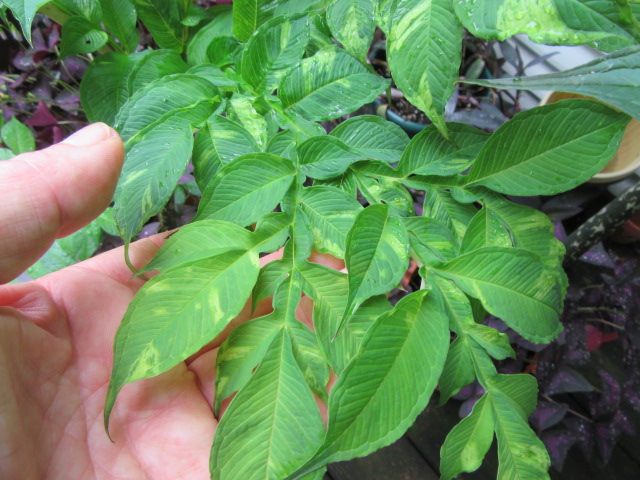
After about a month, the second Amorphophallus started to emerge from the potting soil. Once its leaves unfurled, I saw something very weird… Its leaves were variegated… Hmmm… That never happened before.

Amorphophallus konjac (Konjac) #2 on 7-9-24, #1002-6.

Hmmm… I was very puzzled.

Amorphophallus konjac (Konjac) #2 on 7-9-24, #1002-7.

Well, I went to Facebook and messaged a friend from Alabama, Robert McCracken, and sent the photos. He is an avid plant collector, which is putting it mildly. Then I typed in the browser, “Why is my Amorphophallus leaf variegated?”

Well, a link to the IAS Aroid Quasai Forum came up. It is a forum on the International Aroid Society website. The question I read was similar to mine for this fellow’s variegated leaf on what he believed was an Amorphophallus muelleri. He wrote, “I have what I believe is an Amorphophallus muelleri that has put up a variegated leaf. I don’t believe I have heard anyone mention such an animal. Do I have a sick plant/tuber? Or is this something that happens once in a blue moon?”

There were various answers suggesting nutrient deficiencies or a virus… I checked out the virus and did some reading, but nothing hit the nail on the head as far as I was concerned that would hit the nail on the head, so to speak. The articles I read were more about seed-grown plants in fields where Amorphophallus konjac were grown for medicinal uses. I found out that China grows over 170,000 hectares of A. konjac and around 10% have the virus! It’s either Konjac Mosaic Virus or Dasheen Mosaic Virus. While the Konjac Mosaic Virus is specific to two Amorphophallus species, the Dasheen Mosaic Virus affects several species of members in the Araceae (Aroid) family.

Later on in the evening, Robert messaged me and we started talking. He started mentioning what I already read about the viruses. I told him I already read this and that or he would have started sending links… 🙂 He said he didn’t know much about Amorphophallus and suggested putting photos on a Facegroup called Amorphophallus. He sent a link for me to join, which I did. I wrote a post and submitted the photos and once I was approved to join, the post was up and running.

After a while, there were three comments and 11 likes… Hmmm… LIKES? Two of the comments agreed it was a virus, while the other was completely irrelevant. Apparently, to find out which virus it is I would have to send samples to a lab. Which is also irrelevant… It is a virus! Not only do I have to discard the plant but also the offspring that came up from the corms… It doesn’t matter which virus it is!

The only good thing that came out of this virus is that I am now pretty sure my Amorphophallus is A. konjac… I had been waiting for flowers to figure it out, but instead, it took a virus…

Amorphophallus konjac (Konjac) #2 on 7-14-24, #1004-5.

A lot of questions ran through my mind… How could it contact a virus after 7 years? Why does only one have it when there were two in the same pot for several years? Do I have to get rid of the new plants from the corms in the pot? Being a virus from seed-grown plants, how did my plant get it when it likely came from a corm instead of from a seed? Likely, both plants had the same parent so why does only one have the virus? I moved #2 to the other side of the porch…

Amorphophallus konjac (Konjac) #1 on 7-14-24, #1004-2.

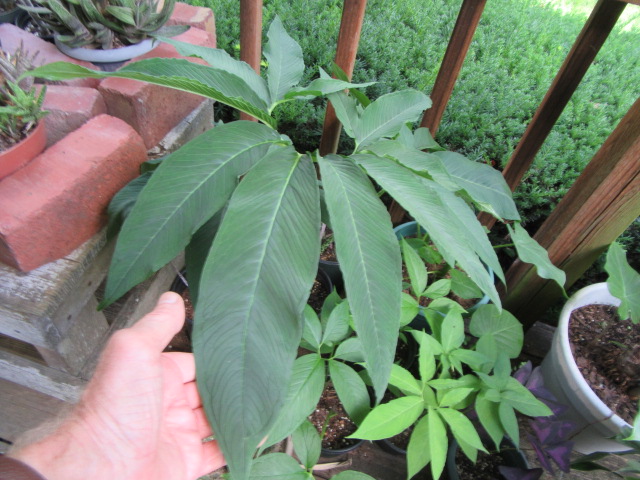
One appears perfectly healthy. I might mention here for those of you who haven’t experienced an Amorphophallus… The corm produces one petiole (stem) which produces a single leaf with many leaflets. The leaf is round in outline (sort of) and it is like a big umbrella. Very neat! It takes several years for the corm to produce a flower from the dormant corm which is what I have been waiting for. Oh yeah, it stinks like rotting flesh…

As of today, Plants of the World Online lists 245 species of Amorphophallus… Until the virus showed its ugly face, I didn’t know for sure what species my plants were. I was pretty sure it was A. konjac since it was likely to be the most common. Amorphophallus is commonly referred to as a Voodoo Lily, Dragon Tongue, Corpse Lily, etc. As it turns out, A. konjac is simply called Konjac…

Amorphophallus konjac (Konjac) #2 on 7-15-24, #1005-7.

It’s sad to have to dispose of my friend of 7 years and its 7 new offspring. Just think I have given away so many of its offspring that are possible carriers of the virus…

I took a lot of photos over several days trying to get a few that were good enough for this post. They are all at the bottom of its own page which you can view by clicking HERE. The page is about my journey with the two Amorphophallus since I brought them home in 2017.

Once looking at all the photos on the page, I realized #2 had always been slow to emerge, something I hadn’t thought about until now. Now, I realize it probably had the virus all along…

Amorphophallus konjac (Konjac) at 32″ tall on 7-15-21, #812-1.

Well, we’ve had some interesting and memorable moments together, but that time is coming to a close with #2. #1 and I will continue… The above photo and the one below were taken on July 15 in 2021.

Amorphophallus konjac (Konjac) plants from the smaller rhizomes on 7-15-21, #812-2.

One of the memorable moments was in the spring of 2021 when I decided to put the larger Amorphophallus in their own pots (before they started sprouting). I wrote two posts when I repotted the Amorphophallus, the last one titled, “Repotting the Amorphophallus & Oxalis triangularis” on April 6, 2021. The above photo was the result of their offspring…

I could add more memorable photos, but you can visit their page…

Sauromatum venosum (Voodoo Lily) on 7-19-24, #1006-1.

Of course, we aren’t alone. The Sauromatum venosum (Voodoo Lily) is on the front porch, too… I bought four corms from a seller on Ebay in 2021 and they are doing quite well. The seller stated in the listing, “These are my own mixed hybrids of a cross between normal venosum and Indian Giant, you can get these anywhere else.” Plant Delight’s says, “Sauromatum venosum ‘Indian Giant’ is similar to the species, except the tropical-looking leaves are about trice as large (up to40” across), and the stalk is a dusty light-green with fewer, but much larger, black freckles. This stem pattern is much more dramatic than the typical form and, so far, it has proven equally as hardy.” I’m not sure if they misspelled twice or if they meant 3 times the size…

Monarch of the East is another common name for Sauromatum venosum if you want a name that isn’t so dark sounding…

Sauromatum venosum (Voodoo Lily) on 7-19-24, #1006-2.

How’s that for a leaf? Umm… I’m not finished with its page yet…

Well, that’s it for this post! NEXT, I will post about the garden…

Until next time, be safe, stay positive, and ALWAYS be thankful. GET DIRTY!


New Plants Update

Aegopodium podagraria (Snow In The Mountain/Goutweed) on 7-5-24, #1000-1.

Hello everyone! I hope this post finds you well. I thought I would write a post about the new plants I brought home in 2024. Some of the new plants complained because I didn’t write a new post when I brought them home, so this is an apology to them. A few are grouping together and are still snubbing me. GEEZ!

Some plants listed are replacements and already have a page (highlighted in green) but most are new and have no page YET. In alphabetical order…

<<<<#1>>>>

I remembered my grandma Miller having plants along the back of their house that were green and white variegated. I didn’t know what they were called and couldn’t find any locally. I saw a house on Main Street that had A LOT next to their house but I didn’t want to stop and ask for a start…

Finally, I found a few at Wagler’s Greenhouse on May 25. Well, of course, I had to grab one. I really knew nothing about their behavior, or even their name, until I drug a photo onto iNaturalist… I think drug is an appropriate word for drag and drop. Anyway, Aegopodium podagraria is the scientific name for this plant that, according to information online, will soon become “plants” as it is a spreader. The common name is Goutweed while the variegated form is usually called Snow-In-The-Mountain… Umm, a different species is called Snow On The Mountain so we don’t want to get confused. Time will tell if I actually want it in the north bed but I can’t hesitate if I choose to relocate it. I read it can be hard to get rid of…

<<<<#2>>>>

Aloe x ‘Amethyst’ on 7-5-24, #1000-2.

I really like Aloe, so when I find a new one of interest I have to bring it home. This Aloe x ‘Amethyst’ caught my eye at Lowe’s on May 9 so I brought it home. Its leaves are definitely unique with all the lumps and strangely toothed margins.

<<<<#3>>>>

Aloe x ‘Pink Blush’ on 7-5-24, #1000-3.

Then on May 10, I ran across this Aloe x ‘Pink Blush’. I had one before, in 2014, that I guessed was ‘Pink Blush’ although it was unlabeled. This time it had a label. Well, I brought it home…

<<<<#4>>>>

Aloe humilis (Hedgehog Aloe) on 7-5-24, #1000-4.

Then there was this really spiny Aloe at Walmart on May 6 I put in my cart (not alone). This one was unlabeled and I had a heck of a time deciding what it was. I put photos on a couple of Facebook Groups and it seemed, at first, one of the suggestions for Aloe x spinosissima could have been correct. But, when I looked up information online, I hoped it wasn’t. Then, while adding captions to the photos I remembered putting the photo on the SucculentGuide Forum. I checked the post I made and several members posted suggestions that didn’t match this plant. One, however, suggested Aloe humilis (Hedgehog Cactus). I happily changed the caption because I like it much better. I’m certainly hoping it is an Aloe humilis

<<<<#5>>>>

Amaranthus cruentus ‘Red Spike’ (Red Amaranthus) on 7-5-24, #1000-5.

I spotted several Amaranthus cruentus ‘Red Spike’ (Red Amaranthus) at Wagler’s Greenhouse on June 11. At first, I just looked at them as I passed by but then turned around and picked one up. Hmmm… I haven’t grown any Amaranthus since 2012. It has grown A LOT!

Amaranthus cruentus ‘Red Spike’ (Red Amaranthus) on 7-5-24, #1000-6.

Now it has a bud…

<<<<#6>>>>

Coleus ? on 7-5-24, #1000-7.

I haven’t grown any Coleus (Coleus) for several years because I couldn’t find any suitable. I found this one at Wagler’s on May 20 that looked similar to one of the Kong Series so I brought it home. It has done quite well but the flowers need to be removed… I have grown some nice Coleus, and this one is proving itself quite well.

<<<<#7>>>>

Euphorbia ferox (Pincushion Euphorbia/Thorn Noors) on 6-5-24, #1000-8.

You know I couldn’t pass this thorny guy up when I found it at Walmart on May 6. Euphorbia ferox is called Pincushion Euphorbia on many websites, but iNaturalist says its common name is Thorn Noors. Hmmm… I’m not sure what that means but the thorn part is quite evident. If you look closely, you can see small leaves. Yep, it is a Euphorbia… It isn’t fond of being touched…

<<<<#8>>>>
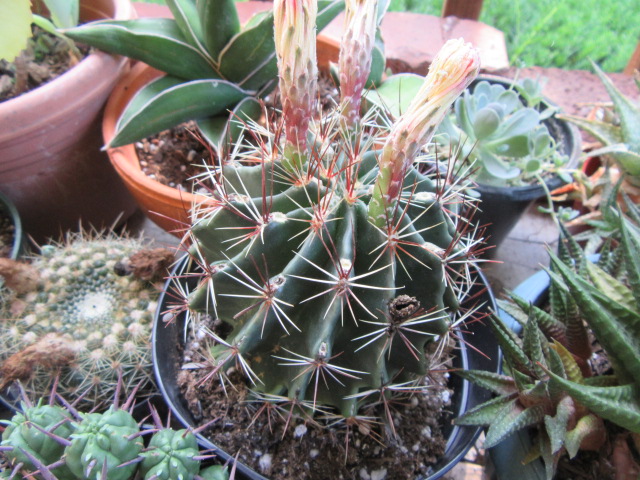
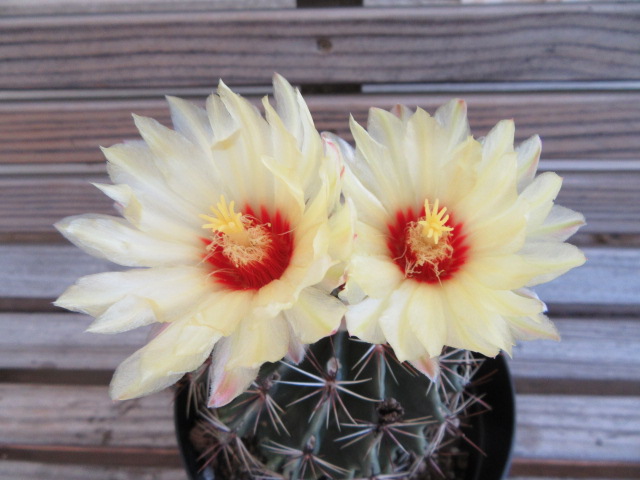
Thelocactus setispinus (Miniature Barrel Cactus) on 7-5-24, #1000-9.

This Thelocactus setispinus (Miniature Barrel Cactus) was the featured photo in the last post. It has had many buds, but it has been somewhat difficult to see them open. I watched every day and all I would see was buds about to open, then the next day they would be wilting like they had already opened. The few times I did see them, they would be fully open for several days. What the heck is that? Now there are three at once… I hope it doesn’t bloom itself to death.

*NOTE: Originally, I thought this cactus was Ferocactus hamatacanthus (Turk’s Head), but thanks to an anonymous reader, I changed the name. So, in alphabetical order, now it should be on the bottom…

<<<<#9>>>>

Geranium pratense ‘Boom Chocolatta’ on 7-5-24, #1000-10.

This Geranium pratense ‘Boom Chocolatta’ is from Muddy Creek Greenhouse that I brought home on May 10. It has very dark green leaves and now it has flowers. NICE!!! Muddy Creek usually sells out early, so I was fortunate this one was still there.

Geranium pratense ‘Boom Chocolatta’ on 7-5-24, #1000-11.

How’s that for a happy leaf? I put this plant between the steps on the north side of the house and an Achillea millefolium… The Achillea was taller, so the Geranium had to grow even taller to strut its stuff.

<<<<#10>>>>

Geranium pratense ‘Johnson’s Blue’ on 7-5-24, #1000-12.

I have wanted a Geranium pratense ‘Johnson’s Blue’ for many years and Wagler’s has several to choose from. I didn’t bring one home until May 28 because I didn’t know where I would put it. Finally, I brought one home anyway… On the third trip… It set in its original pot for so long that it started objecting about its roots getting cramped up. SO, I put it in the northeast corner bed next to the steps. Ummm, between the Amaranthus ‘Red Spike’ and Echinacea purpurea I put there previously…

Hmmm… I moved an Echinacea purpurea to this spot because it came up right next to the Phlomis ‘Edward Bowles’ in the southeast corner bed. Edward objected so I moved the Echinacea. When my sister was here plant shopping, when I first saw the Geranium ‘Johnson’t Blue’, I had a plan to give her the Echinacea so I could go back and get the Geranium. Well, it didn’t work… She wants this and that, but for some reason, she doesn’t want a Purple Coneflower…

Geranium pratense ‘Johnson’t Blue’ on 5-28-24, #994-3.

The above photo was taken of its flower when I brought it home on 5-28-24… NICE!

<<<<#11 & 12>>>>

Heuchera sanguinea ‘Coral Forest’ on 7-5-24, #1000-13.

OK, so Wagler’s had quite a few Heuchera but I was somewhat confused. There were plants with variegated leaves and some with plain green leaves all in the same flats. Some of each had the same label that said Heuchera sanguinea ‘Coral Forest’. I brought home one of each on May 25. A few days later, I went back and there were other flats farther down the greenhouse that were the same but with other labels… Some said Heuchera americana ‘Dale’s Strain’ and others said Heuchera sanguinea ‘Firefly’. Hmmm…

Heuchera americana ‘Dale’s Strain’ on 7-5-24, #1000-14.

I did some research and found out that H. ‘Coral Forest’ has variegated leaves, H. ‘Firefly’ has green leaves, and the leaves of H. ‘Dales Strain’ start out green then they develop olive-green markings… At first, I thought I must have an H. ‘Coral Forest’ and an H. ‘Firefly’. The next thing I knew, ‘Firefly’ became ‘Dale’s Strain’. GEEZ!!!

Now, I have to back up a little. In the spring of 2023, I moved the Hosta and Heuchera from the shade bed to the bed along the north side of the house (the north bed). I had lost several and wanted them replaced. So, on May 6 I went to the Green Street Market (a garden center) in Clinton since they always have a good selection of Hosta.

<<<<#13>>>>

Hosta ‘Dancing Queen’ on 7-5-24, #1000-15.

At Green Street, I found a Hosta ‘Dancing Queen’ to replace the one that the deer destroyed in 2021. Only one leaf came up in 2022 then it fizzled out… The new one likes its new spot except for one thing. The Viola sororia are rather pushy…

<<<<#14>>>>

Hosta ‘Guacamole’ on 7-5-24, #1000-16.

The Hosta ‘Guacamole’ also didn’t return in 2024 so I was happy I found a good selection at Green Street. What would a Hosta collection be without this one? As you can see it is looking great and getting ready to flower.

<<<<#15>>>>

Hosta ‘Patriot’ on 7-5-24, #1000-18.

The Hosta ‘Patriot’ is a new one I decided to bring home from Green Street. It is doing well and it has already produced flowers. No page yet…

<<<<#16>>>>

Hosta ‘Krossa Regal’ on 7-5-24, #1000-17.

Then on May 10, I found a Hosta ‘Krossa Regal’ to replace the one that didn’t return in the shade bed in 2023. I had it since 2009… It is OK but seems a little bewildered by so much company… Ummm… Its color is a bit off, too.

<<<<#17>>>>

Kumara plicatilis (Fan Aloe) on 7-5-24, #1000-19.

For #17 is the Kumaria plicatilis (Fan Aloe) from Walmart on May 20. The label said it was Aloe plicatilis, but it was given a new name in 2013. Ummm… The genus name, Kumaria, was conserved and there are only two species in the genus. The other was renamed in 2014. I thought it was a neat plant but after reading about it I found out it can get quite large and tree-like. Hmmm… Perhaps the tag is totally wrong and it is the other species, Kumara haemanthifolia which is a low-growing species. Well, I guess time will tell…

<<<<#18>>>>

Orostachys malacophylla var. iwarenge (Chinese Dunce Cap) on 7-5-24, #1000-20.

Probably the weirdest plant I brought home this year is the Orostachys malacophylla var. iwarenge (Chinese Dunce Cap) I found at Wagler’s on May 28. It is native to Northern China Mongolia, and Japan and it is cold hardy in USDA Zones 5-10. Hmmm… It is a member of the plant family Crassulaceae and its growing habit is similar to Hens and Chicks. It is named for its “spires of silvery lavender cone-shaped rosettes.” As you can probably guess, it spreads from the runners. So far, it seems happy here, but time will tell. According to what I read about its “needs”, it should be repotted into a more suitable potting mixture…

<<<<#19>>>>

Parodia concinna (Sun Cup) on 7-5-24, #1000-21.

I found this Parodia concinna (Sun Cup) at Lowe’s on May 9. I brought this one home because it had several buds. The label said it was a Notocactus elegans, but there was no such accepted name in the Notocactus genus… Notocactus species were mostly moved to the Parodia genus some time back. I put photos on a couple of Facebook groups and the Cactiguide Forum. Several names were suggested which I checked out but none clicked. Finally, someone suggested Parodia ottonis which is a synonym of Parodia concinna. BINGO! It is a short, squatty fellow with a concaved apex which sets it apart from most members of the genus Parodia… There were a few other possibilities, but I am sticking with Parodia concinna.

Parodia concinna (Sun Cup) ? on 5-12-24, #990-2.

How’s that for a flower? It bloomed several times, once with two flowers at once. The above photo was taken on May 12…

<<<<#20>>>>

Pelargonium denticulatum (Tooth-Leaved Pelargonium) on 7-7-24, #1001-1.

Hmmm… I needed photos for the Pelargoniums, but when I was taking photos on July 5 they weren’t looking so hot. Well, I think they were hot and needed water. They looked much better after a good drink. Then on the 7th, they were in too much sun when I was working on the post, so I decided to take a nap. It was sprinkling when I woke up but I stood back under the roof and zoomed in a bit to get a couple of shots.

I found the above mislabeled plant at Wagler’s on May 28. The label said “Mosquito Plant” and said the name was Pelargonium citronellum. I could have easily called it that but the photo on the tag wasn’t the same as the plant I brought home. I had already figured out the above plant was Pelargonium denticulatum (Tooth-Leaved or Toothy Pelargonium) but I became stumped. I had a previous Pelargonium denticulatum in 2014 that looked completely different with more frilly leaves. Then I found a website belonging to a Pelargonium specialist from Greece. It is an awesome site and the Pelargonium denticulatum on her site had leaves like the one in the above photo. Well, she has a Facebook page, so I messaged her. I sent her photos of this plant and the one below. She, like me, said they were P. denticulatum and P. quercifolium like I thought. One thing led to another and I wound up sending photos of the Geraniums in the flower bed and the two native species…

OH, when I sent her a photo of the P. denticulatum from 2014, she replied that it looked like a cultivar called ‘Filicifolium’… Well… The caption under the photo and on its page says Pelargonium denticulatum ‘Filicifolium’… Before she had messaged me back, I had already looked it up online and had a good laugh. The cultivar has more frilly leaves. I wrote the page about it in 2014 which was transferred to this site in 2017. Ummm… That’s all I have to say about it…

If you want to learn more about Pelargoniums, go to Pelargonium Species World. If you have bought a Pelargonium, the name on the tag is likely incorrect like both of mine this year. Click HERE to go to the photo gallery and scroll all the way down for a chart with leaves. There you can click on a links to the various species that match the leaf shapes.

Pelargonium denticulatum (Tooth-Leaved Pelargonium) on 6-29-24, #999-4.

The above photo of the flowers of P. denticulatum was taken on June 29. Oh yeah, it has a caption…

<<<<#21>>>>

Pelargonium quercifolium (Oak-Leaved Geranium) on 7-7-24, #1001-2.

I brought this Pelargonium quercifolium (Oak-Leaved Geranium) home from Walmart on May 20. It had a dangly tag that said… Well, I’ll just show you a photo…
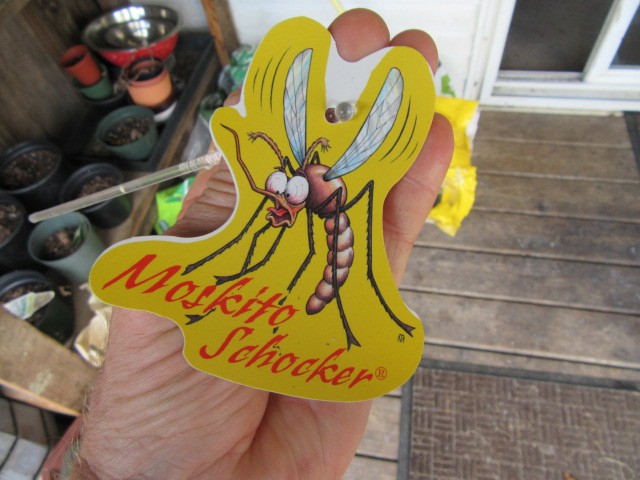
Hmmm…

The back of the tag says “Selection of Pelargonium Crispum or Quercefolia”… Well, it isn’t a P. crispum and P. quercifolium is spelled wrong. 🙂 As far as either one being a mosquito shocker… There are still mosquitos on the back porch. I didn’t buy them to repel mosquitos although they both smell very good.

Pelargonium quercifolium (Oak-Leaved Geranium) on 6-21-24, #997-2.

As the caption says, the above photo was taken on June 21.

<<<<#22>>>>

Peperomia graveolens (Ruby Peperomia/Ruby Glow) on 7-5-24, #1000-22.

When I went to Mast’s Greenhouse last year, I spotted a couple of Peperomia graveolens (Ruby Peperomia/Ruby Glow) in one of Mr. Mast’s daughter’s private collection. She reluctantly gave me a cutting which didn’t work out so well. This year, there were a few available for sale so, of course, I brought one home. It is doing fine so far but it seems to be a slow grower. Of course, it needs a better potting mixture since it is in commercial potting soil…

<<<<#23>>>>

Ptilotus exaltatus ‘Joey’ (Pink Mulla Mulla) on 7-5-24, #1000-23.

The strange flowers of this plant caught my eye when I was at Wagler’s on May 25. There was no label or tag so I used the drag-and-drop feature on iNaturalist. To my surprise, it came up with the name Ptilotus exaltatus (Pink Mulla Mulla). Then I checked online and came up with a cultivar called ‘Joey’. The species is an annual native to Australia… It has done OK, but I don’t think it likes as much rain as we have gotten lately.

<<<<#24>>>>

Selenicereus anthonyanus (Fish Bone Cactus/ Zig Zag Cactus) on 7-5-24, #1000-24.

On my fifth and final trip (so far) to Wagler’s on June 12, I found this Selenicereus anthonyanus (Fish Bone Cactus, Zig Zag Cactus). I asked Mrs. Wagler what it was, and she gave it to me. Well, I asked what it was not because I wanted it, but how could I refuse? According to the Wikipedia article, it was first discovered in 1946 and first flowered in captivity in 1950. It is a rarely collected and most plants in cultivation descend from the first collection. It is an epiphyte growing in trees whose stems are ascending or climbing, branching in clusters at intervals along the stem. The flowers in the photos are quite interesting, but it flowers at night and only for one night… Other common names include Rickrack Cactus and St. Anthony’s Rickrack. Hmmm…

I am finally finished with this post and I promise I will get another one ready soon. Probably about the garden.

Until next time, be safe, stay positive, be thankful, and GET DIRTY!
HAPPY FORTH OF JULY!

Thelocactus setispinus (Miniature Barrel Cactus) on 6-23-24, #998-2.

Helly everyone! Happy Fourth of July! The festivities at the park were canceled about a week ago because rain was in the forecast. Indeed, it was in the forecast right up until last night. I checked the weather one last time before I went to bed last night and a storm was on the way. It came with heavy rain for a few minutes then I went to sleep. I woke this morning with the birds singing and the sun was shining. I thought that was weird… I got up, went to the kitchen, then checked the rain gauge. There wasn’t hardly a cloud in the sky and the rain gauge only had 1/10″… No rain in the forecast until after 5 PM. You would think the planners of the Fourth of July festivities at the park would realize the weather is unpredictable and they wouldn’t have canceled the events. Everyone would know if it is raining the events would be canceled. Now we have a perfectly nice day and nothing is going on at the park… The fireworks have been rescheduled for Saturday evening.
OH, our local newspaper will no longer be published after July 5… The owners of the local newspaper publishes several weekly newspapers for other smaller communities. All will cancelled and their local offices closed… I’m not sure where the main office is, but it’s a sad thing to have to close for these smaller communities that have poor circulation. I think the Windsor Review has been in business since 1870…

The above photo is of the Thelocactus (Miniature Barrel Cactus) I spotted at Walmart on May 6. It already had several buds so I brought it home… It had had several flowers and it at it again… Well, I didn’t just bring that one home…

Anyway, I am still alive and well although I haven’t posted anything lately. I guess I need to catch up… The garden is late but looking great. It’s muddy now because of the rain which is much different than last summer…

Until next time, be safe, stay positive, and GET DIRTY!