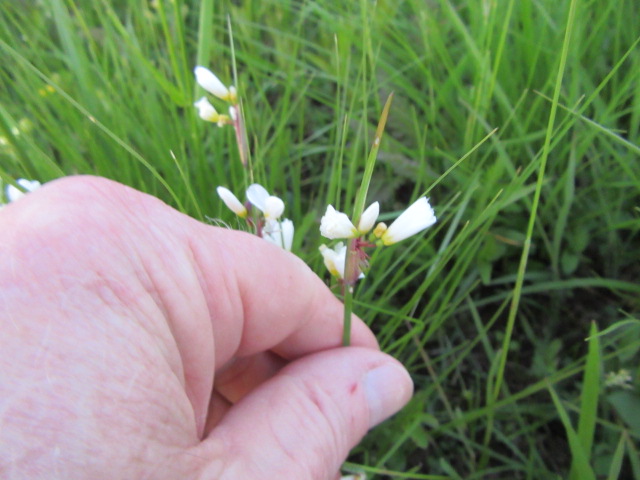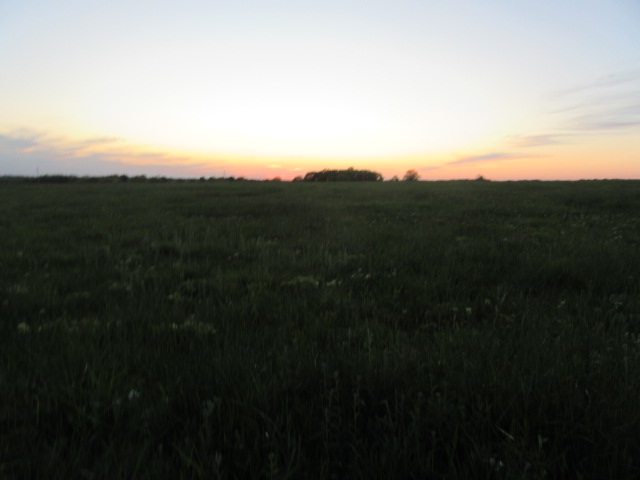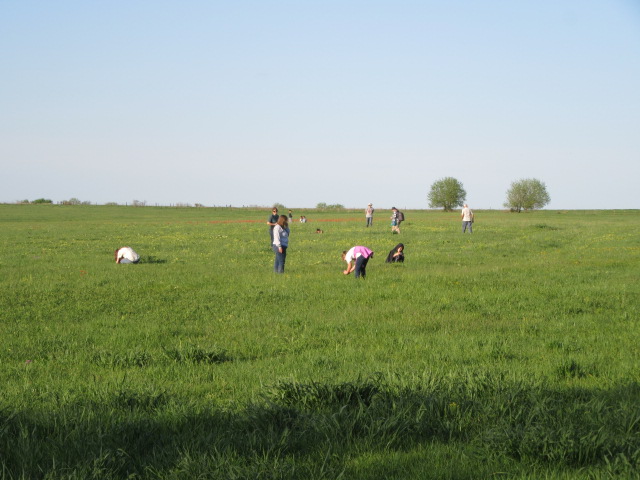
First Visit To The Private Prairie of 2026…

Hello everyone! I hope this post finds you well. I am so glad winter is over and everything is looking so alive. I could do without the storms, but I guess it is the season for them. Soon, we’ll have the heat to complain about, although I complain more about the cold.

A friend of mine, and a great photographer, asked me to join him when he hosted a 4-H groups trip to the private prairie. The same friend that invited me to the same private prairie as last May 5. I was happy to say I would go.

When I arrived, the owner of the farm was explaining the prairie to the kids and they seemed very eager to listen and later ask a few questions. I should have taken notes… She gave them a few rules to remember. No picking, no digging, and I forgot what else… Well, I can’t remember because I wasn’t paying attention. I do remember her saying the conservation department said there were over 600 species on her prairie and that the colors change monthly… Afterwards, my friend had a lot of enlarged photos he had taken and explained a few tools he used to enhance his photographs. It was quite interesting and I think we all learned a few things.

Before we went on the adventure, I introduced myself to the owner and was able to speak with her a few minutes. She said I could come anytime I wanted. YAY!!!
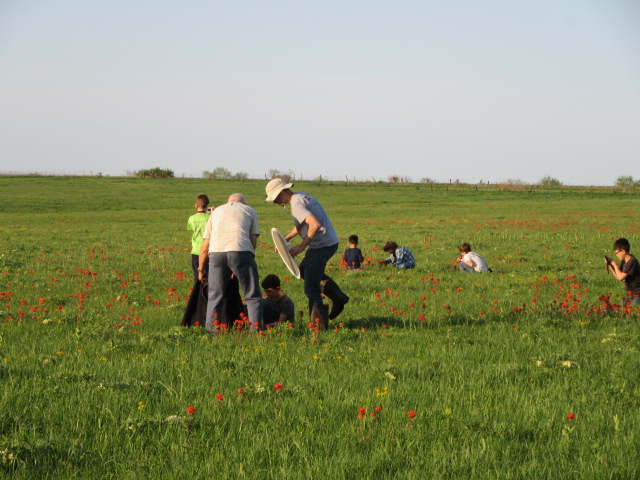
It didn’t take long for Walter to jump in and help the kids out. He’s the one without the hat… Of course, the kids all had cameras that were clicking away.
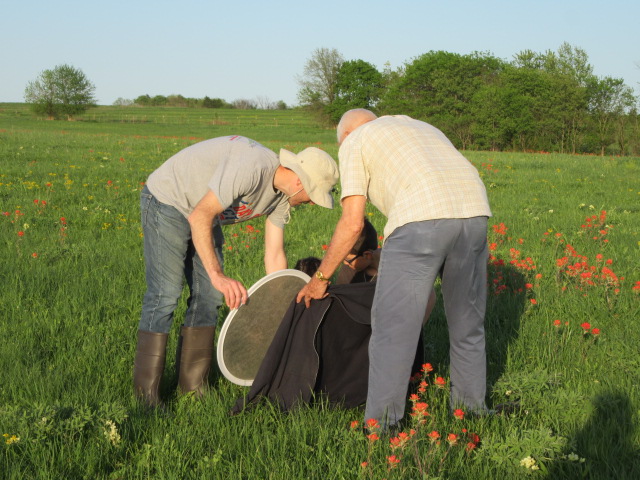
Walter had several reflectors (whatever you call them) of various sizes and shades. Some for enhancing the light and other times giving a little shade.
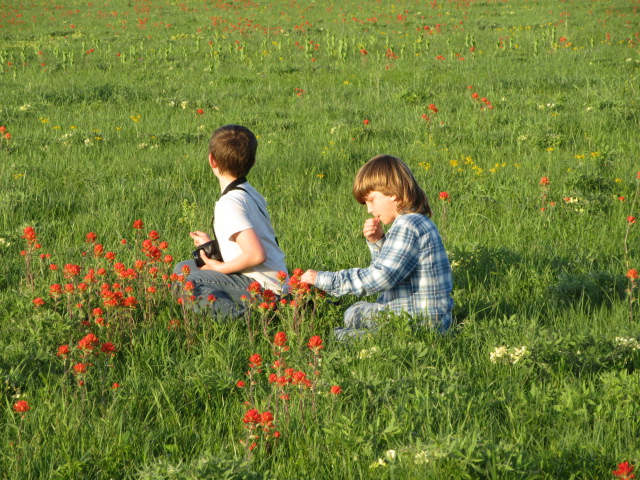
Here, a couple of boys were picking off petals from the Indian Paintbrush and sampling the nectar. Ummm… Walter showed them that, too. One of the boys was hungry for nectar while the other was more interested in exploring.

So, we are going to do this in alphabetical order because I was too busy taking photos to pay attention to what came first. Actually, in the prairie, it was just a mass of many species altogether. I took several photos of every species I could hear and there, so there was really no order. There were small and large patches of certain species together, but there was always a few others mixed in. Like if you mixed up a bunch of seeds but didn’t get them mixed very well before you scattered them by hand.
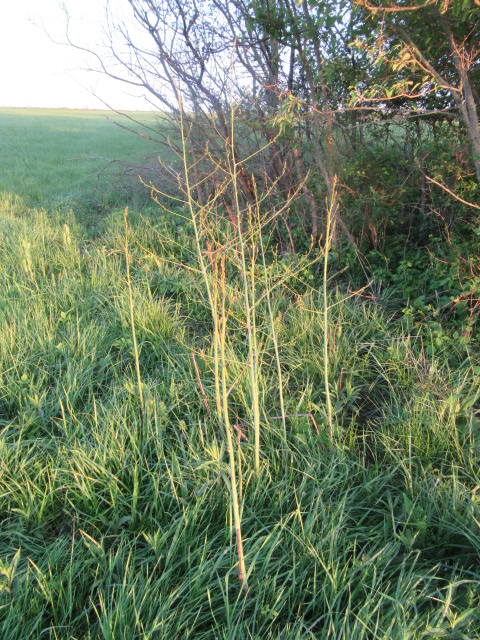
Asparagus officinalis (Wild Asparagus) on 6-19-26.

About half way through the exploration, I started walking toward a small wooded area that was around a low spot, likely a spring since there was water. Next to the north end was a nice clump of Asparagus officinalis (Wild Asparagus). Of course, I had a few nibbles. I mentioned it to Walter when I caught up with him, and before he left, I saw him make his way to the spot and have a few nibbles of his own.

<><>+<><>
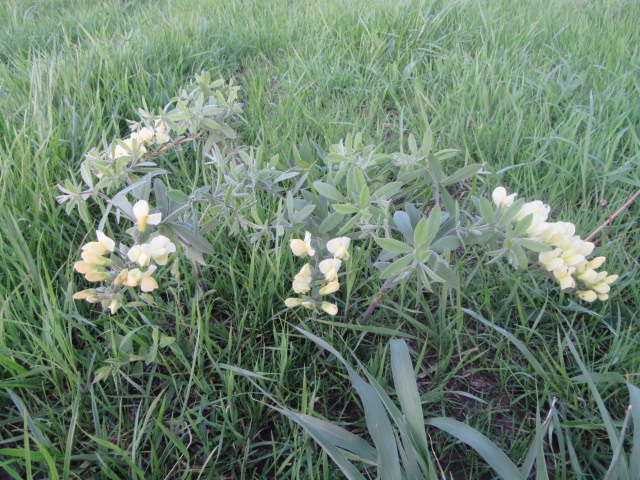
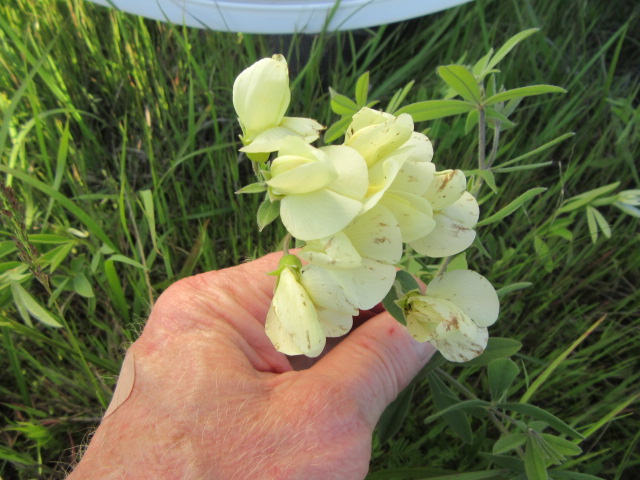
Baptisia leucophaea (Cream Wild Indigo) on 4-19-26, #1089-2.

Baptisia leucophaea (Cream Wild Indigo) is a very familiar sight in the prairie. It grows from one end to the other. Unlike most other species of Baptisia, this one grows in a horizontal fashion. Although Baptisia leucophaea was given that name in 1818, several attempts were made to make it a variety of other species. The original name was resurrected and now the other names are synonyms.
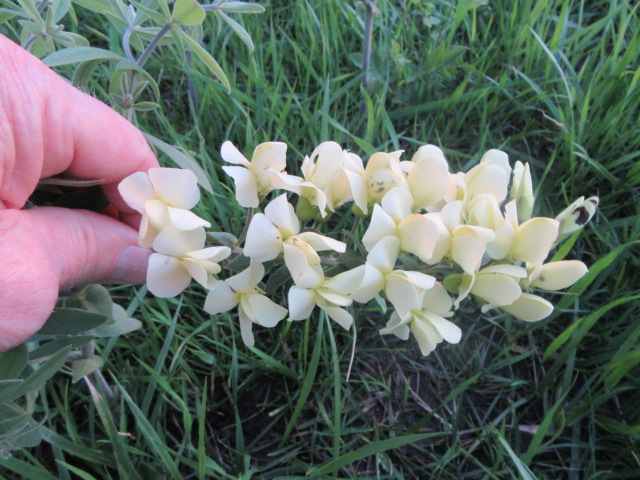
Baptisia leucophaea (Cream Wild Indigo) on 4-19-26, #1089-6.

Baptisia is a member of the pant family Fabaceae (the pea family). The flowers have kind of a thick, waxy texture.

<><>+<><>
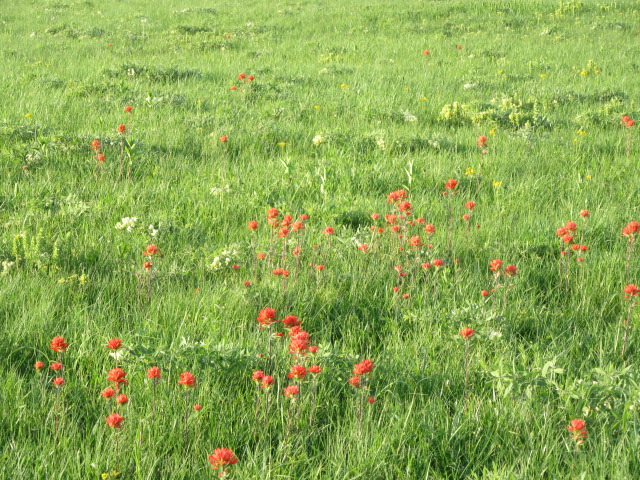
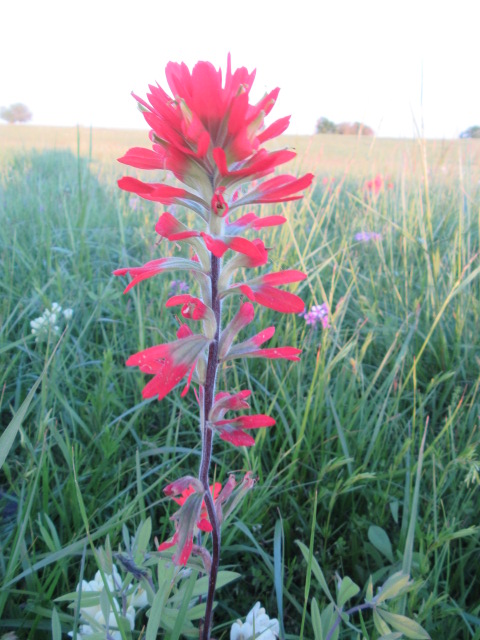
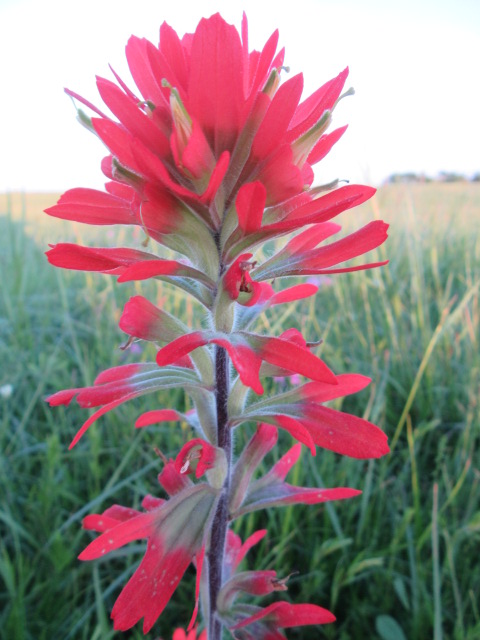
Castilleja coccinea (Indian Paintbrush, Etc.) on 4-19-26, #1089-7.

One of the biggest hits of the prairie is the Castilleja coccinea (Indian Paintbrush, Etc.). It adds a red glow throughout the prairie, some grow here and there among the other species, but there are some really large colonies. Common names include Indian Paintbrush, Painted-Cup Paintbrush, Scarlet Indian Paintbrush, and a few others.
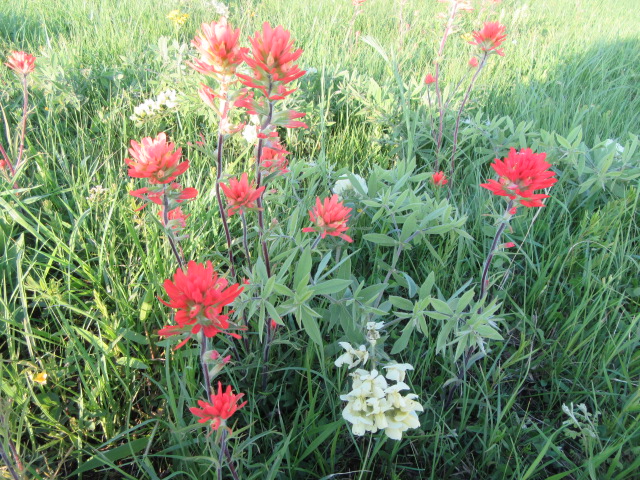
Castilleja coccinea (Indian Paintbrush, Etc.) on 4-19-26, #1089-8.

This species is a member of the plant family Orobanchaceae which was a new family for me until I visited the prairie last year.  Three of the species, including this one, are hemiparasitic meaning they get part of nutrients from the roots of of other species.
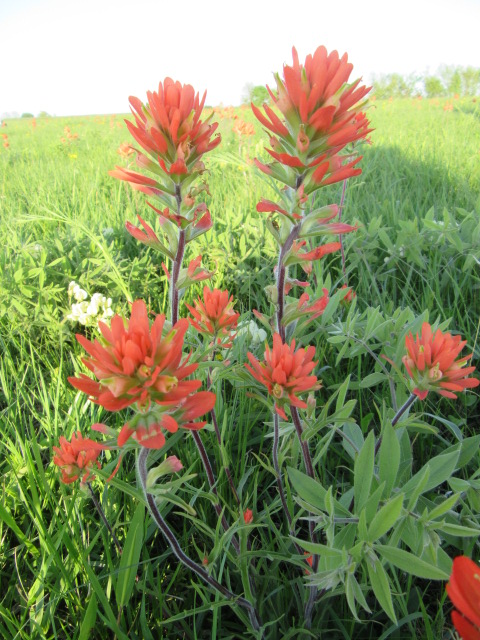
Castilleja coccinea (Indian Paintbrush, Etc.) on 4-19-26, #1089-9.

The color has polymorphism meaning they can be scarlet or yellow depending on the availability of pollinators. More pollinators means better pollination so the color is scarlet. Less pollination and the color will be yellow. Yellow flowered specimens were formerly Castilleja coccinea f. lutescens which is now a synonym according to Plants of the World Online.
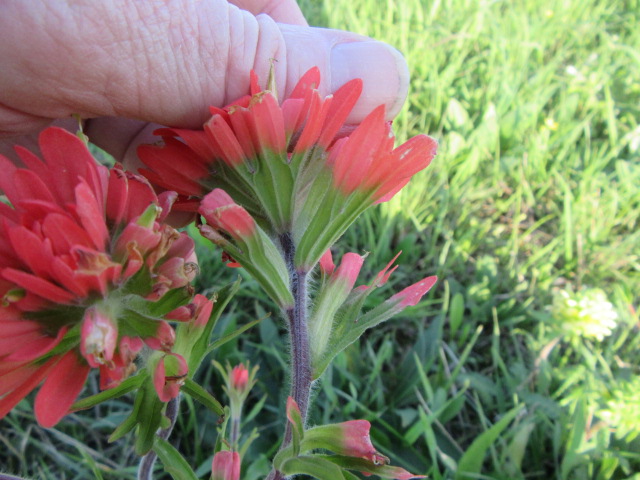
Castilleja coccinea (Indian Paintbrush, Etc.) on 4-19-26, #1089-10.

As with Poinsettias, the red color is not from petals but leaf-like bracts. The flowers are inconspicuous with red-tinged sepals. It is the flowers you pull out to get to the nectar not the bracts…

<><>+<><>
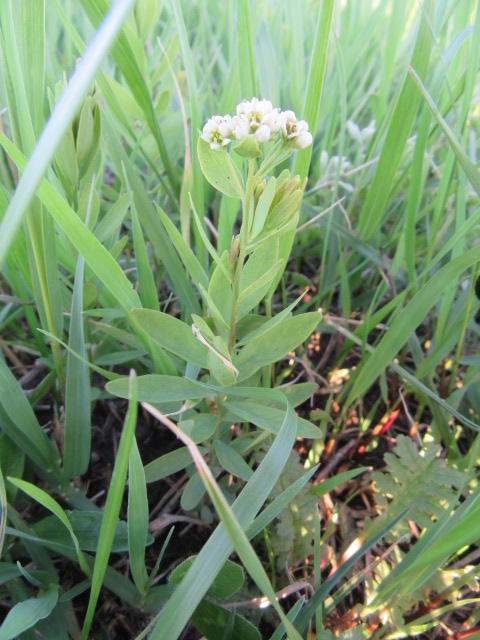
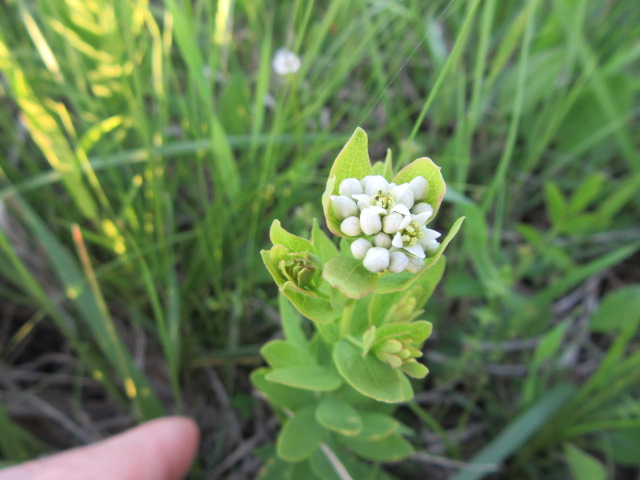
Comandra umbellata (Bastard Toadflax) on 4-19-26, #1089-12.

Comandra umbellata (Bastard Toadflax) is another hemiparasitic species from the plant family Santalaceae. The genus name comes from the Greek word for “male hairs” that refers to the hairs at the base of it’s flowers stamens… 
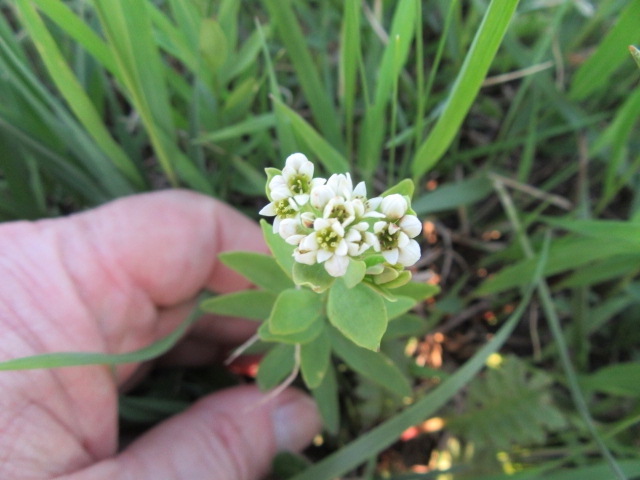
Comandra umbellata (Bastard Toadflax) on 4-19-26, #1089-16.

The flowers open up more, but as before, I didn’t see any like that. Maybe next time… You can see what they look like open by visiting its page (click on the link above). The description of the flowers is quite interesting… One of the adult leaders of the 4H Club was standing next to me when I found the first one. He asked what it was. I paused for a minute and said, “Ummm… Toadflax.” I couldn’t call it a bastard because I didn’t know this guy very well… 🙂 Well, I didn’t remember the other common names.

<><>+<><>
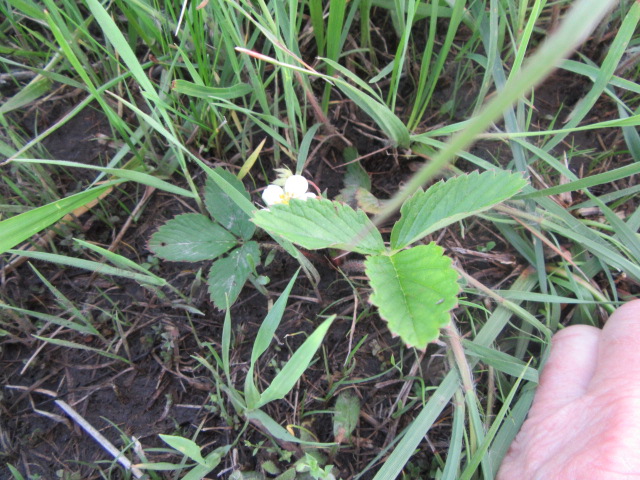
Fragaria virginiana (Virginia Strawberry) on 4-19-26, #1089-17.

The last time Walter and I were at the prairie, the owner asked Walter (over the phone) if we had seen any wild strawberries. We only ran across a few, and this time I found only a couple of plants. Fragaria virginiana (Virginia or Wild Strawberry) is listed as a native species in every state in the United States and every province in Canada. While these strawberries are small, they have a great flavor. Information online says native European strawberries are larger but lack flavor. Our F. virginiana were hybridized with European species which gives led to the development of the many cultivars available today.  Hopefully, someday I will run across some fruit to sample, which would be a first.

<><>+<><>
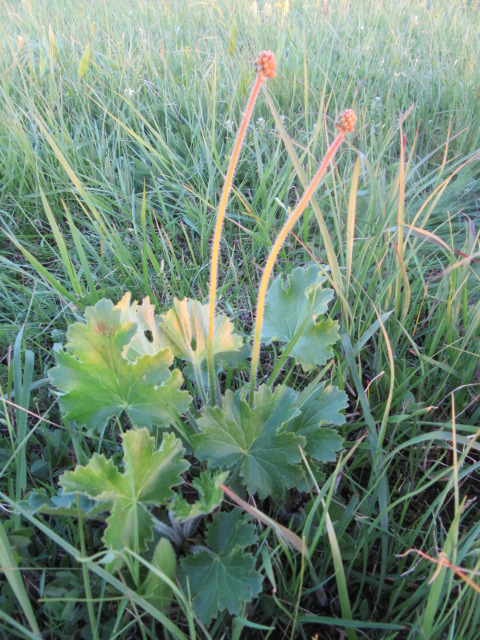
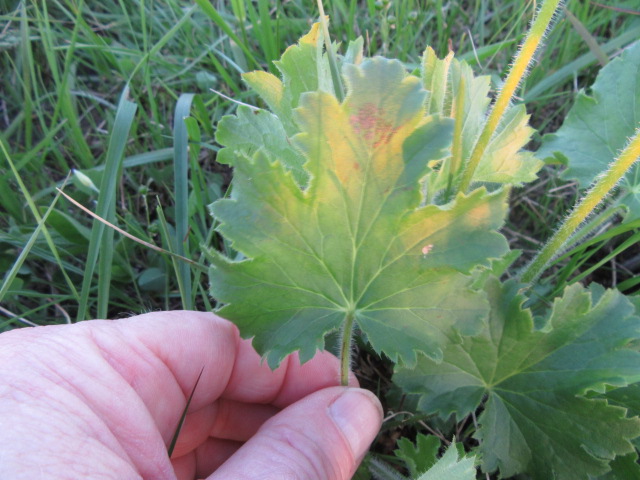
Heuchera richardsonii (Prairie Alumroot) on 4-19-26, #1089-20.

Without a doubt, the greatest find in the prairie was this Heuchera richardsonii (Prairie Alumroot). Walter and I were walking together when he spotted this plant and asked what it was. I took a look at it and immediately thought it looked like the leaves of the Coral Bells in the north bed. I didn’t immediately say that to Walter because I thought there was no way it could be a Heuchera in the prairie. I uploaded the photos I took to iNaturalist and, low and behold, the first suggestion was Heuchera richardsonii

Heuchera richardsonii (Prairie Alumroot) on 4-19-26, #1089-23.

The leaves were very thick are stiff and the stems and petioles are very hairy. This was a great find and the only one I saw. The chances of finding it again are very, very slim… I’ll look for it, though, because I really want to see what it flowers look like in person. I need more photos so I can write a page for it…

The maps Biota of North America Program (BONAP) website show 32 species of Heuchera in the United States. Four of the species are, or have been, found in Missouri. Some species are found only in one to a few states.

When I was a kid, there was a clear, rock-like chunk in the medicine cabinet that mom said was alum. We used it for mouth sores if we bit our cheek or tongue. It was very bitter, but always seemed to do the trick.

<><>+<><>
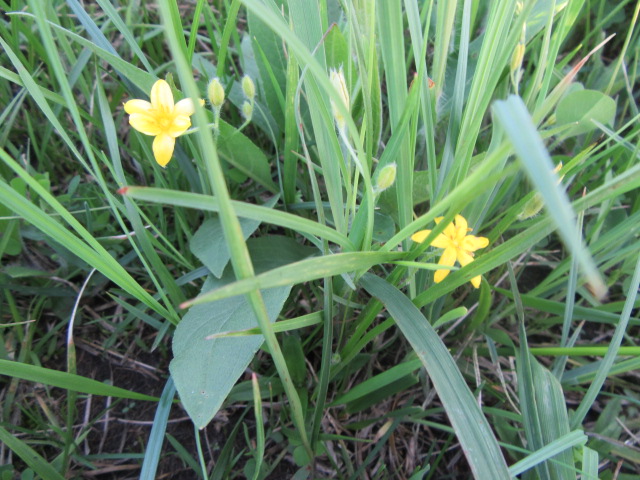
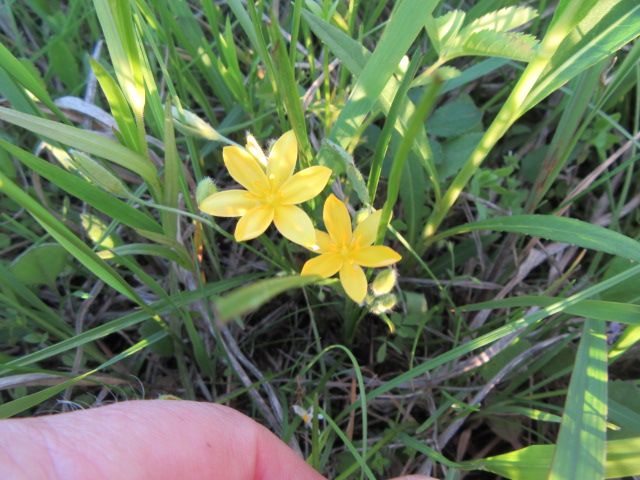
Hypoxis hirsuta (Yellow Star Grass) on 4-19-26, #1089-24.

There were plenty of Hypoxis hirsuta (Yellow Star Grass) here and there throughout the prairie. It’s leaves are grass-like.
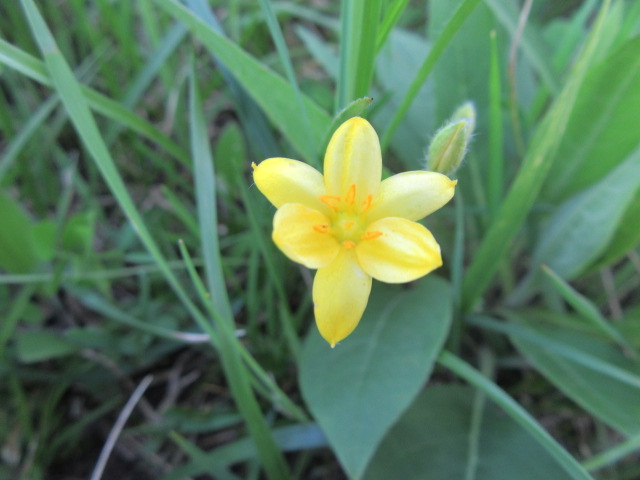
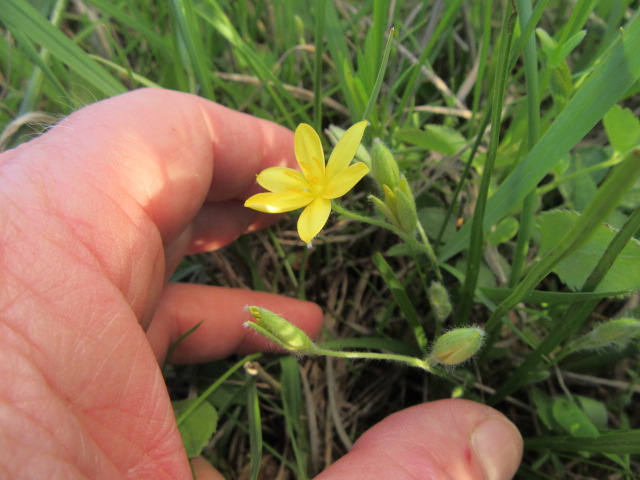
Hypoxis hirsuta (Yellow Star Grass) on 4-19-26, #1089-26.

The flowers were so bright yellow it was hard to get good photos…

<><>+<><>
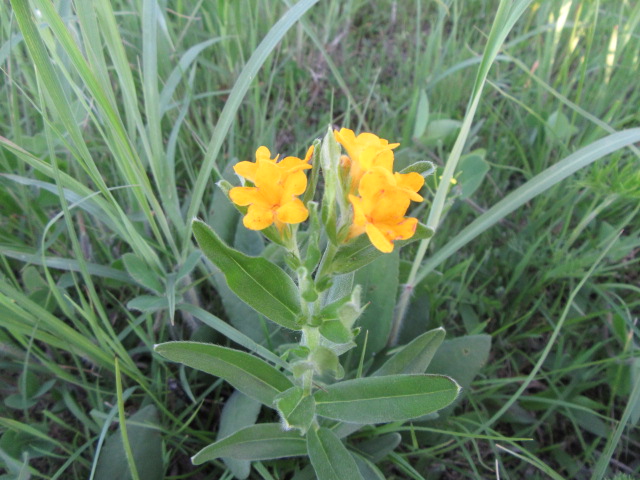
Lithospermum canescens (Hoary Puccoon) on 4-19-26, #1089-28.

Last year all the flowers of the Lithospermum canescens (Hoary Puccoon) were beginning to wilt so I didn’t get very good photos. This time, being earlier, I was able to get several good flower photos.
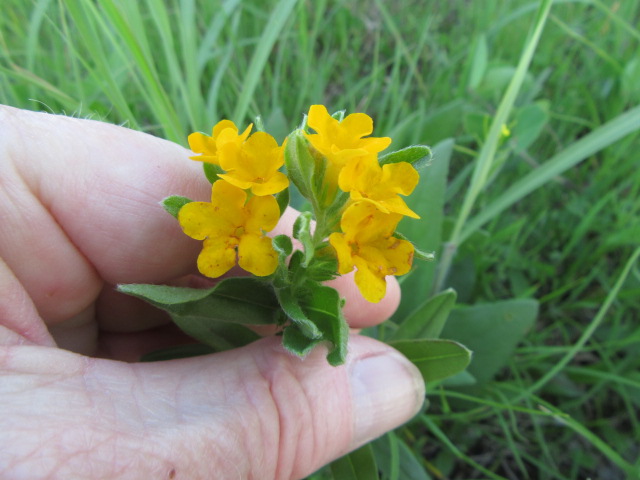
Lithospermum canescens (Hoary Puccoon) on 4-19-26, #1089-31.

There were a few good-sized colonies of this species in the area of the prairie we were walking.

<><>+<><>
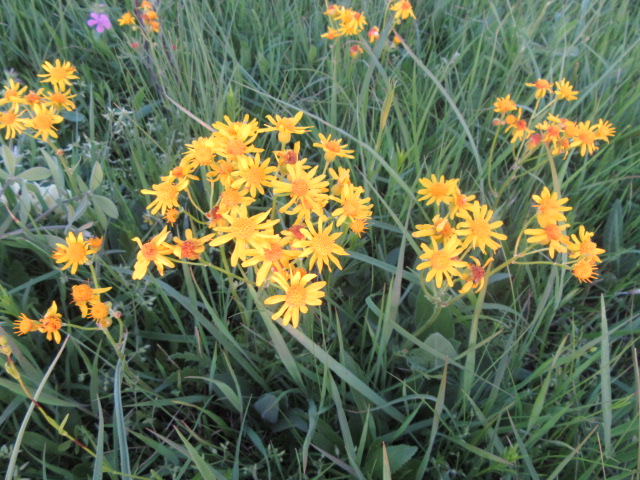
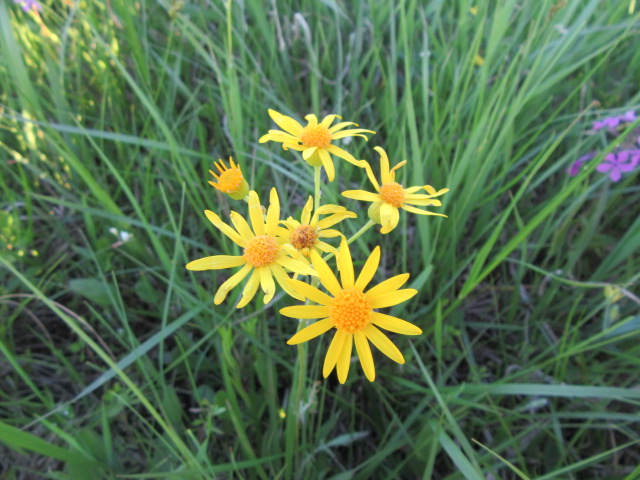
Packera plattensis (Prairie Groundsel/Prairie Ragwort) on 4-19-26, #1089-32.

The Packera plattensis (Prairie Groundsel/Prairie Ragwort) was alive and well and blooming up a storm. This member of the plant family Asteraceae was in both fairly large colonies as well as hit and miss clumps.
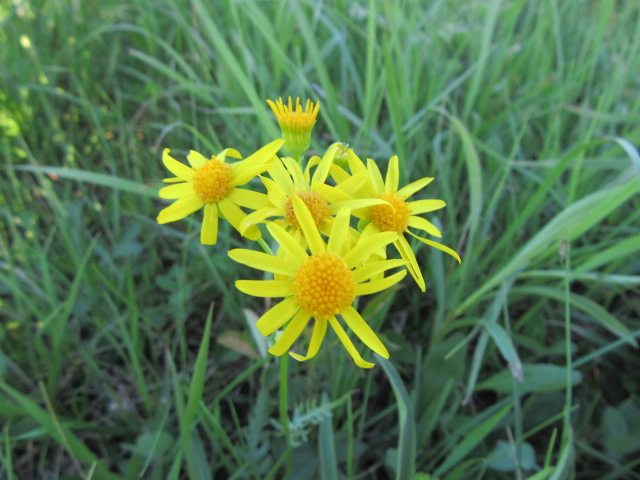
Packera plattensis (Prairie Groundsel/Prairie Ragwort) on 4-19-26, #1089-37.

They sure did add a splash of color and could be spotted from quite a distance.

<><>+<><>
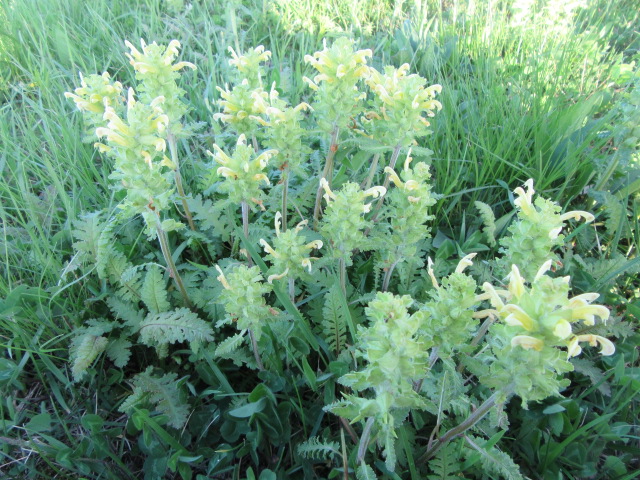
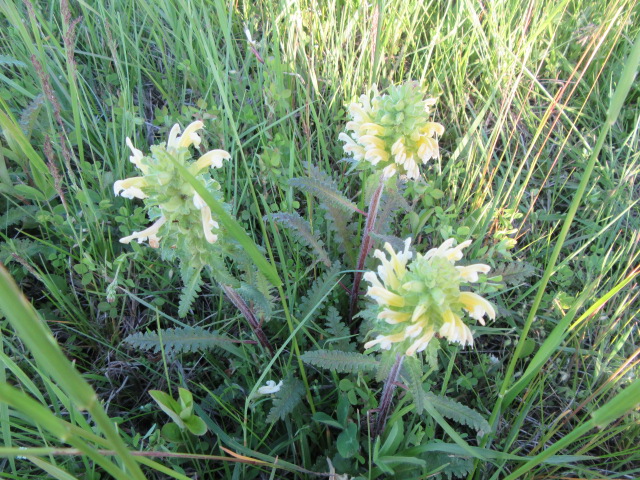
Pedicularis canadensis (Wood Betony/Canadian Lousewort, ETC.) on 4-19-26, #1089-38.

One of my favorite species in the prairie is the Pedicularis canadensis (Wood Betony/Canadian Lousewort). It is a hemiparasitic member of the plant family Orobanchaceae meaning it taps into the roots of nearby plants. Apparently, it has a symbiotic relationship with a fungus that helps gather nutrients. Some references say they accomplish this through “haustoria”, tissue connections that develop between the roots of parasitic plants and host plants…
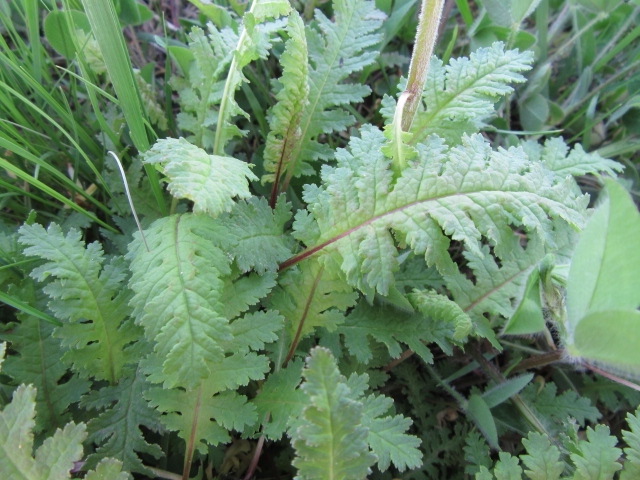
Pedicularis canadensis (Wood Betony/Canadian Lousewort, ETC.) on 4-19-26, #1089-41.

Common names of Pedicularis canadensis include Wood Betony, Canadian Lousewort, Common Lousewort, and possibly others.

The common name “Lousewort” originated with an old belief that cattle that consumed the plant would become infested with lice… Another belief was that a strong concoction of the leaves could be used to eliminate lice. Native Americans used this species for several remedies.
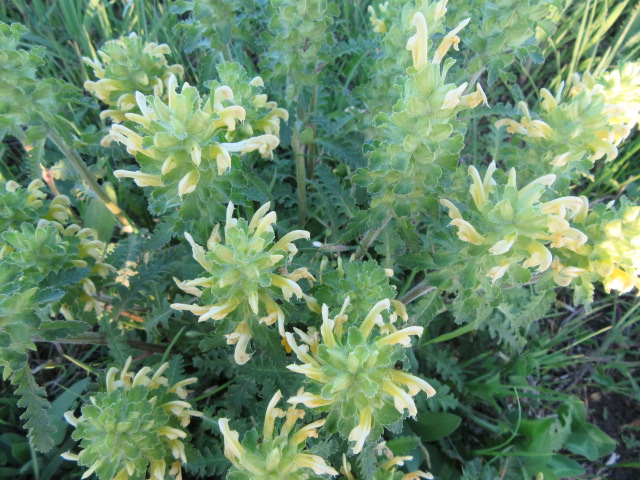
Pedicularis canadensis (Wood Betony/Canadian Lousewort, ETC.) on 4-19-26, #1089-44.

I really like its ferny leaves and the way the flowers spiral.

<><>+<><>
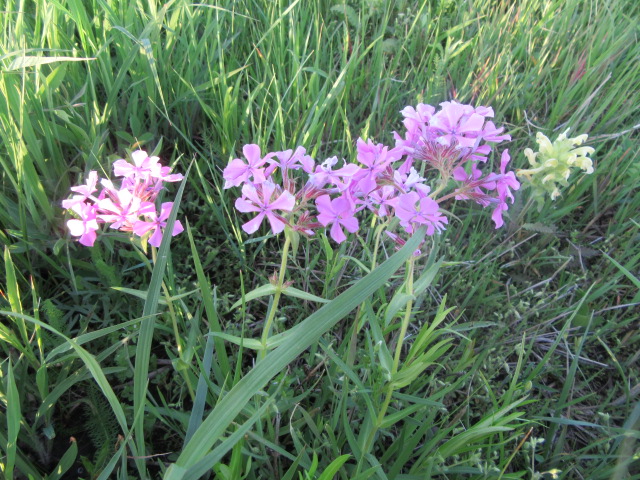
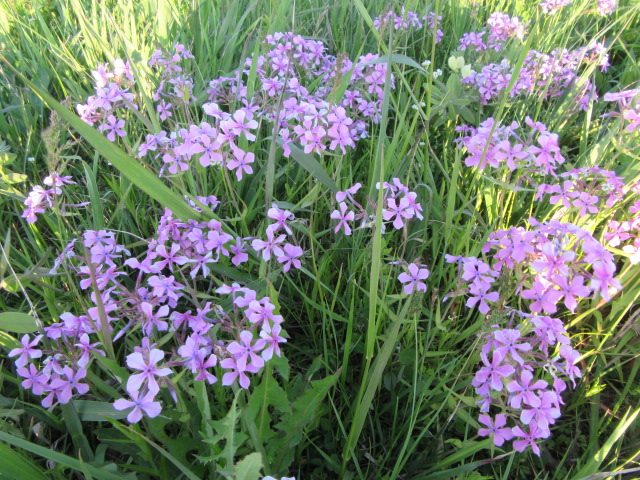
Phlox pilosa (Prairie Phlox/Downy Phlox) on 4-19-26, #1089-45.

In my friend’s secluded woods, Phlox divaricata (Wild Blue Phlox) are abundant, but Phlox pilosa (Prairie Phlox/Downy Phlox) can be found from one end of the prairie to the other. They are a bit shorter in height and have smaller leaves. Their flowers add a splash of color to the landscape.

<><>+<><>
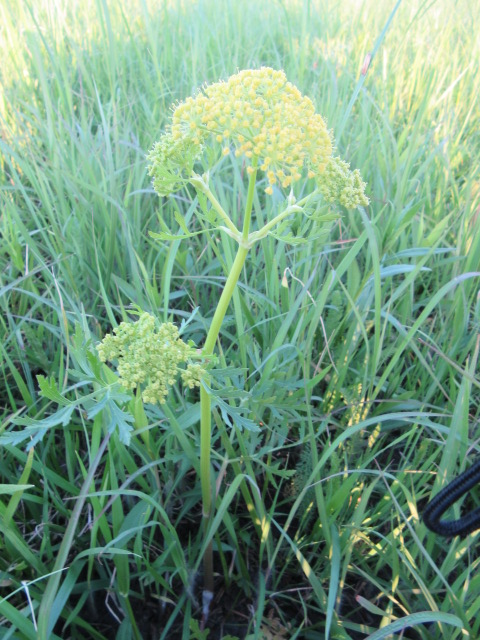
Polytaenia nuttallii (Prairie Parsley) on 4-19-26, #1089-50.

Another new species for me on this trip is the Polytaenia nuttallii (Prairie Parsley). I only found one plant so farm but I may find more when I go back.
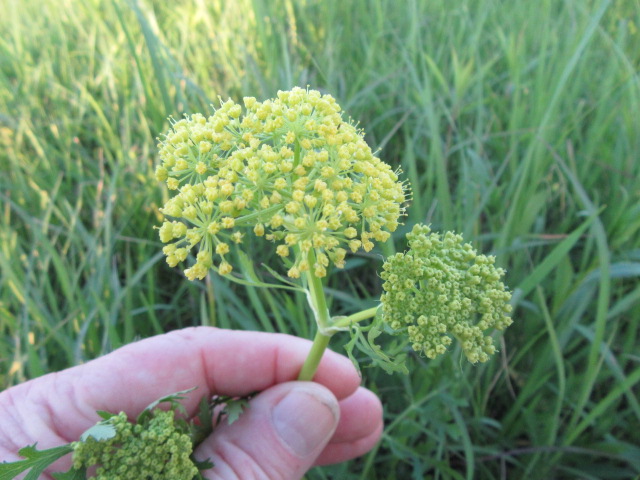
Polytaenia nuttallii (Prairie Parsley) on 4-19-26, #1089-53.

Yeah, those umbels certainly resemble parsley. This species is a host plant for the Black Swallowtail Butterfly and deer and cattle feed on its leaves. Plants can grow to 3 feet in height and it is used in habitat restoration.

<><>+<><>
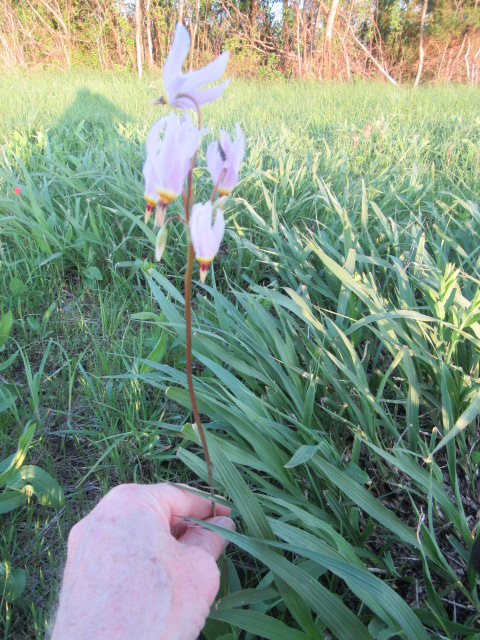
Primula meadia (Common or Eastern Shooting Star) on 4-19-26, #1089-54.

Last in alphabetical order on this trip, but certainly not the least on popularity, is the Primula meadia (Common or Eastern Shooting Star). Although the Indian Paintbrush was an instant hit, I really think this species would win a popularity contest in this prairie. When I spotted the first one of the evening, I called out, “Found one!” Immediately, the kids stopped what they were doing and ran to the spot. They huddled around the poor plant and started taking photos like it was a celebrity. Every time I found another one, I would call out, and they would come running. I didn’t run across any with white flowers this time, but perhaps I will in the next trip.

If you want to read about the last trip on May 5 in 2025, click HERE. Eleven new species for me…

Well, that’s it for this post. I apologize for not having much information in this post. Everyday that went by I was more anxious to get it finished… TEN DAYS from the trip to getting it finished! GEEZ!

The next trip is planned for this Sunday afternoon. I’m taking a couple of very good friends with me.

Until next time, be safe, stay positive, always be thankful, and GET DIRTY!


Surprise Visit To A Native Prairie

Native prairie on 5-5-25.

Hello everyone! I hope this post finds you well. Sunday evening, a friend contacted me and asked if I wanted to go to a native prairie on Monday. Of course, I said yes. On the way there, he told me a little about the place. It is privately owned farm that has never been plowed, grazed, or planted. It gets bailed in September every year which is why it is short now. There are two public prairie sites, one across the road and one next to this property (which used to be part of this farm). I can’t tell you where it is because I said I wouldn’t. There are are two other public areas not far away… If I gave you the names of the conservation areas, then you would be close. 🙂

I am going back at some point, and to the conservation areas. When I go to the state conservation areas, I will give you the name of the site. If you stumble upon this private land, the owner will surely run you off. She showed up within 10 minutes after we got there because she didn’t recognize my friend’s van… All was good!

Native prairie on 5-5-25.

So, we pulled up in front of this area and my jaw dropped. I wasted no time getting the camera and walking into the prairie. It was almost like I died and went to heaven. Well, maybe that is getting a little carried away… Within a few minutes, I was taking photos of a wildflower I didn’t recognize. By the time it was too dark to take photos, I had photographed 11 species to identify. As a matter of fact, I only found two species I recognized, Achillea millefolium (Yarrow) and Galium pedemontanum (Piedmont Bedstraw).

There were areas where certain species was predominant, and others were many species we together. Since this is only the beginning of May and no pasture grass has been sown here, the native grass that grows here was almost non existent. Unlike public conservation areas which has grown up, this prairie was well maintained.

So, I’m going to show you what I found in alphabetical order.. Most of species on this post flower from April-May so they will be fizzled out soon…

Baptisia leucophaea (Cream Wild Indigo) on 5-5-25, #1041-1.

Baptisia leucophaea Nutt. (1818)

bap-TIS-ee-uh  loo-koh-FAY-uh

I was kind of in shock for a minute when I found this plant. I just stood there looking at it like I was weird or something. I have seen a few along 52 Highway on the way to Clinton in the past couple of years, but here it was right in front of me. Baptisia leucophaea (Cream Wild Indigo).

Baptisia leucophaea (Cream Wild Indigo) on 5-5-25, #1041-3.

Unlike most Baptisia species with upright racemes, B. leucophaea racemes droop and hang to the ground. The whole stem was very stiff.

Baptisia leucophaea (Cream Wild Indigo) on 5-5-25, #1041-5.

The flowers have short peduncles (flower stems) and face the sun.

<<<<+>>>>

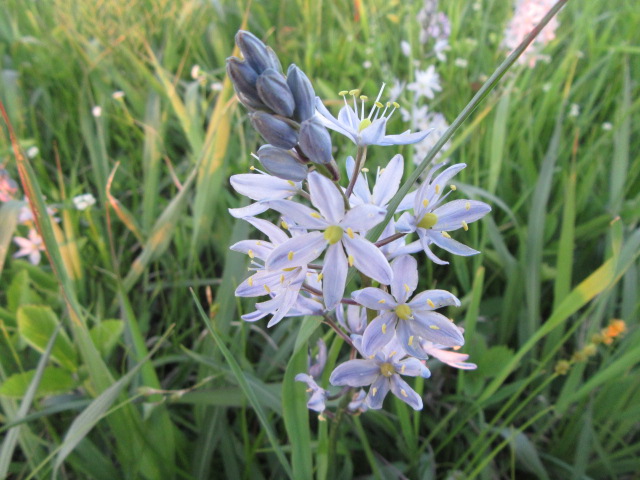
Camassia scilloides (Wild Hyacinth, Atlantic Camas) on 5-5-25, #1041-7.

Camassia scilloides (Raf.) Cory (1818)

kuh-MAS-ee-uh  sil-OY-dees

There were several large colonies of Camassia scilloides also known as Wild Hyacinth and Atlantic Camas. Seeing them in mass was such a WOW moment.

Camassia scilloides (Wild Hyacinth, Atlantic Camas) on 5-5-25, #1041-6.

This is a bulbous perennial wildflower whose racemes terminate with 7-50 flowers.

Camassia scilloides (Wild Hyacinth, Atlantic Camas) on 5-5-25, #1041-10.

Flowers of this species can range from light blue to white and have such bright yellow anthers and filaments. The flowers produce three-lobed fruit.

<<<<+>>>>

Castilleja coccinea (Indian Paintbrush) on 5-5-25, #1041-13.

Castilleja coccinea (L.) Spreng. (1825)

kas-tee-LEE-uh kok-SIN-ee-uh

Finally! The Castilleja coccinea were in large colonies here and there throughout the prairie. I have seen them here and there in the same area along the highway and always wondered what they were. Common names include Indian Paintbrush, Painted-Cup Paintbrush, Scarlet Indian Paintbrush, and a few others.

Castilleja coccinea (Indian Paintbrush) on 5-5-25, #1041-14.

This species is a member of the plant family Orobanchaceae which is also a new family for me. In fact, there were members of three families I was unfamiliar with. Like this species, three were hemiparasitic meaning they get part of nutrients from the roots of of other species. Also new to me. Never heard of hemiparasitic before…

Castilleja coccinea (Indian Paintbrush) on 5-5-25.

The color was so vivid! As with Poinsettias, the red color is not from petals but leaf-like bracts. The flowers are inconspicuous with red-tinged sepals.

Castilleja coccinea (Indian Paintbrush) on 5-5-25, #1041-16.

Let’s get a little closer… According to information online, the color has polymorphism meaning they can be scarlet or yellow depending on the availability of pollinators. More pollinators means better pollination so the color is scarlet. Less pollination and the color will be yellow. Yellow flowered specimens were formerly Castilleja coccinea f. lutescens which is now a synonym according to Plants of the World Online. I guess someone figured that out… Apparently, red colors are harder for insects to see but hummingbirds also pollinate the flowers… Hmmm… I didn’t see any hummingbirds or even any bees for that matter…

This species can be either perennial or biennial. Some seeds will germinate in the fall and and produce flowering plants in the spring. Seeds that germinate in the spring will produce plants that flower the following year. Fruits have 2 divisions and once ripe, they split open allowing up to 300 seeds to be dispersed by the wind.

I read where Native Americans used the flowers as a love charm but also as a poison against their enemies… Hmmm… I “think” the roots of an eastern species was cooked and eaten like potatoes. NOT this species and don’t quote me on that…

<<<<+>>>>

Comandra umbellata (Bastard Toadflax) on 5-5-25, #1041-17.

Comandra umbellata (L.) Nutt. (1818)

koh-MAN-druh um-bell-AY-tuh

This one is called Comandra umbellata (Bastard Toadflax) and it is also hemiparasitic from the new-to-me plant family Santalaceae. The genus name comes from the Greek word for “male hairs” that refers to the hairs at the base of it’s flowers stamens… 

Comandra umbellata (Bastard Toadflax) on 5-5-25, #1041-18.

The flowers have 5 greenish-white sepals and no petals. I need to go back and get more photos of this one when the flowers are open up till July…

Information online says they parasitize over 200 known plant species…

<<<<+>>>>

Hypoxis hirsuta (Yellow Star Grass) on 5-5-25, #1041-21.

Hypoxis hirsuta (L.) Coville

hy-POK-sis  her-SOO-tuh

This dainty little grass, Hypoxis hirsuta, commonly known as Yellow Star Grass, hails from the “new-to-me” plant family Hypoxidaceae. It may be somewhat confused because it has been or is sometimes placed in the families Amaryllidaceae and Liliaceae… Depends on what website you are on or if it is up-to-date.

Hypoxis hirsuta (Yellow Star Grass) on 5-5-25, #1041-22.

Yellow Star Grass grows from a corm and has 3-lobed fruit. The stems grow from rosettes of grass-like leaves. Both the stems and leaves have small white hairs and stems (peduncles) terminate in 3-6 bright yellow, star-shaped flowers. I didn’t notice many of these compared to the other species, but their bright color stood out among the other vegetation.

OH, the flowers close when it gets hot and the fruits are covered with tiny bumps or spines. The anthers “diverge” in the lower half giving the stamens an arrowhead-like appearance… Maybe I could have taken a close-up if I had known that at the time…

<<<<+>>>>

Lithospermum canescens (Hoary Puccoon) on 5-5-25, #1041-23.

Lithospermum canescens (Michx.) Lehm. (1818)

lith-oh-SPER-mum  can-ESS-kens

This half-wilted plant is in the plant family Boraginaceae and goes by the name of Lithospermum canescens (Hoary Puccoon) due to its hairy leaves. The plants are referred to as distylous because they have two flower forms (on the same plant). The genus name means “rock seed” because of its shiny, white, rock hard seeds. Formerly named Batschia canescens by André Michaux in Flora Boreali-Americana in 1803.

Lithospermum canescens (Hoary Puccoon) on 5-5-25, #1041-24.

Apparently, the taproot produced a reddish-purple juice that Native American children would chew on it to make their gum red. Roots were used to treat asthma, lung complaints, and as a sedative. The white seeds were also used as ceremonial beads.

<<<<+>>>>

Packera plattensis (Prairie Groundsel, Prairie Ragwort) on 5-5-25, #1041-25.

Packera plattensis (Nutt.) W.A.Weber & Á.Löve (1981)

PAK-er-uh  plat-EN-sis

This species, Packera plattensis is a member of the familiar plant family Asteraceae and can be either a perennial or biennial. It was formerly formally named Senecio plattensis by Thomas Nuttall in Transactions of the American Philosophical Society in 1841. Common names include Prairie Groundsel, Prairie Ragwort, Platte Groundsel, Squaw Weed, and possibly others.

I found a single Packera glabella (Butterweed) in a wooded area behind the chicken house 2022. Never saw it again so I was glad I found this species in the prairie.

<<<<+>>>>

Pedicularis canadensis (Wood Betony) on 5-5-25, #1041-28.

Pedicularis canadensis L. (1767)

Pe-dik-yoo-LAIR-is  ka-na-DEN-sis

This plant made me smile with the spiral-growing flowers. Another member of the plant family Orobanchaceae, it is also hemiparasitic. The roots have a symbiotic relationship with a fungus that helps it gather nutrients. Some references say they accomplish this through “haustoria”, tissue connections that develop between the roots of parasitic plants and host plants…

Common names of Pedicularis canadensis include Wood Betony, Canadian Lousewort, Common Lousewort, and possibly others.

Pedicularis canadensis (Wood Betony) on 5-5-25, #1041-29.

The upper corollas have a pair of teeth at their tips (characteristic of this species).

Pedicularis canadensis (Wood Betony) on 5-5-25, #1041-31.

I noticed several clumps of rosettes with no flowers, so maybe they can be perennial or biennial. I didn’t see it mentioned, but why else would some plants not have flowers and some not? Another plant mentioned somewhere above has similar leaves, but these clumps were among the Wood Betony. I had to reassure myself for a minute… GEEZ! I have to look into that more…

Why the common name “Lousewort?” Well, apparently, the name came from an old belief that your cattle would get lice if they consumed this plant. Another belief was that a strong concoction made from the leaves would eliminate lice…

Plants were eaten by American Indians, sometimes as a soup. It was added to oats and used as horse feed. A root infusion was used for stomachaches, diarrhea, anemia, and heart issues. Poultices were used for swellings, tumors, and sore muscles…

I also read where the Menomini Indians called the root “enticer root” and carried it as a charm when they wanted to seduce the opposite sex. The root was also used to heal broken marriages by adding it to the food the couple would then eat, hoping its magic would rekindle romance…

<<<<+>>>>

Phlox pilosa (Prairie Phlox) on 5-5-25, #1041-33.

Phlox pilosa L. (1753)

floks  pil-OH-suh

This species looked very familiar and was indeed a Phlox. Even so, the plants were much shorter than the species I have become familiar with. The species here is Phlox pilosa with the common names Prairie Phlox, Downy Phlox, Deam’s Phlox, Hairy Phlox, and possibly others.

Phlox pilosa (Prairie Phlox) on 5-5-25, #1041-35.

While the sessile, lance-shaped leaves grow in an opposite manner, they are smaller and narrower than Phlox divaricata (Wild Blue Phlox).

<<<<+>>>>

Primula meadia (Common or Eastern Shooting Star) on 5-5-25, #1041-38.

Primula meadia (L.) A.R.Mast & Reveal (2007)

PRIM-yew-luh  MEE-dee-uh

After we had walked into the prairie for a while, Walter mentioned me hadn’t seen any Shooting Star yet. He said they would be growing above the other plants. After a few minutes, I looked off in the distance and saw what could be a few. We walked in that direction, and sure enough, found a few. Primula meadia may remind you of a plant that grows from a bulb, but in fact is a rhizomatous perennial member of the plant family Primulaceae. Their common name is Common or Eastern Shooting Star, and likely others. It was previously named Dodecatheon meadia by Carl von Linnaeus in the first volume of the first edition of Species Plantarum in 1753. You know, Linnaeus re-named A LOT of species which was a good thing…

Primula meadia (Common or Eastern Shooting Star) on 5-5-25, #1041-40.

The plants produce good-sized clumps of wide leaves. Plants send up single stems terminating with 5-20 nodding, deeply-lobed flowers with 5 exerted stamens.

The Missouri Plants website says Steyermark (Steyermark’s Flora of Missouri) commented that the flowers have an aroma of grape juice and the rootstock like that of cored beef…

This species had gained the Royal Horticultural Society’s Award of Garden Merit. There is also at least one cultivar that produces larger flowers on taller plants.

<<<<+>>>>

Sisyrinchium albidum (White Blue-Eyed Grass) on 5-5-25, #1041-41.

Sisyrinchium albidum Raf. (1832)

sis-ee-RINK-ee-um  AL-bi-dum

I’m not 100% sure this species is Sisyrinchium albidum, commonly referred to as White Blue-Eyed Grass, Blue-Eyed Grass, and possibly others. I have Sisyrinchium angustifolium (Narrow-Leaved Blue-Eyed Grass) and Sisyrinchium campestre (Prairie Blue-Eyed Grass) here on the farm and they are both similar.

Sisyrinchium albidum (White Blue-Eyed Grass) on 5-5-25, #1041-42.

There were several large colonies of this species on the prairie. Unfortunately, none of the flowers were open.

Sisyrinchium albidum (White Blue-Eyed Grass) on 5-5-25, #1041-44.

Their leaves are grass-like.

Sisyrinchium albidum (White Blue-Eyed Grass) on 5-5-25, #1041-46.

The Blue-Eyed Grass on the farm typically have blue flowers but can be white. S. albidum typically has white flowers but can also be blue… Other features that could distinguish this species from others are not readily noticeable unless you take a closer look. Supposedly, S. albidum has an extra leaflike bract that encloses one or two inflorescences… Something you may not always remember to check… If you look at the first photo, you can see two leaf-like bracts. Is that the tell-tale sign? Hmmm…

After a while, it started getting to dark to take photos…

I think I have them all now. It was a great adventure and one worth sharing. Hopefully, I can get back out to the prairie, and the others, very soon. Now, I need to work on a page for each species… 🙂

Until next time, be safe, stay positive, always be thankful, and GET DIRTY!