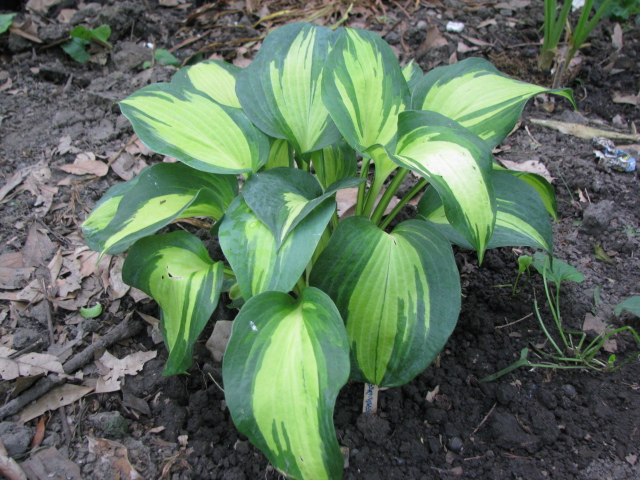
Hosta ‘Dream Queen’ on 5-1-09, #12-37.
Hosta ‘Dream Queen’
Hosta ‘Dream Queen’ was introduced by Jan Van den Top from Holland in 2000. It is a sport of Hosta ‘Great Expectations’. Considered a mid-sized Hosta, it will grow 18-28″ tall. It produces white flowers starting in June. Similar to H. ‘Thunderbolt’ and H. ‘Dream Weaver’. Thick, blue-green, slightly corrugated leaves with a creamy white center.
I bought my Hosta ‘Dream Queen’ in 2009 while I was living in Mississippi. I moved it with me when I came back to Missouri in February 2013. It always performed very well until 2015 when it came up late and stayed very tiny.
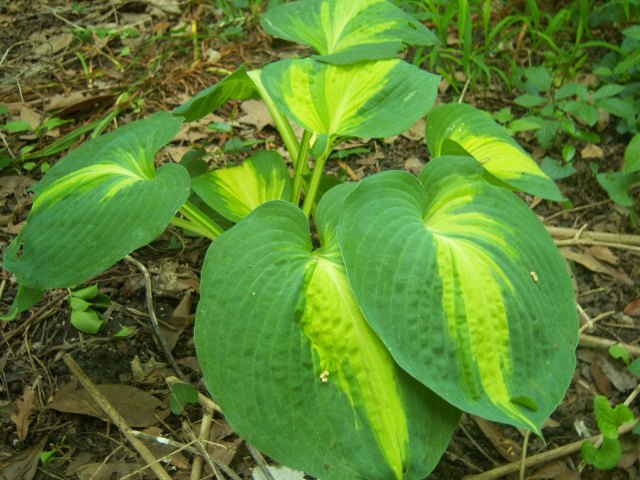
Hosta ‘Dream Queen’ on 4-15-12, #86-35.
USEFUL INFORMATION:
Family: Asparagaceae (formerly in Liliaceae).
Origin: Sport of H. ‘Great Expectations’.
Zones: USDA Zones 3a-8b (-40 to 15° F).
Size: 16-18” tall x 24-30” wide.
Flowers: White Flowers in mid summer.
Light: Light to full shade.
Soil: Prefers moist, well-drained soil.
Water: Average water needs once established.
Propagation: Division every 3-5 years.
Uses: Attracts hummingbirds, shade garden, containers, etc.
Tolerates: Dry shade and high humidity.
Resistant: Information suggests this Hosta is not slug resistant.

Hosta ‘Dream Queen’ on 5-14-13, #148-11.
Hosta ‘Dream Queen’ has nice dark green leaves with a creamy yellow center. The leaves are thick, somewhat puckered, and corrugated.
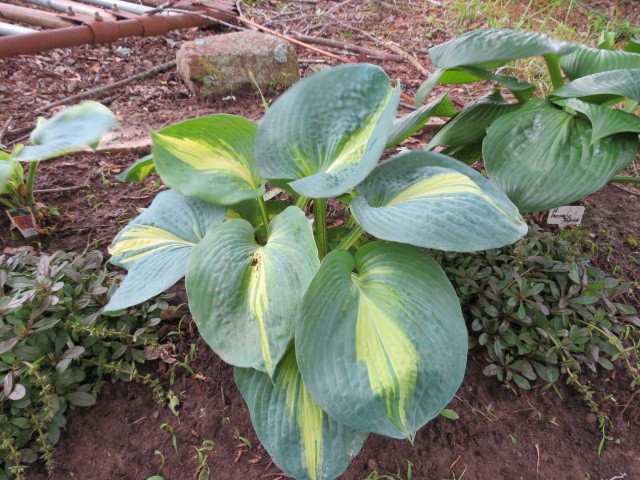
Hosta ‘Dream Queen’ on 6-1-13, #151-45.
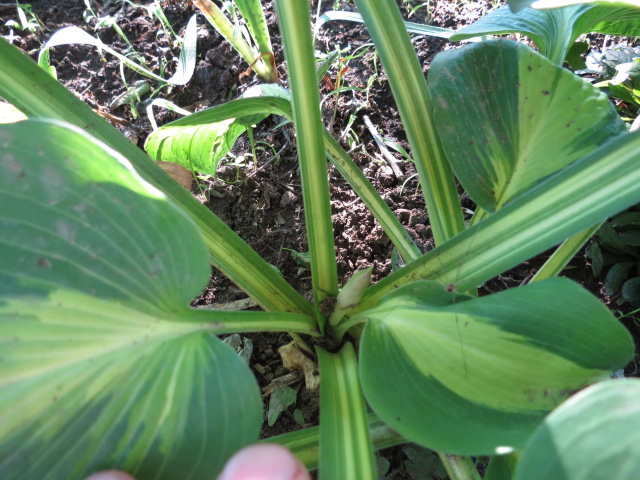
Hosta ‘Dream Queen’ on 6-11-13, #155-12.

Hosta ‘Dream Queen’ on 6-29-13, #159-11.

Hosta ‘Dream Queen’ on 7-3-13, #160-16.
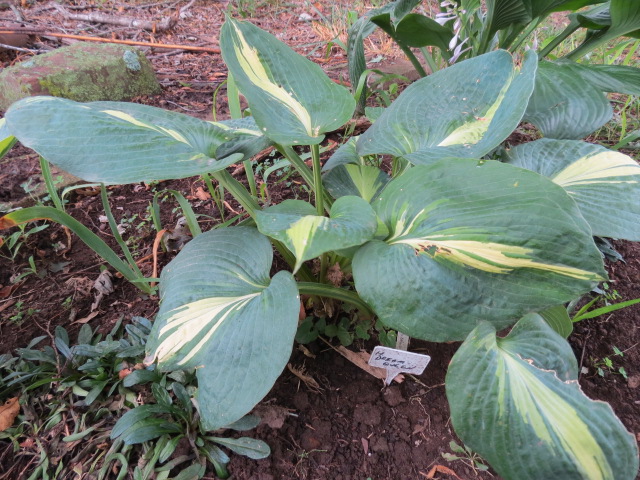
Hosta ‘Dream Queen’ on 7-30-13, #165-37.

Hosta ‘Dream Queen’ on 6-1-14, #228-48.
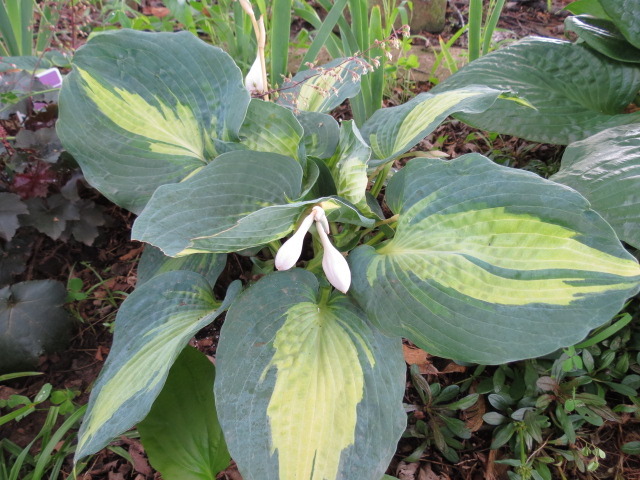
Hosta ‘Dream Queen’ on 6-12-14, #229-18.

Hosta ‘Dream Queen’ on 6-29-14, #230-57.
AWESOME!

Hosta ‘Dream Queen’ on 7-12-14, #231-58.

Hosta ‘Dream Queen’ on 4-21-15, #243-6.
Hosta ‘Dream Queen’ came up later than the other Hosta in the spring of 2015 and not much of it.
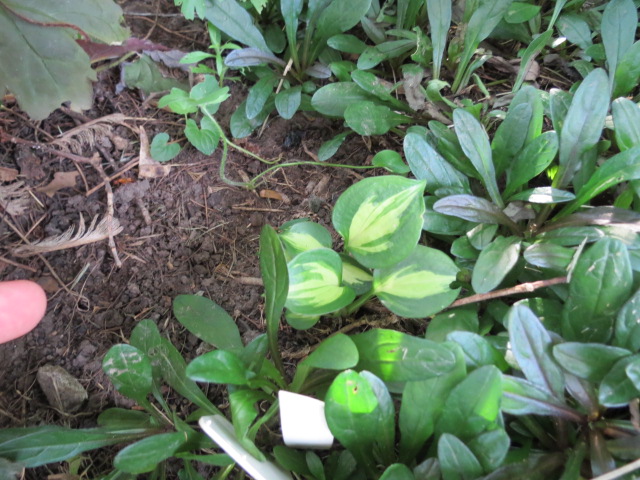
Hosta ‘Dream Queen’ on 7-12-15, #271-21.
It barely grew at all during summer and didn’t return in the spring of 2016. That’s too bad because Hosta ‘Dream Queen’ was a really nice Hosta. Maybe someday I will buy another one.
If you have any comments, questions or suggestions, I would like to hear from you. Please click on the “Like” below if you have visited this page. It helps us bloggers stay motivated. 🙂 Click here for my page about the Hosta genus, growing information and sources. The links below are specifically for this cultivar. There are several good sources of Hosta somewhere toward the bottom on the right side of the page.
 The Belmont Rooster
Did you try moving it to different locations sometimes that helps. I have saved many Hosta by moving them. For some reason the soil, maybe other plants or weeds will cause them not to d well.
LikeLiked by 1 person
Hello, Marion! It has been quite a while since I had ‘Dream Queen’. I did move all the Hosta this past spring to a new location. Another problem I have had is moles digging under the roots over the winter. Take care and thanks for the comment.
LikeLike
From my own experience in zone 5, I’m guessing that voles not moles can be blamed for the sudden decline of your hostas . A colony of voles will also decimate a nice stand of daylilies in very short order.
Good info online but basically they are voracious eaters and hard to control due to prolific breeding abilities
LikeLiked by 1 person
Hello there! You could be right. I have both, so it’s hard to tell without actually seeing them in person. I’m fairly certain it’s moles that were the culprit in the shade bed because of the underground tunnels. The bed is under an elm tree and there are mole hills nearby. There are grubs from Japanese Beetles in the soil under the elm trees and the yard which is what the moles are after. They tunnel under the hosta, moving their crowns upward and then the hosta crowns eventually sink deeper into the mole runs getting covered up with soil (over the winter). I have voles in the garden for sure because I have seen them. I have had issues growing potatoes and sweet potatoes… Whichever, they are a pain in the neck. Take care and thanks for the comment!
LikeLike