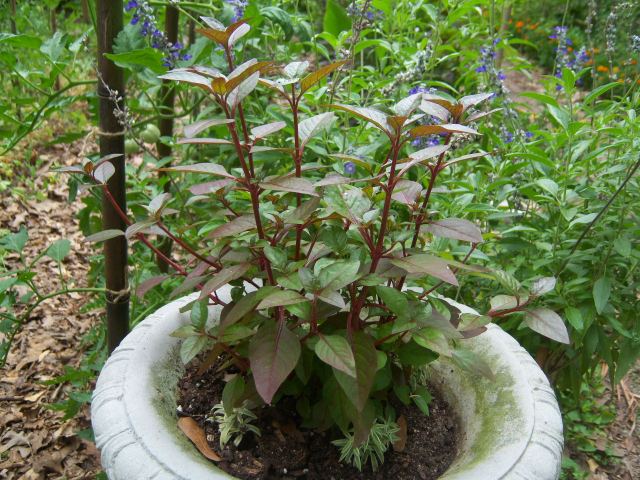
Alternanthera brasiliana ‘Purple Knight’ with Sedum lineare ‘Variegatum’ on 7-3-12, #107-15.
Amaranthaceae Juss.
The plant family Amaranthaceae was named and described by Antoine Laurent de Jussieu in Genera Plantarum in 1789.
As of 12-2-25 when this page was last updated, Plants of the World Online lists 179 accepted genera in this family. This family is commonly known as the Amaranth family.
I only have experience with a few of the 184 genera in this family. I enjoyed growing a few cultivars of Celosia argentea in 2012 when I lived in Mississippi. I moved back to the family farm in west-central Missouri in 2013 and brought seeds of the Celosia argentea ‘Cramer’s Amazon’ with me. They still come up by the THOUSANDS every spring. Gomphrena globosa make great bedding plants and I kind of wish they came up from seed every spring like the Celosia ‘Creamer’s Amazon’. Well, definitely not that many… Of course, the Amaranthus spinosus (Spiny Amaranth) is a wildflower/weed that anyone would definitely love to hate. I have a lot of memories of this species back to when I watched my grandpa digging them up in the pasture when I was a kid. Well, they are still here… Anyone would like the purple leaves of Alternanthera brasiliana ‘Purple Knight’ and the long hanging inflorescence of the Amaranthus caudatus ‘Love Lies Bleeding’.
For more information about this family of plants, please click on the links below. The links take you directly to the information about the family.
PLANTS OF THE WORLD ONLINE
WIKIPEDIA
BRITANNICA
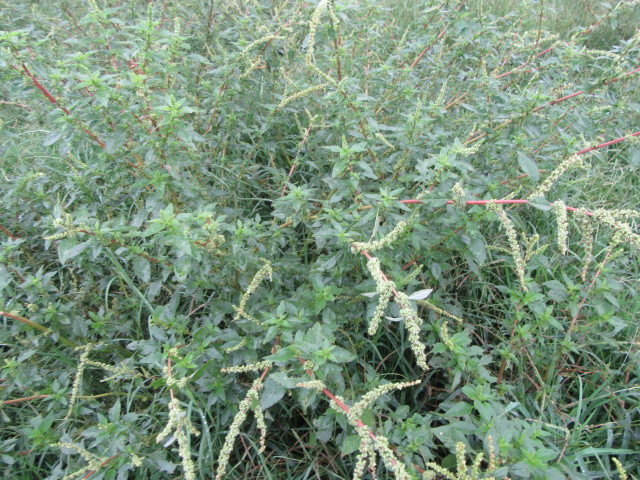
Amaranthus spinosus (Spiny Amaranth) on 9-8-18, #504-2.
Amaranthus spinosus (Spiny Amaranth) is a common sight on the farm, especially behind the barn. I remember my grandpa working them over when I was a kid.
<<<<+>>>>
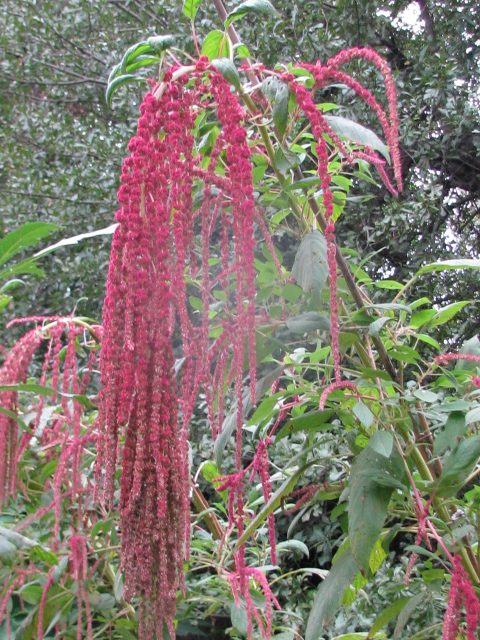
Amaranthus caudatus ‘Love Lies Bleeding’ on 9-22-09. #39-8.
I grew several Amaranthus species when I lived in Mississippi including Amaranthus caudatus ‘Love Lies Bleeding’.
<<<<+>>>>

Celosia argentea (syn. var. cristata) ‘Bombay Pink’ on 7-1-12, #104-10.
I tried several Celosia argentea cultivars when I lived in Mississippi including this Celosta argentea ‘Bombay Pink’ in 2012. Although there are many great photos online, I wasn’t that impressed. I was expecting more “oomph”.
<<<<+>>>>
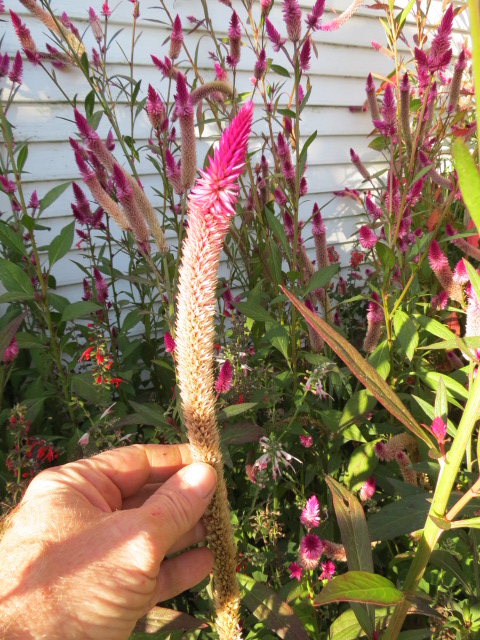
Celosia argentea ‘Cramer’s Amazon’ inflorescence on 10-3-15, #272-4.
I bought my first Celosia argentea ‘Cramer’s Amazon’ seeds from Johnny’s Selected Seeds while living in Mississippi in 2012. I have grown them every year since… I grew several other cultivars, but this one has been my favorite.
<<<<+>>>>
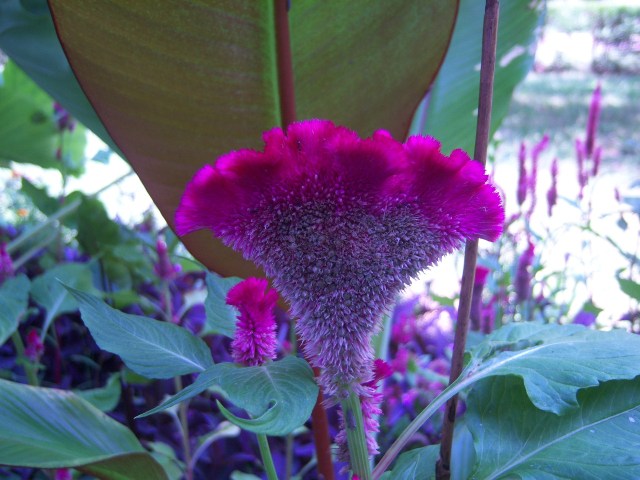
Celosia argentea (syn. var. cristata) ‘Heirloom Giant Burgundy’ on 7-19-12, #111-5.
Celosia argentea ‘Heirloom Giant Burgundy’ was another cultivar I grew in 2012 while living in Mississippi. The seeds came from the now-defunct Heirloom Acres. This one was passed down from a relative to the owner of the company. I thought the flowers would be much larger, which they may very well be in other locations. There may have been too much shade where I had them growing. The color of the flowers was nice!
<<<<+>>>>
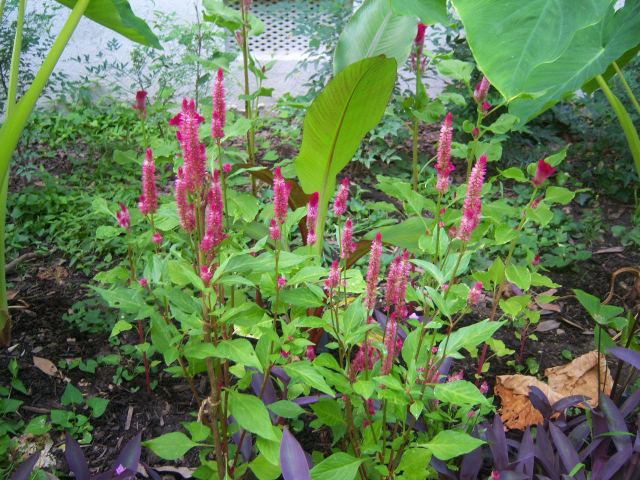
Celosia argentea ‘Punky Red’ at 34″ tall in the west bed at the mansion in Mississippi on 7-2-12, #106-9.
The Celosia argentea ‘Punky Red’ was a great performer at the mansion in Mississippi in 2012. I really enjoyed it and highly recommend it.
<<<<+>>>>

Celosia argentea ‘Ruby Parfait’ on 8-4-12, #113-13.
The Celosia argentea ‘Ruby Parfait’ was an absolute stunner in 2012 while I was in Mississippi. It was definitely a top performer!
<<<<+>>>>

Amaranthus cruentus ‘Red Spike’ on 9-3-24, #1021-1.
I brought this Amaranthus cruentus ‘Red Spike’ home from Wagler’s Greenhouse on 6-11-24. As of when the above photo was taken on 9-3-24, it had grown to approximately 80″ tall x 72″ wide. Its common names include Blood Amaranth, Red Amaranth, Purple Amaranth, Prince’s Feather, and Mexican Grain Amaranth. It features nice maroon leaves and vivid dark red flowers. I say “vivid” because its flowers seem to glow in bright sun.
<<<<+>>>>
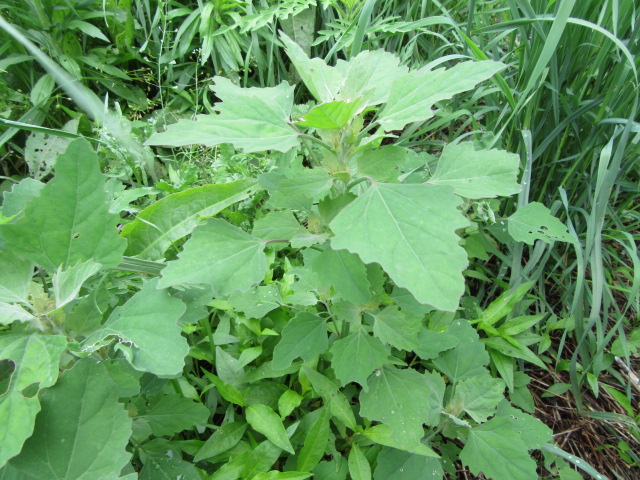
Chenopodium album (Lamb’s Quarters) on 5-24-22, #883-3.
Chenopodium album (Lamb’s Quarters, Pigweed, etc.) is quite common here on the farm and in just about every country in the world. They are one of the widest spread of any angiosperms worldwide. Large plants can produce over 50,000 seeds that remain viable in the ground for up to 50 years!
<<<<+>>>>

Gomphrena globosa ‘Gnome White’ on 7-13-18, #477-10.
I always like growing Gomphrena globosa ‘Gnome Series’ in the flower bed and using them in planters. They produce flowers all summer!
That’s all I have information for in this plant family. Never know what I will run across…
 The Belmont Rooster