FAMILY FUED!!!

img_3316

Saturday, February 18, I decided to let the chickens out for a while. One of the Old English Game Bantam hens got sidetracked and decided to check out the other nests. There was an egg in the nest she went in so I watched to see what she would do. She scratched around a bit and kind of sat on the egg. She kept looking at it like she thought it was a bit uncomfortable. When I looked at this photo, I noticed MORE ORBS!!!

img_3317

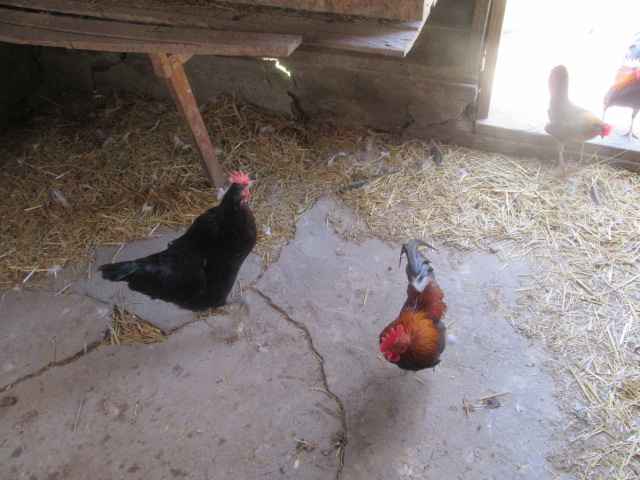
One of the black sex-link hens came to greet the bantams, and one of the roosters came back inside to flirt a little. 

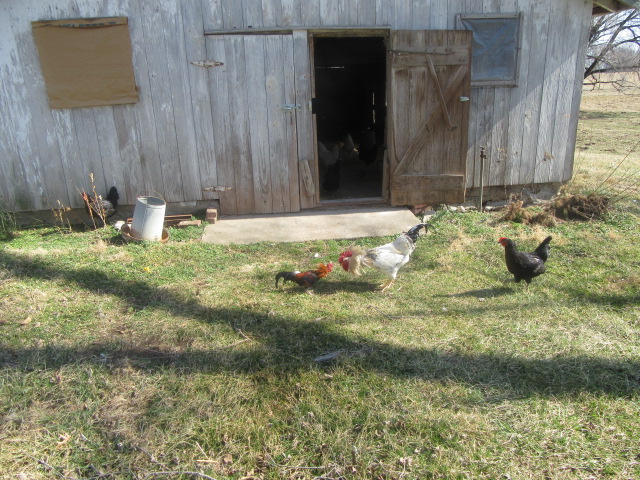
After the bantams went outside I hoped they would move elsewhere before the other chickens came out. BUT…img_3318

That didn’t happen. I didn’t get photos of what led to this, but it as pretty funny and it happened so fast. The Old English were on the grass in front of the step and i was behind them. The Sheriff stepped on the door sill and in a split second, even faster maybe, Rooster #1 hit him so hard he saw stars! Sheriff kind of staggered for a few minutes not knowing what had happened. Then he stepped out of the door and Rooster #1 went right up and challenged him. I got between then and tried to keep them apart. BUT, #1 being so small and faster than the speed of light, darted under my hand and nabbed the Sheriff again. That just made him mad! Actually, both of them were very ticked off at this point. I got them apart and the bantams moved on toward the back yard where they usually stay when they are outside. Then, #1 ran back down and challenged the Sheriff again. That’s when i took the photo.

But it didn’t stop there… Usually the Sheriff and deputy get along fine, and still are. But Deputy, or the Deputy (GEEZ!) kind of sensed the Sheriff was pissed off so he didn’t even come outside for a while. The whole ordeal was quite amusing. I think the Deputy was trying to hold back his laughter and the Sheriff knew he was making fun of him. I mean, just think of it… Look at the photo and notice how much bigger the Sheriff is compared to #1. The funny thing is, I think #1 would actually get the best of the Sheriff. 

(Better explain their names… Sheriff (or the Sheriff) is the Delaware rooster. Deputy (or the Deputy) is the White Chantecler rooster. The Old English Game Bantams are #1, #2 and #3. From the most dominate down to the least… Unfortunately, my buddy is #3).

Well, after the bantams and other chickens had got over the whole deal and were in their separate areas I went inside. After an hour or so, I can out and checked on them and everything was fine still. BUT then later I went out and it seemed the bantams had been squabbling. #3, my little buddy, had a couple of spots on his comb and #1 was kind of bullying him. SO, I knew something was not good. Then later when I went to put them inside their pen, the other two roosters didn’t want #1 with them. OH, that was NO GOOD at all! #3 was so upset, and maybe sore from a beating, he wouldn’t even let me pick him up. So, I walked out of their pen and held it open a little and he followed me out. The bigger chickens had already went to roost, so I left him in the main part of the chicken house. After it got dark I went to the chicken house and he was sitting on the nests. SO, I put him in the small coop outside.

Now, there is a moral to this story… The bantams love being outside, but since #3 has free run outside, they can’t go out. I guess that goes to show you if you pick on the little guy, he still may get the best end of the deal. 

Well, it is time for dinner… I did get the Celosia page finished on the right. I have been working on my online business so I haven’t had a lot of time to work on the blog. BUT, soon it will be finished. Maybe…

SO, I’ll leave for now. I hope you are enjoying whatever life brings your way and REMEMBER… GET DIRTY!


A Few Days Late!!!

It was 5 PM, I think, on Saturday the 11th when I decided to go to the back of the farm to check on the fences, I took these photos along the way. Now, I fully intended to make this post later that evening, but one thing led to another. SO, here we go!
img_3293

Seems like you can go nowhere without being watched around here. We still have 10 cats, I think. Several have died since I last blogged, but at least we won’t be having more kittens.

img_3294

This is a new cactus I acquired last year from Wagler’s Greenhouse. She said it would survive through the winter outside. It is a good thing, because when i was moving plants inside I completely forgot about it. It was over shadowed by the Celosia ‘Cramer’s Amazon’ in the flower bed where I put it. I have no idea what the genus and species name is YET because, like so many other of her plants, she had no idea either. GEEZ!!! You know how that drives me NUTS! Like I said, I had forgotten all about this cactus until one night in January I remembered. It was very cold that night, but I went outside with the flashlight to check on it. It was fine. WHEW!
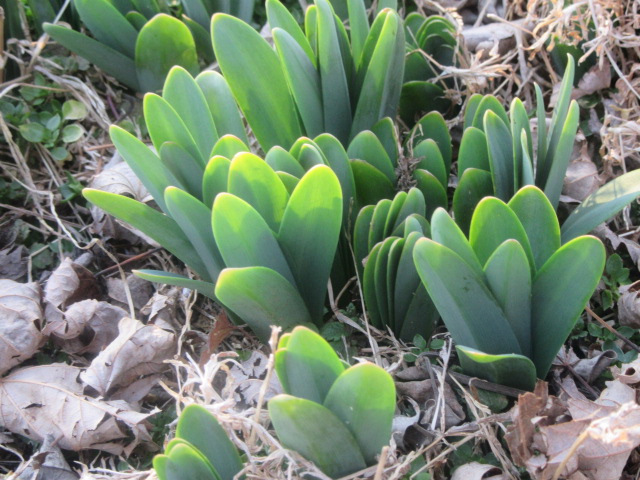
Amaryllis belladonna on February 11, 2017.

Amaryllis belladonna on February 11, 2017.

The temperatures have been so warm lately that there are signs of life. The Amaryllis belladonna (Surprise Lilies, Naked Ladies, etc.) are up. I am not sure when they usually come up but I imagine I have other photos from pervious years.


Grape Hyacinth Mascara armeniacum) on February 11, 2017

Grape Hyacinth (Mascara armeniacum) on February 11, 2017.

The Grape Hyacinths are coming up by the chicken house. As are the…


Achillea millefolium on February 11, 2017.

Achillea millefolium on February 11, 2017.

Fern-Leaf Yarrow.

img_3288

The chicken house is all closed up for the winter. Yeah, I know it needs painted. It kind of gives a rustic appearance wth the paint falling off, though. Grandpa built this chicken house maybe in 1958-1960. It was a plan provided by the Missouri Poultry Association. Well, that may not have been what they called it. I found it in the old 1952 year book I used to have. I collected a lot of old poultry books when I was in the hatchery business in the early 1980’s.

Now, let’s go inside.
img_3295

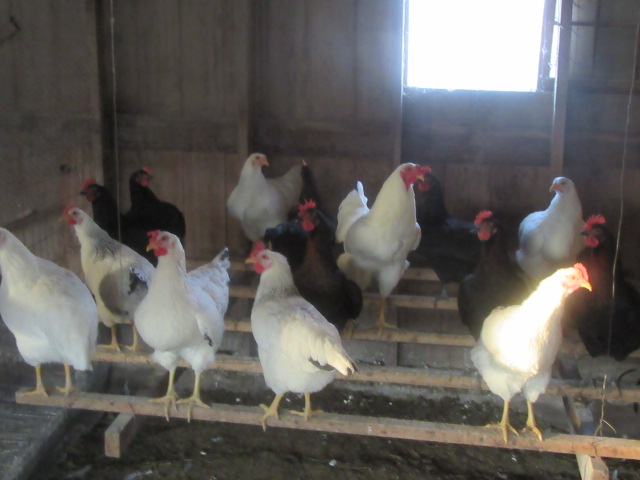
The bigger chickens were all on the roost ready for bed… 4 Delaware hens, 7 black sex-link (we used to call them Rock Reds because they are the progeny of Barred Rock hens with Rhode Island Red roosters), 3 White Chantecler hens, 1 White Chantecler rooster. BUT there us one rooster missing!!!
 

img_3296

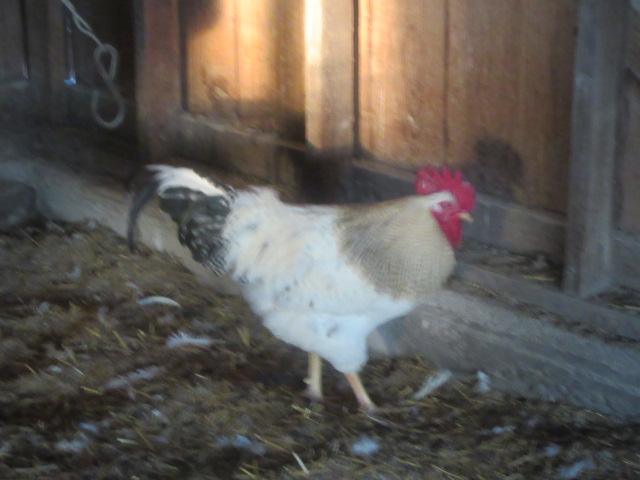
The big Delaware rooster. He is HUGE and he thinks he is the sheriff now. I butchered the other two Delaware roosters a couple of weeks ago because this Delaware and the White Chantecler were fighting them because they were on the bottom of the totem pole. It is strange how well this Delaware and the White Chantecler get along.

The Delaware was originally a sport of the black sex-link cross.

img_3297

This is a closer photo of the White Chantecler rooster. They were developed in Quebec, Canada by the monks of the Cistercian Abbey under the supervision of Brother Wilfred Chatelain. There were no breeds of chickens that had been developed in Canada. Brother Wilfred’s goal was to develop a breed that was more suitable for the cold conditions of Canada that was a dual purpose breed. As you can see, they have a small cushion type comb and hardly any wattles. Work began on creating this breed in 1908 but wasn’t released to the public until 1918. The Chantecler was created by first crossing a Dark Cornish male (pea comb) with a White Leghorn female (single comb), and a Rhode Island Red male (single comb) with a White Wyandotte female (rose comb). The following season pullets from the first cross were mated to a cockerel from the second cross. Then selected pullets from this last mating were mated to a White Plymouth Rock male, thus producing the fowl as seen today. They were admitted to the American Standard of Perfection in 1921. Interesting how crosses with pea, rose and singe comb parents produced offspring with a cushion comb… Actually, there are rose comb White Leghorn and Rhode Island Red.

Later, another variety, the Partridge Chantecler, was developed. In the 1980’s I wanted to get a start of White and Partridge Chantecler’s for the hatchery. BUT they were quite rare. They still are, for the most part. These cost me about $9.00 each. OH, but I have paid more. In 1985 I bought 12 Red Shouldered Yokohama hatching eggs for $120.00… They had been covered in sheep poop and then washed… Only 2 hatched. YES, they became pets and slept in a box on the back porch until the rooster started crowing.

img_3298

This is one of the White Chantecler pullets. I will put the White Chantecler’s in a separate pen later…

img_3299

The bigger chickens were on the roost ready for bed, but the Old English Game Bantams were still wide awake. It was still daylight, so I asked them if the wanted to go outside for a while. Well, I never have to ask them twice. I opened the door to their pen and they eagerly followed me to the outside door.

img_3302

They wasted no time snacking on some green weeds. 3 Hens and 3 roosters. I was supposed to dub their combs and wattles, but I decided not to this time around. Well, they are Old English Game and it is a custom to dub them. I was watching a video on YouTube about how to do it and it said that in some states it is against the law. Even so, I do believe to show them they have to be dubbed. Ummm… If you use them in cock fights they also need to be dubbed. OH, that is illegal, too.

img_3306

This one seems to be my buddy. He likes to get on my lap and be talked to and petted. But what he really likes is to fly on my shoulder and peck my ears. He is a little smaller than the other two and has a smaller comb. A few months ago, I noticed they had been in a fight and I think he got the worse end of it. But no fighting since.

img_3307

Now the roosters get along very well. They still like fighting the bigger chickens, though, even MUCH larger than they are now. The pullets used to love flying over into the bigger chickens pen so they could chase them around. Even now, if I let the bantams out, I leave the outside door open. If the bantams go inside the chicken house, the other hens run into the back pen. BUT, even though the Delaware rooster was raised with the bantams, he doesn’t want them around his hens now. The White Chantecler’s also try and stand their ground. No doubt due to the Dark Cornish Game in their bloodline.

Now it is time to head to the hayfield…

img_3308

The cows are enjoying the hay right now, so I walked past them to the hayfield.
img_3311

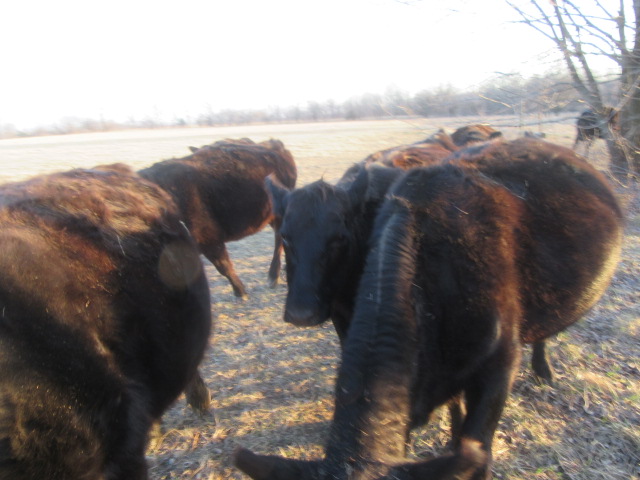
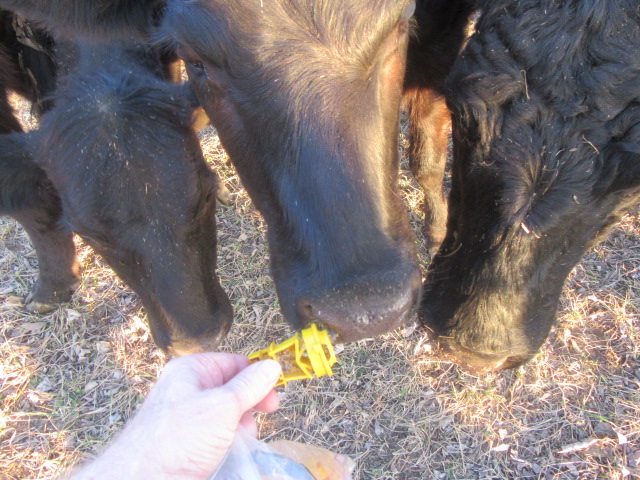
Then I noticed I wasn’t alone… I had company! Ummm… Notice anything odd about this photo?
img_3312

I thought maybe they were following me because I had a bag of insulators. But NO, they weren’t interested.

img_3309

Yeah, I know this one is blurry, but there is a reason I put this photo here. Can you see? ORBS!!! 5 of them in this photo. You know, supposedly they only show up on digital photography and videos…

Check this out: https://www.ghostcircle.com/orb-photos-page/

Just saying… Maybe I was more “not alone” than I thought.

img_3313

They continued to follow me, the cows… Apparently the orbs stayed behind. LOL

A couple of the cows get a little to close sometimes. If i stop and turn around they lower their head and want it scratched. They like it a little to much in fact, I also learned that when they follow like this to keep a slow pace. The faster you walk the faster they follow. Sometimes when i slow down they go around me. They followed me all the way to the end of the hay field. Then crossed the electric fence and left them behind. But they were waiting for me when I came returned from the back pasture.

Well, that’s all I have to say for now. Take care, have fun and GET DIRTY!

Time To Catch Up

#274-1, Achillea millefolium, 7-19-16.JPG

I bought a new camera in July (2016) and immediately went out and took 70 photos. Well, I had bought a lot of new plants, mainly cactus and succulents, so I had to do my thing. You know, make sure the names were right, write their history, take measurements and so on. The above photo is of the Achillea millefolium next to the side porch, which isn’t new by a long shot.


#274-3, Alocasia 'Calidora' 1.JPG

Since I started out this post with a photo of a plant I have had for a while, I’ll just go with that and catch you up on what I still have from before…

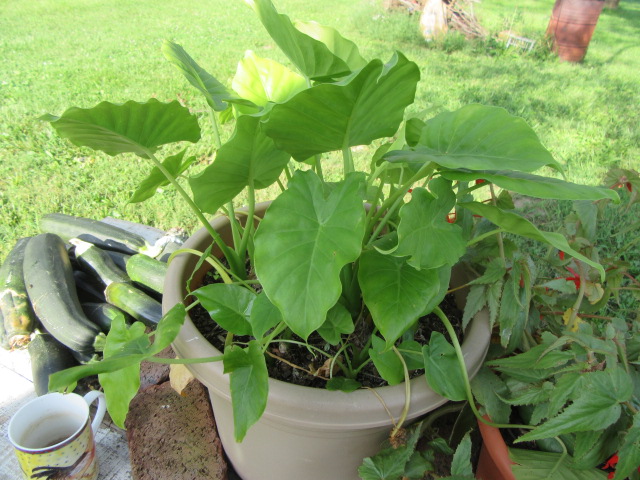
This photo is of the Alocasia ‘Calidora’ that I have had since May 2012. It is looking pretty good and it has a few kids now.


#274-4, Alocasia 'Calidora' 2.JPG

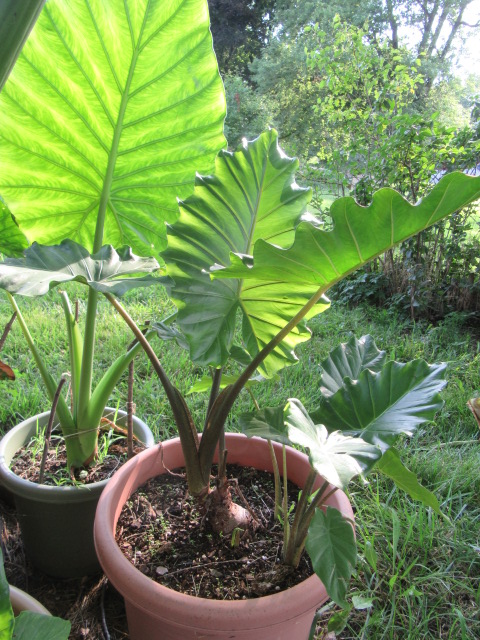
All three of these pots are Alocasia ‘Calidora’.


#274-6, Alocasia 'Mayan Mask' , 3 pots.JPG

On this corner is the Alocasia ‘Mayan Mask’ family. The big one I bought in 2012. They are one of my favorites because they have dark leaves, white veining, and maroon undersides.


#274-7, Alocasia 'Portora' 1.JPG

This is one of the Alocasia ‘Portora’, descendants of one of my first Alocasia when I was in Mississippi in 2009.


#274-9, Alocasia odora.JPG

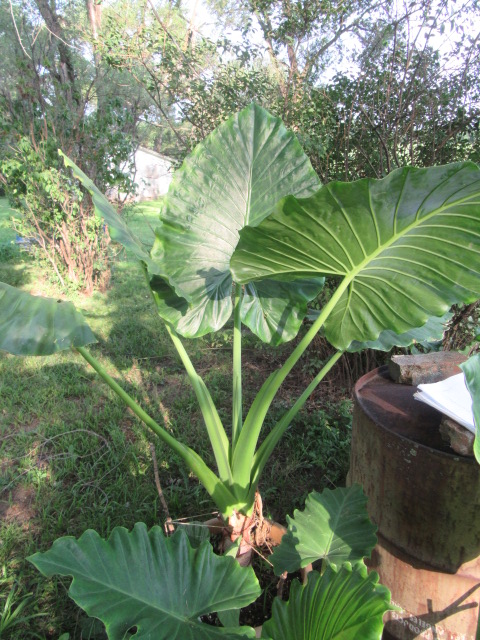
This is the pot of the, umm… Alocasia odora. I say “umm” because I am not so sure about that. I know you don’t remember the story behind this plant, but when I get to the pages of plants on the right, I will explain it again. ANYWAY, this Alocasia and I have some interesting history going back to 2012 in Mississippi.


#274-18, Billbergia nutans.JPG

OF COURSE, I still have the AWESOME Billbergia nutans (Queens Tears/Angels Tears) that was given to me, MUCH SMALLER, by my good friend Walley Morse of Greenville, Mississippi in 2012. For a couple of years now I have wanted to divide this pot. SO, last spring I removed it from the pot. I looked it over and put it back in the pot. I seriously need a bigger pot… This makes its 3rd pot. Where this plant is hardy they can make a large bed in no time. Right now, sitting in the basement for the winter, it is flowering again. I would love for it to be upstairs but I have no idea where I would put it.


#274-25, Colocasia esculenta.JPG

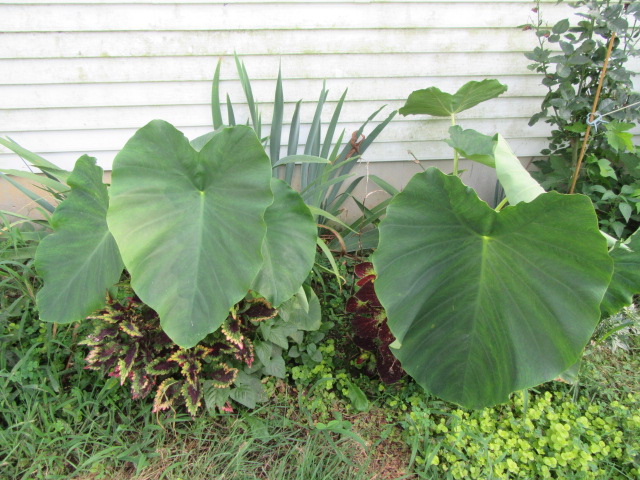
Since I moved back to the farm in 2013 I have had the Colocasia esculenta in front of the chicken house, and a few scattered here and there. They didn’t do so well in front of the chicken house two years in a row, so I decided to put a couple of the bigger tubers on the north side of the house. They did much better. I put about 30 of the smaller tubers in the other yard next to the foundation of my grandparent’s old house.


#274-26, Conoclinium coelestinum 'Aunt Inez'.JPG

I am not sure when dad got the start of his Conoclinium coelestinum (Hardy Ageratum) from Aunt Inez (his mother’s sister). They come up on the other side of the steps in the spring better so I have to always transplant them to this side. More came up last spring than before so I moved some to the south side of the house along the basement steps. This photo was taken on July 19, 2016, so they are just starting to flower.


#274-31, Equisetum hyemale.JPG

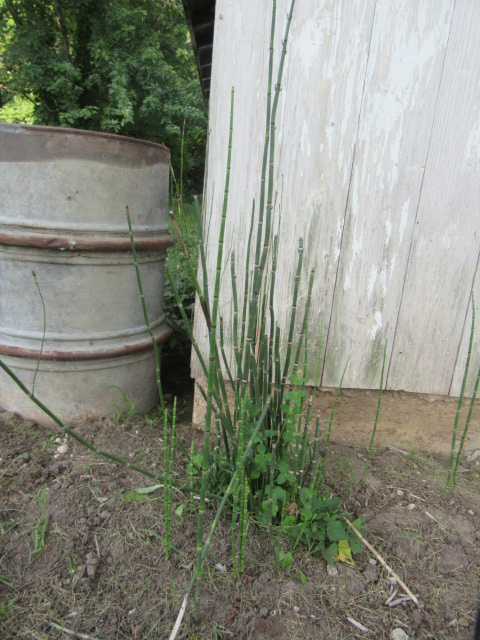
This is the Equisetum hyemale (Horsetail) I dug up from Augustine Taylor’s yard in Leland, Mississippi in 2010. I had them in a pot until the spring of 2014 when decided to put them in the ground in front of the chicken house. I told dad they are called Horsetail and they gallop… This photo was taken on July 19, 2016, and as you can see they have started to gallop. They would make a great accent plant here and there in flower beds, but GEEZ!!!


#274-34, Hosta 'Guacamole'.JPG

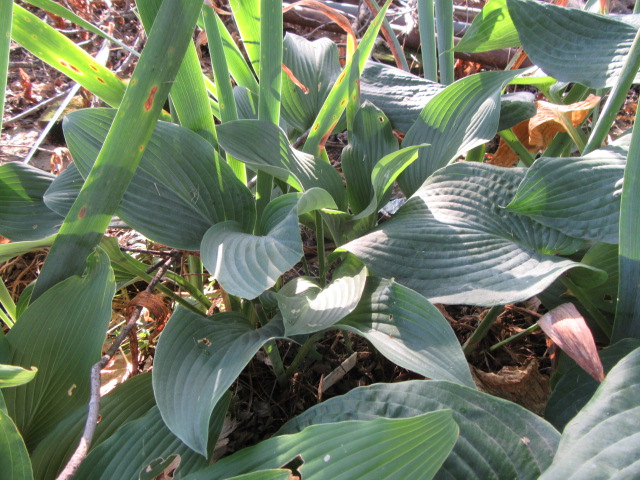
Hosta ‘Guacamole’ that was added to my Hosta collection in 2014 still doing well.


#274-35, Hosta 'Krossa Regal'.JPG

Hosta ‘Krossa Regal’ bought in 2009 still doing well…


#274-37, Hosta 'Potomac Pride'.JPG

Hosta ‘Potomac Pride’ bought in 2009 still doing well and getting BIGGER every year. It is always the first to flower, too. OH, and the deer sampled a few of it’s leaves one night and never bothered the Hosta again… THANK GOODNESS!!!


#274-38, Hosta 'Red October'.JPG

Hosta ‘Red October’ bought in 2009 still doing well…


#274-39, Hosta sieboldiana 'Elegans'.JPG

Hosta sieboldiana ‘Elegans’ bought in 2009 still doing well…


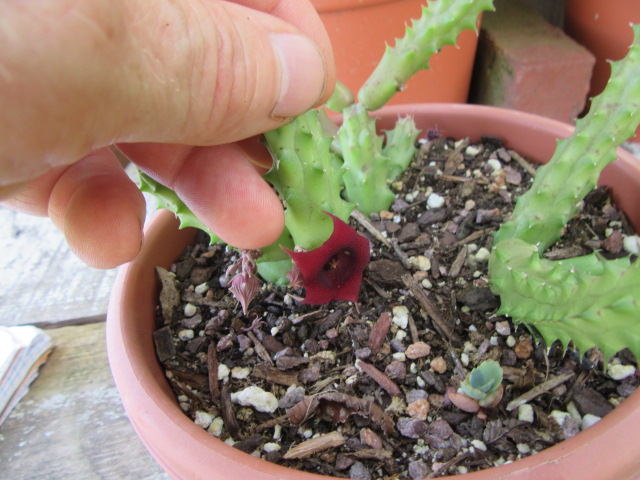
#274-40, Huernia schneideriana.JPG#274-42, Huernia schneideriana flower.JPG

This is the second pot of Hernia schneideriana. You may not remember, but the first one was in 2014 when I had the blog before and Kate told me it was a Carrion Plant. Well, I had got it from one of the Amish greenhouses and she has A LOT of plants with no labels. Even when I tell her the names, she still doesn’t label them… SO, after some research, I found the scientific name. Well, It had to flower first because there are MANY genera and species of Carrion Flowers that look exactly alike until they flower. Most of them have very colorful HUGE flowers but this particular one has among the smallest. VERY FUNNY!!!


#274-43, Kalanchoe daigremontiana.JPG

Oh, yeah, I still have the Kalanchoe x laetivirens (Mother of Thousands). She needs birth control even though there are no men like her around. These Kalanchoe’s, and the other species that grow “plantlets” from their leaves have an interesting story. I will get into that later because I kind of forgot the whole story…


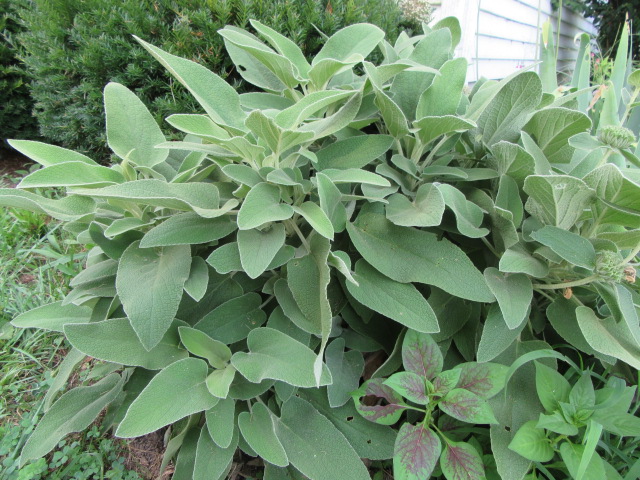
Phlomis 'Edward Bowles' 1.JPG

Since I bought my Phlomis ‘Edward Bowles’ (Jerusalem Sage) in the spring of 2013, I just can’t imagine life without it. It is just an AWESOME plant! I always cover it up with a large pot and put with leaves around it. BUT this fall I forgot to do that so I HOPE it comes back this spring.


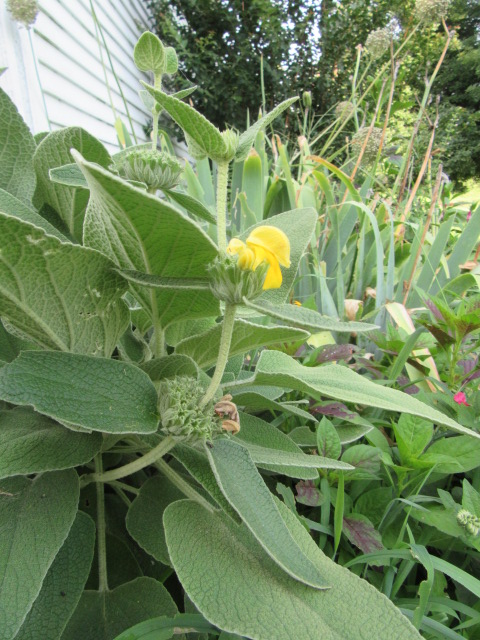
Phlomis 'Edward Bowles' 2.JPG

The first flowers were better looking but I didn’t have a camera then. There are really weird!!!


Vitex agnus-castus 'Shoal Creek'.JPG

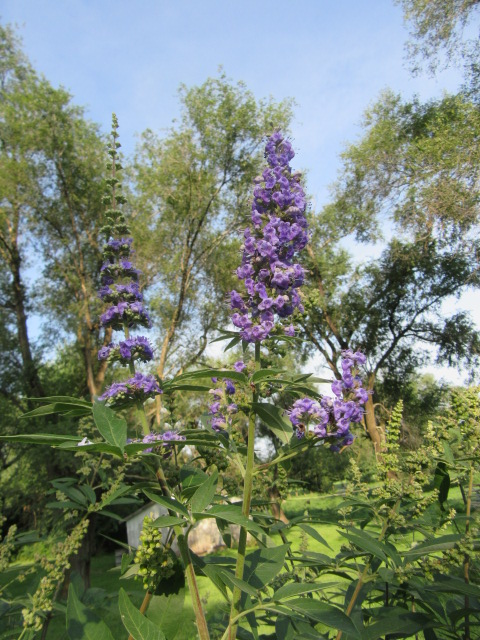
Vitex agnus-castus 'Shoal Creek' flowers.JPG

Last in the alphabet of photos taken on July 19, 2016, is the Vitex agnus-castus ‘Shoal Creek’ I also bought in the spring of 2013. Looking very good and flowers like mad. The flowers smell like lilac.

You know, it felt really good taking the time to make this post, even though the photos are from last July. Makes me feel like the Belmont Rooster again. Maybe the name of the blog should be “THE BELMONT ROOSTER RIDES AGAIN!”. I have a lot more photos to catch you up on, so…. Until next time, TAKE CARE AND GET DIRTY!!!