
Hello folks! I hope this post finds you all doing very well. A couple of weeks ago I was asked to tend the plants, cats, and chickens on my cousin and his wife’s farm while they were away. She asked me to come by on the 7th so she could show me what needed to be done. Dad and I had been thinking about stopping by for a visit for a long time but had never gotten around to it. She has a lot of very nice plants in beds and planters and I was more than happy to take care of them while they were away.

One of their plants was a Night Blooming Cereus. A fellow blogger shared photos of her Night Blooming Cereus with me back in 2013 but it was not this plant. So, when I came back home I looked Night Blooming Cereus online to see what I could find out. According to the Wikipedia, there are several plants that are known by this name.
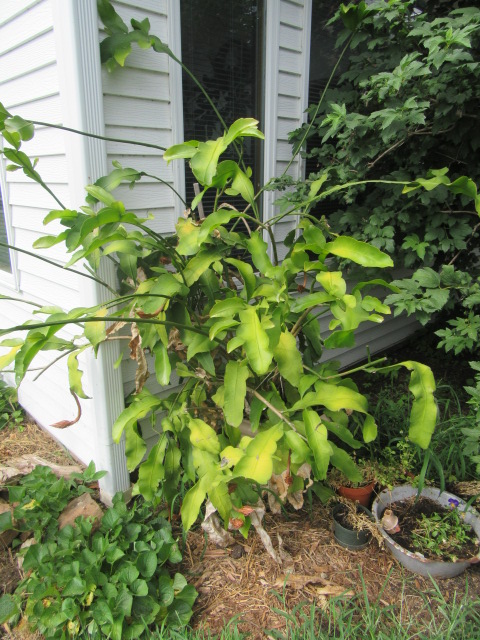
When I went back after they had left the buds were getting bigger.
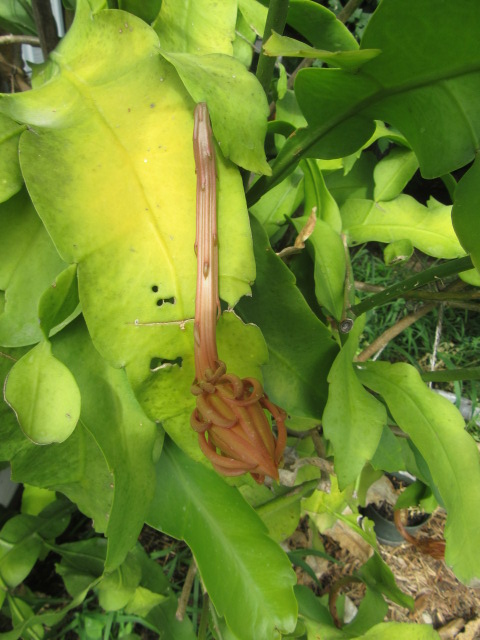
She told me they only bloom at night after it gets dark…

The buds just grow right out of the side of the leaves. How weird is that?
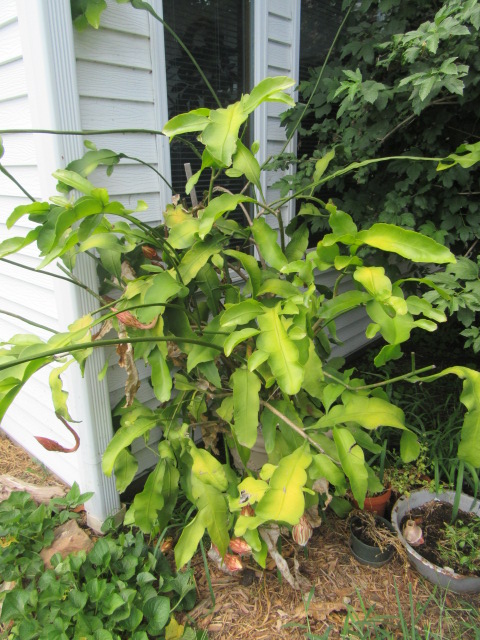
Then on the 16th, I saw one of the buds had opened during the night.
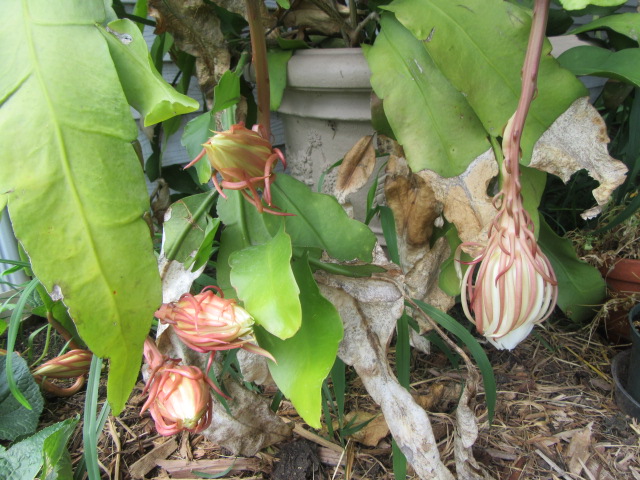
The other buds looked like they may open up that night.

I decided I would go later and stay until they opened up even if I had to stay all night.
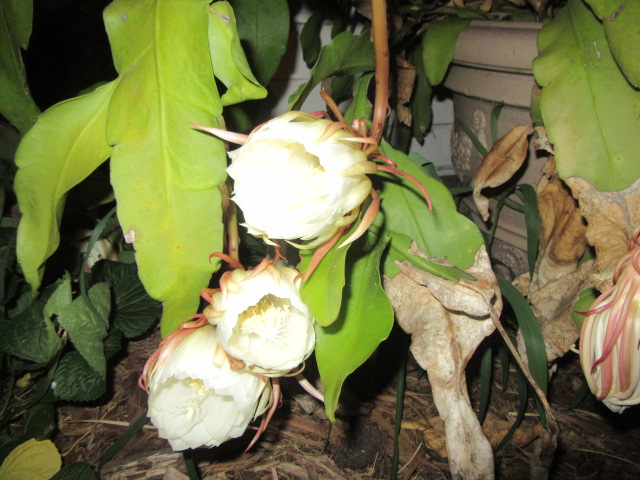
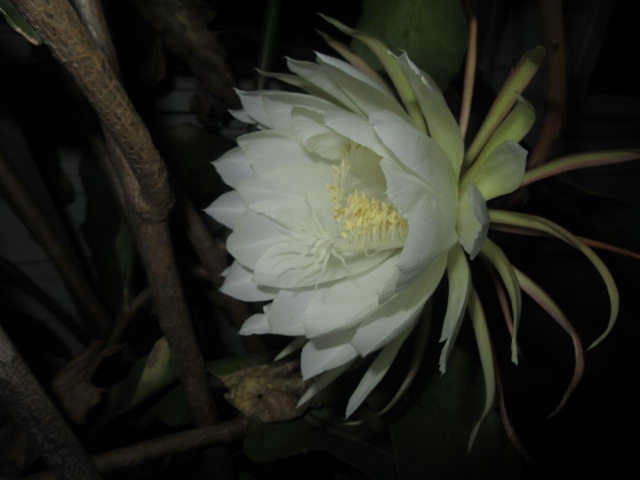
So, I went later and found they had returned home. We went to look at the Night Blooming Cereus to see what they looked like. The above photo was taken at 9:49 PM. We went inside and visited for a while then at about 10:40 she went outside to check.

She came back inside and said they had opened. So, we went back outside to have a look. I had no idea how the photos would turn out, but I was going to take a few anyway. I raised the flash and started shooting. I could tell as I was taking photos that they “may” turn out good but I wouldn’t really know until I uploaded the photos on the computer.

She shined the flashlight on one of the flowers in case that would help a little. At the time I thought they looked better without the flashlight on, but that photo looks pretty neat.
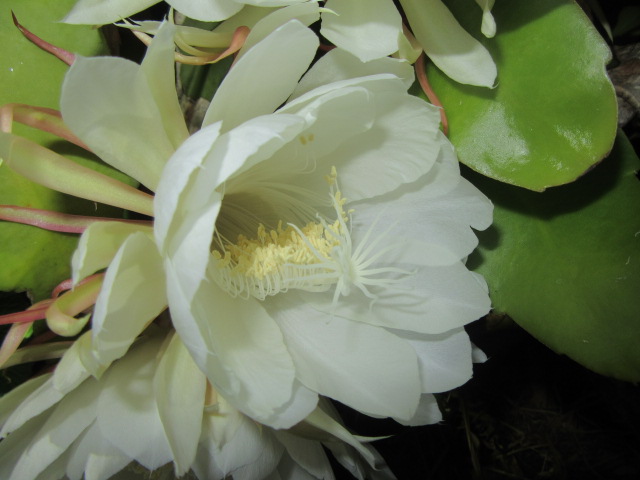
Honestly, I have seen a lot of pretty neat flowers, but the Night Blooming Cereus is without a doubt on the top of the list. The flowers are very sweet smelling!
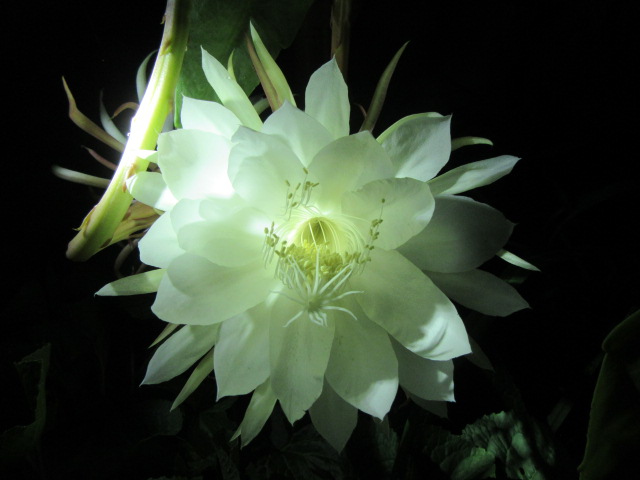
The above photo was also taken with the flashlight shining on a flower.
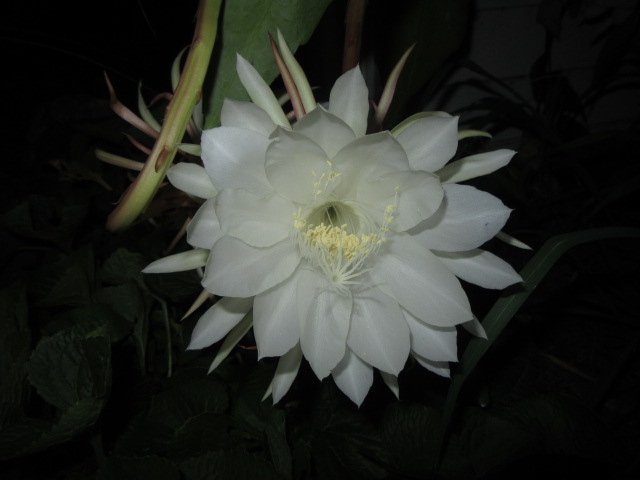
As I was taking photos, I was trying to think of a word to describe these flowers. There is no one single word. Photo’s don’t even capture how AWESOME they are.

It looks like a flower coming out of a flower.
She broke off a couple of flowers and gave them to me. She wouldn’t have done that if they lasted longer than one night.
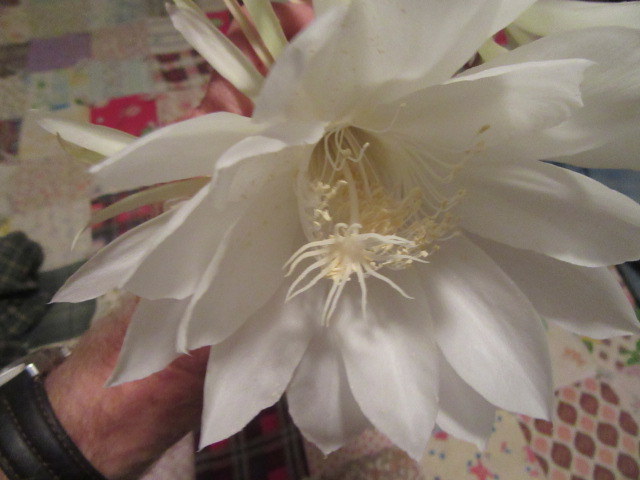
So, when I came home I quickly took a few more photos. I didn’t know how long they would stay open.
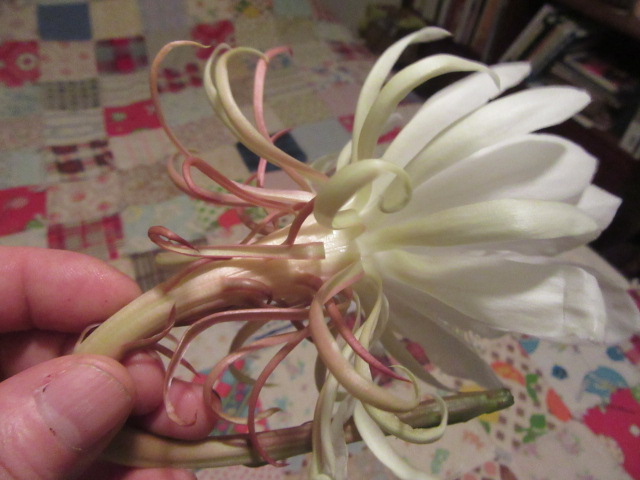
WOW!

It’s a good thing I took the photos when I did because within an hour or so they had shriveled up. The scent of the flowers filled the room for hours.
So, I went online and found out the scientific name for this particular Night Blooming Cereus is Epiphyllum oxypetalum. According to Plants of the World Online, they are native to Belize, Costa Rica, El Salvador, Guatemala, Honduras, Mexico Gulf, Southeast and Southwest Mexico, and Nicaragua. They were later introduced to Northeast Brazil, South and Southeast Brazil, Cuba, Dominican Republic, Leeward Island, Puerto Rico, Venezuelan Antilles, and Windward Island.
Epiphyllum oxypetalum (DC.) Haw.
Epiphyllum oxypetalum was named and described by Adrian Hardy Haworth in the Philosophical Magazine in 1829. It was first named Cereus oxypetalus by Augustin Pyramus de Candolle and first described by him in Prodromus Systematis Naturalis Regni Vegetabilis in 1828. Since then it has been given 10 other scientific names. Besides there being 10 synonyms of this species, there are also 10 other accepted species in the genus which are members of the Cactaceae Family.
The Epiphyllum genus was actually named and first described by Mr. Haworth in Synopsis Plantarum Succulentarum in 1812.
To me, it kind of resembles a HUGE Christmas Cactus. That leads to another genus that had also previously been named Epiphyllum by another botanist, Louis (Ludwig) Karl George Pfeiffer. Somehow, Mr. Pfeiffer had named another group of plants with the same genus name in 1837 and gave the description in Enumeratio Diagnostica Cactearum. That genus was then named Schlumbergera by (Antoine) Charles Lemaire as described in L’Illustration Horticole in 1858. Schlumbergera is the genus of Christmas cacti with 9 accepted species…
This species of Night Blooming Cereus is also known as Dutchman’s Pipe Cactus, Queen of the Night, and Gooseneck Cactus. It is the most popular Night Blooming Cereus.
They are a large epiphytic cactus that can grow up to 20’ in nature and its branches can grow up to 36” long. Flowers can be up to 11” in length and 5” wide.
Well, I hope you enjoyed these photos as much as I enjoyed the opportunity to witness this AWESOME and AMAZING plant in person. The links below will give you a little more information if you want to read about the Epiphyllum oxypetalum.
FOR FURTHER READING:
Plants of the World Online
Wikipedia
Llifle (Encyclopedia of Life)
Dave’s Garden
Until next time, stay well, be safe, stay positive and GET DIRTY!
 The Belmont Rooster