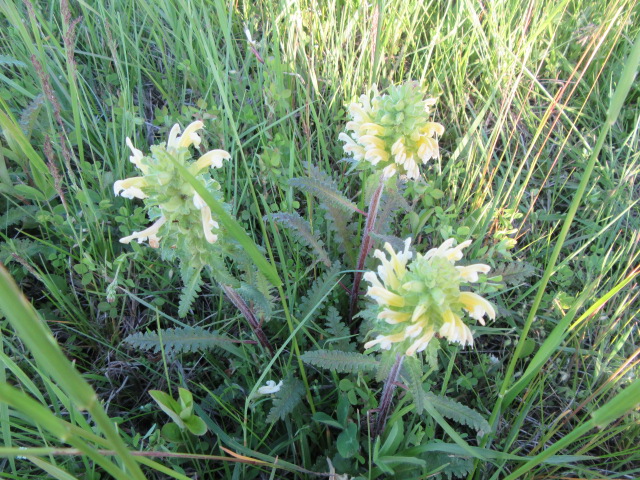
Pedicularis canadensis (Wood Betony, Canadian Lousewort, Etc.) on 5-5-25, #1041-28.
Wood Betony, Canadian Wood Betony, Canadian Lousewort, Common Lousewort
Pedicularis canadensis
Pe-dik-yoo-LAIR-is ka-na-DEN-sis
Synonyms of Pedicularis canadensis (15) (Updated on 12-28-25 from Plants of the World Online): Enslenia bibracteata Raf. (1817), Nelensia bibracteata (Raf.) Poir. (1823), Pedicularis aequinoctialis Kunth (1818), Pedicularis asplenifolia Croom (1834) (nom. nud.), Pedicularis canadensis f. albescens Steyerm. (1952), Pedicularis canadensis f. bicolor Farw. (1928), Pedicularis canadensis var. dobbsii Fernald (1946), Pedicularis canadensis f. flava Farw. (1928), Pedicularis canadensis subsp. fluviatilis (A.Heller) W.A.Weber (1976), Pedicularis canadensis var. fluviatilis (A.Heller) J.F.Macbr. (1918), Pedicularis canadensis var. gladiata (Michx.) Alph.Wood (1845), Pedicularis canadensis f. praeclara A.H.Moore (1914), Pedicularis canadensis f. typica Farw. (1928) (not validly publ.), Pedicularis fluviatilis A.Heller (1898), Pedicularis gladiata Michx. (1803)
Pedicularis canadensis L. Is the accepted scientific name for this species. It was named as such by Carl von Linnaeus in Mantissa Plantarum in 1767.
The genus, Pedicularis L., was named by Carl von Linnaeus in the second volume of the first edition of Species Plantarum in 1753.
As of 12-28-25 when this page was added, Plants of the World Online lists 677 species in the Pedicularis genus. It is a member of the plant family Orobanchaceae with 99 genera. Those numbers could change as updates are made on POWO.
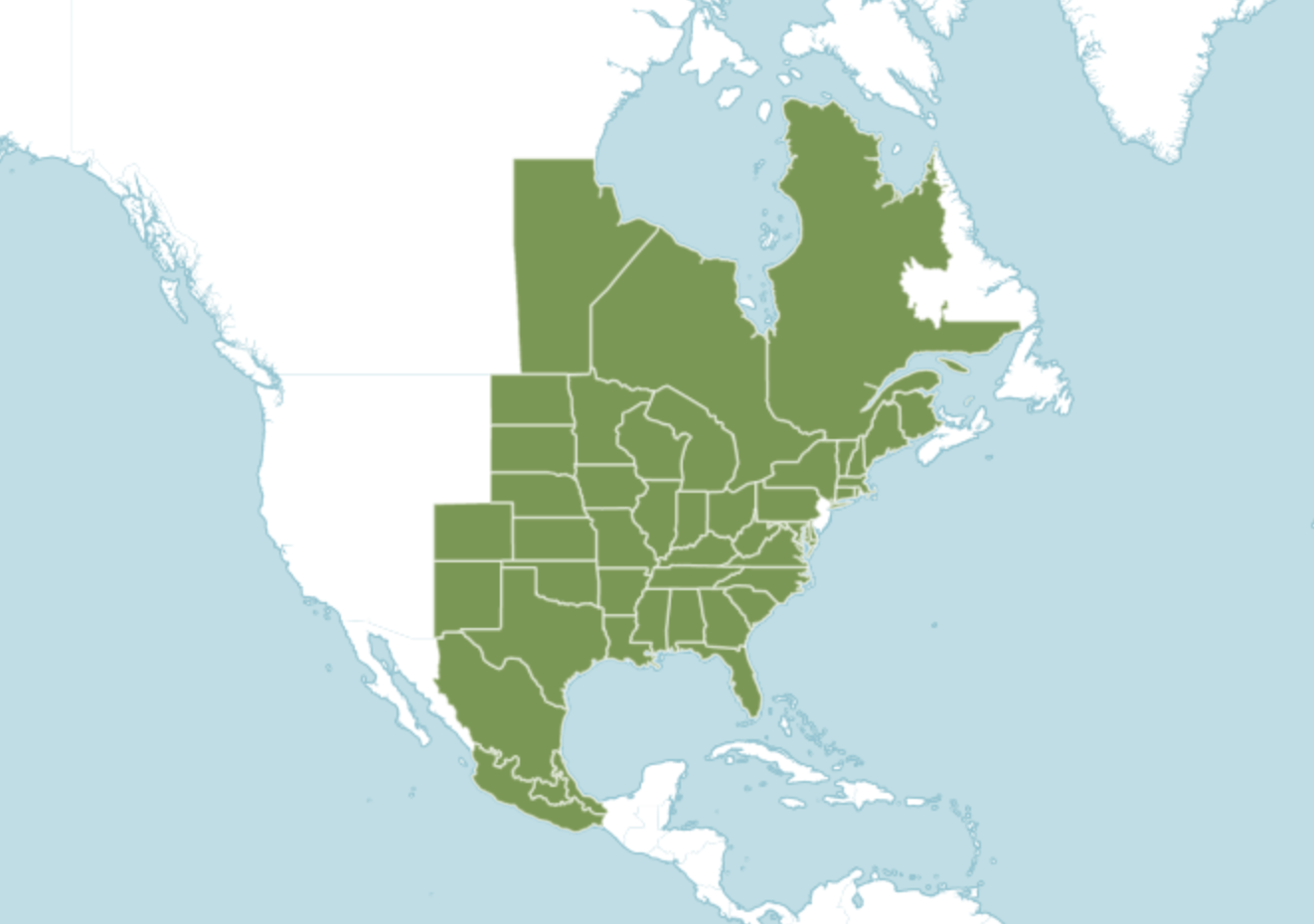
Distribution map of Pedicularis canadensis from Plants of the World Online. Facilitated by the Royal Botanic Gardens, Kew. Published on the Internet; http://www.plantsoftheworldonline.org/. Retrieved on May 19, 2025.
The above distribution map for Pedicularis canadensis is from Plants of the World Online. The map on the USDA Plants Database for North America is similar. Areas in green are where the species is native.
The map on iNaturalist shows where members have made observations. Anyone can join and it is a great website to confirm and share your observations. The maps on iNaturalist are continually updated as members post new observations. I post all my observations on iNaturalist.
THERE ARE A FEW LINKS AT THE BOTTOM OF THE PAGE FOR FURTHER READING AND TO HELP WITH A POSITIVE ID.
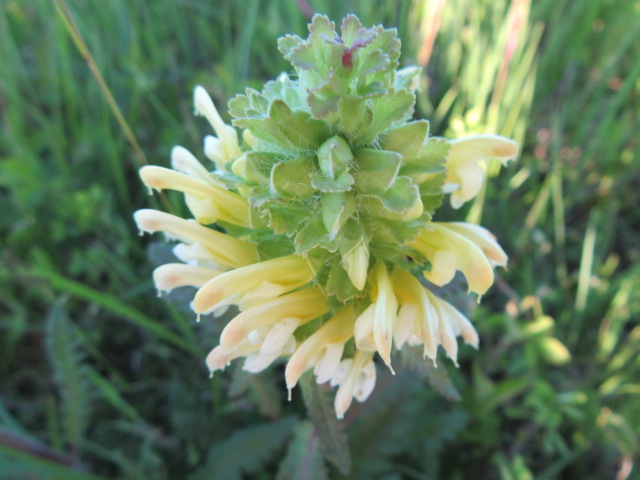
Pedicularis canadensis (Wood Betony, Canadian Lousewort, ETC.) on 5-5-25, #1041-29.
I was invited to visit a private well-maintained native prairie not far from home on 5-5-25. It was quite amazing! I ran across 11 species I hadn’t seen before including Pedicularis canadensis.
This plant made me smile with the spiral-growing flowers. Another member of the plant family Orobanchaceae, it is also hemiparasitic. The roots have a symbiotic relationship with a fungus that helps it gather nutrients. Some references say they accomplish this through “haustoria”, tissue connections that develop between the roots of parasitic plants and host plants…
Common names of Pedicularis canadensis include Wood Betony, Canadian Lousewort, Common Lousewort, and possibly others.
I will come back later and write descriptions, but here is a little information to hold you over…
The links at the bottom of the page provide a wealth of information written by people more knowledgeable than me.
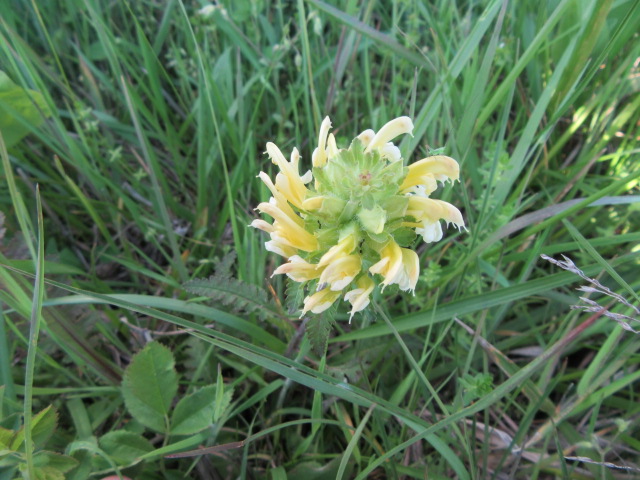
Pedicularis canadensis (Wood Betony, Canadian Lousewort, ETC.) on 5-5-25, #1041-30.
The upper corollas have a pair of teeth at their tips (characteristic of this species).
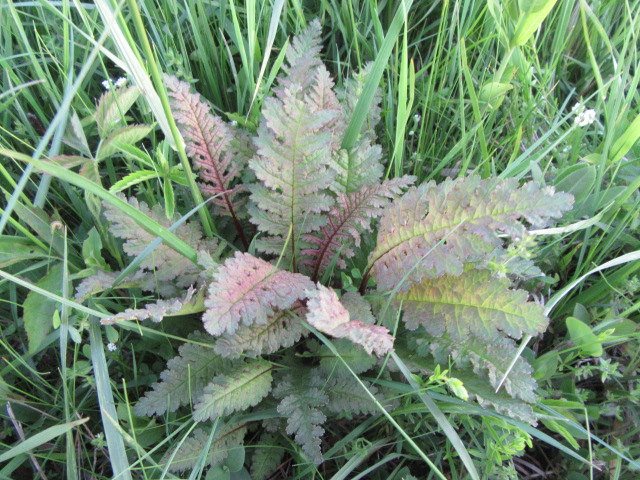
Pedicularis canadensis (Wood Betony, Canadian Lousewort, ETC.) on 5-5-25, #1041-31.
I noticed several clumps of rosettes with no flowers, so maybe they can be perennial or biennial. I didn’t see it mentioned, but why else would some plants not have flowers and some not? Another plant mentioned somewhere above has similar leaves, but these clumps were among the Wood Betony. I had to reassure myself for a minute… GEEZ! I have to look into that more…
Why the common name “Lousewort?” Well, apparently, the name came from an old belief that your cattle would get lice if they consumed this plant. Another belief was that a strong concoction made from the leaves would eliminate lice…
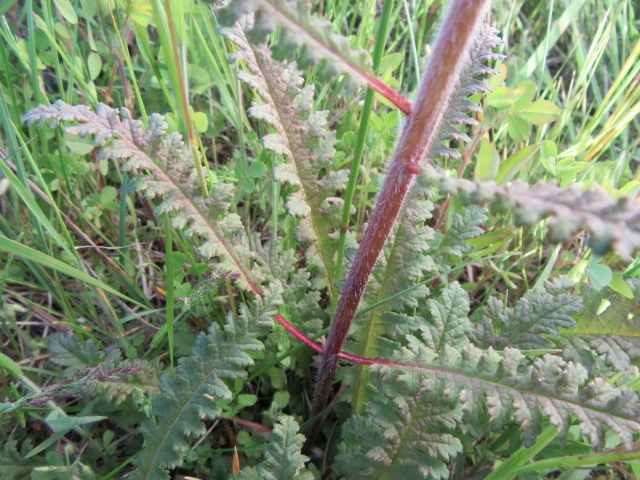
Pedicularis canadensis (Wood Betony, Canadian Lousewort, ETC.) on 5-5-25, #1041-32.
Plants were eaten by American Indians, sometimes as a soup. It was added to oats and used as horse feed. A root infusion was used for stomachaches, diarrhea, anemia, and heart issues. Poultices were used for swellings, tumors, and sore muscles…
I also read where the Menomini Indians called the root “enticer root” and carried it as a charm when they wanted to seduce the opposite sex. The root was also used to heal broken marriages by adding it to the food the couple would then eat, hoping its magic would rekindle romance…
Hopefully, I can get back to the prairie soon and visit a few other public prairies in the area.
To visit the post about the visit to the prairie and the other species I found, click HERE.
I live on the family farm in Windsor, Missouri in Pettis County (Henry County is across the street, and Benton and Johnson aren’t far away). I have grown over 500 different plants and identified over 250 species of wildflowers (most have pages listed on the right side of the page). I am not an expert, botanist, or horticulturalist. I just like growing, photographing, and writing about my experience. I rely on several websites for ID and a few horticulturalists I contact if I cannot figure them out. Wildflowers can be variable from location to location, so that can be a bit confusing. If you see I have made an error, please let me know so I can correct what I have written.
I hope you found this page useful and be sure to check the links below for more information. They were written by experts and they have provided much more information. Some sites may not be up-to-date but they are always a work in progress. If you can, I would appreciate it if you would click on the “Like” below and leave a comment. It helps us bloggers stay motivated. You can also send an email to me at thebelmontrooster@yahoo.com. I would enjoy hearing from you especially if you notice something is a bit whacky.
FOR FURTHER READING:
PLANTS OF THE WORLD ONLINE (GENUS/SPECIES)
INTERNATIONAL PLANT NAMES INDEX (GENUS/SPECIES)
TROPICOS (GENUS/SPECIES)
FLORA OF MISSOURI (GENUS/SPECIES)
FLORA OF NORTH AMERICA (GENUS/SPECIES)
WORLD FLORA ONLINE (GENUS/SPECIES)
WIKIPEDIA (GENUS/SPECIES)
USDA PLANTS DATABASE
iNATURALIST
U.S. FOREST SERVICE
MISSOURI PLANTS
MISSOURI BOTANICAL GARDEN
MISSOURI DEPARTMENT OF CONSERVATION
WILDFLOWER SEARCH
ARKANSAS NATIVE PLANT SOCIETY
BENTON COUNTRY IRVM
DAVE’S GARDEN
FLORA FINDER
GO BOTANY
GRASSLAND RESTORATION NETWORK
ILLINOIS WILDFLOWERS
IOWA PLANTS
KANSAS WILDFLOWERS AND GRASSES
LADY BIRD JOHNSON WILDFLOWER CENTER
MERISTEM
MINNESOTA WILDFLOWERS
NORTH CAROLINA STATE UNIVERSITY
NE SCHOOL OF BOTANICAL MEDICINE
PFAF (PLANTS FOR A FUTURE)
SEINet
U.S. WILDFLOWERS
NOTE: The data (figures, maps, accepted names, etc.) may not match on these websites. It depends on when and how they make updates and when their sources make updates. Some websites have hundreds and even many thousands of species to keep up with. Accepted scientific names change periodically and it can be hard to keep with as well. Some of the links may use a name that is a synonym on other sites. In my opinion, Plants of the World Online by Kew is one of the most reliable and up-to-date plant databases and they make updates regularly. I make updates “at least” once a year and when I write new pages or add new photos but I do get behind. We are all a work in progress. 🙂
 The Belmont Rooster