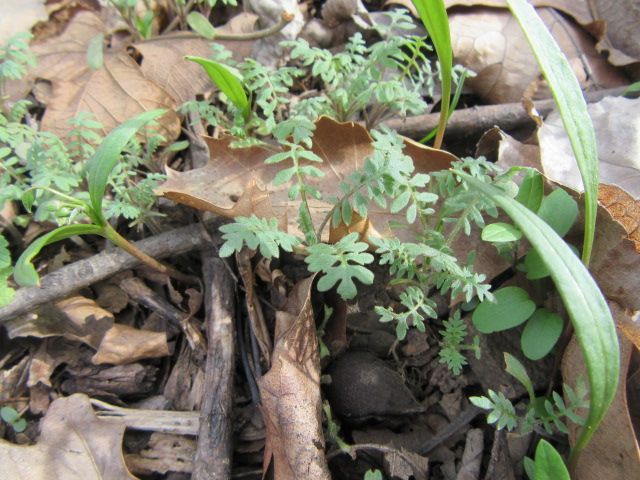
Ellisia nyctelea (Aunt Lucy) on 3-31-24, #981-12.
Aunt Lucy, False Baby Blue-Eyes, Waterpod
Ellisia nyctelea
el-LIS-ee-uh (EL-lis-ee-uh)
Synonyms of Ellisia nyctelea (8) (Updated from Plants of the World Online on 1-25-26): Ellisia ambigua Nutt. (1818), Ellisia nyctelea var. coloradensis Brand (1913), Ipomoea nyctelea L. (1753), Macrocalyx nyctelea (L.) Kuntze (1891), Nyctelea ambigua (Nutt.) Standl. (1919), Nyctelea americana Moldenke (1932), Nyctelea nyctelea (L.) Britton (1913) (not validly publ.), Polemonium nyctelea (L.) L. (1762)
Ellisia nyctelea (L.) L. is the accepted scientific name for this species. It was named and described as such by Carl von Linneaus in the second edition of Species Plantarum in 1763. He first named it Ipomoea nyctelea in the first edition of Species Plantarum in 1753.
The genus, Ellisia L., was named and described as such in the second edition of Species Plantarum in 1763.
As of 1-25-26 when this page was officially published, Plants of the World Online lists only one species in the Ellisia genus. It is a member of the plant family Boraginaceae with 158 genera. Those numbers could change as updates are made on POWO. Some websites place Ellisia in the plant family Hydrophyllaceae.
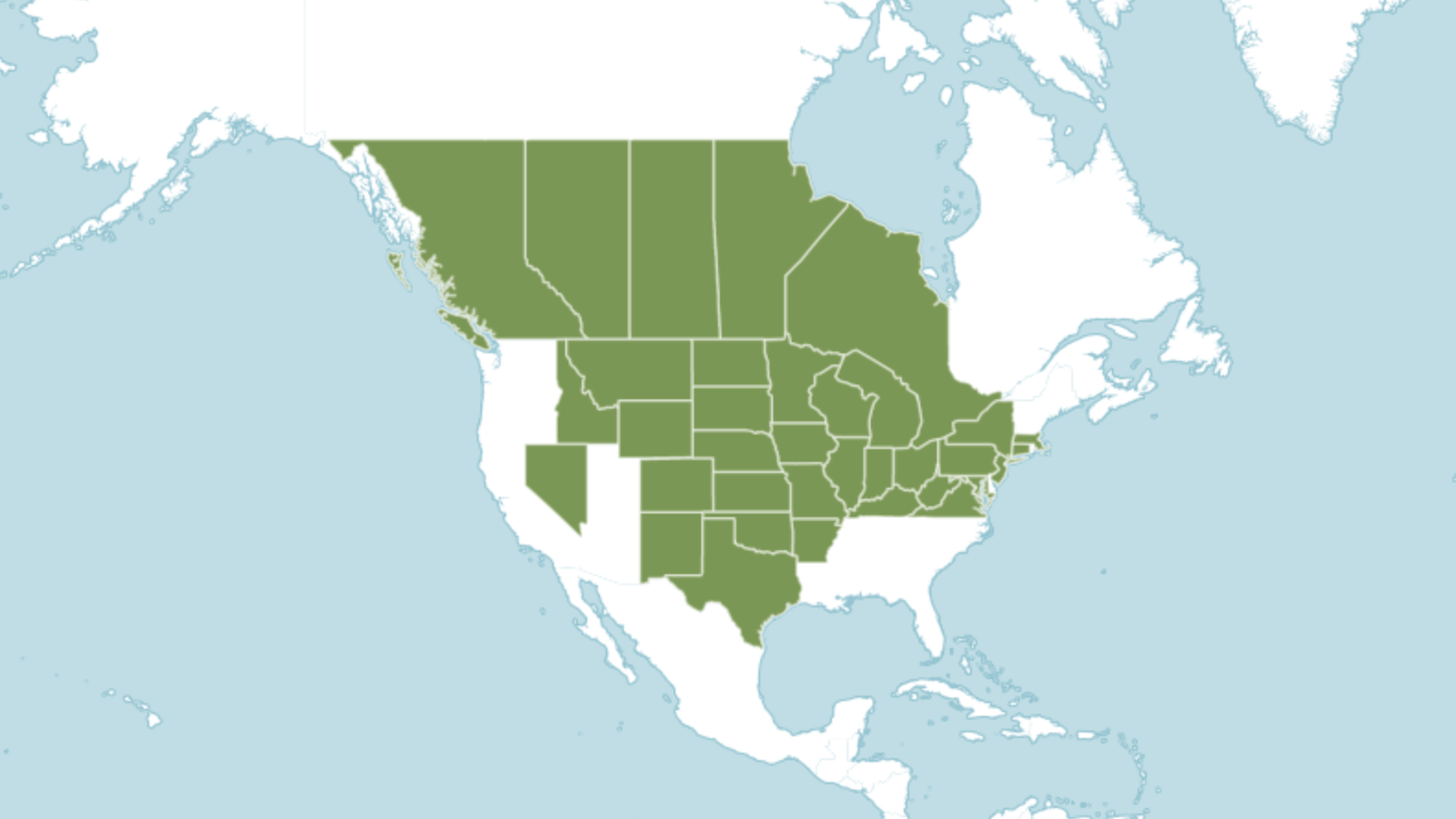
Distribution map of Ellisia nyctelea from Plants of the World Online. Facilitated by the Royal Botanic Gardens, Kew. Published on the Internet; http://www.plantsoftheworldonline.org/. Retrieved on January 24, 2026.
The above distribution map for Ellisia nyctelea is from Plants of the World Online. Areas in green are where the species is native. The map on the USDA Plants Database is the same.
The map on iNaturalist shows where members have made observations. Anyone can join and it is a great website to confirm and share your observations. The maps on iNaturalist are continually updated as members post new observations. I post all my observations on iNaturalist.
THERE ARE SEVERAL LINKS AT THE BOTTOM OF THE PAGE FOR FURTHER READING AND TO HELP WITH A POSITIVE ID.

Ellisia nyctelea (Aunt Lucy) on 3-31-24, #981-13.
I first ran across this species in a friends secluded woods on March 31 in 2024. I have been photographing wildflowers in those woods for several years and I thought it odd I hadn’t run across it before. It wouldn’t have been unusual if there were just a few plants, but there were A LOT! Maybe they just hadn’t come up yet… WEIRD. I won’t make any further excuses…
I thought the plant growing in an old fallen tree limb was pretty neat, so I took a photo.
After I came home with plenty of photos from the woods, I was curious as to what my new find was. I uploaded the photos on iNaturalist and the name Ellisia nyctelea was the only suggestion. I then went to the Missouri Plants website and decided the suggestion was correct. Common names include Aunt Lucy, False Baby Blue-Eyes, and Waterpod. I had an aunt on my mothers side named Aunt Lucy, but I don’t think the plant was named after her, or visa versa. Makes the name easy to remember, though…

Ellisia nyctelea (Aunt Lucy) on 5-3-24, #986-9.
Aunt Lucy can be found through most of Missouri, but is less common in the southeastern part of the state. Most observations on iNaturalist are in the central part of the country. They are said to be inconspicuous, which I can believe, easily being over looked. Once you do find them, they are easily recognized by their leaves and sprawly nature.
Information online says they prefer part sun to light shade in wooded areas and along stream banks in fertile loamy soils with plenty of organic matter. Oddly, it also grows in fields, gardens, flower beds and other disturbed areas and is seen as a common weed. It has been found in sunny, dry, and rocky areas where you wouldn’t think they would be…
I took a few more photos of Aunt Lucy in the same woods on May 12 in 2025. I try to get back there every spring because it is such a neat place explore.
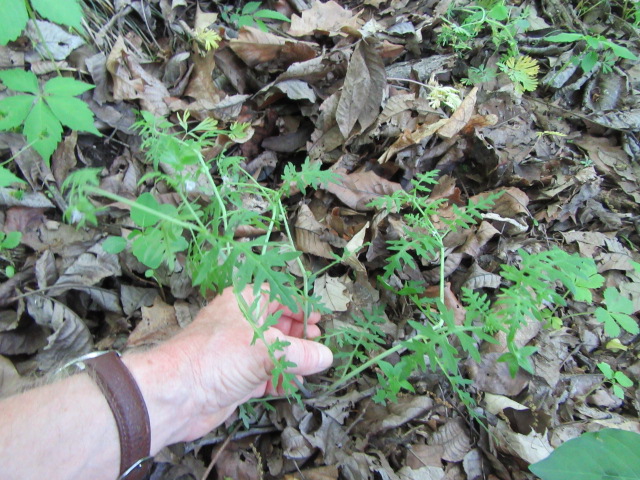
Ellisia nyctelea (Aunt Lucy) on 5-3-24, #986-10.
Plants grow from 4 to about 16 inches tall on spreading to loosely ascending stems, occasionally more erect. The pale green to purplish stems are somewhat thick and fleshy, glaucous (whitish covering) and hairy. The hairs being a combination of long to short, stiff, spreading, downward-facing, fine, curved soft hairs. GEEZ! Larger plants are a rather a tangled mess of leaves and stems…
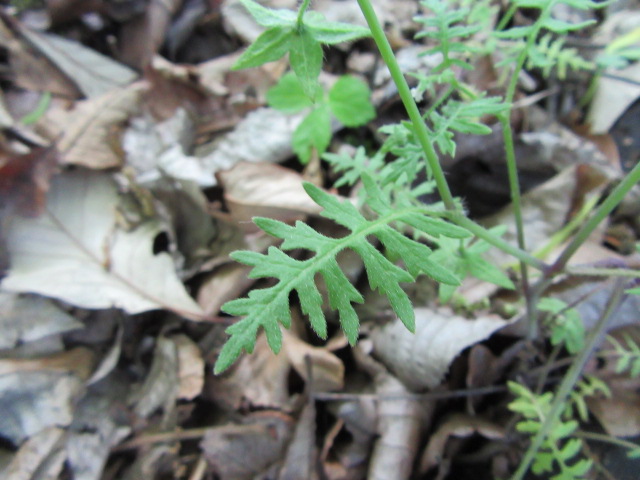
Ellisia nyctelea (Aunt Lucy) on 5-3-24, #986-11.
The lower leaves often grow in an opposite manner at the base and are sometimes withered away at flowering. Above that, the stem leaves usually grow alternate one another and are widely spreading. The leaves are more or less oblong-elliptic-ovate in outline and are around 4” long and 1” across. The leaves are deeply pinnately lobed with 7-13 leaflets (pinnae) that usually have 1-3 pairs of coarse teeth (or lobes). The leaflets and tip of the leaf taper to a point. The leaf surfaces are moderately hairy with very short hairs, sometimes only longer hairs along the veins… The leaves are attached to the main stem by rather long petioles that is somewhat flattened at the base and sort of winged…
The leaves have an unpleasant odor are are avoided by cattle and likely deer.
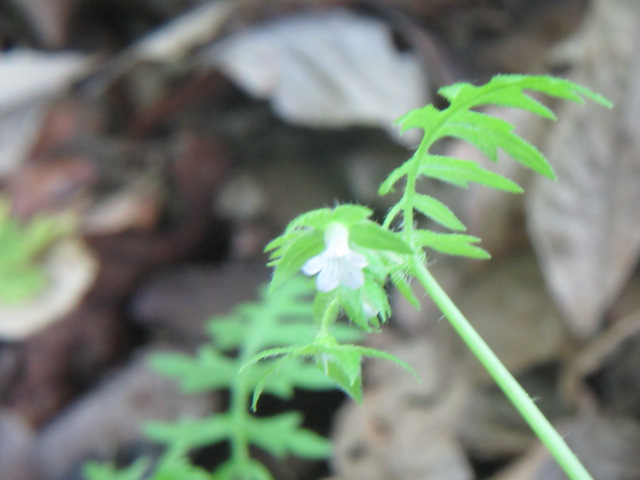
Ellisia nyctelea (Aunt Lucy) on 5-3-24, #986-12.
Individual flowers grow opposite the upper leaves, sometimes from leaf axils, occasionally auxiliary or paired. The pedicels are short, elongating at fruiting, somewhat slender, and have stiff hairs.
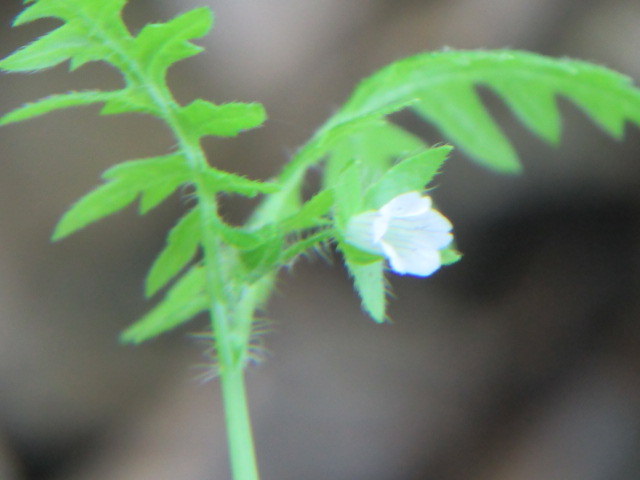
Ellisia nyctelea (Aunt Lucy) on 5-3-24, #986-13.
Each flower is around 1/4 to 3/8 inch across and consists of a 5-lobed tubular corolla that is somewhat funnel shaped, glabrous (not hairy), white to pinkish to bluish tinged, occasionally with spots, with rounded tips. The corolla is surrounded by a deeply-lobed calyx whose lobes are as long or longer than the corolla lobes, enlarging at fruiting, and covered with hairs, and are sharply pointed. There are 5 stamens that alternate with the corolla lobes, filaments attached at the base of the corolla tube, a 1-locular ovary that is covered with long white bristles. A ring of nectaries subtends the ovary. The style, not exerted, is divided at about the midpoint…
Plants flower during April through sometime in May and are visited by several species of bees and flies.

Ellisia nyctelea (Aunt Lucy) on 5-3-24, #986-14.
After flowering, the ovary becomes rounded, fuzzy fruit which becomes the seed capsule and will usually contain 4 seeds. The seeds are brown, kind of oval, and are finely pitted.
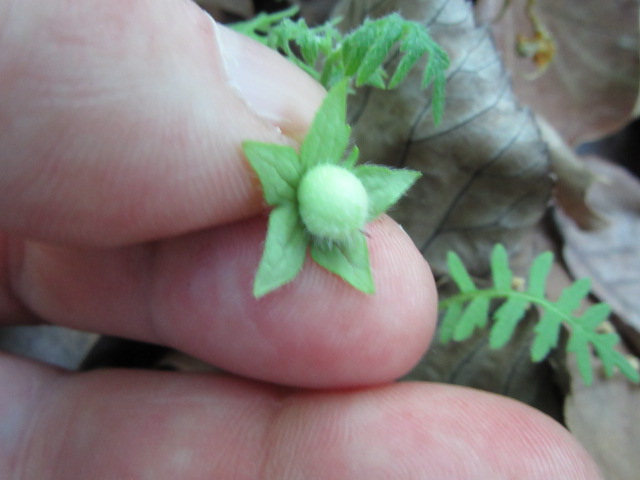
Ellisia nyctelea (Aunt Lucy) on 5-3-24, #986-15.
I took A LOT of photos of several plants from several colonies in the woods. I found it very difficult to get good photos, but I will keep trying. Some plants are just weird for me to photograph and the Ellisia nyctelea is definitely one of them…
I will continue to go back to my friends woods to explore for new plant species and take more photos of the many species found there.
Photos taken in 2025 are at the bottom of the page.
I live on the family farm in Windsor, Missouri in Pettis County (Henry County is across the street, and Benton and Johnson aren’t far away). I have grown over 500 different plants and identified over 250 species of wildflowers (most have pages listed on the right side of the page). I am not an expert, botanist, or horticulturalist. I just like growing, photographing, and writing about my experience. I rely on several websites for ID and a few horticulturalists I contact if I cannot figure them out. Wildflowers can be variable from location to location, so that can be a bit confusing. If you see I have made an error, please let me know so I can correct what I have written.
I hope you found this page useful and be sure to check the links below for more information. They were written by experts and they have provided much more information. Some sites may not be up-to-date but they are always a work in progress. If you can, I would appreciate it if you would click on the “Like” below and leave a comment. It helps us bloggers stay motivated. I would enjoy hearing from you especially if you notice something is a bit whacky.
FOR FURTHER READING:
PLANTS OF THE WORLD ONLINE (GENUS/SPECIES)
INTERNATIONAL PLANT NAMES INDEX (GENUS/SPECIES)
TROPICOS (GENUS/SPECIES)
FLORA OF MISSOURI (SPECIES)
WORLD FLORA ONLINE (GENUS/SPECIES)
WIKIPEDIA (GENUS/SPECIES)
USDA PLANTS DATABASE
iNATURALIST
MISSOURI PLANTS
WILDFLOWER SEARCH
BLEEDING HEARTLAND
GO BOTANY
ILLINOIS WILDFLOWERS
KANSAS NATIVE PLANTS
KANSAS WILDFLOWERS AND GRASSES
LADY BIRD JOHNSON WILDFLOWER CENTER
MARYLAND BIODIVERSITY PROJECT
MINNESOTA WILDFLOWERS
NEW JERSEY STATE LIBRARY
SEINet
WILDFLOWERS OF THE NATIONAL CAPITAL REGION
NOTE: The data (figures, maps, accepted names, etc.) may not match on these websites. It depends on when and how they make updates and when their sources make updates. Some websites have hundreds and even many thousands of species to keep up with. Accepted scientific names change periodically and it can be hard to keep with as well. Some of the links may use a name that is a synonym on other sites. In my opinion, Plants of the World Online by Kew is one of the most reliable and up-to-date plant databases and they make updates regularly. I make updates “at least” once a year and when I write new pages or add new photos but I do get behind. We are all a work in progress. 🙂
MORE PHOTOS…
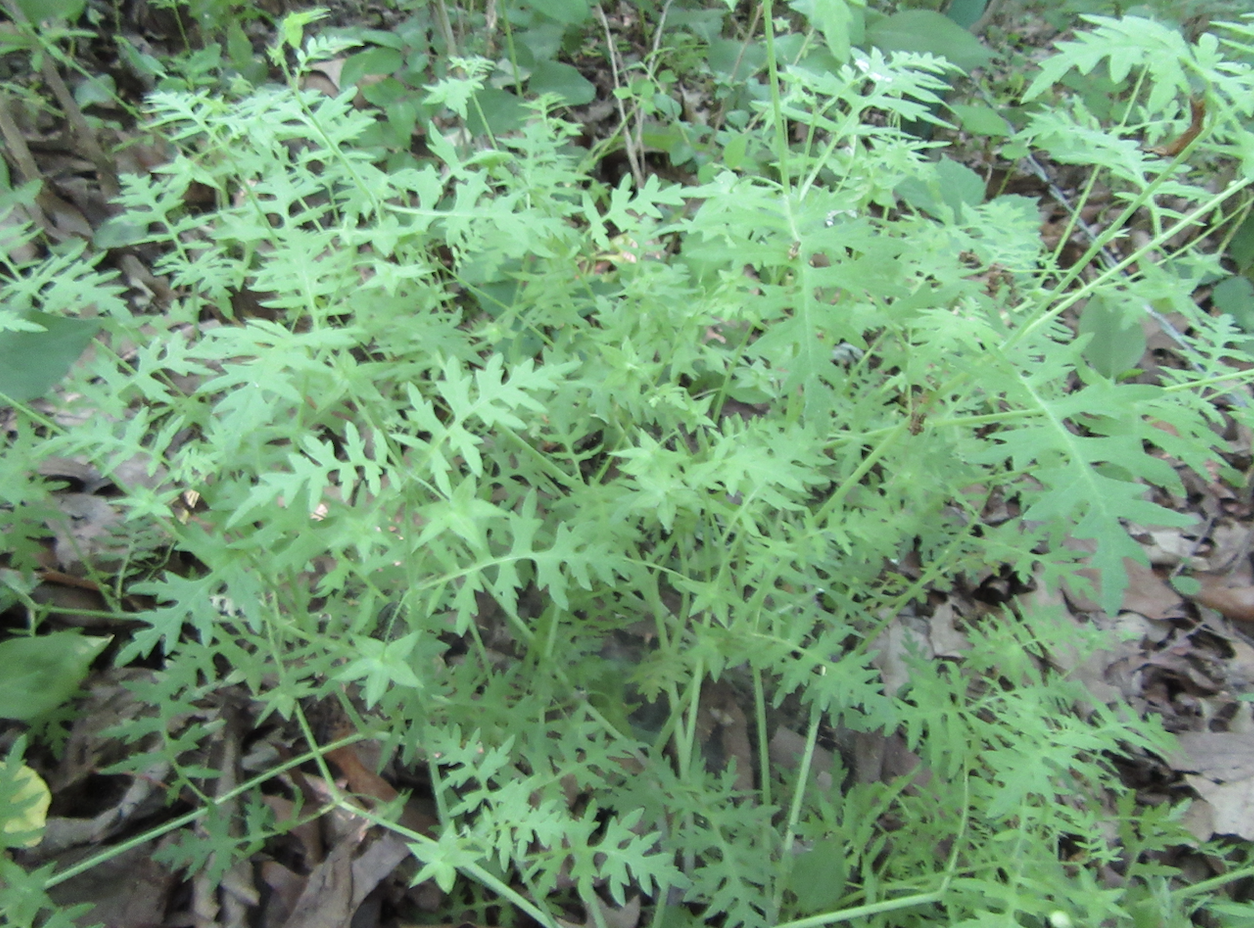
Ellisia nyctelea (Aunt Lucy) on 5-12-25, #1044-3.
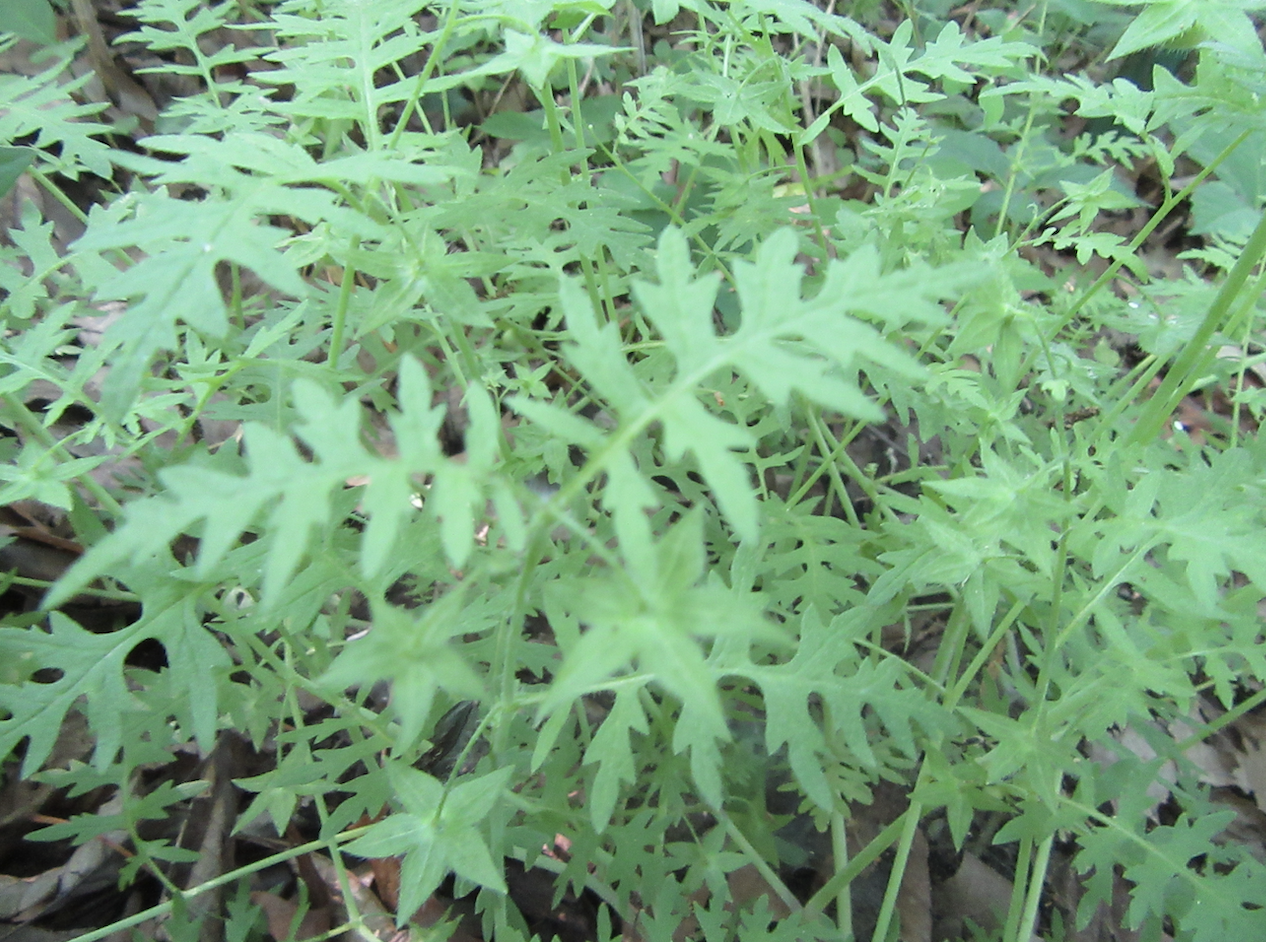
Ellisia nyctelea (Aunt Lucy) on 5-12-25, #1044-4.
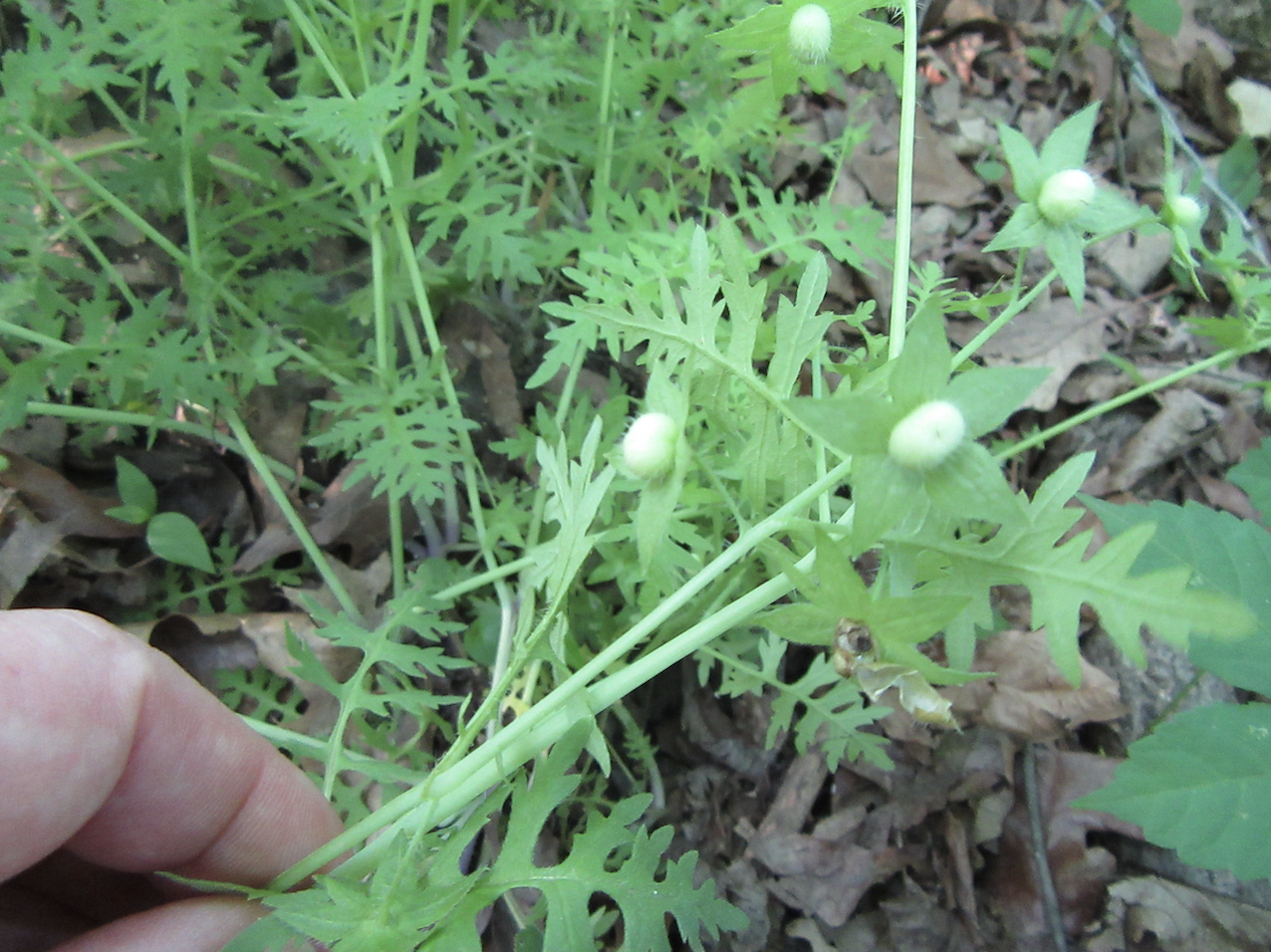
Ellisia nyctelea (Aunt Lucy) on 5-12-25, #1044-5.
 The Belmont Rooster