
Polygonatum biflorum (Smooth Solomon’s Seal) on 6-12-22, #890-40.
Smooth Solomon’s Seal, Solomon’s Seal, Small Solomon’s Seal
Polygonatum biflorum
po-lig-oh-NAY-tum by-FLOR-um
Synonyms of Polygonatum biflorum (49) (Updated on 12-7-25 from Plants of the World Online): Convallaria angustifolia (Pursh) Poir. (1817), Convallaria biflora Walter (1788), Convallaria canaliculata Willd. (1809), Convallaria commutata Schult. & Schult.f. (1820), Polygonatum angustifolium Pursh (1813), Polygonatum biflorum var. commutatum (Schult. & Schult.f.) Morong (1893), Polygonatum biflorum subvar. ellipsoidale Farw. (1928), Polygonatum biflorum var. giganteum (A.Dietr.) Alph.Wood (1870), Polygonatum biflorum var. hebetifolium R.R.Gates (1917), Polygonatum biflorum var. melleum (Farw.) R.P.Ownbey (1944), Polygonatum biflorum var. necopinum R.P.Ownbey (1944), Polygonatum biflorum var. ovatum Farw. (1915), Polygonatum biflorum f. ramosum (McGivney) Fernald (1944), Polygonatum biflorum var. virginicum (Greene) Farw. (1915), Polygonatum canaliculatum (Willd.) Pursh (1813), Polygonatum canaliculatum var. americanum (Hook.) Farw. (1915), Polygonatum canaliculatum subvar. ellipticum (Farw.) Farw. (1928), Polygonatum canaliculatum f. foliatum (H.M.Clarke) J.W.Moore (1950), Polygonatum canaliculatum var. giganteum (A.Dietr.) Miq. (1867), Polygonatum canaliculatum var. oblongifolium Farw. (1921), Polygonatum canaliculatum var. ovatum (Farw.) E.J.Palmer & Steyerm. (1935), Polygonatum canaliculatum f. ramosum (McGivney) Clute (1943), Polygonatum canaliculatum var. rotundifolium J.W.Moore (1950), Polygonatum cobrense (Wooton & Standl.) R.R.Gates (1917), Polygonatum commutatum (Schult. & Schult.f.) A.Dietr. (1835), Polygonatum commutatum f. foliatum H.M.Clarke (1948), Polygonatum commutatum var. lineamentosum Lunell (1917), Polygonatum commutatum var. ovatum (Farw.) R.R.Gates (1917), Polygonatum commutatum f. ramosum McGivney (1925), Polygonatum commutatum var. virginicum (Greene) R.R.Gates (1917), Polygonatum ellipticum Farw. (1915), Polygonatum giganteum A.Dietr. (1835), Polygonatum hebetifolium (R.R.Gates) Bush (1927), Polygonatum latifolium Pursh (1813) (nom. illeg.), Polygonatum latifolium var. commutatum (Schult. & Schult.f.) Baker (1875), Polygonatum melleum Farw. (1918), Polygonatum multiflorum var. americanum Hook. (1839), Polygonatum multiflorum var. biflorum (Walter) Alph.Wood (1845), Polygonatum multiflorum var. canaliculatum (Willd.) Alph.Wood (1845), Polygonatum ovatum (Farw.) Bush (1927), Polygonatum parviflorum A.Dietr. (1835), Polygonatum virginicum Greene (1906), Salomonia biflora (Walter) Britton (1901), Salomonia cobrensis Wooton & Standl. (1913), Salomonia commutata (Schult. & Schult.f.) Britton (1901), Sigillaria angustifolia (Pursh) Raf. (1840), Sigillaria biflora (Walter) Raf. (1840), Sigillaria canaliculata (Willd.) Raf. (1840), Sigillaria elliptica Raf. (1840)
Polygonatum bilflorum (Walter) Elliott is the accepted scientific name for this species of Polygonatum. It was named and described as such by Stephen Elliott in A Sketch of the Botany of South Carolina and Georgia in 1817. It was first named and described as Convallaria biflora by Thomas Walter in Flora Caroliniana in 1788.
The genus, Polygonatum Mill., was named and described as such by Philip Miller in the fourth edition of The Gardener Dictionary in 1754.
As of 12-7-25 when this page was last updated, Plants of the World Online lists 79 species in the genus Polygonatum. It is a member of the plant family Asparagaceae with 126 genera. Those numbers could change as updates are made on POWO. Some authorities list the genus Polygonatum in the plant family Liliaceae.

Distribution map of Polygonatum biflorum from Plants of the World Online. Facilitated by the Royal Botanic Gardens, Kew. Published on the Internet; http://www.plantsoftheworldonline.org/. Retrieved on November 6, 2024.
The above map for Polygonatum biflorum is from Plants of the World Online. Areas in green are where the species is native and purple where it has been introduced. The map for North America above Mexico from the USDA Plants Database is similar. No map is perfect…
The map on iNaturalist shows where members have made observations. Anyone can join and it is a great website to confirm and share your observations. The maps on iNaturalist are continually updated as members post new observations. I post all my observations on iNaturalist.
THERE ARE SEVERAL LINKS AT THE BOTTOM OF THE PAGE FOR FURTHER READING AND TO HELP WITH A POSITIVE ID.

Polygonatum biflorum (Smooth Solomon’s Seal). The above photo was taken in a friend’s secluded woods along a creek on 4-23-20, #690-71.
Polygonatum biflorum is a native perennial wildflower that is also used in the home landscape. I remember my grandmother (father’s side) that had a patch growing along her house when I was a kid. Here on the farm, they grow in the ditch along the street in front of the southwest pasture. They also grow in the woods along the Rock Island Spur of the Katy Trail that runs along the south border of the farm and along a creek in a friend’s secluded woods.
Currently, under the APG III Classification System, the genus Polygonatum is a member of the plant family Asparagaceae. It was a member of the former family Convallariaceae and some authorities still consider it part of the family Liliaceae (perhaps as older publications haven’t been updated or by choice).

Polygonatum biflorum (Smooth Solomon’s Seal) on 6-16-21, #801-62.
Polygonatum biflorum is native to Missouri and the central and eastern half of North America. It is easily recognized by its long arching leaf stalks that grow to around 3 feet in length.
Polygonum biflorum is easily recognized even without flowers once you get used to seeing them. They can be found in damp wooded areas, along streambanks, in ditches, along roadsides. They can be found in shaded areas as well as in full sun if the soil is fairly damp (like in ditches).
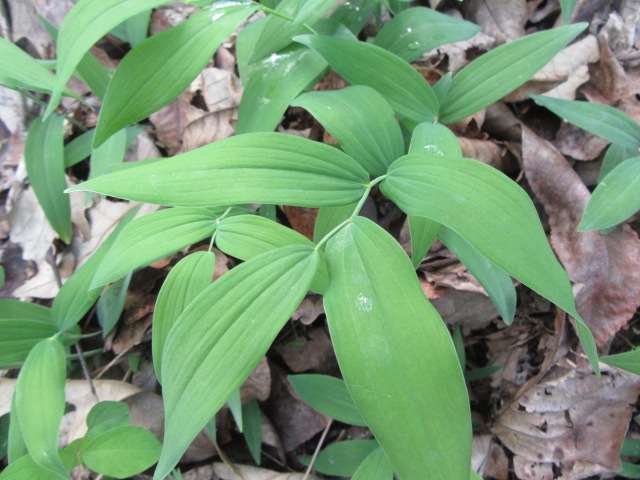
Polygonatum biflorum (Smooth Solomon’s Seal) on 4-23-20, #690-74.
The leaves, 3-8” long, grow alternately along the stems. Leaves are sessile and have 7-19 parallel veins.

Polygonatum biflorum (Smooth Solomon’s Seal) on 5-29-22, #886-6.
Clusters of 1-6 (sometimes more) greenish-white to cream-colored flowers dangle from the leaf axils.
I will add better descriptions as I have time and continue to try to add better photos. There are more photos under the links for further reading.
I live on the family farm in Windsor, Missouri in Pettis County (Henry County is across the street, and Benton and Johnson aren’t far away). I have grown over 500 different plants and identified over 250 species of wildflowers (most have pages listed on the right side of the page). I am not an expert, botanist, or horticulturalist. I just like growing, photographing, and writing about my experience. I rely on several websites for ID and a few horticulturalists I contact if I cannot figure them out. Wildflowers can be variable from location to location, so that can be a bit confusing. If you see I have made an error, please let me know so I can correct what I have written.
I hope you found this page useful and be sure to check the links below for more information. They were written by experts and they have provided much more information. Some sites may not be up-to-date but they are always a work in progress. If you can, I would appreciate it if you would click on the “Like” below and leave a comment. It helps us bloggers stay motivated. You can also send an email to me at thebelmontrooster@yahoo.com. I would enjoy hearing from you especially if you notice something is a bit whacky.
FOR FURTHER READING:
PLANTS OF THE WORLD ONLINE (GENUS/SPECIES)
INTERNATIONAL PLANT NAMES INDEX (GENUS/SPECIES)
TROPICOS (GENUS/SPECIES)
FLORA OF NORTH AMERICA (GENUS/SPECIES)
WORLD FLORA ONLINE (GENUS/SPECIES)
WIKIPEDIA (GENUS/SPECIES)
USDA PLANTS DATABASE
iNATURALIST
MISSOURI PLANTS
MIDWEST WEEDS AND WILDFLOWERS
MISSOURI BOTANICAL GARDEN
MISSOURI DEPARTMENT OF CONSERVATION
WILDFLOWER SEARCH
DAVE’S GARDEN
FLORA FINDER
FRIENDS OF THE WILDFLOWER GARDEN
GO BOTANY
ILLINOIS WILDFLOWERS
(Syn. Polygonatum commutatum)
KANSAS WILDFLOWERS AND GRASSES
LADY BIRD JOHNSON WILDFLOWER CENTER
MARYLAND BIODIVERSITY PROJECT
MINNESOTA WILDFLOWERS
NATIVE PLANTS OF THE CAROLINAS & GEORGIA
NORTH CAROLINA STATE UNIVERSITY
PFAF (PLANTS FOR A FUTURE)
SEINet
U.S. WILDFLOWERS
WILDFLOWERS OF NEW MEXICO
WISCONSIN HORTICULTURE
NOTE: The data (figures, maps, accepted names, etc.) may not match on these websites. It depends on when and how they make updates and when their sources make updates. Some websites have hundreds and even many thousands of species to keep up with. Accepted scientific names change periodically and it can be hard to keep with as well. Some of the links may use a name that is a synonym on other sites. In my opinion, Plants of the World Online by Kew is one of the most reliable and up-to-date plant databases and they make updates regularly. I make updates “at least” once a year and when I write new pages or add new photos I do get behind. We are all a work in progress. 🙂
MORE PHOTOS…
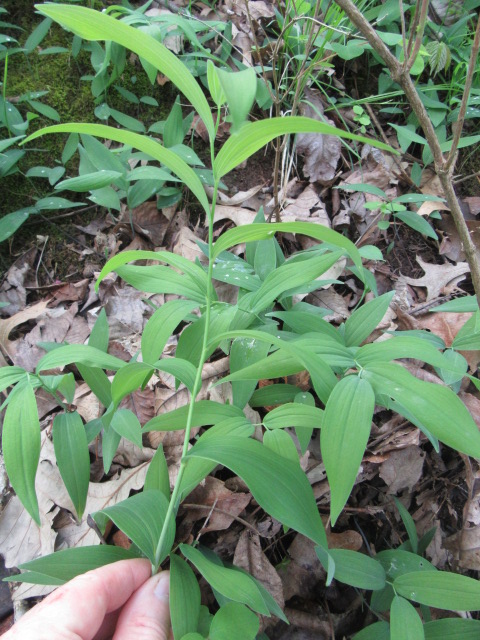
Polygonatum biflorum (Smooth Solomon’s Seal) on 4-23-20, #690-72.

Polygonatum biflorum (Smooth Solomon’s Seal) on 4-23-20, #690-73.

Polygonatum biflorum (Smooth Solomon’s Seal) on 4-23-20, #690-75.
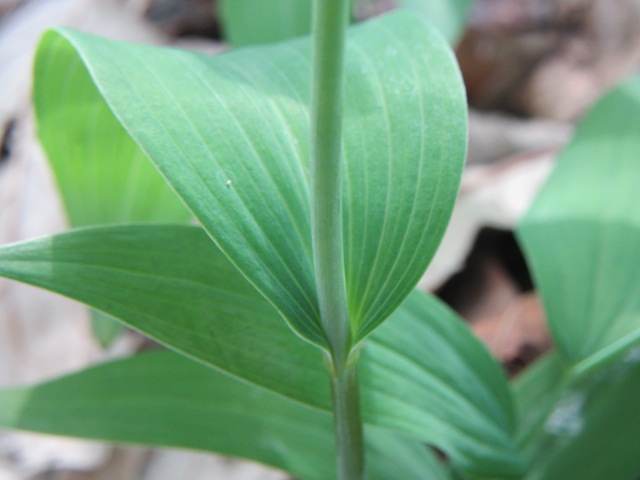
Polygonatum biflorum (Smooth Solomon’s Seal) on 4-23-20, #690-76.

Polygonatum biflorum (Smooth Solomon’s Seal) on 4-23-20, #690-77.

Polygonatum biflorum (Smooth Solomon’s Seal) on 4-23-20, #690-78.

Polygonatum biflorum (Smooth Solomon’s Seal) on 6-16-21, #801-63.

Polygonatum biflorum (Smooth Solomon’s Seal) on 6-16-21, #801-64.

Polygonatum biflorum (Smooth Solomon’s Seal) on 6-16-21, #801-65.

Polygonatum biflorum (Smooth Solomon’s Seal) on 4-20-22, #870-38.

Polygonatum biflorum (Smooth Solomon’s Seal) on 5-22-22, #882-20.

Polygonatum biflorum (Smooth Solomon’s Seal) on 5-22-22, #882-21.
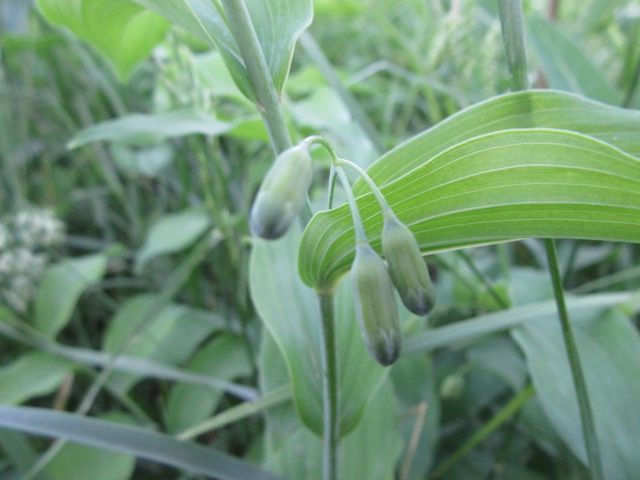
Polygonatum biflorum (Smooth Solomon’s Seal) on 5-22-22, #882-22.

Polygonatum biflorum (Smooth Solomon’s Seal) on 5-3-24, #986-26.

Polygonatum biflorum (Smooth Solomon’s Seal) on 5-3-24, #986-27.
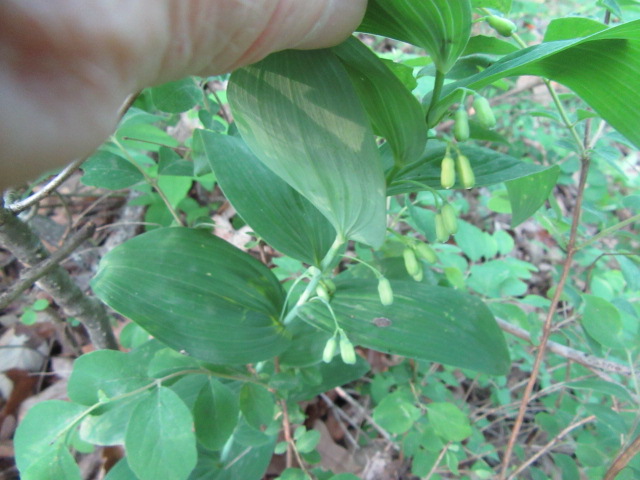
Polygonatum biflorum (Smooth Solomon’s Seal) on 5-3-24, #986-28.
 The Belmont Rooster