Plants Repotted Part 3…

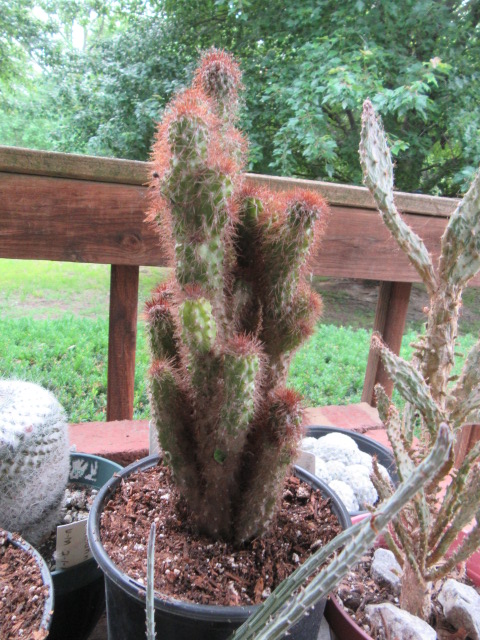
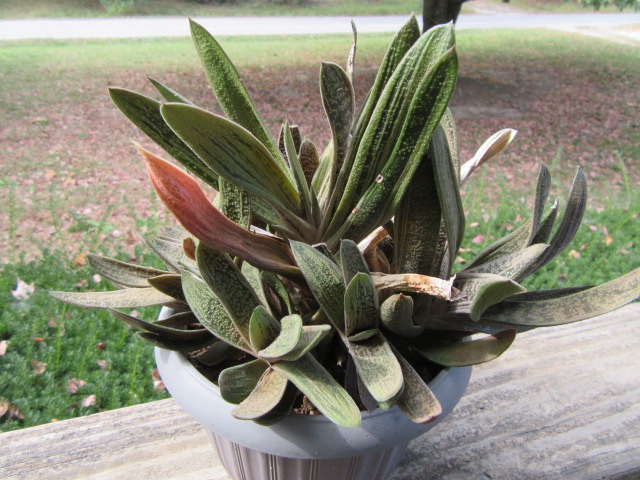
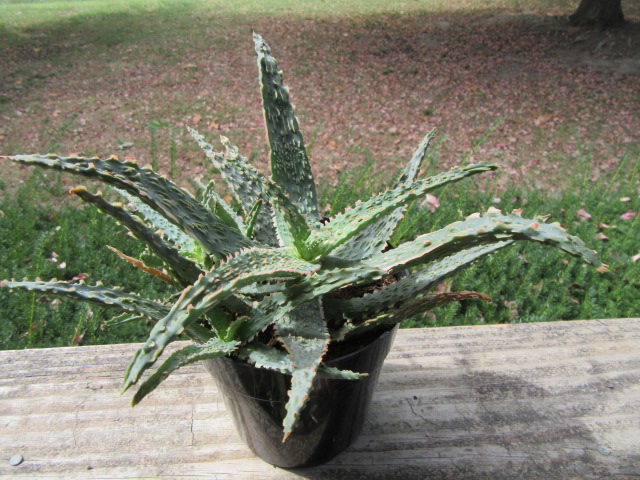
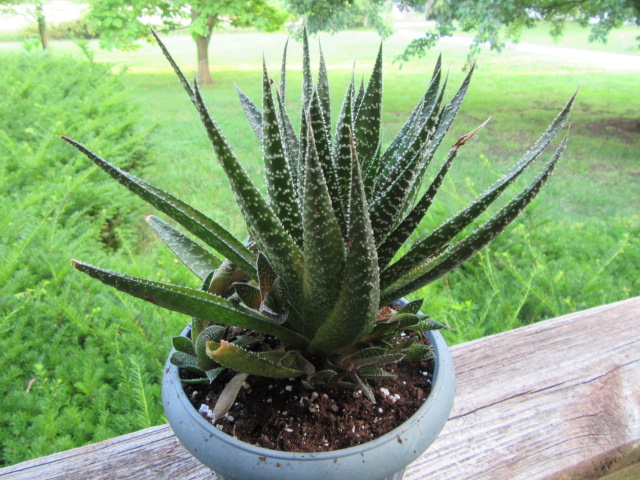
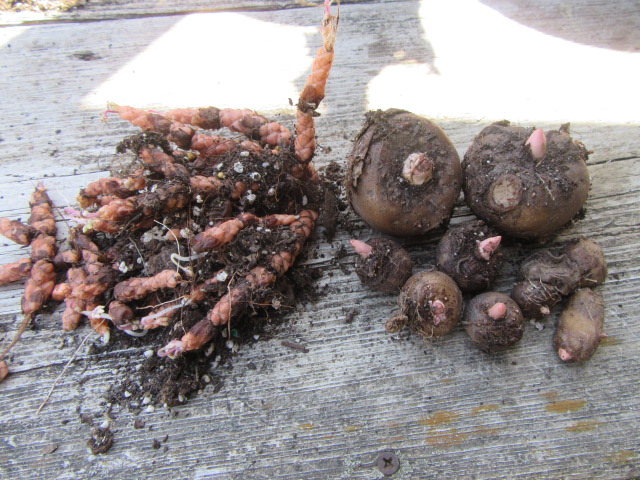
Hello everyone! I hope you are doing well and you are staying cool. It has been quite warm here and the humidity is NUTS! Most of the plants in the above photo have been repotted now, but not all. Of course, there are more that aren’t in the photo…

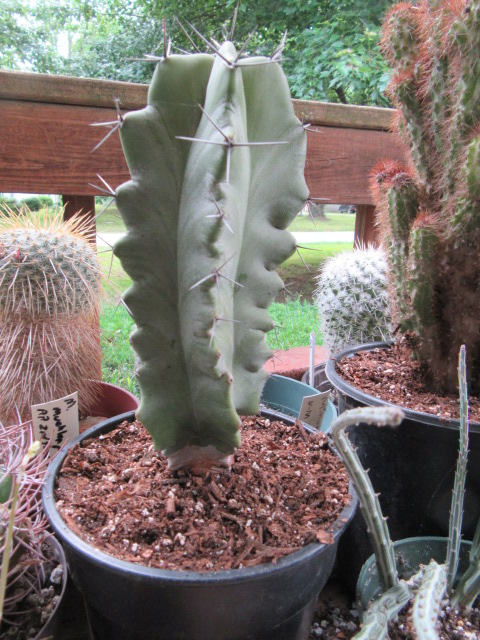
The Euphorbia trigona ‘Rubra’ (or var. rubra) has grown to 42″ tall and I’m not sure what to do with it… Should I hack it into a few pieces? Hmmm… The top of the stem, and the top of the branch, are looking a little weird and turning a light color. Normally, I don’t replant deeper than they were, but one day last fall the wind knocked it out of its pot. “Someone else” opted to put it in a bigger pot and buried it deeper than it was when I wasn’t home. Some plants have a crown and shouldn’t be replanted deeper than the root ball, but I’m not sure about this one. Normally, well maybe not normally, Euphorbia trigona are cut in pieces so they will branch out… So, I’m not sure about doing that, or what the deal is with it turning a lighter color on top. Maybe is isn’t getting enough light up there… Maybe I should check its roots to see if they are OK… I know it doesn’t have much of a root system. Actually, the plant has grown a little over 6″ since I moved it outside this spring, so maybe that is new growth. Hmmm…

This post is part 3 of Plants Repotted.

If you missed part 1, click HERE.

If you missed part 2, click HERE.

Anyway, here we go with part 3 beginning on…

June 8…

Aristaloe aristata (Lace Aloe) before repotting on 6-8-25, #1054-1.

The Aristaloe aristata (Lace Aloe) has been on the kitchen windowsill for I’m not sure how long. It was looking like it was in need of fresh air, so I put it on the front porch with the rest of the potted plants when temps warmed up enough. I like this plant, but sometimes I think it is a little finicky…

Aristaloe aristata (Lace Aloe) root system on 6-8-25, #1054-2.

I removed the plant from its pot to look at its roots. There was still plenty of room to grow. I trimmed off the dead and dying leaves.

Aristaloe aristata (Lace Aloe) in a larger 4″ tall x 4 1/2″ wide pot on 6-8-25, #1054-.

It was in a 3″ tall x 3 3/4″ wide pot, so I increased the size to 4″ tall x 4 1/2″ wide pot. I used Miracle Grow Cactus Mix with a little extra perlite and chicken grit. There is still another very small offset that that fell off this plant when it was first repotted…

<<<<+>>>>

Ferocactus wislizeni (Fishhook Barrel Cactus) before repotting on 6-8-25, #1054-4.

Hmmm… The Ferocactus wislizeni (Fishhook Barrel Cactus) hasn’t looked really great for several years.

Ferocactus wislizeni (Fishhook Barrel Cactus) root system on 6-8-25, #1054-5.

I removed it from its pot to have a look at the roots. To be honest, I’m not sure how alive this cactus really is… Yeah, I know that sounds a little weird… It grew a little from 2022 to 2023, but not from 2023 to 2024. It actually shrunk in diameter 1/2″.

Ferocactus wislizeni (Fishhook Barrel Cactus) after repotting on 6-8-25, #1054-6.

After removing most of the old potting mix and some of the dead roots, I put it back in the same pot with Miracle Grow Potting Mix with a little extra perlite and chicken grit. I noticed a few dead mealybugs, so for now I put it in an area away from the other plants. I’ll keep an eye on it and we’ll see if it grows when I take measurements when I start moving plants inside for the winter…

<<<<+>>>>

Parodia magnifica (Ball Cactus/Balloon Cactus) before repotting on 6-8-25, #1054-7.

The Parodia magnifica (Ball Cactus/Balloon Cactus) is a really neat plant. I brought it home in March 2019 and repotted it in November 2019. It had a really good root system then and needed a larger pot.
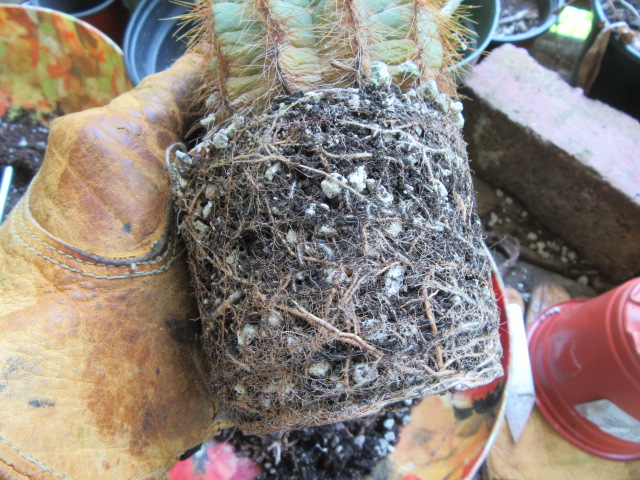
Parodia magnifica (Ball Cactus/Balloon Cactus) root system on 6-8-25, #1054-8.

Well, that is quite a root system! GEEZ!!!

Parodia magnifica (Ball Cactus/Balloon Cactus) in a larger 4 1/2″ tall x 5 3/4″ wide pot on 6-8-25, #1054-9.

After removing most of the old potting mix and some of the dead roots, I put the plant into a larger 4 1/2″ tall x 5 3/4″ diameter pot. I used Miracle Grow Cactus Mix with a little extra perlite and chicken grit. Now, we’ll see how it does.

<<<<+>>>>

June 15…

Ledebouria socialis ‘Paucifolia’ before repotting on 6-15-25, #1058-1.

Well, where do I begin with this one? Actually, the Ledebouria socialis ‘Paucifolia’ is the easy one. It hasn’t grown nearly as much as its cousin which is why it is still in a small pot.
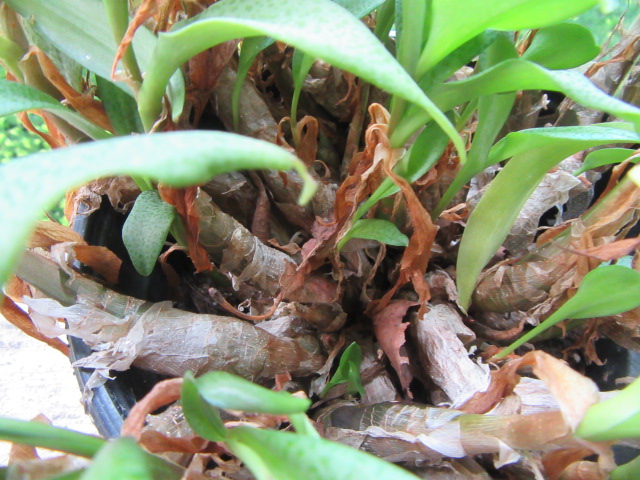
Ledebouria socialis ‘Paucifolia’ before repotting on 6-15-25, #1058-2.

Although not near as crowded as the other one, it is in a smaller pot and still a bit crowded. Looking back at old photos, it was put in a green pot in 2029 and at some point it was put in a somewhat larger black pot. Hmmm…

Ledebouria socialis ‘Paucifolia’ roots on 6-15-25, #1058-1.

It was already growing new roots…

Ledebouria socialis ‘Paucifolia’ in a larger 6″ tall x 9 1/2″ wide pot on 6-15-25, #1058-1.

I pulled the bulbs and roots apart somewhat and put everything in a larger 6″ tall x 9 1/2″ diameter pot. Now it has room to grow more. I used Miracle Grow Potting Mix with a little more perlite and chicken grit.

Ledebouria socialis ‘Violacea’ on 6-12-25, #1056-24.

At some point I need to tackle the Ledebouria socialis ‘Violacea’. It is HUGE!!!

I bought both of the Ledebouria socialis from a seller on Facebook in 2018, so I have had their company for a while now. If you haven’t tried them, I suggest you do. If you want a passalong plant that will produce A LOT, try Ledebouria socialis ‘Violacea’. If you want a plant that doesn’t produce much, try ‘Paucifolia’. They are carefree plants and very easy to grow. Water them regularly during the summer and put them in a cooler room with no water at all during the winter. They have been in the basement with a south facing window over the past two winters with no issues.

<<<<+>>>>

June 27…

Kleinia stapeliiformis (Pickle Plant) before repotting on 6-27-25, #1065-2.

I brought this pot of Kleinia stapeliiformis (Pickle Plant) home from Mast’s Greenhouse in May of 2023. It was from Mr. Mast’s daughters collection. The original stem she used as a cutting was hanging over the pot and there were several smaller “sprouts” a couple of inches tall along one side of the pot. Well, they grew and the original stem broke where it was hanging over the pot (which had grown to about 2′ long). In the spring, I cut the stem that broke in 4 pieces and put them in a pot to see if they would root. The only cutting that survived was the top cutting. Now, I had bought a few cuttings of this species from a seller on Facebook in 2018 and they soon after bit the dust. I was somewhat hesitant to bring home the pot from Mast’s, but I thought anything that weird looking deserved another chance. To be honest, I was surprised they did so well over last summer and even survived the winter on the shelf in my bedroom… But, not only did they survive, they even grew a little during the winter. Since they did so well and looked a little weird on one side of the pot, I thought would al least put them in the middle of the pot…
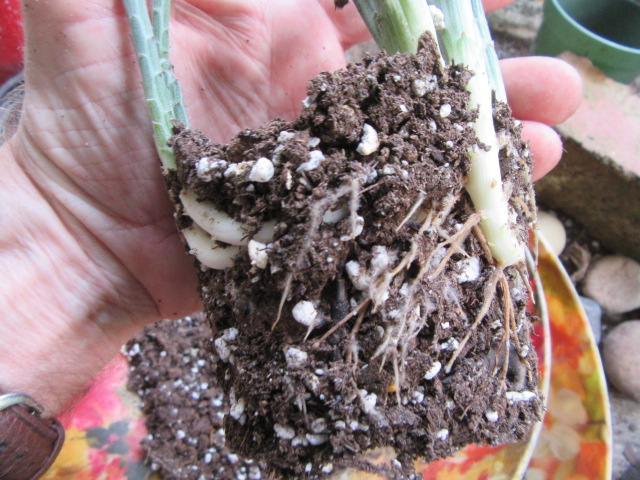
Kleinia stapeliiformis (Pickle Plant) roots on 6-27-25, #1065-3.

So, I carefully removed them from the pot to have a look. I was happy with what I saw.

Kleinia stapeliiformis (Pickle Plant) in a larger 4 1/2″ tall x 5 3/4″ wide pot on 6-27-25, #1065-4.

I didn’t disturb the roots much and carefully put them in a larger 4 1/2″ tall x 5 3/4″ wide pot. I feel like I am whispering… I put the cutting, which hadn’t grown any roots yet, in the pot with the others. I guess it is really their parent… It is the one with the weird shape.
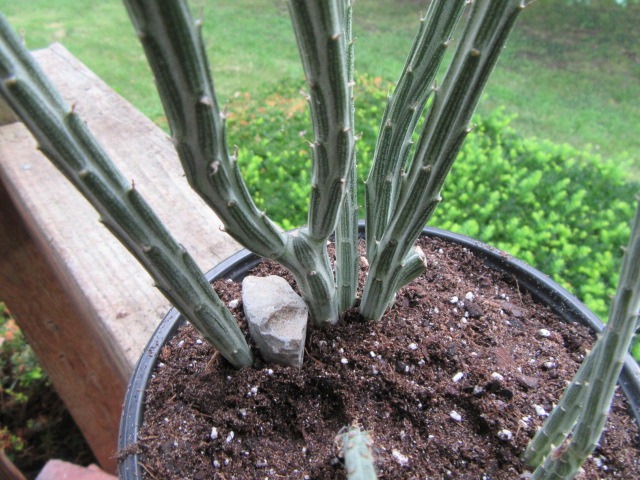
Kleinia stapeliiformis (Pickle Plant) on 6-27-25, #1065-5.

I put in a piece of gravel to hold one of them upright.

When I went to Mast’s on July 3, I walked back to see his daughters collection of plants. A few of her Kleinia stapeliiformis had flowers and seeds. I didn’t have my camera, so I took a few photos with my phone (yeah, I have a cell phone now) but they didn’t come out good. I did get to visit with her and told her I would bring her some Alocasia and the baby Amorphophallus konjac. I guess I should find out her name…

I don’t have a page for this plant yet. I wanted to make sure it would survive…

<<<<+>>>>

Peperomia graveolens (Ruby Peperomia/Ruby Glow) on 6-27-25, #1065-6.

The Peperomia graveolens (Ruby Peperomia/Ruby Glow) is another plant I brought home in 2024 from Mr. Mast’s daughters collection. She first gave me a cutting in 2023, but it didn’t take root. This plant made it through the winter, but wasn’t looking so good. I took it out of the pot and found the stem had broke under the soil and there were just a couple of roots left. SO, emptied the pots old potting soil and put in fresh then buried the plant a little deeper than what it was. Hopefully, it will grow new roots and survive. You just never know…

<<<<+>>>>

Selenicereus anthonyanus (Fish Bone Cactus) before repotting on 6-25-24, #1065-7.

To say the Selenicereus anthonyanus (Fish Bone Cactus) has grown would be an understatement! It only has two leaves sticking out of the pot when I brought it home from Wagler’s Greenhouse in June of 2012. It spent the winter on the kitchen windowsill and continued to grow.
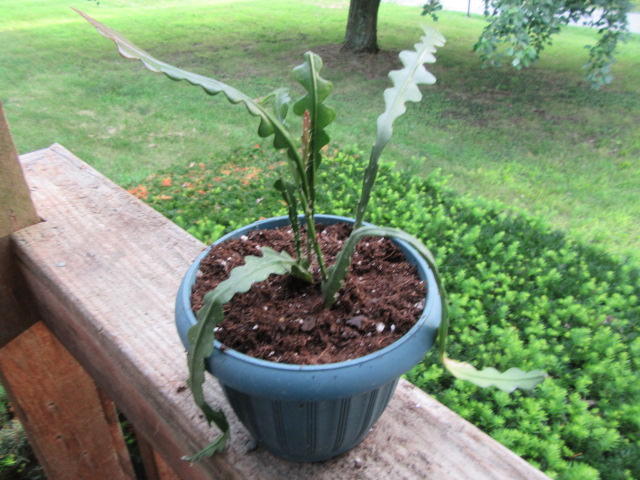
Selenicereus anthonyanus (Fish Bone Cactus) in a larger 4 1/2″ tall x 5 1/2″ wide pot on 6-25-24, #1065-8.

I decided to put it in a larger 4 1/2″ tall x 5 1/2″ diameter pot with Miracle Grow Potting Mix with a little orchid bark. It is an epiphytic cactus from Mexico’s tropical rainforest that grows in trees…
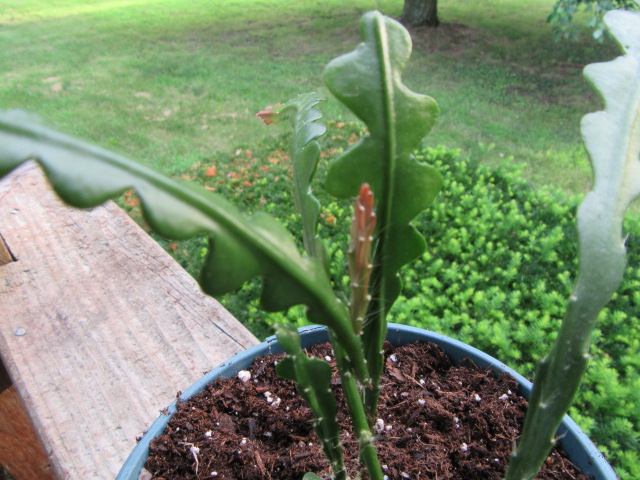
Selenicereus anthonyanus (Fish Bone Cactus) on 6-25-24, #1065-9.

Also known as Ric Rac and Zig-Zag Cactus, this plant is a night bloomer…

<<<<+>>>>

July 2…

x Mangave ‘Inkblot’ before repotting on 7-2-25, #1067-1.

Ummm… I decided it was time to give the x Mangave ‘Inkblot’ a makeover on July 2 and put it in a larger pot. Its kid also needed to be put in a pot of its own. This is an AWESOME plant, by the way.

I need to mention that x Mangave is a hybrid combination of Agave and Manfreda. A few years ago, or whenever it was, I noticed Plants of the World Online said Manfreda (and a few other genera) had become synonyms of Agave. That was kind of confusing for me because there are A LOT of patented x Mangave cultivars. Does that mean the patented x Mangave are now Agave cultivars? Well, I just checked as I was writing this post and it appears Manfreda is ONCE again an accepted genus! So, the hybrid cultivars were once hybrids, then not, now are once again… Now I have to change captions AGAIN… Botanists and taxonomists have to jump few several hoops to change scientific names and it has to be peer reviewed, etc. Then they change the name back AGAIN. What the heck?!?! I’m so glad they have that figured out. 🙂

x Mangave ‘Inkblot’ pup on 7-2-25, #1067-2.

The pup grew almost as tall as the parent…

x Mangave ‘Inkblot’ roots on 7-2-25, #1067-3.

I always think it’s funny how pots get so root bound that the soil disappears. Where does it go?

x Mangave ‘Inkblot’ in a larger 12″ tall x 14 1/2″ wide pot on 7-2-25, #1067-4.

I looked around and found a good-sized pot that I wasn’t 100% happy with. I normally put rocks in the bottom of pots to help with drainage, but this pot has fairly large holes… Oh well, I just went with it. Now, the big plant is in a larger 12″ tall x 14 1/2″ wide pot. Then after I had it finished, I noticed a crack about 3″ long around the bottom of the pot. So, at some point I will have to change the pot again (before the plants come inside for the winter).
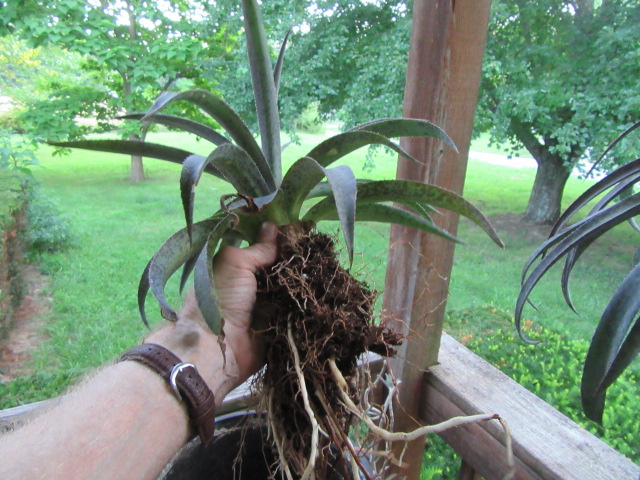
x Mangave ‘Inkblot’ pups roots on 7-2-25, #1067-5.

Now for the pup… I’m not sure why they call the offsets pups… Anyway, it was definitely a good idea to remove the pup from the parent and it really wasn’t attached anymore. It has a nice root system for sure. At least there wasn’t a long runner wrapped around the pot like I have seen before (been there, done that).
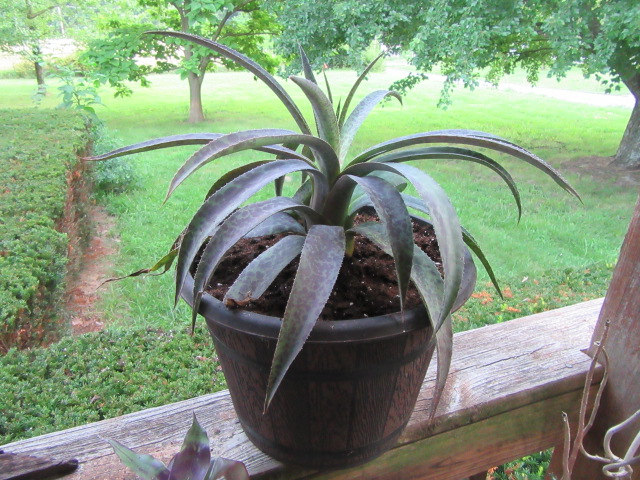
x Mangave ‘Inkblot’ pup in the original 8 1/2″ tall x 10 1/2″ wide pot on 7-2-25, #1067-6.

I put the pup in the original 8 1/2″ tall x 10 1/2″ wide pot.
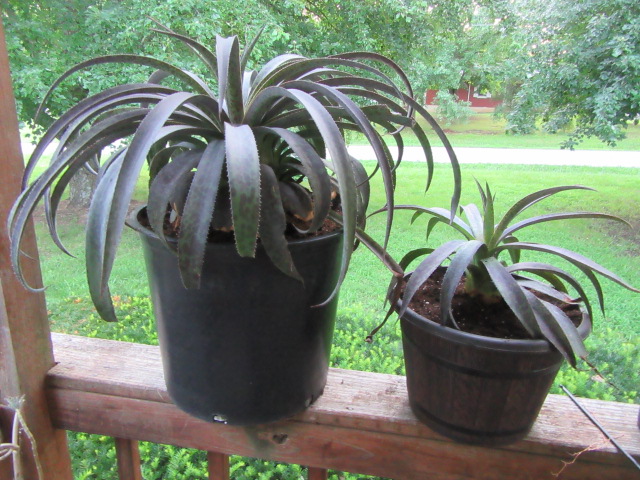
x Mangave ‘Inkblot’ parent and sibling on 7-2-25, #1067-7.

Yep! They were both in the smaller pot…

<<<<+>>>>

July 3…

Callisia fragrans (Grandpa’s Pipe, Etc.) on 7-3-25, #1068-1.

The Callisia fragrans (Grandpa’s Pipe, Inch Plant, Etc.) needed to be repotted, so I put all six in two pots. There were in individual pots, but I decided putting three in two pots would be more than satisfactory. Of course, if they do really well, they will produce a lot of runners and new plants. These plants don’t produce much of a root system, and even with a little neglect, they are virtually indestructible.

<<<<+>>>>

7-10-25…

Mammillaria plumosa (Feather Cactus) before repotting on 7-10-25, #1073-5.

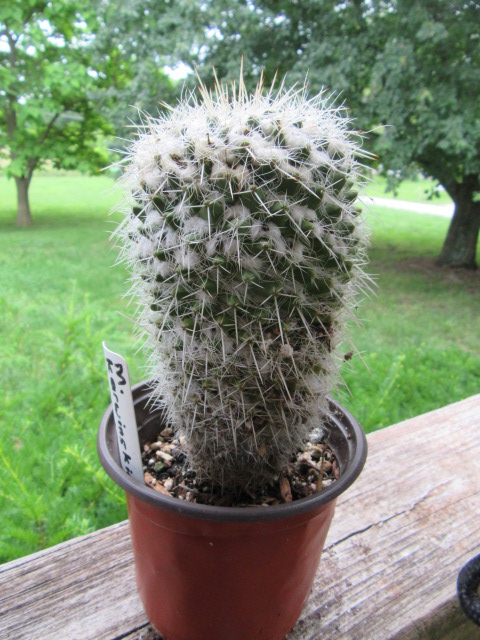
I debated repotting the Mammillaria plumosa (Feather Cactus) for a couple of reasons. For one, I was pretty sure it didn’t need a deeper pot, and two, I thought it might fall apart. 🙂 Now, let me give you a little history (which you can read if you click on it name)… I bought this plant (or clump of plants) from a seller on Ebay in September 2018. It came wrapped in toilet paper and looked like a ball of tiny feathers. I put it in a pot and the rest is history. All you see in the above photo was was what came in the mail only much smaller. It has grown and done extremely well with no issues whatsoever, and it does produce a few flowers. BUT, I don’t believe it has produced any offsets…

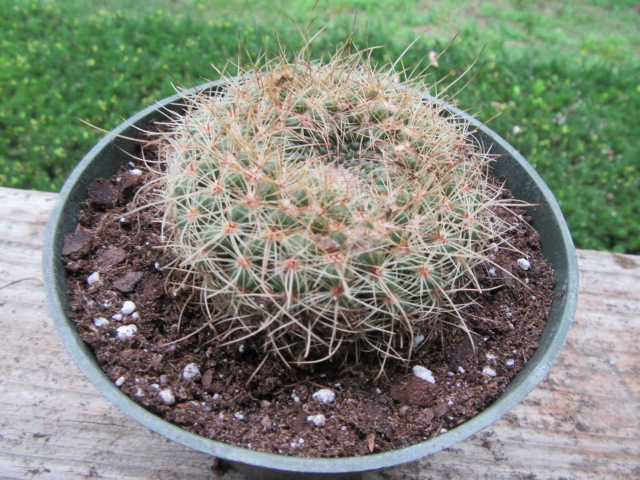
Mammillaria plumosa (Feather Cactus) from the top on 7-10-25, #1073-6.

The sides of the cactus were touching the pot in a couple of spots and the soil was almost 2″ from the top of the pot… Well, it hadn’t been repotted since 2019…
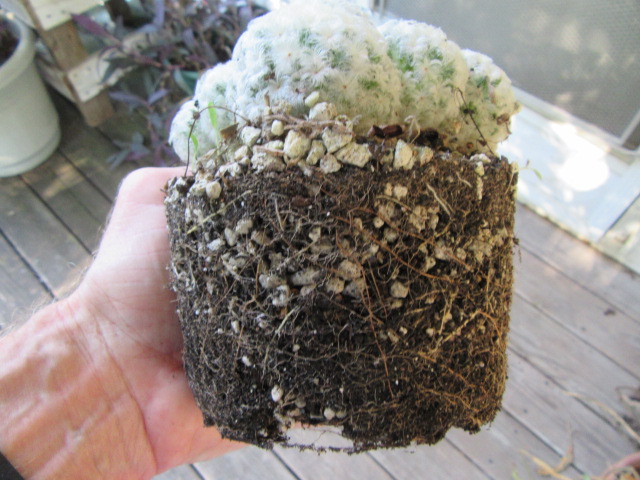
Mammillaria plumosa (Feather Cactus) roots on 7-10-25, #1073-7.

As you can see, there isn’t a massive root system, but still more than I thought there would be. Back in 2019, I used pumice in the mix…

Mammillaria plumosa (Feather Cactus) roots after removing old soil on 7-10-25, #1073-8.

After I removed old potting soil and dead roots, there wasn’t much left. I was very glad the cluster of plants stayed together. I removed the dead roots up to where I saw new ones growing. You don’t have to worry about removing roots because they grow new ones every year. I think I said that before.

Mammillaria plumosa (Feather Cactus) in a larger 5 1/2″ tall x 6 1/4″ wide pot on 7-10-25, #1073-5.

I didn’t like putting it in a deeper pot, but I didn’t have much of a choice for the moment. So, I put it in a 5 1/2″ tall x 6 1/4″ diameter pot with Miracle Grow Cactus Mix with a little additional perlite and chicken grit… I may order a few shallow pots online that are good sized in diameter but shallow. I saw them somewhere…

<<<<+>>>>

x Mangave ‘Pineapple Express’ before repotting on 7-10-25, #1073-11.

I decided July 10 it was time to repot the x Mangave ‘Pineapple Express’. I knew it would be tough… I brought this plant home in May 2019 and first repotted it in November 2019. Information said it was slow to offset, but it already had one by then which I left in the pot. When I moved the plants inside for the winter in 2020, I counted “about” 10… I could have miscounted. 🙂 I still left them all in the same pot. When I measured the plants as I moved them inside in October 2021, this plant measured 11 1/2″ tall x 20″ wide. In 2023, I decided to put it on the back deck in full sun to see how it would do. Well, it did GREAT but changed colors. Then, when it was inside over the winter, it started loosing leaves and I thought it was a goner. But it survived…  After that, I kept it on the porch on the north side of the house. It did fine after that, but measured only 7 1/2″ tall x 13 1/2″ wide when I moved it inside in October 2024. Both of the x Mangave‘s stayed in my bedroom over the winter, which they did not appreciate, and were very glad to get back outside.

x Mangave ‘Pineapple Express’ roots on 7-10-25, #1073-12.Well, to be honest, I knew it was going to be root bound… I’ve been through repotting LARGE Agave when I was in Mississippi. GEEZ!!!

x Mangave ‘Pineapple Express’ pups on 7-10-25, #1073-13.

And, of course, I knew there had been pups in the pot for several years…

x Mangave ‘Pineapple Express’ in a larger 6″ tall x 6 1/4″ wide pot on 7-10-25, #1073-14.

It was not easy unwrapping the old roots and removing the pups, but I managed to get it done. I put the parent in a larger 6″ tall x 6 1/4″ diameter pot with Miracle Grow Cactus Mix with a little extra perlite and chicken grit.

x Mangave ‘Pineapple Express’ with 7 pups in 4″ tall x 4 1/2″ wide pots on 7-10-25, #1073-15.

I successfully removed five pups but I accidentally broke two… I went ahead and put the two I broke in pots like the other 5. I also put the roots of the two that I broke off in a couple of pots, too. The two I broke off will no doubt grow roots (been there, done that), but I’m not sure if the two with just roots will grow new leaves. Time will tell…

That’s all for this post and I am caught up with the plants I have repotted so far, I still have plenty to repot that I will post about soon.

Until next time, be safe, stay positive, be well, stay thankful, and GET DIRTY!


Plants Repotted Part 2…

Hello everyone! I hope you are all doing well and had a great 4th of July. This is part two of Plants Repotted. If you missed part one, click HERE.

I know I’m behind posting about repotting the plants on the front porch, but I’ve been fairly busy and I wasn’t sure if it would be of interest. But, what the heck. Better late than never… So, this post is about plants repotted on June 5.

I always had a problem finding good pots for the plants until Thursday when I went to Mast’s Greenhouse. I hadn’t paid much attention to their garden center in the past because I was more interested in their plants. I was very glad to find they have a good selection of high quality plastic pots so I brought home a few.

I went to four of the five local greenhouses on Thursday looking for a couple of plants my sister wanted. Unfortunately, none were to be found. I kind of figured that would be the case since it is July… Of course, I am using my sister as an excuse to go to the greenhouses. While most of the greenhouses were pretty much out of plants, two still had A LOT. They keep buying more at an auction for some reason…  I found a planter of Rose Moss at Wildwood Greenhouse I thought would look good on the front porch.

Alocasia ‘Calidora’, ‘Mayan Mask’, and ‘Portora’ on July 5.

I have been keeping the Alocasia on the back porch during the summer for the past several years, but I had to do something different with three litters of kittens there. I put the Alocasia along the south side of the house at first, but on July 5 I brought them to the front of the house. All the offsets need to be put in their own pots so I can take them to a couple of greenhouses.

I bought a couple of bags of Miracle Grow Cactus Mix which should be better than their regular potting mix for cactus and succulents (even though I usually add a little extra perlite and chicken grit). I know, I know, if you are a cactus and succulent pro you make your own mix or use something besides Miracle Grow, but in my neck of the woods, our choices are limited. I have used pumice in the past, but I ran out. I guess I could sift it out of the old potting soil, but that’s a lot of trouble…

June 5…

Aloe x ‘Cha Cha’ on 6-5-25 before being repotted, #1053-1.

The Aloe x ‘Cha Cha’ is the last survivor of the plants I received from Succulent Market in 2020. It has been a great plant and has produced flowers consistently. It has been in the same pot since it arrived, so I thought it was high time it had a new one.

Aloe x ‘Cha Cha’ root system on 6-5-25, #1053-2.

Well, that’s a pretty good root system…

Aloe x ‘Cha Cha’ in a larger 4 1/2″ tall x 5 1/2″ diameter pot on 6-5-25, #1053-3.

After giving it a makeover (removing dead leaves), I decided to put it in a 4 1/2″ tall x 5 1/2″ diameter pot.

<<<<+>>>>

Austrocylindropuntia subulata (Eve’s Needle) before repotting on 6-5-25, #1053-4.

This Austrocylindropuntia subulata (Eve’s Needle, ETC.) has grown a lot since I brought it home from Wagler’s Greenhouse in November of 2019. It was only a few inches tall when I brought it home and within a few months it sent up its first offset. As weird as it may sound, it has been repotted several times to put it back in the center of the pot. I always wondered how it moves, not to mention why…

Austrocylindropuntia subulata (Eve’s Needle) root system on 6-5-25, #1053-5.

Well, that’s a pretty good root system in only a year…

Austrocylindropuntia subulata (Eve’s Needle) in a new 5″ tall x 5″ diameter pot on 6-5-25, #1053-6.

After removing most of the old potting mix from its roots, I found a larger 5″ tall x 5″ diameter pot that seemed suitable. The plant is now 8 3/4″ tall…

<<<<+>>>>

Gymnocalycium saglionis (Giant Chin Cactus) before repotting on 6-5-25, #1053-7.

I started repotting the cactus and succulents, so on 6-5-25 I decided it was time to repot this cactus. I hadn’t put it in a new pot since 2021 and the upper rim around the top of the pot had broke off.

Gymnocalycium saglionis (Giant Chin Cactus) roots on 6-5-25, #1053-8.

Yep, judging from its roots, it definitely needed a larger pot…

Gymnocalycium saglionis (Giant Chin Cactus) in a larger 5″ tall x 6 1/2″ wide pot on 6-5-25, #1053-9.

So, I put it in a larger 5″ tall x 6 1/2″ wide pot with Miracle Grow Cactus mix with a little extra perlite and chicken grit. I really like this cactus, so hopefully it will like its new pot and fresh mix…

Gymnocalycium saglionis (Giant Chin Cactus), 3 3/4″ tall x 3 3/8″ wide on 7-6-25, #1070-1.

AH HA! I caught it! July 6 was a rainy day and I noticed something weird with this cactus! Its spines were RED! Then I remembered taking its photo on 10-28-21 (#853-9) and it had red spines in the photo when I uploaded them on the computer. I went out and looked at it, and its spines were gray. It was the last day before moving the plants inside and it had been raining… It’s spines must turn red when it gets wet…

Not only that, it looked larger than when I last measured it at 2 1/2″ tall x 3 1/2″ wide on 10-15-25. I measured it on July 7 and it was 3 3/4″ tall x 3 3/8″ wide. So, watering does make them swell. Case closed! OH, I don’t include the spines in my measurements…

<<<<+>>>>

Mammillaria hahniana (Old Lady Cactus) before repotting on 6-5-25, #1053-10.

I think I put the Mammillaria hahniana (Old Lady Cactus) in this pot in 2021, but that doesn’t mean it needs a larger one.

Mammillaria hahniana (Old Lady Cactus) root system on 6-5-25, #1053-11.

It had a very good root system, but I decided to just clean it up a little. You know, loosen it up and remove some of the dead roots and potting mix

Mammillaria hahniana (Old Lady Cactus) in the same 4 1/2″ tall x 5 1/2″ wide pot on 6-5-25, #1053-12.

I put it back in the same 4 1/2″ tall x 5 1/2″ wide pot using Miracle Grow Cactus Mix with a little extra perlite and chicken grit.

<<<<+>>>>

Mammillaria karwinskiana (Silver Arrows) before repotting on 6-5-25, #1053-13.

The Mammillaria karwinskiana (Silver Arrows) has always been a great cactus, well they have all been for the most part. I brought it home in 2018, so I have had it for quite some time. It had been in this pot since 2021 and I thought it might need one. Mammillaria karwinskiana is one of only a few Mammillaria species commonly referred to as “Owl Eye Cactus” known for their dichotomous branching. This means the plant (stem) divides into two parts. Then the two become 4 and so on…

Mammillaria karwinskiana (Silver Arrows) root system on 6-5-25, #1053-14.

I removed the plant from the pot and saw a really good root system. NICE!

Mammillaria karwinskiana (Silver Arrows) in a larger 4 1/2″ tall x 5 3/4″ wide pot on 6-5-25, #1053-15.

After loosening the roots a bit, I put it in a larger 4 1/2″ tall x 5 3/4″ wide pot.

<<<<+>>>>

Mammillaria muehlenpfordtii (Golden Pincushion) before repotting on 6-5-25, #1053-16.

The Mammillaria muehlenpfordtii (Golden Pincushion) is a really neat cactus, but it needs straightened up once in a while. That’s quite common even if they seem to have a good root system. Once it gets anchored good, roots and all lean. The whole plant has fallen out of the pot more than once…  There is usually a rock (or two) in the pot for it to lean on. It was put in a larger pot in 2020 and 2023, so I didn’t think it needed another one.

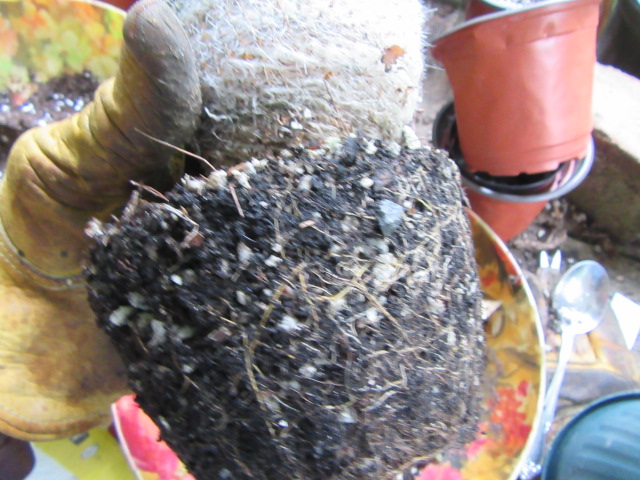
Mammillaria muehlenpfordtii (Golden Pincushion) root system on 6-5-25, #1053-17.

I removed it from its pot to have a look and saw it had a pretty good root system. The long white roots around the edge is crab grass coming up in the pot. Normally, the cactus are on the back deck and various seeds would land in the pots and germinate. It’s kind of a pain to remove grass from pots of cactus in more way than one…

Mammillaria muehlenpfordtii (Golden Pincushion) hot glue on 6-5-25, #1053-18.

It’s weird, but the hot glue that was on the plant when I brought it home in 2018 is still stuck to the plant. I checked to see if it would come off, but it is still stuck pretty firm so I left it alone. It’s funny how low it is on the plant now compared to 2018.

Mammillaria muehlenpfordtii (Golden Pincushion) in the same 4 1/2″ tall x 5 1/2″ wide pot on 6-5-25, #1053-19.

After removing most of the old potting mix and trimming the roots a little, I returned the Mammillaria muehlenpfordtii to its same pot with a few friends for support.

<<<<+>>>>

Mammillaria mystax before repotting on 6-5-25, #1053-20.

The Mammillaria mystax has always been a fun cactus with its dark green color and perfect shape. It has been in the same pot since 2021, so I thought I better have a look.

Mammillaria mystax root system on 6-5-25, #1053-21.

I removed the plant from its pot to have a look and found a well developed root system. I think it could fill a larger pot in no time.

Mammillaria mystax in a larger 5 1/2″ tall x 7″ tall pot on 6-5-25, #1053-22.

After removing most of old potting mix and trimming off the dead roots, I put it in a larger 5 1/2″ tall x 7″ diameter pot with Miracle Grow Cactus Mix with a little more perlite and chicken grit. Now, we’ll see how it does.

<<<<+>>>>

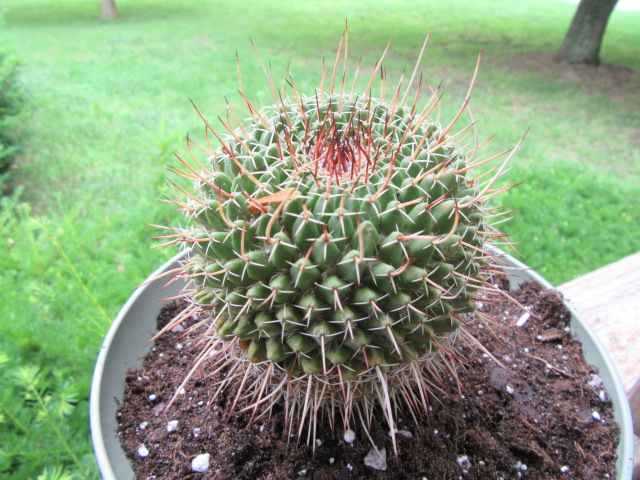
Parodia concinna (Sun Cup) before repotting on 6-5-25, #1053-23.

The Parodia concinna (Sun Cup) always makes me smile with its squatty shape and sunk-in center. It had a flower and several buds when I brought it home last May, but hasn’t done anything yet this year. Sometimes you don’t know when plants actually bloom that come from a greenhouse environment in some other state. Plus, living here with me isn’t anything like their natural environment. Well, how would they know since they were likely grown from seed in a greenhouse? Hmmm…

This plant needed a new pot for a while, like right after I brought it home. It nearly filled the whole pot and there are slits (for handles) around the rim of the pot. I think most of the water just ran out…

Parodia concinna (Sun Cup) roots on 6-5-25, #1053-24.

Roots were coming out of the bottom, but they weren’t from this years growth and were easily removed. Obviously, I forgot to take a photo of its roots once I removed it from the pot… GEEZ!

Parodia concinna (Sun Cup) in a larger 4″ tall x 4 1/2″ wide pot on 6-5-25, #1053-25.

We shall see how it does in a larger 4″ tall x 4 1/2″ diameter pot… I need to finish its page…

<<<<+>>>>

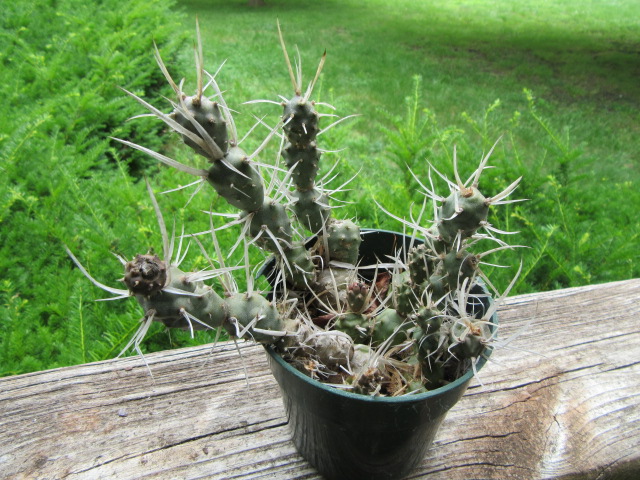
Tephrocactus articulatus var. papyracanthus (Paper Spine Cactus) before repotting on 6-5-25, #1053-26.

I had been avoiding repotting the Tephrocactus articulatus var. papyracanthus (Paper Spine Cactus) for a few reasons and they didn’t have anything to do with spines. I knew from the last time it didn’t have much of a root system and it could easily fall apart. Plus, you have to be careful the segments don’t break off… I have had this cactus since 2016 (rescued it as a piece that had fallen off on a shelf at Walmart) and it has been in this same pot since 2018.

Tephrocactus articulatus var. papyracanthus (Paper Spine Cactus) root system on 6-5-25, #1053-27.

I gently removed the cluster from the pot, and from the above photo you can see there just isn’t much there. The potting mix below the roots just fell off…

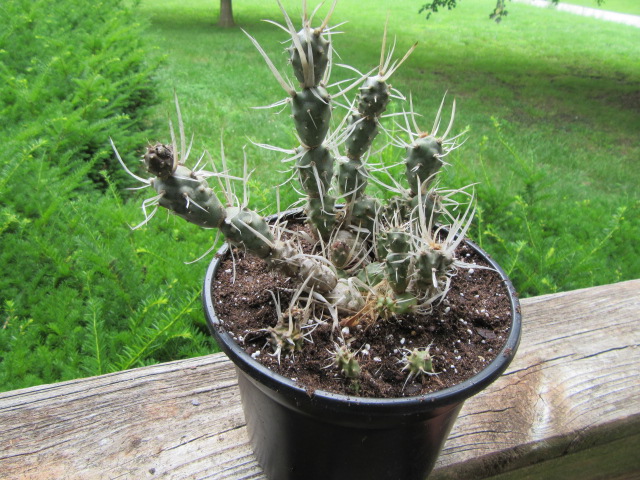
Tephrocactus articulatus var. papyracanthus (Paper Spine Cactus) in a larger 5″ tall x 6 1/2″ wide pot on 6-5-25, #1053-28.

I definitely thought it needed a wider pot, but not a deeper one. Well, the problem was I didn’t have a satisfactory pot that was wider and not so deep. So, I decided to go ahead and put it in a 5″ tall x 6 1/2″ diameter pot. If I run across a shallow and wide pot at some point, I may repot it again. I may have to get one online…

Tephrocactus articulatus var. papyracanthus (Paper Spine Cactus) segments on 6-5-25, #1053-29.

Fortunately, the cluster stayed together without too much difficulty. There were three segments that weren’t in the soil, but now are.

I think nine plants on this post is enough, but part 3 will be ready shortly.

Until next time, be safe, stay positive, be well, always be thankful and GET DIRTY!

Plants Repotted Part 1…

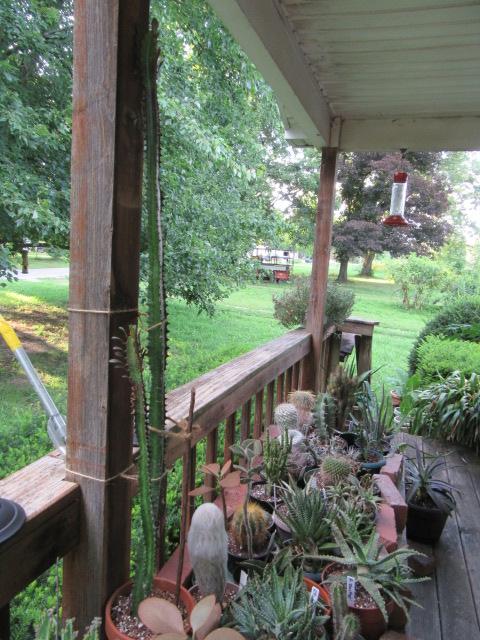
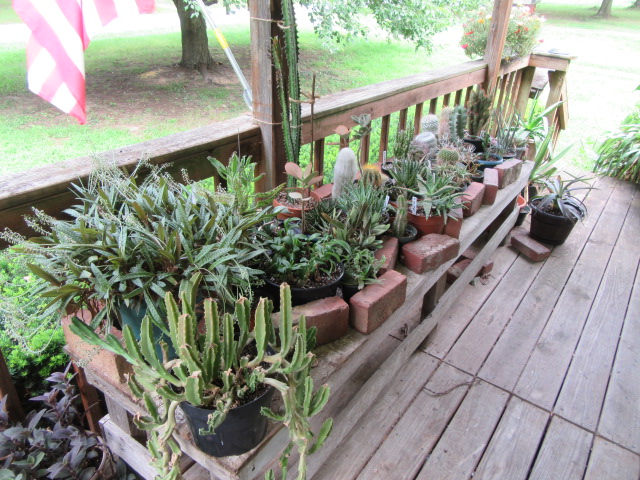
Some of the plants on the front porch on 7-1-25.

Hello everyone! I hope this post finds you well. I don’t have a garden this year, so I can give the plants on the front porch more attention. There are three litters of kittens on the back porch (GEEZ!!!), so all the potted plants are on the front porch. Well, I first put the Alocasia pots along the south side of the house, then moved them in front of the shrubs in front of the house (on July 4). Cactus and succulents aren’t exactly the most needy plants, but at some point, they do need to have larger pots and fresh soil. On the front porch, none of the plants get what we call full sun (6 or more hours of direct sun). The front porch faces west, is covered, and there are two good-sized maple trees providing afternoon sun. All the plants somehow get direct sun at certain times of the day and seem to do amazingly well.

While the plants on the front porch consist mainly of cactus and succulents, there are also other plants… Amorphophallus konjac, Sauromatum venosum, Tradescantia, Callisia fragrans, Ledebouria, Billbergia nutans… You get the picture.

The work table that has been on the back porch since 2019 was moved to the front porch. It’s what I use for repotting. I built this table, as well as the tables I have the plants on, while I was living in Mississippi. The top and shelf of the work table is made of old cypress boards that were once part of the old covered patio behind the mansion. Well, it was a big house… The plant tables are made of boards that were stacked in the old patio that were once part of a fence that surrounded the back yard. I made tables that surrounded the inside of the two large sunrooms in Mississippi. I took a few apart and brought them with me when I moved back here in 2013. They have come in handy…

I repotted a few plants last year (and every year), but I lit in with a purpose on May 30… I wrote that while laughing… I don’t repot everyday, obviously, and some days I just look at the plants with a “?” on my face. Then I realized that some of the plants have the same expression. It like they are saying, “Well, is it my turn yet?” “What about me?”

Every plant gets a before photo, its roots, the new pot is measured, then an after photo is taken. That may seem a bit excessive, but I do that for the plants pages and the journal. Well, I guess the blog is a journal…

So, lets get started before I change my mind or get distracted…

May 30…

Cereus repandus f. monstruosus ‘Rojo’ in a new 6 1/2″ tall x 6 1/4″ wide pot on 5-30-25, #1048-2.

At first, I hadn’t thought of taking before photos and photos of their roots, so the Cereus repandus f. monstruosus ‘Rojo’ and the others repotted on May 30 just have an after photo…

I found a larger 6 1/2″ tall x 6 1/4″ diameter pot that seemed suitable. I had bought a few bags of Dr. Earth Cactus and Succulent Mix last year, so I used what was left on May 30.

Espostoa melanostele subsp. nana (Peruvian Old Lady) on 5-30-25, #1048-8.

I removed the old potting mix and added new to the Espostoa melanostele subsp. nana (Peruvian Old Lady), but I used the same pot it has been in since 2021. She doesn’t have much of a root system, so she didn’t’t need a larger pot. Of course, I had straighten her up a bit (AGAIN) since she is a leaner… Well, she easily leans because she doesn’t have many roots to hold her up. To say she has been in the same pot since 2021 is an understatement, though. She has been in and out and back in multiple times. It isn’t uncommon for there to be rocks in her pot to help with that.

I had to be careful not to mess up her new hairdo… A friend came over one day and thought she was pretty neat. Of course, he had to touch her. He gave her a little squeeze and found out the hard way she has sharp spines under the soft hair. 🙂

Stenocereus pruinosus (Gray Ghost, Etc.) on 5-30-25, #1048-15.

The Stenocereus pruinosus (Gray Ghost, Organ Pipe, Etc.) now has a larger 6″ tall x 6 1/4″ wide pot. It seems to like its new pot and I hope it likes Dr. Earth’s potting mix… This is a well mannered friend.

June 2…

Still, no before photos so I snuck in a few from last October…

Aloe humilis (Hedgehog Aloe) at 5 1/2″ tall x 6 3/4″ wide on 10-14-24, #1022-1.

The Aloe humilis (Hedgehog Aloe, ETC.) was still in its 4 1/2″ diameter x 5″ tall pot I brought it home in 2024. It also had a few dead leaves that needed removed.

Aloe humilis (Hedgehog Aloe) on 6-2-25, #1050-1.

WHOA! When I removed the plant from the old pot, I saw it had a very good root system and could definitely use a larger pot.

Aloe humilis (Hedgehog Aloe) in its new 6″ tall x 6 1/2″ diameter pot on 6-2-25, #1050-2.

I gave it a 6″ tall x 6 1/2″ diameter pot… I ran out of Dr. Earth Cactus Mix, so I just used Miracle Grow Potting Mix with a little extra perlite and chicken grit. I always go to the driveway and put enough rocks in the pot to cover the bottom for drainage.

Gasteria ‘Little Warty’ at 6″ tall x 9″ wide on 10-14-24, #1022-12.

The Gasteria ‘Little Warty’ had been in the same pot since it was repotted in 2021 and was feeling a little cramped up.

Gasteria ‘Little Warty’ in a larger 5″ tall x 6 1/2″ wide pot on 6-2-25, #1050-3.

I decided to give the Gasteria ‘Little Warty’ a makeover and put it in a larger 5″ tall x 6 1/2″ wide pot. It had several dead leaves I needed to remove to tidy it up a bit. As you can see, it has several good-sized offsets.

Haworthiopsis limifolia (Fairy Washboard, Etc.) after it was repotted on 6-2-25, #1050-4.

I put the Haworthiopsis limifolia (Fairy Washboard, File-Leaf Haworthia, ETC.) in this larger pot last year so it was still fine. For some reason I decided it needed new potting mix again.

June 4…

Aloe juvenna (Tiger Tooth Aloe) on 6-4-25, #1052-1.

The Aloe juvenna (Tiger Tooth Aloe) has had its ups and downs the last several years. Judging by its root system, it seemed better suited for a little smaller and shallower pot. To much unused soil under the roots may have been causing problems for this one…

Aloe x ‘Amethyst’ on 10-14-24, #1022-2.

As you can see in the above photo of the Aloe x ‘Amethyst’ taken last October, it definitely needed a new pot…

Aloe x ‘Amethyst’ roots on 6-4-25, #1052-2.

It has a very nice root system.

Aloe x ‘Amethyst’ in a larger 5″ tall x 6 1/2″ diameter pot on 6-4-25, #1052-3.

Looking much better after removing some dead leaves and putting it in a larger 5″ tall x 6 1/2″ diameter pot.

Aloe x ‘Amethyst’ leaves on 6-4-25, #1052-4.

I really like this Aloe and its interesting leaves… Umm, I don’t have a page for this one yet…

Aloe x ‘Pink Blush’ at 4 1/2″ tall x 6 1/2″ wide on 10-14-24, #1022-4.

I brought this Aloe x ‘Pink Blush’ home last spring and it has been doing very well.

Aloe x ‘Pink Blush’ in a larger 4 1/2″ tall x 6″ diameter pot on 6-4-25, #1052-5.

I decided to put it in a larger 4 1/4″ tall x 6″ diameter pot to give it a little more room…

x Gasteraloe ‘Flow’ before repotting on 6-4 25, #1052-6.

I brought this x Gasteraloe ‘Flow’ home in 2022 after I lost the one I had since 2016 to a mealy bug infestation. The plant had been in the same pot since I brought it home and it needed a makeover… This is when I started taking “before” photos…

x Gasteraloe ‘Flow’ root system on 6-4 25, #1052-7.

I took it out of the pot to have a look at its roots. There was a nice root system and many offsets. I trimmed off the dead leaves and removed some of the old potting mix. It doesn’t hurt to trim off some of the old roots as they grow new ones during the growing period.

x Gasteraloe ‘Flow’ in a larger 4 1/2″ tall x 5 1/2″ wide pot on 6-4 25, #1052-.

I decided to put the plant in a larger 4 1/2″ tall x 5 1/2″ wide pot.

I think I will stop with this post and start working on part 2 or it will get very long…

Until next time, be safe, stay positive, stay thankful, and GET DIRTY!


Repotting Amorphophallus & Oxalis triangularis

Amorphophallus with the Oxalis triangularis subsp. papilionaceae on 6-7-20, #708-1.

Hello everyone! I hope you are all doing well. I have been wanting to move the potted plants to the back deck and front porch but the wind has been crazy! It is a few weeks earlier than I normally do it but I think it is safe. Even if I have to move them back inside it isn’t that big of an ordeal. The plants are looking out the windows and some are coming out of dormancy and beginning to need more water. It is much easier to water over 100 pots outside on the plant tables…

I put the Alocasia on the back deck last week and some of the new plants I brought home from Wagler’s are on the front porch. Last spring I moved the Alocasia to the back deck so I could repot them before I moved them to their usual location. I repotted most of them but they seemed to do well on the back porch so I left them there. The wind wasn’t that bad Sunday, so I repotted the biggest Alocasia ‘Calidora’ that I didn’t get repotted last year. I had bought a large bag of Miracle Grow Potting Soil and I used almost all of it for that one pot. Since it was Easter the hardware store was closed so I couldn’t get another bag. SO, I decided to work on the pot with the two Amorphophallus sp. and Oxalis triangularis subsp. papilionaceae

I brought home the pot from Wagler’s Greenhouse in 2017 with two Amorphophallus and the Oxalis growing in it. I hadn’t been in this pot until July 2018 when I removed the smaller Amorophoallus youngsters. I have been itching to get in the pot to see how big the Amorphallus corms are but I needed to do it when they were dormant. Sunday seemed like the perfect opportunity since the Oxalis had gone dormant over the winter as well… Normally, I keep the Oxalis in this pot watered over the winter and they don’t go dormant.

Amorphophallus sp. and Oxalis triangularis subsp. papilionaceae on 4-4-21, 789-1.

SOOOOO….. I dug in and removed the Oxalis rhizomes before digging deeper for the Amorphophallus corms. I was totally amazed at how many Oxalis there were. Some species of Oxalis produce bulbs, but as you can see, the Oxalis triangularis is definitely a rhizomatous species…

Amorphophallus sp. on 4-4-21, #789-2.

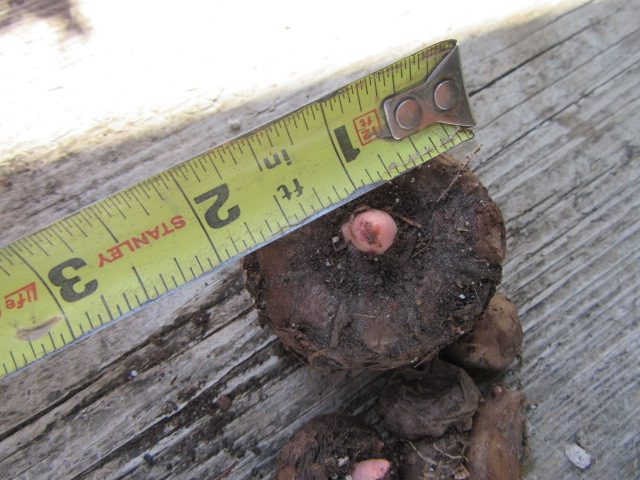
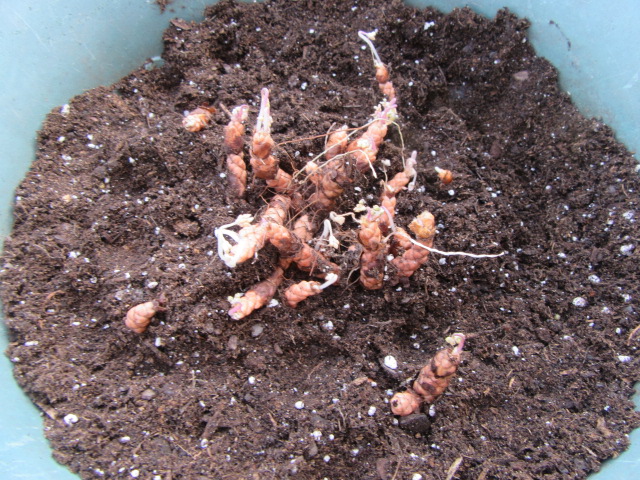
Besides the two larger Amorphophallus corms, there were seven small ones. It is kind of funny how there is so much confusion about the difference between what a bulb, tuber, corm, rhizome, etc. is. It seems like every time I write bulb, tuber, corm, or rhizome I have to double-check to make sure. I believe the Amorphophallus have corms rather than bulbs. They produce one stem, (which basically replaces the corm as it grows), produce only one petiole, and only one leaf… When they flower, the flower stalk emerges from the dormant corm… The Amprohphallus corm has no eyes like a bulb or rhizome. Of course, if you read information on other sites, you may see them being called bulbs… I suppose it doesn’t matter what you call them as long as you plant them properly.

Amorphophallus sp. bulb at 2″ on 4-4-21, #789-2.

I was surprised the two larger corms were only 2″ in diameter… I thought they would be maybe twice that size by now. This is actually the first time I have seen them even though I have had the pot since 2017…

Maybe you can’t really tell in the photo, but the corm is kind of concave toward the center…

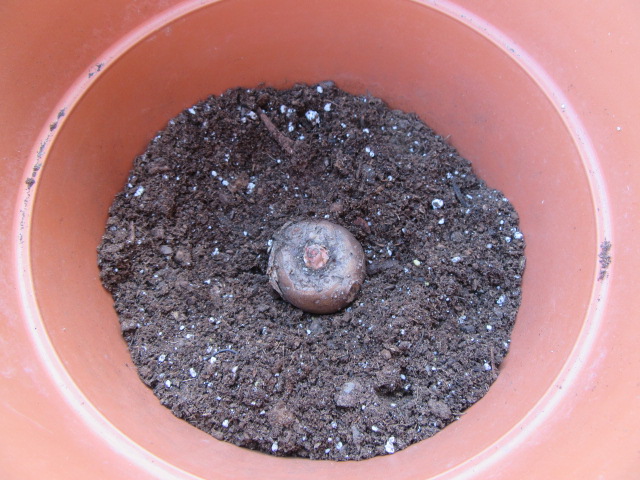
Amorphophallus sp. in a new pot on 4-4-21, #789-2.

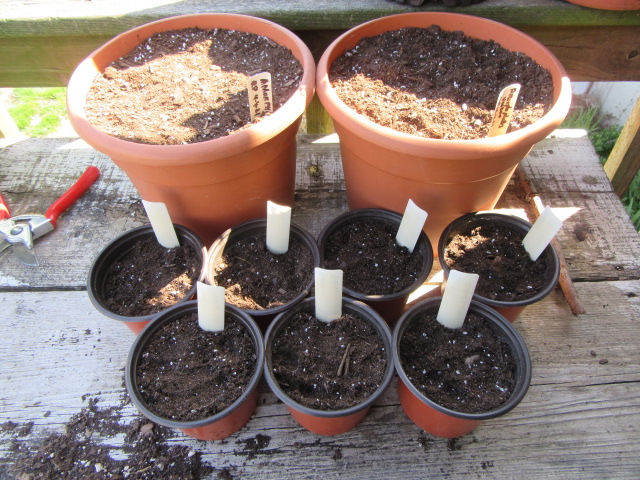
I found two pots of the same size, 8 1/2″ tall x 9″ diameter, for the larger corms. I put a few inches of potting soil in the bottom of the pots, centered the bulbs with the sprout on top, then filled the pot within an inch or so from the top of the rim.

You can get on several sites online to learn how to plant Amorphophallus corms and so many tell you different things. With so many opinions it may leave you confused. Previously, I had read where bulbs should be planted 6″ below the surface, depending on the size of the corms. I knew from locating them in the pot they were, in fact, 6″ or so deep… SO, that is the depth I returned them at. One site says to plant them twice as deep as the size of the corm but I think that would not do… I planted the smaller corms about halfway down in their pots.

One reason you need to plant the bulbs so deep is because the soil is what will anchor the plant until the roots start to grow. The roots grow from the top of the bulbs AFTER the leaves start growing… The growing plant uses energy from the corm which basically vanishes. SO, you don’t want to water the soil because it could cause the corm to rot…

The top of the corms are slightly concave with a sprout in the center and the bottom is round like a bowl. One video I watched said to plant your bulbs slightly tilted so water won’t collect in the concaved area on the top of the corm (he called them bulbs…). Well, I didn’t do that and just planted them flat. The same video says to use slightly moistened potting soil, while other information says not to water until the stem emerges… The guy in the video also used potting soil with timed-release fertilizer and added more fertilizer below where he put the bulb… Other websites say not to add fertilizer until AFTER the roots start growing.

SO, I used a fresh bag of Miracle Grow Potting Soil, which was slightly damp because it was just opened. I did NOT moisten the soil more. I did not add any more fertilizer… I did NOT water the soil after I was finished…

Amorphophallus sp. on 4-4-21, #789-2.

SO, now the two larger Amorphophallus have their own pots. I put several Oxalis rhizomes in the bigger pots with the Amorphophallus because they look good together. 🙂 I will take the smaller pots to Mrs. Wagler once the plants start growing.

I went ahead and watered the Oxalis rhizomes a little in the bigger pots because some of them had a few sprouts. I didn’t soak the soil, though…

I still have no idea what species of Amorphophallus I have… I would guess probably Amorphophallus konjac.

Now for the Oxalis… 

Oxalis triangularis subsp. papilionaceae rhizomes on 4-4-21, #789-6.

Getting back to the Oxalis triangularis subsp. papilionaceae… There were two larger clusters of rhizomes and quite a few single pieces… They are already beginning to grow…

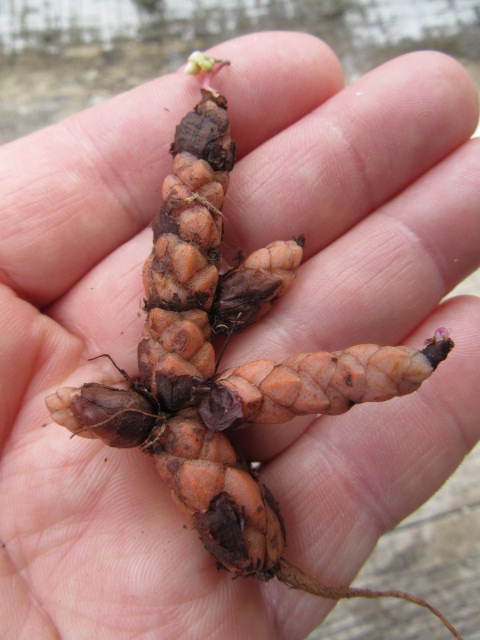
Oxalis triangularis subsp. papilionaceae rhizome.

There several rhizomes similar to the one above and several of them already have leaves… This rhizome is 2 1/2″ long, so put the bottom of it approximately 3″ or so deep in the soil.

Oxalis triangularis subsp. papilionaceae rhizomes in the pot on 4-4-21, #789-7.

I took the large clusters and placed them in the center, with the bottom approximately 3-4″ deep and made sure rhizomes attached to them were verticle. I spaced several of the smaller rhizomes around the bigger clusters in the pot and then covered them all with an inch or so of potting soil.

Little Bit asked if she could help but all she really wanted was a spare hand…


Oxalis triangularis on 4-6-21, #790-2.

The local grocery store had a large display of Oxalis triangularis in the early part of March. They had several pots with purple and black leaves and several with solid green. Since I didn’t have one with solid green leaves I brought one home…

Oxalis triangularis leaves on 4-6-21, #790-3.

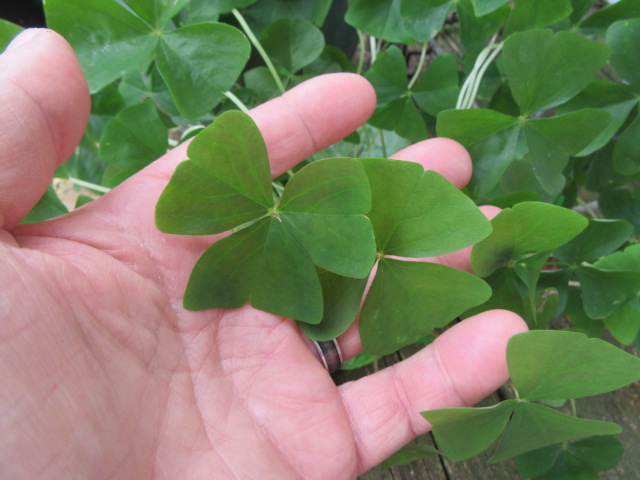
Oxalis triangularis leaves can be solid green, maroonish, or black and purple… There are several cultivars available and the pots at the grocery store didn’t have labels…

Maybe I should mention a little about the Oxalis triangularis name… Plants of the World Online by Kew lists 22 synonyms of Oxalis triangularis. One of the typical synonyms you see online for these plants is Oxalis regnellii or Oxalis regnellii subsp. triangularis. The name Oxalis triangularis subsp. papilionaceae is even considered a synonym even though the subspecies has much larger leaves… My first experience with Oxalis triangularis was when a friend and fellow plant collector gave me a start in 2012 when I lived at the mansion in Mississippi. It had much smaller leaves so it wasn’t the subspecies… I choose to recognize my purple and black leaved Oxalis triangularis as the subspecies papilionaceae because of its enormous and beautiful leaves. That is OK as long as the name was validly published which it was in 1983. Both the species Oxalis triangularis and Oxalis papilionaceae were named and described by different botanists in 1825. Of course, the name issues could be cleared up if I used the cultivar name ‘Atropurpurea’. 🙂

Plants of the World Online lists 557 species of Oxalis native to nearly every country the world over. Oxalis is a member of the plant family Oxalidaceae (family of Wood Sorrels) with five genera which include mainly annuals, perennials, and subshrubs. Some species are considered invasive weeds…

Spring is a great time of the year to start getting dirty. The garden is ready to be tilled but there is rain in the forecast for Tuesday evening through Thursday. After that, I will till when the soil is ready. I already have the sweet corn seed because I didn’t want the local farmer’s co-op to sell out before I was ready to plant. I will probably have to go to the Greenstreet Market in Clinton to get the green bean and snap pea seeds…

Until next time… Be safe and stay positive. I hope you are all doing well. Don’t forget to always be thankful.